Maureen Carroll, Ph.D., is a Founder of Lime Design and a lecturer at Stanford’s Hasso Plattner Institute of Design (d.school) where she co-teaches Creativity & Innovation and leads the quarterly K12Lab Network introductory design thinking workshops.
Developing a design-driven approach to innovation is about culture change; developing empathy, I believe, is an essential first step in that journey. The greatest challenge for an organization is what happens after the introductory workshop. Individuals have to begin using design thinking, and their efforts have to be both supported and championed. Your first goal as a design thinker is to gain empathy for the people you are designing solutions for. ..
You have to take the time to analyze and synthesize your data using tools like Empathy Maps and Point of View Statements that help you discover insights about unarticulated user needs. ...
However, they have different goals. It is important for businesses to have empathy for their customers so that they can design products, services and strategies to meet their needs.
Through this integration, we are able to focus on the powerful role of empathy in learning.
Empathy can be a pivotal factor in the success of yourself and your projects. If you don’t care about the people using your product, why are you making it?
If you don’t care about your co-workers who will have to use your code, why do you work with them? If you don’t care about yourself, why are you doing this as a career?
Some people may ask “why empathy?”. Let’s examine this concept, find ways to be more empathetic in our actions, and discuss the pragmatism of empathy.
This talk will explore various ways in which developers can be more empathetic to the community, their co-workers, and themselves. The talk will also explore larger ways we as an industry can work together to improve empathy.
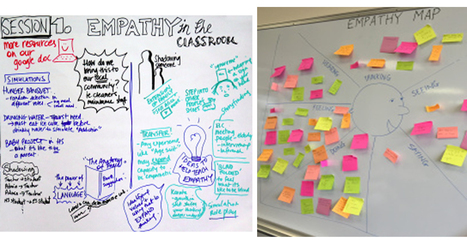
How to Build A Persona Empathy Map The persona empathy map is a large sheet of paper that has the character outlined and named in the middle. Four sections are created around the character including, “Say,” “Think,” “Do,” and “Feel.” In another part of the sheet – we recommend the top – the idea and the situation being discussed are identified to focus the collected information around different emotional experiences.
The persona empathy map can be created using paper sheets and pens, white board and markers, or a printed template such as our Persona Empathy Mapping Sheet. You can download our Persona Empathy Map sheet by clicking on the download link at the end of this article.
Too often we get caught up in our own biases, even the most compassionate of us. When we do, we lose sight of how to design and build platforms and experiences that work for all our users.
We end up building for ourselves, the person who knows the system inside and out, the power user. And while people like us are important, they rarely make up the majority of users.
We need to build things that anyone can learn quickly, use efficiently, making the user feel confident and powerful. Through examples of atypical users, I’ll walk through things to consider when designing tools and applications that empower the greatest number of users to achieve more.
While the movie is fictitious, of course, the broader lesson lies at the core of a real-world business need: empathy. Using empathy to put customers, clients, and end users at the center of the problem-solving equation is the foundation of design thinking. ...
Bringing empathy to the organization
One essential to running a design-driven company is making sure the right people with the right skill set are in the right place. To start, that means ensuring a chief design lead has a seat at the table where strategic decisions are made. That person could be a chief design officer, a chief digital officer, or a chief marketing officer. All that matters is that whoever has the responsibility is the primary customer advocate. He or she must bring the customer’s point of view to business decisions, translate business goals into customer-friendly initiatives, and build a culture in which employees think about how what they do affects customers....
Building these bridges requires extending customer advocacy and customer-centric empathy to more roles in the organization...
Raising the design capabilities of a company requires moving customer empathy beyond the skill set of a design team to permeate all areas of the business. ...
McCann and his fellow academic superstars had come to a classroom at Thomas Jefferson University to do something unusual for them: talk about their feelings.
They were participating in Reflection Rounds, an experimental protocol meant to help students stay in touch with a sense of spirituality - very broadly defined - that might help them keep their hearts open and protect them from cynicism and burnout as they encounter the suffering, disappointment, and limitations that permeate medicine.
McCann decided the best thing he could do to help the man was to organize and record his story. "It felt like such a hollow gesture," he told his friends.
Empathy has long been understood to be a healing agent. It has become the core essence in the field of therapy to heal personal problems such as, stress, anxiety, depression, burnout, shame, self-judgment, stuckness, trauma, PTSD, etc., etc. It is the core healing agent of interpersonal and social conflicts in mediation and restorative justice processes.
Even in the medical field, studies show that patients with an empathic doctor heal faster since feeling seen, heard, acknowledged and understood reduces stress and inflation, thereby, allowing the natural healing processes of the body to work more effectively.
To build a more empathic culture, we need more people trained and practiced in offering empathic guidance and support. I am expanding my empathic guide services for healing and invite you to try a 30 minute free empathic listening session. If you know of others who may benefit from this, do pass it on.
Product design is a fundamentally compassionate act. After all, the best products come from designers who listen intently to the populations they serve and have empathy for the people who might use their product or service.
Unfortunately, the world is not full of those products. Perhaps designers and engineers fall victim to not yet realizing mass customization and personalization on an affordable scale. Maybe ever-shrinking timelines limit designers’ ability to get customer feedback early and often. Or maybe it’s just carelessness or narcissism by designers who don’t look beyond themselves for design requirements.
Regardless of the reason, there is a growing movement for a more empathic product-design process. It’s aptly named human-centered design.
New initiatives are encouraging doctors to be better listeners and more sensitive to patients.
The University of Michigan, the Cleveland Clinic and some Catholic health systems are among medical systems experimenting with techniques to encourage physicians to be more responsive, said Tim Vogus, an associate professor of management at Vanderbilt University who has researched the relationship between compassion initiatives and patient satisfaction scores.
His research found that hospitals that promote compassion -- especially with rewards -- are more likely to have higher patient satisfaction scores.
Partners HealthCare in Massachusetts and medical schools such as Duke are requiring some residents to take courses to help them be empathetic and offering training to practicing physicians. Other medical organizations encourage physicians to put personal details about patients in their medical charts so they can bond over topics like hobbies or sports teams.
Our students are often prompted in ways that guide them to empathize with both hypothetical and real “users.” HS Mathematics Teachers Duane Wacha and Amy Harbaugh’s geometry course took a look at ASIJ, as it is designed now.
Their goal was to redesign the entire campus in a way they feel more empathetically represents the student users’ needs. They created 3D models in SketchUp and used paper schematics to draft a new view of the school grounds. In the process Duane and Amy’s geometry students came to appreciate the complexity in considering the needs of all who share our campus. They also came to appreciate the value in creating for others.
Empathy was a topic of interest at the start of school In-House Teacher Conference held on August 18 and 19. Eighteen other teachers joined Duane in a collaborative session that explored empathy in the classroom—discussing strategies and skills teachers can use to support students in shifting their point of view and understanding the diverse perspectives of others.
A few weeks ago, I received an brief e-mail from Seung Chan Lim, otherwise known as Slim. He had come across my DiaPraxis website (and possibly, my paper on Empathy and Collaborative Meaning-Making) and wanted to know about upcoming workshops. As I started to write him back, I noticed his email address was connected to a website,RealizingEmpathy.com And thus I came to learn more about his amazing work, which is directly relevant to the work that we do with group facilitation....
I can’t write about empathy without mentioning the work of my friend Edwin Rutsch, who curated the “Empathy in Human-Centered Design”Scoop-it page I linked to earlier.
Edwin is the founder ofcultureofempathy.com, an amazing treasure-trove of resources on empathy. Among other things, Edwin has been interviewing leading experts on empathy from a wide variety of different fields, and posting the interviews online...
Last-but-not-least, Edwin and I are about to begin some small-group experiments, called “Beyond Dynamic Facilitation”, where we’ll be exploring the application of DF principles in an on-line environment, to create new forms of online facilitation. I’ll keep you posted! Either on this blog, and/or, through our Diapraxis e-mail newsletter.
Unlike the marketing research that deals with numbers and facts, empathic design tries to meet users' needs and even thinks in terms of what they may need to make their life much easier. Empathic design aims to build an emotional relationship between the end consumer and the product by achieving a better understanding of the user experience and users' needs at an early stage of new product development (NPD).
The Benefits of Empathic Design
Beyond the simple aim of empathic design to create an emotional relationship between the consumer and the product, empathic design can help companies in multiple disciplines.
Conducting the proper research to target empathic design not only can build this connection but also can help a company innovate new products or solutions for problems the user never asked for or never thought could be solved. For some products, innovation does not require creating a new product but rather improving an existing product in order to meet the current consumer needs.
From a marketing context, empathic design can lead to acquiring market segments through the exploration of unexpected and unmet needs of the end consumer.
Further readings
Empathy on the Edge PDF (2014) by Battarbee K., Suri J., and Howard S. (IDEO)
The goal of the exercise was to understand the user’s experience. To do this, I used MURAL to map out three different aspect of an onboarding experience before the session began, seen in the image below.
Colleen Clines share her personal journey to starting a social enterprise and using design thinking to impact the world.
Colleen Clines at CreativeMornings Louisville, September 2015. Free events like this one are hosted every month in dozens of cities. Discover hundreds of talks from the world's creative community athttp://creativemornings.com/talks
Gordon D Cook describes himself as an activist and educator. He studied modern literature, became a copywriter, escaped military service in two countries and lived in the US for a couple of years.
On returning to South Africa, he ran the AAA School of Advertising, co-founded The Global School of Business and a few years later, The Vega School of Brand Leadership. From inception in October 1998 until 2014 Gordon was the National Brand Navigator for Vega.
The workshop inspired a lot of great ideas, particularly around the idea that 1) empathy is an ongoing skill that you can never "master" and 2) empathy takes different forms. Further, it became clear how much we need to treat intellectual empathy versus shared empathy differently, and that closing that gap is deeply important.
Herbert
I am impressed how people who never met before could develop so much trust, ideas and engagement. I am thankful for Edwin guidance.
Sonja
I felt very good about having discovered what has always bugged me about the empathy circle — my inability to actually relate to anybody’s experience by just listening and reflecting back what they said. I wasn’t focused on how they truly felt but on what they said and what they thought. I was focused on understanding what they were trying to convey. I felt inspired about actually developing a tool that could address this problem. Reflecting back in a metaphor.
Edwin
felt a bit rushed at the end. I really enjoyed the final design challenge of the bridging the gap of intellectual empathy and feeling.. If we can get into the feelings more, that will make the empathy circle much more engaging.
Empathy is the ability to share and understand the feelings of others.
Now, let me say this, I am no expert at it and I am still on this journey, but empathy should be at the core of each and everyone of us. I spent several years of my life as a pastor. A great deal of my time was understanding the places, feelings, and situations people were going through.
It WRECKED me.
Why did it wreck me? Those experiences went to my soul.
At Nueva School’s I-Lab, we are pioneers in teaching Design Thinking. Come learn how to implement a similar program at your school to prepare your students for the future.
To get content containing either thought or leadership enter:
To get content containing both thought and leadership enter:
To get content containing the expression thought leadership enter:
You can enter several keywords and you can refine them whenever you want. Our suggestion engine uses more signals but entering a few keywords here will rapidly give you great content to curate.


 Your new post is loading...