Your new post is loading...

|
Scooped by
Kim Flintoff
February 23, 2018 6:18 PM
|
Abstract
At present a substantial insecurity prevails about the future of eLearning and particularly about the future of recent MOOCs. Those who have been enthusiastic at the beginning are now more esceptical about the future development of teaching with digital media, others maintain their positive attitude and look for ways to promote and implement their use in the university. Numerous institutions publish forecasts and time frames about relevance of the upcomong innovations. We took the critique raised against the methodological background of some studies as a point of departure to discuss the possible impact of digitalization on a future digital university from a historical and economic perspective. It shows that digitalization followed a continuous development especially pushed by distance education universities and that phenomena such as MOOCs turned out to be not as “disruptive” as some providers pretend. Instead national policies, economic sustainability and the impact of digitalization on different stakeholders will determine the future shape of the “digital University”.
|
|
Scooped by
Kim Flintoff
February 2, 2018 7:23 PM
|
For the past few years at the Institute, we’ve heard stories about Brazilian teachers trying out blended learning. Since then, some of these teacher-led initiatives have flourished into school-wide programs around the country. To explore these trends more deeply, we published our first international blended-learning research paper in November, Blended Beyond Borders, in partnership with the WISE Initiative. This paper offers a snapshot of blended-learning in Brazil, Malaysia, and South Africa, as well as giving policymakers and practitioners recommendations on how they can help blended efforts prosper in their context.
Our partnerships with the Lemann Foundation, Peninsula Institute, Porvir, Nova Escola, and Todos Pela Educação were instrumental in gathering data and understanding the landscape of the public and private Brazilian education system. Through these partners, we administered a survey to capture whether and why schools were going blended. After answering a series of questions asking what types of technology a teacher or school used, survey respondents told us why they started to use technology in their classrooms. Providing more options for students (73.64% of both administrators and teachers), facilitating more personalized student learning (71.82%), facilitating competency-based learning (67.27%), and improving student academic outcomes (61.82%) were the top reasons educators gave for using technology.
|
|
Scooped by
Kim Flintoff
January 22, 2018 1:06 AM
|
The notion of a next generation digital learning environment (NGDLE) was articulated in a 2015 white paper as what could replace conventional learning
|
|
Scooped by
Kim Flintoff
December 29, 2017 5:16 PM
|
Today, we’re publishing a new report: “From Good Intentions to Real Outcomes: Equity by Design in Learning Technologies.” The report lays out in greater detail the three ed tech myths above and connects them to research findings from diverse fields and disciplines. The report then outlines a variety of examples of programs that are closing dimensions of the digital divide, and lays out a framework toward developing a set of Guiding Principles for Digital Equity, that could guide developers, philanthropists, venture capitalists, policymakers, researchers, and educators toward more effective strategies for leveraging technology in the service of equality. The report concludes with a call for efforts to consolidate all that we have learned over the last decades about education technology and equality, and to imagine from that history a new way forward.
|
|
Scooped by
Kim Flintoff
December 24, 2017 6:22 PM
|
Coding is something that each student can do and is a more engaging way for students to work on their collaboration, critical thinking and problem-solving skills. Coding can help to promote SEL (Social and Emotional Learning) skills as well. For example, in working through the various modules available on Code.org or through other coding programs, students develop their self-awareness as they work through the challenges of coding and they develop a greater understanding of their strengths and being able to set goals for oneself based on this self-awareness. Students will become more confident as they problem solve and experience success along the way and by helping peers as well. Students build relationship skills through the collaboration during activities, seeking and offering help when needed and learning to cooperate with one another to solve a coding challenge.
Students can also experience more inquiry-based learning, where they are exploring on their own, problem solving and discovering how to make a program work, where the steps fit in and then being able to share the experience with one another. Personally, I enjoy trying to work through the activities on my own, to experience the challenges and be better equipped to anticipate student questions, but also to be more familiar with areas of struggle.
|
|
Scooped by
Kim Flintoff
December 21, 2017 8:28 PM
|
How to Approach the Digital Transition
This imperative means that it is up to us as teachers to today take on the challenge of teaching students to use digital resources in an impactful, appropriate way, and approach the digital transition with an and, not or attitude. Here are some suggestions:
Enhance the instructional experience by integrating digital strategies and content with “traditional” teaching strategies. This approach can be a catalyst for increasing student engagement. For example, ask students to write a five-paragraph essay, and then have them summarize their work Twitter-style in 140 characters or less. Or, have students create hypotheses about what type of sunlight, soil, and nutrition grow the best tomatoes through a virtual lab, then test those hypotheses with real tomato plants. Look for opportunities to provide both hands-on and digital learning experiences to your students.
Let the content support differentiation. In a classroom powered by digital resources, a teacher can more easily assign students texts at different lexiles, or provide information through multimodal texts, empower students to access information through multiple languages, and much, much more. Digital resources can help teachers not only expand their impact, but it can be a tool that can help scale what we know is good instructional practice.
Use technology to teach students how to learn. New apps. Technologies like Siri. New types of digital content like Virtual Reality. Every day, it seems, there is something new. Engage your students in exploring these new tools. How will a new app help their learning? When and why should it be used? We know the how is just as important as the what. Think about the Standard for Mathematical Practice that requires students to use appropriate tools strategically. Technology makes this a practicality.
|
|
Scooped by
Kim Flintoff
December 7, 2017 7:46 PM
|
Online students who use the innovative robots feel more engaged and connected to the instructor and students in the classroom, the first-ever study of a pioneering robot-learning course shows.
|
|
Scooped by
Kim Flintoff
November 21, 2017 10:05 PM
|
Quick Take: In a knowledge economy, we need to ensure that every student is getting the right opportunities to fulfill their potential. Online learning offers a flexibility that can help transform Education into a student-centered learning system beneficial to all.
Michael Horn is an expert in online learning, blended learning, competency-based learning and student-centered education. He works with several education organizations to improve student learning experiences and his work has also led him to serve on education organizations advisory boards. He is co-founder of the Clayton Christensen Institute for Disruptive Innovation, a non-profit think tank, and is the author of the bestseller book “Blended: Using Disruptive Innovation to Improve Schools.” Horn holds a BA in history from Yale University and an MBA from the Harvard Business School.
In this interview, he shares how to transform the educational system into a student-centered learning (SCL) approach, how to use online learning to maximize student success, and why online learning is considered a disruptive innovation in education. He also shares his perspective on the challenges of blended learning, as well as some of the trends educational institutions will experience in the coming decades.
|
|
Scooped by
Kim Flintoff
September 7, 2017 10:21 PM
|
Authors:
by Marieke de Wit, Francesc Santanach and Jeffrey Merriman
Published:
Monday, August 14, 2017
Key Takeaways
How can higher education institutions worldwide support transforming educational needs with the right tools at the right time?
Next generation digital learning environments must meet the requirements of evolving learning methodologies, the realities of the new life-long student demographic, and constantly evolving hardware and software technologies.
New, openly defined, and evolving models, standards, and data formats for capturing and sharing educational knowledge in programmatically accessible ways will stimulate the emergence of new educational businesses and services.
|
|
Scooped by
Kim Flintoff
September 6, 2017 7:15 PM
|
This leaves us constantly in the position of trying to build our tech integrations strategy on quicksand. We have to be constantly finding new apps and services to replace the ones that have folded and then starting again learning and training how to use and build ideas and materials around these.
|
|
Scooped by
Kim Flintoff
August 24, 2017 2:45 AM
|
Digital Futures is a program of technology-related projects that are increasing Curtin University’s digital capabilities and equipping key areas of the business to compete in the rapidly-evolving higher education marketplace.
The expectations of students, researchers and staff are changing in light of the increasing use of digital technologies and capabilities around availability of information – anytime, anywhere and using any device.
A personalised, interactive, intuitive and collaborative experience is now the norm.
|
|
Scooped by
Kim Flintoff
August 23, 2017 7:15 PM
|
Key Takeaways
Academic libraries support institutional goals for student success and have embraced the use of correlation research to demonstrate connections between library services and resources and student learning, retention, completion, and postgraduation success.
Recent correlation research has revealed promising connections between academic libraries and student success; however, data difficulties seem likely to stymie continued work in this area.
To further their research and maximize library contributions to learning, librarians should prepare for next generation digital learning environments and learning analytics initiatives on their campuses by reading about related topics, engaging with library colleagues, and consulting campus partners.
|
|
Scooped by
Kim Flintoff
August 16, 2017 8:14 PM
|
Key Takeaways
How can higher education institutions worldwide support transforming educational needs with the right tools at the right time?
Next generation digital learning environments must meet the requirements of evolving learning methodologies, the realities of the new life-long student demographic, and constantly evolving hardware and software technologies.
New, openly defined, and evolving models, standards, and data formats for capturing and sharing educational knowledge in programmatically accessible ways will stimulate the emergence of new educational businesses and services.
|
|
|
Scooped by
Kim Flintoff
February 12, 2018 7:01 AM
|
Every day, we speak to universities that are looking to launch new online-learning initiatives, and many of these conversations start with the same question: “How do we put these courses online?”
By asking a few initial questions of our own, we’ve found that most institutions tend to anchor their thinking to their existing on-campus courses. This approach is limiting at best, and a recipe for mediocrity in many cases.
Instead of thinking about your new online initiative—whether it’s a single course or an entire degree program—as a generic rework of your on-campus courses, we recommend thinking of it as an entirely new educational experience. A new product. One that demands that you carefully evaluate all your requirements and ensure the program is designed specifically with your target audience of current students and prospective students in mind.
In other words, approach the process as a product company would when planning to launch a new offering.
|
|
Scooped by
Kim Flintoff
January 29, 2018 2:03 AM
|
"It seems like most teachers and students have access to a paid-for digital learning program. You know the kind – RAZ kids, IXL, Spelling City, any one of those listed in the featured image of this article – and they all promise to raise achievement while making learning “fun”. These CAI (computer assisted instruction) programs can be traced back to when Skinner first created his “teaching machine”, the original solution for replacing the teacher, pictured below.
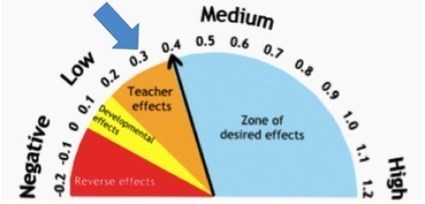
The thing is, these “learning” programs have not been proven to be as effective as the edtech industry overlords would like us to believe. In fact, the meta-analysis of John Hattie, which was shared with me at AEC 2017 by Dr. Sonny Magana (@sonnymagana), clearly shows that telling a kid to “go do Mathletics” will not make a sizeable difference in the learning of our students."
|
|
Scooped by
Kim Flintoff
January 17, 2018 5:33 PM
|
Teachers and professors have been working for decades to integrate the latest technologies from computers to laptops to tablets for reading electronic textbooks. Now immersive technology is being tested for application in the classroom.
Supporters say it could change the face of education, but only if educations can push students beyond the exhilaration of a virtual world and into real-life learning.
|
|
Scooped by
Kim Flintoff
December 25, 2017 8:15 PM
|
Digital screen use is a staple of contemporary life for adults and children, whether they are browsing on laptops and smartphones, or watching TV. Paediatricians and scientists have long expressed concerns about the impact of overusing technology on people’s wellbeing. However, new Oxford University research suggests that existing guidance managing children’s digital media time may not be as beneficial as first thought.
|
|
Scooped by
Kim Flintoff
December 21, 2017 9:05 PM
|
Are you among those who think that blended learning is just another online course? Well, in that case, you need to read this post. Blended learning is a superior training methodology that is a blend of online delivery of formal educational content and traditional classroom interaction.
This learning technique ensures that learners are engaged and driving their individual learning experience. Many students turn towards this program as it is one of the effective learning approaches in today’s world.
Here we’ll discuss in detail the significant role of this program in transforming the future of education system.
|
|
Scooped by
Kim Flintoff
December 12, 2017 6:09 PM
|
Higher education provosts and chief academic officers (CAOs) have come of age, personally and professionally, with the technologies that are now ubiquitous on campus and in the consumer market. However, considerable survey data and numerous conversations suggest that many provosts and CAOs remain skeptical about the potential or claimed benefits of information technology as a resource for teaching, learning, and instruction. They are also concerned about the significant investments that institutions make to support information technology for those purposes.1
|
|
Rescooped by
Kim Flintoff
from Edumorfosis.it
December 7, 2017 6:17 PM
|
Learning — to some it is the sound of chalk on blackboards, the search through stacks of scribbled notes, and backpacks full of heavy textbooks. For others with a less traditional lens, learning is the summoning of professors with a click of a mouse, assignments no longer living on paper, but in a cloud, and the ‘classroom’ being everywhere. Education has changed considerably in recent years and we don’t expect it to slow down anytime soon.
Because of the advancement of technology, institutions are able to reach more students than ever with the help of quality and accessible online courses. ‘eLearning’, ‘distance education’, ‘blended learning’, ‘online campuses,’ and other related programs have grown more prominent in higher education institutions. According to NCES data, there were 5.5 million students enrolled in distance education courses at degree-granting postsecondary institutions in fall of 2013.
There are many technologies flooding the market that help foster innovative teaching and learning. These tools, such as learning management systems, lecture capture systems, simulation creators, authoring, and video and audio tools, have flooded into the classrooms and lecture halls of higher education. However, the inference that these innovative tools aid learning should not be immediately assumed. With faculties’ full work load, learning and implementing new and often complex tools to improve their online pedagogy isn’t a priority. In fact, as the needs and tools of institutions have evolved, instructional designers have positioned themselves as pivotal players in the design and delivery of learning
experiences. Instructional designers exist to bridge the gap between faculty instruction and student online learning. But who, exactly, are instructional designers? What do they do? Where do they fit in higher education?
Via Edumorfosis
|
|
Scooped by
Kim Flintoff
November 19, 2017 4:29 PM
|
Academics say that the move, which would bring an end to more than 800 years of tradition, has come about because students rely too heavily on laptops in lectures, and are losing the ability to write by hand.
Cambridge University has now launched a consultation on the topic as part of its "digital education strategy", having already piloted an exam typing scheme in the History and Classics faculties earlier this year.
In an online survey, students are asked whether they would like the option to type exams, and whether this would have a “significant positive impact” on their “well-being”.
|
|
Scooped by
Kim Flintoff
September 6, 2017 7:46 PM
|
A lot has been written about helping guide students to choose the 'right' materials that have 'authority' when they access the online world, but I think that's a mistake. There are no wrong or right sources of information, there is only information. We need to help students to think critically about that information understand the arguments within it, the rationale behind it, the bias that influenced it and above all how they, as individuals, personally respond to that information and apply it to their lives. There is a wonderful line from a poem by Walt Whitman
" re-examine all you have been told at school or church or in any book, dismiss whatever insults your own soul, and your very flesh shall be a great poem and have the richest fluency".
This was written in 1855, but in the world we now live in, this above all is what our children need to learn.
|
|
Scooped by
Kim Flintoff
August 24, 2017 9:08 PM
|
Disclaimer: The Tate Modern is one of my favorite museums. My previous apartment held a place of honor, above the couch, for a poster I picked up there. And, in 2014, I interviewed the developers of their awesome app, the Magic Tate Ball (re: Using “String and Sellotape” To Build the Magic Tate Ball). So, imagine my excitement when I was recently introduced to Kathryn Box at the Tate Gallery in London.
Kathryn manages and produces content for the Tate Kids website and the Tate Kids social channels, which focuses on games and films and articles that speak to kids’ interests in art and the wider world. After three years invested at the Tate, she seemed like the perfect person to speak with to learn about their latest innovations in digital learning and across the British art scene in general.
|
|
Scooped by
Kim Flintoff
August 23, 2017 7:16 PM
|
Key Takeaways
The next generation digital learning environment presents many challenges for institutions because of its dramatically new approach to teaching and learning.
A consortium is often the most cost-effective means to explore the vision of personalized learning through technology that the NGDLE offers.
Meeting this vision will require collaboration to collectively control and govern resources and provide the infrastructure needed to enable innovation and serve each university’s mission.
|
|
Scooped by
Kim Flintoff
August 22, 2017 8:37 PM
|
If a classroom gets iPads, a question you will often hear immediately is, “What apps should I download?” In our concern for machines taking over education, we often do things that encourage machines to take over our teaching. I have been privy to seeing many educators use “flashcard” apps with students, not because they see it as a better process, but because they feel they need to justify iPads in their classroom by using them (the device) in some way with their students. This is often because devices are thrust onto educators without much thought and support on what is possible to do with them and how this aligns with the vision of the community.
I always ask educators to think, “What could you create with this iPad that you couldn’t create before?” Focusing on what we can “create” versus what we “consume” only, is a great starting point. It is not that consumption and content isn’t important. It is just that both consumption and creation should be evident in education for true deep learning.
|