Discover tools and techniques to plan, film, and edit high-quality videos for online learning with this online course from the University of Edinburgh.
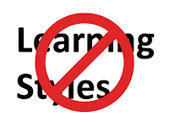
Learning styles have been popularized by well-intentioned people, including possibly your professor of instructional design. However, the claim that we have to adapt our design to accommodate different learning styles has been repeatedly debunked by research.
Then why do people cling to the belief? Let’s look at one reason why learning styles are so appealing and how we can respond to the believers on our team.
In a 2017 study by Newton and Miah, from the University of Swansea, Evidence-Based Higher Education – Is the Learning Styles ‘Myth’, 58% believed Learning Styles to be beneficial. Only 33% actually used Learning Styles but remarkably, they report that 32% faculty continued to believe in their use, even after being presented with the evidence that shows it doesn’t work.
As video has replaced text as Gen Z’s medium of choice, publishers, courseware developers, colleges, and K-12 leaders must prioritize video-enabled learning.
As higher education institutions turn to technology to meet the needs of teaching and learning in a post-pandemic world, knowing how to efficiently and effectively introduce new approaches — and learning how to recover from mistakes along the way — will be an increasingly valuable skill.
Conclusion For me, this is a touchstone issue. The fact that it has persisted for so long is a damning indictment on our professions, practices and professional bodies. Learning styles do not exist - let me repeat – learning styles do not exist. To believe in learning styles is to believe that the sun goes round the earth or that the earth is flat. It’s an intuition gone bad – a fail. Worse still, is to apply this theory in practice. If you categorise children as VAK or adults to Honey and Mumford or any of the other dozens of learning styles theories, and yes there are dozens, you’re doing learners a disservice. You may even be ruining their education.
Evidence We have 35 years of evidence against learning styles. This includes individual studies, systematic reviews and books. People like Pedro de Bruyckere, Wil Thalheimer and I have been talking about this for decades. Chapter 1 of Pedro de Bruyckere’s book ‘Urban Myths’ is an excellent summary of the research. A critique of Fleming’s VAK can be found here and a critique of Honey and Mumford’s theory can be found here.
The belief in learning styles is so widespread, it is considered to be common sense. Few people ever challenge this belief, which has been deeply ingrained in our educational system. Teachers are routinely told that in order to be effective educators, they must identify & cater to individual students' learning styles; it is estimated that around 90% of students believe that they have a specific learning style but research suggests that learning styles don't actually exist! This presentation focuses on debunking this myth via research findings, explaining how/why the belief in learning styles is problematic, and examining the reasons why the belief persists despite the lack of evidence.
Many people, including educators, believe learning styles are set at birth and predict both academic and career success even though there is no scientific evidence to support this common myth.
Universal Design for Learning is a framework that guides the design of courses and learning environments to appeal to the largest number of learners. It emphasizes flexibility in how instructional material is presented, how students demonstrate their knowledge and skills, and in how they are engaged in learning.
The principles of multiple means of engagement, representation, and action and expression offer instructors an instructional design model to strive for equitable access for all students by offering options, flexibility, and sets goals to accommodate diverse learners regardless of the discipline. In addition, universal design for learning prompts instructors to consider how they might improve their own teaching practice by considering diversity in the classroom, student voice and agency.
How can education technology help ensure that every student has a voice? Perusall co-founder Gary King shares the learning design principles behind the company's social annotation platform.
Online courses can be examined from two perspectives—what students do in the course and how a professor structures the course. There are a variety of instructional strategies and learning activities educators can implement to keep students engaged in the doing of the course. Equally important is the structuring of the course, in which instructors make […]
The fast-growing educational technology industry is poorly regulated and profits from user data. Australian law, education departments and schools can all do more to improve safeguards for children.
As most students bid farewell to COVID-19’s homeschooling, one high-fee independent school is seeking to offer single subjects, holiday programs and full-time enrolments online.
To get content containing either thought or leadership enter:
To get content containing both thought and leadership enter:
To get content containing the expression thought leadership enter:
You can enter several keywords and you can refine them whenever you want. Our suggestion engine uses more signals but entering a few keywords here will rapidly give you great content to curate.


 Your new post is loading...
 Scoop.it!