

Amid the rise of AI, researchers found that employers still value skills like communication, professionalism and teamwork among prospective and new employees.


|
Scooped by
EDTECH@UTRGV
onto Educational Technology News August 10, 12:28 PM
|
 Scoop.it!
Amid the rise of AI, researchers found that employers still value skills like communication, professionalism and teamwork among prospective and new employees.

 Your new post is loading...
 Your new post is loading...
Your new post is loading...
Scoop.it!
|
|
|
Scooped by
EDTECH@UTRGV
Today, 2:13 PM
|
Scoop.it!

What I told Ray Kurzweil’s digital twin about why AI keeps failing in schools
"With good intentions, we pushed AI onto schools — chatbot licenses, prompting workshops, tool rollouts — before redesigning any of the teaching and learning underneath. And the assessment underneath is, overwhelmingly, product-based.Something AI can now do better than most humans."
|
|
Scooped by
EDTECH@UTRGV
Today, 2:09 PM
|
Scoop.it!

A 28-page proof of concept, built in an afternoon, that needs a math teacher to improve it
"Most AI-in-the-classroom debate activities fail identically. The student asks a model for arguments, the model supplies them, and the reasoning the debate existed to produce never happens. The AI absorbs the authorship."
|
|
Scooped by
EDTECH@UTRGV
Today, 2:04 PM
|
Scoop.it!

In new work from Common Sense Media, many teens acknowledge AI is changing how they think, with schools providing few safeguards.
"70% now use AI for schoolwork, but that fewer than one in three say a teacher has ever talked with them about using it safely. And just one in four have discussed with a teacher how to tell whether AI-generated information is accurate."
|
|
Scooped by
EDTECH@UTRGV
Today, 2:01 PM
|
Scoop.it!

Multiple-choice quizzes feel like retrieval practice, but they often measure recognition instead. Here's how to fix the format.
"[A] multiple-choice item does not necessarily test retrieval at all. It often tests recognition, and recognition is an easier, shallower, and much more forgiving process than recall. The result is a quiz that looks like retrieval practice, scores like success, and predicts performance poorly."
|
|
Scooped by
EDTECH@UTRGV
August 17, 11:11 AM
|
Scoop.it!

Anthropic has revealed how Claude is able to secretly watermark AI-written text, and it has everything to do with word choices.
"There are situations where Claude's watermarking solution might not be effective."
|
|
Scooped by
EDTECH@UTRGV
August 17, 11:08 AM
|
Scoop.it!

From pattern recognition to alignment failures, a clear-eyed guide to what's actually happening inside the AI systems reshaping work, media, and daily life
"[T]he gap between what AI can do and what people believe it's doing creates real problems. People anthropomorphize systems that have no inner experience. They trust outputs that are confidently wrong. They assume AI is "thinking" when it's doing something quite different."
|
|
Scooped by
EDTECH@UTRGV
August 17, 11:04 AM
|
Scoop.it!
"What happens when the smoke and mirrors comes with larger stakes? When the confident, capable-sounding thing on the other side of the screen is wearing the name of someone, or some company, you already believe, and you have no reason left to check whether it actually knows what it’s talking about? What does it cost that name when it’s wrong"
"The more we trust a name, the less we question the machine wearing it, and the more that name has to lose when the machine is confidently wrong."
|
|
Scooped by
EDTECH@UTRGV
August 17, 11:00 AM
|
Scoop.it!

Teaching success should not rely solely on pass rates or student satisfaction. Here’s how to gather evidence that students understand, apply and transfer what they learned
"Redefining teaching success means moving from impressions to evidence: being able to show, through concrete criteria, that students understood, applied and developed their professional thinking and behaviour. The goal is not to teach more, but to demonstrate more clearly what has been learned."
|
|
Scooped by
EDTECH@UTRGV
August 17, 10:56 AM
|
Scoop.it!

Learn five practical ways to verify student learning and assess genuine understanding in higher education when AI tools are part of the learning environment.
"Rather than trying to prove how a submission was produced, you ask the student to demonstrate that they understand what they submitted."
|
|
Scooped by
EDTECH@UTRGV
August 14, 11:50 AM
|
Scoop.it!

Three-quarters of U.S. adults support in-class school cellphone bans, and for the first time, more now support than oppose all-day bans for middle and high schoolers.
"About half of U.S. adults (48%) back “bell-to-bell” school cellphone bans for middle and high school students, up from 36% in 2024."
|
|
Scooped by
EDTECH@UTRGV
August 14, 11:46 AM
|
Scoop.it!

In many math classrooms, mistakes in math classrooms have been seen as something to avoid, hide, or quickly fix.
"What if mistakes became one of the most valuable tools for learning mathematics? Shifting the narrative around errors—from something to fear to something to explore—can transform not only how students approach math, but how they see themselves as learners."
|
|
Scooped by
EDTECH@UTRGV
August 14, 11:39 AM
|
Scoop.it!

Successful AI adoption requires the extraction of tacit knowledge from your best workers in order to feed it to the model.
"Many companies already have everything they need for successful AI adoption—except knowledge of how their best people actually work."
|
|
Scooped by
EDTECH@UTRGV
Today, 2:18 PM
|
Scoop.it!

Last year, the online and professional education association UPCEA urged institutions to close the gap between student expectations on institutional preparedness for online learning as part of its annual report on the Benchmarking Online Enterprises Survey.
"Growth in online education is real and ongoing...but long-term sustainability depends on how well institutions align their governance structures, financial models and program strategies with their broader institutional mission."
|
|
Scooped by
EDTECH@UTRGV
Today, 2:11 PM
|
Scoop.it!

The choice isn’t between distributing AI and not having it. AI is coming regardless of what anyone decides. So the real choice is between a broadly distributed capability and a concentrated one.
"There is no version of the next decade in which advanced AI is scarce and someone responsible is deciding who gets it. That world is gone. It ended without an announcement and without a vote."
|
|
Scooped by
EDTECH@UTRGV
Today, 2:07 PM
|
Scoop.it!

"For three years, the conversation about AI in education for most people (a few of us pushed much further, much, much earlier) was largely about using AI in the classroom — a tool here, a chatbot there, some traffic lights, and a policy somewhere.
Now, more people (unfortunately, not everyone) have moved past that. We’re now arguing about instructional design, and beyond that about the structure of schooling itself. That’s the right altitude, and those are really the only thing that matter."
"As the technology keeps developing, the honest conclusion is that we are entering something like a new industrial era, and our institutions are only beginning to notice."
|
|
Scooped by
EDTECH@UTRGV
Today, 2:02 PM
|
Scoop.it!

At a gathering in Boston, ‘student senators’ proposed a first-of-its-kind national AI policy for K-12 classrooms.
"Transparency, literacy and security were among its key provisions, and the goal is that the student-created regulations will inspire adult leaders to act in similar fashion."
|
|
Scooped by
EDTECH@UTRGV
Today, 1:58 PM
|
Scoop.it!

Real microlearning is designed around how memory works—spaced, single-concept, retrieval-based lessons to increase retention.
"Chopping a 60-minute course into 610-minute clips isn't microlearning. Real microlearning is designed around how memory works—spaced, single-concept, retrieval-based."
|
|
Scooped by
EDTECH@UTRGV
August 17, 11:10 AM
|
Scoop.it!
Atlas is an AI-powered learning platform built to meet students where they are.
"For educators, Atlas is an example of how AI is evolving beyond general-purpose chatbots into subject-focused learning assistants. While it shouldn't replace classroom teaching or critical thinking, it can help students review difficult topics, organize information, and prepare for assessments when used appropriately."
|
|
Scooped by
EDTECH@UTRGV
August 17, 11:06 AM
|
Scoop.it!
"Against the backdrop of the widespread integration of generative artificial intelligence (GAI) into higher education, previous research has yielded divergent findings regarding its relationship with students’ higher-order thinking (HOT). Moving beyond outcome-oriented discussions of technology use itself, this study examines the association between HOT performance, instructional design elements, and cognitive processes in GAI-supported teaching contexts from an instructional design perspective."
"These findings suggest that differences in HOT (higher-order thinking) performance in GAI-supported learning contexts may stem from variations in instructional design and the cognitive pathways associated with it, rather than from technology use alone."
|
|
Scooped by
EDTECH@UTRGV
August 17, 11:02 AM
|
Scoop.it!
"Conversations regarding the societal implications of artificial intelligence (AI) and its integration into educational processes are ongoing. An area of great significance in this regard is agency, including how the use of AI technologies impacts an individual’s ability to exercise autonomy. In educational contexts, this remains a relatively unexplored yet vital subject. To shed light on this subject, this paper provides an exploratory thematic review of works which investigate the relationship between generative artificial intelligence (GenAI) and agency in education, mapping and interpreting the available literature through the lens of critical digital pedagogy (CDP)."
"The findings suggest that while GenAI may enhance learner agency through personalisation and support, it also risks exacerbating educational inequalities and diminishing learner autonomy in certain contexts."
|
|
Scooped by
EDTECH@UTRGV
August 17, 10:58 AM
|
Scoop.it!
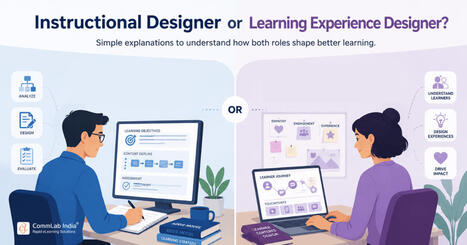
Explore how instructional designers and learning experience designers differ in their approach to creating impactful learning.
"A learning experience designer (LXD) takes a broader, more human-centered view. The role emerged from the intersection of instructional design, UX design, and design thinking — and it places the learner's full experience at the center of every decision."
|
|
Scooped by
EDTECH@UTRGV
August 14, 11:57 AM
|
Scoop.it!

Artificial intelligence tools offer a glimpse into students’ classroom experience. When paired with teachers’ knowledge and judgment, it can be a path to improvement.
"Schools must look beyond a vendor’s general privacy statement and determine what data enters the system, who has access, whether it is stored or shared, and what happens to it when the district stops using the product."
|
|
Scooped by
EDTECH@UTRGV
August 14, 11:48 AM
|
Scoop.it!
"Anthropic said in a support document Tuesday that its future AI models will put an invisible watermark in all text, identifying it as AI-generated."
"The imperceptible marks will be invisible and will travel with the text"
|
|
Scooped by
EDTECH@UTRGV
August 14, 11:44 AM
|
Scoop.it!

A data analytics and marketing major at Bentley University and a distinguished lecturer at the university explore the future of "technology learning partners" — technologies that participate in the learning process by asking questions and giving feedback, not just information search results.
"Student experiences with AI and other technologies today will inform the next generation of human/machine learning partners."
|
|
Scooped by
EDTECH@UTRGV
August 14, 11:36 AM
|
Scoop.it!
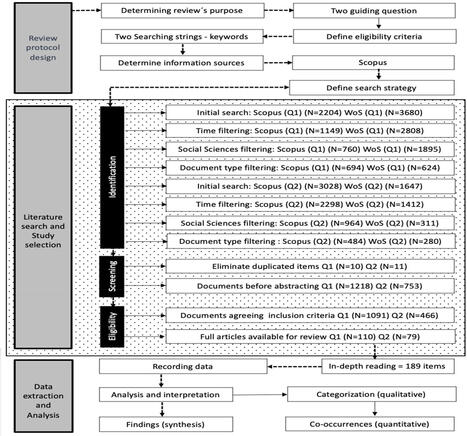
"This scoping review examines the growing intersection between lifelong learning (LLL) and artificial intelligence (AI), focusing on whether the promises of assistance, personalization, and automation are aligned with the broader educational, social, and equity-oriented aims of LLL."
"The review identifies a misalignment between the theoretical and policy-oriented framing of LLL and the practical deployment of AI in educational contexts. This suggests the need to move beyond technology-centred approaches and to design AI-supported lifelong learning initiatives that are explicitly connected to regional needs, learner vulnerability, social justice, and human development."





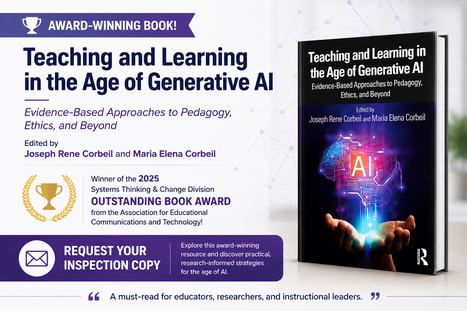




"Much of the conversation in business education to date has centered on helping students learn how to use AI responsibly and effectively. Even so, our recent findings show that other qualities and skills still matter. This is especially true when it comes to helping entry-level workers succeed and advance in their careers."