



Blended, sometimes called hybrid, learning is more than another passing educational fad. It’s not only growing in its use, but it’s proving to be an effective means of instruction.

 Your new post is loading...
 Scoop.it! Blended, sometimes called hybrid, learning is more than another passing educational fad. It’s not only growing in its use, but it’s proving to be an effective means of instruction. 
No comment yet.
Sign up to comment
Scoop.it!

Twitter is a useful tool. It can also be incorporated into your elearning courses. Today I’d like to share a few ideas to whet your appetite.
Scoop.it!

"Imagine a classroom where every child moves at his own pace. Where lesson plans are customized to every student's individual strengths and weaknesses. Where a teacher spends less time grading papers and more time interacting one-on-one with students who are struggling—or who need to move ahead faster. Where real-time data on student progress makes a once-a-year standardized test obsolete. The tools to make all that a reality are here. Now."
Scoop.it!

The following infographic shows how the increase in ebook readers is impacting printed book sales.
Scoop.it!

Welcome to the Educational Technology News site. I have been involved in technology and distance education for over 30 years. Research interests include best practices in e-learning and mobile learning. I am currently researching the effectiveness of social media for enhancing social presence and teacher immediacy in e-learning environments.
Visit us at: http://utrgv.edu/edtech

CésarAdrián Suaste's curator insight,
January 25, 2017 8:39 PM
la educación tecnológica en nuestros días a tomado una gran importancia 
Carlos A Hernandez's curator insight,
October 23, 2017 12:51 AM
I am finding a greater value and interest of the learning concepts from the Ed Tech which is providing for the future wants and needs of the learning environment.
Scoop.it!

"Whether you’re a new or seasoned Twitter user, you likely come across confusing hashtags that probably look like a bunch of nonsense... The # symbol, called a hashtag, is used to mark keyword or topic in a Tweet. Any Twitter user can categorize or follow topics with hashtags.Those hashtags (usually) mean something and are a great way to get a tweet to appear in search results or discussion monitoring."
This resource provides a list of the most popular hashtags in education.
Scoop.it!

Taking an online college class might sound like an easy “A” that gives lazier students a chance to sleep in and spend class time in their pajamas and robe instead of dressing and showering the way we used to before the Internet changed everything.
Scoop.it!

A decade after the term 'digital native' was first popularized, educators examine what the term means today--if anything.
Scoop.it!

There are some people who think Facebook has become too complicated. There are other people who agree with those people.
Scoop.it!

Online education could be the perfect fit for your schedule and goals. Find out what type of learning style you possess, how you can succeed in distance education, and what similarities and differences there are with online ...
Scoop.it!

"Technology and innovation are at the heart of Syracuse’s history. But the big question is — how do we keep that innovation going? How do we inspire the next generation of technology pioneers? With every ounce of enthusiasm I have, it’s my goal to spark excitement about one subject in particular — engineering."
Scoop.it!
Experience how the vision of AR turns into a roadmap.
Scoop.it!

Lisa Johnson has been involved in IT training for more than a decade at Barnardo's. Here she shares her top tips on how to engage staff with the virtual classroom.
|
Scoop.it!

"Technology will transform higher education as it has many other industries. One of the ways it will cause transformation is through personalization—giving students more power to understand and craft the education experience they want for themselves. This will happen as information technology, or IT, becomes embedded in more and more of the processes that make up going to college such as course enrollment, classroom instruction, and student support services."
Scoop.it!

"NBC News hosted high school students for a discussion on the state of education – and what students really want from their teachers. Technology came up for discussion more than once. Various students said: 'You need to use tools in the classroom that we use in the real world like Facebook, email, and other tools we use to connect and communicate.' "
Scoop.it!

Many analysts are predicting that 2011 will be the year of the tablet.
Scoop.it!

"How do you make the case for technology integration? Is it because kids are incessantly using technology, including many multifunctional mobile devices and they ‘demand’ that our pedagogical choices match their ‘digital learning style’ ‘in the 21st Century’? Are they really wired differently?"
Scoop.it!
"The impact of ICT on Primary schooling over the next nine years will result in educational changes in teacher pedagogies and student learning. By 2020, an appropriate teacher model will be developed to assist with such changes and their implications."
Scoop.it!
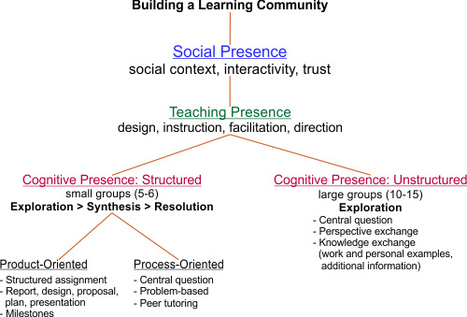
“One thing is certain, learning communities are more engaging and members more engaged than is the case with traditional instruction.”
Scoop.it!

"What are the skills you need to land an elearning job? Working in elearning taps into many skill sets. Designing or developing elearning requires experience in training and project management as much as audio and video production."
Scoop.it!

College students believe that technology has a direct impact on their academic performance, according to findings from a new student-driven study out of the Lone Star College System.
Scoop.it!

"The field of social media is a burgeoning area of communication, and one that educators cannot ignore. Facebook, Twitter, LinkedIn, Diigo, GooglePlus – these platforms for communication are not going to go away; and while there is a great deal of negative media surrounding their use, they can be harnessed to create myriad possibilities for schools as learning communities. Current research only proves the dominance of Social Media as a modern communication medium..."

Jacqueline Elizondo's curator insight,
January 31, 2022 11:43 PM
This article really brings to light what it means to have social media and incorporate it in education. Not only that but it addresses and acknowledges that it has its negative side as well, but looks into ways that it can be positive.
Scoop.it!

"Research indicates that, at every age level, people take their writing more seriously when it will be evaluated by peers than when it is to be judged by teachers. Online blogs directed at peers exhibit fewer typographical and factual errors, less plagiarism, and generally better, more elegant and persuasive prose than classroom assignments by the same writers. Longitudinal studies of student writers conducted by Stanford University's Andrea Lunsford, a professor of English, assessed student writing at Stanford year after year. Lunsford surprised everyone with her findings that students were becoming more literate, rhetorically dexterous, and fluent—not less, as many feared. The Internet, she discovered, had allowed them to develop their writing."
Scoop.it!
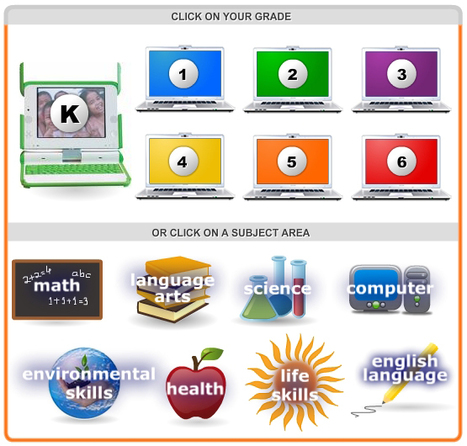
e-Learning for Kids is a global nonprofit foundation dedicated to free and fun online learning for kids of all ages.
Scoop.it!

While it's no secret that students are addicted to technology, the specifics of their gadget usage have never been studied scientifically - until now. Via Gust MEES, k3hamilton
|





