The latest news related to the meaningful and effective implementation of educational technology and e-learning in K-12, higher education, corporate and government sectors.
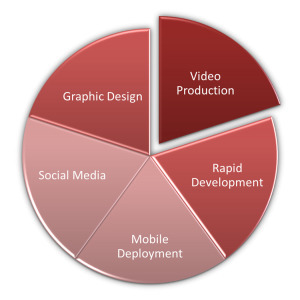
"What are the skills you need to land an elearning job? Working in elearning taps into many skill sets. Designing or developing elearning requires experience in training and project management as much as audio and video production."
College students believe that technology has a direct impact on their academic performance, according to findings from a new student-driven study out of the Lone Star College System.
"The field of social media is a burgeoning area of communication, and one that educators cannot ignore. Facebook, Twitter, LinkedIn, Diigo, GooglePlus – these platforms for communication are not going to go away; and while there is a great deal of negative media surrounding their use, they can be harnessed to create myriad possibilities for schools as learning communities. Current research only proves the dominance of Social Media as a modern communication medium..."
This article really brings to light what it means to have social media and incorporate it in education. Not only that but it addresses and acknowledges that it has its negative side as well, but looks into ways that it can be positive.
"Research indicates that, at every age level, people take their writing more seriously when it will be evaluated by peers than when it is to be judged by teachers. Online blogs directed at peers exhibit fewer typographical and factual errors, less plagiarism, and generally better, more elegant and persuasive prose than classroom assignments by the same writers. Longitudinal studies of student writers conducted by Stanford University's Andrea Lunsford, a professor of English, assessed student writing at Stanford year after year. Lunsford surprised everyone with her findings that students were becoming more literate, rhetorically dexterous, and fluent—not less, as many feared. The Internet, she discovered, had allowed them to develop their writing."
As technology evolves, society often follows, which is why some Metro Detroit schools are softening their former restrictions on cellphone use in the classroom.
Student to Content Interactivity Interactivity can refer to a lot of things. In the online learning world, it often refers to collaboration & communication often done in discussions, blogs, chats, webinars, etc.
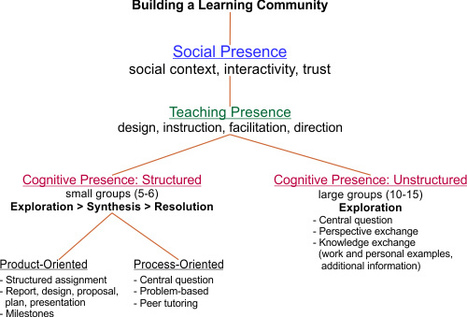
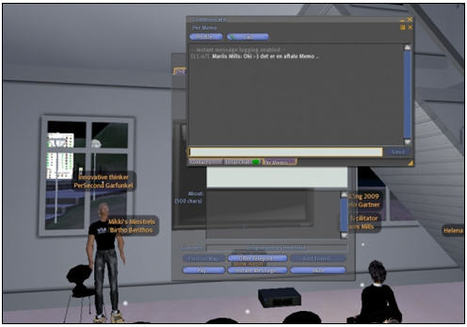
"Using the recently validated community of inquiry (COI) instrument, this study focuses on students’ perceptions of teaching, social and cognitive presence in virtual world contexts. The authors examine whether the COI Instrument can effectively be applied to virtual world learning events. The results are exciting: in a diverse sample, virtual world learners perceive teaching presence, social presence and cognitive presence."
Taking an online college class might sound like an easy “A” that gives lazier students a chance to sleep in and spend class time in their pajamas and robe instead of dressing and showering the way we used to before the Internet changed everything.
Online education could be the perfect fit for your schedule and goals. Find out what type of learning style you possess, how you can succeed in distance education, and what similarities and differences there are with online ...
"Technology and innovation are at the heart of Syracuse’s history. But the big question is — how do we keep that innovation going? How do we inspire the next generation of technology pioneers? With every ounce of enthusiasm I have, it’s my goal to spark excitement about one subject in particular — engineering."
Lisa Johnson has been involved in IT training for more than a decade at Barnardo's. Here she shares her top tips on how to engage staff with the virtual classroom.
"Online colleges come with their own unique challenges as well as their own benefits. When studying online, it's crucial to keep yourself organized and motivated."
Wikipedia today introduced a program called QRPedia, a QR code creation service that lets users snap a picture of a QR code and be automatically directed to a linked mobile Wikipedia entry in whatever written language their phone uses.
"I watch in amazement and sometimes frustration at the way students are ‘drawn in’ to the technology they bring into our rooms and set on their desks. (or underneath it if they are doing something they shouldn’t be) I see them text, play games, play music, change songs over and over, and read, all with unwavering focus. They engage with the devices for extended periods, to the exclusion of everything else happening around them; if we let them. I see the perspective of teachers who see these devices as a distractor; and, if a student is using a device in their usual context, it is a non-contest that it certainly is."
To get content containing either thought or leadership enter:
To get content containing both thought and leadership enter:
To get content containing the expression thought leadership enter:
You can enter several keywords and you can refine them whenever you want. Our suggestion engine uses more signals but entering a few keywords here will rapidly give you great content to curate.






 Your new post is loading...
 Scoop.it!










![Facebook 101 [COMIC] | Educational Technology News | Scoop.it](https://img.scoop.it/8GfC0cJgyKUqDSKuqfghijl72eJkfbmt4t8yenImKBVvK0kTmF0xjctABnaLJIm9)