
ETS, known for licensing tests, wants to gauge teacher readiness for new technology.
Get Started for FREE
Sign up with Facebook Sign up with X
I don't have a Facebook or a X account


|
Scooped by
EDTECH@UTRGV
onto Educational Technology News February 19, 10:13 AM
|
 Scoop.it!
ETS, known for licensing tests, wants to gauge teacher readiness for new technology.

 Your new post is loading...
 Your new post is loading...
Your new post is loading...
Scoop.it!
|
|
|
Scooped by
EDTECH@UTRGV
February 19, 10:36 AM
|
Scoop.it!

"The battle between bots and brains has already begun, and educators can see how it might end"
"Reading closely, thinking critically, and writing with logic and evidence are precisely the skills people need to realise the bona fide potential of AI to support lifelong learning.”
|
|
Scooped by
EDTECH@UTRGV
February 19, 10:28 AM
|
Scoop.it!
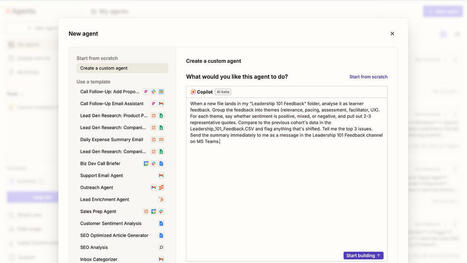
A simple, practical blueprint for building your first team of agents for L&D — and what this means for your role
"The tasks that agents are best at — monitoring, pattern-finding, quality-checking, synthesising data, closing feedback loops — are exactly the tasks that instructional designers know they should be doing but rarely have bandwidth for."
|
|
Scooped by
EDTECH@UTRGV
February 19, 10:22 AM
|
Scoop.it!

"The future of digital advertising should feel less like a distraction and more like recommendations from a friend."
A few days ago, ChatGPT began testing ads within conversations. Early examples show a how a user asks a question, receives a standard AI response, and then sees an advertisement aligned with the keywords from that conversation.
|
|
Scooped by
EDTECH@UTRGV
February 19, 10:13 AM
|
Scoop.it!
ETS, known for licensing tests, wants to gauge teacher readiness for new technology.
"The nation’s largest purveyor of licensing exams for teachers now offers a gauge of whether teachers have the skills to use artificial intelligence—the latest sign that the technology continues to infiltrate all corners of K-12 education."
|
|
Scooped by
EDTECH@UTRGV
February 18, 12:05 PM
|
Scoop.it!

The University of Wisconsin system is developing governance policies for students, faculty and staff for responsible use of AI, and UW-Madison’s newest college centered around AI opens this fall.
"In response to the wave of AI, the UW system is developing governance policies for students, faculty and staff for responsible use of AI, Rothman said. The policies would provide guidance to campuses on how research or information is handled if it was put into an AI model for public use."
|
|
Scooped by
EDTECH@UTRGV
February 18, 11:56 AM
|
Scoop.it!

The stress arising from fears of being replaced by AI warrants an entirely new psychological dysfunction, researchers argue.
"Job destruction is probably one of the biggest fears. A Reuters survey found that 71 percent of Americans are worried that AI could permanently put vast swaths of people out of work."
|
|
Scooped by
EDTECH@UTRGV
February 18, 11:51 AM
|
Scoop.it!

How researchers can use AI responsibly, without compromising scholarly rigour or integrity
"AI can make a paragraph sound smoother but it can’t take responsibility for its mistakes. If a tool edits “associated with” to “caused by,” or adds an overconfident claim, you will be the one answering reviewers, correcting the record or dealing with complaints."
|
|
Scooped by
EDTECH@UTRGV
February 17, 11:15 AM
|
Scoop.it!

Asssessment in education is now enabled by AI to become low-stakes and continuous, applying proven cognitive science principles.
"What was once a final checkpoint is becoming a continuous learning engine, as AI enables education platforms to apply proven cognitive science principles–retrieval, spacing, and formative feedback–at scale."
|
|
Scooped by
EDTECH@UTRGV
February 17, 11:10 AM
|
Scoop.it!

When educators design with accessibility in mind from the outset, they signal that all learners belong,
"Accessibility is not a specialized add-on. It is a core component of instructional design, communication strategy, and leadership practice."
|
|
Scooped by
EDTECH@UTRGV
February 17, 11:08 AM
|
Scoop.it!
"The dynamic field of nursing includes the use of virtual technology platforms in patient care. Therefore, it is essential that nursing students are provided with exposure to technology changing the landscape of patient care to optimize their transition into actual practice. One such technology is telepresence robots, which have been increasingly used in acute care medical facilities to allow distanced physicians/providers to be placed at their point of need."
"Telepresence robots...are effective tools for synchronous simulation to overcome teaching/learning barriers imposed by the distance between learners and proximity to a brick-and-mortar simulation environment."
|
|
Scooped by
EDTECH@UTRGV
February 17, 11:00 AM
|
Scoop.it!

Why consciousness is more likely a property of life than of computation and why creating conscious, or even conscious-seeming AI, is a bad idea.
"When we identify conscious experience with seemingly human qualities like intelligence and language, we become more likely to see consciousness where it doesn’t exist, and to miss seeing it where it does."
|
|
Scooped by
EDTECH@UTRGV
February 17, 10:31 AM
|
Scoop.it!
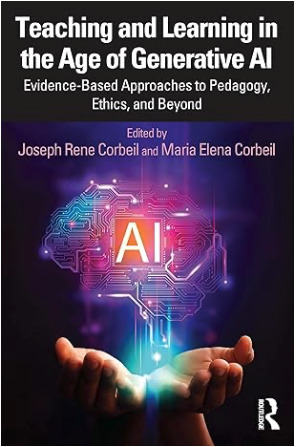
"The collected volumes, Teaching and Learning in the Age of Generative AI (T&L) and Using Generative AI Effectively in Higher Education (Using GenAI) address how Generative AI (AI) is reshaping higher education (HE). Acknowledging the technology’s advantages and shortcomings, the authors of these two volumes argue for a balance between innovation and safeguarding
core educational values...
Both volumes are strong in their global reach. With insights from the United States, the United Kingdom, New Zealand, Canada, Australia, Sweden, The Caribbean Netherlands, Singapore, Poland, Hong Kong, Turkey, and Vietnam, they provide a truly international perspective on AI, showcasing educational practices across varied cultural, institutional, and regional contexts. Together, these two volumes speak to educators, researchers, and policymakers across the globe, suggesting adjustments to governmental and institutional practices as well as teaching strategies."
"Collectively, the two books offer evidence-based frameworks for integrating GenAI into HE. While the field is still in its infancy and requires further large-scale, longitudinal study, these texts are an essential reading for anyone participating in the ongoing debate."
|
|
Scooped by
EDTECH@UTRGV
February 19, 10:38 AM
|
Scoop.it!
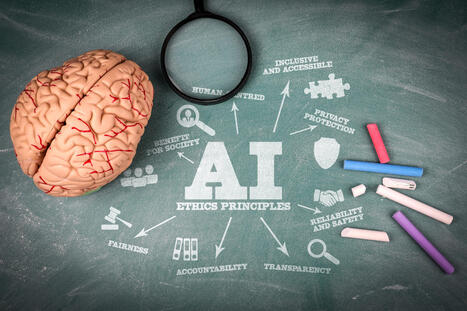
Why banning AI won’t fix higher education—and how redesigning teaching, assessment, and integrity can prepare students to learn and lead in an AI-driven world.
"The most profound problems in higher education are structural and pedagogical, not technological. Prohibition doesn’t fix these problems; it hides them."
|
|
Scooped by
EDTECH@UTRGV
February 19, 10:32 AM
|
Scoop.it!
"I showed my team an AI-generated design. Two senior designers called it ‘solid.’ None of them questioned where it came from."
"[T]his design follows every single best practice in the SaaS landing page playbook. Clear headline. Social proof. Benefit-driven copy. Visual hierarchy. It checks every box. And it’s completely forgettable."
|
|
Scooped by
EDTECH@UTRGV
February 19, 10:24 AM
|
Scoop.it!

What new research tells us about the pedagogical perils of "dehumanised" feedback
"[C]an AI make learners feel seen as individuals and make them feel a sense of belonging, which is so critical to their engagement, motivation, and—ultimately—achievement?"
|
|
Scooped by
EDTECH@UTRGV
February 19, 10:17 AM
|
Scoop.it!

Explore how AI boosts speed and clarity in learning design, yet the insight and judgment of instructional designers remain essential.
"[A]midst all this speed and automation, one question keeps resurfacing: If AI can do so much, what role remains for the instructional designer?"
|
|
Scooped by
EDTECH@UTRGV
February 18, 12:14 PM
|
Scoop.it!
"In education, authority and credibility are often misaligned. The voices that shape education policy are rarely those of current teachers. Firsthand insights gained from classroom experience take a backseat to the musings of outsiders. Frequently, those farthest from students dictate the narrative, while ever fewer actual teachers influence national discussions about teaching."
"Teachers live with the consequences. Too often, those outside the classroom make the big decisions."
|
|
Scooped by
EDTECH@UTRGV
February 18, 12:00 PM
|
Scoop.it!

After being accused of using AI for coursework, a student filed a lawsuit arguing that her anxiety and obsessive compulsive disorders contribute to a writing style that was falsely flagged as AI-generated.
"[T]he accusations of AI use were based heavily on "subjective judgments" about her writing style and on AI comparison outputs. The lawsuit said she "vehemently denied" the use of AI for the course papers and provided proof she didn't use AI."
|
|
Scooped by
EDTECH@UTRGV
February 18, 11:53 AM
|
Scoop.it!

When everyone defines quality differently, how do we measure it? Start by looking at the whole picture.
"Beyond measuring quality, communicating it effectively is essential. Clear communication helps guide students in selecting credentials, signals value to employers for hiring, and makes the case for public investment."
|
|
Scooped by
EDTECH@UTRGV
February 17, 11:17 AM
|
Scoop.it!

Master core AI skills to equip your team for effective AI use, focusing on transformation rather than just compliance.
"AI tools are evolving rapidly. The technical skills you teach today might be obsolete in six months. But delegation, curiosity, contextual intelligence, and discernment are foundational capabilities that apply to every AI tool your team is using, regardless of how those tools evolve."
|
|
Scooped by
EDTECH@UTRGV
February 17, 11:13 AM
|
Scoop.it!

When we use differentiation to meet students at their level and celebrate their progress, we help them discover their love for learning.
"Differentiation is all about giving every student what they need to succeed."
|
|
Scooped by
EDTECH@UTRGV
February 17, 11:09 AM
|
Scoop.it!

Marcela Escobari and Ian Seyal break down which non‑degree credentials truly pay off and how better accountability can help workers advance.
"The credential marketplace has exploded, yet without guardrails, workers face an opaque, high-stakes gamble, where distinguishing value from noise is increasingly urgent."
|
|
Scooped by
EDTECH@UTRGV
February 17, 11:04 AM
|
Scoop.it!
"A few weeks ago, I read an article — A new navigation paradigm — that felt relatable, yet unsettling in a way I couldn’t fully articulate. I eventually stopped thinking about it, but the ideas lingered in the background. They then surfaced in the most mundane and seemingly unrelated places."
"Problem-solving is navigation. Learning is navigation. Decision-making is navigation. You’re moving through space — either real or conceptual — through uncertainty, towards clarity, understanding, destination, or outcomes."
|
|
Scooped by
EDTECH@UTRGV
February 17, 10:53 AM
|
Scoop.it!

"Some of you may remember the Apple ads that emphasized the computer as a “bicycle for the mind.” (From https://folklore.org/Bicycle.html) GenAI is not like a bicycle for the mind. Instead, it’s more like an automobile. I’m finding that comparison to be useful in thinking about how GenAI may impact our world."
"A bicycle extends our abilities. It allows us to do more with our legs and bodies than we can without the bicycle. The automobile also extends our abilities, but it doesn’t use those abilities. As Paul Kirschner recently wrote, GenAI is not cognitive offloading. It’s outsourcing."
|
|
Scooped by
EDTECH@UTRGV
February 16, 1:34 PM
|
Scoop.it!

"Not long ago, I participated in an exercise that asked educators to define thinking and learning. It was a familiar prompt, one we have returned to countless times over the past decade.
This time felt different. The task was to triangulate, even pinpoint, what these concepts mean in today’s educational landscape."
"If machines can do much of what we once taught students to do, what should learning now require?"






"The nation’s largest purveyor of licensing exams for teachers now offers a gauge of whether teachers have the skills to use artificial intelligence—the latest sign that the technology continues to infiltrate all corners of K-12 education."