
New book argues it’s not the tools we use but the values we hold that make the difference in education
Get Started for FREE
Sign up with Facebook Sign up with X
I don't have a Facebook or a X account


|
Scooped by
EDTECH@UTRGV
onto Educational Technology News February 10, 11:00 AM
|
 Scoop.it!
New book argues it’s not the tools we use but the values we hold that make the difference in education

 Your new post is loading...
 Your new post is loading...
Your new post is loading...
Scoop.it!
|
|
|
Scooped by
EDTECH@UTRGV
March 6, 2:49 PM
|
Scoop.it!

"Much of the conversation around artificial intelligence (AI) is framed in fear. White-collar professionals are increasingly anxious about AI replacing cognitive work once thought untouchable, a concern captured in The Atlantic’s piece on the worst-case future for white-collar workers. Blue-collar workers have their own version of this fear as employers test automation that shows up in the real world as robots and drones doing physical jobs once reserved for people, including delivery and warehouse work, like Amazon’s reported testing of humanoid delivery robots.
The anxiety is real. But what if we are asking the wrong question?"
"Instead of asking how we preserve jobs as they exist today, what if we ask whether working less might actually be progress?"
|
|
Scooped by
EDTECH@UTRGV
March 6, 2:46 PM
|
Scoop.it!

"We are approaching the integration of artificial intelligence into our universities in a piecemeal rather than a comprehensive fashion."
"To date, we have been limited to a kind of Whac-A-Mole approach to introducing AI into higher education."
|
|
Scooped by
EDTECH@UTRGV
March 6, 2:38 PM
|
Scoop.it!

"Last Tuesday, I asked Claude to prepare a competitive analysis. Not in a chat window. Not through a prompt. I opened Cowork, pointed it to a folder on my desktop, and said what I needed. It read my files. It cross-referenced data from Slack through a connector. It pulled calendar context. It produced a document — formatted, structured, sourced — and saved it to my working folder. I didn’t open a single application. I didn’t navigate a single menu. I didn’t click through a single interface."
"Cowork reads files on your desktop, modifies documents, creates deliverables, and operates within your working folder — asking for confirmation before significant actions, working autonomously within defined boundaries."
|
|
Scooped by
EDTECH@UTRGV
March 5, 3:13 PM
|
Scoop.it!
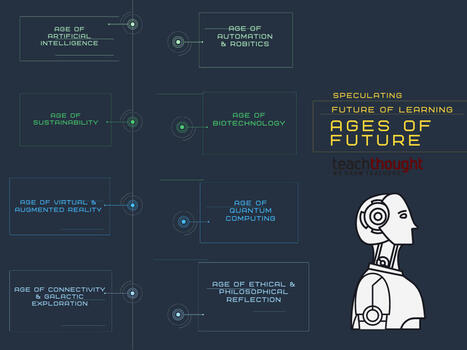
"Artificial intelligence is increasingly present in education conversations. Some teachers are experimenting with it. Others are cautious. Many are simply unsure where it belongs or whether it belongs at all."
"Rather than positioning AI as a solution or a threat, educators might consider how, and whether, it aligns with their instructional goals, assessment practices, and professional values."
|
|
Scooped by
EDTECH@UTRGV
March 4, 12:27 PM
|
Scoop.it!

Why are students so comfortable using AI for emotional support?
"Navigating budget shortfalls and limited mental health staff, Interlachen Jr.-Sr. High School, where Phillips works, is using an AI platform to vet students’ mental health needs."

Interesting article about the use of AI to support teens’ mental health - With Teens Comfortable Confiding in AI, Should Schools Embrace It for Mental Health Care? https://www.edsurge.com/news/2026-03-03-with-teens-comfortable-confiding-in-ai-should-schools-embrace-it-for-mental-health-care
|
|
Scooped by
EDTECH@UTRGV
March 4, 12:19 PM
|
Scoop.it!
"After the FCC pulled back coverage for school bus Wi-Fi and hotspots, K-12 leaders are scrambling to connect students without home internet."
"[L]ow-income urban school districts are also feeling the brunt of the E-rate expansion reversal — from both an infrastructure and affordability perspective."
|
|
Scooped by
EDTECH@UTRGV
March 4, 12:15 PM
|
Scoop.it!
"For years, computer science was marketed as one of the safest degrees in higher education. Strong demand, high wages and a seemingly endless need for technical talent made CS feel like a guaranteed return on investment. Today, that certainty is being questioned."
"Entry-level hiring is more competitive than it was just a few years ago, and routine technical tasks are increasingly supported by automation and AI-enabled tools."
|
|
Scooped by
EDTECH@UTRGV
March 4, 12:10 PM
|
Scoop.it!
"Momentum appears to be growing against any screen time in schools as states like Tennessee and Kansas propose prohibiting ed tech for grades K-5."
"At least five states are considering legislation this year to limit or ban ed tech to some extent in classrooms — moving beyond widespread prohibitions on students’ personal devices to also include those issued by districts during the school day."
|
|
Scooped by
EDTECH@UTRGV
March 3, 10:16 AM
|
Scoop.it!
"In graduate school, my experimental archaeology professor told a student to create a door socket—the hole in a door frame that a bolt slides into—in a slab of sandstone by pecking at it with a rounded stone. After a couple of weeks, the student presented his results to the class. “I pecked the sandstone about 10,000 times,” he said, “and then it broke.”
This kind of experience is known as individual learning. It works through trial and error, with lots of each."
"Technological progress occurs when different forms of expertise are combined."
|
|
Scooped by
EDTECH@UTRGV
March 3, 10:11 AM
|
Scoop.it!

Teens are turning to AI chatbots for homework help, research, entertainment, and emotional support.
"New research gives a glimpse into how teens are using artificial intelligence."
|
|
Scooped by
EDTECH@UTRGV
March 3, 10:08 AM
|
Scoop.it!

"In the age of AI, the true future of higher education lies not in replacing faculty but in freeing them to do what only humans can—build meaningful relationships, cultivate wisdom, and guide students through the ethical and intellectual challenges machines cannot navigate."
"The age of AI calls for reclaiming an elevated role for higher education institutions and a commensurate elevation of the faculty who make that role possible."
|
|
Scooped by
EDTECH@UTRGV
March 3, 10:01 AM
|
Scoop.it!

CareerNet builds essential infrastructure for career navigation, using shared data and benchmarks to guarantee users high-quality guidance.
"When we ask young people how they’re making decisions about their futures, the answers are revealing. They say they aren’t waiting passively for direction. They’re searching, comparing, watching, asking, and piecing things together. They’re scrolling TikTok for day-in-the-life videos, messaging older friends about internships, combing through Reddit threads, browsing job boards, and trying to decode what a college website really means when it lists “career outcomes.”
And increasingly, they’re turning to AI chatbots for answers."
|
|
Scooped by
EDTECH@UTRGV
March 6, 2:55 PM
|
Scoop.it!
"Dealing with students who plagiarize now seems like a piece of cake compared to ones who use AI to write their papers. I could usually deter students from plagiarizing by demonstrating how easy it is for teachers to find it...However, the rise of AI has completely changed that approach."
"Discouraging students from using AI involves a two-prong approach. First, they should see that it won’t help them pass the course. And second, they must realize they are missing opportunities for the teacher to help them actually improve their writing."
|
|
Scooped by
EDTECH@UTRGV
March 6, 2:47 PM
|
Scoop.it!

For any student finding their footing in a completely new environment, technology should steady the path--not widen the digital experience gap
"When technology creates barriers, it’s harder for students to succeed–and that technology may undermine an institution’s own mission."
|
|
Scooped by
EDTECH@UTRGV
March 6, 2:43 PM
|
Scoop.it!
"Publicly accessible generative artificial intelligence (AI) is predicted to transform how learners construct knowledge and the skills needed for professional success across industries...[T]his article explores learning through dialogue, supporting knowledge construction, leveraging AI tools, and implications for instructional designers and educators."
"In a world where access to information is practically endless, the mark of an expert educator will be the ability and the humility to embrace AI to 1) center learners throughout a learning experience; 2) facilitate knowledge construction with and among AI, learners, and other stakeholders; 3) support learners in applying what they know and identifying what they do not know; and 4) nurture critical thinking and problem-solving skills across all modalities."
|
|
Scooped by
EDTECH@UTRGV
March 5, 3:15 PM
|
Scoop.it!
"Every quarter, business leaders ask the same questions: where is demand shifting? Which customers are stalling? Where is margin under pressure? Teams conduct the analysis, insights surface briefly in decks and dashboards and then they recede. The next quarter, the process of analyzing business tailwinds and headwinds resets. The context and nuance from quarters past has dissipated, and the query is asked and answered anew."
"If the first AI era was about accelerating answers, the next one should be about mining insights at scale."
|
|
Scooped by
EDTECH@UTRGV
March 5, 3:11 PM
|
Scoop.it!

Learning in the AI age: Education 5.0 Patrick Blessinger Learning is for human flourishing, but only if we can see flourishing as something more than economic productivity, something more than employability, something more than credentials, though these things are very important.
"[K]nowledge is now universally abundant and available to everyone, but it is fragmented, contested, and increasingly filtered through algorithms.
The aim of learning today should be to move from survival to meaning, from authority to participation, from control to co-creation, from power to rights, and from fragmentation to coherence."
|
|
Scooped by
EDTECH@UTRGV
March 4, 12:23 PM
|
Scoop.it!

Learn why and how teachers can use generative AI to streamline lesson planning, personalize explanations, and automate retrieval practice—without losing instructional control.
"To guide educators on how to get the most out of generative AI...we picked three important aspects of instructional practice: lesson planning, providing explanations, and retrieval practice."
|
|
Scooped by
EDTECH@UTRGV
March 4, 12:17 PM
|
Scoop.it!
"Two educators who use artificial intelligence in their classroom combine prompt engineering, in-class assignments and guardrails."
"Successfully infusing artificial intelligence into the classroom means boosting students’ AI literacy without using the tech to offload their thinking. But that requires teachers first getting up to speed on AI"
|
|
Scooped by
EDTECH@UTRGV
March 4, 12:13 PM
|
Scoop.it!

Results of two gatherings make case for visionary yet balanced approaches to AI.
"Retreating from AI, the authors find, creates 'the worst of both worlds' — students who can neither think independently nor use AI effectively."
|
|
Scooped by
EDTECH@UTRGV
March 3, 10:18 AM
|
Scoop.it!

More than three years after ChatGPT debuted, AI has become a part of everyday life — and professors and students are still figuring out how or if they should use it.
"More than half of students who used AI for coursework had mixed feelings about it, reporting that it helps them sometimes but can also make them think less deeply."
|
|
Scooped by
EDTECH@UTRGV
March 3, 10:15 AM
|
Scoop.it!
"From AI study assistants to presentation builders, these free tools can help teachers, students, and parents work smarter."
"The top-tier tools have consistently been super valuable for me—in my teaching, in my job at the City University of New York, and as a dad of two daughters. To save you the time and effort of sifting through the chaff, I’m sharing the ones I find most useful."
|
|
Scooped by
EDTECH@UTRGV
March 3, 10:09 AM
|
Scoop.it!

"Across campuses, conversations about artificial intelligence are sometimes being framed by unease rather than enthusiasm. Leaders, faculty and students are questioning how fast to move, what might break and who bears the risk."
|
|
Scooped by
EDTECH@UTRGV
March 3, 10:05 AM
|
Scoop.it!

K-12 teachers and higher education faculty across all grade levels and subject areas will have free access to AI literacy training modules designed by Google and aligning with ISTE+ASCD standards.
"Every U.S. educator will have free access to professional learning about artificial intelligence in the coming months, thanks to a partnership between Google and the ed-tech nonprofit ISTE+ASCD."
|
|
Scooped by
EDTECH@UTRGV
March 2, 2:17 PM
|
Scoop.it!
"Nearly every technological revolution of the past 150 years—from the automobile to televisions, microwave ovens and smartphones—has been marked by both extraordinary promise and deep public fear. Artificial intelligence, or AI, is no exception."
"Can we build the structures of trust and reliability early enough to allow innovation to accelerate to new heights, without sacrificing safety?"





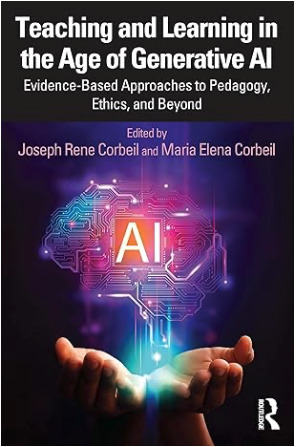


Key takeaway from the book: "Education is not a matter of tools; it is a matter of values."