
These advanced AI models could have a dramatic impact on education.
Get Started for FREE
Sign up with Facebook Sign up with X
I don't have a Facebook or a X account


|
Scooped by
EDTECH@UTRGV
onto Educational Technology News December 17, 2025 1:27 PM
|
 Scoop.it!
These advanced AI models could have a dramatic impact on education.

 Your new post is loading...
 Your new post is loading...
Your new post is loading...
Scoop.it!
Watch this video to learn more about the fully online, accelerated, project-based Master of Education in Educational Technology at the University of Texas Rio Grande Valley. For more information, visit: https://www.utrgv.edu/edtech/index.htm
EDTECH@UTRGV's insight:
This 30-hour accelerated program designed to prepare persons in K-12, higher education, corporate, and military settings to develop the skills and knowledge necessary for the classrooms and boardrooms of tomorrow. Students in this program have the opportunity to earn one or more graduate certificates in E-Learning, Technology Leadership, and Online Instructional Design.

Katlego Mofokeng's curator insight,
May 19, 2025 3:46 PM
Using technology in education proves affective in helping students/ learners accelerate their learning progress.

Elena Galeote's comment,
December 29, 2025 6:51 AM
Desde mi punto de vista, el Master of Education in Education Technology responde de manera acertada a las necesidades actuales del ámbito educativo, donde la integración pedagógica de la tecnología es cada vez más importante. El enfoque basado en proyectos potencia un aprendizaje significativo, ya que permite a los maestros diseñar y aplicar recursos digitales directamente en sus contextos escolares. Además, el formato online y acelerado facilita la actualización profesional continua, lo que considero clave para mejorar la práctica docente y promover una educación más creativa y eficaz.
Scoop.it!
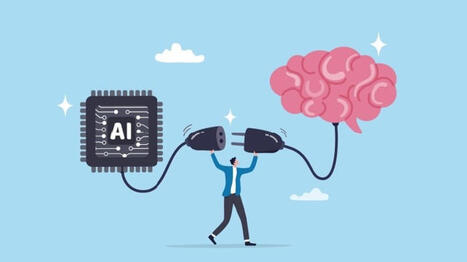
AI creates a paradox: making learning easier while making it more essential. The solution is to adopt the "Centaur" model.
EDTECH@UTRGV's insight:
"After AI defeated grandmaster Garry Kasparov, a new form of the game emerged where human-AI teams, or "Centaurs," consistently outperformed both AI alone and humans alone. This paradigm—Human + AI > AI alone—is the key to unlocking future professional growth."
Scoop.it!

In 2025, higher education shifted from expansion to impact, with institutions now judged on graduate readiness and research relevance. This structural reinvention was driven by AI's integration, the erosion of the degree as the sole competence marker, and a global reality demanding adaptable, outcome-driven learning. Universities are now continuous talent-development platforms, prioritizing skills and lifelong learning for relevance.
EDTECH@UTRGV's insight:
"For decades, universities were assessed on expansion, that is, more campuses, higher enrolments, global rankings and physical infrastructure. That era is now decisively over."
Scoop.it!

Rand research indicates teachers of young students want and need more training in ed tech, curricula and supporting diverse learners.
EDTECH@UTRGV's insight:
"About 30% of preschool teachers in public schools said they used generative artificial intelligence in their job during the 2024-25 school year, according to research by Rand Corp. released in December. That’s low compared to K-12 teachers, with high school educators incorporating AI at the highest rate at 69%."
Scoop.it!

"Despite concerns about screen time, more preschool teachers are using artificial intelligence products in their classrooms, according to a new report."
EDTECH@UTRGV's insight:
"[A]s AI is evolving and the entire edtech landscape is evolving, it’s making it harder for teachers to know what is high and low quality... So this is probably more important than ever.”
Scoop.it!

More than two dozen states and Puerto Rico have issued AI education guidance, and unsurprisingly, the recommendations fall short.
EDTECH@UTRGV's insight:
"So far, state guidance has been heavy on frameworks and glossaries and light on clear, actionable policies and resources. No state guidance has emerged as a clear model to emulate."
Scoop.it!

AI-fueled technologies make communicating in other languages easier than ever, but it still can’t replace the transformative value of learning a new language.
EDTECH@UTRGV's insight:
"[W]hat’s the value of learning another language when AI can handle tourism phrases, casual conversation and city navigation? The answer... lies not in fleeting encounters but in cultivating enduring capacities: curiosity, empathy, deeper understanding of others, the reshaping of identity and the promise of lasting cognitive growth."
Scoop.it!
From
uxdesign

“The medium is the message” — Marshall McLuhan
"Every era of product design on the web brings with it new design tools, these tools change how we design websites and also influences the next generation of design tools to come."
EDTECH@UTRGV's insight:
"As Marshall McLuhan proclaimed more than 60 years ago: “The medium is the message” and it is much more pronounced in any technological field since technological tools change all the time."
Scoop.it!

In the age of AI, Instructional Designers should focus on strengthening strategic, analytical, and interpersonal capabilities.
EDTECH@UTRGV's insight:
"AI has made two potential futures for the profession extremely clear. Future 1: Instructional Designers Are Pushed Downward Into Production Oversightor... Future 2: Instructional Designers Advance Into Strategy And Experience Architecture"
Scoop.it!

As AI becomes a fixture in schools, educators and students need reliable guidance on how to use it well--especially as AI use evolves.
EDTECH@UTRGV's insight:
"AI use among both students and educators has grown sharply–by more than 15 percentage points in just the past one to two years. Yet, training and policy have not kept pace. Schools and districts are still developing professional development, student guidance, and clear usage policies to manage this shift."
Scoop.it!
From
uxdesign
"Function is the floor, not the ceiling. It’s time to raise the bar and prove that the most viable products are the ones that feel human."
EDTECH@UTRGV's insight:
"AI is now omnipresent in our workflows, but it's come at a cost: a sea of sameness. Lately, products have begun to look and feel homogeneous & indistinguishable, leading to diluted brands and increasingly sterile interactions."
Scoop.it!

"The world of work is changing so quickly that traditional education and job preparation can’t keep up. With 39% of skills expected to shift or become outdated by 2030, educators face a critical challenge: how to prepare Gen Alpha for jobs that don’t even exist yet."
EDTECH@UTRGV's insight:
"This infographic outlines how schools can prepare for the future of work by exploring the agile skills necessary for success."
Scoop.it!

"In addition to the vast churn of AI offerings covering a wide range of topics, more AI-backed teaching tools and functions came online in 2025. Google, OpenAI, and Anthropic each launched a study or learning mode for their services. Google in particular leaned into education, released an AI Co-scientist, an application aimed at helping people do scientific research, while launching Learn About. Google Scholar now presents an AI interface. Other AI-powered commercial offerings have appeared, like Socrait and Gradescope."
EDTECH@UTRGV's insight:
"How have academics acted on, or reacted to AI? Overall, it seems that colleges and universities are still scrambling to react to this technological revolution at a strategic level. Three years after ChatGPT 3.0 exploded only one quarter of campuses have institutional policies about AI"
|
Scoop.it!

The AI landscape will keep shifting—new tools, faster models, endless possibilities. But clarity, not speed, will determine who succeeds.
EDTECH@UTRGV's insight:
"The leaders who thrive are the ones who adapt with purpose, aligning every experiment with strategy and using AI to elevate, not erode, human skills."
Scoop.it!

"High completion rates in AI courses don't always equal high adoption. If your organization is "training" but not "transforming," you might be falling into one of these four common traps. Here is how to use a diagnostic-first operating system to fix the disconnect."
EDTECH@UTRGV's insight:
"The problem isn't your Instructional Design. The problem is that we are treating AI adoption as a content challenge when it is actually a workflow challenge."
Scoop.it!

AI and digital tools are reshaping higher ed. Can they bridge the cost-value gap? Explore new insights today!
EDTECH@UTRGV's insight:
"Once seen as a futuristic concept, artificial intelligence is now transforming how students learn. From automating mundane tasks like note-taking to providing targeted, real-time feedback, AI is adding layers of personalization and efficiency to education like never before."
Scoop.it!

When student work looked like McKinsey memos, an NYU business school professor used AI oral exams to test real learning.
EDTECH@UTRGV's insight:
"The assignments looked brilliant. The understanding didn't. That's when an NYU business school professor decided to fight AI-assisted coursework with AI-powered oral exams."
Scoop.it!
From
www
"Artificial intelligence is past the novelty stage. We’re now deciding whether it will scale as an engine for human progress or as an opaque system we can’t fully trust. The answer won’t be found in bigger models alone. It will come from architectures that make intelligence reliable: transparent, auditable, aligned with human intent, resilient and guided in production."
EDTECH@UTRGV's insight:
"What we build today determines who benefits tomorrow. Without trusted AI, governments, enterprises, startups, investors and everyday users can’t move from optimism to operating discipline."
Scoop.it!

From
futurism
The tech industry is making sure kids will be hooked on AI for generations -- in a huge experiment students never consented to.
EDTECH@UTRGV's insight:
"AI companies are rapidly making inroads into education before the dust can settle on any of these urgent questions."
Scoop.it!
From
www
"As American schools continue to turn to artificial intelligence, a new study by eLearning Industry highlights which states are showing the strongest interest in AI education. The study analyzed data on the website searches with 28 AI education-related keywords across all 50 states. Virginia leads the nation in online interest in AI education with 60.87 searches per 100,000 residents. Maryland is second at 58.96, and New Jersey is at 54.67."
EDTECH@UTRGV's insight:
“The No. 1 skill enterprises are looking for is AI oversight and governance,”
Scoop.it!

Discover the top skills 2026 for eLearners, from AI and data skills to creativity and problem-solving to future-proof your career.
EDTECH@UTRGV's insight:
"Explore the most in-demand skills for 2026, including AI, data analytics, digital skills, and essential soft skills like creativity and emotional intelligence. Learn practical tips to start building these skills today, stay ahead in the evolving job market, and make your New Year's resolution all about future-proofing your career."
Scoop.it!

Durable skills are critical for success in college and beyond--and laying a strong foundation for these skills in K-12 learning is essential.
EDTECH@UTRGV's insight:
"As AI increasingly automates technical tasks across industries, students’ long-term career success will rely less on technical skills alone and more on durable skills or professional skills, often referred to as soft skills. These include empathy, resilience, collaboration, and ethical reasoning–skills that machines can’t replicate."
Scoop.it!

"New research highlights a vital policy window: deploying Artificial Intelligence (AI) not as a policing tool but as a powerful mechanism to support student learning and academic persistence.
Evidence from independent researcher Dr Rebecca Mace, drawing on data generated by a mix of high, middle and low-tariff UK universities, suggests a compelling, positive correlation between the use of ethically embedded ‘AI for Learning’ tools and student retention, academic skill development and confidence."
EDTECH@UTRGV's insight:
"The findings challenge the predominant narrative that focuses solely on AI detection and academic misconduct, advocating instead for a clear and supportive policy framework to harness AI’s educational benefits."
Scoop.it!

"AI faces the same barriers that every enterprise technology faces: integration costs, organizational resistance, regulatory friction, security concerns, training requirements, and the stubborn complexity of real-world workflows. Impressive demos don’t translate smoothly into deployed systems. The ROI is real but incremental. The hype cycle does what hype cycles do: Expectations crash before realistic adoption begins."
EDTECH@UTRGV's insight:
"We are experiencing the start of a civilization-level discontinuity. The nature of work changes fundamentally. The question is not which jobs AI will take but which jobs it won’t."
Scoop.it!

"The skills students and educators need right now aren’t AI-related in nature and cannot easily be taught through certification or so-called upskilling. That’s because they’re human. The chorus calling for education to remake itself in this age of automation misses a fundamental truth about what AI represents to learning, namely redefining tasks isn’t the answer. It doesn’t matter how fun, exciting, or engaging you make a curriculum, or how challenging you make an assessment; machine intelligence can now automate it."
EDTECH@UTRGV's insight:
"When we hear the term agency, we associate it with free will, but what does free will mean when algorithms and complex systems increasingly dictate our lives?"
Scoop.it!

10 Teaching skills that will be highly needed in 2026 every teacher must plan on investing on.
EDTECH@UTRGV's insight:
Which of these skills have you mastered?
|








"Compared with generative AI — AI models that are trained to produce text, images or code based on prompts — AGI implies a “target level of capability for general problem-solving, such as reasoning, planning, sensing and acting, across many domains."