 Your new post is loading...
Looking for a Textbook on Generative AI in Education?
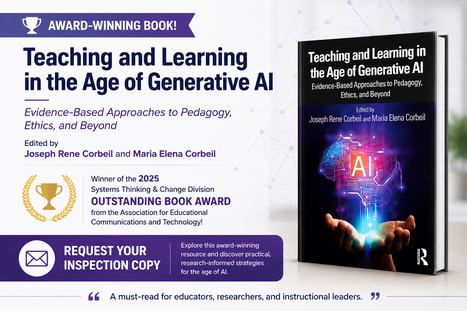
Teaching and Learning in the Age of Generative AI: Evidence-Based Approaches to Pedagogy, Ethics, and Beyond Edited by Joseph Rene Corbeil & Maria Elena Corbeil (2025) 🏆 Winner of the 2025 Systems Thinking & Change Division Outstanding Book Award from the Association for Educational Communications and Technology! If you are designing a course that addresses generative AI in education, this award-winning volume provides a research-driven, classroom-ready foundation. Rather than offering hype or fear, this book helps educators:
- Ground AI integration in learning theory and research
- Address academic integrity with thoughtful, practical strategies
- Redesign assessment for an AI-enabled world
- Explore ethics, bias, privacy, and institutional responsibility
- Leverage AI to enhance critical thinking and digital literacy
Bookended by historical and forward-looking analyses of AI in education, the chapters move beyond surface-level discussions to provide evidence-based approaches for real classrooms—K–12, higher education, and professional learning environments.
This text is ideal for:
- Undergraduate and graduate teacher education programs
- Curriculum & Instruction courses
- Educational Technology programs
- Higher education faculty development
- School technology coordinators and talent development professionals
Adopting a GenAI textbook for an upcoming semester? We invite you to request an inspection copy and explore how this resource can support your students in navigating AI with skill, ethics, and informed judgment.
Request your inspection copy today.

|
Scooped by
EDTECH@UTRGV
Today, 11:42 AM
|
Corporate training rarely teaches AI judgment, yet that is the skills gap the WEF's 2025 report is actually describing.
|
|
Scooped by
EDTECH@UTRGV
Today, 11:37 AM
|
Higher education must defend the meaning of learning--and ensure that whatever intelligence AI acquires does not come at the cost of our own.
|
|
Scooped by
EDTECH@UTRGV
Today, 11:32 AM
|
Learn how to integrate AI into teaching while preserving deep learning, authentic assessment, social connection, equity, and the pedagogical principles that support student learning.
|
|
Scooped by
EDTECH@UTRGV
Today, 10:00 AM
|
Learn how an e-portfolio can complement your résumé by showing employers what you can do and how UTRGV Educational Technology students build one throughout their graduate program.
|
|
Scooped by
EDTECH@UTRGV
September 25, 8:25 AM
|
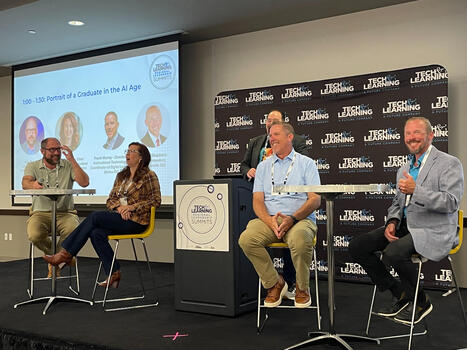
"What does a "Portrait of a Graduate" look like in the age of AI? As the future workplace grows increasingly unpredictable, district leaders must rethink how they equip students for success."
|
|
Scooped by
EDTECH@UTRGV
September 25, 8:19 AM
|
People remember the moment they had to decide. Four rules for building scenarios that teach — and a 30-second mini scenario you can try inside the post.
|
|
Scooped by
EDTECH@UTRGV
September 24, 8:40 AM
|
AI use in early years education has risen sharply, with educators reporting time savings alongside concerns about accuracy, safeguarding, data protection and training.
|
|
Scooped by
EDTECH@UTRGV
September 24, 8:35 AM
|
"Every educator in higher education is grappling with AI right now. But the challenge lands differently in fully asynchronous online environments. In a face-to-face course, a faculty member develops a running read on each student across the semester. They have heard students speak, watched them work through ideas in discussion, observed the moments where understanding arrived and the moments where it did not. When a submitted paper does not sound like the student who stumbled through an explanation two weeks ago, the discrepancy is recognizable. The faculty member has a reference point outside the artifact itself."
|
|
Scooped by
EDTECH@UTRGV
September 24, 8:30 AM
|
Teenagers are willingly automating cognition and learning less. Adults seem unwilling to stop them.
|
|
Scooped by
EDTECH@UTRGV
September 23, 11:16 AM
|
AI is changing which human capabilities matter most at work, yet employees are reporting that some of those same capabilities are being eroded, according to a new IBM study.
|
|
Scooped by
EDTECH@UTRGV
September 23, 11:11 AM
|
Transform your career with an Instructional Design certificate and master the skills needed for today’s evolving workplace learning.
|
|
Scooped by
EDTECH@UTRGV
September 23, 11:07 AM
|
Discover small, practical strategies for building a positive classroom climate, strengthening social presence, and creating connection and community in online classes.
|
|
|
Scooped by
EDTECH@UTRGV
Today, 11:43 AM
|
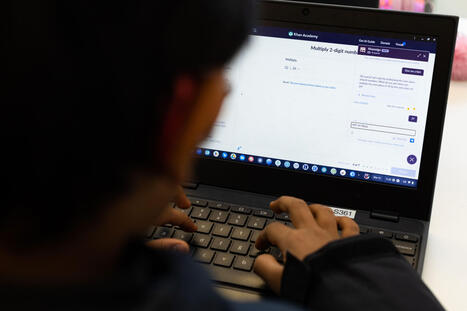
Giving students access to an AI assistant Khanmigo did not improve math performance above Khan Academy practice alone.
|
|
Scooped by
EDTECH@UTRGV
Today, 11:41 AM
|
This article discusses the disclosrure standards for AI-voiced and generated training videos, necessary to retain workforce trust.
|
|
Scooped by
EDTECH@UTRGV
Today, 11:35 AM
|
New report finds educators want better vetting, more input, and greater classroom oversight rather than strict technology limits.
|
|
Scooped by
EDTECH@UTRGV
Today, 11:30 AM
|
Teachers are using AI to develop lesson plans, and in some districts, AI chatbots give students feedback on their work. Meanwhile, the research around how AI can help students is extremely limited.
|
|
Scooped by
EDTECH@UTRGV
September 25, 8:26 AM
|
Here are five ways to open up your assignments and make student thinking, creativity, and judgment matter more in the age of AI.
|
|
Scooped by
EDTECH@UTRGV
September 25, 8:22 AM
|
As hiring falls across 20 top college majors, new LinkedIn data shows which degrees work best for versatility, with liberal arts such as English in the lead.
|
|
Scooped by
EDTECH@UTRGV
September 24, 8:44 AM
|
One school even offers pupils a semiconductor qualification to help them get into the industry.
|
|
Scooped by
EDTECH@UTRGV
September 24, 8:37 AM
|
Relying too much on AI will hurt both individuals and organizations in the long run, warns Wharton’s Cornelia Walther.
|
|
Scooped by
EDTECH@UTRGV
September 24, 8:32 AM
|
"Industries desire employees who can navigate complex, technology-driven environments with agility and foresight. As educators, it is essential to anticipate and prepare students so that they may flourish in their lives and careers."
|
|
Scooped by
EDTECH@UTRGV
September 23, 11:18 AM
|
AI literacy should include the energy and resources behind AI, helping students decide when its benefits justify its environmental costs.
|
|
Scooped by
EDTECH@UTRGV
September 23, 11:15 AM
|
As regulations and risks increase, these directories of artificial intelligence components help boost confidence.
|
|
Scooped by
EDTECH@UTRGV
September 23, 11:08 AM
|
"For centuries, higher education institutions have occupied a uniquely stable position in society. While technologies, from printing presses to the internet, have continually reshaped how colleges and universities operate, academic structures have remained remarkably resistant to transformation. Professors teach, evaluate, mentor, and certify; students study and progress through academic terms; credentials are awarded through processes deeply embedded in tradition. Today, agentic artificial intelligence (AI) is challenging that stability. In just a few years, AI has evolved from a novelty into a ubiquitous partner in writing, coding, designing, analyzing, simulating, and, increasingly, teaching."
|
|
Scooped by
EDTECH@UTRGV
September 22, 10:59 AM
|
Looking ahead, higher education institutions face a pivotal moment with AI.
|



















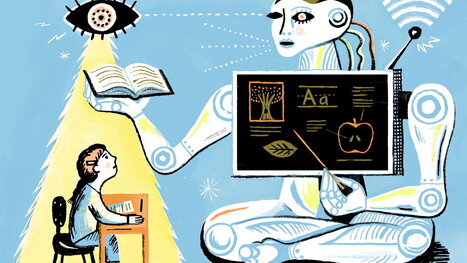




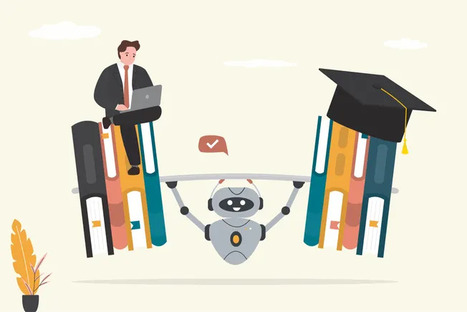





The difference we have with ChatGPT is that it doesn’t so much present a threat to the university experience, but rather directly into the heart of the purpose of a university education – its ability to ‘teach you how to think’. There have been shadows of this in the past, for instance the hostility towards Wikipedia (Coomer 2013), the emergence of essay mills, not to mention simple, now common place tools such as spell checkers and calculators. I remember vividly a very angry professor in the early 2000s telling me that reading lists with hyperlinks would make students baby birds, with wide open mouths expecting to be spoon fed. We’ve pretty much moved through all those advancements in technology and realised their benefits, but this one, I would argue, is different. Not because it does not have its benefits, but because of the sheer volume and scale of what’s coming will be meaningfully different and ultimately challenge the foundations upon which we measure that ability to think – university assessment.
Learn more / En savoir plus / Mehr erfahren:
https://www.scoop.it/topic/21st-century-innovative-technologies-and-developments/?&tag=ChatGPT
https://www.scoop.it/t/21st-century-innovative-technologies-and-developments/?&tag=AI
https://www.scoop.it/topic/21st-century-innovative-technologies-and-developments/?&tag=Ethics