"Often the algorithms that shape our lives feel invisible, but every now and then you really notice them.
Your credit card might get declined when you’re on vacation because a system decides the behavior seems suspicious. You might buy a quirky gift for your cousin, and then have ads for that product pop up everywhere you go online. In education, schools and colleges even use big data to nudge students to stay on track.
As we create this data layer around us, there’s more and more chance for systems to misfire, or to be set up in a way that consistently disadvantages one group over another."
A national study conducted by the Canadian Teachers’ Federation (CTF) revealed that at least four in 10 teachers per school jurisdiction have experienced violence from students.
In some jurisdictions, the number of teachers experiencing violence is as high as nine in 10.
Three billion years ago, more or less, life crossed a threshold and began moving toward a multicellular existence. Evidence from multiple directions is showing how this hard-to-fathom leap might have been less difficult than once believed. The evolutionary histories of some groups of organisms record numerous transitions from single-celled to multicellular forms, suggesting the hurdles could not have been so high. Genetic comparisons between simple multicellular organisms and their single-celled relatives have revealed that much of the molecular equipment needed for cells to band together and coordinate their activities may have been in place well before multicellularity evolved. And clever experiments have shown that in the test tube, single-celled life can evolve the beginnings of multicellularity in just a few hundred generations—an evolutionary instant. The end result: the incredible diversity of life seen today.
The power of many Elizabeth Pennisi Science 29 Jun 2018: Vol. 360, Issue 6396, pp. 1388-1391 DOI: 10.1126/science.360.6396.1388
Nigeria has made some big advances in strengthening its economic infrastructure, but even as it emerges from recession it is still a long way from escaping its dependence on oil.
"In Nigeria, an almost two-year recession brought on by disrupted oil output and a crash in commodity prices, led Africa’s largest economy into a period of intense self-analysis. The oil growth that Nigeria enjoyed between 2011 and 2015 was exposed as a poisoned chalice and diversification became a rallying cry."
Spread the loveTechnology is becoming a significant component of classroom curriculum and education in general. Computers, tablets, and mobile apps all promote learning on a deeper level for students. While this edtech certainly can help to promote better grades and deeper understanding, schools are now facing issues with digital equity. Students from high-income families have far more access to the technology needed to succeed than those from low-income families. The major disparity is both shocking and widespread. One of the most prevalent issues is that children from low-income families are four times more likely to be without internet than their …
Spread the loveTechnology is becoming a significant component of classroom curriculum and education in general. Computers, tablets, and mobile apps all promote learning on a deeper level for students. While this edtech certainly can help to promote better grades and deeper understanding, schools are now facing issues with digital equity. Students from high-income families have far more access to the technology needed to succeed than those from low-income families. The major disparity is both shocking and widespread. One of the most prevalent issues is that children from low-income families are four times more likely to be without internet than their …
An extremely entertaining stage play highlighting the experiences of four children who have been removed from their parents and placed into the foster car
Its not what you go or are going threw or what is going thru you or has gone threw you in life but what you choose to do with it. Let nothing stop you not even being justly or unjjustly being a ward of the State in Foster Care or any other placement. It may be meant to cause you harm but i say usd it for your good. Use your gifts. You are so so loved by God and so many others which you may not even know. Kiss and dismiss what was and get your move on to what already is that is in your future waiting for you. Go get it its yours for real. May or may not be a play but your gifts will make room for themselves if you faint not.
By cultivating strong school leadership, committing to ongoing professional development, and exploring innovative models like its technology-infused Future S...
One of the most contentious issues in education today is how much our schools have, or haven't, kept up with the times. The physical plants of schools represent the biggest capital investment in the provision of education, so they tend to stay in use as long as possible. And, Lange's book shows how everything from the dimensions of a room to the height and placement of windows can make certain kinds of learning easier or harder.
The familiar one-room schoolhouse ruled from Colonial times. But starting in the 19th century, she writes, big public schools were built in urban centers. They had facilities like gyms and auditoriums, sometimes open to the public. And they had several stories of classrooms, outfitted with the learning technologies of the time: blackboards, globes and maps.
These rooms were designed for one type of learning only: direct instruction. They had rows of individual desks, originally fixed to the floor, facing front — a slight update from the one-room schoolhouse days, when students often sat on benches. These rooms were lit by large rows of windows with light meant to come over the left shoulder to reduce glare and shadows on a student's notebook — presuming, of course, that the students must all be right-handed.
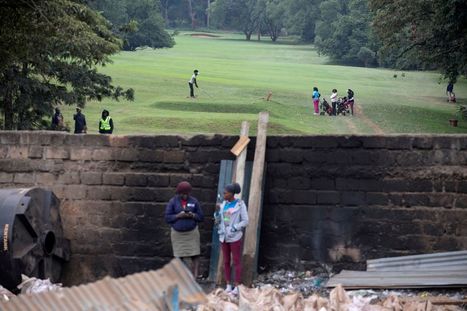
Residents of Kenya’s biggest slum Kibera started their week on a bleak note: government cranes and bulldozers demolishing homes, schools, and businesses in certain sections of the slum to make way for a new $20m dual-carriageway in the capital Nairobi. Over 30,000 dwellers were rendered homeless in the process on Monday (July 24), a mov
"Residents of Kenya’s biggest slum Kibera started their week on a bleak note: government cranes and bulldozers demolishing homes, schools, and businesses in certain sections of the slum to make way for a new $20m dual-carriageway in the capital Nairobi. Over 30,000 dwellers were rendered homeless in the process on Monday (July 24), a move Amnesty International Kenya said, “betrays the public trust and violates our laws.”"
Today, FIRE joined with prominent civil liberties organizations to call on the University of Kansas to restore an art display that the university removed.
Like the American Civil Liberties Union (ACLU) and the National Coalition Against Censorship, the Foundation for Individual Rights in Education (FIRE) takes an unbiased and objective stand on individual rights, academic freedom, and freedom of speech affecting all U. S. citizens, regardless of political affiliation or group identity.
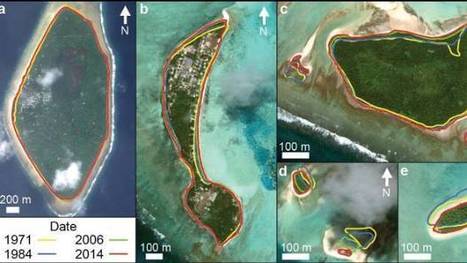
"The tiny Pacific nation of Tuvalu – once thought to be under threat from rising sea levels – has grown the size of California's Disneyland over the past 40 years. It's mostly thanks to waves dumping extra sediment, sand and gravel on shore lines, according to research by Auckland University scientists. The study, published in the Nature Communications journal on Friday, was the first in-depth look at how much each of Tuvalu's 101 islands have changed over the decades."
The world is at a historic crossroads. Market extremism, often labelled neoliberalism, which has shaped our national and global policies for the past three decades, has become a toxic fuel for the stuttering engine for global growth. It has also generated polluting side effects that are no longer tolerated by large portions of society.
Yet market-driven globalization has lifted over a billion people out of poverty and has been an overall driver of improved standards of living. In its present form, however, it is no longer fit for purpose in our current – nor particularly our future – context.
Conde Nast has a very interesting video series called “70 People Around The World.” You can see them all here. I’m adding this info to The Best Sites For Learning About The World’…
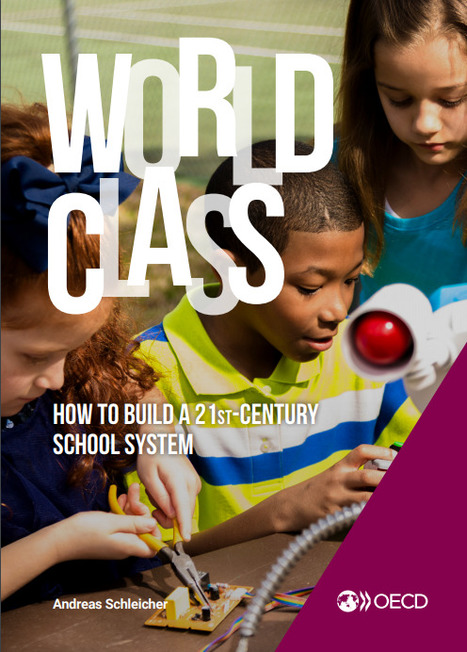
World Class How to Build a 21st-Century School System
In a world where the kind of things that are easy to teach and test have also become easy to digitise and automate, it will be our imagination, our awareness and our sense of responsibility that will enable us to harness the opportunities of the 21st century to shape the world for the better. Tomorrow’s schools will need to help students think for themselves and join others, with empathy, in work and citizenship. They will need to help students develop a strong sense of right and wrong, and sensitivity to the claims that others make. What will it take for schools to be able to do this? Andreas Schleicher, initiator of the OECD Programme for International Student Assessment (PISA) and an international authority on education policy, has accompanied education leaders in over 70 countries in their efforts to design and implement forward-looking policies and practices.
While improvement in education is far easier to proclaim than achieve, in this book Schleicher examines the many successes from which we can learn. This does not mean copying and pasting solutions from other schools or countries, but rather looking seriously and dispassionately at good practice in our own countries and elsewhere to understand what works in which contexts. Trained in physics, Schleicher offers a unique perspective on education reform: he convincingly argues that it should not necessarily be less of an art, but more of a science. “No one knows more about education around the world than Andreas Schleicher.
Full stop. For the first time, he's collected 20 years worth of wisdom in one place. World Class should be required reading for policy makers, education leaders and anyone who wants to know how our schools can adapt for the modern world – and help all kids learn to think for themselves.” – Amanda Ripley, author of The Smartest Kids in the World, a New York Times bestseller “[Schleicher]…grasps all the key issues, and does so through keeping his ear to the ground and by working out solutions jointly with a variety of leaders at all levels of the system, and in diverse societies” – Michael Fullan, Global Leadership Director, New Pedagogies for Deep Learning “Every visionary leader who is serious about improving student learning should add the data-driven World Class:
How to Build a 21st-Century School System In a world where the kind of things that are easy to teach and test have also become easy to digitise and automate, it will be our imagination, our awareness and our sense of responsibility that will enable us to harness the opportunities of the 21st century to shape the world for the better. Tomorrow’s schools will need to help students think for themselves and join others, with empathy, in work and citizenship. They will need to help students develop a strong sense of right and wrong, and sensitivity to the claims that others make. What will it take for schools to be able to do this? Andreas Schleicher, initiator of the OECD Programme for International Student Assessment (PISA) and an international authority on education policy, has accompanied education leaders in over 70 countries in their efforts to design and implement forward-looking policies and practices.
"Stratfor explains that Italy's main geographic challenge is to preserve its unity despite strong regional identities." For more of these videos, visit http://arcg.is/1IeK3dT
Italy is looked at as being an independent country but yet during its growth has always had separate regions. most of the regions speak Italian but are all different dialect of the major region which can be frustrating trying to travel town to town. So, they have a real challenge on their hands to get them to become more unionized.
To get content containing either thought or leadership enter:
To get content containing both thought and leadership enter:
To get content containing the expression thought leadership enter:
You can enter several keywords and you can refine them whenever you want. Our suggestion engine uses more signals but entering a few keywords here will rapidly give you great content to curate.


 Your new post is loading...