Today the U.S. is polarized, yet this post by John Merrow states "I have found something that unites Republicans and Democrats: neither party talks about poverty, despite our current epidemic of child poverty and its consequences for the life chances of millions of children."
Merrow continues to discuss poverty, and what he describes as its "evil twin, greed" stating that "we cannot solve on in isolation."
He provides a number of statistics from the National Center for Children in Poverty, including:
* 31% of white children - 12.1 million - live in low-income families.
* 64% of black children - 6.5 million - live in low-income families.
* 31% of Asian children - 1.0 million - live in low-income families.
* 63% of Hispanic children - 10.7 million - live in low-income families.
When you add in American Indian and children of other races, 30 million children live in poverty.
For more information on this and to learn more about "deep poverty" and "normal poverty" as well as a look at salary differentials between the typical CEO and the typical worker click through to the article. Merrow suggest that "if we backed away from greed, we would be more open to recognize the scourge of poverty and the long term threat it poses to our nation."
Poverty is increasing all around the world. If the world leaders do not do anything about it then it won't stop increasing. Financial assistance is sometimes not enough to get their daily needs. That is why the world leaders need to get poverty undone.
With the current cutbacks on food stamps (SNAP), the high cost of living, unemployment, unequal pay for women, a lack of education the responsibility for children without a partner and caring for senior parents, this does not come as a surprise to me.
Poverty in America is a form of murder to the weakest and most innocent of our society. Struggling parents are more apt to take their frustrations out on their children when they are faced with the stress of mounting bills, inadequate housing, or lack of stable and supportive employment. In the last 10 years here in America, there have been well over 20,000 children who have been murdered as a direct result of living in an impoverished home. The totals are devastating when compared to the fact that fewer soldiers have died in the entire span of the war in Afghanistan. More than 75% of these children are under the age of four. Over half of them are under the age of one.
The middle class, if defined as households making between $35,000 and $100,000 a year, shrank in the final decades of the 20th century. For a welcome reason, though: More Americans moved up into what might be considered the upper middle class or the affluent. Since 2000, the middle class has been shrinking for a decidedly more alarming reason: Incomes have fallen.
"...economists say the study offers perhaps the most detailed portrait yet of upward mobility — and the lack of it. The findings suggest that geography does not merely separate rich from poor but also plays a large role in determining which poor children achieve the so-called American dream.
"How neighborhoods affect children “has been a quandary with which social science has been grappling for decades,” said David B. Grusky, director of the Center on Poverty and Inequality at Stanford University, who was not involved in the research. “This delivers the most compelling evidence yet that neighborhoods matter in a really big way.”
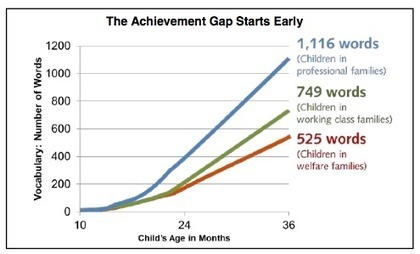
The Matthew effect refers to the notion that “the rich get richer and the poor get poorer.” Research has identified (and any teacher can attest) that some children enter school “wealthier” than their classmates when it comes to literacy foundational skills. Children who start out with advantages, in terms of early reading skills and vocabulary, tend to thrive and grow academically, while “less wealthy” children tend to fall progressively further behind.
With alarming studies like the 30 Million Word Gap reiterating the catastrophic long term effects on students that do not possess these foundational skills, it is incumbent on our country to stem the tide. Consider the graph below that illustrates this point. And that data just represents the first three years of a child’s life. Now compound this divide over the next three, six, nine, or twelve years (when the children would be sophomores in high school). Research is clear: knowledge of words is knowledge of the world. So, how can we as a collective curb the Matthew effect and level the playing field? Below are a few ideas with which to start the conversation.
Intervention Programs
Early intervention is crucial. High-quality preschool is absolutely essential. All children deserve the opportunity to start their school career on or relatively close to grade level, instead of several years behind.
Additionally, we must advocate for and implement intervention programs in the primary grades to bridge gaps and support student development. All too often, we see intervention programs attempting to mend the disconnects children face in 3rd, 4th, and 5th grade. It’s disingenuous. Generally speaking, intervention in 4th and 5th grade is about targeted skill instruction to help pass a test. But if we don’t begin intervention programs until students hit the intermediate grades in elementary school, we’ve missed our opportunity. Our programs should focus on K–3 students. We need to identify gaps and provide remediation early. Without early intervention, the gap widens over time and is almost insurmountable by 4th grade. Research indicates that in 5th grade and above, literacy intervention programs are only successful with about 13 percent of struggling readers.
"We have a myth today that the ghettos in metropolitan areas around the country are what the Supreme Court calls 'de-facto' — just the accident of the fact that people have not enough income to move into middle class neighborhoods or because real estate agents steered black and white families to different neighborhoods or because there was white flight. It was not the unintended effect of benign policies, it was an explicit, racially purposeful policy that was pursued at all levels of government, and that's the reason we have these ghettos today and we are reaping the fruits of those policies."
Ghettos were created because of many factors; one of these being in the 20th century real estate agents "blockbusting" basically meaning scaring white folks into thinking their neighborhood was becoming a slum causing them to quickly sell their house to real estate agents for an extremely low price and then turning around to sell the same house to black folks for much more because of limited homes for them to live in.
The ethnic neighborhoods and ghettos that still exist now are the result of people not having enough income to move to middle class neighborhoods and because real estate agents steered black and white families apart.
mySanAntonio.com (blog) New credit score myths and why you shouldn't believe them mySanAntonio.com (blog) Myths and folklore endlessly evolve as cultures change, technologies emerge and societies grow.
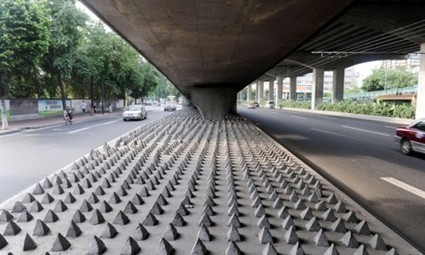
"Defensive architecture is revealing on a number of levels, because it is not the product of accident or thoughtlessness, but a thought process. It is a sort of unkindness that is considered, designed, approved, funded and made real with the explicit motive to exclude and harass. It reveals how corporate hygiene has overridden human considerations…"
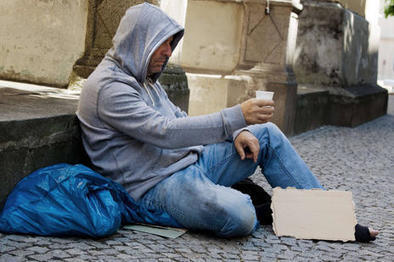
The government should try to develop better methods to keep homeless out of the street. Planning and designating a place to the homeless group by offering better conditions, will change the problem. As the architects have new ideas to resolve a problem with the homeless, they should also be formulating ideas to prevent homelessness such as providing feasible shelter on the street. Part of the problem is that shelters should be marketed in the communities. Local businesses, policies and general communities could be more active in helping these minority groups to get aid and better their life. Cities should provide more programs and aid for the homeless group.
These structures such as benches with dividers that make it impossible to lie down, spikes and protrusions on window ledges and in front of store windows, forests of pointed cement structures under bridges and freeways, emissions of high pitched sounds, and sprinklers that intermittently go off on sidewalks to prevent camping overnight are very rude and without a shadow of a doubt send a message to the homeless that they aren't welcomed, and we will do whatever it takes to make sure they cannot be comfortable; even something as simple as sitting on a windowsill.
This article deals with unit 7 because it discusses architecture and new things in cities. In some cities they have defensive architecture to make it harder for homeless people to live. For example benches with dividers, and pointed cement structures under bridges. This tells the homeless they are unwanted and that others don't care about them.Some corporations have turned to aggressive ways to keep out homeless and the article says the government is denying it. In addition there are few resources to help the homeless and what they do have is insufficient. It also notes that free shelters are very rare. The author says that we should worry a little more about the homeless because "given just the right turn of events, it could happen to us."
In 2012, the Utah Legislature launched a new war on chronic poverty and is making the same mistakes as the nation’s war on poverty from 1964. Those who should be in charge of making changes are
A group of not-for-profit groups that support homeless youth are running a campaign to bring national attention to the issue. They hope that the Federal Government will provide more money to tackle the problem. The government says they are already spending 2$30 million on a National Partnership Agreement on homelessness that is making frontline services for women and children experiencing domestic violence a priority, as well as homeless youth under 18.
Improving people’s living conditions and lifting them out of extreme poverty – in other words: taking human development seriously – is one of the most effective ways of preventing violent outbreaks.
Four friends from the United States spent their summer living in Guatemala on one dollar a day to try and understand the reality of poverty first hand. Buy t...
Shell companies are used to shield the identities of buyers in the competition to secure condos at the Time Warner Center and other high-end buildings. This is the first installment in a five-part series
A very similar article appeared in NY Magazine in June 2014. -JL
Jim Lerman's insight:
These articles document one of the numerous astute observations on current culture made by William Gibson in his most recent book, The Peripheral. Thanks to Rick Searle for his incisive review of the novel.
Michael Cowling and Cris Brack, Australian National University The idea that teachers should teach and students should listen presumes that teachers know more than their students.
This article shares some thoughts on how faculty should be prepared for higher number of digital natives being in their classrooms this coming semester and moving forward.
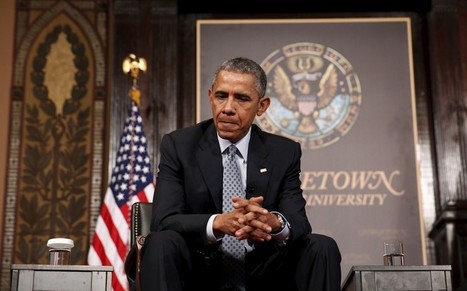
Kevin Lamarque / Reuters Yesterday, Georgetown University hosted President Barack Obama, columnist E.J. Dionne and famed social scientist Robert Putnam for a conversation on poverty in America.
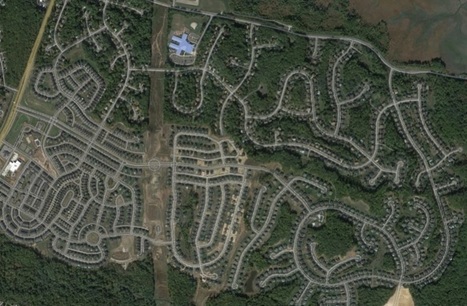
In strictly economic terms, sprawl is inefficient. Spread people out, and it takes them longer to drive where they need to go, and it costs them more in gas money to get there. Disperse a few people over a lot of land, and that land is used inefficiently, too. Then give those people roads and sewers — you’d need a lot more of both to serve 20 households living over a square mile than 20 on the same block. And that's to say nothing of the costs of fire and police service when people live far apart.
These costs add up, in both private budgets and public ones. It’s a messy thought exercise to contemplate tallying them, akin to trying to calculate the productivity America wastes by sitting in traffic every year. How do you measure, for instance, the saved health care costs in a community where many people walk for transportation every day? How do you quantify the pleasure gained from a big yard that offsets any of these costs?
Sometimes people choose to live out of the cities for many reasons. First of all, living in suburban neighborhoods would be more affordable than residing in the cites and people will acquire more square footage, land, and less expensive houses. To be able to live in the city, people have to pay high prices in addition to dealing with the stress of city life. Second, over populated cities can cause damage to the environment through such ways as air pollution and santitation hazards. Taxes will remain high in order to keep up with the urban sprawl and maintain public transportation and education services. Mexico is an example where many over populated cities can be found. These cities suffer from severe air pollution, massive clouds of industrial smoke, and substandard public service programs.
Chris/Flickr Would better education significantly reduce income inequality in America? No, says recent study from the Brookings Institution. But that doesn't mean that better education wouldn't help the overall economic picture.
To get content containing either thought or leadership enter:
To get content containing both thought and leadership enter:
To get content containing the expression thought leadership enter:
You can enter several keywords and you can refine them whenever you want. Our suggestion engine uses more signals but entering a few keywords here will rapidly give you great content to curate.


 Your new post is loading...




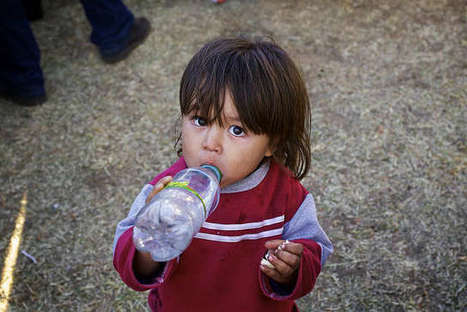




















Poverty is increasing all around the world. If the world leaders do not do anything about it then it won't stop increasing. Financial assistance is sometimes not enough to get their daily needs. That is why the world leaders need to get poverty undone.