


“Joe,” a man who has been homeless several times, knows how difficult it can be to get enough sleep without permanent housing.


 Your new post is loading...
 Your new post is loading...
Your new post is loading...
 Scoop.it!
“Joe,” a man who has been homeless several times, knows how difficult it can be to get enough sleep without permanent housing. 
No comment yet.
Sign up to comment
Scoop.it!
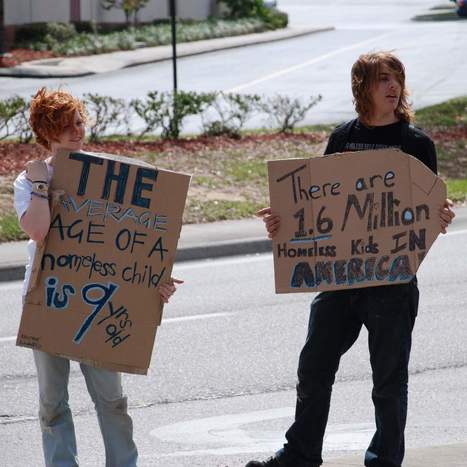
From
tbo

Tbo.com Bonner project in Brandon simulates homelessness Tbo.com Caitlyn Stewart, left, and Nick Thornton stand on a median to show passing motorists statistics about homeless American youth during Zach Bonner's second 24 Hours homeless simulation...
Scoop.it!
http://www.worldbank.org - The world's most successful social movements are started by a small group of like-minded people, says the World Bank Group Preside...
Scoop.it!

The American middle class is shrinking. According to a report released earlier this year, an estimated 51% of the population was in the middle class at the start of the decade, down from 61% forty years earlier.
Scoop.it!
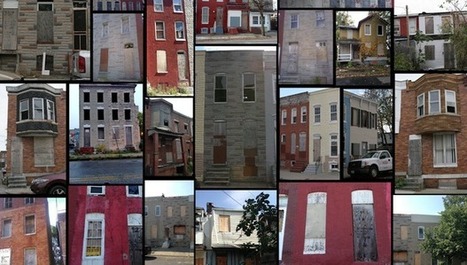
A video follows Carol Ott, a mother of two who is documenting every blighted property she can find in Baltimore.
Scoop.it!

The Economics of Pope Francis Mainstream The document is incredibly direct in its call for specific, policy-level action to fight institutional inequality rather than speaking broadly and loftily about poverty as some kind of abstraction or...
|
Scoop.it!

Care2.com Could We House the Homeless in America's 77000 Empty Government Buildings? Care2.com Converting empty buildings and lots into homeless housing has been done before.

Duane Craig's curator insight,
July 18, 2014 12:10 PM
It is definitely time we consider repurposing old structures whenever possible. They have a significant store of embodied energy.
Scoop.it!
“Eliminating” Homelessness Doesn't Always Mean Housing the Homeless
Scoop.it!
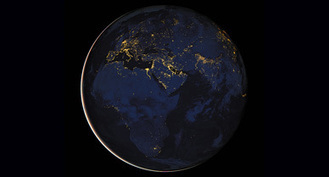
Want to know where the poor live? Look at where the light isn’t
Scoop.it!

Source: ThinkstockChair, man, chairman, ceo, executive, rich guy, wealthy, Satisfied BusinessmanCEO compensation, relative to the amount the average american is paid, has skyrocketed in the past few decades.
Scoop.it!

Nice visual on differences in income, with associated paper. No stats needed here; a simple exploratory/observational curiosity is all you need. A great starter for classroom discussions/lab activities. Start with this primer where you can see the distinct difference.

Christian Madison's curator insight,
January 13, 2014 7:28 PM
Well first of all I'd have to think on the bright side of life on the poor side. And on the other side, the rich side, I'd have to not take things for granted. On the poor side you'd have to use everything to it's limit and not waste a bit. While on the rich side it doesn't really matter that much. 
Vivica Juarez's comment,
January 13, 2014 8:16 PM
@Sherryn Kottoor made some excellent points about the pictures. In the diagram, it shows the poor vs. the rich. It clearly proves how there is a big difference between the two. The rich have more access to things, that the poor don't. The poor are also not as fortunate when it comes to living and education.

Marcelle Searles's curator insight,
January 25, 2014 4:47 AM
useful for Year 8 and Year 11 Geography units.
Scoop.it!

Source: ThinkstockDespite signs of economic recovery, the number of U.S. residents living in poverty remains stubbornly high. An average of 15.7% of the U.S.
|




