ED262 mylineONLINE: ClassMatters
752 views | +0 today
ED262 mylineONLINE:  ClassMatters
View related curated articles on Class Matters, Rankism, Poverty, Hunger, Homelessness at http://flip.it/o3lJhC
Curated by Dennis Swender
Your new post is loading...
Rescooped by Dennis Swender from Community Village Daily
July 23, 2015 1:56 PM
Scoop.it!

Student Loan Debt Stratified by Race, Class

Student Loan Debt Stratified by Race, Class | ED262 mylineONLINE:  ClassMatters | Scoop.it


It’s well known that graduating college students in recent years have faced student loan debt at unprecedented levels far exceeding that of previous generations of American graduates. Nonetheless, a new report released by the New York-based Demos public policy organization documents the patterns of debt along racial and class lines with Black, Latino, and low-income students taking out higher loans than Whites and more likely to drop out with significant debt.


Continue reading


Via Community Village Sites
No comment yet.
Rescooped by Dennis Swender from Inequality, Poverty, and Corruption: Effects and Solutions
July 7, 2015 1:20 PM
Scoop.it!

Being poor is not the same everywhere

Being poor is not the same everywhere | ED262 mylineONLINE:  ClassMatters | Scoop.it

Young people growing up in impoverished neighborhoods who perceive their poor communities in a positive light report better health and well-being than those with worse perceptions of where they live, new research led by the Johns Hopkins Bloomberg School of Public Health suggests.


Via Ziggi Ivan Santini, Jocelyn Stoller
No comment yet.
Scooped by Dennis Swender
July 5, 2015 4:07 PM
Scoop.it!

10 Corporations Control Almost Everything You Buy — This Chart Shows How

10 Corporations Control Almost Everything You Buy — This Chart Shows How | ED262 mylineONLINE:  ClassMatters | Scoop.it

Ten mega corporations control the output of almost everything you buy; from household products to batteries. But it gets even crazier who when you see who controls the money.

No comment yet.
Scooped by Dennis Swender
July 5, 2015 4:01 PM
Scoop.it!

Waging War Against Global Food Waste

Waging War Against Global Food Waste | ED262 mylineONLINE:  ClassMatters | Scoop.it
National Geographic Emerging Explorer Tristram Stuart wants the world to stop throwing away so much good food.
Scooped by Dennis Swender
July 5, 2015 3:57 PM
Scoop.it!

Changes in the U.S. Economic Geography

Changes in the U.S. Economic Geography | ED262 mylineONLINE:  ClassMatters | Scoop.it
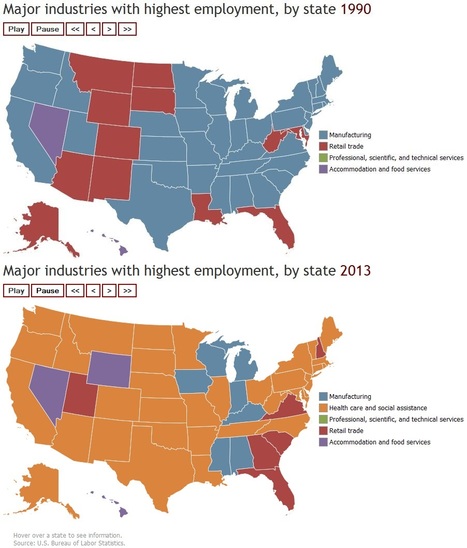
In 1990, the manufacturing industry was the leading employer in most U.S. states, followed by retail trade. In 2003, retail trade was the leading employer in a majority of states. By 2013, health care and social assistance was the dominant industry in 34 states. This animated map shows the top industry in each state and the District of Columbia from 1990 to 2013.
Lora Tortolani's curator insight, February 2, 2015 6:49 PM

It's amazing to see how priorities have shifted over time.  Also, this is a great display of how technology has taken over what once was human labor.  

Alex Smiga's curator insight, March 14, 2016 7:43 PM

Shifting economies.


This interactive map is a powerful way to visually display the changes in the economic geography of the United States.  It is especially useful when discussing the transition of an economy from the secondary sector to tertiary sector.  

Olivia Campanella's curator insight, September 5, 2018 5:02 PM
Over the years the United States has shown a number of leading employer industries. In the 1990"s the manufacturing industry was the leading employer in most United States, followed by Retail Trade industries. In 2003, Retail Trade was the leading employer, but by 2013 health Care and Social Assistance was dominant industries in 34 States. From the 1990"s to 2013 employment has been on a steady decline while Health Care and Social Assistance became largest industries in New York (1992) and North Dakota (1995).
Scooped by Dennis Swender
July 5, 2015 3:57 PM
Scoop.it!

City Centers Are Doing Better than Inner Suburbs

City Centers Are Doing Better than Inner Suburbs | ED262 mylineONLINE:  ClassMatters | Scoop.it

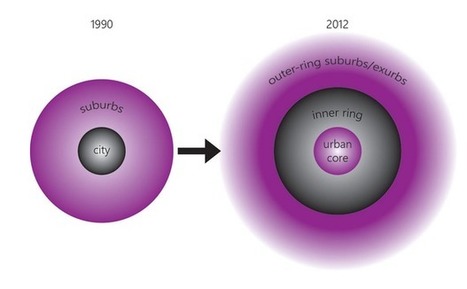
A new report tracks demographic trends across 66 U.S. metro areas.  The report provides comprehensive evidence for Aaron Renn's "new donut" model of cities (pictured in above image, on the right). Renn's model proposes that city centers and outer-ring suburbs are doing well economically, but inner-ring suburbs are struggling with a new influx of poverty."


Tags: urban, economic, urban models, APHG.

Michael Amberg's curator insight, May 26, 2015 11:09 PM

This shows the changes in urban geography and how the world is changing due to all the new technology available now.

Bella Reagan's curator insight, May 26, 2015 11:33 PM

Urban unit

Summary

This article goes in to depth on a newer model on cites called the donut model, as pictured similar to a donut. The donut model was created by Aaron Renn, and it shows urban development recently in cities. The center of the city is grownign economically and falling. There is an influx of people moving in , resulting in an increase of poverty too. Also more educated people are moving in like young newly educated individuals.

insight

The new structure of cities forming is a change from the old. With cities now developing bigger and more industrial, there are many opportunities for people for work in the center of the cit. however, many people may want the jobs but can't get them, so many of those in poverty live in the city centers in search of economic opportunities. It is also interesting to see the status of the people changing the in the city center with that also more young educated people move to city centers, most likely in search of job opportunities. This new way of urban development is modernizing the work system.

Shane C Cook's curator insight, May 27, 2015 8:44 AM

More and more the urban stage is filling and cities are becoming once again the next big thing. After WW2 suburbs became intensively popular but now since a change in personnel views people prefer the city more.

Scooped by Dennis Swender
July 3, 2015 1:22 PM
Scoop.it!

Giving the Poor Easy Access to Healthy Food Doesn’t Mean They’ll Buy It

Giving the Poor Easy Access to Healthy Food Doesn’t Mean They’ll Buy It | ED262 mylineONLINE:  ClassMatters | Scoop.it
Those living in areas without fresh produce tend not to eat well. But just putting in a supermarket is not a panacea, it turns out.


Tags: food distribution, food, economic, poverty, place, socioeconomic, neighborhood.

Meridith Hembree Berry's curator insight, May 10, 2015 3:55 PM

It is difficult to change the junk food and convenience food culture in one generation. 

Robert Slone's curator insight, May 19, 2015 9:04 AM

This was really surprising , it is amazing how education effects every area of our lives .

Rescooped by Dennis Swender from Dismantling Oppression
June 11, 2015 2:27 AM
Scoop.it!

When Class Became More Important to a Child's Education Than Race

When Class Became More Important to a Child's Education Than Race | ED262 mylineONLINE:  ClassMatters | Scoop.it

"The country is far from fulfilling King's dream that race no longer limit children's opportunities, but how much income their parents earn is more and more influential."


Via Kelli McLoud Schingen
Sirila Padi's curator insight, December 5, 2013 9:04 PM

This article appears on my page because it gives a picture of how the society is. I think reace or money should not affect an individuals oppurtunities. I think the family or race one is born in should not have any type of affect on the capability of the person. Race is just a color on the outside and that should be not used on the outside to tell what you can and cant do.  However, I also dont like how money is now being used in substitute. I think one's familys income should not be able to be the key factor in if whats get the oppurtunity or not. It should rely on the individual it self and what they have to offer. A child can't make money for their family so they shouldnt deal with the consequences.  I think women and men of all ages can benefit reading this as it shows that the country's making progress in some ways, yet still has more to go. I think its time for use to take race and money out of the answer and leave it to one's capability. I feel if this is the case, we as a society will strong and will be able to be the most influential. It relates to Half the Sky as we see how race and gender our issues int he book as far as who or what gets the oppurtunities and that needs to be fixed.  Now that you have read this , create ideas to help stop making race and money be the factors in one's oppurtunities.

Rescooped by Dennis Swender from Civil Rights, Next Generation
June 11, 2015 1:59 AM
Scoop.it!

How Close to Poverty Are You? | Blog, The Poverty Line | BillMoyers.com

How Close to Poverty Are You? | Blog, The Poverty Line | BillMoyers.com | ED262 mylineONLINE:  ClassMatters | Scoop.it
Fifty years after the War on Poverty began, poverty remains a serious problem. US Census figures show that most urban areas have neighborhoods with high poverty rates.

Via Kristen Magis
No comment yet.
Rescooped by Dennis Swender from Civil Rights, Next Generation
June 11, 2015 1:58 AM
Scoop.it!

Breakdown: Americans On The Edge - Poverty News, Blogs, Coverage - HuffPost Politics

Breakdown: Americans On The Edge - Poverty News, Blogs, Coverage - HuffPost Politics | ED262 mylineONLINE:  ClassMatters | Scoop.it

Via Kristen Magis
No comment yet.
Rescooped by Dennis Swender from Civil Rights, Next Generation
June 11, 2015 1:58 AM
Scoop.it!

There Are Many Reasons Women In Lower-Income Neighborhoods Die Younger. This Is One I Didn’t Know.

There Are Many Reasons Women In Lower-Income Neighborhoods Die Younger. This Is One I Didn’t Know. | ED262 mylineONLINE:  ClassMatters | Scoop.it
Things that matter. Pass 'em on.

Via Jocelyn Stoller, Kristen Magis
No comment yet.
Rescooped by Dennis Swender from Civil Rights, Next Generation
June 11, 2015 1:57 AM
Scoop.it!

Debunking the Myth of the “Welfare Queen”: Who Actually Receives TANF Benefits?

Debunking the Myth of the “Welfare Queen”: Who Actually Receives TANF Benefits? | ED262 mylineONLINE:  ClassMatters | Scoop.it
In February of this year, a blogger wrote about their experience observing an 11th grade classroom. The post discusses a student performing a poem that mocks a poor woman who encourages her seven c...

Via diane gusa, Kristen Magis
No comment yet.
Rescooped by Dennis Swender from Civil Rights, Next Generation
June 11, 2015 1:54 AM
Scoop.it!

The Poverty Trap: Slack, Not Grit, Creates Achievement

The Poverty Trap: Slack, Not Grit, Creates Achievement | ED262 mylineONLINE:  ClassMatters | Scoop.it
Poverty is a trap children are born into: No child has ever chosen to be poor. Children have never caused the poverty that defines their lives, and their education. Yet, the adults with political, ...

Via diane gusa, Sharrock, Kristen Magis
Shareezan's curator insight, February 27, 2014 3:28 AM

We people should not give up in life and we should do our best in education wise. Education will help us in the future, they will make us find jobs easier and make easy money. No one wants to give up just like that because they should start think about their future. No one wants to be poor too. To have less poor people in the world, we must also do apart, donate some money to the poor and help them in financial and medical. They need help and we should not look down on them. The government should do something about this. there's still some question I've been wondering. Why the government did not put their 100% effort on helping these poor people? Did they do something wrong? Seriously, they should just help. Everyone is not perfect.

Rescooped by Dennis Swender from Inequality, Poverty, and Corruption: Effects and Solutions
July 7, 2015 1:21 PM
Scoop.it!

A Different Approach to Breaking the Cycle of Poverty

A Different Approach to Breaking the Cycle of Poverty | ED262 mylineONLINE:  ClassMatters | Scoop.it

This neighborhood south of downtown is bleak, with empty parking lots fenced in by barbed wire, and skeletons of buildings covered in graffiti. Many of the people walking the long blocks of Mechanicsville grew up poor, and their children are likely to be poor, too. It’s part of the vicious cycle of poverty—without access to high-quality education, kids born into poverty are likely toremain there for their whole lives, despite the promise of the American Dream. A foundation is sponsoring a new approach to breaking the cycle of poverty just a few blocks from where Davis and I spoke. It tries to give children access to high-quality, early-childhood education while helping parents get better jobs and build stronger families. It’s called the two-generation approach, and has been found to be one of the best bets in helping families escape poverty.


Via Ziggi Ivan Santini, Jocelyn Stoller
No comment yet.
Rescooped by Dennis Swender from Eduserv Digital Excellence
July 5, 2015 4:31 PM
Scoop.it!

'Them and us' online service warning

'Them and us' online service warning | ED262 mylineONLINE:  ClassMatters | Scoop.it
There is a danger of creating a "them and us" situation by digitising public services, with many people unable or unwilling to go online, a report warns.

Via Eduserv
Houtenvriendjes's comment, July 25, 2020 5:28 AM
good
PortalPassportIndia's comment, December 24, 2020 10:46 AM
good
PortalPassportIndia's comment, December 24, 2020 10:46 AM
good
Scooped by Dennis Swender
July 5, 2015 4:05 PM
Scoop.it!

Economic Decline and Sense of Place

"McDowell County, situated in the coalfields of West Virginia, has experienced a great boom-and-bust since 1950. But despite the economic decline and population loss, many still call it home and feel a great sense of purpose among the mountains. Residents speak about their connection to this place and the meaning of 'home.' Hear more stories at hollowdocumentary.com "

dilaycock's curator insight, April 29, 2014 6:51 PM

Excellent example of urban decline. Would pair nicely with a reading from 'Rocket Boys' by Homer Hickam Jnr, or with the movie version 'October Sky.' The book and movie are the true story of a boy in Coalwood, West Virginia in the 1950s who is determined to  "escape" working in the coal mines to become a rocket scientist.

John Nieuwendyk's curator insight, September 16, 2014 11:02 PM

 McDowell, a once thriving county in the 1950’s ceased to keep up with the ever-chaning world. There was little need for coal after the 1980’s so work became scarce and the “Brain Drain” began. Those looking for a successful future left for there was more choice elsewhere and economically it would make no sense to stay in McDowell. Nevertheless, cultural upbringings paved way to this "Boom and Bust” town, which gave people a sense of place and identity. Though McDowell is economically on the decline the communal relations and sense of place the community holds is still strong. 

Luke Walker's curator insight, October 3, 2014 3:41 AM

Develop your sense of place regarding the coalfields of West Virginia.

What geographic context (location) might create a place like McDowell County, West Virginia?

Scooped by Dennis Swender
July 5, 2015 3:58 PM
Scoop.it!

The ghastly tragedy of the suburbs

The ghastly tragedy of the suburbs | ED262 mylineONLINE:  ClassMatters | Scoop.it
In James Howard Kunstler's view, public spaces should be inspired centers of civic life and the physical manifestation of the common good. Instead, he argues, what we have in America is a nation of places not worth caring about.
Zeke Robinson's curator insight, May 26, 2015 9:23 PM

i disagree with this guy, for suburbs bring us close and save space and its good that we have them.

Scooped by Dennis Swender
July 5, 2015 3:57 PM
Scoop.it!

The Speed Burden [Costs of Sprawl]

The Speed Burden [Costs of Sprawl] | ED262 mylineONLINE:  ClassMatters | Scoop.it
The need for speed devours huge chunks of American cities and leaves the edges of the expressways worthless. Busy streets, for almost all of human history, created the greatest real estate value because they delivered customers and clients to the businesses operating there. This in turn cultivated the highest tax revenues in town, both from higher property taxes and from elevated sales taxes. But you can't set up shop on the side of an expressway. How can cities afford to spend so much to create thoroughfares with no adjoining property value?
Alexa Earl's curator insight, March 14, 2015 10:48 AM

This blog really made me realize what an impact humans are to the environment. They compare different cities and talk about the impacts and it really showed me how humans have built up cities.

Brian Wilk's curator insight, March 21, 2015 6:12 PM

A side by side comparison at first blush is striking but the devil is in the details. Florence, Italy is a city of only 368,000 while the Atlanta metro area is about 4.5 million. Agree that sprawl is ineffective real estate and efficiency wise, but fuel prices may be having a counter effect on the reduction of sprawl. It is much less expensive to commute given the price of oil at its current levels and the millennials will have a say in this urban sprawl contracting or expanding. Many do not own cars, relying on commuter systems within the city to get around. This in theory should drive down demand for fossil fuels, culminating in reduced prices for gasoline. If the infrastructure is already built, was is the cost to maintain it, given the static population of the large metro areas? Interesting to see how this plays out.

Scooped by Dennis Swender
July 3, 2015 1:22 PM
Scoop.it!

An Atlas of Upward Mobility Shows Paths Out of Poverty

An Atlas of Upward Mobility Shows Paths Out of Poverty | ED262 mylineONLINE:  ClassMatters | Scoop.it

"A decades-old effort found that moving poor families to better neighborhoods did little to help them.  A large new study is about to overturn the findings of Moving to Opportunity. Based on the earnings records of millions of families that moved with children, it finds that poor children who grow up in some cities and towns have sharply better odds of escaping poverty than similar poor children elsewhere."


Tags: housing, economic, poverty, place, socioeconomic, neighborhood.

Rescooped by Dennis Swender from Collaborationweb
July 3, 2015 12:57 PM
Scoop.it!

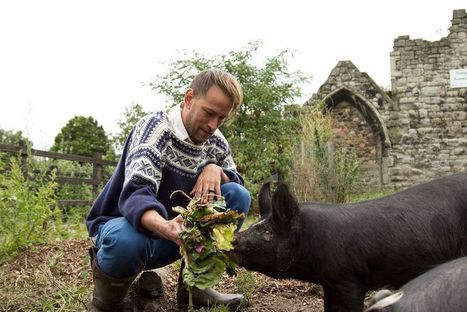
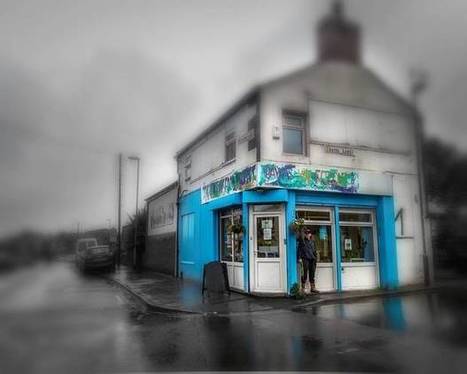
Real Junk Food Project: The Leeds cafe that has fed 10,000 people, using 20 tonnes of unwanted food – and started a worldwide movement

Real Junk Food Project: The Leeds cafe that has fed 10,000 people, using 20 tonnes of unwanted food – and started a worldwide movement | ED262 mylineONLINE:  ClassMatters | Scoop.it
The founder of a quietly-growing empire of social cafes has called on a change in the law to prevent the UK’s "criminal" levels of food waste - especially by supermarkets - while so many go hungry.

Via Jocelyn Stoller, David Hain
No comment yet.
Rescooped by Dennis Swender from Colorful Prism Of Racism
June 11, 2015 2:16 AM
Scoop.it!

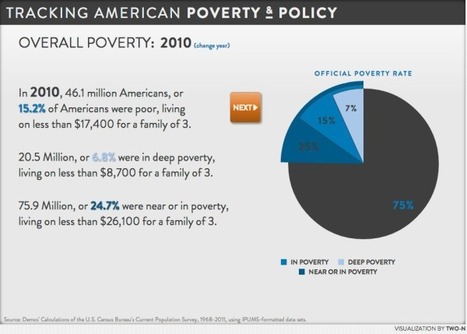
Tracking American Poverty - Cool Infographics

Tracking American Poverty - Cool Infographics | ED262 mylineONLINE:  ClassMatters | Scoop.it
Tracking American Poverty & Policy is an interactive infographic visualization site that br...

Via Deanna Dahlsad
No comment yet.
Rescooped by Dennis Swender from Civil Rights, Next Generation
June 11, 2015 1:59 AM
Scoop.it!

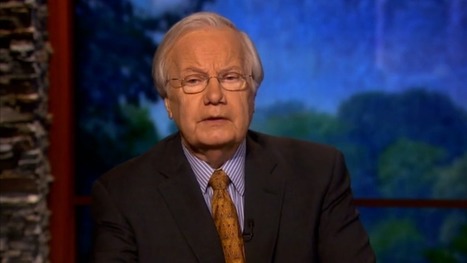
Bill Moyers Essay: The United States of Inequality

Bill Moyers Essay: The United States of Inequality | ED262 mylineONLINE:  ClassMatters | Scoop.it
In an extended essay, Bill Moyers shares the striking extremes of wealth and poverty across the country. WATCH:   BILL MOYERS: Welcome. Inequality matters.

Via Jocelyn Stoller, Kristen Magis
No comment yet.
Rescooped by Dennis Swender from Civil Rights, Next Generation
June 11, 2015 1:58 AM
Scoop.it!

Everything you need to know about the war on poverty

Everything you need to know about the war on poverty | ED262 mylineONLINE:  ClassMatters | Scoop.it
Lyndon Johnson used his 1964 State of the Union to declare war on poverty. Here's what you need to know.

Via Kristen Magis
No comment yet.
Rescooped by Dennis Swender from Civil Rights, Next Generation
June 11, 2015 1:57 AM
Scoop.it!

What A Mobile Phone Means When You Are Homeless

What A Mobile Phone Means When You Are Homeless | ED262 mylineONLINE:  ClassMatters | Scoop.it
Here are some quotes taken from a great article by Kat Ascharya (Mobileidea) that was published at maschable.com.  The article shows the importance that mobile phones have for homeless: [...] His p...

Via ET Russell, Kristen Magis
ET Russell's curator insight, July 10, 2013 7:55 AM

In Australia:

Did you know that only 6% of people experiencing homelessness are on the street?  The rest are 'hidden' - and could be someone we know.


HPW 2013 will focus on four key groups that are hidden when it comes to homelessness:

- Aboriginal and Torres Strait Islander Australians

- Domestic and Family Violence

- Staying with other households

- Australians in household stress.


visit the link below to download a PDF information sheet

http://www.homelessnessaustralia.org.au/index.php/events/hpw/hpw-2013Homeless Persons' Week 2013 Monday 5th August - Sunday 11th August
Rescooped by Dennis Swender from Civil Rights, Next Generation
June 11, 2015 1:55 AM
Scoop.it!

Not Just a Southern Thing: The Changing Geography of American Poverty

Not Just a Southern Thing: The Changing Geography of American Poverty | ED262 mylineONLINE:  ClassMatters | Scoop.it
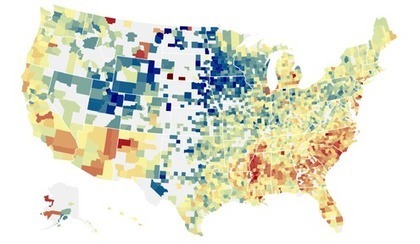
Thirty years ago, the states with the deepest poverty were all clustered in dixie. But the rest of the country has been playing catchup.


So how did poverty stop being a Southern specialty? You've had, deindustrialization in the Midwest and Northeast. And you've had fast growing Hispanic populations, which tend to be poorer, in California, Nevada, Arizona, and Colorado (as well as North Carolina and Georgia, which could explain their presence on the list above).  Meanwhile, the Southeast has made some economic progress by attracting foreign manufacturing, among other efforts.


Via Alison D. Gilbert, Kristen Magis
viknesh's curator insight, March 2, 2014 9:42 AM

When Americans think of poverty, they often times think of the southern states. However, that was most accurate 30 years ago. As time progesses, other states, especially New York, have been catching up drastically. Poverty is not only a southern thing, but a factor in on the growing rates of low income households across the United States. Although the quality of life among the states of low income households may vary, the povery levels do not.

Nick Smith's curator insight, September 2, 2014 4:19 PM

Poverty, no longer a southern thing. What has changed this?

Nicholas Patrie's curator insight, October 20, 2014 12:16 PM

not only has poverty increased drastically in the south and spread west but also states that where considered to be low percentage of poverty have increased to poverty. many states up north are now in danger. the economy hasn't increased at all in the last twenty plus years and it should be interesting to see what happens in the future, hopefully the south doesn't get too far under the poverty line to the point where it can't be brought back.