Distance Learning, mLearning, Digital Education, Technology
16.5K views | +0 today
Distance Learning, mLearning, Digital Education, Technology
Your new post is loading...
Rescooped by Dennis Swender from Voices in the Feminine - Digital Delights
May 20, 2015 3:42 AM
Scoop.it!

“Your Hair Sucks” and Other Great Moments in Student Evaluations of Teaching

“Your Hair Sucks” and Other Great Moments in Student Evaluations of Teaching | Distance Learning, mLearning, Digital Education, Technology | Scoop.it
It’s student evaluation time again—and I should be the last professor in the world to complain. With slight exceptions for “caring too much” and courses that meet “too early” (9:10 a.m.), my evaluations are quite good. And yet the student evaluations of teaching (SETs) I’ve received during my decade-long teaching...

Via Ana Cristina Pratas
No comment yet.
Rescooped by Dennis Swender from Voices in the Feminine - Digital Delights
May 20, 2015 3:41 AM
Scoop.it!

Class blogs as a teaching tool to promote writing and student interaction

Class blogs as a teaching tool to promote writing and student interaction | Distance Learning, mLearning, Digital Education, Technology | Scoop.it
Class blogs as a teaching tool to promote writing and student interaction

Via Ana Cristina Pratas
Ana Cristina Pratas's curator insight, September 30, 2014 12:50 AM

Abstract


Blogs are a useful teaching tool for improving student writing and increasing class
interaction. However, most studies have looked at individual blogs rather than blogs
maintained by a whole class. We introduced assignments involving participation in class
blogs to four science communication classes with enrolments of between 15 and 36
students. We administered paper-based surveys to obtain student perceptions of the value of
the blogging assignment. Based on feedback in semester one, we increased commenting
requirements and spent more time integrating the blog with coursework in semester two. In
semester two, students had significantly improved perceptions of the blog assignments. The
most commonly cited benefit by students in both semesters was that the blog helped to
improve their writing. Most enjoyed the opportunity to have increased intellectual
exchange with other students and the majority agreed that knowing other students read the
blog motivated them to write better. Students disliked being forced to comment and they
felt that they benefited just from reading other students’ posts. However, we recommend
that weekly commenting should be mandatory, as this increased involvement and perceived
value of the assignment.

Rescooped by Dennis Swender from Voices in the Feminine - Digital Delights
May 20, 2015 3:37 AM
Scoop.it!

How I Converted My Blog Post Into an Online Course, Part 2

How I Converted My Blog Post Into an Online Course, Part 2 | Distance Learning, mLearning, Digital Education, Technology | Scoop.it
This post is the second in a 3 part series dedicated to showing bloggers and online educators an easy, step-by-step process for converting blog content into an online course. I’ll share how I converted my blog post into an online course!

Via Ana Cristina Pratas
No comment yet.
Rescooped by Dennis Swender from Voices in the Feminine - Digital Delights
May 20, 2015 3:37 AM
Scoop.it!

Social or Fauxial Learning?

Social or Fauxial Learning? | Distance Learning, mLearning, Digital Education, Technology | Scoop.it
There's a big difference! SOCIAL LEARNING is how we learn naturally and on a continuous basis - with our friends and colleagues. Social learning doesn't require the use of social media, although it...

Via Ana Cristina Pratas
niftyjock's curator insight, October 20, 2014 5:08 PM

How do you pronounce it?

Rescooped by Dennis Swender from Voices in the Feminine - Digital Delights
May 20, 2015 3:35 AM
Scoop.it!

Apply a Pedagogical Model to Create Powerful Online Courses

Apply a Pedagogical Model to Create Powerful Online Courses | Distance Learning, mLearning, Digital Education, Technology | Scoop.it
Whether you’re a digital marketer planning to teach the next generation conversion rate optimization (CRO) or a software developer looking to earn a few thousand a month in passive income, this post will help you get a grip on a few basic pedagogical principles that should guide your course design process. This post was inspired...

Via Ana Cristina Pratas
No comment yet.
Rescooped by Dennis Swender from Voices in the Feminine - Digital Delights
May 20, 2015 3:33 AM
Scoop.it!

Is your Learning map student friendly?

Is your Learning map student friendly? | Distance Learning, mLearning, Digital Education, Technology | Scoop.it

Via Ana Cristina Pratas
No comment yet.
Rescooped by Dennis Swender from Voices in the Feminine - Digital Delights
May 20, 2015 3:31 AM
Scoop.it!

Six Instructional Design Tips for Learner Engagement by Jacqueline Bessette

Six Instructional Design Tips for Learner Engagement by Jacqueline  Bessette | Distance Learning, mLearning, Digital Education, Technology | Scoop.it

Via Ana Cristina Pratas
No comment yet.
Rescooped by Dennis Swender from Voices in the Feminine - Digital Delights
May 20, 2015 3:30 AM
Scoop.it!

Top Tips for Responsive eLearning Instructional Design

Top Tips for Responsive eLearning Instructional Design | Distance Learning, mLearning, Digital Education, Technology | Scoop.it
“I need the content to work on a phone and a tablet as well as on a
desktop.” This is a request we’re hearing more and more each day. In the new
era of multi-device delivery, instruction designers struggle to find the one
design to...

Via Ana Cristina Pratas
Michelle Mentzer's curator insight, January 6, 2015 9:39 AM

Responsive design is one of the most important factors for online courses design and development. Even if our faculty and administration do not immediately see its use, our students demand the flexibility and variety of multiple devices and learning modalities.  One only has to observe our current students to see that they are mobile driven and mobile savvy.  We have to adapt to the current technologies that they use and learn with, and not expect them to remain at the level of technology that we learned ten years ago.  Part of an Instructional Designer's job is to keep current in technology, social media and web apps and tools. Any one up for the challenge?

Rescooped by Dennis Swender from Voices in the Feminine - Digital Delights
May 20, 2015 3:27 AM
Scoop.it!

The Future of Education: Programmed or Programmable

The Future of Education: Programmed or Programmable | Distance Learning, mLearning, Digital Education, Technology | Scoop.it

Via Ana Cristina Pratas
Rescooped by Dennis Swender from Voices in the Feminine - Digital Delights
May 20, 2015 3:26 AM
Scoop.it!

When Not to Use Technology: 15 Things That Should Stay Simple In Education

When Not to Use Technology: 15 Things That Should Stay Simple In Education | Distance Learning, mLearning, Digital Education, Technology | Scoop.it
Most of us know better than to use technology for technology?s sake. The Shiny New Tech Syndrome is taking the world by storm, and with the added pressur

Via Ana Cristina Pratas
No comment yet.
Rescooped by Dennis Swender from Voices in the Feminine - Digital Delights
May 20, 2015 3:25 AM
Scoop.it!

10 Easy Ways to Learn Online in 2015

10 Easy Ways to Learn Online in 2015 | Distance Learning, mLearning, Digital Education, Technology | Scoop.it

Via Ana Cristina Pratas
No comment yet.
Rescooped by Dennis Swender from Voices in the Feminine - Digital Delights
May 20, 2015 3:24 AM
Scoop.it!

50 tips to develop and run your online courses

50 tips to develop and run your online courses | Distance Learning, mLearning, Digital Education, Technology | Scoop.it
In addition to the already full plates of educators, in-house online content and course development remains a challenge. With a healthy dose of optimism and motivation to better serve their current, digitally-inclined

Via Ana Cristina Pratas
No comment yet.
Rescooped by Dennis Swender from Voices in the Feminine - Digital Delights
May 20, 2015 3:22 AM
Scoop.it!

Literacies for the digital age: Information and digital literacy

Literacies for the digital age: Information and digital literacy | Distance Learning, mLearning, Digital Education, Technology | Scoop.it

Via Ana Cristina Pratas
No comment yet.
Rescooped by Dennis Swender from Voices in the Feminine - Digital Delights
May 20, 2015 3:41 AM
Scoop.it!

Designing according to cognitive theory of multimedia design in one place

Designing according to cognitive theory of multimedia design in one place | Distance Learning, mLearning, Digital Education, Technology | Scoop.it

Via Ana Cristina Pratas
No comment yet.
Rescooped by Dennis Swender from Voices in the Feminine - Digital Delights
May 20, 2015 3:38 AM
Scoop.it!

E-pedagogies, Social Media and Open Practices - by Grainne Conole

National Teaching Fellow 2012 EDEN fellow 2013 Ascilite fellow 2012 E-pedagogies, social media and open practices Gráinne Conole, University of Leicester …

Via Ana Cristina Pratas
No comment yet.
Rescooped by Dennis Swender from Voices in the Feminine - Digital Delights
May 20, 2015 3:37 AM
Scoop.it!

Targeting 6 Social Learning Needs in eLearning Environments

Targeting 6 Social Learning Needs in eLearning Environments | Distance Learning, mLearning, Digital Education, Technology | Scoop.it
6 social learning needs that can be applied to eLearning. Targeting these needs will result in more effective courses.

Via Ana Cristina Pratas
No comment yet.
Rescooped by Dennis Swender from Voices in the Feminine - Digital Delights
May 20, 2015 3:36 AM
Scoop.it!

Using wikis for online group projects: Student and tutor perspectives

Using wikis for online group projects: Student and tutor perspectives | Distance Learning, mLearning, Digital Education, Technology | Scoop.it
Using wikis for online group projects: Student and tutor perspectives

Via Ana Cristina Pratas
Ana Cristina Pratas's curator insight, October 21, 2014 11:35 PM
Abstract


This paper presents a study of the use of wikis to support online group projects in two courses at the UK Open University. The research aimed to investigate the effectiveness of a wiki in supporting (i) student collaboration and (ii) tutors’ marking of the students’ collaborative work. The paper uses the main factors previously identified by the technology acceptance model (TAM) as a starting point to examine and discuss the experiences of these two very different user groups: students and tutors. Data was gathered from students via a survey and from tutors via a range of methods. The findings suggest that, when used in tandem with an online forum, the wiki was a valuable tool for groups of students developing a shared resource. As previous studies using the TAM have shown, usefulness and ease of use were both important to students’ acceptance of the wiki. However, the use of a wiki in this context was less well-received by tutors, because it led to an increase in their workload in assessing the quality of students’ collaborative processes. It was possible to reduce the tutor workload by introducing a greater degree of structure in the students’ tasks. We conclude that when introducing collaborative technologies to support assessed group projects, the perceptions and needs of both students and tutors should be carefully considered.


Rescooped by Dennis Swender from Voices in the Feminine - Digital Delights
May 20, 2015 3:34 AM
Scoop.it!

The7 Cs of learning design chapter

1 The 7Cs of Learning Design Gráinne Conole, University of Leicester, grainne.conole@le.ac.uk Introduction There are now a rich variety of ways in which d…

Via Ana Cristina Pratas
Dr. Helen Teague's curator insight, November 2, 2014 8:34 AM

7 C's of Learning Design

Carlos Rodrigues Cadre's curator insight, November 2, 2014 4:05 PM

adicionar a sua visão ...

Rescooped by Dennis Swender from Voices in the Feminine - Digital Delights
May 20, 2015 3:32 AM
Scoop.it!

How Online Journals Increase Student Communication Skills

How Online Journals Increase Student Communication Skills | Distance Learning, mLearning, Digital Education, Technology | Scoop.it
For students who have difficult writing, we recommend online journals to help build reading, writing, and communication skills.

Via Ana Cristina Pratas
Sharilee Swaity's curator insight, November 17, 2014 12:44 AM

For kids, everything is online now. So, doing a journal online makes sense. It is really important, though, that the journal is in a safe environment, and not shared with anyone but close family and friends. 

Saberes Sin Fronteras OVS's curator insight, January 3, 2015 6:00 PM

#on-line_recursos

Heather Severson's curator insight, August 10, 2015 10:42 AM

For kids, everything is online now. So, doing a journal online makes sense. It is really important, though, that the journal is in a safe environment, and not shared with anyone but close family and friends. 

Rescooped by Dennis Swender from Voices in the Feminine - Digital Delights
May 20, 2015 3:31 AM
Scoop.it!

A 7 Step Guide to Creating Your Own Open Educational Resources

A 7 Step Guide to Creating Your Own Open Educational Resources | Distance Learning, mLearning, Digital Education, Technology | Scoop.it
Increasingly, educators are turning to Open Educational Resources (OERs) as teaching tools. OERs are free publicly available educational resources that anyone can copy, use, adapt, and re-share. Numerous OERs exist for teachers, but ever wondered if you could create your own? Do-it-yourself OER is n

Via Ana Cristina Pratas
Rescooped by Dennis Swender from Voices in the Feminine - Digital Delights
May 20, 2015 3:28 AM
Scoop.it!

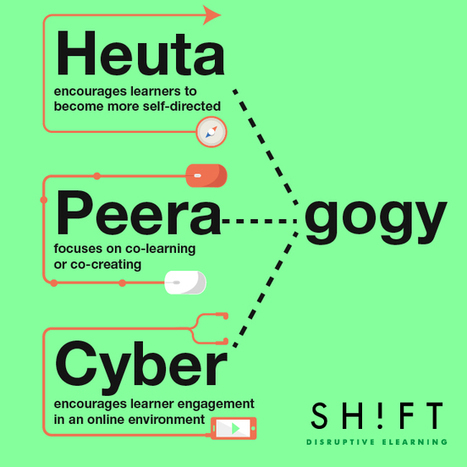
3 Key Concepts That Will Help You Understand Learning in the Digital Age

3 Key Concepts That Will Help You Understand Learning in the Digital Age | Distance Learning, mLearning, Digital Education, Technology | Scoop.it
These three "gogies" of effective online learning will help you get a clearer picture of learning and eLearning in the digital age.

Via Ana Cristina Pratas
niftyjock's curator insight, December 8, 2014 6:23 PM

New words, new insight, interesting!!

Rescooped by Dennis Swender from Voices in the Feminine - Digital Delights
May 20, 2015 3:27 AM
Scoop.it!

Using ePortfolios to Assess Program Goals, Integrative Learning, an Civic Engagement: A Case Example


Via Ana Cristina Pratas
No comment yet.
Rescooped by Dennis Swender from Voices in the Feminine - Digital Delights
May 20, 2015 3:26 AM
Scoop.it!

New modes of integration: Individuality and sociality in digital networks

New modes of integration: Individuality and sociality in digital networks | Distance Learning, mLearning, Digital Education, Technology | Scoop.it
New modes of integration: Individuality and sociality in digital networks

Via Ana Cristina Pratas
Ana Cristina Pratas's curator insight, January 12, 2015 11:23 PM


The rapid and fundamental changes of societal communication that occur against the backdrop of current media development (digitization) call for an extension of communication research by revisiting the social theoretical foundations of social cohesion and integration. Arguing that social change and media change are intimately tied up, we discuss important changes in the means and modalities of communication in the digital era as indicative of — and bound to — changes in contemporary modern societies. Based on a discussion of the concepts individualization and network, the paper devises a theoretical perspective that places current media convergence firmly at the center of social change. At the heart of this approach lies the concept of networked individuality as an increasingly important mode of creating personal identity and shaping social relations today.

Rescooped by Dennis Swender from Voices in the Feminine - Digital Delights
May 20, 2015 3:25 AM
Scoop.it!

Addressing Maslow's Hierarchy of Needs with Technology

Addressing Maslow's Hierarchy of Needs with Technology | Distance Learning, mLearning, Digital Education, Technology | Scoop.it
A major criticism I have of most educational institutions is that their primary focus is on students' intellectual and cognitive development.  Too often individual learner's needs do not enter into...

Via Ana Cristina Pratas
Suzanne's curator insight, February 1, 2015 6:23 AM

Addressing the whole student in education, not only the cognitive and intellectual development. Applying Abraham Maslow’s theory of a pyramid-shaped hierarchy — physiological needs, personal safety, social affiliation, self-esteem and self-actualization — to education is an ideal way to assess lesson plans, courses and educational programs.

CTD Institute's curator insight, February 2, 2015 11:32 AM

This is a must read article! It uses Matrlow

s hierarchy of needs to the educational technology reality.

Rescooped by Dennis Swender from Voices in the Feminine - Digital Delights
May 20, 2015 3:24 AM
Scoop.it!

Taking over someone else's e-learning design: challenges trigger change in e-learning beliefs and practices

Taking over someone else's e-learning design: challenges trigger change in e-learning beliefs and practices | Distance Learning, mLearning, Digital Education, Technology | Scoop.it
Taking over someone else's e-learning design: challenges trigger change in e-learning beliefs and practices

Via Ana Cristina Pratas
Ana Cristina Pratas's curator insight, February 10, 2015 5:58 AM
ABSTRACT

As universities invest in the development of e-learning resources, e-learning sustainability has come under consideration. This has largely focused on the challenges and facilitators of organisational and technological sustainability and scalability, and professional development. Little research has examined the experience of a teacher dealing with e-learning sustainability when taking over a course with an e-learning resource and associated assessment. This research focuses on a teacher who was inexperienced with e-learning technology, yet took over a blended unit of study with an e-learning resource that accounted for one-fifth of the subject assessment and was directed towards academic skills development relevant to the degree program. Taking a longitudinal approach, this research examines the challenges faced by the new teacher and the way she changed the e-learning resource and its implementation over two years. A focus of the research is the way the teacher's reflections on the challenges and changes provided an opportunity and stimulus for change in her e-learning beliefs and practices. This research has implications for the way universities support teachers taking over another teacher's e-learning resource, the need for explicit documentation of underpinning beliefs and structured handover, the benefit of teamwork in developing e-learning resources, and provision of on-going support.