


Before you claim you’re just “really busy” and you need it on you at all times, see how many of these symptoms you recognize in yourself.
Via malek

 Your new post is loading...
 Scoop.it! Before you claim you’re just “really busy” and you need it on you at all times, see how many of these symptoms you recognize in yourself. Via malek 
Scoop.it!

Want to know why you need to include Narrative In Your Online Learning? Check all the reasons why you need to include Narrative In Your Online Learning. Via EDTECH@UTRGV, diane gusa, malek
Scoop.it!
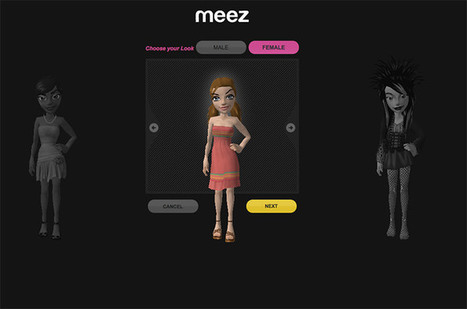
Thanks to many free web services, you don't have to pay an artist for your cartoon illustrations. All you have to do is upload your photo, or perform some mix and match. Here are 12 websites that allows you to create a cartoon a character of yourself. If you are not comfortable using real photos to represent yourself in any online profiles and avatars, why not create a cartoon characters of yourself? It’ll definitely be fun and unique to others when you are representing yourself in a cartoonized way in your online profiles. Read more: click image or title.
FREE Business Plan Template here: http://bit.l/1aKy7km Growthink teaches how to FUND, build, grow, and sell a great business: http://bit.ly/2hn5ROb Via Ana Cristina Pratas, Marc Kneepkens, malek
Scoop.it!

Google has unveiled plans to use its Squared Online course to disrupt the education system, as it says it is “successfully” merging classroom and online learning styles, something it claims rival tech firms have failed to do. Via Edumorfosis, malek
Scoop.it!

Twelve public higher education institutions in Maryland have been awarded grants to ramp up the use of open educational resources. Via Peter Mellow
Scoop.it!

Photo Mapo is a cool iPad app that allows you to add maps to your photos.You can use it to add context to photos you include in your instruction and create mapped collections that can be easily shared with others. Photo Mapo, as we have indicated in an earlier post, is on sale now for free and only for a limited period of time. This deal is valid at least in the Canadian and American iTunes App Stores. Hopefully it will be still free by the time you are reading this post. Via John Evans
Scoop.it!

The world of social media – good or bad – has given everyone with a computer or smartphone a platform and a voice. In the healthcare world, the ability for patients to post reviews and comments in real time can have a detrimental effect on physicians. Negative assessments (and positive ones, too) have the capability to reach thousands of people in a matter of seconds. So when it comes to reacting to some of the negative comments about a doctor or a specific interaction during a consultation, what is the best course of action? In a recent poll conducted by Physician’s Weekly, we asked our readers how they would handle such an instance. Is responding to a negative/unsatisfied patient the right thing to do? The results were: More than 3/4 of the respondents felt it was unnecessary to respond to negative comments from dissatisfied patients. With social media becoming more and more of a sounding board for anyone and everyone, it’s vital that medical professionals remain … professional. Related: Tips Provided for Leveraging Social Media Two experts from Allied World – Anne Huben-Kearney, RN, BSN, MPA, CPHQ, CPHRM; Pauline Barry, BSN, MPS, CPHRM, CPPS, DFASHRM – recently gave their opinions on this topic based on their own experience. According to the article, “The issue is not only how, but whether the healthcare entity or an individual physician should respond at all. This creates a quandary: responding to the patient/family could be a violation of patient privacy, even though the patient or family posted their own protected health information, but ignoring the issue could be perceived as a tacit agreement with the complaints or lack of concern with the feedback.” Related: Maximizing Potential with Social Media “The desire to ‘correct the record’ or give the other side of the story when faced with the negative online posting is natural. However, doing so may lead to an allegation of breach of confidentiality or other legal consequences.” The authors also gave four alternative responses to a negative online posting, which included: 1. Ignore the post if the comments are generally benign. 2. Respond to significantly negative or blatantly untruthful comments with a generic statement that explains your privacy rules and your process for receiving complaints. The statement should never identify that the individual is or was a patient but only confirm that your organization was named in the posting. 3. Contact local law enforcement immediately if the posting is a threat against a specific healthcare provider, staff member or other individual. These comments should be taken seriously and require immediate action. Make a hard copy of the postings to provide to law enforcement as the posting could be deleted by the individual making the threats. 4.Notify your insurance company’s Claims Department through a Notice of Potential Loss if any comments indicate that a medical malpractice or other claim against the healthcare organization is likely. Via Plus91
Scoop.it!

This infographic explores how digital signage can fit into your education strategy to address 10 common education challenges.
Scoop.it!

As education becomes more accessible with advanced technology, more and more students are opting to enroll in online schools or take some of their traditional college courses online. Via Kim Flintoff
Scoop.it!
Today we are seeing an explosion in doctors using public social media channels to talk with each other about clinical and practice matters. In this webcast, Da… Via Plus91
Scoop.it!

You’ve been keeping up with friends on Facebook for years. Email is pouring into multiple professional and personal accounts. Clinical tasks are piling up. Will you return that call to your mum? Invitations from colleagues to connect on LinkedIn, are gathering dust in your inbox… Maybe you actually need to meet with someone face to face?.. We are now expected to communicate using an overwhelming selection of different channels and networks. Many of us are already frustrated. So why would you want to use yet another social network? Twitter is one of the more mature and well known social networks. But it is also one of the hardest to understand. Why would a busy clinician use Twitter? Twitter allows users to broadcast SHORT updates of up to 140 characters to the whole world. ALL other twitter users can choose to follow what you are saying and can find anything you have previously posted. You choose who to follow, but ANYONE can follow you. It is this, brevity, openness and global reach which set twitter apart from the other social networks. My path to Twitter…I have a confession to make. I am a fairly new to using twitter regularly. As someone who identifies as being forward thinking and tech savvy, for a long time I had felt a little guilty for not being on board the twitter train. But like many people, I just couldn’t see how it would be useful to me.
However, this changed when I finally had something I wanted to tell the world about. Last year I started this blog with the intention of promoting discussion about innovation in General Practice. Naturally, I wanted to spread my message and let people know about the blog and twitter was one of a few obvious tools to do this. Once I began using Twitter, I began to follow and engage with other users, to enter into discussions and to hear what they had to say. I began to understand the platform and to finally see how it can be useful. How does Twitter work?To use and appreciate twitter properly, you need to understand the basic mechanics. Twitter has a steeper learning curve than most social networks, but once mastered it is a useful tool. Tweets – Posts with the option to attach pictures or videos. Every other twitter user will be able to follow and find what you have “tweeted”. The character limit of 140 characters keeps posts brief, focuses people to their point and makes it easy to follow what is being said.Followers – When you choose to follow another user, their tweets will be visible in your timeline. When they follow you, they will see your tweets in theirs. The more followers you have, the people will see your tweets.#Hashtag – This is perhaps Twitter’s most recognisable influence on modern culture. Topics, themes and events will have a hashtag. You can search for hashtags associated with topics or events that you are interested in. The most popular hashtags at anyone time are said to be “trending”. Add a hashtag to your post to allow others searching for a topic to find it. Learn what are the most popular hashtags in your field and use them.@Mention – Include the name of another user in your tweet and they will be notified that they have been mentioned. This is a way of attracting a user’s attention and encouraging them to engage with your tweet.Retweet – When you retweet a tweet from another user, it will be reposted in your own timeline and will be visible to your own followers, who can then also choose to retweet it too. This is an extremely important twitter mechanic. Tweets that are retweeted by many users spread across the network. These tweets are usually important, insightful, impactful, funny or otherwise noteworthy.Like – If you like a tweet, the user is notified of you appreciation. But unlike a retweet, it will not be reposted in your timeline.Lists – If you are following a large number of users, your timeline can become crowded. You can creating lists containing only certain users, such as just your medical news outlets for example. This allows you to look at tweets from only those users, providing another way to browse tweets in a more focused way.Direct Message (DM) – If you really need to communicate with another user privately, then you can send a direct message and it will only be visible to the two of you.5 REASONS WHY A DOCTOR WOULD USE TWITTER 1- Keeping up to date – You may not have enough time to check all of the news, medical, or journal publications that you would like on a regular basis. Most publications, even academic ones, will have a twitter account which you can follow. Important news and posts from these sources will appear together in your timeline. Some users are excellent at identifying, filtering and retweeting great content in their field. Find these people and follow them. 2- Networking and discussion – Talk about issues with others, make connections and expand your network. Contacts made on Twitter can become useful professional colleagues. 3- Enhanced experience of live events – Many events will acquire or be given hashtag. Following these hashtags can help you see what other people are thinking about an event you are interested in or attending. Follow conference hashtags, those for live TV shows (in the UK #BBCQT can be fun), or even breaking news. Keeping a step ahead of the TV news during the attempted July 2016 coup in Turkey was an interested experience. 4- Expose yourself to different perspectives – An interesting observation about recent political events, such as the Brexit vote and 2016 US election, was the notion that many people were in an opinion “echo chamber”. They were hearing only social media of updates and comments made or Iiked by their friends. Thus they were exposed overwhelmingly to views similar to their own, potentially strengthening cognitive biases and more extreme opinion. Deliberately following twitter users with different views to yourself can help you to maintain a balanced information diet and a more informed and objective perspective. 5- Find new patients – Physicians operating in private healthcare markets such as the US are increasingly using their social media presence to promote themselves and their services. A good way to recruit new patients. Top tips for clinicians starting out on Twitter Have a reason to be on Twitter. This might simply be keeping up to date in your field or with a hobby. Perhaps you have a message you want to spread or want to build your network? For me, Twitter only began to make sense, once I was clear about why I was using it. Complete your profile. Be sure to have a suitable username, a good profile picture of yourself and an appropriate description of you and your interests. Other users will look at your profile when deciding if to follow you. Search for keywords, organisations or hashtags of interest and see who is tweeting about them. Begin to follow these users. Look at your timeline and reply, comment and engage with tweets and users as well as posting your own information and insights. Build your own followers and network. And of course, remember to click here and follow me,
Most professional and regulatory bodies will have published their own social media guidelines. Be sure to read those applicable to yourself to ensure you don’t make any missteps or end up in trouble. In the UK the GMC and RCGP social media guideline are useful reading. Twitter for doctors in <140 characters:
Next, download the twitter app and get started. Via Plus91
Scoop.it!

Melissa Spears's curator insight,
August 24, 2015 4:17 AM
Positive traits of Online Education for which students are emphasizing more on Online Education |
Scoop.it!

17 Venn diagram templates, with examples of how to use them. Insert your own information, change colors and download as JPG, PNG or PDF. Via malek

malek's curator insight,
April 6, 2017 5:15 PM
A Venn diagram can be used in any field of study to visually represent relationships between concepts.
Scoop.it!

People are (rightfully) freaking out about their privacy as the Senate voted to let internet providers share your private data with advertisers. While it’s important to protect your privacy, it doesn’t mean that you should sign up to a VPN service and tunnel all your internet traffic through VPN servers. Via malek
Scoop.it!

Discover 30 useful eLearning tools and resources that can make your life easier! Via juandoming, malek
Scoop.it!

PinterestHelp Students Get Organized, Track Progress, Take Notes, and more with Google Keep! Google Keep is a robust G Suite tool that can help teachers and students create and share notes, lists, and reminders. There are so many possibilities that I decided to put together this post and infographic with ideas for how Google Keep can … Via malek
Scoop.it!

GE Teach Tour is a free tool that you and your students can use to create tours to play in the new web version of Google Earth. To get started head to geteach.com/tour/ then enter a title for your tour. The next step is to give your first placemark a title and to enter a description of the location you're featuring with that placemark. To place your placemarks in your tour you can either manually enter latitude and longitude coordinates or you can click on the map to insert your placemarks. Finally, to add images to your placemarks you will have to link to publicly available images that are in your Google Drive account or on another image hosting service like Flickr (by the way, linking to images found on sites that prevent hotlinking won't work). Via John Evans
Scoop.it!

The EDUCAUSE Center for Analysis and Research report, Higher Education’s Top 10 Strategic Technologies for 2017, identifies the new technological investments colleges and universities are actually planning and implementing in 2017, as well as technologies they are tracking or simply not addressing for the time being. ECAR defines a technology as “strategic” based on the time, active attention, and priority granted to it at a given time. Institutions can use the annual report as a guide to consider which technologies they might focus on, where they might be lagging, and where they might be leading. Via Carlos Fosca

Carlos Fosca's curator insight,
April 25, 2017 11:31 PM
Las aulas para aprendizaje activo son una tendencia global en las IES y hay que impulsar su desarrollo.
Scoop.it!
Dennis Swender's insight:
Idea for class blogs / discussion posts, i.e., opening up feedback to include all participants
Scoop.it!

Social media is omnipresent today. Be it in private life or at work, every action and decision can be instantly projected to millions of people worldwide. As with all technological advancements, the omnipresence of social media is potentially a double-edged sword.
Via Plus91
Scoop.it!
From tweets to likes, see how fast data is generated every second on the internet in this interactive visualization. Via Dr. Richard NeSmith
Scoop.it!

In today’s fast-paced world, most communication takes place on the web. People are connected to everything via smartphones, tablets and computers. If you want to convey a message, you have to know how to reach your audience online. At Crystal Clear Digital Marketing, that is our specialty. We offer optimal strategies for social media use and how it works in conjunction with marketing. As a medical professional, there are several ways for you to make social media work to your advantage. Why Use Social Media?Since social media is free to use, you cannot afford not to utilize it once you discover its many benefits. In case you are concerned about HIPAA, there are plenty of ways to use social media without creating any privacy issues. Here are just a few of the many good reasons to use social media if you are a physician or run a medical practice. You can get better reviews. According to research, 42 percent of Americans read health-related consumer reviews. Being active on social media and maintaining a good public image (as well as a personable one) boosts your ratings across several health review sites. If patients are unhappy or post a complaint, you can respond and resolve the issue. This shows that you care about patients and your reputation. Word of mouth creates an impact. Even if the “word of mouth” phrase has shifted more towards “word of computer,” this is still an important factor for your business. According to research, 32 percent of people ask their family members and friends about their experiences with doctors and ask for recommendations. Another 29 percent talk to other patients about their experiences with certain illnesses. If patients suggest your social media pages to their friends and family members, you can build your reputation even more. You can build meaningful relationships with patients. Using social media makes you more accessible. In a world where nearly everything is available on demand, you have to be as accessible as possible. People communicate these days differently. Not all people have the time or desire to pick up a phone or wait for a return call. They may want to send you messages with their questions on social media, because social media is a great tool for help with managing health today. You have a competitive edge. Not all physicians realize the value of social media, and many do not have a strong online presence. You can stand above the competition by building your own brand, being an innovator and making yourself an advocate for your community. If people can see and understand your passions and contributions through what they read online, your personal brand receives a strong boost. You have a more cost-effective marketing strategy. While paid ads and SEO are important, you should not rely solely on them for reaching a wider market. Since social media accounts are free to create, you can reach people without a big investment. You can also opt for paid ads to supplement your posts. Some social media sites provide analytic tools that help you see your reach, which types of posts garner the most engagement and how fast your follower base is growing. If you have satisfied patients, they will recommend you to their friends and family members. Types Of Social MediaToday, there are social media sites based on the following: BlogsVideosInformation sharingWritten communicationPhotosAlthough one or two social media accounts may benefit you, having a presence across all major networks is a great solution. For example, a plastic surgeon can benefit from using a photo sharing social media platform to share before-and-after pictures of different procedures. Research shows that about 30 percent of people view pictures related to diseases or procedures online before seeking treatment. A plastic surgeon could benefit from a video channel with demonstrations or informative videos about different procedures. Posting blogs about health tips or success stories and sharing the links to the posts using social media can boost traffic, increase revenue and draw in loyal patients. Tips For Effective ContentHere are a few basic tips for social media posts to make them engaging: Focus on teaching people valuable things that they might search for with a search engine.Use photos, videos or other visuals whenever possible.Follow other medical professions and professional associations.Join conversations about your area of expertise to increase your visibility.Join groups related to your area of expertise.Ask other medical professionals questions to start conversations online.Always strive for 100 percent accuracy when posting facts.Make posts that encourage discussions, answers or feedback to maximize engagement.How To Get StartedThe biggest obstacle for medical professionals who want to use social media is time. Doctors are too busy helping patients, saving lives and being health advocates to spend copious amounts of time building a strong online presence. Also, family and social commitments make it hard to maintain social media accounts. Our marketing professionals understand these dilemmas that are unique to you as a physician. Why spend the work doing it yourself when we can do it for you? We help dentists, plastic surgeons, cardiologists, family physicians and all other types of doctors optimize their social media accounts. Our experts determine your target market and help develop strategies for reaching people. Also, we focus on engaging and retaining your current patients. Social Media Marketing: A Holistic ApproachAs our name implies, our strategies are clear, simple and concise to give you crystal-clear results. These are some of the other ways in which we help you build your brand and reputation. Search Engine OptimizationThe algorithms for search engine ranking are always changing, and keeping up with those changes can be a full-time job. We stay current with trends and know how to optimize everything from your page code to social media posts for maximum site traffic or engagement. There are many other components of successful SEO, and we will be happy to discuss them with you. Search Engine MarketingSEM utilizes paid advertising. You can bid on keywords related to your area of discipline. When people search those terms and other terms such as your location, you rank higher in search engines. Also, there are other types of programs that show people your ad on different sites when they search relevant terms. SEM is a great tool to use along with traditional marketing tactics. Email MarketingOur email marketing strategies focus on attracting new patients and maintaining your current ones. Automated emails are very effective for attracting and keeping patients with follow-ups when they contact you or after you call them back. Think of it as a way to stay in the forefront of their minds to maintain engagement. Mobile MarketingMobile marketing is one of the most overlooked areas of online marketing today. However, more people use their tablets and smartphones to communicate, learn and search. If your blogs and sites are optimized for mobile platforms, you increase your potential viewers even more. We help you monitor mobile activity and develop strategies for quick conversion using the latest mobile technologies. BloggingMaintaining a blog and optimizing it boosts your traffic from organic searches and your keyword ranking on search engines. Also, you can make yourself an authority figure in your field of expertise. By posting useful content on a regular basis, you can gain more followers, more patients and more money. We can help you develop a strategy for creating posts that people will share across social media. Online marketing is similar to a recipe. Each ingredient is good and has its own qualities. When one is missing, it can affect the final outcome of combining all other ingredients. If all ingredients are combined and preparation methods are followed, the outcome is good. If you use several forms of marketing but neglect social media, your overall result may not be optimal. When you combine social media marketing with SEO, email marketing and use proper techniques, you are much more likely to meet and even exceed an ideal outcome. Since about 75 percent of medical professionals have yet to discover the full value of social media marketing and having a strong social media presence, now is the time to start building your unique brand. With innovative and knowledgeable online marketing experts on your side, you can meet your goals faster, establish yourself, strengthen your reputation or become an authority figure in your area of expertise. Via Plus91
Scoop.it!

In this “digital age,” the model of healthcare is changing rapidly, primarily in the area of communication that is happening among the major stakeholders each minute. Patients, being the central point of the importance of all the work and development, are more empowered than ever with information from various sources, among which social media is leading from the front. This article reviews how social media engages healthcare service providers, service seekers, and regulatory authorities. If the gaps in the current regulations are filled, better healthcare outputs can be triggered. This article also briefly explores the popular healthcare applications launched by leading pharmaceutical companies, encompassing the big data advantage, in this evolving era of patient centricity. Keywords: Big data, communication, healthcare, mobile applications, patient centricity, social media How to cite this article: Ray S. In sickness and in health: Clinical research and social media. Perspect Clin Res 2017;8:73-8 How to cite this URL: Ray S. In sickness and in health: Clinical research and social media. Perspect Clin Res [serial online] 2017 [cited 2017 Apr 16];8:73-8. Available from: http://www.picronline.org/text.asp?2017/8/2/73/203038
Click here to view
Click here to view
Click here to view
Via Plus91

raph's curator insight,
January 31, 2023 8:43 AM
Quando si tratta di questioni di salute, è fondamentale sapere quali sono le farmacie buone e cattive. Devi imparare cosa cercare in una farmacia per sapere se è quella giusta. Ricorda, hai a che fare con la vita, ecco perché devi stare attento a dove acquistare i tuoi farmaci e altre necessità farmaceutiche. <a href="https://www.google.it/url?q=https://farmaciadimagrante.com/Prodotto/acquista-ativan-online/" rel="dofollow">acquista-ativan-online</a> <a href="https://www.google.it/url?q=https://farmaciadimagrante.com/2022/08/15/acquista-adderall-30mg-online/" rel="dofollow">acquista-adderall-30mg-online</a>
Quando si tratta di questioni di salute, è fondamentale sapere quali sono le farmacie buone e cattive. Devi imparare cosa cercare in una farmacia per sapere se è quella giusta. Ricorda, hai a che fare con la vita, ecco perché devi stare attento a dove acquistare i tuoi farmaci e altre necessità farmaceutiche.
Quando si tratta di questioni di salute, è fondamentale sapere quali sono le farmacie buone e cattive. Devi imparare cosa cercare in una farmacia per sapere se è quella giusta. Ricorda, hai a che fare con la vita, ecco perché devi stare attento a dove acquistare i tuoi farmaci e altre necessità farmaceutiche.

Nay's curator insight,
June 7, 2024 2:35 PM
https://chaojiyaowu.com/
https://perderepesoefedrina.com/
Scoop.it!

Background: Given the rapid changes in the communication landscape brought about by participative Internet use and social media, it is important to develop a better understanding of these technologies and their impact on health communication. The first step in this effort is to identify the characteristics of current social media users. Up-to-date reporting of current social media use will help monitor the growth of social media and inform health promotion/communication efforts aiming to effectively utilize social media. Objective: The purpose of the study is to identify the sociodemographic and health-related factors associated with current adult social media users in the United States. Methods: Data came from the 2007 iteration of the Health Information National Trends Study (HINTS, N = 7674). HINTS is a nationally representative cross-sectional survey on health-related communication trends and practices. Survey respondents who reported having accessed the Internet (N = 5078) were asked whether, over the past year, they had (1) participated in an online support group, (2) written in a blog, (3) visited a social networking site. Bivariate and multivariate logistic regression analyses were conducted to identify predictors of each type of social media use. Results: Approximately 69% of US adults reported having access to the Internet in 2007. Among Internet users, 5% participated in an online support group, 7% reported blogging, and 23% used a social networking site. Multivariate analysis found that younger age was the only significant predictor of blogging and social networking site participation; a statistically significant linear relationship was observed, with younger categories reporting more frequent use. Younger age, poorer subjective health, and a personal cancer experience predicted support group participation. In general, social media are penetrating the US population independent of education, race/ethnicity, or health care access. Conclusions: Recent growth of social media is not uniformly distributed across age groups; therefore, health communication programs utilizing social media must first consider the age of the targeted population to help ensure that messages reach the intended audience. While racial/ethnic and health status–related disparities exist in Internet access, among those with Internet access, these characteristics do not affect social media use. This finding suggests that the new technologies, represented by social media, may be changing the communication pattern throughout the United States. Via Plus91
|







Before you claim you’re just “really busy” and you need it on you at all times, see how many of these symptoms you recognize in yourself.