Your new post is loading...

|
Scooped by
Romain
February 15, 2013 4:33 AM
|
Technology Development Approach Reduces Costs, Schedule for Fielding Bomber Upgrades -- Northrop Grumman Corporation (NYSE:NOC) will help drive down costs and speed the availability of new hardware and software upgrades for the B-2 stealth bomber under a recently awarded contract from the U.S. Air Force. The contract covers Technology Development (TD) Phase 2 of a multiyear effort by Northrop Grumman to modernize the B-2's defensive management system (DMS). TD Phase 2 is expected to last approximately three years. DMS is an electronic warfare system that includes various antennas and display processors. Northrop Grumman is the Air Force's prime contractor for the B-2, the flagship of the nation's long-range strike arsenal. "TD Phase 2 is the cornerstone of a rapid acquisition initiative that Northrop Grumman and the government developed to reduce B-2 DMS modernization costs and accelerate the availability of the latest technologies for the aircraft," said Lauren Stevens, director of the company's B-2 DMS modernization integrated product team. "Instead of relying on new hardware and software development, our initiative takes advantage of mature, proven technologies. It minimizes nonrecurring costs, and reduces the time and technology risks associated with fielding new capabilities." DMS modernization includes a new avionics graphics processor being developed by Lockheed Martin Mission Systems and Training, Owego, N.Y.; and new antennas, which are being developed by L3 Randtron, Menlo, Park, Calif., and Ball Aerospace, Boulder, Colo. Northrop Grumman serves as the B-2 system integrator and developer of the architecture that determines how the aircraft responds to threat environments. In this role, the company will integrate all new DMS hardware and requisite software onto the jet. "The DMS upgrades demonstrate how Northrop Grumman is using innovation and thoughtful engineering to address and fulfill key affordability goals of the Department of Defense," explained Ron Naylor, director of B-2 Modernization and Transformation for Northrop Grumman Aerospace Systems. "They also help ensure that the B-2 will remain the nation's most survivable and most effective long-range strike system for dealing with sophisticated enemy threats." TD Phase 2 of the DMS modernization program will include continued development and testing of the hardware and software for the new systems; evaluation, down-select and awarding of the contract for the new DMS antennas; and preparation by Northrop Grumman and its suppliers for the next phase of DMS modernization, known as engineering, manufacturing and development (EMD). As part of its plan to reduce costs and fielding schedules, Northrop Grumman accelerated forward into TD Phase 2 many significant engineering tasks normally conducted during EMD. EMD is expected to begin in late 2014.
|
|
Scooped by
Romain
February 15, 2013 4:29 AM
|
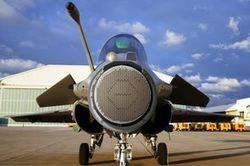
Les négociations pour l'achat par l'Inde de 126 Rafale de Dassault Aviation pourraient connaître une accélération et l'accord pourrait être conclu en juillet, ont indiqué jeudi deux sources au ministère indien de la Défense. Une date que le PDG de Dassault Aviation, Eric Trappier, n'a pas confirmée, tout en se déclarant "résolument optimiste". Le dossier du Rafale a constitué le fil rouge de la première journée de la visite d'Etat de François Hollande jeudi en Inde, même si la vente des avions de combats pour quelque 11 milliards d'euros, qui fait toujours l'objet de pourparlers sur les prix, le transfert de technologie et le choix du partenaire indien, ne sera finalisée lors du voyage présidentiel. Le président français et le Premier ministre indien, Manmohan Singh, ont tous deux fait état de "progrès" dans ce dossier. Le ministre indien de la Défense a déclaré la semaine dernière que les coupes budgétaires prévues cette année ne remettaient pas en cause l'achat de l'avion de chasse que le constructeur français n'a pas encore vendu à l'export. Dassault Aviation est entré en négociations exclusives avec New Delhi en janvier 2012 en vue de remporter ce contrat géant et le ministre français des Affaires étrangères, Laurent Fabius, a déclaré le 10 février que les choses avançaient positivement. "Les dossiers contentieux ont été grosso modo aplanis", a déclaré une source du ministère indien de la Défense. "Nous nous attendons à ce qu'un accord puisse être annoncé en juillet." Une date que le PDG de Dassault Aviation, Eric Trappier, n'a pas confirmée, tout en se déclarant "résolument optimiste". "Je m'en réjouis", a-t-il dit à la presse à propos de l'échéance de juillet. "J'y crois puisque c'est le client qui le dit, le client est roi, le client a toujours raison... souvent raison", a-t-il ajouté lors d'un forum économique à New Delhi". "Le plus tôt sera le mieux". TRANSFERTS DE TECHNOLOGIE Le dirigeant a souligné que la participation de Rafale aux conflit en Libye en 2011, et actuellement au Mali, avaient aidé à le défendre auprès des clients. "Malheureusement, ça aide", a-t-il commenté. "On se passerait de conflits, mais c'est aussi fait pour remplir les besoins. Cet avion est utilisé fortement au Mali et a fait preuve de qualités". Les conditions du transfert de technologie, la production en Inde et la co-entreprise avec Hindustan Aeronautics Ltd (Hal) ont retardé la conclusion des négociations de quelques mois, a déclaré une autre responsable du ministère indien de la Défense. Selon ces sources, Dassault a demandé le paiement d'un montant supplémentaire allant jusqu'à 2 milliards de dollars pour la modernisation future des technologies qui seraient transférées à l'Inde pendant la durée de 30 ans de l'accord. Face aux objections de l'Inde, Dassault a accepté de revoir ses prétentions à la baisse mais des négociations ont toujours lieu sur le calcul du coût de la maintenance des avions. L'Inde insiste aussi pour que 30% à 50% de la valeur du contrat aille à des entreprises indiennes, conformément au code indien des marchés publics révisé l'an dernier. Dassault veut diminuer ce pourcentage, affirmant que les Indiens n'ont pas la capacité d'y faire face. Selon les termes des négociations exclusives, l'avionneur français est censé vendre 18 Rafale fabriqués en France et le reste sera fabriqué en Inde, les entreprises locales fournissant au moins 30% de la valeur du contrat. L'Inde espère que le contrat occasionnera des retombées de l'ordre de trois à quatre milliards d'euros pour ses entreprises, souligne une source au ministère indien de la Défense. "RIEN À VOIR" AVEC FINMECCANICA Un autre point de discorde est le choix de Hal, une entreprise publique, comme partenaire de Dassault pour construire l'avion en Inde, la partie française émettant des doutes sur sa capacité à produire un appareil aussi sophistiqué. Mais pour les Indiens, ce point n'est "pas négociable" et il n'est pas question d'impliquer une entreprise privée. Les milieux d'affaires indiens bruissaient jeudi de l'affaire de soupçons de pots-de-vin dans la vente à l'Inde d'hélicoptères fabriqués par l'italien Finmeccanica. New Delhi a suspendu ses paiements pour ce marché et déclaré qu'elle n'accepterait pas de nouveaux appareils jusqu'à la conclusion d'une enquête. Interrogés à ce sujet, François Hollande et Eric Trappier ont insisté sur la probité des entreprises françaises. "Je peux ici prendre l'engagement qu'il n'y aura rien qui soit contraire aux principes qui nous sont communs, c'est-à-dire que le commerce doit être seulement avec des règles commerciales", a dit le président en conférence de presse. "C'est en fonction de la compétitivité et de l'efficacité que les choix peuvent être faits", a-t-il ajouté. "Dans la lutte contre la corruption nous sommes vigilants , comme l'Inde l'est, parce que c'est un principe essentiel". Le PDG de Dassault Aviation s'est lui aussi montré ferme. "Nous travaillons avec les autorités indiennes, nous n'avons rien à voir avec Finmeccanica et encore moins avec les problèmes qu'ils rencontrent", a-t-il assuré.
|
|
Scooped by
Romain
February 15, 2013 3:57 AM
|
|
|
Rescooped by
Romain
from Newsletter navale
February 15, 2013 3:43 AM
|
MOSCOW, February 14 (RIA Novosti) - Russian Northern Fleet aircraft have started patrolling the Arctic Ocean on a regular basis, Defense Ministry spokesman Capt. First Rank Vadim Serga said on Thursday. “So far this week, Northern Fleet aircrews have made three flights to the Arctic region,” he said. Two flights were made by an Ilyushin Il-38 May maritime patrol and anti-submarine warfare (ASW) aircraft and one by a Tupolev Tu-142 Bear maritime reconnaissance and ASW aircraft, he said. The ASW aircraft take off from fleet airbases in the Murmansk and Vologda regions and fly over international waters above the Arctic Ocean and along the Northern Sea Route, Serga said. The Navy patrol aircraft monitor the pack-ice near the Northern Sea Route to assist navigation for civilian ships in Arctic regions, Serga said. These patrols are in addition to strategic bomber patrol flights which Russia resumed over the Pacific, Atlantic and Arctic oceans in August 2007. According to the Defense Ministry, Tu-95 and Tu-160 strategic bombers fly an average of 50 such patrol missions every year. Russia has officially set the goal of deploying a combined-arms force including military, border, and coast guard units by 2020, to protect its political and economic interests in the Arctic and boost Russia’s military security. The Russian authorities have recently been calling for tighter security along the country’s Arctic frontiers as rapid pack-ice loss is making the region more accessible to maritime traffic. Russian Deputy Prime Minister Dmitry Rogozin said in December 2012 that Russia risks losing its sovereignty by the mid-21st century if it does not assert its national interests in the Arctic today. According to the US National Snow and Ice Data Center, in late 2012 the area covered by Arctic ice shrank to its lowest since 1979. “Climate change has increased the transport accessibility of the Arctic region. However, growing maritime traffic is likely to bring about more attempts at smuggling, illegal migration, drug trafficking… and other types of organized crime,” Yevgeny Lukyanov, a deputy secretary of the Russian Security Council, said at an international Arctic states conference in Norway’s Tromso. “That’s why Russia needs to cooperate with other Arctic states in strengthening and defending its Arctic borders and in monitoring transportation routes,” Lukyanov added. He denied Russia was pursuing military or geopolitical goals in the area.
Via Patrick H.
|
|
Scooped by
Romain
February 14, 2013 12:32 PM
|
D'ici 2020, les troupes russes de missiles stratégiques (RVSN) seront entièrement équipées de missiles tactiques Iskander, a annoncé jeudi le chef d'Etat-major général russe Valeri Guerassimov. "A l'horizon 2020, nous rééquiperons toutes les brigades avec des systèmes de missiles Iskander", a indiqué M.Guerassimov lors d'une conférence de presse tenue à Moscou. Les missiles opérationnels tactiques Iskander-M de haute précision sont destinés à détruire différentes cibles terrestres, qu'il s'agisse de missiles, de l'artillerie à longue portée ou de systèmes antimissiles et de DCA. Ils sont dotés d'une portée de 280 km.
|
|
Scooped by
Romain
February 14, 2013 12:30 PM
|
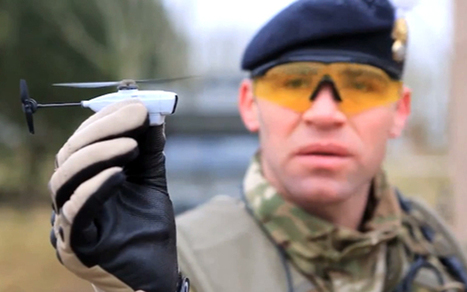
Sergeant Carl Boyd shows off a remote controlled miniature helicopter with three cameras on-board.
|
|
Scooped by
Romain
February 14, 2013 5:12 AM
|
The UK Ministry of Defence (MoD) has selected Heli-One for a long-term Contractor Logistics Support (CLS) arrangement for the Puma HC2 helicopter fleet’s Makila 1A1 engines. The new 13 year contract was signed between the MoD and Heli-One on 7 February. The Royal Air Force (RAF) No. 33 and 230 Squadron’s fleet of 24 Puma HC2s will be serviced by a pool of new, powerful Makila 1A1 engines. Heli-One will support the engines under a service support model that includes the ability to sustain engine availability using Makila 1A1 assets from Heli-One’s own stock if required. The MoD will be able to forecast schedules of expenditure based on planned flight hours logged through an RAF and Heli-One dual reporting system.
Engine repair and deep overhaul activity will take place in Heli-One’s facility in Stavanger, Norway. Heli-One Norway’s Turbomeca-approved engine shop is a centre of excellence for Makila support, and has been repairing and overhauling Makila engines for over 20 years. The scope of the contract will also involve Heli-One technical engineers being permanently embedded at RAF Benson to work as a team with RAF operations staff.
|
|
Scooped by
Romain
February 14, 2013 5:10 AM
|
South African Denel Mechem has recently sold ten CASSPIR 2000 mine protected vehicles to Benin and has 15 on order with the United Nations as it promotes the latest version of the CASSPIR mine protected armoured vehicle. The Casspir 2000 is the latest variant of the world renowned armored vehicle. The CASSPIR 2000 emerged from the shortage of old CASSPIR Mk 1 and 2’s available for refurbishment. Denel saw a niche as there were no more second hand CASSPIRS to rebuild, yet there is demand for the vehicles.
|
|
Scooped by
Romain
February 14, 2013 5:08 AM
|
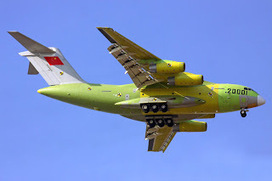
If There Were ever year aircraft That should grow in capability, China's newly flown Y-20 Would Be Airlifter it. The prototype That Took to the air on January 26 matt what looks like a modern airframe with obsolete 1960s-technology engines. Together, They Represent probably no more than a serviceable design standard, Offering only modest advances in capability over the Ilyushin Il-76 That Operates Already China. But a better engine is under development for the Y-20. If and when Technologically challenged China's aero-engine industry can get that high-bypass turbofan ready, then the shoulds Airlifter surge in performance. More distantly, a truly modern engine under development for Comac C919 airliner Could the also be available. Successful development of the Y-20 airframe is in Itself year major accomplishment for the Chinese industry, more than six in Which decades of Communist history has-been only slowly and haltingly weaning Itself from copying foreign types, mostly Soviet-era Russian designs. Underscoring this point, the Y-20 is the Largest indigenous Chinese aircraft built so far, unsuccessful Exceeding the Y-10 airliner tested in the early 1980s. The Y-20 will not enter Service before 2017, two Chinese military selon academics, Zhang He and Li Wei, writing in China Youth Daily, a major national newspaper. They say aussi que la Y-20 airframe Incorporates composite materials (although MOST of it Appears to be aluminum) and a "supercritical" wing. It is not clear Whether the objective is to have a new engine ready by Service entry. The Y-20 is an Entirely new design, even though it is close in size and shape to the Il-76, Which uses the same D-30KP Saturn medium-bypass engine as the Chinese Airlifter's prototype. Compared with the Il-76, the Y-20 HAS shorter wingspan and a shorter, but slightly WIDER fuselage. The Y-20 is larger than the Airbus A400M and about the same HAS fuselage diameter, much smaller than goal is the Boeing C-17. Specifications Estimated by Aviation Week (see table) and photometrically Determined Including dimensions, vary from figures quoted by Zhang and Li The academics say the Y-20's span is 45 meters (148 ft.), Length 47 meters, height 15 meters , gross weight "over 200 tons" and 66 tons payload. They give no source, purpose Their preliminary figures Could be Estimated numbers in 2006, When the project was about Effective Launched 15 years of study. Comparison with the IL-76 suggests que les published weight and payload figures are too high for a Version fitted with the D-30KP. In late 2009, Hu Xiaofeng, general manager of the AVIC Aircraft-the airplane-wide specialist filiale of aeronautics group Avic-said the Y-20 was in the "200-ton class" and Would Be unveiled at the end of That year. Purpose it was not unveiled then, Suggesting airframe or engine que le program HAD hit trouble. The Xian Aircraft building plant is the Y-20 was rolled out in Which December 2012
|
|
Scooped by
Romain
February 14, 2013 5:06 AM
|
Chinese Loitering Harpy Suppression of Air Defense (SEAD) fire and forget system which was acquired from the Israel to destroy the hostile radars, airdefence systems.
|
|
Scooped by
Romain
February 14, 2013 5:03 AM
|
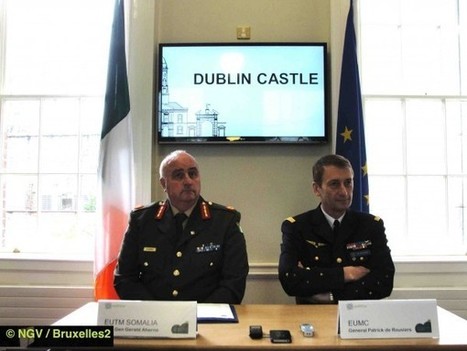
On ne le sait pas vraiment. Mais la formation des soldats somaliens par les forces de l’Union européenne est « un des grand succès de la politique européenne de défense » a tenu à souligner le général irlandais Gerald Aherne, qui a pris le commandement de cette mission EUTM Somalia. « Nous avons formé 3000 soldats qui constituent aujourd’hui le coeur des nouvelles forces nationales somaliennes » et ont pour tâche de « stabiliser la situation à Mogadiscio et aussi en dehors ». Ce qui a permis « d’augmenter de façon significative la zone d’action (footprint) du gouvernement somalien » a-t-il précisé lors d’un petit point de presse effectué à l’issue de la réunion informelle des ministres de la Défense ce mercredi (13 février). Pour le général, « il y a un lien direct entre la stabilisation de la Somalie et la formation de l’armée somalienne ». Des formations spécialisées L’effectif actuel est de 87 Européens de 13 pays différents, basés à Bihanga (Ouganda) avec des équipes en renfort pour les formations spécialisées : Civilo-Militaire (CIMIC), génie, détection d’engins explosifs (contre-IED), police militaire… « Chaque armée apporte ce qu’elle a le plus de forces, là où elle est le plus capable. C’est là, la force européenne » a ajouté le général De Rousiers, conseiller militaire de la Haute représentante de l’UE. Défi : gérer le déménagement … Tout le défi aujourd’hui pour l’équipe du général est de gérer le déménagement vers Mogadiscio. Une requête expresse du gouvernement somalien. Ceci ne pourra se faire a-t-il précisé que sous deux conditions : que la sécurité soit assurée sur place et que la génération de forces soit positive. Une conférence de génération de forces devrait avoir lieu d’ici la fin du mois pour identifier les apports des Etats membres. … et compléter la génération de forces Là encore, comme pour nombre de missions européennes, c’est la protection de la force (force protection) et le soutien médical qui manquent. « Nous travaillons avec nos partenaires de façon étroite pour que ces conditions soient remplies » a précisé Aherne. Avoir un Rôle 1 et Rôle 2 (infirmerie et hopital de campagne), c’est une obligation. Mais c’est comme « une police d’assurance, nous espérons ne jamais y recourir ». Selon les informations recueillies par B2, plusieurs options sont sur la table, soit des contributions fournies par les Etats membres, soit des éléments “contractés” (contractors). Le déménagement complet ne pourrait pas se produire avant la fin de l’année.
|
|
Scooped by
Romain
February 14, 2013 4:56 AM
|
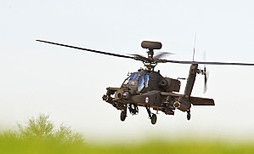
Two production contracts to continue upgrading U.S. Army Apache helicopters have been given to Lockheed Martin. The awards -- for upgrading of the attack helicopter's Modernized Target Acquisition Designation Sight/Pilot Night Vision Sensor -- are worth $161.7 million and ensure that production at the company's Missiles and Fire Control's facilities in Florida will continue into 2016. Work under the new contracts will include production of 482 Modernized Day Sensor Assembly Modernized Laser Rangefinder Designator kits and spares. "These two production lots represent our continued confidence in Lockheed Martin Missiles and Fire Control to provide a high-performing, high-quality, reliable LRFD for the AH-64D/E," said Lt. Col. Steve Van Riper, U.S. Army product manager of Apache Sensors. "We look forward to our first delivery and subsequent fielding of this capability." "M-DSA M-LRFD kits reduce ongoing obsolescence while significantly increasing system performance," added Matt Hoffman, director of M-TADS/PNVS programs at Lockheed Martin Missiles and Fire Control. "These contracts demonstrate the customer's commitment to ensuring our soldiers have superior capabilities as they carry out their missions."
|
|
Scooped by
Romain
February 14, 2013 4:55 AM
|
The French defence procurement agency (DGA) has selected Astrium Services and Actia Sodielec to create the system “Comcept”, France’s first full-IP military ultra-fast broadband satellite communications network • Comcept will complement the capabilities provided by the French Ministry of Defence’s Syracuse satellite system • Thanks to Comcept, the French armed forces will be among the first in the world to be equipped with a military satcom network operating in Ka-band, the frequency range of the future • Astrium has unique expertise in new Ka-band satellite communications networks, acquired notably through its work on the United Arab Emirates’ Yahsat system and Eutelsat’s KA-SAT satellite 13 February 2013 - Astrium, Europe’s leading space technology company, and its partner Actia Sodielec, specialists in military telecommunications, have been awarded the Comcept contract by the French defence procurement agency (DGA). The contract will run for 17 years. As of 2014, Comcept will provide the French armed forces with access to additional broadband satellite capacity over and above that provided by the existing Syracuse system. Comcept will mainly utilize capacity on the French-Italian satellite Athena-Fidus – scheduled for launch within the next 12 months – and will also be compatible with future commercial satellite networks operating in Ka-band, which will provide global coverage. Through Comcept, the French army, air force and navy will benefit from a network of fixed and deployable ground stations, the latter deployable both in France and in theatres of operation, allowing them to exchange data, videos and telephone communications using latest-generation, full-IP (Internet Protocol) technology. The contract also provides for the option of equipping vehicles, ships, planes and drones with built-in mobile stations. Comcept is designed to provide the French armed forces with a Ka-band ground segment for secure ultra-fast broadband communications by satellite. It will become the first military network of its type in Europe, and will make use of the latest IP network solutions on the market, while also optimizing costs. “Having built the Yahsat system for the armed forces of the United Arab Emirates and the KA-SAT satellite for Eutelsat, Astrium is a key player in new satellite networks operating in Ka-band, the frequency range of the future,” said Astrium Services’ Chief Technical Officer Eric Soulères. “Thanks to Comcept, the French armed forces will join their American and UAE counterparts in a very select group of armed forces who have military Ka-band networks.” Astrium Services is the prime contractor for Comcept in France and will also be responsible for the engineering and testing of the system. For the duration of the contract (17 years), the company will also ensure the system remains operational and secure. Astrium will be working in partnership with its co-contractor Actia Sodielec, a medium-sized company specialising in satellite telecommunications and supplier to the French Ministry of Defence. Actia Sodielec will be in charge of the engineering, integration and operational maintenance of the ground stations. To bring the Comcept project to fruition, Astrium will draw on its unique Ka-band expertise, unrivalled in France, acquired while building the Yahsat system for the armed forces of the United Arab Emirates and Eutelsat’s KA-SAT satellite, which provides internet services across Europe. The world’s leading military satellite telecommunications provider, Astrium Services’ customer portfolio includes some of the world’s most modern armed forces, including the UK, France, Germany, the USA and NATO. Astrium Services has been developing and delivering innovative solutions and services to the French Ministry of Defence for many years. For example, since 2005, Astrium Services has been providing a range of satellite telecommunication services to the French armed forces under the ASTEL convention, a framework agreement with DIRISI, the joint directorate of infrastructure networks and information systems responsible for the management of military satellite communication services. And since 2008 Astrium has also been providing communication services for French military personnel deployed on overseas missions, enabling servicemen and women to keep in touch with their families and friends through an Internet portal called “Escale des Armées” (previously known as “Passerel”). Moreover, in 2008, the DGA awarded a contract to Astrium Services for the development of the Telcomarsat naval satellite communication system. For more information on Astrium Services’ military satellite communications systems, go to: www.astriumservices.com About Astrium Astrium is the number one company in Europe for space technologies and the third in the world. In 2011, Astrium had a turnover close to €5 billion and 18,000 employees worldwide, mainly in France, Germany, the United Kingdom, Spain and the Netherlands. Astrium is the sole European company that covers the whole range of civil and defence space systems and services. Its three business units are: Astrium Space Transportation for launchers and orbital infrastructure; Astrium Satellites for spacecraft and ground segment; Astrium Services for comprehensive fixed and mobile end-to-end solutions covering secure and commercial satcoms and networks, high security and broadcast satellite communications equipment and systems, and bespoke geo-information services, worldwide. Astrium is a wholly owned subsidiary of EADS, a global leader in aerospace, defence and related services. In 2011, the Group – comprising Airbus, Astrium, Cassidian and Eurocopter – generated revenues of € 49.1 billion and employed a workforce of over 133,000.
|
|
|
Scooped by
Romain
February 15, 2013 4:30 AM
|
US and Thai troops are training together in the opening act of 2013's Cobra Gold exercises. Cobra Gold 2013 started today with an amphibious assault simulation, involving more than 300 US Marine Corps and Royal Thai Marine Corps personnel. Exercise Cobra Gold is the longest-established exercise of its kind in the Pacific region. Its roots lie in a goal to allow US and Thai troops to train together but, since the first Cobra Gold, it's been expanded massively, allowing in other nations too. Consequently, the 2013 edition involves military personnel from Japan, Indonesia, Singapore, Malaysia and South Korea, besides the two original countries. They're just the active participants: overseeing proceedings are representatives from no less than 20 other countries. US and Thai Troops Exercise Cobra Gold 2013's opening onslaught was staged on several levels, with US and Thai troops travelling to shore in small boats and landing craft while, overhead, USMC F-18D Hornets and AV-8B Harrier IIs flew on patrol. Other airborne assets set to participate at some point over the next week include US Marine Corps KC-130J Hercules tactical transporters and MV-22B Osprey V-STOL transport aircraft, along with Royal Thai Air Force F-16 Fighting Falcon multirole fighters and L-39 Albatros fighter/trainers. Further scenarios will be played out in coming days and they'll include disaster response taskings and humanitarian aid missions, besides purely military undertakings. Cobra Gold 2013 Cobra Gold 2013 was launched by Navy Adm. Samuel J. Locklear III. "Whether you are a participant or an observer, or whether you have been here for 32 years or this is your first year, your being here demonstrates your country's resolve to peace and stability in this region and in the world", he told those present. "It is critical to building our multinational coordination, our interoperability with all of our partners in the region and to allow us to collectively respond to crises and protect the peace and prosperity of all our people."
|
|
Scooped by
Romain
February 15, 2013 3:59 AM
|
Navy researchers are working on a project to develop three classes of robotic bomb disposal ground vehicles using a common open architecture. A prototype of the AEODRS bomb disposal robot.
(Photo courtesy of AUVSI) The Advanced Explosive Ordnance Disposal Robotic System program, known as AEODRS, is working on a family of ground robots ranging from a 35-pound ‘bot that a sailor or Marine could carry in a backpack to one weighing several hundred pounds that, when mounted on a vehicle, could respond to explosives threats at airfields and bases. A third version, or increment, would be a 160-pound unmanned ground vehicle. Brian Brezina, technical project manager of AEODRS, explained the expected cost savings the program could produce Tuesday (Feb. 12) at an unmanned systems conference. The three-day review of government programs for ground, air and maritime systems is sponsored by the Association for Unmanned Vehicle Systems International (AUVSI), a robotics industry trade group.
|
|
Scooped by
Romain
February 15, 2013 3:45 AM
|
Le Emirats Arabes Unis vont-ils donner au VBCI de Nexter la même chance que l'Inde au Rafale de Dassault ? Même si la prudence reste de mise, l'ouverture, dimanche, du salon Idex d'Abou Dhabi pourrait être l'occasion d'une annonce majeure : celle du vainqueur de l'appel d'offres géant portant sur l'achat de 700 blindés à roues. Face au VBCI de Nexter, deux autres blindés sont en lice pour décrocher la timbale : l'AMV du finlandais Patria, et l'Arma du turc Ottokar. A l'origine, Abou Dhabi souhaitait que l'industriel retenu crée une filiale avec la société locale Tawazun, le bras armé local en matière d'industrie de défense. La procédure a connu son lot d'avancées et de suspensions, avant que les émiriens finalement n'optent pour un achat sur étagère plus classique. Première référence export Pour Nexter, l'enjeu est de taille : par son volume -700 exemplaires même si une majorité serait produite hors de France -l'appel d'offres décidera du destin à l'exportation du VBCI, qui, comme le Rafale , cherche toujours sa première référence internationale. Conçu pour les besoins de l'armée de terre française, le VBCI a été commandé à 632 exemplaires. Sur ce total, environ 450 ont été produits, et plusieurs engagés en Afghanistan ou plus récemment au Mali. On devine sans mal le deuxième grand enjeu pour Nexter : pareille commande à l'export permettrait de prendre le relais de la production nationale qui s'approche tout doucement de sa fin (le dernier VBCI français doit sortir de chaîne à Roannes fin 2014). Seulement, avec les Emirats, on ne sait jamais, tant qu'elle n'est pas intervenue, si une annonce aura lieu ou non. Les plus prudents rappellent le cas du Leclerc. Quelques heures avant l'annonce par Abou Dhabi du contrat d'achat du char lourd français -c'était il y a 20 ans -les américains étaient persuadés d'avoir placé leur Abrams. Un hôtel avait même été réservé pour fêter la signature du contrat. Laquelle intervint bien, mais en faveur de l'ex-Giat, après une négociation de dernière minute... Aujourd'hui, la configuration est différente, puisqu'il s'agit d'annoncer la vainqueur de l'appel d'offres avec qui le plus dur s'engagera derrière : négocier un contrat. Si la chance lui sourit, le VBCI emirien sera différent de son cousin français puisqu'il devra incorporer la tourelle beaucoup plus armée du BMP-3, un blindé d'infanterie russe qu'Abou Dhabi a acquis à près de 400 exemplaires.
|
|
Scooped by
Romain
February 14, 2013 12:34 PM
|
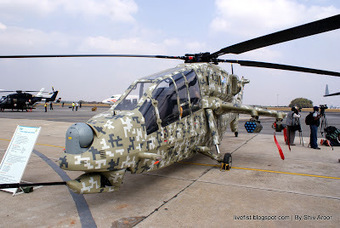
Scoped out the 2nd prototype of the Light Combat Helicopter today on the flightline at Aero India. The third prototype of the LCH joins flight test very shortly, and promises to be the final shape and configuration of the helicopter. The LCH programme is speeding along well. More details about current tests soon.
|
|
Scooped by
Romain
February 14, 2013 12:31 PM
|
D'ici 2020, l'armée russe recevra des systèmes antiaériens et antimissiles S-400 et S-500, ainsi que des drones de fabrication nationale, a annoncé jeudi le chef d'état-major russe, le général Valeri Guerassimov.
"Il est prévu de créer d'ici 2020 des brigades aérospatiales équipées de systèmes S-500 et S-400. Des drones de fabrication nationale seront également mis à la disposition des forces armées", a déclaré le général lors d'une conférence à Moscou.
Il a ajouté que l'armée russe recevrait en outre 200 nouveaux avions de transport militaire.
Développés par le bureau d'études Almaz-Anteï, les missiles sol-air S-500 sont en mesure de détruire 10 cibles simultanément volant à une vitesse de 7 km/sec à 200 km d'altitude, ainsi que les ogives de missiles de croisière hypersoniques.
|
|
Scooped by
Romain
February 14, 2013 5:18 AM
|
Les discussions avec la France sur la vente du Rafale à l'Inde "progressent bien", a déclaré jeudi le Premier ministre indien, Manmohan Singh, lors d'une conférence de presse conjointe avec le président français, François Hollande. "Les discussions sur le contrat sur le MMRCA (avion de combat multirôle) progressent bien", a-t-il dit. L'Inde est entrée en janvier 2012 en négociations exclusives avec Dassault Aviation pour doter son armée de 126 avions Rafale, un contrat estimé à 12 milliards de dollars. Après une longue série de déceptions, il s'agirait du premier succès à l'exportation pour l'avion de combat français qui a été engagé sur les théâtres d'opérations afghan, libyen et malien M. Hollande a pour sa part indiqué que "le Premier ministre (indien) et moi-même avons constaté des progrès dans la discussion et j'ai bon espoir que nous pourrons parvenir à la conclusion". Le PDG de Dassault Aviation, Eric Trappier, a récemment dit espérer conclure avant la fin de l'année la vente des Rafale à l'Inde. La semaine dernière, le chef d'état-major de l'armée de l'air indienne a pour sa part dit espérer que la signature de ce contrat intervienne "avant la mi-2013". Accompagné d'une forte délégation de chefs d'entreprise français, François Hollande est arrivé jeudi en Inde pour une visite d'Etat à forte teneur économique.
|
|
Scooped by
Romain
February 14, 2013 5:10 AM
|
|
|
Scooped by
Romain
February 14, 2013 5:09 AM
|
India has rejected Israel’s Iron Dome air defense system, offered to the Indian Air Force nearly two years ago. Marshal Norman Anil Kumar Browne, the Indian Air Force (IAF) chief, told reporters at Aero India 2013 that Iron Dome is not suitable for the service. The announcement puts to rest speculation in the media that India is negotiating to buy Iron Dome from Israel. Sources in the Indian Ministry of Defence (MoD) attending Aero India said India and Israel have been discussing the purchase of Iron Dome and the David Sling air defense system, jointly made by the U.S. and Israel, for more than two years. David Sling is jointly produced by Raytheon and Rafael Advanced Systems of Israel, while Iron Dome is manufactured by Rafael.
|
|
Scooped by
Romain
February 14, 2013 5:06 AM
|
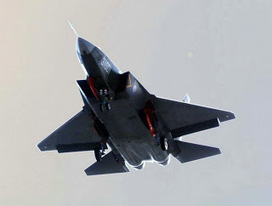
New set of images of the Chinese F-60/J31 Shen Fei (Falcon Eagle) fifth Generation Stealth Fighter Jet from its flight in Feburary 2013.
|
|
Scooped by
Romain
February 14, 2013 5:05 AM
|
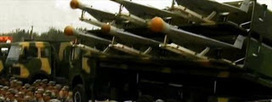
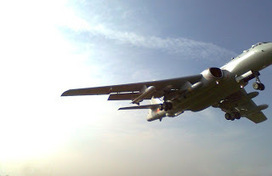
Chinese H-6K strategic bomber spotted carrying four YingJi-63/KD-63 air-launched cruise missiles.
|
|
Scooped by
Romain
February 14, 2013 4:57 AM
|
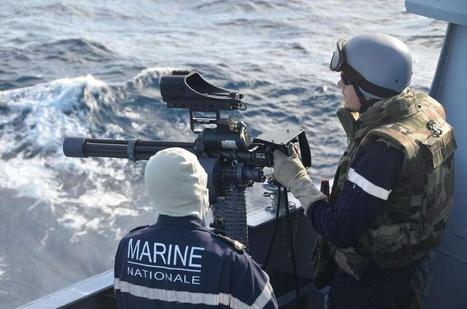
Enfin de l’artillerie légère moderne ! La Marine nationale a acquis auprès de la société américaine Dillon Aero des mitrailleuses multitubes M134. Ce système dispose de six affûts couplés de 7.62mm capables de tirer 3000 coups par minute. Bien que non télé-opéré et nécessitant donc un servant, on imagine que l’arrivée du Dillon M134 est vivement appréciée par les marins français, contraints jusqu’ici de se contenter, pour la défense à très courte portée, de vieilles « sulfateuses » du type AN F1 datant des années 60… Eprouvé dans de nombreuses forces armées terrestres, aériennes et navales (notamment l'US Army et l'US Navy), le système américain, plus puissant et précis, renforce significativement l’autoprotection des bâtiments, notamment contre les menaces asymétriques, comme les attaques d'embarcations rapides. Les premières unités françaises équipées sont les frégates du type La Fayette (deux Dillon par bâtiment), pour lesquelles ce système pourrait se révéler très utile lors de leurs déploiements au large de la Somalie dans le cadre de la lutte contre la piraterie. L’emploi du Dillon pourrait ensuite se développer sur d’autres plateformes, comme les bâtiments de projection et de commandement, pour lesquels la marine souhaite un renforcement de l’autoprotection. De manière générale, la mise en place d’une artillerie légère moderne demeure un réel besoin pour les unités de la Marine nationale, qui accusent en la matière du retard par rapport à d’autres grandes flottes. Une faiblesse également palpable dans le domaine des canons télé-opérés de moins de 30mm, les premiers matériels de ce type ne devant faire leur apparition qu'avec la frégate multi-missions Normandie, qui embarquera deux canons de 20mm Narwhal et sera livrée en 2014.
|
|
Scooped by
Romain
February 14, 2013 4:55 AM
|
The Guardian newspaper is reporting that Almost 450 drones operated by the British military have crashed, broken down or been lost in action during operations in Afghanistan and Iraq over the last five years. The newspaper bases that on statistics released under Freedom of Information law. More from the Guardian: The Ministry of Defence has disclosed for the first time the five Unmanned Aerial Vehicle (UAV) systems used in the conflicts and the number that have perished due to pilot error, technical faults or the undesirability of retrieving them from hostile areas. The figures show the military has lost one Reaper drone since 2007 – it is the only UAV that carries Hellfire missiles as well as surveillance and intelligence-gathering equipment. The drone, which has not been replaced, cost £10m. There have been nine losses of another large UAV, the Hermes 450. Eight of the £1m aircraft were lost in Afghanistan and another in Iraq. The surveillance fleet has halved in size because of the incidents. The UAV to suffer most is the Desert Hawk 3, a small hand-held UAV used by the army: 412 have crashed or been lost in the last five years. British forces have been using other mini-UAVs, the Black Hornet, and the Tarantula Hawk, in Afghanistan; 25 of them have perished during operations. The Black Hornet is the latest piece of UAV equipment to be deployed in the conflict. A mini-helicopter, it is equipped with a camera which gives troops video and still images.
|