Your new post is loading...

|
Rescooped by
Romain
from Newsletter navale
June 14, 2013 2:20 AM
|
The U.S. Navy’s P-8A Poseidon needs more “critical testing” before the service decides to buy production models of the submarine-hunting plane, according to the Pentagon’s inspector general’s office. The Defense Department next month plans to hold a meeting to decide whether to begin full production of the Boeing Co.-made aircraft — before testing is completed to determine whether it meets life-expectancy requirements, according to the summary of an audit released this week on the website of the Defense Department’s Office of Inspector General. “Additional critical testing should be completed before the full-rate production (FRP) decision,” according to the summary dated June 10. The author of the report wasn’t listed. The Pentagon’s inspector general position has been vacant for months. The office is headed by Principal Deputy Inspector General Lynne Halbrooks. A decision by the Pentagon’s top weapons buyer, Frank Kendall, to purchase the first 13 production models of the aircraft at an estimated cost of $2.6 billion “based on incomplete test results could result in costly retrofits to meet lifespan and mission and system performance requirements,” it states. The overall cost to develop and build 122 of the aircraft is estimated at $34.9 billion, according to figures the Pentagon released in May. The P-8 Poseidon made by Chicago-based Boeing is based on the company’s commercial 737–800 twin-engine narrow-body airliner. The naval version is designed to replace the P-3C Orion made by Bethesda, Md.-based Lockheed Martin Corp, in conducting long-range missions to hunt submarines, among other ships, and collect intelligence, according to the Navy. The IG office recommended for Kendall to buy the aircraft under a contract for low-rate production and delay the full-rate production decision until Capt. Scott Dillon, the Navy’s program manager for maritime surveillance aircraft, demonstrates that the plane will be able to survive its 25-year lifespan without structural fatigue, overcome mission-limited deficiencies, and hunt submarines and perform other primary missions.
Via Patrick H.
|
|
Rescooped by
Romain
from Newsletter navale
June 14, 2013 2:19 AM
|
(Infodefensa.com) L. Vasquez, Santiago, Chile - The Chilean Navy has asked his government authorization and funding to purchase the ship amphibious assault transport 12,000 tons Sirocco , according to confirmed sources of the sector solvents Infodefensa Chile .According to sources, the Commander in Chief of the Chilean Navy, Admiral Edmundo Gonzalez , and confirmed the government's interest in incorporating strength ship offered by the French authorities. However, managing to complete the sale shall rest González successor, Admiral Enrique Larrañaga , who takes office next June 18. The Sirocco will be removed from service by the National Marine France later this year as part of the implementation of military cuts announced in the Defence White Paper , published by the French Government in April. As part of plans to increase its force projection capability from the sea, at the end of 2011 Chile acquired the former Lightning, Sirocco Twin. The ship was renamed Sergeant Village and joined the fleet of the South American country in early 2012. The Chilean Navy plans considered to have two amphibious assault ships, so that one of the ships is always in working condition, while the other is in regular maintenance periods or unexpected repairs. The same plans establish a preference for both assault ships are the same model or design, to reduce operating costs and logistics. According to sources in Santiago, the former transfer contract signed in late Foudre 2011 included a provision that gives Chile the first option to buy the Sirocco. In 2012, the Chilean Navy activated a Amphibious Expeditionary Brigade (BAE) 1,400 troops strong. The force, described as rapid deployment consists of two reinforced battalions of infantry amphibians and other support units Marines, plus a mobile anti-aircraft battery of the Air Force.
Via Patrick H.
|
|
Rescooped by
Romain
from Newsletter navale
June 14, 2013 2:19 AM
|
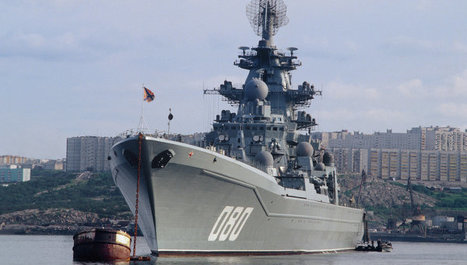
MOSCOW, June 13 (RIA Novosti) – The Admiral Nakhimov, a nuclear-powered missile cruiser currently being overhauled and modernized, will rejoin the Russian Navy in 2018 with the most advanced weapons systems for its vessel type, the Sevmash shipyard said Thursday. The Kirov-class cruiser, known as the Kalinin until 1992, was commissioned in 1989 and mothballed in 1999. It has since been docked for upgrades at the Sevmash shipyard in the northern Russian city of Severodvinsk, on the White Sea. Sevmash deputy head Sergei Marichev said in a statement that the Admiral Nakhimov would become the most advanced heavy nuclear-powered missile cruiser in the Russian Navy.
Via Patrick H.
|
|
Scooped by
Romain
June 12, 2013 11:01 AM
|
The U.S. military has notified Congress of a possible Foreign Military Sale of technical and logistics support to Kuwait. The deal would support the country's fleet of F/A-18 C/D aircraft and carries an estimated value of $200 million. According to the Defense Security Cooperation Agency, the package would include avionics software upgrades, engine component improvements, ground support equipment, spare and repair parts, publications and technical documentation, and engineering change proposals. The principal contractor would be General Dynamics, Boeing and Wyle Laboratories. The assignment of 90 U.S. government and contractor representatives to Kuwait for three years to establish and maintain operational capability would be required, the agency said. "The proposed sale will contribute to the foreign policy and national security of the United States by helping to improve the security of a friendly country which has been, and continues to be, an important force for political stability and economic progress in the Middle East," DSCA said in its notification. "The proposed sale of this support will not alter the basic military balance in the region." Read more: http://www.upi.com/Business_News/Security-Industry/2013/06/11/Kuwait-asks-FA-18-support/UPI-36151370967248/#ixzz2W0x7DGi4
|
|
Scooped by
Romain
June 12, 2013 10:56 AM
|
La 21ème brigade aéromobile néerlandaise va être directement intégrée à une unité binationale. Une perte d’autonomie conséquente pour les Pays-Bas qui créent ainsi un précédent historique en Europe. Au cours d’un discours à Berlin, le 28 mai dernier, la ministre néerlandaise à la Défense s’est montrée parfaitement claire : «la coopération militaire n’est plus un choix, c’est une nécessité !». Jeanine Hennis-Plasschaert annonçait alors un événement historique pour son pays : toute une partie de son armée va être directement fusionnée avec celle de l’Allemagne. Ce partenariat, parfaitement inédit en Europe, va mixer au sein d’unités communes plusieurs pans de la défense des deux pays. La 21e brigade aéromobile néerlandaise, soit quelque 4 500 hommes, vont ainsi rejoindre à partir de 2014 une division binationale aux côtés de la Division de réaction rapide allemande (DSK). Les Pays-Bas fournissent ainsi leur contingent le plus opérationnel, accompagné de ses hélicoptères, tandis que les Allemands gardent d’autres unités capables de se déployer en toute autonomie. Militaires allemands et néerlandais doivent de plus collectiviser leurs formations et certains choix d’équipements. Des experts militaires seront échangés entre Berlin et Amsterdam. Enfin, par la suite, d’autres unités devraient être mixées, comme la défense anti-aérienne ou la défense anti-missile ainsi que les forces sous-marines néerlandaises. Rupture stratégique et perte de souveraineté «C’est une vraie rupture, analyse Etienne de Durand, directeur de recherche à l’Institut français des relations internationales (IFRI). Les Néerlandais ont toujours été très atlantistes et donc interventionnistes, alors que les Allemands sont politiquement plus réservés à l’égard des interventions.» C’est effectivement une «mauvaise nouvelle pour les Américains», confirme Joseph Henrotin, rédacteur en chef du magazine Défense et Sécurité internationale. Les instances de commandement de cette nouvelle division seront en effet basées en Allemagne. Les Néerlandais risquent de voir leurs choix politiques dans les domaines stratégiques soumis à la nécessité d’un aval allemand. «Il est facile de bien s’entendre tant qu’on ne va pas sur le terrain», remarque Joseph Henrotin. Ce fin observateur des armées à travers le monde remarque ainsi que les forces néerlandaises ont souvent été un vrai appui pour les Américains, au cours de leurs différentes interventions de l’Irak à l’Afghanistan. A l’inverse, les Allemands ont toujours fait en sorte de ne pas exposer leurs propres forces. Cette division, dont l’objectif annoncé est de pouvoir secourir des ressortissants néerlandais et allemands n’importe où dans le monde, sera donc soumise à la décision politique des deux pays. Ce sont les fondements de la puissance néerlandaise qui risquent, à terme, d’être fondus dans la stratégie allemande. Dans le cas des sous-marins, «ces bâtiments ont par exemple été très utiles pour recueillir du renseignement au large de l’Iran ou pour lutter contre la piraterie en surveillant les ports du Golfe d’Aden», explique Joseph Henrotin. Autant de missions pour lesquelles les forces néerlandaises perdent leur autonomie de décision. Pas forcément positif pour l’Europe de la Défense Pour Jeanine Hennis-Plasschaert, ces inquiétudes sont sans fondement. «Devons-nous vraiment craindre une perte de souveraineté ?», interroge-elle dans son discours de Berlin. «Ou ne devrions-nous pas plutôt redéfinir ce concept ?» Si la ministre néerlandaise voit dans cette réforme une manière différente de défendre l’Europe, beaucoup s’inquiètent surtout de voir ici un effet pervers des réductions budgétaires. «Cela ne traduit aucun plan, remarque ainsi Etienne de Durand. Personne n’est d’accord sur l’emploi de la force dans la gestion des crises internationales ou même sur les priorités stratégiques communes.» «C’est dans l’ère du temps, tout le monde réduit ses budgets de défense», constate également Joseph Henrotin. Pour ce dernier, d’autres pays pourraient suivre le mouvement. Reste à savoir à quelle logique stratégique et culturelle ils pourraient vouloir se rattacher. Tandis que les pays les plus à l’est s’inquiètent du réarmement russe, les Allemands défendent l’idée d’une sanctuarisation et d’un repli sur soi stratégique. Là-dedans, Français et Britanniques pourraient se retrouver bien seuls à tâcher tant bien que mal de défendre des capacités de projection.
|
|
Scooped by
Romain
June 12, 2013 8:57 AM
|
L'enquête de notre camarade du Télégramme, Hervé Chambonnière, sur diverses failles dans la sécurité de la base des sous-marins nucléaires lanceurs d'engins (SNLE) à L'Île Longue dans la rade de Brest, ne laisse pas indifférent le ministère de la Défense. C'est le moins que l'on puisse dire ! Jean-Yves Le Drian a diligenté une enquête complète sur la sécurité terrestre, aérienne et maritime du sanctuaire de la dissuasion nucléaire sous-marine française...
L'enquête du Télégramme dénonce des failles de sécurité sur les deux sites de Guenvénez (stockage des missiles) et L'Île Longue (base des sous-marins). Les badges magnétiques des employés, qui donnent accès aux parkings, à la zone de vie de la base et aux navettes transrades entre Brest et le site seraient falsifiables.
Le porte-parole du ministère de la Défense, Pierre Bayle, a dû apporter quelques éclaircissements ce mardi 11 juin. Il a d'abord confirmé qu'une enquête de l'Inspection générale des armées, sur la sécurité du site, a été réclamée par Jean-Yves Le Drian.
Pour le reste, Pierre Bayle a voulu se montrer rassurant. " La sécurité des emprises militaires est une préoccupation permanente. " Il explique que la sécurité repose sur " différentes couches complémentaires ", de la Marine à la gendarmerie en passant par la DPSD, le service de renseignement chargé de la protection du personnel et des emprises militaires.
" La partie évoquée dans la presse ne concerne que les accès périphériques et ne touche pas le cœur de la dissuasion nucléaire (...) Les points névralgiques font l'objet d'une protection particulière ", explique le porte-parole. Plusieurs centaines de gendarmes et de fusiliers marins gardent le site. Sans oublier divers capteurs. En constante évolution selon le ministère.
Pierre Bayle conclut avec assurance : " Je tiens donc à rassurer ceux qui craindraient pour la sécurité de notre dissuasion : celle-ci n'est pas en défaut ! " Cette affaire nécessite quand même une réponse et une enquête officielle...
|
|
Rescooped by
Romain
from Newsletter navale
June 12, 2013 2:54 AM
|
WASHINGTON — There’s a new Fire Scout in the pipeline — bigger, faster, longer legs, more muscle. It’s still being assembled and won’t fly until later this year, but it’s headed for the fleet as soon as late 2014. And it could fundamentally change some of the parameters expected of the US Navy’s seagoing unmanned helicopter program. The MQ-8 Fire Scout program has been under development for about a decade. A key factor for the aircraft was its small size, making it exceptionally handy to store and operate aboard ship. The Navy often presents the diminutive Northrop Grumman aircraft as taking up about half the space of the H-60 Seahawk helos routinely deployed on surface combatants. And frigates are deploying with four MQ-8B Fire Scouts. Littoral combat ships are intended to routinely deploy with one or two Fire Scouts in addition to an H-60. But something more was needed, and in 2011, US Africa Command and Special Operations Command (SOCOM) submitted an urgent needs request for an aircraft with more range and payload for their maritime-based ISR. Northrop Grumman, before selecting the Schweizer 333 helicopter as the basis for its original Fire Scout bid, had evaluated the larger Bell 407 Jet Ranger, an aircraft familiar to Navy rotary flight school trainees as the TH-57 Sea Ranger. To meet the new need for the larger UAV, the company proposed switching to the larger bird, but keeping the systems, electronics and ground control stations developed for the smaller helo. A demonstrator, dubbed Fire-X, was developed at company expense to show off the concept. The Pentagon was impressed, and in the spring of 2012, Northrop received a contract for the first batch of up to 30 MQ-8C Fire Scouts using the basic Jet Ranger air frame... ... The new Fire Scout C is bigger — 10 feet longer than the B’s 31.7 feet, a foot higher, and with an operational ceiling 3,000 feet lower than the smaller helo’s 20,000 feet. But the C can fly at 140 knots over the B’s 110; has an internal payload of 1,000 pounds over the B’s 600 pounds; has a gross takeoff weight of 6,000 pounds compared with the B’s 3,150 pounds; and can stay aloft 11 to 14 hours versus the smaller vehicle’s endurance of four to five hours. “The C will have approximately twice the capability of the B — time on station, payloads — and provides for additional growth, including radar,” said Capt. Patrick Smith, Fire Scout program manager at the Naval Air Systems Command. “And because of more endurance, it should have less impact on the crew, who can launch, then recover, the aircraft eight hours later.” Lire l'intégralité de l'article sur Defense news : http://www.defensenews.com/article/20130611/DEFREG02/306110009
Via Patrick H.
|
|
Scooped by
Romain
June 11, 2013 12:17 PM
|
La Russie a testé jeudi un nouveau missile balistique intercontinental que le vice-premier ministre russe Dmitri Rogozine a qualifié vendredi de "tueur de bouclier antimissile". "Les Troupes balistiques stratégiques russes (RVSN) ont effectué le 6 juin, à 21h45 heure de Moscou, le lancement d'essai d'un prototype du nouveau missile balistique intercontinental depuis une rampe de tir mobile installée sur le polygone central de Kapoustine Iar, dans la région d'Astrakhan", a indiqué le service de presse des RVSN dans un communiqué. Le tir a été un succès, l'ogive du missile a atteint le polygone "Balkhach" au Kazakhstan à l'heure prévue, selon le service de presse. "Nous avons suivi avec attention le tir de jeudi soir. Tout s'est bien passé, nous avons testé un missile balistique intercontinental que je qualifie de "tueur de la défense antimissile". Aucun moyen du bouclier antimissile américain ne pourra empêcher ce missile à détruire sa cible", a indiqué le vice-premier ministre Rogozine lors d'une conférence à Moscou. Selon lui, la Fédération de Russie cherchera à se doter d'armes et de matériel permettant d'éviter les guerres de 6e génération (utilisant des armes de haute précision) dans le cadre de son programme public de rééquipement de l'armée. Moscou créera des armes et des techniques de défense aérospatiale susceptibles de surmonter tous les systèmes de la défense antimissile et de préserver l'équilibre dans le monde.
|
|
Rescooped by
Romain
from Newsletter navale
June 11, 2013 9:10 AM
|
Israel Shipyards has won major orders to build six 62 m offshore patrol vessels (OPVs) for an unidentified customer along with six Shaldag Mk V fast patrol boats for another customer. The 62 m OPVs are identical to the two that were delivered to Equatorial Guinea in February 2011. They are based on the Saar 4.5 hull, of which 33 hulls in four variants have been built by Israel Shipyards. The OPVs, which have a small flight deck for a light helicopter, have a length of approximately 62 m, a beam of 7.62 m, a mean draft of 2.77 m at full load, and a full load displacement of 470 tons. The OPVs are powered by four MTU 16 V 4000 series engines driving four shafts for a maximum speed of 32 kt, although 28 kt is the maximum sustained speed. Range is approximately 3,200 n miles at speeds of 12-18 kt, while endurance is around two weeks. The OPV is designed for a complement of 26-35, as well as a special forces detachment of up to 24 persons.
Via Patrick H.
|
|
Scooped by
Romain
June 11, 2013 6:22 AM
|
Former Japanese Defense Minister Satoshi Morimoto, the architect of Japan’s decision to purchase F-35 joint strike fighters to boost Japan’s deterrence against China, now believes cost pressures caused by the recent plummeting value of the yen could delay the rate of annual purchases for the country’s planned buy of 42 fighters. In an interview with Defense News, Morimoto, who served as Japan’s defense minister until December and is one of Japan’s leading defense experts and strategists, said he now believes the Defense Ministry may be forced to delay annual purchases of F-35s, should the yen continue to hover around 100 to the US dollar. “Because this was a decision by the government of Japan to introduce the F-35A, no matter what the price becomes, we cannot change our principle or our policy. We had to introduce the F-35 to replace the F-4. But the problem is … the price is increasing. The question then is how to manage it. I think the MoD has to reshape [the] number of purchases each year. “The problem is whether we can catch up with the competition for air superiority with Russia and China, so we cannot postpone more than three years. I guess we might postpone one or two years,” he said. Japan had planned to have all 42 aircraft in its inventory by 2021, and a delay in annual purchases could push that to 2023. When asked about the possible delay, Defense Ministry spokesman Takaaki Ohno said the complex program is still being worked. “We recognize the F-35A contains the most advanced technology but we also recognize that it is a project that is still under development,” he said. “Whatever happens with the introduction of the F-35, we will continue to maintain the closest contact and cooperation with the US.” Last year under Morimoto, Japan agreed to import four F-35s in 2017 and locally assemble the remaining 38, which will be built in small lots by two main local prime contractors led by Mitsubishi Heavy Industries. Under a June 29 foreign military sales agreement with the US, Japan committed to purchase the first four at ¥10.2 billion a unit, which was about US $124 million each under the exchange rate at the time of 82 yen to the dollar. The price was already well over the earlier agreed price of ¥9.9 billion, due to the then-continuing development and testing difficulties the F-35 program was facing. However, over the past six months, the value of the yen has plummeted to around 100 to the dollar. “This is a very, very serious problem for the Japanese taxpayer,” said defense analyst Shinichi Kiyotani. The problem is compounded by the fact that Japan’s purchasing costs are plagued by small-lot, piecemeal procurement, meaning local production costs can be sometimes double those of US-made counterparts. “People are wondering if Japan can afford it,” Kiyotani said. Morimoto stressed that the total number of aircraft would remain at 42, but also said if future prices bust budget ceilings set by the Finance Ministry — as they are likely to do if the yen stays so cheap — the MoD could spread out the purchase over several consecutive years. The MoD has committed to purchasing the first 10 units in tranches of four, two and four, he said. After that, “if the price is still higher, the Ministry of Finance will be relatively reluctant to purchase the planes. We can’t change the basic plan for the first two or three tranches,” so the changes will come later, he said. Richard Aboulafia, vice president of analysis at US-based think tank Teal Group, anticipated potential problems because the more fighters are built in Japan, the more costs are likely to rise. “[S]tanding up a Japan Final Assembly and Check Out [organization] … would greatly increase costs, a factor that has hobbled generations of Japanese fighter procurement programs and might mean a gap in firming up details, as Japan decided how much equipment would be built in country,” Aboulafia said. “It’s quite possible that the Japanese government hasn’t decided what it’s willing to pay for in terms of fighter manufacturing and industrial sovereignty.” Paradoxically, while the longer-term future of Japan’s F-35A buy now looks more hazy, the overall stabilization of the F-35 program means delivery of the initial four is on schedule for 2017, sources said. Further, Japan is already making moves to recalibrate the Japan Air Self-Defense Force (JASDF) to accommodate them. Steve O’Bryan, Lockheed Martin F-35 vice president of program integration, earlier told Defense News that negotiations with Japanese partners were progressing and both sides were looking to hit the 2017 target delivery date. In anticipation, the MoD has already begun preparations to receive the planes, Ohno said earlier. These include budgeting ¥29.9 billion this year for purchasing the first two units and ¥83 billion for initial costs to help industry set up plants and facilities to build various parts of the planes. The MoD is spending an additional ¥21.1 billion for training equipment and expenses to start rebuilding Misawa Air Base in the northern part of Honshu. Meanwhile, this year the MoD has begun beefing up defense and deterrence of Japan’s far-flung Nansei Shoto, or southern island chain, which stretches southwest of Okinawa to within 70 miles of Taiwan. The MoD has begun reinforcing the 20 F-15J/DJ fighters with a further squadron in 2015. The MoD has budgeted ¥3.4 billion on facilities construction at the JASDF’s Naha Air Base and invested an initial ¥50 million to study how it should improve airborne radar, deployment and logistics issues to accommodate the move, Ohno said. Finally, the MoD is spending ¥12.2 billion to upgrade both its F-15s and F-2s in response to what the MoD calls the need to “adapt to the modernization of the aerial combat capabilities of neighboring countries.” This year, six F-15s and an undisclosed number of F-2s will get improved radars, a medium-range air-to-air missile and modernized data systems, Ohno said.
|
|
Scooped by
Romain
June 11, 2013 4:25 AM
|
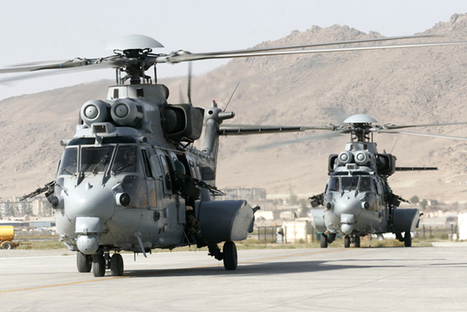
The French Air Force is set to significantly enhance its SAR and CSAR capabilities with the completion of in-flight refueling certification for its EC725 Caracals. Speaking to reporters at Cazaux airbase in May, director of operations Maj Guillaume Vernon confirmed the EC725 Caracal helicopter squadron EH 1/67 was aiming to achieve high altitude refueling (HR) certification for night flight by the end of 2013. ‘HR is a brand new capability we are trying to build, and as of today we are just day HR capable. Hopefully within the year we will be night HR capable. This will definitely bring us further into enemy territory,’ Vernon said. The Eurocopter EC725 Caracal was designed to fly 250 nautical miles, have 20 minutes of hover time, and return to base. With full HR capability the squadrons range could be doubled, or even tripled. ‘We are just waiting on certification to fly behind a C-130 at night. A far as the mission itself, flying behind a [C-130] tanker is pretty tricky; the rotor system is just a meter behind the probe, and the tail wing of the craft is as big as the helicopter,’ Vernon continued. Part of Cazaux air force base, helicopter squadron EH 1/67 is responsible for public SAR operations over the southwest of France, as well as being a deployable combat unit for CSAR operations. ‘The motto of our chain of command is fight and rescue, that’s what we do. We save lives on a daily basis, we rescue people. But we don’t have red crosses on the side of our helicopters, we have dual-mounted crew-served machine guns and we intend to use them if need be, so we also fight,’ Vernon emphasised. ‘We do crisis time tactical missions, and personnel recovery CSAR. The idea behind personnel recovery is to deny the ability for any bad guy to use one of our isolated personnel against our will.’ The squadron has certified 80% of its Caracal pilots for day HR, and is the only European unit capable of refueling two in-flight helicopters simultaneously. French forces first deployed the Caracal in a combat capacity in Afghanistan, and subsequently during NATO-led operations for the Libyan military campaign and Mali. ‘Just a few months after the helicopter was declared to be operationally available we were deployed to Lebanon. We got this bird in 2006 and by June we were deployed to Lebanon. Young pilots were deployed to Afghanistan with just 100 hours of flight because this helicopter is very easy to learn,’ Vernon added. While deployed in these operational theatres, the EC725 performed missions ranging from tactical transport and special operations to CSAR and maritime patrol. ‘CSAR is dedicated to the ability to go and pick up trained personnel on the ground. People who know how to talk to us, and know the procedures to be picked up. We flew 3000+ flight hours with the Caracal in Afghanistan, with over 200 casevac missions and 250 individuals brought back safely from 2006 to March 2012,’ said Vernon. Specifically designed to cope with adverse weather conditions, the EC725 avionics suite includes an advanced four-axis autopilot with full flight envelope protection. ‘The system allows us to fly in really bad weather conditions, especially at night. We have a good situational awareness building system for all the crew within the helicopter, and thanks to the automatic hovering system, the threat posed by brown-outs no longer prevents the successful completion of search and rescue missions,’ he said. France have ordered 19 EC 725 Caracals for the French Air Force and the French Army Aviation (ALAT). Other customers include Brazil, Mexico, Malaysia, Indonesia and Thailand, bringing the total number of EC725s sold to 106 as of June 2013.
|
|
Rescooped by
Romain
from Newsletter navale
June 11, 2013 4:24 AM
|
According to the updated plans for protecting Israel’s offshore gas rigs, the Israeli Navy will equip the rigs with Barak missiles for defense against Yakhont missiles. The gas rigs are located at a distance of nearly 80 miles from the coasts of Israel, and near the coasts of Lebanon. The plans additionally include the acquisition of four new missile boats, as well as naval observation and collection measures, including UAVs.
The use of the Barak missiles is intended to solve the severe problem troubling the Israeli Navy – the Russian missile Yakhont that Russia sold to Syria and which according to assessments will also be transferred to Hezbollah (if it has not been transferred already).
In the past year, the supply of the missile to Syria has become a done deal. The Yakhont can hit naval vessels at a distance of up to 300 kilometers with considerable precision, and it is equipped with a warhead containing 200 kilograms of explosives. The missile flies towards its target at a speed twice the speed of sound.
The Yakhont’s characteristics make its interception very difficult: at a distance of several kilometers from the attacked target, the “sea-skimming” missile descends to a cruise altitude of roughly ten meters above sea level, making it difficult for radars to detect it. The Yakhont’s homing head is build so that it is very difficult for electro-optic defense systems to get a lock on it while in flight.
The Israeli Navy presently possesses the Barak-1 missile, jointly developed by Israel Aerospace Industries (IAI) and Rafael a decade ago. The intent is to equip the rigs with Barak-8 missiles, which are in advanced development stages at IAI.
The system is intended to protect not only the rig or the vessel carrying the missiles, but also fleets of vessels sailing together in a given expanse. The objective is to supply comprehensive perimeter defense to the entire navy, with command and control (C2) systems receiving data from the radar systems of the different vessels and integrating them to create a shared combat and threat picture.
The Barak-8 system includes an advanced C2 center, developed by IAI’s Mabat Missiles factory. The system integrates mission management towards managing an individual fire system or managing fire from several units in parallel. The Barak-8 has a radar system that presents a 360-degree hemispheric picture, above the vessel or the vessel layout. It has a high resolution and can detect missiles with a very low radar cross section area. The system is also suitable for countering naval “seaskimming” cruise missiles, as well as threats to aircraft or helicopters.
The Barak-8 missile is single-staged: the missile has fixed stabilizers in its lower section and driving surfaces in its bow. The interceptors are stabilized with carrying and launch containers, which are fixed vertically below the deck of the missile boats. Once a target is received, the missile is launched vertically and immediately transitions to horizontal flight in order to hit and destroy the target, while receiving indications and data from the vessel’s guidance system. Once the target is within range of its self-detection systems, it locks on it and destroys it. The interceptor possesses advanced homing capabilities, suitable for intercepting aircraft and missiles flying at a low altitude above the water, in all weather conditions. The Barak missile family also includes an surface-to-air variant for protecting against aircraft. IAI has thus far sold the system to foreign countries (primarily to India) at billions of dollars, and it is anticipated that additional sales in the scope of billions will take place.
Via Patrick H.
|
|
Scooped by
Romain
June 11, 2013 4:22 AM
|
Croatian MoD has awarded local  ZTC- Zrakoplovno-tehnički centar  a contract to overhaul and upgrade six Air-Force Mi-8 helicopters. Ukrainian  Sevastopol Aviation Company and Motor Sich will act as sub-contractors.
|
|
|
Rescooped by
Romain
from Newsletter navale
June 14, 2013 2:19 AM
|
L’U36, sixième et dernier sous-marin du type 212A commandé par la marine allemande, a été baptisé le 15 mai au chantier HDW (TKMS) de Kiel. Le bâtiment a, ensuite, été mis à flot, en vue de son achèvement puis de ses essais, sa livraison étant prévue cette année. Son aîné, l’U35, a rejoint la flotte allemande en 2012 et, en avril dernier, a signé à l’occasion d’un exercice aux Etats-Unis un nouveau record d’immersion pour un sous-marin à propulsion non-nucléaire. L’U35 est, ainsi, resté 18 jours sans faire surface ni utiliser son schnorchel pour faire tourner ses moteurs diesels... ...Par rapport à leurs quatre aînés (U31, U32, U33 et U34), mis en service entre 2005 et 2007, les U35 et U36 sont un peu plus grands (1 mètre de long et 50 tonnes supplémentaires) et bénéficient de différentes évolutions. Ils intègrent, notamment, de nouveaux équipements (systèmes de communication, sonars, système de commande et de contrôle, mât optronique remplaçant le périscope), ont été adaptés pour embarquer des forces spéciales et sont « tropicalisés », afin d'être déployés en eaux chaudes. Lire l'intégralité de l'article sur Mer et Marine : http://www.meretmarine.com/fr/content/le-dernier-sous-marin-allemand-du-type-212a-mis-flot
Via Patrick H.
|
|
Rescooped by
Romain
from Newsletter navale
June 14, 2013 2:19 AM
|
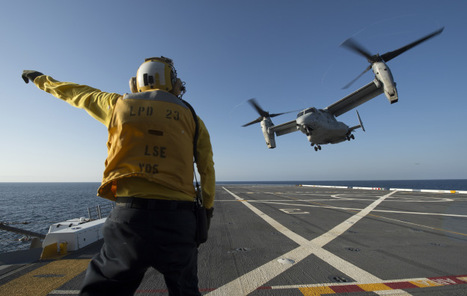
The Department of the Navy has kicked off its second multi-year buy for 99 V-22 Osprey tilt-rotor aircraft with option for 22 more, a NAVAIR official told USNI News on Thursday. The Pentagon issued a $4.89 billion contract for the Ospreys on Wednesday with Textron’s Bell Helicopter division and Boeing. Of the 99 aircraft The U.S. Marine Corps will operate 92 of the Bell-Boeing aircraft as MV-22s and seven will be operated by the U.S. Air Force as CV-22s. The multi-year sheds an estimated $1 billion in costs over buying the aircraft individually, according to Jim O’Donnell from Naval Air Systems Command. The Pentagon’s goal is for a planned total of 458 Ospreys, split between 360 for the Marines, 50 for the Air Force and an eventual 48 for the Navy. This will be the second multi-year deal for the V-22, following a $10.4 billion deal with Bell Boeing for 167 of the aircraft in 2008. The Osprey has been in operational use since 2007 in both Afghanistan and Iraq with a total of 214 in service with the Marines and the Air Force. The news of the multi-year follows an announcement from Secretary of Defense Chuck Hagel Israel planned to buy the aircraft for the countries special operations forces. Estimates indicate Israel would by five of the aircraft for $70 million a copy.
Via Patrick H.
|
|
Scooped by
Romain
June 12, 2013 11:02 AM
|
La commande porte sur 177 appareils CH-47F Chinook, avec des options pour 38 supplémentaires, précise le communiqué de Boeing. Le groupe aéronautique américain Boeing a annoncé mardi 11 juin avoir remporté un contrat évalué à 4 milliards de dollars pour livrer des hélicoptères à l'armée américaine. La commande porte sur 177 appareils CH-47F Chinook, avec des options pour 38 supplémentaires, précise le communiqué qui ajoute que les livraisons sont prévues à partir de 2015 et vont s'étaler sur cinq ans. Le contrat de longue durée va permettre "d'apporter de la stabilité aux ouvriers" de Boeing et à ses sous-traitants et leur permettre "d'investir dans les outils de production", a commenté Chuck Dabundo, un responsable des programmes d'hélicoptères du groupe américain cité dans le communiqué. La commande est d'autant bien venue que l'heure est plutôt à la réduction des dépenses fédérales aux Etats-Unis, ce qui touche en premier lieu le secteur de la défense. Ce contrat de plusieurs années permet toutefois de réaliser des économies "évaluées à plus de 800 millions de dollars", a souligné Robert Barrie, un responsable de l'armée américaine, cité dans le communiqué.
|
|
Scooped by
Romain
June 12, 2013 10:59 AM
|
Jakarta (ANTARA News) - Defense Minister Purnomo Yusgiantoro said Indonesia will soon build infrastructure for the production of submarines.
The infrastructure will be built by state shipbuilding company PT PAL in Surabaya, Purnomo said after a session of the Committee for the Defense Industry Policy here on Tuesday.
He said the country is expected to have the infrastructure ready in the next two to three years.
The session of the Committee, which is chaired by Purnomo, also discusses a plan to produce jet fighter planes in the country.
Purnomo said legal umbrella would be needed before any step taken to build the war plane and submarine infrastructure.
"Support from the House of Representatives would be needed to provide a legal basis for the project," he said.
Indonesia as the world`s largest archipelago, would need strong navy and air force to protect its thousands of islands.
Indonesia has agreed with South Korea to cooperate in building the infrastructure for the production of submarines. The cooperation will include in license, engineering manufacturing and production of prototype.
Cooperation is already implemented in design technology and in the next two years cooperation is expected to be implemented in engineering manufacturing and prototype.
Indonesia and South Korea also agreed on transfer of technology in the construction of submarines.
Earlier, the government said development of modern factory to produce submarine would be implemented in 2016-2017.
The first submarine to be produced under the cooperation agreement in Korea will be completed in 2014.
Construction of the second submarine will involve Indonesian technicians and production of the third unit will be in Indonesia by PT PAL.
The submarine bases will be built in the Palu bay, Central Sulawesi to be commissioned by the end of this year. All units of Indonesian submarine will be stationed in the Palu bay including the new one produced in Korea.
|
|
Rescooped by
Romain
from Newsletter navale
June 12, 2013 8:58 AM
|
SEOUL, June 12 (Yonhap) -- South Korea will arm its Aegis destroyers with the surface-to-air Standard Missile 6 (SM-6) starting 2016 as part of efforts to bolster its missile defense against North Korean threats, a senior government official said Wednesday.
The SM-6, which is suitable for low-altitude sky defense with a maximum range of 320-400 kilometers, is an upgrade of the SM-2 by U.S. defense firm Raytheon.
The South Korean military has sought to upgrade its SM-2 missiles deployed on one of its three Aegis destroyers as they are considered ineffective in shooting down North Korea's ballistic missiles due to their short range.
The decision to buy the newest naval missiles is part of Seoul's plan to develop an independent, low-tier missile shield called the Korea Air and Missile Defense System (KAMD). "The defense ministry and the Joint Chiefs of Staff will prepare a plan to develop the KAMD system to deter North Korea's missile and nuclear weapons by the end of this year," the official said, asking for anonymity as he is not allowed to talk to media.
The KAMD involves early warning radars, ship-to-air and land-based missile defense systems, arming Seoul with the ability to track and shoot down the North's low-flying, short- and medium-range missiles, with help of U.S. early warning satellites.
The KAMD plan includes purchasing hundreds of rounds of Patriot Advanced Capability-3 (PAC-3) missiles and additional PAC-2 missiles for deployment from next year, as well as development of mid- and long-range surface-to-air missiles in the next decade.
For that goal, the South Korean military has jointly formed a working group with its U.S. counterparts to conduct a study on the Korean missile defense system, the official said.
"We will operate a working group with the U.S. to analyze the KAMD program," he said. "The research is expected to be completed around February 2014."
The latest move, however, sparked further speculation that Seoul is preparing to join the U.S.-led missile defense system that involves ground-based interceptors and the X-band radar.
Via Patrick H.
|
|
Scooped by
Romain
June 12, 2013 5:51 AM
|
Un peu plus de deux mois après le salon SOFINS, le camp de Souge accueille un nouveau rendez-vous ouvert au public cette fois. Et pour cause, les journées portes ouvertes du 13è RDP sont très attendus des militaires, familles de militaires, fanas milis ou simples curieux. Le régiment d’élite de la BFST exposera ses savoir-faire à travers différentes expositions statiques et dynamiques (chuteurs opérationnels, aérocordage, grappe). Une démonstration du GIGN est également intégrée au programme, sous réserve de disponibilité comme les années précédentes. Mais, trêve de bavardage, toutes les infos sont consultables sur le site des JPO. Et, en prime, une petite vidéo qui met l’eau à la bouche :
|
|
Rescooped by
Romain
from Newsletter navale
June 12, 2013 2:54 AM
|
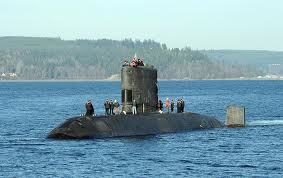
L’Institut Rideau et le Centre canadien de politiques alternatives viennent de publier un rapport sur l’avenir du programme canadien des sous-marins. « That Sinking Feeling: Canada’s Submarine Program Springs a Leak » (Naufrage appréhendé : le programme canadien des sous-marins prend l’eau) est le fruit des travaux du professeur de sciences politiques Michael Byers et de l’analyste de défense Stewart Webb (chercheur invité à l’Institut Rideau et associé de recherche au Centre canadien de politiques alternatives). Le Canada a acheté sa flotte de sous-marins de classe Victoria, de seconde main, du Royaume-Uni, en 1988, à un coût considérablement réduit. Malheureusement, les quatre submersibles ont été affligés de problèmes mécaniques depuis leur acquisition et ont passé la majeure partie de leur vie utile en radoub et en réparation. La Marine royale canadienne projette que ces sous-marins atteindront la fin de leur cycle de vie vers 2030. La menace de graves problèmes mécaniques laisse prévoir que les navires pourraient être envoyés à la ferraille avant cette date. Par contre, le remplacement des sous-marins de la classe Victoria n’est pas inclus dans la Stratégie nationale d’approvisionnement en matière de construction navale — qui établit un échéancier de construction jusqu’en 2041. Cette omission soulève d’importantes questions à l’égard des intentions du gouvernement pour l’avenir du programme canadien des sous-marins. Le rapport émet trois hypothèses pour expliquer pourquoi la Stratégie nationale d’approvisionnement en matière de construction navale a omis les sous-marins : On a pris la décision d’acquérir de nouveaux sous-marins pour remplacer la classe Victoria, et cette décision est gardée secrète pour l’instant ;On a pris la décision de mettre fin au programme canadien des sous-marins à la fin de la vie utile de la classe Victoria et cette décision est gardée secrète pour l’instant ;Le gouvernement Harper gère mal le programme des sous-marins et manque à son obligation d’en planifier l’avenir ou d’assurer la transition vers d’autres plateformes ou technologies.
Via Patrick H.
|
|
Rescooped by
Romain
from Newsletter navale
June 11, 2013 9:10 AM
|
About to ‘slide’ across the flight deck of RFA Mounts Bay, this is the Navy’s next-generation helicopter going through a crucial workout off the South Coast. Fleet Air Arm aircrew have been flying by day and night – latter courtesy of night vision kit – on to and off the deck of the amphibious support ship as they take another important step down the road to introducing the Wildcat to front-line service. The helicopter will replace the long-serving Lynx as the air power of the Royal Navy’s destroyers, some of her frigates (which also operate the Merlin), and whichever warship or Royal Fleet Auxiliary requires an aircraft for its global mission. Wildcat has already carried out trials at sea on RFA Argus (its first deck landing) and HMS Iron Duke (first time on a Royal Navy frigate) as test pilots, specialist engineers and technicians noted the helicopter’s flight characteristics to help them set the limits so it can be safely operated at sea by the Fleet Air Arm. The helicopter’s now in the hands of the squadron charged with bringing into front-line service, 700W (W for Wildcat), who embarked on Mounts Bay to hone deck landing skills. The squadron is specially formed to introduce new aircraft into the Fleet Air Arm (most recently the Merlin). Although Wildcat looks very similar to a Lynx the two are different beasts. The new aircraft has more powerful engines – giving the pilot around one third more power than its predecessor – and new avionics. And on the fighting side, there’s a glass cockpit with four large colour displays, replacing dials and screens of old. As for firepower as well as Sting Ray torpedoes, and a .5in M3M machine-gun mounted by the side door, there’ll be the new light and heavy versions of the Future Anti-Surface Guided Weapon – the next-generation missile for use against targets at sea and on land. Learning how use to the weaponry lies in the future. For now, 700W has been concentrating on the basics of flying Wildcat at sea and the lessons it learns will help the Fleet Air Arm devise the training courses for the Wildcat aircrew of tomorrow. The Fleet Air Arm is buying 28 Wildcats, with the Army Air Corps acquiring 34. All 62 of the new helicopters will be based at RNAS Yeovilton, with the naval variant, the HMA2 (Helicopter Maritime Attack Mk2) due to be declared operational in early 2015.
Via Patrick H.
|
|
Scooped by
Romain
June 11, 2013 6:40 AM
|
Nexter Systems est déjà prêt pour proposer à l’armée française son futur engin blindé de reconnaissance et de combat (EBRC), un véhicule à roues 6x6 polyvalent. Sa conception modulaire permettra à Nexter de réaliser des économies d’échelle tout en proposant aux armées de différents pays un véhicule adapté à leur besoins, et à leurs moyens. La loi de programmation militaire pour les années 2014-2019 ne devrait être votée qu’au cours de l’été par l’Assemblée nationale. Cela n’empêche pas Nexter Systems d’avoir une idée déjà précise de l’engin blindé de reconnaissance et de combat (EBRC) que l’armée de terre ne devrait pas manquer de commander avant la fin de la décennie pour remplacer les vieillissants AMX 10RC et ERC 90, lancés en 1977. Le dialogue est constant entre Nexter et les membres de l’état-major, dont certains ont participé aux récents conflits, en Afghanistan et au Mali. Et le dernier Livre blanc de la sécurité et de la défense nationale, rendu public en avril 2013, confirme que la France est susceptible de participer à tout type de conflit dans des zones géographiques diverses. "Les blindés sur roues présentent le meilleur compromis, explique le général d’armée Bertrand Ract-Madoux, chef d’état-major de l’armée de terre. Il y a trente ans, la France était en pointe dans ce domaine. Depuis, pays après pays, même les plus ardents défenseurs de la chenille ont adopté des véhicules à roues. Le programme Scorpion est essentiel pour l’armée française." Les blindés à roues ont prouvé leur efficacité, avec leur mobilité, leur vitesse de déplacement et leur masse raisonnable permettant l’acheminement par avion, le tout avec une puissance de feu et une protection significatives. Le programme Scorpion (Synergie du contact renforcée par la polyvalence et l’infovalorisation), lancé en 2010, doit assurer la modernisation des unités de combat au sol, au sein desquelles les véhicules blindés de la cavalerie joueront un rôle clé. L’EBRC de Nexter sera un blindé compact à roues de type 6 x 6, relativement léger (entre 20 et 25 tonnes), doté d’un canon de 40 mm à munition télescopé qui permet d’utiliser des projectiles de plus faible dimension et un chargement automatique sur le côté, un élément important pour un véhicule de dimensions restreintes. La tourelle permettra de lever le canon jusqu’à un angle de 45 degrés pour traiter des cibles en hauteur, alors que les chars sont conçus uniquement pour des combats au sol. Elément important, l’EBRC sera modulaire afin de s’adapter aux besoins des différentes armées. A partir d’une cellule de base à prix serré, il est possible d’ajouter des éléments comme des missiles, flash bang, système fumigène, brouilleur d’ondes. De même, le système informatique embarqué reposera sur des micro-ordinateurs et un câblage Ethernet, pour faciliter l’intégration et assurer une réelle évolutivité. Cette modularité a été prise en compte dès les premières études, pour ensuite mettre en place les solutions industrielles afin de profiter au maximum d’une fabrication en nombre qui permettra une baisse des coûts.
|
|
Scooped by
Romain
June 11, 2013 4:27 AM
|
Tous les services sont en surcharge et en sous-effectif", dénonce Luc Scappini le secrétaire général de la CFDT Défense. Un congrès CFDT a réuni cette semaine près de 200 délégués syndicaux du ministère de la Défense, de Dcns, Nexter et l'Igesa au club Belambra du Pradet. ( Var) Qu'est-il ressorti de ce 50e congrès syndical ? Ce congrès intervient dans une période extrêmement importante, car il tombe juste après les conclusions du Livre blanc sur la Séfense et la Sécurité nationale. Et en amont de la loi de programmation militaire, qui doit être présentée au Conseil des ministres début juillet. En interne, ces quatre jours de débats nous ont aussi permis d'adopter un plan de travail pour les quatre ans à venir. Ce document politique a été adopté à 96,20 %.
|
|
Rescooped by
Romain
from Newsletter navale
June 11, 2013 4:24 AM
|
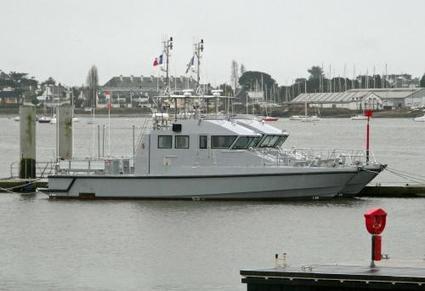
Les deux vedettes du type RPB 20 vendues par Raidco Marine à la Libye ont quitté Lorient jeudi dernier. Le Janzour et l’Akrma sont attendus à Tripoli autour du 18 juin... ...L’acquisition de ces deux vedettes va permettre à la marine libyenne de renforcer et moderniser ses moyens de surveillance et de contrôle des eaux territoriales du pays.... ...Capables d’atteindre 28 nœuds, les RPB 20 mesurent 20 mètres de long pour 5.3 mètres de large. Pouvant être équipées l’artillerie légère, ces vedettes disposent à l’arrière d’une rampe pour la mise à l’eau d’une embarcation rapide. Lire l'intégralité de l'article sur Mer et Marine : http://www.meretmarine.com/fr/content/raidco-marine-les-deux-rpb-20-libyennes-ont-quitte-lorient
Via Patrick H.
|
|
Rescooped by
Romain
from Newsletter navale
June 11, 2013 4:23 AM
|
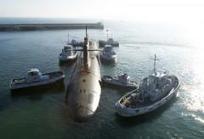
10/06/2013 (Infodefensa.com) Brasilia - The front sections built in France's first conventional submarine arrived in Rio de Janeiro . The piece, weighing 22 tons, is 25 meters long, in addition to six meters wide and 12 meters high. Sections three and four were transported to the Port of Sepetiba, by raft, Nuclebrás Dock for Equipments Heavy (Nuclep). Subsequently, the sections were transferred via land for Manufacturing Unit Structural Steel (UFEM) , where sections 1 and 2 of this submarines will be manufactured. The Entrepreneurship manager Obtaining Modular Conventional Submarines, Rear Admiral Sydney dos Santos Neves , ensured that this means the realization of technology transfer from France to Brazil. "No more hull will be built in France. The hull construction definitely passes through Brazil, with the arrival of Sections 3 and 4. Sections 1 and 2 and will begin to be built. The sectional qualifying, which enables the manufacture, and are in the final stages of completion in Nuclep, then reach UFEM "said Admiral Neves. Sections 3 and 4 of the first conventional submarine, built in partnership with France, took three years to be built. Participants were 255 companies astillerosn Ituaguaí Shipbuilding (ICN) and Nuclep as well as engineers, technicians and operators of the Brazilian Navy. During this period, were given 140 courses covering the most diverse areas of knowledge. On June 28, the defense minister, Ambassador Celso Amorim, accompanied by the Commander of the Navy, Fleet Admiral Julio Soares de Moura Neto, visit UFEM for the front section of the first conventional submarine built in partnership with France.
Via Patrick H.
|