Your new post is loading...

|
Scooped by
Romain
June 7, 2013 10:52 AM
|
C'est une arme redoutable, fruit du savoir faire français et allemand. L'armée de terre française vient de recevoir le premier exemplaire de cet appareil dont la version antérieure a fait ses preuves en Afghanistan, en Libye et plus récemment au Mali. Une équipe de TF1 a pu exceptionnellement y prendre place. Des images impressionnantes.
|
|
Scooped by
Romain
June 7, 2013 10:51 AM
|
C'est la hantise des pilotes de monoréacteurs : hier en fin d'après-midi, un Mirage 2000-5F rattaché à l'escadron EC-1/2 "Cigognes" et ayant décollé de Luxeuil s'est écrasé à une trentaine de kilomètres de sa base d'attache après une collision avec un volatile qui, "avalé" par l'entrée d'air de l'avion, a entraîné une surchauffe du réacteur M53. Le pilote, qui jouait le rôle de plastron à basse vitesse pendant une mission d'entraînement, s'est éjecté après avoir largué ses deux bidons de carburant qui sont apparemment tombés dans un jardin. Il est en bonne santé.
Pour l'EC-1/2 "Cigognes", il s'agit là du deuxième Mirage 2000-5F perdu en moins d'un an. Le précédent l'avait été en octobre 2012 ; peu après un décollage en patrouille de quatre avions et par mauvais temps, l'appareil s'était écrasé sur la commune de Froideconche, à proximité de Luxeuil. Les conclusions de l'enquête ne sont pas connues et il n'est pas certains qu'elles soient rendues publiques, car le sujet est sensible : le pilote, qui s'était tué dans l'accident, était en effet un Taïwanais en échange dans l'escadron.
Suite à ces deux accidents, l'armée de l'Air ne compte plus que 30 Mirage 2000-5F en inventaire. Il s'agit de cellules anciennes mais rénovées au cours des années quatre-vingt-dix avec un système d'armes très performant, exclusivement dédié à la défense aérienne. Ces avions se sont notamment illustrés pendant l'opération "Harmattan", assurant dès les premières heures le respect de la "No Fly Zone" décrétée au-dessus du territoire libyen.
Des travaux sont aujourd'hui en cours pour déterminer de quelle manière ces avions pourraient être prolongés au-delà de 2018, date à laquelle il était jusqu'alors prévu de les retirer du service. Car contrairement aux autres Mirage 2000 français, leur armement (le missile Mica) ne sera pas frappé d'obsolescence à court terme et ces avions pourraient donc continuer de jouer un rôle utile en assurant les missions de protection du territoire national, à un coût inférieur à celui d'un Rafale.
|
|
Rescooped by
Romain
from Newsletter navale
June 7, 2013 10:44 AM
|
The U.S. Coast Guard took delivery of its 15th HC-144A Ocean Sentry maritime patrol aircraft from prime contractor EADS North America. The Ocean Sentry is based on the Airbus Military CN235 tactical airlifter, more than 230 of which are currently in operation by 29 countries. The latest aircraft delivered on-time and on-budget, will join a fleet of Ocean Sentries performing in a range of different roles from Coast Guard Air Stations in Cape Cod, Mass., Mobile, Ala., and Miami. With the ability to remain airborne for more than ten hours, the Ocean Sentry is performing a wide range of maritime patrol missions for the Coast Guard, including drug and migrant interdiction, disaster response, and search and rescue.
“In today’s tight budget environment, the U.S. Coast Guard needs programs that deliver what’s been promised,” said Sean O’Keefe, EADS North America Chairman and CEO.
“EADS North America and Airbus Military are proud to be working with the USCG to field this capability consistently on schedule and on cost, and will continue to support this mission.”
The United States Coast Guard operates fourteen HC-144A Ocean Sentry Maritime Patrol Aircraft and has three additional planes on order scheduled for delivery in 2013 and 2014. The Coast Guard plans for a fleet of 36 Ocean Sentries. The HC-144A achieved initial operational capability with the Coast Guard in 2008.
Via Patrick H.
|
|
Rescooped by
Romain
from Newsletter navale
June 7, 2013 10:43 AM
|
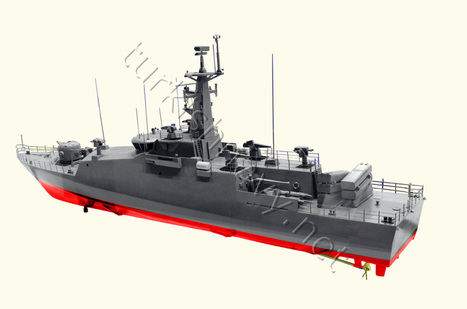
Turkmenistan is buying eight new well armed naval vessels from Turkey, marking a substantial increase in capability for the country’s nascent navy. The ships will be built by Dearsan, the Turkish shipyard Which had already been contracted by Turkmenistan for two fast patrol boats. The eight new ships will be of the same size as the two previous ships, but better armed.Each will be equipped with four anti-ship missiles, two remote-controlled MANPADS-sized surface-to-air missile launchers, a 40 mm main gun, a six-barreled anti-submarine mortar, two remote-controlled 12.7 mm guns and two Remote-controlled 25 mm guns. Turkmenistan had already been reported to be acquiring five missile boats from Russia, in addition to the two Dearsan fast patrol boats. The model as appears to have the same 40 mm main gun and the ASW mortar used in Tuzla class. The ASW mortar has been moved to B position to create space for surface to surface anti ship missiles. I was not told the type of the missiles but the launcher boxes of the model resemble very much to Otomat/Teseo. There are two remotely controlled SAM launchers one in the forecastle one in the aft. The missiles and launchers look like adaptation of some MANPADS surface to air system. In addition to these weapons there are two STAMP 12,7 mm remote-controlled machine gun turrets a top of the bridge and two 25 mm STOP remote-controlled gun turrets.
Via Patrick H.
|
|
Rescooped by
Romain
from Newsletter navale
June 7, 2013 10:43 AM
|
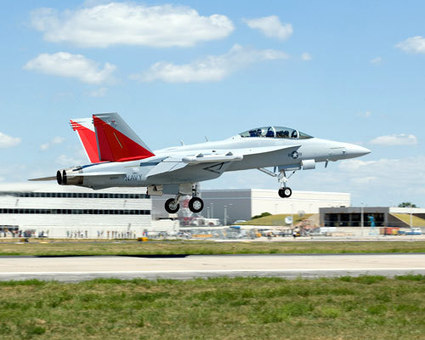
ITT Exelis has completed its technology maturation phase of the next-generation jammer (NGJ), installed onboard the US Navy's EA-18G electronic attack aircraft.
During the 33-month technology maturation phase, the company designed, developed and demonstrated various subsystems, including advanced receiver controlled jamming, digital radio frequency memory and mid-band aperture, critical to the NGJ. The NGJ will enable US Navy's EA-18G aircraft to defeat integrated air defence systems and disable an enemy's electronic communications, command and control capabilities. ITT also tested the electronically steerable array transmitter technology as well as multiple critical technology elements such as digital beam-forming, mid-band power amplifiers and high-band power amplifiers and validated its high levels of technical maturity and performance. Exelis Electronic Systems president Rich Sorelle said that the company has worked closely with the US Navy during the phase to ensure the technology is ready for the next stage of the programme. In addition, wind tunnel testing validated power generation and control capability of the concept demonstrator pod's ram air turbine (RAT), designed to generate electrical power for the electronic attack payload, at Nasa's Langley Research Center in Hampton, Virginia, US. Technology maturation phase has validated the NGJ's ability to transmit broadband, high-power RF energy directly at targets without unintended effects or disruptions even under dynamic environmental conditions. "The NGJ will provide US and allied fighting forces with the tool they need to dominate the electromagnetic spectrum on even the most advanced battlefield," Sorelle said. Work under the technology maturation phase was carried out at Exelis facilities in Clifton, New Jersey and at Amityville and Bohemia, New York, US.
Via Patrick H.
|
|
Rescooped by
Romain
from Newsletter navale
June 7, 2013 10:40 AM
|
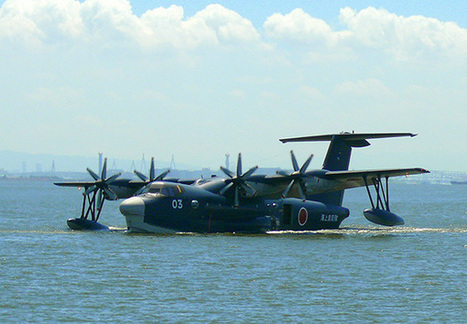
Japan is close to signing an agreement to supply amphibious planes to India, a report said Monday, in what would be the first sale of hardware used by the military since a weapons export ban was imposed. During a four-day visit to Tokyo by Indian Prime Minister Manmohan Singh, starting Monday, the two sides are setting up firm plans for Delhi to purchase the US-2, a domestically-developed aircraft used by Japan’s armed forces. The sale, reported by the Nikkei business daily, would be the first of a finished product made by Japan’s homegrown defense industry since rules were imposed restricting the export of weapons systems and other equipment. It would also mark a strengthening of the alliance between Japan and India, which both see rising China as a threat to regional stability.
Via Patrick H.
|
|
Scooped by
Romain
June 4, 2013 12:04 PM
|
Fairfax, en Virginie l'armée américaine en collaboration avec Boeing équipe vient de clore le premier vol du Enhanced Reconnaissance (EMARSS) basé sur une cellule de Beechcraft King Air 350ER. L'avion a volé durant plus de quatre heures et a bouclé tous les objectifs d’essais de ce premier vol. Système EMARSS : Le système EMARSS « Enhanced Medium Altitude Reconnaissance and Surveillance System » est un système de reconnaissance électronique qui doit permettre de détecter, localiser, classifier, identifier et les cibles de surface dans toutes les conditions météorologiques, de jour comme de nuit, avec un haut degré de rapidité et de précision. Les systèmes installés dans un appareil de type Beechcraft King Air 350ER comprennent : un système électro-optique à infrarouge, un système de géolocalisation à très haute précision, une liaison de données Link 16 ainsi qu’un poste de gestion pour la guerre-électronique. L’armée américaine prévoit d’acquérir quatre appareils de ce type, dans un premier temps. Les livraisons doivent débuter l’année prochaine.
|
|
Scooped by
Romain
May 30, 2013 4:59 AM
|
Le C295W a été officiellement présenté par Airbus Military ce mercredi 29 mai, à Séville. Cette nouvelle version s'apparente surtout à une nouvelle désignation pour le prochain standard de production du "bon vieux" C295. Le bimoteur de transport intégrera tout de même deux améliorations par rapport aux exemplaires actuellement en service : une paire d'ailettes marginales (winglets) et une nouvelle version du turbopropulseur PW127G de Pratt & Whitney. Les winglets, déjà testés en soufflerie et en vol, pourraient selon Airbus Military, permettront de réduire de 3 à 6 % la consommation en carburant, avec pour seule contrepartie une masse accrue de 90 kg. Concernant le moteur, il va bénéficier d'un nouveau mode de fonctionnement, qu'il lui permettra de conserver sa pleine puissance (Toga, Take Off and Go Around) durant la phase de montée après le décollage. Au final, la charge utile pourrait être augmentée d'une tonne en conditions "hot & high" (fortes température et décollage en altitude), et de 1,5 tonne en conditions normales. L'endurance de l'avion sera également accrue de 30 minutes, ce qui bénéficiera aux versions de mission du C295. Les essais de certification du C295W devraient débuter en fin d'année, en vue de l'obtention d'un amendement à la certification du C295 au deuxième trimestre 2014, puis de premières livraisons à la fin de cette même année. C'est le C295W qui servira de base à la version de surveillance (ISR) équipée d'un rotodôme. Airbus Military va parallèlement étudier la possibilité d'équiper son avion d'une arme de sabord, à choisir entre un canon de 27 mm et de 30 mm. Airbus Military vient juste de débuter la commercialisation du C295W. L'industriel européen veut promouvoir l'avion dans les pays chauds ou dotés d'aérodromes situés en altitude, notamment en Amérique du Sud, au Moyen-Orient, en Afrique et en Asie.
|
|
Scooped by
Romain
May 29, 2013 4:06 PM
|
Le général Christophe Gomart sera nommé cet été à la tête de la direction du renseignement militaire (DRM). Cet officier de 53 ans est aujourd'hui le patron du Commandement des opérations spéciales (Cos). Ancien chef de corps du 13 eme régiment de dragons parachutistes, il a également été en poste à l Élysée auprès du coordinateur national du renseignement, Bernard Bajolet, nommé, lui, à la tête de la Dgse en avril. Il succédera au général Didier Bolelli dont le nom circule pour le poste de coordinateur national du renseignement (CNR) avec ceux de Pierre Poëssel (directeur à la Dgse) et Alain Zabulon (chef de cabinet adjoint à l Élysée). Comme nous l'annoncions sur ce blog, son successeur au COS sera le général de Saint-Quentin.
|
|
Scooped by
Romain
May 29, 2013 4:04 PM
|
The US Navy's manned deep-ocean research submersible, Alvin, has successfully completed a $41m phase one modernisation programme and set sail off to Astoria, Oregon, to undergo trials. Following completion of the major refit programme, the submersible was loaded onto the enhanced Woods Hole Oceanographic Institution (WHOI)operated Thomas G Thompson-class oceanographic research vessel, R/V Atlantis (T-AGOR-25), to transfer to Astoria. Funded by the National Science Foundation (NSF) and WHOI, upgrades to the system included installation of titanium personnel sphere, which has been designed to improve observations and collaboration in selecting sampling sites for pilot and scientists. Additional phase one upgrades to the submersible involved integration of new syntactic foam, providing buoyancy and improved command and control system. To improve visibility and provide overlapping fields of view, five viewports have been fitted to the system, in addition to installation of new lighting and high-definition imaging systems as part of the overhaul programme. "Additional phase one upgrades to the submersible involved integration of new syntactic foam, providing buoyancy and improved command and control system." Launched in 1964, Alvin is the longest-operating submersible operated by the WHOI and has been designed to benefit the entire ocean science community for the US. Capable of accommodating two scientists and a pilot, Alvin submersible features six reversible thrusters to hover, manoeuvre in rugged topography, or rest on the sea floor. Improvements to the R/V Atlantis vessel included A-frame, used to launch and recover the sub, as well as modifications to the hangar where the sub is stored when not in use. Alvin submersible is scheduled to undergo navy certification process in September 2013, off Monterey, California, making a series of progressively deeper dives. After the completion of certification process, the submersible will undergo science verification cruise in November to validate its scientific systems and is expected to enter service in December 2013.
|
|
Scooped by
Romain
May 29, 2013 2:32 PM
|
Le Ventôse est la seconde frégate de surveillance, après le Nivôse, à disposer d’une peinture à base de silicone, plus respectueuse de l’environnement que les peintures de coque traditionnelles. Cette nouvelle peinture, testée actuellement sur plusieurs frégates de la Marine, présente de nombreux avantages tels que l’absence d’impact sur la faune et la flore, une résistance plus longue aux salissures liée à la texture très lisse de la silicone et une optimisation de la consommation de carburant, l’eau s’écoulant mieux le long de la coque. Cette opération est une première en Martinique, accomplie par l’entreprise martiniquaise Dry Dock Peinture et supervisée par un expert de la société «International Paint». L’arrêt technique du Ventôse s’inscrit dans le cadre du marché d’entretien des frégates de surveillance. Il est programmé tous les trois ans. Sous la maîtrise d’œuvre conjointe de STX et de DCNS, il se poursuivra jusqu’au 12 juillet 2013.
|
|
Scooped by
Romain
May 29, 2013 2:20 PM
|
The Republic of Korea (ROK) Navy has received approval from the country's joint chiefs of staff to procure maritime patrol aircraft, to boost surveillance capabilities. An unnamed military source told Yonhap News Agency that the navy is considering purchasing a total of 20 maritime patrol aircraft to strengthen its surveillance capabilities against North Korea near the guarded western sea. The aircraft will complement the ageing squadron of 16 Lockheed Martin-built P-3C anti-submarine warfare (ASW) aircraft. The state arms procurement agency Defense Acquisition Program Administration is currently working on the plan, which is likely to cost approximately $889m. Potential bidders for the acquisition programme include Airbus Military's C295 multirole maritime patrol aircraft (MPA), Boeing's P-8 Poseidon aircraft, and Lockheed Martin's SC-130J Sea Hercules. Meanwhile, the South Korean Navy has placed orders with L-3 Mission Integration and Korean Air team to upgrade its eight P-3C Orion aircraft to Lot 2 standards by 2016, according to Flightglobal. Upgrades to the P-3C aircraft include installation of multipurpose radar to enable detection of fixed and moving targets, high-definition electro-optical/infrared cameras, digital acoustic analysis equipment and a magnetic anomaly detector, according to Defense News. L-3 Mission Integration surveillance systems senior director Brent Billingslea said that the aircraft would be equipped with mission system to enhance capabilities, while being completely compatible and interoperable with existing P-3 fleet for the navy. Under the contract, L-3 will be responsible for the design and development of upgrades, while Korean Air will integrate the equipment on to the aircraft. Armed with Harpoon Block II air-to-ground missiles, the P-3C aircraft is equipped with four Allison T56-A-14 turboprop engines, as well as tactical information system interoperable with the KF-16 fighter jet.
|
|
Scooped by
Romain
May 29, 2013 2:19 PM
|
L'armée de l'air russe a reçu un système de guerre électronique capable de déconnecter de manière ciblée les radars ennemis et les systèmes de contrôle de drones, sans pour autant brouiller ses propres communications, écrit mercredi le quotidien Izvestia. Les essais du nouveau brouilleur, baptisé Poroubchtchik, se sont achevés début mai à l'Institut de recherche Gromov à Joukovski, dans la région de Moscou. Avant le Poroubchtchik, les brouilleurs bloquaient tous les systèmes électroniques, ennemis et amis. Aujourd’hui il est possible de "débrancher" des cibles précises. Le nouveau brouilleur devrait être efficace contre le système américain de détection et de commandement aéroporté AWACS, les missiles sol-air de classe Patriot, et permettra de bloquer le contrôle des drones activement utilisés par les pays de l'Otan. "Le nouveau système détecte des communications sans fil ou les rayons radar en régime passif sans rien émettre lui-même, il analyse la fréquence des canaux et émet un brouillage ciblé actif ou passif. Par ailleurs, le signal est bloqué dans une certaine direction sur une certaine fréquence sans affecter d'autres sources", a déclaré l'un des participants aux essais. En l'absence d'avions modernes bénéficiant d’une longue autonomie, le brouilleur a été installé sur un ancien Il-22 construit en 1979. L'appareil a été intégralement remis en état à l'usine Miasnitsev et doté d'équipements spéciaux, dont des antennes latérales et des transmetteurs tractés qui se déroulent en vol sur plusieurs centaines de mètres. Une source du ministère de la Défense a expliqué qu'en raison de l'ancienneté du Il-22 le commandement de l'armée de l'air insistait sur l'installation du brouilleur sur un autre appareil, mais aucun avion affichant les performances nécessaires - vitesse et autonomie de vol - n'était disponible. A l'heure actuelle, l'avion équipé du nouveau brouilleur est en essais d'usine et sera mis en service d'ici la fin de l'année. L'armée de l'air devrait recevoir cinq avions de ce type. "Même en dépit de la modernisation du Il-22 l'appareil sera retiré du service dans 10 ans, après quoi il faudra installer le brouilleur sur un autre moyen de transport", remarque une source de l'armée de l'air. Selon elle, des modifications significatives au niveau du fuselage et de l'électronique seront nécessaires pour installer le brouilleur sur l'appareil. "Il faut incorporer des antennes, modifier le système d'alimentation, installer des canaux supplémentaires pour les câbles, les trappes de service, etc. Et le brouilleur doit être installé de sorte à ne pas interférer avec les équipements de l'appareil et ne pas faire écran avec les ailes et le corps de l'avion", explique la source. Dmitri Kornev, rédacteur en chef du site Military Russia, a déclaré que le brouilleur Poroubchtchik était très demandé dans les guerres modernes. "Les armes des plus grandes armées du monde disposent aujourd'hui de systèmes électroniques complexes, y compris les drones, par conséquent les systèmes de brouillage ciblé deviendront une arme très puissante", explique Dmitri Kornev. Les travaux sur le nouveau brouilleur ont commencé en 2009 après la signature d'un contrat entre le ministère de la Défense et l'usine Miasnitsev. L'installation des équipements sur un Il-22 a commencé en 2010. Les premiers vols de l'appareil modifié se sont déroulés en 2012. Le système a coûté plus de 5 millions d'euros.
|
|
|
Scooped by
Romain
June 7, 2013 10:52 AM
|
Chile will buy surplus U.S. stock of a dozen AAV7 armored amphibious vehicles for its new sea-borne Amphibious Expeditionary Brigade, defense industry media reported. Officials say the vehicles are being acquired from excess inventory of U.S. stockpiles but will be upgraded before they are put into service. The cost of the AAV7 acquisition was not mentioned. The upgrade is likely to be carried out by BAE Systems' Global Combat Systems unit, Defense Market Intelligence and Chile's Defense and Military blog reported. Independent comment on the acquisition and upgrade was not immediately available. The first of the AAV7s is set to be delivered in 2014 after the upgrade, likely to involve installation of more powerful engines. Chile's purchase includes 10 AAVP7 A1 troop transports, one AAVC7 command vehicle and one AAVR7 recovery vehicle, the reports said. Manufactured by U.S. Combat Systems, the AAV-7A1 is the current amphibious troop transport of the U.S. Marine Corps. The vehicles, once commissioned, will be part of a 1,400-strong brigade Chile operates aboard its Sargento Aldea multirole assault ship, acquired from France in a $80 million deal. The Sargento Aldea previously operated in the French navy as the Foudre and served allied forces in NATO Yugoslavia operations in 1992-93 and French military action in Ivory Coast. Analysts said the tracked AAV7 could work well with the Sargento Aldea and other Chilean navy vessels but might not be suitable for peacekeeping missions requiring faster, wheeled vehicles. It was not immediately clear if the BAE upgrade would extend to weaponry. A standard AAV7 is usually equipped with a .50-caliber machine gun and a 40mm grenade launcher. Chile is also looking into acquiring new helicopters, landing craft and other hardware for its armed forces. The Chilean military, recently spotlighted for its alleged failure to spend enough of its allocations channeled through the copper export tax and other financial instruments, is aiming to catch up with military advances made by South American neighbors Brazil and Argentina. However, the military is also hamstrung by low response to its recruitment drive. Chile's economic growth has opened new career opportunities and turned the military into an employer of last resort. The armed forces enlistment numbers are set to be the lowest this year since 2007, the Santiago Times reported. The number of Chileans volunteering to join the military is down 21 percent from 2012 and is the lowest since the rules on military service were reformed in 2007, the newspaper said on its website. "The explanation for the decrease is similar to previous years, as we have been a country with full employment and a wide range of educational opportunities," Armed Forces Undersecretary Alfonso Vargas told La Tercera newspaper. "There has been a strong competition that has changed the landscape." Chile's economy has continued to grow by more than 5 percent each year since 2009 and the average unemployment rate is 6.4 percent, the Santiago Times said, citing 2012 data. The military announced new incentives including higher pay, bonuses and scholarships as part of the effort to reverse falling recruitment.
|
|
Rescooped by
Romain
from Newsletter navale
June 7, 2013 10:44 AM
|
The Indian Navy is set to receive the first four of its order of 17 Hawk Advanced Jet Trainer (AJT) aircraft in next month. The aircraft, manufactured under license by Hindustan Aeronautics Limited (HAL) will be delivered to INS Dega at Visakhapatnam and will eventually take over the role of the eight Kiran Mk II training aircraft operated by the Indian Navy at INS Hansa at Goa. These aircraft are part of a batch of 57 Hawks ordered jointly by the Indian Navy and Indian Air Force (IAF) for around 700 million pounds. The second of eight Boeing P-8I Long Range Maritime Reconnaissance (LRMR) aircraft will also be delivered to the Indian Navy’s base INS Rajali next month. The first aircraft was delivered last month. The IAF also plans to acquire an additional 20 aircraft for their Surya Kiran aerobatic team. The delivery of a 2004 IAF order of 66 Hawk aircraft to the IAF was completed last year, with 42 being license-produced by HAL. A Kiran Mk II of the Indian Navy’s Sagar Pawan aerobatic team crashed at Hyderabad during the Indian Aviation 2010 air show on in March, 2010, killing both crew members. The first ten of the IAF order for 75 Pilatus PC-7 Mk II aircraft in an order worth around USD 600 million, were delivered last month, which will replace the indigenous HAL HPT-32 basic trainer aircraft, grounded last year following a number of crashes.
Via Patrick H.
|
|
Rescooped by
Romain
from Newsletter navale
June 7, 2013 10:44 AM
|
The U.S. Navy received delivery of two ships in the same day Thursday, gaining both a nuclear submarine and a new support ship. The submarine Minnesota (SSN 783) was delivered from Newport News Shipbuilding, a subsidiary of Huntington Ingalls Industries (HII). The Minnesota is the tenth SSN 774 Virginia-class submarine and the last Block II version to be built. The Virginias are built under a 50-50 teaming arrangement with General Dynamics Electric Boat, with each shipbuilder alternating in the final assembly of each sub. HII trumpeted the delivery, nearly 11 months ahead of contract schedule. “This is a success story of the teamwork between the crew and shipbuilder,” Cmdr. John Fancher, commanding officer of the Minnesota, said in a press release. “The team reached the finish line together with quality craftsmanship by the shipbuilder, coupled with a crew that was given the opportunity to train as necessary to operate the submarine to its fullest extent during the combined trials.” The Minnesota is sponsored by Ellen Roughead, wife of retired Adm. Gary Roughead, the former chief of naval operations. Construction of the submarine began in February 2008, and a christening ceremony was held Oct. 27, 2012. A commissioning ceremony is scheduled for Sept. 7 at Naval Station Norfolk, Va., and the sub will be homeported at Naval Submarine Base Groton, Conn. Further south in Mobile, Ala., Austal USA delivered the second Joint High Speed Vessel, Choctaw County (JHSV 2), to the Navy for operation by the Military Sealift Command. The Pentagon is buying 10 all-aluminum JHSVs for high-speed logistics use, and the vessels could prove capable of a number of missions. The Choctaw County’s civilian mariners will sail away the ship later this summer. At the same shipyard, the Millinocket (JHSV 3) was rolled out June 4 from its building shed, transferred to a floating drydock, and launched June 5 into Mobile Bay. The ship will continue fitting out before running sea trials late this year. Late on June 6, Navy Secretary Ray Mabus also announced the names of five ships — two more Littoral Combat Ships and the last three JHSVs. The LCSs are USS BILLINGS (LCS 15), a Freedom-class ship, and TULSA (LCS 16), built to the Independence-class design. Contract awards for both ships were announced March 4, BILLINGS to Lockheed Martin for construction at Marinette Marine, Marinette, Wisc., and TULSA to Austal USA. The ships are to be delivered in 2016 and 2017, respectively. Mabus also completed naming the 10 JHSVs with the selections of YUMA (JHSV 8), BISMARCK (JHSV 9) and BURLINGTON (JHSV 10). Construction contracts for the YUMA and BISMARCK were awarded to Austal USA on Feb. 24, 2012, and the BURLINGTON contract on Dec. 20, 2012. BISMARCK, first intended to be completed for the U.S. Army, originally was named SACRIFICE, but most of the JHSV Army names were cancelled when all the ships were transferred to the Navy.
Via Patrick H.
|
|
Rescooped by
Romain
from Newsletter navale
June 7, 2013 10:43 AM
|
The U.S. Navy is preparing for final integration and sea trial tests for the amphibious assault ship America (LHA-6), the first in a series of planned next-generation “America-class” big-deck, hybrid-electric amphibs slated to enter the fleet in coming years, service officials said. The USS America, the first of as many of 11 planned America-class amphibs, is now nearly 90-percent complete at a Huntington Ingalls Industries (HII) facility in Pascagoula, Miss., said Capt. Chris Mercer, Amphibious Warfare program manager. Initial Operating Capability for the USS America is planned for September of 2016, once the ship finishes up its builder’s trails and acceptance trails, Mercer said. “Eleven ships is our stated requirement for large-deck Amphibious Assault Ships. About every four or five years we are procuring a large-deck amphib. Eventually all of the America-class ships will replace all of the Wasp-class ships and all of the Tarawa-class ships,” Mercer explained. The second America-class amphib, the USS Tripoli, is now also under construction at the same HII location in Mississippi. Overall, the America-class amphibs are designed with a larger deck space, compared to prior Wasp-class ships; they are built to accommodate new and emerging Naval and Marine Corps air assets such as the MV-22 Osprey tilt-router helicopter, the Corps’ Vertical Take-off-and-Landing Harrier Jet as well as the Marine Corps’ short take off and landing variant of the F-35B Joint Strike Fighter aircraft, Mercer explained. “The future USS America is all about aviation. Think about the power projection and sustained presence of joint or multi-national expeditionary warfare capability centered around ships loaded up with the capabilities that a JSF and MV-22 bring you,” Mercer said. The amphibs will be the lead vessel in what the Navy calls Amphibious Ready Groups, groups of air, sea and ground assets designed for expeditionary warfare including an Amphibious Transport Dock and a Dock Landing Ship. The Amphibious Ready Group is able to launch an air cushioned ship to shore transport vessel called the Landing Craft, Air Cushioned (LCAC). LCACs are engineered to transport cargo, personnel, weapons, equipment and even an M1 Abrams tank — from over the horizon onto shore, Mercer explained. Landing Craft Utility (LCU) vessels are also an integral part of an Amphibious Ready Group, Mercer said. In fact, the Navy is now working on an analysis of alternatives such that it can launch an acquisition program to acquire as many as 32 new LCUs. The America and the Tripoli will also carry CH-53 Sea Stallion, MH-60 Sea Hawk and AH-1Z Super Cobra helicopters.
Read more: http://defensetech.org/2013/06/04/first-america-class-amphib-nears-completion/#ixzz2VN50s7WE
Defense.org
Via Patrick H.
|
|
Rescooped by
Romain
from Newsletter navale
June 7, 2013 10:42 AM
|
|
|
Rescooped by
Romain
from Newsletter navale
June 7, 2013 10:40 AM
|
The US planemaker is ready to offer its P-8 maritime patrol aircraft to the MoD. Based on the 737, a passenger aircraft popular with low-cost airlines, it has reinforced wings so it can carry missiles. P-8 business development director Egan Greenstein said: “The P-8 is a natural fit, but it depends on the outcome of the strategic defence review.” Britain has been left with a capability gap in maritime patrol after scrapping Nimrod. The reconnaissance aircraft was axed in spending cuts despite £3.4 billion having been ploughed into the programme. The MoD is thought to be considering alternatives to Nimrod and is believed to be talking to Boeing about P-8, which can fire on submarines and costs £113.8 million a unit. The US Navy plans to purchase 117. India and Australia have also placed orders. Fifteen countries, including the Middle East and South East Asia are interested in the aircraft. Boeing estimates international orders could total 60. Non-military applications include policing immigration and protecting the petroleum industry.
Via Patrick H.
|
|
Scooped by
Romain
May 30, 2013 5:35 PM
|
Film de présentation de l'hélicoptère Caïman Marine
|
|
Scooped by
Romain
May 29, 2013 4:18 PM
|
Le très placide Philippe Burtin esquissait un léger sourire de contentement hier soir, à l’issue d’un dîner du cercle Prospective terre. Et pour cause : alors que le livre blanc laisse clairement entrevoir une nouvelle purge pour le budget de l’armée de terre , le PDG de Nexter a trouvé un peu de réconfort en écoutant Laurent Collet-Billon, le délégué général pour l’armement, esquisser les grandes lignes du grand programme Scorpion, vital pour le secteur. Derrière cet acronyme qui vaut pour « synergie du contact renforcée par la polyvalence et l’infovalorisation » (!) se dessine une opération majeure de modernisation des équipements de l’armée de terre utilisés par les groupements tactiques interarmes (les GTIA), du nom des unités du combat au sol de 500 à 1.500 hommes projetées en opération extérieure. Co-entreprise associant Thales, Nexter et Sagem Le lancement des premières réflexions pour affiner l’architecture du programme Scorpion, les grands choix techniques et industriels, a été décidé début 2010, dans le prolongement d’un contrat de recherche sur la numérisation du champ de bataille. Pour cela, la DGA et l’Etat major s’appuient sur une co-entreprise associant Thales, Nexter et Sagem (Safran). Le périmètre visé est très large puisqu’il s’agit de remplacer les vénérables Véhicules de l’avant blindés entrés en service dans les années 70, les blindés légers AMX 10 RC et Sagaie, de rénover les chars lourds Leclerc, de remplacer le missile anti char Milan, ainsi que toute l’informatique de ces équipements pour faire en sorte qu’ils communiquent sans coutures entre eux. Initialement, les premières livraisons des nouveaux blindés étaient prévues en 2015. La crise de 2008 et les problèmes de fins de mois de l’Etat ont tout chamboulé. Au point que lors des travaux de préparation du livre blanc, les scénarios budgétaires les plus noirs préconisaient un abandon pur et simple de Scorpion. Avec pour corollaire, la mort à petit feu de Nexter. On en est plus là. Si l’on en croit Laurent Collet-Billon, les premières livraisons du VBMR - le blindé appelé à remplacer les VAB - sont prévues à partir de 2018. Même s’il le nombre de véhicules visés va être fortement réduit, les nouveaux calendriers prévoient que plus de 1.000 exemplaires devront être livrés en 2025. Les 250 EBRC, qui prendront la place des AMX 10 RC et des Sagaie, entreront en service à compter de 2020. Ils seront équipés d’un tout nouveau canon de 40 millimètres en cours de mise au point par Nexter et BAE Systems. Facteur coût primordial Pour les détails, il va falloir attendre la prochaine loi de programmation militaire, et rien ne garantit que le nouvel échéancier tienne dans le temps. D’autant que le facteur coût des futurs équipements sera primordial, autant au niveau de leur production que pour leur maintenance dans le temps. Pour cela, les VBMR et les EBRC devront partager beaucoup d’équipements, a insisté Philipe Burtin. Cela vaudra par exemple pour les écrans de visualisation, les moyens de transmission ou encore l’électronique embarquée. Conscient depuis longtemps déjà que l’argent va manquer, les militaires imaginent de disposer de blindés modulables : une plate-forme commune auquelle on greffera des équipements en fonction de la mission. L’ère de l’hypertechnologie a vécu...
|
|
Scooped by
Romain
May 29, 2013 4:05 PM
|
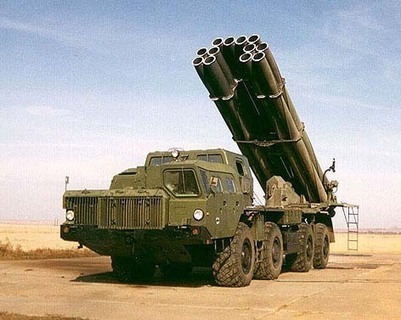
L'Azerbaïdjan lancera prochainement la production de missiles conjointement avec la compagnie turque Roketsan, annonce lundi l'agence APA, se référant à un communiqué publié par Roketsan. "La portée des missiles de 122 millimètres sera de 42 kilomètres (deux fois supérieure à celle des missiles russes Grad), alors que la portée de missiles de 107 millimètres sera de 11 kilomètres, soit quatre kilomètres de plus que les missiles analogues fabriqués par la Russie et l'Ukraine.
|
|
Scooped by
Romain
May 29, 2013 4:04 PM
|
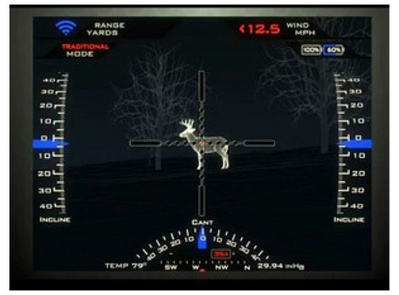
À quoi bon investir dans des leçons de tir ? Offrez-vous plutôt la carabine Tracking Point et faites mouche à quasiment tous les coups. Ce « fusil de précision guidée » (Precision Guided Firearm) est aux armes à feu ce que l’iPhone fut à la téléphonie mobile : une technologie pionnière à la fois conviviale, ludique et très efficace… mais qui suscite déjà maintes inquiétudes. Conçu par la start-up texane éponyme, Tracking Point est un système composé d’une carabine de précision, d’une boussole, d’un calculateur balistique, d’une centrale à inertie (IMU : Inertial Measurement Unit ou IMU), d’un télémètre laser, d’un filtre optique (très utile à l’aube ou au crépuscule), d’un microphone, de capteurs environnementaux (pression, température, vitesse du vent, etc), d’un viseur tête haute, d’une caméra (14 mégapixels), d’un enregistreur vidéo/photo et d’un serveur Wi-Fi, le tout fonctionnant grâce au système d’exploitation Linux. Lorsque le tireur a reperé puis marqué sa cible (avec le bouton de marquage), le Tracking Point XactSystem (TPXS) stabilise l’image dans le viseur tête haute Tracking Point Head-Up Display et propose une solution de tir basée sur une dizaine de paramètres : distance, angle et magnitude de la visée, effet de coriolis, température, pression atmosphérique, vitesse et direction du vent, etc. Il revient ensuite au tireur de presser la « détente guidée » (Guided Trigger) : grâce à la technologie prédictive Tag Track Xact adaptée aux lents mouvements d’ajustement de la visée, l’arme fera feu dès que le réticule sera aligné sur le point de marquage. Néanmoins, le tireur expérimenté peut désactiver le Tag Tract Xact, ajuster sa visée et faire feu à volonté. En fait, le Tracking Point transforme le « sniping » en activité ridiculeusement accessible : l’immense majorité des tireurs débutants ont réussi à toucher leurs cibles à 450 mètres de distance après seulement deux ou trois essais… au lieu de plusieurs mois/années de pratique. Des amateurs de chasse considèrent que cette carabine intelligente tue le côté sportif de leur loisir. Forts d’une telle technologie de tir assisté, les snipers militaires/policiers peuvent aisément marquer, traquer et viser (Tag Track Kill) des cibles avec précision et rapidité, pour peu que le Tracking Point soit suffisamment fiable et conçu pour un usage tactique de longue haleine sous toutes conditions. Pour couronner le tout, le Tracking Point n’oublie pas le partage en ligne. Grâce aux apps Shotview et Tracking Point App, le tireur peut enregistrer, diffuser en streaming et partager ses exploits via le viseur tête haute Tracking Point HUD vers les smartphones/tablettes de ses compagnons de chasse. Je ne serais guère surpris que de telles applications ouvrent la voie à des tirs de précision guidée multi-tireurs en réseaux (Multi-Shooters Online Precision Guided Firing) en forêt. Parallèlement, un tel procédé peut jouer un rôle décisif pour une équipe de snipers militaires/policiers recherchant les meilleures solutions de tir en environnement urbain. Dans une Amérique déjà très échauffée par le débat sur le contrôle des armes à feu, des experts en armement et des officiers de police souhaitent vivement que la vente du Tracking Point – qui coûte la bagatelle de 22 000 $ / 17 000 € – soit réservée aux forces de l’ordre, craignant à juste titre qu’une telle arme tombe vite entre des mains criminelles ou terroristes. Le « smartgun » est vendu uniquement par la start-up… qui a suspendu sa boutique en ligne surchargée de commandes et redirige actuellement ses acheteurs vers une liste d’attente. Cliquer sur l’image pour agrandir Selon Tracking Point, la vente directe et une technologie d’authentification intégrée à chaque unité facilitent l’identification de tous ses acheteurs. Le tireur du futur devra-t-il préalablement se soumettre à une reconnaissance biométrique ou composer son identifiant et mot de passe pour activer sa carabine 2.0 ? Chaque jour, les technologies numériques conquierent un peu plus les téléphones, le matériel domestique, les automobiles, et n’auraient certainement pas épargné les armes à feu. Compte tenu des coûts décroissants de ces technologies, le Tracking Point fera sûrement des émules moins onéreuses de par le monde. En outre, tout porte à croire que cette application soit peu ou prou dérivable ou compatible avec d’autres carabines civiles/militaires de précision.
|
|
Scooped by
Romain
May 29, 2013 2:21 PM
|
A Brazilian air force KC-137 crashed on 26 May with no injuries to the 141 people aboard while attempting to take-off from the Toussaint Louverture International Airport in Port au Prince, Haiti. The Brazilian air force released a statement saying only that a "technical problem" caused the KC-137 to exit the runway around 15:30 Brasilia local time. The aircraft was loaded with 131 Brazilian troops who were returning to Brazil after a six-month deployment in support of the United Nations stabilisation mission in Haiti (MINUSTAH). The UN force said in a news release that the runway overrun caused the aircraft's landing gear to collapse. Other news reports in Brazil quoted local airport officials saying that one of the converted Boeing 707's four engines exploded moments after take-off, and the gear collapsed after the flight crew cut power and fuel to land the heavily-loaded aircraft on the runway. The airport was shut down to commercial aircraft for several hours before the KC-137 was removed from the tarmac. Brazilian air force officials have launched an investigation of the crash. Brazil's two KC-137 tanker transports were built as airliners in the 1960s, but entered service with the Brazilian air force in 1986. Israel Aerospace Industries (IAI) was selected two months ago by the air force to convert two Boeing 767-300ER airliners into aerial refuelling transports to replace the KC-137s.
|
|
Scooped by
Romain
May 29, 2013 2:20 PM
|
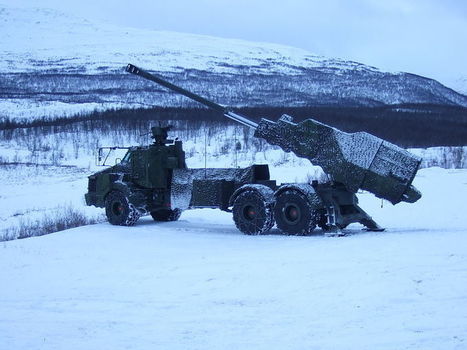
A request for information (RFI) has been issued by the Danish Defence Acquisition and Logistics Organization (DALO) seeking a new 155mm self-propelled gun for replacement of the national army's ageing M109A3 155mm self-propelled howitzer fleet. Primarily aimed at replacing the army's remaining 32 M109A3 howitzers, the RFI is seeking 15 new weapons that can either be wheeled or tracked, and should support installation of a self-defence weapon, as reported by Shephard. Capable of carrying a crew of five, the weapons should be able to achieve a range of at least 40km firing extended range ammunition, and a burst rate of six rounds per minute. The RFI seeks submission of bids for between nine and 21 systems by 17 June, while evaluation of the responses resulting in selection of three or four manufacturers is scheduled to take place throughout July. Short-listed candidates will proceed to a comprehensive evaluation programme that will complete in late 2013 or early 2014, followed by the signing of the procurement contract in the middle of the same year. The contract will also feature a ten-year support, spare parts and maintenance package. Likely contenders include BAE Systems Bofors' 155/52calibre wheeled Archer, Krauss-Maffei Wegmann-built 155/52calibre tracked Panzerhaubitze 2000 (PzH 2000), and Nexter 155/52-calibre wheeled CAmion Equipé d'un Système d'ARtillerie (CAESAR), amongst others. DALO reportedly discussed the production and acquisition of Archer with Norway and Sweden, but withdrew in 2007 before signing a co-operation agreement. Around 48 Archer systems, including 24 units each for Sweden and Norway, are currently being manufactured by BAE Systems Bofors. The Danish Artillery Regiment features one artillery battalion and an ISTAR battalion, which is also responsible for training recuits. In addition, the regiment deployed M/10 120mm towed mortars in support of the Danish troops serving with the International Security Assistance Force (ISAF) in Afghanistan.
|