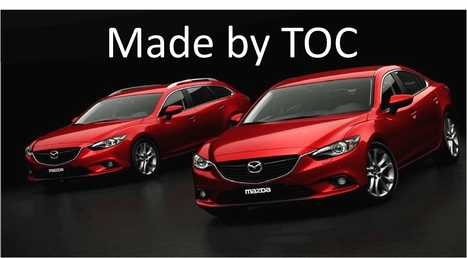
Mr. Mitsuo Hitomi, Executive Officer from the Mazda Motor Corporation Power Train Development Division presented […] how Critical Chain Project Management enabled Mazda to quickly develop their innovative SkyActiv capability. [He] described the crisis faced by Mazda […] surviving four straight years of significant financial losses. Mr. Hitomi described the last chance for Mazda to survive by developing technology that would achieve low fuel consumption from an internal combustion engine that would rival a hybrid engine, no compromise in the driving pleasure, and affordable for all customers. The product development cycle had to be cut in half for Mazda to survive. Starting with Critical Chain Project management education in 2007, the momentum grew within the company for holistic project management until the development project duration was cut by half. […]
Rami Goldratt, CEO of Goldratt Consulting, said, "Mazda gives the world another great example of the power of TOC to generate results previously thought not possible - financially, operationally, and at least as importantly, in the growth and harmony of the people themselves." Mazda has won 73 awards for its SKYACTIV technology as of 20 January 2013 including Japan Car of the Year for the CX-5, Best SUV of the Year, Green Awards 2012. The CX-5 is the most sold car in Japan for 2012 and has sold three times more than last year's diesel cars sold total in Japan.
Yuji Kishira, Regional Director for Goldratt Consulting Japan, said, "I am so happy that Mazda is among the growing number of major Japanese organizations that are using TOC and with it, not just improving the performance the company, but also really improving our country and the lives of the people in Japan. […]
Mr. Hitomi received warm applause as he presented the remarkable results in the improved quality of working life and the financial results for 2013 where Mazda has returned to the black after a continuous four year fiscal red ink. "[…] I know there is so much more to do. I will continue our journey of TOC with mindset of "Even sky is not the limit."
October 2013 - Gary Palmer introduced the topic of Critical Chain Project Management to a room-full of APM [Association for Project Management] members and volunteers at a Midlands APM Branch event in Birmingham UK.
This posting is the first in a series of postings on a story written by Bruce Nelson […] The Cabinet Maker: The consequences and chaos of uncontrolled efficiency.
The ultimate story of the Cabinet Maker could actually be any company, in any industry, in any location, and at any point in time. […] The new projects seemed to be stalled in the production process. It was not uncommon that new projects could take as long as two (2) months to complete, and this was not a good situation. […] the primary contractor (the construction companies) used MS Project to schedule their project(s). MS Project is a Critical Path Method (CPM) scheduling system, and that, by itself, presented a multitude of recurring issues. […] It was a vicious cycle of reduced cash flow, poor on-time-delivery, and the inability to accept any new work, that finally pushed the cabinet maker management team to ask for some help. To be continued.........
Exepron implements practices from critical chain project management and agile project management to create software that can roll with the punches and get important projects done right. [...] Today, we’re focusing on our software’s use of agile project management, which shares some concepts and theories with CCPM. Agile project management software is primarily used in the software development process. If you work in software development, you know that projects can rapidly evolve due to the complex nature of the industry. This is why using agile project management tools can help software businesses complete projects in a matter of weeks rather than a matter of months.
Advanced Multi-Project Management presents the full strategy and detailed tactics needed to correctly accelerate and synchronize projects for successful execution of an increased number of projects with the same resources, delivering them on time, on budget, and within original scope.
Provides a proven step-by-step approach to achieving vastly improved multi-project management results. Outlines the 10 essential steps to creating valid project networks and task estimates in a multi-project environment. Illustrates examples of how to define resource skill sets in a multi-project environment and effective ways to align all projects to prevent constant conflicts over resources. Reveals software requirements necessary to support small, medium, and large multi-project environments. Offers downloadable improvement results reported by 59 organizations using these methodologies, a complete strategy and tactics with instructions, multi-project flow simulations, and more
Gerald Kendall and Kathy Austin wrote significant compendium for modern Multi-Project Management. Traditional approach to Project Management , based on based on Critical Path, causes multilevel pressure, local focus on thin sliced tasks and inability to recover time, remains unchanged in their fundamentals. Advanced Multi-Project Management focus attention on perfect readiness before execution start. The aggressive planning of significant tasks (with check list in place of details in low level tasks) with precise definition of IN Entry Conditions and Task OUT-comes (definition of DONE). Several ongoing projects resources are balanced in "what-if?" Analysis to define the sequence of realization with maximum speed. You have a chance to make one of the best investments in your professional career! Six gears of successful multi-project management are fully presented, together with how-to suggestions.
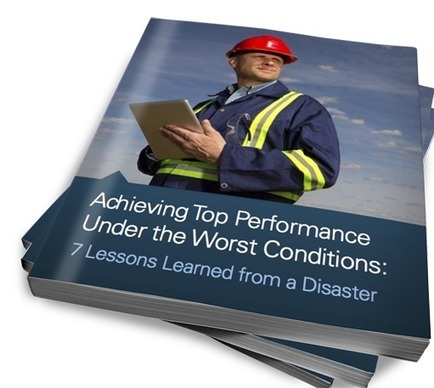
How in Just Six Months, Pinnacle Strategies Helped the Company and Contractors in Charge of Cleaning Up the 2010 Oil Spill in the Gulf of Mexico, by Doubling the Supply of Skimmers, Boom and Other Critical Resources, and in Doing So Saved More Than $700 Million using and applying the Theory of Constraints and Lean Manufacturing Principles. The mission: Improve supply lines and performance for one of the largest oil spill cleanup efforts in history. And by the way, you have to quadruple capacity in a few weeks.
The purpose of the Theory of Constraints (TOC) Transformation blog is to create a community of Executives, TOC Practitioners, Project Managers, Program Managers, Portfolio Managers and anyone responsible for Execution Management to share their experience, passion and lessons learned in the implementation of TOC and Critical Chain Project Management (CCPM) best practices.
[...] Kanban and Theory of Constraint can give rise to innovative ways to manage projects, to enhance risk management, and to continuously improve your software processes. Kanban is relatively new on the software methodology scenario, but it has enjoyed rapid success, and most software practitioners have heard about it. The same is not true with regards to the Theory of Constraint, which is often disregarded, ignored or misunderstood by software practitioners.
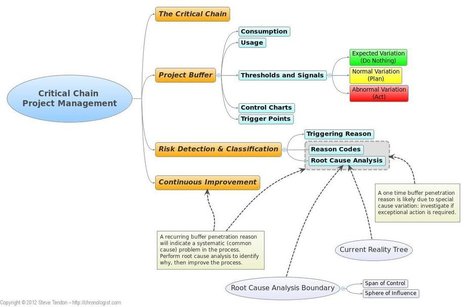
In my next few series of posting we’ll take a look at how traditional project management (CPM) attempts to protect a project from inevitable uncertainty and then compare it to TOC’s version of project management referred to as Critical Chain Project Management (CCPM).
The official Theory Of Constraints community organization (TOCICO) has launched a series of webinars that are freely accessible to all. They are hosted by the world’s top TOC experts.
At the time of writing this post (28th Sept. 2013) this new offering that was recently launched has just one Critical Chain webinar: The Project Manifesto - by Robert Newbold.
I am not certain of the durability of the URL link. If necessary you can go to the home page where there is a link: http://www.tocico.org/
Aurora-CCPM by Stottler Henke is a project planning and scheduling software with the power and flexibility of Multi-project Critical Chain Project Management
Chicago October 17 and 18, 2013. C3PM - Certified Critical Chain Project Manager Workshop and Exam Session C3PM program is Developed by EXEPRON and managed by ISCEA. The Facilitators: Daniel Walsh and John Thompson.
How to combine improved project management with improved agile methods. The agile movement (Scrum/Kanban) is a big success and a breakthrough in knowledge work. […] But the agile methods do not really fit into our project worlds. […] you have to deliver exactly to a due date with a defined scope and budget. […]So the question is how to bring these worlds together? In this presentation I show an approach based on Critical Chain Project Management (CCPM) how to make agile Methods reliable (Reliable Scrum) and protect the agile part of course. The next step is to make them even faster (and more agile) with ideas out of the Lean/TOC World and in the third step - how this all fits together. […] The whole story and details can be found in Part IV of "Tame the Flow - Hyper-Productive Knowledge-Work Management" S. Tendon/W.Müller, 2013, leanpub.
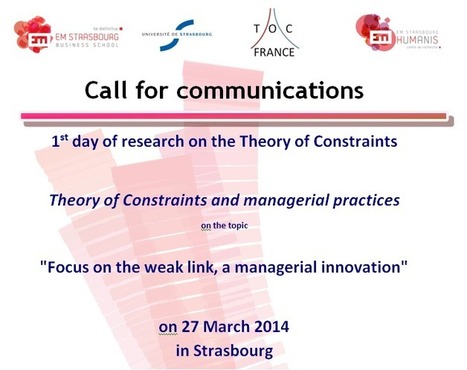
The EM Strasbourg Business School in France (part of Strasbourg University) and the TOC France Association are organising a 1 day conference on the Theory Of Constraints on the 27th of March 2014. This is the "Call For Papers" that will be published in the academic media. Submissions can be in English or in French.
The subject is TOC in general so Critical Chain Project Management is perfectly relevant. Indeed since the topic is "TOC and managerial practices" I would say there is a lot of potential CCPM material that could be submitted.
Are you convinced that multitasking is counter-productive but you do not know how to show co-workers and your organization the benefits of reducing multitasking?
Share this video that illustrates how you and your organization can significantly cut multitasking and increase productivity.
"Realization makes it easy for organizations to be fast and efficient."
ProChain Solutions was founded in 1996 to deliver advanced project management solutions to Fortune 500 companies. We are the premier implementer of solutions based on the Critical Chain approach.ProChain provides Software and Services that enable our customers to:
Dramatically increase project predictability while decreasing riskReduce project cycle times by 20% to 50%Improve time to marketIncrease productivity
This eBook is an instruction manual for implementing Theory of Constraints' "Critical Chain" solution for Projects. This eBook is targeted at Business Owners, Managers, Consultants and Implementers. Theory of Constraints - Do It Yourself Kit for Small & Medium Size Enterprises for Projects
To get content containing either thought or leadership enter:
To get content containing both thought and leadership enter:
To get content containing the expression thought leadership enter:
You can enter several keywords and you can refine them whenever you want. Our suggestion engine uses more signals but entering a few keywords here will rapidly give you great content to curate.


 Your new post is loading...