This presentation takes you through the journey of CCPM implementation in Dr. Reddy’s Laboratories. CCPM is implemented as part of Viable Vision initiative rolled out in 2008. Before CCPM Dr Reddy’s suffered from many symptoms: there were always some projects on hold due to ...
9 examples of Critical Chain Project Management (CCPM) implementation. A method based on the Theory of Constraints (The Goal / Eli Goldratt) that has enabled thousands of organizations around the world to transform their project management.
Textile recycling machines – ETO & MTO ERP & CRM – Accelerating installation and migration R&D of food packaging machines – Reducing development time Aeronautics (airplane seats) – Accelerating product development Aeronautics (valves, solenoids, etc.) – Breaking the bottleneck International aeronautics – Installation of composite weaving machines (US, FR, Mexico) Production line relocation – a CAPEX project Cloud computing & open source – Scheduling in an Agile environment Military aircraft maintenance & weapons – Optimizing MRO and MCO operations
In this presentation Etienne Lecerf, Managing Consultant at Marris Consulting, explains how to apply proven delivery principles from Agile, Lean, and the Theory of Constraints to improve flow, reduce friction, and deliver more consistently — across projects, teams, and functions.
You will understand: - how to fix the orga. root causes leading to projects delays, - how to manage bottlenecks in a project portfolio, - how to scale Agile without heavyweight frameworks.
A world class medical device manufacturer suddenly has far too many projects, a serious backlog, a slow review process, and few good options to help fix things. Realization’s toolkit of best practices and the company’s Concerto software helped tame the workload, prepare each project, and resolve problems as they arose.
The "2 for 1" rule to reduce Work In Progress and accelerate flow. A webinar hosted by Philip Marris, the founder and CEO of Marris Consulting. [...] The "2 for 1" rule is very simple: a new unit (such as a production order, an order, or a project) can only be launched into the system if two units have been previously released (finished).
Stop starting and start finishing!
The emphasis is on completing activities already underway before starting new work. [...]
About the speaker: Philip Marris Philip started his Lean and Theory Of Constraints journey in 1984. He worked with Eliyahu Goldratt, the founder of TOC and author of the worldwide bestseller “The Goal”. He is also a recognized Lean expert and combines Lean (Manufacturing/Engineering/Management) with TOC. ...
Adding Critical Chain to an Agile environment provides VISIBILITY. This is the key message by Kabir Veitas the founder and CEO of deep tech startup Nunet. NuNet is an open-source platform using decentralized GPUs to offer an alternative to traditional cloud services. NuNet’s solution powers AI, Machine Learning, and other applications without relying on centralized providers, helping drive innovation in a scalable and sustainable way.
This is a short extract of Philip Marris' presentation during the TOCICO Critical Chain 2026 annual conference: "Service industries boosted by Critical Chain Project Management".
The extract discusses the phenomena of managing project portfolios by hydraulic pressure.
by Rob Newbold Project. A temporary endeavor undertaken to create a unique product, service, or result.
Nowadays, it seems like you can call pretty much any chunk of work your team takes on a "project."
I used to feel like I knew a project when I saw one. Constructing a building, creating a new kind of widget, developing software: projects. My to-do list, the to-do lists of functions involved in developing new semiconductors or drugs: not projects.
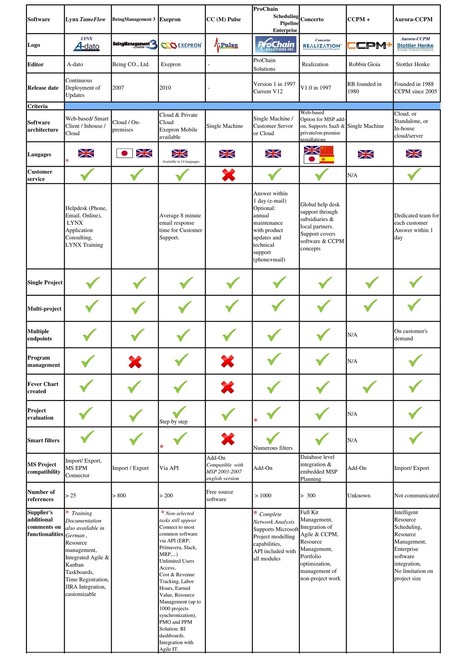
The problem is, I’ve recently been looking at different project management software apps, and that’s forced me to re-think my beliefs. Monday.com, Smartsheet, and Microsoft Planner all call themselves project management software. But they seem designed first of all to help manage task lists, and second to help team managers manage team task lists. Traditional project management, with dependencies, scheduling, and critical paths (let alone critical chains!), gets much less emphasis. Dates are an input, not an output. ...
A-dato invites you to join our upcoming webinar, “Hybrid Project Management: Antipoles or Winning Synergy?” which explores how organizations navigate hybrid environments with clarity and control. 🔍 Join and discover: - Why hybrid setups have become the new normal - What makes them so hard to manage - What to look for in a system that supports real hybrid coordination - How leading organizations are making it work with LYNX
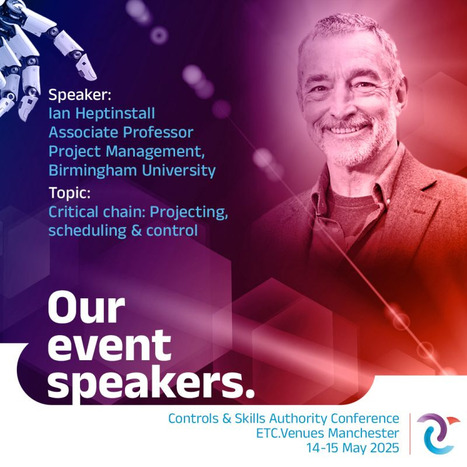
Welcoming back Ian Heptinstall, to the speaker line-up for the Controls & Skills Authority Conference 2025: Controls & Skills for You, Your Work & Your World – Manchester, 14–15 May 2025. 🔹Ian Heptinstall will be sharing his insights on "Critical Chain: Projecting Scheduling & Control"
Philip Marris, CEO of Marris Consulting describes briefly the Critical Chain Project Management (CCPM) approach. [...] Critical Chain Project Management (CCPM) has shown over the last 20 years (1997) that performance can be significantly improved. The Critical Chain is defined by the longest chain of dependencies between tasks, but it also takes into account resources availability. [...] Critical Chain is used both for individual projects and for entire project portfolios.
David Updegrove describes his book "The Critical Chain Implementation Handbook". He explains why he wrote this "How to Implement" guidebook and why he based it on the Theory Of Constraints' Critical Chain "Strategy & Tactics Tree".
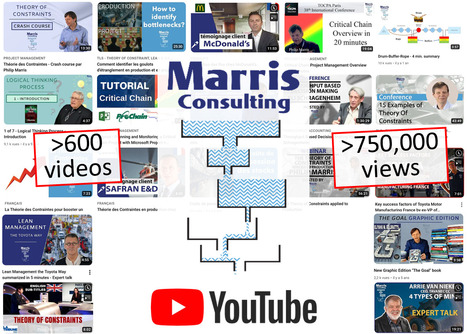
Marris Consulting has reached 600 videos and 750,000 views it’s YouTube channel. The videos are mostly about the Theory Of Constraints, Critical Chain Project Management, and the Thinking Process. There are also many videos about Lean including a series with an ex-VP of Toyota Motor Manufacturing. Many tutorials. Dozens of conference recordings. Etc.
In this video, Philip Marris, CEO of Marris Consulting, presents two case studies. The first concerns the industrial relocation of production lines. The second concerns NuNet, a decentralized open-source cloud computing platform. To better manage uncertainty and ensure accurate tracking of their releases and market release dates, they complemented their Agile approach with the Critical Chain method.
“Implementing Critical Chain to accelerate new products development in the aeronautical industry”. Presentation during the annual Critical Chain International conference in April 2023 by Frédéric Grehal, Vice-President and General Manager of Circor Aerospace & Defense. [...]
The project durations were reduced, and the projects finished on time. The efficiency and throughput of the New Product Development also increased. Following the success of the pilot projects, they then rolled out the Critical Chain Way on their entire portfolio.
All these actions resulted in better managerial alignment, improved communication and better problem escalation within the project teams. It also provided Circor Aerospace & Defense with better, more challenging and more realistic, project schedules, and gave them much better visibility on the project’s progress.
Date: Thursday 4th of September 2025. 5:00pm to 5:45pm (CEST). Free online conference, in English.
Many project-driven organisations adopt Agile hoping for faster delivery and empowered teams — but often find those benefits elusive in complex environments like R&D, IT, and engineering. The issue isn’t with Agile itself, but with the unchanged system around it: shared resources, overloaded portfolios, and coordination bottlenecks that Agile alone can’t fix. This short webinar cuts through the noise. You’ll learn how to apply proven delivery principles from Agile, Lean, and the Theory of Constraints [Critical Chain Project Management] to improve flow, reduce friction, and deliver more consistently — across projects, teams, and functions.
Jira is used by almost 60% of software engineers and over 300K companies. Scrum and Kanban are the primary approaches in Jira today, but not all types of work are equally well managed with these Agile methodologies. Critical Chain Project Management can improve visibility, reduce time to value, and substantially increase the chance of delivering a project on time. In this webinar, we will examine how to start getting the benefits of CCPM alongside Scrum/Kanban with the help of AgileCCPM for Jira.
Efrat Goldratt-Ashlag, author and daughter of Eliyahu M. Goldratt the author of the global bestseller THE GOAL is interviewed for the launch of the French edition of her bestselling book "Goldratt's Rules of Flow" / "The principles of THE GOAL applied to projects."
In this conversation with Philip Marris, CEO of Marris Consulting, they cover the story behind the writing of the book, its core concepts, and how Efrat continued her father’s legacy by identifying common obstacles to flow in projects, such as multitasking, lack of full-kit readiness, and local versus global optimization. ...
Critical Chain Project Management (CCPM) is a project management approach developed in the late 90s that aims to finish your projects faster. This video explains the basic principles of Critical Chain project management through an Engineering to Order (ETO) project. However, Critical Chain Project Management can be applied to any projects: new product development, MRO, software development, ... How to build a Critical Chain ...
Shop for your moonrocks at bigsouth511cookies shop. At bigsouth511cookies we offer the quality A1 products. moonrocks etc all ours lows are on fire; sherbert, caramel gelato, gush runtz, icc runtz,kushmintz, animal cake, icc, purple runtz, tea rose, potty mouth, phantom og, gelato melon etc. we have the best deals ever. animal cake Direct order @bigsouth511s https://t.me/bigsouth511
Philip Marris shares practical insights, success stories, and the impact of Critical Chain Project Management (CCPM) on project performance in various industries. - How Marris Consulting has helped organizations significantly reduce project durations and improve delivery reliability using CCPM. - Key lessons learned from implementing CCPM across several sectors. - Why Critical Chain is more relevant than ever in today’s fast-paced and uncertain business environment.
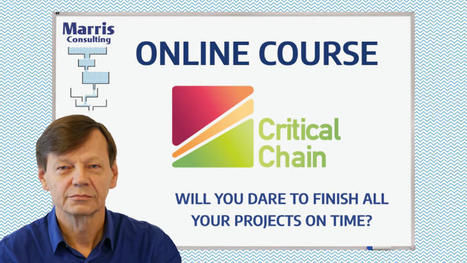
Led by world expert Philip Marris, this course is designed to empower you with the knowledge and skills to excel in the realm of CCPM. During this training, you will delve into topics such as project scheduling, portfolio management, and the techniques specific to CCPM. Additionally, you will have the opportunity to hear directly from Marris Consulting clients through numerous testimonies and case studies. These real-world examples will showcase how organizations have successfully implemented Critical Chain Project Management and its positive impact on their projects. Learning from their mistakes and their tips and tricks applied in their environment will enhance your learning experience and enable you to apply the Critical Chain principles to your own environment/challenges.
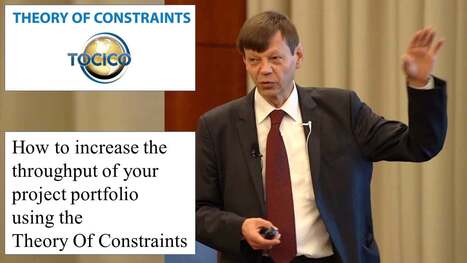
Applying the "short 5 Focusing Steps" (steps 1, 2 and 5), Philip Marris describes how to increase the productivity and output of project portfolios. How to quickly increase the number of projects finished over time.
There are two dimensions of constraints in a project environment. The first one is the project constraint: it is the longest sequence of tasks also known as the Critical Chain. The second one is the portfolio constraint: somewhere in the organization there is a weak link, a bottleneck.
To get content containing either thought or leadership enter:
To get content containing both thought and leadership enter:
To get content containing the expression thought leadership enter:
You can enter several keywords and you can refine them whenever you want. Our suggestion engine uses more signals but entering a few keywords here will rapidly give you great content to curate.


 Your new post is loading...