Coastal Restoration
32.9K views | +5 today
 
Scooped by Catalina Monroe
onto Coastal Restoration
February 15, 11:05 PM
Scoop.it!

MSN

Red eyes and black beaches: How one of the worst environmental disasters left its mark
Catalina Monroe's insight:
I found it particularly interesting how in ths article it is mentioned how many things went wrong such as an inexperianced caption, bad port managment and out dated infrastructer. Makes me ask the question of many more "disasters waiting to happen" are out there currently that could be prevented 
No comment yet.
Coastal Restoration
Coastal management and restoration of our planet's coastlines with a particular focus on California, Louisiana and the Pacific.  Emphasizing wetland restoration, aspects of agriculture in the coastal plain, fisheries, dealing with coastal hazards, and effective governance.
Curated by PIRatE Lab
Your new post is loading...
Scooped by yaiza.delgado165@myci.csuci.edu
Today, 1:35 AM
Scoop.it!

Scientists finally know where the Colorado River’s missing water is going

Scientists finally know where the Colorado River’s missing water is going | Coastal Restoration | Scoop.it
For years, water managers have been puzzled as the Colorado River kept delivering less water than expected—even when snowpack levels looked promising. New research reveals the missing piece: spring rain, or rather, the lack of it. Warmer, drier springs mean plants are soaking up more snowmelt before it can reach rivers, fueled by sunny skies that boost growth and evaporation. In fact, this shift explains nearly 70% of the shortfall, tying the mystery directly to the long-running Millennium drought.
yaiza.delgado165@myci.csuci.edu's insight:
Where is the water? It looks like we can not track how much water we will receive on just winter snowpack. Scientist must focus on more variables such as tracking rainfall, soil moisture, plant activity, and temperature patterns as these are a chain reaction driven by climate change.
Catalina Monroe's comment, Today, 2:33 PM
This is so interesting! even a promising snow pack the river water being low has been an issue ive known about for the last year, the finding of plants at higher elevation taking the water in along with dry weather causing higher levels of evopartion gives us an answer to the question of the water.
Scooped by Sierra Williams
April 15, 7:14 PM
Scoop.it!

An environmental disaster in Moldova has Russia’s fingerprints all over it | Paula Erizanu | The Guardian

An environmental disaster in Moldova has Russia’s fingerprints all over it | Paula Erizanu | The Guardian | Coastal Restoration | Scoop.it
The Ukraine war on our doorstep is a constant threat. Contaminated drinking water is a dangerous new twist, says Moldovan journalist Paula Erizanu
Sierra Williams's insight:
A Russian strike on a Ukrainian hydropower plant caused a massive oil spill into the Dniester River, contaminating Moldova’s main source of drinking water and triggering a nationwide emergency. This crisis exposes Moldova’s vulnerability and is turning water security into a geopolitical issue.
No comment yet.
Scooped by Irma Hinojos
April 15, 1:57 AM
Scoop.it!

Deportations Are Putting US Disaster Response at Risk | Opinion

Deportations Are Putting US Disaster Response at Risk | Opinion | Coastal Restoration | Scoop.it
"When the next hurricane, fire or flood strikes, there will simply be fewer trained workers available to help communities recover."
Devan Page's comment, April 15, 5:23 PM
It is really interesting to see how interconnected these issues are. Now knowing that 25-40% of the disaster task force are immigrants, it is very unfortunate to see disaster relief being weakened in multiple ways now. Not only less funding and less staff, but actively pursuing to deport the demographic majority of that staff.
Ashlyn Olson's comment, April 15, 8:13 PM
I thought the estimated 25-40% of disaster recovery workforce being immigrants statistic, is a little symbolic, almost poetic. I wonder how many, if any, of the immigrant recovery workforce had to flee because an environmental disaster.
Scooped by Ryan Murgatroyd
April 14, 7:48 PM
Scoop.it!

Blueprint for Bay Area future adopted by regional agencies

Blueprint for Bay Area future adopted by regional agencies | Coastal Restoration | Scoop.it
MTC adopted Plan Bay Area 2050+ and certified its environmental impact report last month, giving final approval to the region's long-range blueprint for transportation, housing, economic resiliency and environmental sustainability.
Ryan Murgatroyd's insight:
Plan Bay Area 2050+ has been accepted by ABAG. The plan provides conceptual frameworks for transportation, housing, and environmental infrastructure changes to improve Bay Area sustainability and affordability. 
Rogelio Navarro's comment, April 14, 10:57 PM
This is great news to hear as it will be very beneficial to the local communities. Although it does seem as if it will take much time, it is still something positive that is being created which I believe is always good news to hear.
Scooped by Bradley Wagner
April 14, 12:45 PM
Scoop.it!

https://www.nytimes.com/live/2025/climate/antarctica-thwaites-glacier#how-antarctica-turns-your-world-upside-down

A New York Times climate reporter, Raymond Zhong and a photographer, Chang W. Lee. They traveled with a scientific expedition to study Antarctica’s fastest melting glacier, documenting the journey in real time. They were aboard the Araon, a South Korean icebreaker, with nearly 40 scientists from around the world. The destination was the Thwaites, an immense and remote glacier whose uncertain fate could affect global sea-level rise for generations to come. The scientists battled the unyielding polar elements to conduct their research, and have returned bearing new data and insights on the rapid changes that are well underway.

Scrolling the article you read throughout the journey. There are photos and videos above each text to give a better idea of it all. 
Ryan Murgatroyd's comment, April 14, 7:50 PM
This is a super cool expedition with great implications. I am glad to see great efforts being made to further research and understanding.
Scooped by marisa denninger
April 14, 12:26 PM
Scoop.it!

https://ktla.com/news/inland-empire/southern-california-fire-department-using-sound-waves-to-fight-fires/

Water has long been the go-to when it comes to fighting a fire. But what about sound waves? It might be hard to wrap your head around the concept at first, but the San Bernardino County Fire Department is testing out the idea of using sound to extinguish flames. The technology – called Sonic Fire Tech – was developed by ex-NASA engineers and works without water or chemicals. San Bernardino County Fire Department officials explained that the device, which resembles a leaf blower, is designed to detect and suppress fire using sound waves.
marisa denninger's insight:
Share your insight
Kalani Wagoner's comment, April 14, 12:59 PM
I saw this! This is so cool that we're finally testing out different forms of energy to displace things like fire. Can't wait to see this is real action...but I wonder what the effects would be to wildlife that could be sensitive these wavelengths...
Scooped by Catalina Monroe
April 14, 2:40 AM
Scoop.it!

Near-Record Sea Temperatures in March Pave Wave for El Niño

Near-Record Sea Temperatures in March Pave Wave for El Niño | Coastal Restoration | Scoop.it
Several climate centres said last month that El Niño is likely to form during the summer months and persist into 2027.
Catalina Monroe's insight:
We seem to be in a death cycle of hot tempatures over water causing weather disasters and higher rates of agressive storms and climate change as a whole. These headlines are begining to sound increasingly repetitive and yet no one is noticing the seriousness of this. 
No comment yet.
Scooped by brayden.hosler576@myci.csuci.edu
April 12, 3:29 PM
Scoop.it!

Trump approves disaster requests for at least 7 states. Others await aid decisions

Trump approves disaster requests for at least 7 states. Others await aid decisions | Coastal Restoration | Scoop.it
The Trump administration approved major disaster declaration requests for at least seven states this week, according to information released Saturday by the Federal Emergency Management Agency, allowing affected communities to access federal support.
brayden.hosler576@myci.csuci.edu's insight:
The integration of politics and disaster is an ongoing issue. "Arizona has been waiting nearly three months for an answer to its appeal after being denied support for severe storms and flooding that occurred in September." This is surprising since Trump won Arizona by almost 5 points in 2024.  https://www.270towin.com/states/arizona#:~:text=However%2C%20that%202016%20election%20saw%20Donald%20Trump,2024%2C%20winning%20by%205.5%25%20over%20Kamala%20Harris.
Christopher Blackwell's comment, April 13, 2:19 PM
This was really interesting to read about. It is concerning to me that there is now a push for disaster relief to be the state's responsibility. The redirection of FEMA is something that should be looked at in terms of how the states feel about the elections after these funds were redirected.
Scooped by Devan Page
April 9, 3:37 PM
Scoop.it!

Iran International: Can Iran’s environment be saved?

"Iran’s environmental strain is not only the result of neglect or mismanagement, but also of deliberate policies that have redirected natural and economic resources toward militarization at the expense of long-term sustainability."
Devan Page's insight:
The environment of Iran is deteriorating due to consistent military efforts that deplete their resources. Iranian people have been facing air pollution and water scarcity that has only been getting worse. This collapsing environment is not only an issue for Iranians, but the neighboring countries who also will face the ecological consequences.
Irma Hinojos's comment, April 9, 10:52 PM
This is devastating news to hear that the people of Iran have to suffer from this, and on top of that the air pollution and water scarcity are being affected as well, which in turn will affect the people.
Catalina Monroe's comment, April 11, 12:02 AM
Iran is in such a hard place in so many aspects. Its so devastating how much destruction is happening and the environment is not a top priority when thousdands are dying however millions world wide will feel the fallout from this war.
Scooped by Catalina Monroe
April 9, 11:51 AM
Scoop.it!

Colorado residents face earliest water restrictions ever

Colorado residents face earliest water restrictions ever | Coastal Restoration | Scoop.it
Some Colorado residents have already been told to reduce their water use — the earliest such restrictions ever imposed — following a heat wave and snow drought.
Devan Page's comment, April 9, 3:45 PM
This is unfortunate news. The 40% loss of the snowpacks in Colorado put the state in a precarious situation where they must reduce water consumption by 20%, and even worse, they are now more susceptible for wildfires and the loss of hydropower and agriculture.
Cael Thor Hill's comment, April 10, 7:36 PM
Wildfires and agriculture are a great concern but something else to be considered is the wildlife that depends on the environment these snow packs create. I understand this is a disasters class but these impacts could be disasterous for local people.
Scooped by Ashlyn Olson
April 8, 9:39 PM
Scoop.it!

EPA flags microplastics as "priority" contaminants in drinking water

EPA flags microplastics as "priority" contaminants in drinking water | Coastal Restoration | Scoop.it
Federal regulators are moving to add microplastics to a list of drinking water contaminants marked for research, funding and possible regulation in the future.
Ashlyn Olson's insight:
Studies have found microplastics in more than 80% of the people tested. The US Environmental Protection Agency (EPA) and the US Department of Health and Human Services announced April second that they are taking action to protect the public health from microplastic harms. The HHS started a $144 million program to measure microplastic levels in humans, identify the most harmful plastic contaminants, and research ways to remove them.
Heather Farlow's comment, April 8, 10:49 PM
I am glad to hear that the EPA is flagging microplastics as a priority contaminant in drinking water because it has been proven that humans carry a worrying amount of microplastics in their bodies, and while that in itself is a huge concern, they can also leach harmful substances in the process.
Scooped by Irma Hinojos
April 8, 4:01 PM
Scoop.it!

Disaster Debris: Coming Soon To A Park Near You?

Disaster Debris: Coming Soon To A Park Near You? | Coastal Restoration | Scoop.it
Some park users are getting in the faces of city crews and leaving ugly voicemails, demanding the debris be taken elsewhere.
No comment yet.
Scooped by Sierra Williams
April 8, 2:33 AM
Scoop.it!

As heat wave ends in the West, scientists try to make sense of its intensity

As heat wave ends in the West, scientists try to make sense of its intensity | Coastal Restoration | Scoop.it
The spring heat wave that baked the West for over a week has finally moved along, after setting more than 1,500 temperature records across 11 states.
Sierra Williams's insight:
The record-breaking heat wave across the western U.S. has finally ended after lasting unusually long and shattering hundreds to thousands of temperature records across multiple states. Scientists say its early timing, intensity, and duration were highly unusual, likely influenced by climate change, and could worsen drought, wildfire risk, and water shortages in the months ahead.
Julia Richter's comment, April 10, 11:49 PM
The unusually high temperatures are definitely something to be scared about, as they will be leading to significantly longer wildfire seasons and the predicted El Nino is of great concern too. It will be interesting to see how temperatures shift throughout the rest of the year and if the later months will be record breaking highs.
Chad Chambers's comment, April 11, 1:52 AM
It is wild to see how climate change is causing these "virtually impossible" events and it will be interesting to see how we deal with this problem in the future.
Scooped by Ashlyn Olson
April 15, 7:55 PM
Scoop.it!

Near-Record Sea Temperatures in March Pave Wave for El Niño

Near-Record Sea Temperatures in March Pave Wave for El Niño | Coastal Restoration | Scoop.it
Several climate centres said last month that El Niño is likely to form during the summer months and persist into 2027.
Ashlyn Olson's insight:
According to the European Union Copernicus Climate Change Service's,  the average sea surface temperature for March '26 was 20.97 ºC, the second highest value on record during the month of March. This reflects the climate's transition into El Niño. The National Oceanic, Atmospheric Administration, and several other climate centers announce that El Niño is likely to start during the summer and last through the end of 2026, "potentially longer."
No comment yet.
Scooped by Devan Page
April 15, 5:16 PM
Scoop.it!

250 missing as boat carrying Rohingya and Bangladeshi migrants sinks in Indian Ocean

250 missing as boat carrying Rohingya and Bangladeshi migrants sinks in Indian Ocean | Coastal Restoration | Scoop.it
The trawler "reportedly sank due to heavy winds, rough seas and overcrowding", the United Nations said.
Devan Page's insight:
Rohingya and Bangladeshi migrants endure a horrifying situation of being stranded in the middle of the ocean. Their journey was made by a lot of the passengers to ensure job security and better living conditions. The damaged and sinking ship led to an oil spill that burned the survivors. The survivors were stranded for 36 hours at sea before being rescued. 
Sierra Williams's comment, April 15, 7:16 PM
This disaster highlights the ongoing risks faced by people fleeing persecution and poverty who attempt dangerous sea journeys.
Scooped by Rogelio Navarro
April 14, 10:35 PM
Scoop.it!

https://www.nytimes.com/2026/04/13/climate/gray-whales-san-francisco-bay.html

Rogelio Navarro's insight:
Gray whales traveling to the San Francisco bay in search of food sources that have been lost as a result of climate change, are being injured and even killed by ships navigating the area.
No comment yet.
Scooped by Kalani Wagoner
April 14, 12:56 PM
Scoop.it!

Earthquake in Indonesia kills at least 1 person and sets off small tsunami

Earthquake in Indonesia kills at least 1 person and sets off small tsunami | Coastal Restoration | Scoop.it
JAKARTA, Indonesia — An earthquake in Indonesian waters set off small tsunami waves Thursday morning, killed at least one person and damaged houses and buildings, officials said
No comment yet.
Scooped by Julia Richter
April 14, 12:33 PM
Scoop.it!

https://japantoday.com/category/national/japan's-curbing-of-greenhouse-gas-emissions-slows-in-fy-2024

Julia Richter's insight:
I think this is a really important article to note Japan's ability to excel in reducing emissions.  It's short, quickly shares the point that due to Japan's care and support of marine ecosystems and forests, on top of other efforts as well, they were able to greatly reduce their GHG emissions throughout the year.  Definitely a lesson that needs to be learned by the United States and Japan could be a great footprint to copy to reduce global emissions through all countries. 
Heather Farlow's comment, April 14, 12:42 PM
While Japan may not have met their exact target for greenhouse gas emissions, it is still impressive that they are maintaining reduced emissions compared to the past levels. It is not perfect, but Japan taking steps toward reduced emissions is better than many other countries. I hope that other countries take inspiration from this and follow their example.
yaiza.delgado165@myci.csuci.edu's comment, Today, 1:52 AM
Yes, I agree that the United States can definitely learn from Japan's foot print to reduce green house gas emissions. It seems that Japan is more collective and rely on high public participation due to social norms. In the United states it is harder to follow this footprint because we tend to work for incentives. This is just my opinion because I have visited Japan and saw differences in how public behavior is motivated when working collectively. In the U.S. individual choice is often prioritized and leaves us with designing policies to get the same level of participation. I am not sure if I am right about this but just a simple observation.
Scooped by Heather Farlow
April 14, 12:25 PM
Scoop.it!

Why bombing Iran’s nuclear power plant could cause an environmental disaster

Why bombing Iran’s nuclear power plant could cause an environmental disaster | Coastal Restoration | Scoop.it
Strikes to Iran’s Bushehr nuclear power plant could release long-lasting radioactive cesium 137 into the Persian Gulf, causing environmental calamity and threatening drinking-water supplies for millions
Julia Richter's comment, April 14, 12:39 PM
It is crazy to think that such a huge danger to our environment's and people's health could be caused with the knowing impact of the situation. Chernobyl was unexpected and uncalled for, but this can directly be avoided. Our governments need to understand the implications that this will have across the world and all need to be smart about it. It's not a matter of dominating power in this situation, but protecting the health of the world.
marisa denninger's comment, April 14, 5:01 PM
I think it's crazy that this even has to be an argument. We have seen how toxic and awful nuclear radiation leaks can be. I also feel like this is going to scare the public even further away from wanting nuclear power plants to power their cities, even though it's one of the best sources of renewable energy. I wouldnt want to live near one either if it has the chance of being bombed and dosing me and my community with radiation
Scooped by Christopher Blackwell
April 13, 2:23 PM
Scoop.it!

USDA finalizes NEPA rule overhaul

USDA finalizes NEPA rule overhaul | Coastal Restoration | Scoop.it
The U.S. Department of Agriculture has finalized a sweeping reform of its NEPA regulations, consolidating rules.
Christopher Blackwell's insight:
This was an article that looked at the new regulations that are in place for environmental policy. We see that they have reduced the number of pages allowed for writing on topics. This means that environmental action is quicker, but the environmental impact is not fully described in papers. This means that the science is summarized and does not show the full details and impacts. 
brayden.hosler576@myci.csuci.edu's comment, April 13, 7:50 PM
Summarization for the public should be extremely important, but scientific research should be rigorous and dedicated to clarity, reproducibility, and (generally) analytical and/or statistical determinations.
Scooped by Julia Richter
April 10, 11:46 PM
Scoop.it!

Emperor Penguin Now 'Endangered' Due to Climate Change

Emperor Penguin Now 'Endangered' Due to Climate Change | Coastal Restoration | Scoop.it
The emperor penguin was downgraded from "Near Threatened" to "Endangered", the Antarctic fur seal from "Least Concern" to "Endangered".
Julia Richter's insight:
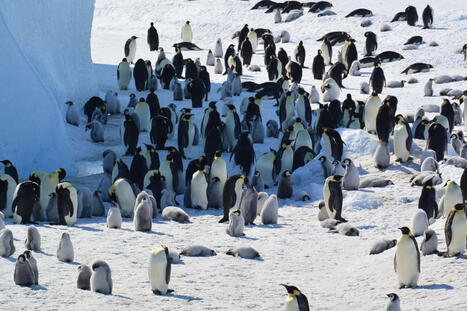
Due to globally increasing temperatures, Emperor penguins have now been labeled "endangered" by the Red List of Threatened Species.  Rising ocean temperatures are threatening their main food source and their environment is melting.
No comment yet.
Scooped by Chad Chambers
April 9, 12:15 PM
Scoop.it!

Remembering Vietnam’s Worst Environmental Disaster – and the Ongoing Cover-up – The Diplomat

Remembering Vietnam’s Worst Environmental Disaster – and the Ongoing Cover-up – The Diplomat | Coastal Restoration | Scoop.it
It’s bad enough that the company at fault considers the issue closed, but the Vietnamese government has effectively sided with a foreign corporation – and arrested those who dared to protest.
Chad Chambers's insight:
A Taiwanese company was dumping waste into the ocean in secret. It has been 10 years and the company still hasn't compensated the fisherman for health impacts and lost livelihoods. 
No comment yet.
Scooped by Heather Farlow
April 8, 10:41 PM
Scoop.it!

Opinion | Yuba River disaster: Coming soon to a river near you?

Opinion | Yuba River disaster: Coming soon to a river near you? | Coastal Restoration | Scoop.it
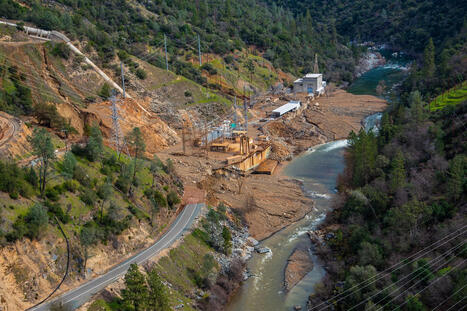
Climate change and age are stressing California's water infrastructure, endangering struggling salmon populations and other wildlife.
No comment yet.
Scooped by Bradley Wagner
April 8, 6:59 PM
Scoop.it!

https://www.ifrc.org/press-release/study-climate-change-fuels-fire-weather-threatening-worlds-oldest-trees-argentina-and

This article talks about the raging heat conditions in Chile and Argentina. The conditions are hot, dry, and windy. That's a formula for wildfires. The article states because of these conditions Chile and Argentina are three times more likely to have wildfires. This poses a threat to some of the worlds oldest trees. Some being thousands of years old. Once these types of trees destroyed, then will not come back. 
No comment yet.
Scooped by Ryan Murgatroyd
April 8, 1:48 PM
Scoop.it!

Zeldin tells climate skeptics to 'celebrate' endangerment finding repeal

Zeldin tells climate skeptics to 'celebrate' endangerment finding repeal | Coastal Restoration | Scoop.it
The head of the Environmental Protection Agency on Wednesday defended his decision to repeal the legal determination that serves as the basis for federal rules to slow climate change.
Ryan Murgatroyd's insight:
Zeldin has made it official. This continues the misinformation regarding climate change and he is actually changing policy of the past and directly walking back the progress made. This is not a good look for efforts to reduce emissions while this administration is in office.
No comment yet.