
Via LaLIST


|
Scooped by
Gilbert C FAURE
from LaLIST Veille Inist-CNRS
onto CME-CPD October 4, 2013 8:36 AM
|
 Scoop.it!


 Your new post is loading...
 Your new post is loading...
Your new post is loading...
Scoop.it!
|
|
|
Scooped by
Gilbert C FAURE
August 12, 3:55 AM
|
Scoop.it!
New CME Slideset: Frontline Management of Transplant-Ineligible Multiple Myeloma
For patients who have deferred or are ineligible for transplant, treatment decisions carry real weight. This slideset outlines how to integrate anti-CD38–based regimens and optimize supportive care to improve outcomes.
📥 Download now to bring evidence-based strategies into your next patient discussion: https://lnkd.in/eVKhipg5
#DeceraClinicalEducation #MedicalEducation #HealthcareEducation #ScientificActivation
|
|
Scooped by
Gilbert C FAURE
August 4, 3:47 AM
|
Scoop.it!


Live and on-demand healthcare courses, conferences, workshops, webinars and sessions.
A few years ago, 𝘮𝘪𝘤𝘳𝘰𝘭𝘦𝘢𝘳𝘯𝘪𝘯𝘨 was one of the biggest buzzwords in medical education.
Today, I think most mature education providers see it rather differently.
𝘔𝘪𝘤𝘳𝘰𝘭𝘦𝘢𝘳𝘯𝘪𝘯𝘨 is no longer a format in its own right. It is an educational design principle.
At MedAll, every programme we develop starts with educational architecture rather than educational products. The question isn't "should this be a webinar?" or "should this be microlearning?" The question is "what does the learner need, and what educational approaches will best support that need?"
That often leads us to programmes that combine multiple modalities:
• live webinars and faculty interaction
• enduring educational materials
• infographics and visual summaries
• modular learning experiences that incorporate microlearning principles
• practical tools and resources designed for use in clinical practice
The strength lies not in any one format, but in the blend.
That flexibility allows us to meet learners where they are, recognise the realities of modern clinical practice, and create educational journeys rather than isolated educational moments.
Of course, we are far from the only organisation thinking this way. Across the IME/CME community there are valuable conversations taking place between colleagues developing innovative approaches to education, and those conversations help all of us continue to raise the bar for healthcare professionals and, ultimately, for patients.
Perhaps the era of asking whether an activity is "microlearning" or "traditional education" is behind us.
The more interesting question is simply: 𝒅𝒐𝒆𝒔 𝒕𝒉𝒆 𝒆𝒅𝒖𝒄𝒂𝒕𝒊𝒐𝒏𝒂𝒍 𝒅𝒆𝒔𝒊𝒈𝒏 𝒘𝒐𝒓𝒌 𝒇𝒐𝒓 𝒕𝒉𝒆 𝒍𝒆𝒂𝒓𝒏𝒆𝒓?
|
|
Scooped by
Gilbert C FAURE
July 30, 3:14 AM
|
Scoop.it!

Do you teach, train, or supervise health professionals?
Health literacy is one of the most consistently under-taught skills in clinical education and one of the most consequential for patients. Our first Health Literacy Exchange seeks to address this important gap! Join us:
Thursday 6 August 2026, 11:00am AEST. Free and online.
Register: https://lnkd.in/gsHERYQG
#HealthLiteracy #HealthCommunication #MedicalEducation #UndergraduateTraining #PostgraduateTraining #CPD #ContinuingProfessionalDevelopment #HealthProfessionsEducation #Training #StaffTraining
Danielle Muscat Shandell Elmer Rosie Nash Kirsten McCaffery
|
|
Scooped by
Gilbert C FAURE
July 25, 9:36 AM
|
Scoop.it!

Thanks to a nudge from Brian S. McGowan, PhD, FACEHP, I was listening to the latest Alliance Podcast, where several Alliance past presidents were discussing the future of CPD. Around the 28-minute mark, Vince Loffredo Ed.D. and Joseph S. Green, PhD, two people that I truly admire and respect, raised an important point about the need for greater faculty development in CPD. Here is a link if you haven’t listened to it yet! https://lnkd.in/e7PJTqtc
I couldn’t agree more.
For too long, faculty development in CPD has not received the attention it deserves. Too many of the faculty used in CPD across the health professions find themselves with little formal preparation for the unique knowledge, skills, and competencies required to teach professionals in practice.
This is one of the reasons I’ve been so passionate about advancing CPD Literacy, including for CPD faculty.
Currently, I’m actively involved in researching the unique competencies needed by CPD educators across the health professions. In fact, we’re just launching a global Delphi study to build international consensus around those competencies.
I’m encouraged that this conversation is gaining momentum. Now let’s work together to ensure faculty development in CPD becomes the expectation, not the exception.
|
|
Scooped by
Gilbert C FAURE
July 21, 11:09 AM
|
Scoop.it!

How does accredited CME influence clinical practice; We need your help to find out.
Every day, healthcare professionals use a range of trusted resources to inform clinical decision-making. But what is the real-world impact of a single accredited continuing medical education (CME) activity?
To answer this important question, the European Board for Accreditation of Continuing Education for Health Professionals (EBAC) has launched what aims to become the largest global survey exploring the impact of CME on clinical practice. We are proud to support this initiative as an EBAC partner.
If you're a healthcare professional, your experience matters.
Your insights will help strengthen understanding of how CME supports clinical decision-making and shape the future of medical education.
Please take 3 minutes to complete the survey and consider sharing it with your colleagues. The more healthcare professionals who participate, the stronger the evidence will be.
📝 Take the survey today: https://lnkd.in/e2cwUqwm
Together, we can shape the future of continuing medical education.
#CME #ContinuingMedicalEducation #CPD #HealthcareProfessionals #MedicalEducation #ClinicalEducation #EBAC
|
|
Scooped by
Gilbert C FAURE
July 17, 3:13 AM
|
Scoop.it!

A few months ago, I asked whether CPD needs a global home. I keep coming back to the question.
Part of the reason is language.
Many organizations in our profession often describe their work simply as “medical education.” Technically, that is true. But health professions education is a continuum, and CPD has its own expertise, learners, goals, and measures of success.
CPD is not just the final stage of medical education. It is a specialized discipline focused on educating practicing health professionals and closing gaps in knowledge, competence, confidence, performance, and readiness to change. We focus on andragogy and heutagogy as our learners have progressed beyond pedagogy.
Our published research on CME and CPD systems globally has shown enormous variation in how lifelong learning is understood, structured, and supported. It has also reinforced the need for stronger CPD literacy.
At the same time, CPD should not sit apart from the rest of health professions education. We are a community of practice that must both contribute to, and reconnect with, the broader continuum.
The global interest is clearly there. Brian S. McGowan, PhD, FACEHP and I have helped build a LinkedIn CME community of more than 13,000 members from around the world.
Perhaps what is missing is a more visible global home, one that advances CPD literacy, connects people and ideas, develops future leaders, and strengthens CPD’s place across health professions education.
What would that home need to provide?
|
|
Scooped by
Gilbert C FAURE
July 6, 7:42 AM
|
Scoop.it!

Our 2026 UEMS Insights (January–June) issue is now available!
Discover highlights from the past six months, including our latest initiatives, innovation efforts, people stories, community engagements, and milestones as we continue delivering integrated facilities management solutions.
📖 Read the latest issue and stay updated with what's happening at UEMS on our website here:
https://lnkd.in/gGACutBJ
#UEMS #UEMSInsights #IntegratedFacilitiesManagement #FacilitiesManagement
|
|
Scooped by
Gilbert C FAURE
June 22, 8:42 AM
|
Scoop.it!

I have completed roughly two decades of continuing education, and I could not tell you where most of it went.
Courses. Conference notes. A folder of certificates I will never open again. Every few years, I relearn what I already learned because the first version evaporated the moment the credit was logged.
Earlier this month, Google published the Open Knowledge Format. It consists of plain Markdown files in a folder, structured just enough for an AI agent to read them straight through. It was built for companies documenting their data. I keep reading it as something else.
What if a clinician's learning lived in that shape? Not a transcript of hours spent in a room. The actual claims. What I now believe about sepsis management that I did not in 2018, and the trial that changed my mind, written so a machine can follow the reasoning.
Then learning stops being a pile of completed events. It becomes something an agent can question. It can notice that two things I learned contradict each other. It can flag that a guideline I trust was retracted last year and that I never updated it.
That is the part continuing education has always been bad at. We measure attendance. We almost never check whether what we learned is still true or whether we can still find it when a patient is in front of us.
A certificate proves I was present. It proves nothing about what I retained.
So here is what I am sitting with. If an agent read everything I have learned over twenty years, would it find a body of knowledge or a graveyard of hours?
#ContinuingMedicalEducation #LifelongLearning #MedicalEducation #HealthProfessionsEducation #AIinHealthcare #AgenticEngineOptimization
My other posts on the same topic:
https://lnkd.in/dM6M3p3H
https://lnkd.in/dajQb4hC
|
|
Scooped by
Gilbert C FAURE
June 21, 2:32 AM
|
Scoop.it!
As Europe’s population ages, the need for high-quality geriatric care has never been greater.
The European Geriatric Medicine Specialty Exam (EGeMSE) is helping to strengthen standards and recognise expertise in geriatric medicine across countries and healthcare systems.
📅 The 3rd pilot examination will take place on 21 October 2026, with applications open from 1 July to 19 August 2026.
Whether you are a specialist trainee or an established specialist looking to demonstrate your knowledge, EGeMSE offers a valuable opportunity to benchmark your expertise at a European level.
Find out more: www.egemse.org
Together, we can advance excellence in geriatric medicine across Europe.
|
|
Scooped by
Gilbert C FAURE
June 20, 8:59 AM
|
Scoop.it!

Mapping educational formats and adult learning theories
|
|
Scooped by
Gilbert C FAURE
June 7, 3:37 AM
|
Scoop.it!

Posting this from the plane on my way to the IAMSE conference in Augusta, Georgia.
This weekend, I’ll be talking about CPD literacy and why medical science educators belong in lifelong learning. It will be part of the AMEE - The International Association for Health Professions Education panel that also features Kimberly Dahlman Neil Osheroff Diann Eley and moderator extraordinaire Aviad Haramati.
Too often, CPD is seen as something that happens “later,” after students become clinicians.
But lifelong learning starts much earlier.
Medical science educators help build the habits that make CPD possible: curiosity, scientific reasoning, evidence appraisal, humility, and the ability to keep asking better questions.
And their role does not end with students.
Basic science and pre-clinical educators also deserve a seat at the table in CPD activities.
They can help connect science to practice, evidence to decisions, and learning to better care.
CPD is not someone else’s problem.
Medical science educators are already part of the lifelong learning continuum.
Now let’s make that role more visible. And if you’re attending the conference, come join the conversation! You’ll also be able to find me at the Lecturio exhibit where I’ll be happy to talk more about this and all things learning science.
|
|
Scooped by
Gilbert C FAURE
August 15, 2:56 AM
|
Scoop.it!
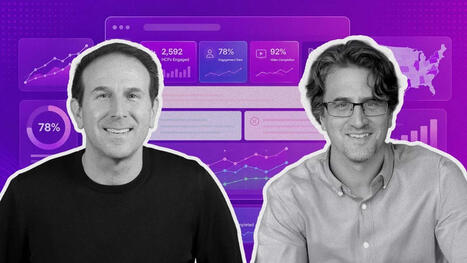
This one's been a long time coming. Really excited to see RTI out in the world. If you're heading to #AIS in September, reach out to book time with me or anyone at Medlive - A PlatformQ Health Brand. We would love to show you the dashboard in person!
|
|
Scooped by
Gilbert C FAURE
August 8, 10:40 AM
|
Scoop.it!
Il y a quelques années, un visiteur médical entrait dans le cabinet du médecin, posait ses études sur la table et repartait.
C’était ça, la mise à jour des connaissances d’un généraliste français pendant 40 ans.
Ce circuit est en train de disparaître, et rien d’officiel n’a pris sa place.
Un généraliste libéral travaille 54 h par semaine et consacre 2 h à la mise à jour de ses connaissances.
C’est la DREES qui le dit, dans son Panel des médecins généralistes mené auprès de 3.300 praticiens.
2 h pour absorber les recommandations européennes sur l’hypertension révisées en 2024, les nouveaux traitements de l’obésité et l’arrivée de l’intelligence artificielle en consultation.
Julien Delpech a construit la réponse à cette contrainte.
Invivox affiche 680.000 inscriptions de professionnels de santé et 2.000 contenus disponibles, en formats de 15 à 30 min, consultables sur un smartphone.
Personne n’oblige ces soignants à s’y former. Ils viennent seuls.
Et ce sont les industriels qui financent ces contenus, pas la puissance publique.
Je recevrai Julien Delpech pour parler de ce qui remplace vraiment la visite médicale, de ce qu’un soignant apprend en 15 min, et de ce que cela change quand la formation continue des médecins français dépend du volontariat et de financements privés.
RDV le 12 Août via ce LinkedIn Live!| 19 commentaires sur LinkedIn
|
|
Scooped by
Gilbert C FAURE
August 1, 5:39 AM
|
Scoop.it!
Background: Recent advances in large language models (LLMs) such as GPT-3/4 have spurred the development of artificial intelligence (AI) chatbots and advisory tools in medicine. These systems are posited to assist or augment physician-patient communication, potentially improving empathy, clarity, and responsiveness. However, their actual impact on communication outcomes remains uncertain. Objective: This study aimed to systematically review and meta-analyze peer-reviewed studies (2020‐2025) evaluating how LLM-based interventions affect physician-patient communication, including empathy, clarity, trust, and patient understanding. Methods: Following PRISMA (Preferred Reporting Items for Systematic Reviews and Meta-Analyses) 2020 guidelines, we searched PubMed/MEDLINE, Embase, Scopus, and Web of Science for studies published from 2020 to 2025 examining LLM or chatbot applications in clinical communication contexts. Eligible designs included randomized, observational, cross-sectional, and qualitative studies. Two reviewers (WHP and SR) independently screened titles or abstracts, assessed full texts, and extracted data on study design, population, LLM type, communication measures, and outcomes. We conducted a qualitative synthesis and random-effects meta-analysis, reporting pooled standardized mean differences or odds ratios with 95% CIs. Results: From 312 records, 10 studies were included, all quantitative and predominantly cross-sectional. Populations ranged from patients with chronic conditions to health care professionals and laypersons. Outcomes assessed included empathy (8 studies), clarity or information quality (6 studies), satisfaction or usefulness (4 studies), and trust perceptions (2 studies). In 6 direct comparisons of AI- versus physician-generated responses, LLMs were rated significantly higher in empathy in 5 studies. One large study found that chatbot replies were judged empathetic in 45.1% of cases versus 4.6% for physician replies (odds ratio approximately 9.8, <.001). Similarly, ChatGPT-4 answers scored higher in empathy on a 5-point scale than human-written responses (mean 4.18 vs 2.70, <.001). One neurology study showed higher empathy scores (Consultation and Relational Empathy Scale +1.38, <.01) for ChatGPT answers. Only 1 study found no significant empathy difference. LLM content was also longer and more information-rich, improving patient-perceived clarity and understanding. On the other hand, GPT-4 simplified pathology reports, increasing patient comprehension scores (7.98 vs 5.23/10, <.001) and reducing consultation time by 70%. However, AI replies were sometimes less concise or less readable for low-literacy patients. In pooled analyses (=4 studies; total evaluations N=2604), LLM assistance showed a large positive effect on empathy (standardized mean difference 1.02, 95% CI 0.44‐1.60; random-effects model). Patient satisfaction results were mixed. No study directly assessed long-term trust. Conclusions: Current evidence suggests that LLM-based chatbots can enhance physician-patient communication by producing more empathetic, detailed, and understandable responses. These improvements may positively influence patient experience and engagement. However, LLMs may also generate overly lengthy or occasionally inaccurate advice, emphasizing the need for physician oversight. While meta-analytic findings are promising, robust randomized controlled trials, real-world and longitudinal studies are needed to confirm benefits, assess trust outcomes, and define optimal clinical integration strategies.
|
|
Scooped by
Gilbert C FAURE
July 27, 7:21 AM
|
Scoop.it!

🏆We recently awarded the 2026 AMEE Faculty Development Research Grant and are proud to champion research in this important area of Health Professions Education. This week let's explore some of the latest research on faculty development.
📝Medical Teacher: Twelve tips for using microlearning for faculty development
This paper provides twelve practical tips to guide faculty developers to design, implement, evaluate and sustain microlearning programmes for faculty development.
The tips offer ideas to help faculty developers manage common barriers to engagement and provide ideas to navigate these. The tips are applicable to Health Professions Education settings seeking scalable, sustainable, low burden professional development.
Read the full article: https://ow.ly/k5pN50Zt5Xn
💭Tell us: What's the biggest challenge you face when engaging faculty in professional development, and could microlearning help address it?
Find out more about our AMEE Faculty Development Research Grant: https://ow.ly/Jl2n50Zt5Xq
#AMEE #Research #HealthProfessionsEducation #FacultyDevelopment #MedicalTeacher
|
|
Scooped by
Gilbert C FAURE
July 23, 3:55 AM
|
Scoop.it!

Hot off the press
PEPCAL: A Heuristic Framework for Teaching Generative AI to Continuing Professional Education Providers and Faculty Developers
Kudos to the team led by Heather MacNeill, MD and coauthors Jennifer Benjamin Ken Masters Anoop Agrawal and Sofia Valanci MD,PhD, CPC(HC).
https://lnkd.in/g6TzWKZr
|
|
Scooped by
Gilbert C FAURE
July 21, 11:06 AM
|
Scoop.it!

La DGOS vient de publier sa FAQ officielle sur la certification périodique.
17 pages qui clarifient enfin le dispositif.
Voici ce qu'il faut retenir, que vous soyez professionnel de santé ou employeur :
Pour les professionnels de santé :
→ 4 axes, 8 actions minimum sur un cycle de 6 ans (9 ans pour le cycle transitoire) → Vos actions réalisées depuis le 1er janvier 2023 comptent déjà — DPC, formations internes, engagements professionnels → Les formations hors DPC peuvent être prises en compte → La plateforme nationale « Ma Certif' Pro Santé » ouvrira en novembre 2026 → En attendant : conservez tous vos justificatifs
Pour les établissements et employeurs :
→ La certification reste une démarche individuelle du professionnel, y compris quand il est salarié → Mais la FAQ précise que le parcours « se construit en lien avec l'employeur » → Votre rôle : faciliter l'accès aux formations, soutenir l'organisation du parcours, mobiliser le plan de développement des compétences → Vous n'avez aucun rôle de contrôle — c'est l'Ordre qui vérifie
Ce que la FAQ ne dit pas (et c'est important) :
Aucun texte ne désigne explicitement qui finance la certification des salariés. Le mot « financer » n'apparaît pas une seule fois. Seuls les termes « organiser », « faciliter » et « mobiliser les dispositifs existants » sont utilisés.
Concrètement, les établissements qui anticipent maintenant — en intégrant la certification dans leur plan de développement des compétences — prendront une longueur d'avance.
Chez Biologie Elearning, nous accompagnons déjà les professionnels de santé avec des formations éligibles à la certification périodique, en e-learning et à leur rythme.
Découvrez nos programmes : https://lnkd.in/eXwrQrJa
Source : FAQ DGOS « La certification périodique : les clés pour s'y retrouver », juin 2026
#CertificationPériodique #SantéPublique #FormationContinue #DPC #ProfessionnelsDeSanté #Elearning #BiologieElearning #Pharmacien #Infirmière #IDEL #QualitéDesSoins
https://lnkd.in/eEZSDtVB
|
|
Scooped by
Gilbert C FAURE
July 15, 8:11 AM
|
Scoop.it!

We just relaunched BMJ Portfolio.
Every healthcare professional carries a real admin burden around appraisal and revalidation - logging CPD, writing reflections, gathering evidence, all scattered across different places. We rebuilt Portfolio into a single hub that brings it together: automatic CPD tracking, evidence storage, FourteenFish integration, and appraisal-ready exports in seconds.
The part I'm proudest of is our new AI reflection support. Reflections are where most people get stuck. So we built guided prompts tailored to the activity, the person's profession, and the standards that matter for their appraisal (GMC, NMC, HCPC and more).
Three principles we held onto:
→ The clinician stays the author - AI prompts thinking, it doesn't replace it.
→ Personalisation is the whole value - a prompt for an emergency registrar should look different to one for a community pharmacist.
→ Guardrails first - in a clinical context, safety isn't optional.
Genuinely rewarding product work. Proud of the team that made it happen.
BMJ Portfolio is live now, and free for every healthcare professional: https://portfolio.bmj.com/
|
|
Scooped by
Gilbert C FAURE
July 4, 8:06 AM
|
Scoop.it!

What is UEMS, and why does it matter for healthcare in Europe?
Premiered during the UEMS Congress and now available on our YouTube channel, our new video provides a clear introduction to the European Union of Medical Specialists, its history and the role we play in shaping the future of specialist medicine across Europe and beyond.
▶️ Watch the video: https://lnkd.in/eUKKV7Zp
|
|
Scooped by
Gilbert C FAURE
from Hésitations Vaccinales: Observatoire HESIVAXs
June 21, 8:18 AM
|
Scoop.it!

Words matter in public health. They matter everywhere, all of the time, but probably most in public health.
One of the most concerning trends emerging in recent months is not only the policy changes surrounding vaccines, but the apparent suppression, delay, or reframing of scientific communication itself.
This recent article from CIDRAP highlights growing concern among physicians, researchers, and public health experts that inconsistent messaging and interference with scientific communication may further erode public trust in vaccines and health institutions.
As someone with roots in journalism and a career in continuing medical education, I think often about what happens downstream when scientific communication becomes fragmented, politicized, or difficult to trust.
Clinicians are already navigating an overwhelming volume of rapidly evolving information. CME exists, in part, to help healthcare professionals critically evaluate evidence, contextualize new data, and translate it into patient care with clarity and confidence.
Ultimately, the goal of medical education today is no longer simply knowledge acquisition. It is behavior change: improving clinical decision-making, strengthening provider-patient communication, and supporting evidence-based care that leads to better patient outcomes.
BUT, meaningful behavior change depends on something fundamental: trust in the integrity and accessibility of the underlying science.
When public trust in scientific institutions weakens, the ripple effects extend far beyond headlines. They influence clinician confidence, patient conversations, vaccine decision-making, and ultimately public health outcomes.
Clear, evidence-based communication isn’t ancillary to healthcare. It’s part of the infrastructure.
https://lnkd.in/es-h9Q9V
|
|
Scooped by
Gilbert C FAURE
June 20, 9:03 AM
|
Scoop.it!
Medical Practitioners in Vietnam are responsible for continuously updating their knowledge in their professional careers. Here are details of Vietnam regulation
|
|
Scooped by
Gilbert C FAURE
June 16, 9:49 AM
|
Scoop.it!
What is UEMS, and why does it matter for healthcare in Europe?
Premiered during the UEMS Congress and now available on our YouTube channel, our new video provides a clear introduction to the European Union of Medical Specialists, its history and the role we play in shaping the future of specialist medicine across Europe and beyond.
▶️ Watch the video: https://lnkd.in/eUKKV7Zp
|
|
Scooped by
Gilbert C FAURE
June 4, 4:57 AM
|
Scoop.it!

Are you struggling to find clients as a CME writer? You've spent thousands on training, yet you're still spinning your wheels. It's
|
|
Scooped by
Gilbert C FAURE
May 31, 5:24 AM
|
Scoop.it!

We are a go! 🚀
Excited to officially kick off the UEMS Congress — bringing together experts, colleagues, and innovators from across Europe for inspiring discussions, collaboration, and the future of healthcare.
Join us for the opening plenary session today at 5PM
📍 Gasthuisberg Campus - Leuven
Looking forward to the days ahead!
🗓️ 27 - 30 May
🔗 Last minute registration on https://lnkd.in/eiSrW5j7
#UEMS #UEMSCongress





from open access to predatory journals... but obviously a publisher is not a publisher is not a publisher!
every reader should keep an open mind to criticism
every author should maintain a tenacious search of journals
and every so-called evaluator train in scientific information!
but....