📘 What is an ELM Course? An ELM Course is a structured set of related learning modules designed to provide in-depth education in a specific field. ✅ To claim CME/CPD credits, learners must complete the entire course — partial completion does not qualify. ⚠️ Once an ELM Course is accredited, its content and format are fixed for the full accreditation period. Any changes require the submission of a new application. 🎓 ELM Courses ensure consistency, quality, and transparency in accredited medical education.
extract from glossary of international academy for CPD accreditation
Continuing Medical Education (CME) - The process by which healthcare professionals engage in activities designed to support their continuing professional development. Activities are derived from multiple instructional domains, are learner centered, and support the ability of those professionals to provide high-quality, comprehensive, and continuous patient care and service to the public or their profession. The content of CME can be focused not only on clinical care, but also on those attitudes/skills necessary for the individual to contribute as an effective administrator, teacher, researcher, and team member in the healthcare system. Note: CME is often used interchangeably with continuing professional development (CPD).
Continuing Professional Development (CPD) –The learning journey of the healthcare professional as he/she seeks to improve her/his competence and expertise. This learning journey is supported by continuing medical education and other personal/professional activities by the learner with the intention of providing safe, legal, and high-quality services aiming at better health outcomes
for the patients and the community.
Note: CPD is often used interchangeably with continuing medical education (CME).
This hub content do not endorse any event or e-learning material.
a link to a slideshare PPT presentation at UEMS headquarters in July 2013
📣 7 janvier 2026 marque une étape majeure pour l’IA en santé.
OpenAI lance ChatGPT Santé, une expérience inédite qui permet de connecter vos données personnelles de santé pour obtenir des réponses contextualisées et utiles à vos questions santé — sans diagnostic médical.
🔍 Pourquoi c’est important ? ➡️ Répondre à une demande massive d’informations santé ➡️ Contextualiser les données personnelles (Apple Health, dossiers médicaux, etc.) ➡️ Repousser les frontières entre technologie, médecine et régulation
🌍 Et pendant ce temps en Europe ? Alors que l’accès est pour l’instant limité hors UE, des acteurs comme Doctolib développent des assistants IA patients conformes aux normes européennes — une réponse souveraine à ces nouveaux enjeux.
📯 Newsletter complète ➜ enjeux, régulation, risques, opportunités et comparatif USA vs Europe.
Ce post appartient à l’univers IAtrogénique × IAtus, mes deux IA complémentaires. Chaque réflexion possède son “double” : une version critique (IAtrogénique) et une version narrative (IAtus). Abonnez-vous à la newsletter : https://lnkd.in/eENTNBWR
#Santé #IA #IAenSanté #ChatGPT #HealthTech #Innovation #RGPD #DonnéesDeSanté Rémy TESTON Chanfi MAOULIDA Stéphane OHAYON Barbara Mathian Patrick Callier Stanislas Niox-Chateau Ludivine Raffin Brice Bottégal Pascal BECACHE Fabien GUEZ Bernard castells Yann-Mael Le Douarin David Sainati Hela Ghariani David Ledru Jean-Christophe Zerbini Pierre Simon Isabelle Cambreleng Antoine Tesniere Thanusian RASANAYAGAM Claire Portefaix Stéphane KIRCHE Benoit Lequeux Thierry Garban Nicolas Néaume Nadia Simon Eric Fromentin Nemanja Milenkovic Gildas AUFFRET Didier MENNECIER 🩺 Emilie Mercadal Guillaume Laguette eudes menager CEDRIC VILLEMINOT Frederic Jallat Florent Chapel Stéphane LAURENT | 16 comments on LinkedIn
Hybrid learning doesn’t just change where teaching happens - it changes what teachers do.
In 60 seconds, this video breaks down the real shift in hybrid classrooms: teachers moving from delivering content to designing learning, coaching independence, and connecting school and home with clarity and consistency.
You’ll take away practical focus points, including:
- How to blend live teaching with purposeful independent learning
- Simple routines and scaffolds that build pupil independence
- Quick checks and feedback that move learning forward
- What safeguarding looks like when learning goes remote
- Why equity must be planned (not assumed)
- How clear home communication strengthens learning
- Why ongoing CPD matters for confident digital practice
If you’re planning hybrid provision — or trying to make it more consistent — use this as a quick checklist for your next unit.
💬 Question for you: What’s the hardest part of hybrid teaching in your setting — independence, engagement, or home communication?
Presented by the Global Academic Forum (GAF) Advancing educational excellence through leadership, innovation, and professional learning.
Medical doctors are at the forefront of healthcare, and staying current isn't just an option—it's a necessity. This video explores key strategies for physicians to maintain their expertise and enhance patient care through continuous professional development.
In this guide, you'll discover actionable insights to: ► Implement effective strategies for ongoing medical education. ► Leverage various resources for professional growth and skill enhancement. ► Ensure compliance with regulatory requirements while advancing your career. ► Balance patient care demands with personal development goals. ► Foster a mindset of continuous learning for long-term success.
Useful Links UEMS EACCME European Union of Medical Specialists (UEMS) Rue de l'industrie 24, B-1040, Brussels, Belgium Connect with us Contact uemscongress@uems.eu...
Are we measuring all that matters in our healthcare education programs?
I have been immersed in the CME world for a substantial time, and I so appreciate that the measurement models for assessing the effectiveness of education are valid and strong: as a community, CME/CE providers measure knowledge and competency impact from education well. We have years of data examining different factors that impact effectiveness of education, too.
But, lately, particularly as I've been thinking more broadly about impact through my involvement in the Applied Learning & Evidence Translation Collaboratory (ALET Collaboratory), I am thinking about what matters. Our recent webinar (see the link in the ALET Collab site: https://lnkd.in/gjDgKi47) focused on measuring the impact of education as a function of whether clinicians are equipped to move further toward application of what they learn in practice, which includes frameworks for thinking about real-world cases differently. This is critical: we cannot stop at understanding and skills development if we expect to see a change in practice--particularly in the messy space of real-world patient care.
This morning, I am thinking about this from even a few steps more broadly: How can we integrate concepts of "value" (image below, from ISPOR of the "value flower" of variables to consider) in our educational planning and measurement?
When we think about what we measure, we ideally aim to measure what matters. That means we, in turn, must design for what we aim to impact. It is a cycle that begs important questions of those in the continuing education and healthcare education space: Do we design for the impact we seek to see?
I look forward to hearing this discussion go further, through the ALET Collaboratory and in Alliance For Continuing Education in the Health Professions venues and meetings.
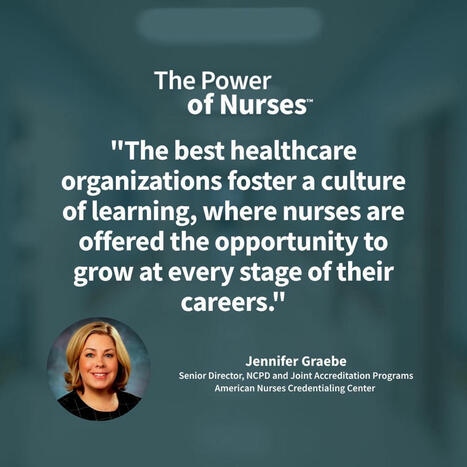
📚 Nearly 60% of nurses say they want access to continuing education to support their career development, according to new LinkedIn research.
“Learning is not a one-and-done, and it's not a one-size-fits-all," says Jennifer Graebe DrPH, MSN, RN, NEA-BC, FAAN, Senior Director of NCPD and Joint Accreditation Programs at the American Nurses Credentialing Center.
CHECK OUR CONFIRMEDKEYNOTE SPEAKERSMORE INFORMATION HERECHECK OUR CONFIRMEDPLENARY SPEAKERSMORE INFORMATION HERECME CREDITS AT IUIS 2025 IUIS is seeking Continuing Medical Education (CME) accreditation for the 19th International Congress of Immunology. Stay tuned for updates on the final accreditation details. Welcome To Vienna Welcome message On behalf of the Austrian Society for Allergology and Immunology (ÖGAI) […]
Because as CME writers, we need to know: 📌 CME in Europe isn’t structured like CME in the US. 📌 Accreditation, funding, and formats vary widely. 📌 Language, compliance, and stakeholder priorities shift across borders.
Inside WriteCME Pro, we talk about all of this—and more. Our members are building freelance businesses that flex across systems and borders.
If you're ready to specialize and scale your writing practice in CME/CE, come join us.
For those interested in European CME (and beyond), there is a report from the 17th European CME Forum (ECF) that convened in Madrid, Spain in November 2024, in the Journal of CME https://lnkd.in/emhBj28P. It is a great review of the conference prepared by two of the organizers, Cara Macfarlane and Eugene Pozniak.
I was pleased to have led the Lunch with the Learners session, where we had a great conversation with Dr Ranj Bhakar, a surgical trainee from Devon, UK. During these sessions, held at every ECF, we provide opportunities for providers and learners to talk about the current environment of CME, and to identify opportunities for improvement through dialogue.
It was also a great pleasure to facilitate, together with Katie S L., a breakout session about the Transtheoretical Model of Readiness to Change, first described by Prochaska and DiClemente https://lnkd.in/ef_ggBxy, and its applications in CME and CPD.
If you are interested in learning more about ECF, and the upcoming meeting in Manchester, UK in November, follow this link https://lnkd.in/eSze_PUp.
📘 What is an ELM Course? An ELM Course is a structured set of related learning modules designed to provide in-depth education in a specific field. ✅ To claim CME/CPD credits, learners must complete the entire course — partial completion does not qualify. ⚠️ Once an ELM Course is accredited, its content and format are fixed for the full accreditation period. Any changes require the submission of a new application. 🎓 ELM Courses ensure consistency, quality, and transparency in accredited medical education.
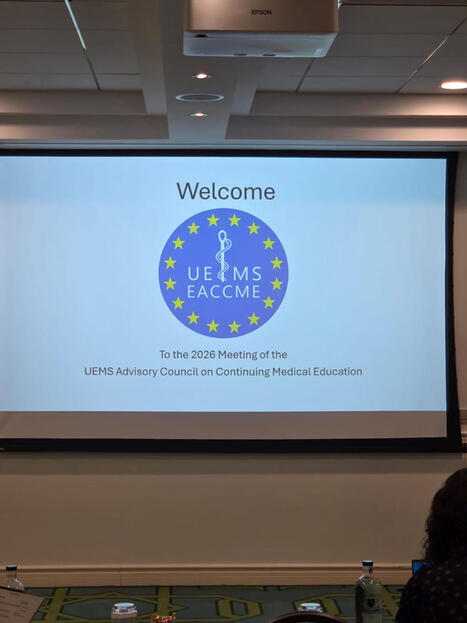
📍 Last Saturday, UEMS-EACCME hosted the meeting of the UEMS Advisory Council on Continuing Medical Education (CME) in Brussels.
🤝 The Advisory Council brings together colleagues from National Accreditation Authorities (NAA), National Medical Associations (NMA), as well as UEMS Sections, European Specialty Accreditation Boards (ESABs), and other partners involved in UEMS EACCME® accreditation to exchange on current issues and shape the future development of EACCME and medical accreditation in Europe.
🔍 The main topic of the meeting was the EACCME-accredited provider status, with a presentation of the ongoing work and progress achieved so far, followed by an exchange of insights, comments, and feedback from participants.
📊 The EACCME 2025 Report was also presented, highlighting the remarkable work and commitment of the accreditation team and its partners in the field of accreditation, including reviewers and experts involved in the process.
📅 Participants were reminded of the upcoming UEMS Congress, taking place on 27–30 May 2026 in Leuven, Belgium 🇧🇪.
💬 The discussions were highly productive, generating valuable insights and further reinforcing collaboration in European medical accreditation.
Nous lançons ChatGPT Santé, une expérience dédiée qui combine de manière sécurisée vos informations de santé avec l’intelligence de ChatGPT, pour vous aider à vous sentir mieux informé, préparé pour gérer votre santé.
La santé est déjà l’un des usages les plus courants de ChatGPT, avec des centaines de millions de personnes qui posent chaque semaine des questions liées à la santé et au bien-être. ChatGPT Santé s’appuie sur les mécanismes éprouvés de confidentialité, de sécurité et de gestion des données de ChatGPT, avec des protections supplémentaires spécifiquement pensées pour la santé, notamment un chiffrement dédié et une isolation renforcée afin de préserver la confidentialité et le cloisonnement des conversations de santé. Vous pouvez connecter en toute sécurité vos dossiers médicaux et vos applications de bien-être afin d’ancrer les conversations dans vos propres données de santé, pour obtenir des réponses plus pertinentes et plus utiles. Conçu en étroite collaboration avec des médecins, ChatGPT Santé aide les personnes à jouer un rôle plus actif dans la compréhension et la gestion de leur santé et de leur bien-être, tout en venant en soutien — et non en remplacement — des soins prodigués par des professionnels de santé.
The underpinnings of adult learning theory are foundational to continuing medical education (CME). Several widely studied learning theories are relevant to medical providers including deliberate practice, situated learning theory and community of practice, social cognitive theory and self-determinat …
🩺 Certification périodique des professionnels de santé
Le décret est publié. Un cadre clair et progressif, très attendu par les professionnels, construit notamment avec les ordres, pour accompagner les carrières et renforcer la qualité des soins.
👉 Un engagement au service de la confiance des patients.
Conseil national de l'Ordre des médecins Ordre national des chirurgiens-dentistes Ordre National des Infirmiers Ordre national des pharmaciens Conseil National de l'Ordre des sages-femmes Conseil national de l'ordre des masseurs-kinésithérapeutes Ordre National des Pédicures-Podologues Haute Autorité de Santé | 29 comments on LinkedIn
We were truly honored to host Prof. Lawrence Sherman, a global leader and visionary in medical education and lifelong learning coach, during a compelling, powerful live webinar titled:
“Global Perspectives in Continuing Professional Development (CPD): Sustaining Competency and Impact in Health Professions Education.”
Prof. Sherman delivered a masterclass – not just in content, but in connection. He illuminated core themes and explored transformative ideas such as:
🔹 CPD literacy – the foundation for informed, adaptive practice for modern health professionals 🔹 Professional authenticity – beyond checklist, toward learning that aligns with purpose, not just policy 🔹 Navigating the real-world nuances of multidisciplinary vs. interprofessional education (IPE) – and why the distinction matters
His reflections were a timely reminder that CPD isn’t an obligation, it’s a strategic pathway and commitment to excellence, relevance, adaptability and patient-centered care in a rapidly evolving world.
💡 “Sustained impact begins with intentional learning – and CPD is the compass.”
🌱 Grateful for this enriching dialogue, for the inspiration Lawrence Sherman FACEHP, FRSM, CHCP, and eager to translate vision into action.
✨ So excited for what lies ahead in our collective journey of growth.
Attached figure from {ICO Guide to Effective CPD/CME}: Continuing professional development (CPD) incorporates and goes beyond the classical concept of continuing medical education (CME), as defined by the European Union of Medical Specialists (UEMS).
Here’s something I’ve been saying in meetings around the world (sometimes out loud, sometimes just in my Brooklyn head):
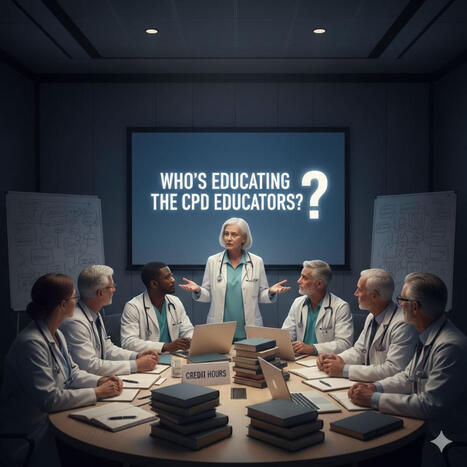
“We’ve built entire CPD systems to educate clinicians, but who’s educating the educators?” And I am being specific to faculty in CPD activities as opposed to those in undergraduate and postgraduate who often have advanced training.
Globally, from Europe to East Africa to Asia, I’ve seen this pattern so many times that I’ve stopped being surprised and started being concerned. Our global research on CPD systems, published in journals like Medical Teacher and The Asia Pacific Scholar, made it painfully clear: most CPD faculty are clinicians first, educators second, and in many systems, not trained as educators at all.
They’re asked to “teach,” “facilitate,” and “evaluate,” yet rarely given the tools to design learning that changes performance or behavior. And yet they remain connected and passionate. They want to do better. They just haven’t been taught how to teach. That’s the gap we don’t talk about enough. We focus on accreditation, content, credit hours, and attendance, and forget the human engine that makes CPD run.
What happens when we invest in educator capability and building capacity? Outcomes can improve. Learners stay engaged. Systems evolve from compliance-driven to performance-driven. In other words: when educators get better at teaching, clinicians are better and more appropriately prepared.
Maybe it’s time to stop seeing “faculty development” as optional and start seeing it as foundational CPD infrastructure.
What’s one skill or quality you think every CPD educator should have, but most don’t?
PS: Thanks, Google Gemini, for the image! | 10 comments on LinkedIn
I’ve been thinking about this for a while now, usually somewhere between time zones, wondering why there isn't a global home for "CPD for CPD."
Plenty of us work in health professions education. But a much smaller group specializes in Continuing Professional Development, and we don’t always have a clear place to gather, grow, or even get recognized.
Most of the CPD-focused conferences tend to ☑️ Lean heavily on industry-supported education ☑️ Be centered in the US and Europe. These conferences are absolutely meetings some of the needs of the CPD community in some regions, but we need to think broader and globally!
That means large parts of the world miss out on CPD for CPD educators—especially those building systems, training faculty, and trying to raise the bar where CPD infrastructure is still maturing. That lack of access contributes to the global gap in CPD literacy that I have discussed in previous posts.
But we’re making progress!
✅ In December 2024, WFME released updated global standards for CPD, which I was honored to contribute to.
✅ AMEE - The International Association for Health Professions Education has had a CPD Committee for 8 years, and over the lasst two years has it introduced a dedicated CPD track at its conference and launched a CPD Educator Training Course as part of the Essential Skills in Medical Education (ESME) series.
✅ We have the LinkedIn CME Group https://lnkd.in/esihmTcb, where it’s clear from the global conversations that there’s no shortage of passion, just a shortage of structure. Feel free to join this group! I know that Brian S. McGowan, PhD, FACEHP and I would love to see this group continue to grow beyond the current 13,414 members!
✅ Assessments of CPD systems in Japan, East and Southeast Asia, China, Europe, the Middle East and North Africa, and Latin America have been published recently. There is certainly data about not only the system structures, but the needs and gaps amongst clinicians in these papers.
So what now? Maybe it is time to establish a global home for CPD educators. Or maybe it’s time for collaboration across organizations and regional and national networks to finally build a shared foundation.
A space where those of us who build CPD systems can also build skills, share strategies, and find community because CPD professionals globally need continuing development too.
If you’re working in CPD, especially in capacity-building, where do you go for your own growth? What would a real global home for CPD look like to you? Let’s not just discuss. Let’s start designing it!
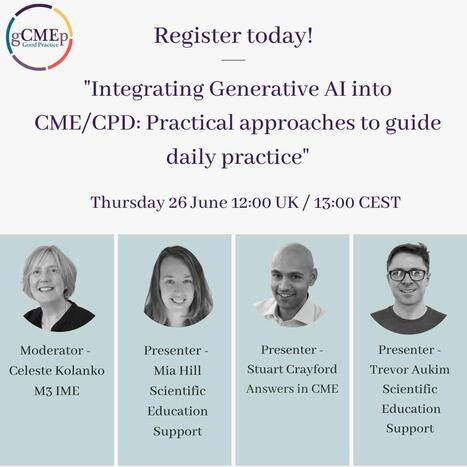
Join the #gCMEp webinar on Thursday 26 June 2025 (12:00 BST / 13:00 CEST) for a topical 30-minute webinar "Integrating Generative AI into CME/CPD: Practical approaches to guide daily practice".
This timely session explores how AI is already transforming day-to-day medical education workflows—from content creation and digital production to project management and outcomes analysis.
Celeste Kolanko, Mia Hill, Stuart Crayford and Trevor Aukim will share real-world examples, practical tools, and lessons learned to help you use AI with purpose and precision.
Whether you’re experimenting with new tools or looking to optimize established processes, you’ll come away with actionable insights to apply immediately.
✈️ Just returned from the 7th Sun Yat-Sen Medical Education Conference in Guangzhou, China—an inspiring gathering of health professions educators featuring faculty from mainland China, Hong Kong, Taiwan, and Macau.
I was deeply honored and humbled to be invited as a keynote speaker, where I shared insights on Best Practices in Global Continuing Professional Development (CPD) and Interprofessional Continuing Education (IPCE). My sincere thanks to the organizers for the opportunity to learn with and from so many passionate colleagues.
One takeaway I emphasized: CPD deserves a larger and more explicit role in medical education conferences around the world. While undergraduate and postgraduate education often take center stage, it's vital to recognize that clinicians in practice require different kinds of learning—and that means CPD educators must develop a distinct set of competencies to meet the needs of busy professionals in real-world settings.
What struck me most was the shared curiosity and commitment to improvement that unites health professions educators globally. Despite different systems and cultural contexts, we are all working toward the same goals: better education, better care, and better outcomes.
And the food? Let’s just say I now have strong opinions about my love for the local Guangzhou food that emphasizes fresh and natural ingredients. If you know me, you know how adventurous I can be in the things that I eat! 🥢🔥
Looking ahead, I’m excited to share that the next big opportunity to connect in the region will be at the Asia Pacific Medical Education Conference (APMEC) in Yiwu, China, January 21–25, 2026. Mark your calendars and learn more here:
5 Reasons Why Health Professionals Need Social Media-Based CME
The continuing education landscape is evolving rapidly, and social media is at the forefront of… | 10 comments on LinkedIn
Gilbert C FAURE's insight:
Alignment with learning preferences: As millennials now represent the largest segment of healthcare professionals, social media delivers the interactive, technology-driven experience they seek.
2️⃣ Accessibility without barriers: Social media platforms eliminate geographical and financial obstacles that prevent many practitioners from accessing quality CME—particularly crucial for those in rural or underserved areas.
3️⃣ Real-time knowledge application: Platforms like Twitter/X and TikTok enable immediate feedback through polls, knowledge checks, and peer discussion, reinforcing learning in ways traditional formats cannot match.
4️⃣ Microlearning opportunities: Today's busy clinicians benefit from shorter, focused learning segments that can be consumed between patients or during brief breaks—exactly what social media platforms excel at delivering.
5️⃣ Community building: Beyond content delivery, social media hashtag#CME creates communities of practice where professionals can discuss cases, share insights, and collectively improve patient care long after formal education ends.
To get content containing either thought or leadership enter:
To get content containing both thought and leadership enter:
To get content containing the expression thought leadership enter:
You can enter several keywords and you can refine them whenever you want. Our suggestion engine uses more signals but entering a few keywords here will rapidly give you great content to curate.


 Your new post is loading...