KROTOASA XAM-KHOEKHOE HERITAGE division of the KROTOASA FOUNDATION seeks to develop Intangible cultural heritage products and services that promote, preserve, and utilize our Khoena and San cultural practices, skills, and knowledge with our priority in Safeguarding our tangible and intangible cultural heritage and sustainable development in South Africa and Africa.
We are committed to implement the Convention adopted by the General Assembly of the State Parties to the Convention with the Republic of South Africa becoming the 184th State to join the 2003 Convention for the Safeguarding of the intangible Cultural Heritage and having deposited our instrument of ratification with UNESCO on 24 January 2025. LKKSTICH shall endeavour, by all appropriate means, to recognize the importance and strengthen the role of intangible cultural heritage as a driver and guarantee of sustainable development., as well as fully integrate the safeguarding of intangible cultural heritage into their development plans, policies and programmes at all levels.
Safeguarding intangible cultural heritage
• Inscription on the list of tangible and intangible Cultural Heritage in need of urgent safeguarding
• Working closely with Government that nomination files demonstrate that elements proposed for inscription on the List of Intangible Cultural Heritage in need of urgent safeguarding satisfies all of the following criteria:
- The element constitutes intangible cultural heritage as defined in Article 2 of the Convention
- The element is in urgent need of safeguarding because its viability is at risk despite the efforts of the Khoena & San people concerned; or
- The elements is in extremely urgent need of safeguarding facing gave threats as a result of which it cannot be expected to survive without immediate safeguarding.
- A safeguarding plan is elaborated that may enable the Khoena & San if applicable to continue the practice and transmission of the element.
- The element has been nominated following the widest possible participation of the Khoena & San people and with our free, prior and informed consent.
- The element is included in an inventory of the intangible cultural heritage present in the territory of South Africa as defined by Article 11 and 12 of the Convention.
- In cases of extreme urgency, South Africa Government has been duly consulted regarding inscription of the element in conformity with Article 17.3 of the Convention.
• KKLSTICH will propose national, subregional or regional programmes, projects and activities for safeguarding intangible cultural heritage to the Committee for selection and promotion as best reflecting the principles and objectives of the Convention.
• KKLSTICH will pay special attention from among our programmes, projects and activities that we will propose, that we understand that the Committee shall select those that best satisfy all of the following criteria, the programmes, projects and activities:
… involves safeguarding as defined in Article 2.3 of the Convention
… Promotes the coordination of efforts for safeguarding intangible cultural heritage on regional, subregional and or international levels.
… reflects the principles and objectives of the Convention.
… has demonstrated effectiveness in contributing to the viability of the intangible cultural heritage concerned.
… is or has been implemented with the participation of the Khoena & San people and with our free, prior and informed consent.
… may serve as a subregional, regional or international model, as the case may be, for safeguarding activities.
… the South African Government, implementing body(ies), and Khoena & San people are willing to cooperate in the dissemination of the best practices, if their programme, project of activity is selected
… features experiences that are susceptible to an assessment of their results
… is primarily applicable to the particular needs of developing countries
• KKLSTICK in partnership with other cultural groups will also focus on the following product:
- Cultural Tourism and Heritage Routes
* Oral Traditions: This includes legends, myths, folktales, and oral histories passed down through generations
* Performing Arts: This encompasses music, dance, theatre, and other artistic performances.
* Social Practices: This includes rituals, customs, and social events that are important to a community
* Festive Events: These include festivals, celebrations, and religious holidays
* Traditional Crafts: This includes the knowledge, skills, and techniques used to produce traditional crafts, such as pottery, weaving, and metalworking
* Traditional Culinary Practices: This includes food preparation techniques, recipes, and the cultural significance of food.
* Religious Sites and Spaces: These are locations where religious practices and rituals take place, such as rivers, mountains and ancestorial lands and holy sites
PM Narendra Modi and Chinese Leader Xi Jinping were caught on camera discussing something as they headed for the BRICS leaders' press conference in Johannesburg. The two leaders shared a brief moment at the venue. Watch this video for more details
Hindustan Times Videos bring you news, views and explainers about current issues in India and across the globe. We’re always excited to report the news as quickly as possible, use new technological tools to reach you better and tell stories with a 360 degree view to give you a better understanding of the world around you.
Prime Minister Narendra Modi, speaking at the 15th BRICS Summit on Thursday, said that India welcomed the expansion of the grouping of world economies. PM Modi's words of affirmation came after President of South Africa Cyril Ramaphosa announced the induction of six new member states. #bricssummit2023 #modi #india #china
Subscribe to India Today for NEW VIDEOS EVERY DAY and make sure to enable Push Notifications so you'll never miss a new video.
All you need to do is PRESS THE BELL ICON next to the Subscribe button!
India Today TV is India's leading English News Channel. India Today YouTube channel offers latest news videos on Politics, Business, Cricket, Bollywood, Lifestyle, Auto, Technology, Travel, Entertainment and a lot more.
Stay tuned for latest updates and in-depth analysis of news from India and around the world!
For the first time since 2010, the BRICS group is expanding.
Six countries have been invited to join the group. We’ll discuss what this means for the Global South. Chinese President Xi Jinping calls the expansion of BRICS, a group of emerging economies, historic and a new starting point for cooperation.
Six countries are invited to join Brazil, Russia, India, China and South Africa as full members of the bloc in January.
They include Argentina, Egypt, Ethiopia, Iran, Saudi Arabia and the United Arab Emirates.
Joining the discussion:
Elizabeth Sidiropoulos is the Chief Executive of the South African Institute of International Affairs. Anton Fedyashin is a Russian affairs expert and a Professor of History at American University. Otaviano Canuto is a Senior Fellow with Policy Center for the New South and former Vice President of the World Bank. Yan Liang is an Endowed Chair and Professor of Economics at Willamette University in Portland, Oregon.
Watch CGTN LIVE on your computer, tablet or mobile https://cgtnamerica.vhx.tv/videos/hd-live-broadcasts Subscribe to CGTN America on YouTube Follow CGTN America: Twitter: @cgtnamerica Facebook: @cgtnamerica Instagram: @cgtnamerica TikTok: @newstoks
This material is distributed by MediaLinks TV, LLC on behalf of CCTV. Additional information is available at the Department of Justice, Washington, D.C.
BRICS Summit 2023: India's PM Modi, China's Xi Jinping Agree to De-escalate Border Tensions | Vantage with Palki Sharma
India's Prime Minister Narendra Modi and Chinese President Xi Jinping agreed to de-escalate from the friction points in Ladakh at the Line of Actual Control. The conversation took place on the sidelines of the BRICS Summit in South Africa where member states agreed to induct six new members. Palki Sharma decodes.
India | Narendra Modi | Xi Jinping | India China Border Dispute | BRICS | Firstpost | World News | Latest News | Global News | International News | Trending News
Vantage is a ground-breaking news, opinions, and current affairs show from Firstpost. Catering to a global audience, Vantage covers the biggest news stories from a 360-degree perspective, giving viewers a chance to assess the impact of world events through a uniquely Indian lens.
The show is anchored by Palki Sharma, Managing Editor, Firstpost.
By breaking stereotypes, Vantage aims to challenge conventional wisdom and present an alternative view on global affairs, defying the norm and opening the door to new perspectives. The show goes beyond the headlines to uncover the hidden stories – making Vantage a destination for thought-provoking ideas.
Vantage airs Monday to Friday at 9 PM IST on Firstpost across all leading platforms. Subscribe to Firstpost channel and press the bell icon to get notified when we go live. https://www.youtube.com/@Firstpost
Prime Minister Narendra Modi interacted with Xi Jinping on the sidelines of BRICS. The two leaders agreed to direct officials to expedite the de-escalation process.
#brics #xijinping #modi
About Channel:
WION The World is One News examines global issues with in-depth analysis. We provide much more than the news of the day. Our aim is to empower people to explore their world. With our Global headquarters in New Delhi, we bring you news on the hour, by the hour. We deliver information that is not biased. We are journalists who are neutral to the core and non-partisan when it comes to world politics. People are tired of biased reportage and we stand for a globalized united world. So for us, the World is truly One.
Please keep discussions on this channel clean and respectful and refrain from using racist or sexist slurs and personal insults.
Collaboration in the just energy transition and improving trade facilitation are some of the priority areas the BRICS Business Council recommended to the heads of state. The Council handed its annual report to the leaders yesterday, recommending deeper economic partnerships and enhanced mutual prosperity. It also recommends regulatory harmonisation to increase trade between member countries.
For more news, visit sabcnews.com and #SABCNews on all Social Media platforms.
The BRICS summit club – which comprises Brazil, Russia, India, China and South Africa – will be welcoming Iran along with other five countries as permanent members starting next year.
BRICS SUMMIT MEMBERS SET TO INVITE SAUDI MEMBERSHIP IN BID FOR MORE CLOUT
In an effort to increase their bloc’s influence globally, major emerging market states are getting ready to extend invitations to Saudi Arabia, the world’s largest oil exporter, and a number of other nations.
BLOC INVITES SIX NEW MEMBERS, OPEN TO ADDING MORE
In an effort to increase their group’s worldwide power, the leaders of the BRICS invited Iran and five other nations, including the leading oil exporter Saudi Arabia, to join them.
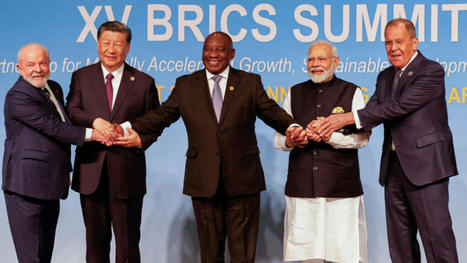
In a joint news conference with the BRICS leaders on Thursday at their annual meeting in Johannesburg, South Africa’s President Cyril Ramaphosa announced that Saudi Arabia, Argentina, Egypt, Ethiopia, Iran, and the United Arab Emirates will all become full members on January 2024.
The leaders of Brazil, Russia, India, China, and South Africa all approved of the extension. The expansion will mark the first since 2010.
IRAN HAILS BRICS MEMBERSHIP AS ‘SUCCESS FOR FOREIGN POLICY’
On Thursday, a top advisor to the president of Iran welcomed the Islamic Republic’s upcoming membership in the BRICS bloc as a diplomatic victory.
Starting in 2024, Iran will join the other five nations as permanent members of the BRICS club, which is made up of Brazil, Russia, India, China, and South Africa.
BRICS country leaders claim that the bloc’s growth represents a turning point in the global economy of developing markets.
BRICS EXPANSION A TIPPING POINT IN GLOBAL ECONOMY, SAY BLOC LEADERS
In 2010, South Africa was given full membership in the BRICS organization, which has since changed its name from BRIC to BRICS. At that time, BRICS had last admitted a new member.
Talks to expand the BRICS have reportedly been ongoing for years, according to President Cyril Ramaphosa.
The bloc’s objective to promote global peace and development would be further strengthened by the new members, according to China’s state president, Xi Jinping.
The Johannesburg II Declaration, a statement that captures major BRICS opinions on issues of global economic, financial, and political significance, was successfully endorsed by the 15th BRICS Summit.
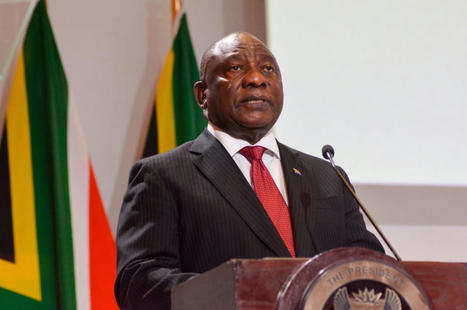
Cyril Ramaphosa, the president of BRICS, made this announcement on Thursday during a press conference to reveal the results of the XV BRICS Summit.
“We endorsed the Johannesburg II Declaration, which embodies fundamental BRICS themes on issues of crucial global economic, financial, and political relevance. It exemplifies the shared principles and interests that drive our mutually beneficial cooperation as the five BRICS nations.
“BRICS as a whole is a heterogeneous collection of countries. A better world is the goal of this equitable collaboration of nations, the president added.
With over 40 countries keen to join, the Brics summit underscores SA's evolving international stance and strategic global partnerships.
The summit will bring together leaders from the Brics countries from 22 – 24 August. Picture: Twitter/African National Congress
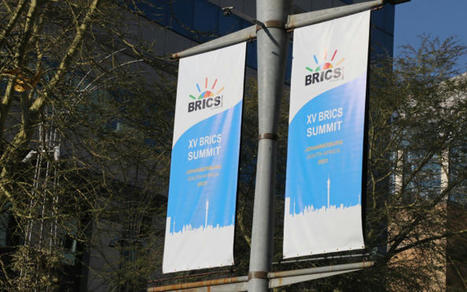
The 15th Brics Summit which starts today at the Sandton Convention Centre in Johannesburg could be the ultimate game-changer for global affairs. This year’s Brics – made up of Brazil, Russia, India, China and South Africa – is billed to be the most significant in the group’s history and could impact on SA’s relationships with other countries and its position globally. The summit has attracted more than 40 countries who seek to join the bloc and heightened debate on a “Brics Plus”, which would incorporate more nations. In his address to the nation regarding the summit, President Cyril Ramaphosa touched…
The world’s leading emerging market powers have complained for years about being sidelined by wealthy nations. Now they are mounting their most ambitious challenge yet to the status quo.
The Brics bloc — Brazil, Russia, India, China and South Africa — will use an annual leaders’ summit in Johannesburg this week to begin the process of enlisting more members to bolster its global heft, a push driven mainly by Chinese President Xi Jinping but also backed by Russia and South Africa. There will also be talks on how to accelerate a shift away from the dollar, in part by increasing the use of local currencies in trade between members, which is surging.
The bloc has failed to convert its growing economic might into significant political clout since it began holding summits 15 years ago. But the current splintering of the world order amid rising US-China frictions and the splits over Russia’s invasion of Ukraine provides a fresh opening for it to become a louder voice of the Global South and potentially to challenge the US and its allies.
bigger Brics would account for almost half of the global population, up from 42% currently
“We want to make the Brics very strong politically, very strong financially,” said Brazilian President Lula da Silva.
The summit could see the bloc’s first expansion since South Africa was added in 2010. High on the list of potential candidates are Indonesia and Saudi Arabia, as well as the United Arab Emirates, Algeria and Egypt. But India wants the process to be gradual.
An expanded group would represent about half of global output by 2040, Bloomberg Economics estimates show, double the share of the G7, a reversal from the turn of this century. A bigger Brics would account for almost half of the global population, up from 42% currently, according to Anil Sooklal, South Africa’s ambassador to the bloc.
“These countries have risen economically, they have voiced their concerns, they’re now capable of offering alternatives if their voices are not heard,” said Karin Vazquez, a Shanghai-based associate professor of diplomatic practice at India’s OP Jindal Global University.
Deep divisions in Brics
To date, deep divisions among members have limited the consensus-driven bloc’s ability to increase its sway at institutions such as the International Monetary Fund, the World Bank or the United Nations Security Council. A Brics development bank has lent only US$32.8-billion in eight years in operation, a tiny fraction of the amount the IMF and World Bank have disbursed over the period. Suggestions that the bloc introduce a common currency haven’t gone anywhere.
The economies of Brazil, South Africa and Russia have all underperformed and China’s is slowing down.
A market capitalisation-weighted measure of the five Brics nations’ stocks has risen 81% since 2009, compared with a 379% rally in the S&P 500 Index. Factor in the weakness of their currencies during this time and their dollar returns look much worse.
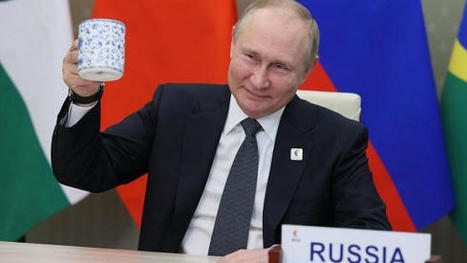
Russian President Vladimir Putin is staying away from this year’s summit because he faces a war-crimes arrest warrant from the International Criminal Court, of which host South Africa is a member. He will participate remotely.
The gathering will give him another opportunity to present his narrative of the Ukraine invasion directly to leaders from the Global South, many of whom have been sympathetic to his accounts in the past. Brazil, Russia, India, China and South Africa have been cautious about openly taking Russia’s side in the war, but have also been unwilling to ally with the West in opposing it.
While the European Union sees the Brics as primarily a talk shop – which could be weakened rather than strengthened by expansion – Putin’s ability to use the group as an international platform is a worry, said an EU official who spoke on condition of anonymity because he isn’t authorised to comment publicly.
The bloc has been a “big disappointment”, said Jim O’Neill, the former Goldman Sachs Group chief economist who coined the acronym Bric in 2001 to highlight their rising global heft. “China and India rarely agree on anything, which is a fundamental problem.’’
The world’s two most-populous nations have been locked in a border dispute for years. Their army commanders last week agreed to work swiftly toward easing their differences, opening the door for progress in negotiations between Xi and Indian Prime Minister Narendra Modi.
India is wary that expanding Brics will transform the group into a mouthpiece for China, while Brazil is also worried about alienating the West, according to officials familiar with the bloc’s internal negotiations. But they are resigned to admitting new members, even as they push for an agreement on the rules and criteria.
“Since Brics was founded, China’s become not only more aggressive regionally, or even along the border with India, but also it, too, wants to be the standard bearer for the Global South,” said Katherine Hadda, a former senior US diplomat who now heads US-India policy studies at the Center for Strategic and International Studies in Washington. “India doesn’t want that.”
The appeal of Brics is that it is led by states of the South and is thus seen as a symbolic way of rejecting Western leadership
This week’s meeting hosted by President Cyril Ramaphosa will be the first in-person Brics summit since the global pandemic, and Lula, Xi and Modi have confirmed their attendance. Heads of state from more than 30 African counties, along with others from the Global South, will sit in as observers and more than 20 nations have formally expressed interest in becoming members. The bloc’s five leaders will decide who can join and when, with consensus largely reached on an admission policy, according to Sooklal.
“The appeal of Brics is that it is led by states of the South and is thus seen as a symbolic way of rejecting Western leadership,” said Robert Schrire, a politics professor at the University of Cape Town. “It is this symbolism, rather than any expectation of economic gains, that drives the desire of those who wish to join the bloc.” — Simone Preissler Iglesias, S’thembile Cele and Sudhi Ranjan Sen, with Colum Murphy, Anup Roy, Gina Turner, Benjamin Harvey, Eugene Reznik, Iain Marlow, Srinivasan Sivabalan and Scott Johnson, (c) 2023 Bloomberg LP
Cyril Ramaphosa says this has enhanced SA's position as an important emerging economy
FROM THE DESK OF THE PRESIDENT
13 September 2021
Dear Fellow South African,
A year before the first democratic elections, President Nelson Mandela wrote an article in Foreign Policy magazine on the new South Africa’s future foreign policy.
Reflecting on the shifts in global alliances brought about by the end of the Cold War, he wrote that countries would have to “recast their nets” if they were to reap any benefit from international affairs.
Since the tectonic shift of 1994 when we made a decisive break with not just apartheid but the international relations outlook of its architects, South Africa’s foreign policy continues to be characterised by this “recasting the net”.
Our foreign policy priorities are regional political and economic integration, pursing African development, multilateral engagement and the promotion of democracy, peace and human rights.
To this end we have forged strategic alliances with both the countries of the Global South and mutually beneficial cooperation with the countries of the North.
Joining the BRICS group of countries in 2010 was a milestone in our quest to advance our own national development priorities by forging stronger ties with the important emerging economies of Brazil, Russia, India and China.
Put into context, BRICS countries comprise roughly 41% of the world’s population and account for around 24% of global GDP and some 16% of global trade.
We have reaped the benefits of membership of this important bloc, most notably in the area of economic cooperation.
Bilateral trade has grown, particularly with China and India, with commodity exports and manufactured goods imports featuring strongly.
The BRICS countries continue to be important sources of foreign direct investment in key such as mining, automotive, transportation, clean energy, financial services and IT.
A 2018 review of our BRICS membership by professional services firm Deloitte noted that BRICS partners “invested three times more capital in the country compared to the seven years prior to 2011”. These investments and projects have in turn led to significant job creation.
Since the formation of the New Development Bank, whose regional office is located in Johannesburg, South Africa has been a beneficiary of financing and technical support for projects in transportation, clean energy, environmental protection, water infrastructure and greenhouse gas emissions reduction.
Since the outbreak of the COVID-19 pandemic, South Africa has received $2 billion in funding from the New Development Bank under the COVID-19 Emergency Loan Programme to fight the pandemic and to support our economic recovery.
There has also been substantial cooperation with our BRICS partners in securing personal protective equipment and cooperation around vaccine access and distribution.
Last week we participated in the 13th BRICS Summit, where BRICS countries agreed to deepen cooperation to fight COVID-19 and mobilise the political support and financial resources needed to respond to future pandemic preparedness.
This includes the establishment of a virtual BRICS Vaccine Research and Development Centre and a BRICS Integrated Early Warning System to forecast future outbreaks of infectious diseases.
Another important area of agreement was on mutual recognition of national documents of vaccination and systems of COVID-19 testing – something that will be vital to cross-border travel in the future.
The concept of mutually beneficial cooperation will be particularly important in the global economic recovery, where unequal development means that some countries will bounce back quickly, while others will lag behind.
In support of economic recovery, BRICS partners agreed to strengthen collaboration in catalytic sectors such as energy, IT, science, technology and innovation, agriculture and the green economy. These are all important sectors identified in our Economic Reconstruction and Recovery Plan announced last year.
Cooperation with other BRICS countries, particularly in the field of innovation research, will help to accelerate our country’s industrialisation and help us meet our Fourth Industrial Revolution aspirations. In this regard, discussions were held around the creation of formal BRICS platforms to share best practice, knowledge and expertise, including the use of open source technology platforms.
The BRICS partners agreed that developing countries need assistance to achieve the UN Sustainable Development Goals, and that donor countries should honour their commitments in this regard.
This is particularly important within the context of climate action. Like most countries, South Africa seeks to move towards a low-carbon development path that is inclusive, sustainable and that takes into account our status as a developing country. The BRICS Energy Research Cooperation Platform will be valuable as we move to diversify our energy sources.
In the eleven years since we joined BRICS, our membership has substantially advanced our national interest. Being a member of BRICS has enhanced our position as an important emerging economy. It has given us access to policy and technical expertise of larger and established economies, as well as access to the support of the National Development Bank. It has strengthened our activism on the global stage, particularly around reform of multilateral institutions.
We have benefitted from being part of a collective voice striving to advance a world order based on mutual respect and the equal sovereignty of nations.
BRICS is of immense strategic importance to our country, and will continue to be so for some time to come.
Members of the BRICS group of major emerging economies are meeting for a summit in South Africa, which could determine the bloc's future.
Dozens of countries are eager to join the likes of Brazil, Russia, India and China and South Africa in the group, and expansion is top of the agenda.
Guest: Gustavo de Carvalho, political analyst on Africa's relationship with global powers and BRICS at the South African Institute of International Affairs
As world leaders from the Global South convene in South Africa for the BRICS Summit this week, the West is watching closely. 23 countries have applied to join Brazil, Russia, India, China, and South Africa in the grouping, which is focused on trade and development in their regions — typically dominated by colonizing powers in Europe and the United States. Where is BRICS headed and what unifies the grouping?
Brian Becker is joined by Mikaela Nhondo Erskog, member of secretariat of Pan Africanism Today, researcher at Tricontinental: Institute for Social Research, member of No Cold War, and host of the podcast The Crane: An Africa-China podcast coming from the DongSheng News collective.
Please make an urgently-needed contribution to The Socialist Program by joining our Patreon community at https://www.patreon.com/TheSocialistProgram. We rely on the generous support of our listeners to keep bringing you consistent, high-quality shows. All Patreon donors of $5 a month or more are invited to join the monthly Q&A seminar with Brian.
The BRICS countries have long seen themselves as a counterweight to Western hegemony. Now with Brazil, Russia, India, China and South Africa looking to throw open the doors of their exclusive club to new members, could it become a genuine rival?
Guests:
Andrew Leung Independent Expert on China
James Oates Specialist in eastern Europe and CEO of Cicero Capital
Marisa Lourenco Independent risk consultant
Roundtable is a discussion programme with an edge. Broadcast out of London. It’s about bringing people to the table, listening to every opinion, and analysing every point of view. From fierce debate to reflective thinking, Roundtable discussions offer a different perspective on the issues that matter to you. Watch it every weekday at 15:00 GMT on TRT World.
SABC International News Editor Sophie Mokoena is in conversation with the United Nations Secretary-General Antonio Guterres at the 15th BRICS Summit. Let's cross live to her at the Sandton Convention Centre.
For more news, visit sabcnews.com and #SABCNews on all Social Media platforms.
BRICS | India has a standing in Africa that is rapidly catching up with that of China: Dr Tara Kartha, Ex Dir NSCS. PM Modi meeting Xi is positive. The two 'super populations' should put territorial issues behind: Prof Victor GaoZK, Soochow Varsity. If there was any serious falling out between China and India, it would be disastrous for Russia: Analyst. Prime Minister Narendra Modi was seen having a brief conversation with Xi Jinping before the conference began of the Brazil, Russia, India, China and South Africa (BRICS) Summit.
Awkward moment Xi Jinping’s aide forcefully blocked from entering BRICS summit | Aide of Chinese President Xi Jinping is blocked from entering BRICS summit venue. President Xi Jinping casually continues walking thereafter. #xijinping #china #brics #brics2023 #dailymail
Did China's Attempts to Hijack BRICS Work? | Vantage with Palki Sharma
BRICS summit was held in Johannesburg yesterday. While China and Russia pushed for the aggresive need to add new members- Indian PM Modi has backed the decision among other member nations.
Brics will now have six new nations joining the bloc in January 2024. What does this mean for the bloc's future? Palki Sharma tells you more.
BRICS | Johannesburg | China | Russia | Firstpost | World News | Vantage | Palki Sharma
Vantage is a ground-breaking news, opinions, and current affairs show from Firstpost. Catering to a global audience, Vantage covers the biggest news stories from a 360-degree perspective, giving viewers a chance to assess the impact of world events through a uniquely Indian lens.
The show is anchored by Palki Sharma, Managing Editor, Firstpost.
By breaking stereotypes, Vantage aims to challenge conventional wisdom and present an alternative view on global affairs, defying the norm and opening the door to new perspectives. The show goes beyond the headlines to uncover the hidden stories – making Vantage a destination for thought-provoking ideas.
Vantage airs Monday to Friday at 9 PM IST on Firstpost across all leading platforms. Subscribe to Firstpost channel and press the bell icon to get notified when we go live. https://www.youtube.com/@Firstpost
Brazil, Russia, India, China and South Africa (BRICS) have just concluded their 15th summit in Johannesburg. What began as an investment tag line from Goldman Sachs has grown into an alternative power center in a changing world. Could BRICS become a pro-China club? Will India block expansion? Is BRICS the best way to bring about greater equity in the global financial order? How will the West respond? These are just a few of the questions Global Eyes examines. South African President Cyril Ramaphosa said in the run-up to the summit that some 40 countries were seeking to join the group that says it wants to change the global financial order established by the West in the wake of World War Two and run by Western-dominated organizations such as the World Bank and International Monetary Fund ever since. Global Eyes hosts Isha Bhatia Sanan and William Glucroft sat down with Sushant Singh, a senior fellow at the Delhi-based Centre for Policy Research (CPR) and Professor Daniel Bradlow of the University of Pretoria’s Centre for the Advancement of Scholarship to examine the future of the organization, including the possible membership of Iran, Saudi Arabia, Bangladesh, Indonesia and Argentina, to name just a few of the countries reportedly seeking to join the group.
Please let us know what you think in the comments below.
The second day of the 15th BRICS Summit. Image: Twitter/@PresidencyZA
The 15th BRICS Summit, which boasts over 40 heads of state in attendance, began on Tuesday and will conclude on Thursday.
PUTIN CLAIMS THAT BRICS WORKS FOR THE “GLOBAL MAJORITY”
According to taped remarks from a BRICS summit on Tuesday in South Africa, Russian President Vladimir Putin stated that the BRICS countries were on track to satisfy the goals of the majority of the world’s people.
According to Putin, “We cooperate on the tenets of equality, partnership support, and respect for each other’s interests, and this is the essence of the future-oriented strategic course of our association, a course that meets the aspirations of the majority of people in the world, the so-called global majority.”
He did not mention that the BRICS summit will likely debate adding new members, despite the fact that Brazil, Russia, India, China, and South Africa together make up more than 40% of the world’s population.
DURING THE SUMMIT TALKS, THERE WAS NO AGREEMENT ON DE-DOLLARIZATION, BUT PUTIN CLAIMS THE PROCESS IS “IRREVERSIBLE AND GAINING PACE”
After the Business Forum failed to reach agreement on Tuesday, the leaders must now debate dedollarizing the economies of the Brics.
Entrepreneurs, officials, businesspeople, and academics attended the forum, which served as the opening of the 15th Brics Summit taking place in Sandton this week.
INDIA’S MODI SAYS THAT INCLUSIVE SUPPLY NETWORKS CAN LEARN FROM THE PANDEMIC
The Covid-19 epidemic has demonstrated the value of resilient and inclusive supply chains, but for these to work, transparency and mutual confidence are essential.
The 15th BRICS Summit, which boasts over 40 heads of state in attendance, began on Tuesday and will conclude on Thursday.
FILE: Wednesday’s BRICS programme kicks off at South Africa’s economic hub, the Johannesburg Stock Exchange (JSE).
JOHANNESBURG - Wednesday marks the second day of the 15th BRICS (Brazil, Russia, India, China and South Africa) Summit, which is currently underway at the Sandton Convention Centre.
The BRICS Summit brings together five of the world’s emerging economies mentioned in its namesake.
The event boasts over 40 heads of state in attendance.
Wednesday’s BRICS programme kicks off at South Africa’s economic hub, the Johannesburg Stock Exchange (JSE).
The subject for its breakfast engagement is the role of capital markets in driving sustainable economic growth.
Some of the speakers expected are Fawzia Suliman, the chief financial director of the JSE, Gauteng Premier Panyaza Lesufi, and a representative from the Bank of China.
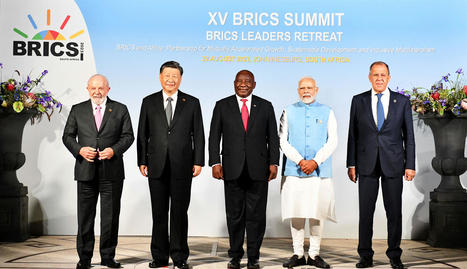
On Tuesday night, the four BRICS heads of state went to a retreat where they discussed several issues behind closed doors.
These included the expansion of BRICS membership, the use of local currencies in trade, leveraging the BRICS platform to solve global challenges, and more.
At the end of the conference, clarity on any declarations made by the heads of state regarding those issues is expected.
The wealthiest square mile in Africa is hosting a big international summit this week with a mixture of pride, relief, and a hint of unease.
Sandton - a glitzy banking district on the outskirts of South Africa's increasingly dilapidated city of Johannesburg - is the venue for the latest meeting of the Brics group, an ambitious but amorphous bloc of countries (Brazil, Russia, India, China, and South Africa), united by a desire to challenge perceived Western dominance in global affairs. Dozens of other nations are queuing up to join.
The current wave of relief felt here in South Africa in relation to Brics can be explained by President Vladimir Putin's recent decision to stay away from the summit.
Had he insisted on coming, South Africa would have finally had to clarify its position on whether it would carry out its international obligation to arrest Russia's leader for alleged war crimes in Ukraine.
Spared that awkward challenge, South African officials are now revelling in their role as host - proudly filling journalists' inboxes with a flood of emails about Brics breakfast meetings, trade fairs, township dialogues and the like.
This unusual degree of official enthusiasm serves, to some observers, to underline quite how far and fast this country appears to be steering away from the West, not just towards a more multi-polar world, but firmly into China and, to a lesser extent, Russia's orbit.
At a recent pre-summit meeting of Brics foreign ministers in Cape Town, a Russian journalist leant over to me in a news conference and declared: "You can keep your human rights paradise [in the West]. We are remaking the world."
Brics may still be in its infancy, but it is generating - at least in some quarters - a genuine and disruptive sense of energy and excitement.
A colleague who attended a foreign policy workshop organised by South Africa's government told me of an overwhelming consensus there that China was the future, and the West was in decline.
Which is where South Africa's unease comes into the equation.
The country's President Cyril Ramaphosa - a wealthy businessman - will be acutely aware of the fact that the local economy, hit hard by Covid and grappling with the world's highest levels of unemployment and inequality, desperately needs more foreign investment if it is to escape a spiralling crisis.
Russia is certainly not the answer. Its trading relationship with South Africa is almost non-existent.
China is an increasingly important player but is, nonetheless, overshadowed here by longstanding trade with, and investment from, the European Union (EU) and the US.
So why would South Africa jeopardise those key Western relationships - already strained - at a time of profound economic uncertainty?
The answer, at least in part, appears to lie within the country's increasingly weary and erratic governing party.
After three decades in power, the African National Congress (ANC) is struggling to rid itself of infighting, corruption and administrative chaos.
Confronted with the war in Ukraine, for instance, South Africa's government has offered a muddled grab-bag of responses - first condemning the invasion, then pointedly refusing to condemn it, then blaming Nato, praising Mr Putin, offering itself as a peace broker, hosting Russian naval exercises, rushing to explain itself to Washington, and casually repeating Kremlin talking points.
Then there is the still lingering mystery of whether South Africa supplied arms to Russia last year - as alleged by the US.
There is little doubt that President Ramaphosa is deeply uneasy about Russia's invasion and anxious to portray himself as a wise and neutral advocate for a more multi-polar world.
But many in his government and party routinely undermine that stance - often citing nostalgia for Moscow's support during the anti-apartheid struggle and a more general suspicion of US foreign policy.
The haphazard messaging has managed to irritate all sides in the conflict and succeeded only in making South Africa appear weak and indecisive.
Nelson Mandela's "rainbow nation" is certainly struggling right now - with some even warning that it could soon become a "failed state".
But this week's Brics summit will, by contrast, provide the Kremlin with a useful platform to showcase its own, far more strategic and effective diplomacy.
Recent headlines from the continent may have been dominated by the coup in Niger, and the potential for Russia's thuggish, opportunistic, Wagner Group mercenaries to exploit the chaos for their own benefit, as they have already done in Mali and the Central African Republic (CAR).
But at least as significant is the success with which Moscow, through its hard-travelling Foreign Minister Sergei Lavrov, and through canny media messaging, has managed to present itself - after decades with almost no presence on the continent - as a credible alternative to "colonial" Western influence in Africa.
In countries wrestling with poverty, the impact of climate change, increasingly youthful populations, and growing unemployment, frustration with the status quo has left many people open to new alternatives.
Which begs the question - what have Western nations been doing to challenge Russia?
It is, of course, dangerous to make generalisations about this continent, and both wrong and offensive to suggest African governments are merely pawns in a reviving Cold War.
But where is the Western version of Brics? The UK has a "minister for Africa" - but almost no-one has ever bothered to stay in the job for more than a year.
A preoccupation with development projects, strict conditions and cherry-picked foreign invitations for favoured African leaders, has fuelled the claim that France, the UK and other former colonial powers are still treating the continent as a tiresome crisis to be managed, rather than a partner to be supported.
This may be unfair. After all, Western nations have, for decades, devoted significant energy and cash towards supporting health services, businesses and governments across the continent.
But the role of Western armies - French troops and American drones in particular - in places like Niger and Somalia, has provoked strong backlashes.
Which may help to explain why Brics's alternative vision is gaining traction on this continent, and why the bloc will be making its case, loudly and confidently, in the conference halls of Sandton this week.
The wealthiest square mile in Africa is hosting a big international summit this week with a mixture of pride, relief, and a hint of unease.
Sandton - a glitzy banking district on the outskirts of South Africa's increasingly dilapidated city of Johannesburg - is the venue for the latest meeting of the Brics group, an ambitious but amorphous bloc of countries (Brazil, Russia, India, China, and South Africa), united by a desire to challenge perceived Western dominance in global affairs. Dozens of other nations are queuing up to join.
The current wave of relief felt here in South Africa in relation to Brics can be explained by President Vladimir Putin's recent decision to stay away from the summit.
Had he insisted on coming, South Africa would have finally had to clarify its position on whether it would carry out its international obligation to arrest Russia's leader for alleged war crimes in Ukraine.
Spared that awkward challenge, South African officials are now revelling in their role as host - proudly filling journalists' inboxes with a flood of emails about Brics breakfast meetings, trade fairs, township dialogues and the like.
This unusual degree of official enthusiasm serves, to some observers, to underline quite how far and fast this country appears to be steering away from the West, not just towards a more multi-polar world, but firmly into China and, to a lesser extent, Russia's orbit.
At a recent pre-summit meeting of Brics foreign ministers in Cape Town, a Russian journalist leant over to me in a news conference and declared: "You can keep your human rights paradise [in the West]. We are remaking the world."
Brics may still be in its infancy, but it is generating - at least in some quarters - a genuine and disruptive sense of energy and excitement.
A colleague who attended a foreign policy workshop organised by South Africa's government told me of an overwhelming consensus there that China was the future, and the West was in decline.
Which is where South Africa's unease comes into the equation.
The country's President Cyril Ramaphosa - a wealthy businessman - will be acutely aware of the fact that the local economy, hit hard by Covid and grappling with the world's highest levels of unemployment and inequality, desperately needs more foreign investment if it is to escape a spiralling crisis.
Russia is certainly not the answer. Its trading relationship with South Africa is almost non-existent.
China is an increasingly important player but is, nonetheless, overshadowed here by longstanding trade with, and investment from, the European Union (EU) and the US.
So why would South Africa jeopardise those key Western relationships - already strained - at a time of profound economic uncertainty?
The answer, at least in part, appears to lie within the country's increasingly weary and erratic governing party.
After three decades in power, the African National Congress (ANC) is struggling to rid itself of infighting, corruption and administrative chaos.
Confronted with the war in Ukraine, for instance, South Africa's government has offered a muddled grab-bag of responses - first condemning the invasion, then pointedly refusing to condemn it, then blaming Nato, praising Mr Putin, offering itself as a peace broker, hosting Russian naval exercises, rushing to explain itself to Washington, and casually repeating Kremlin talking points.
Then there is the still lingering mystery of whether South Africa supplied arms to Russia last year - as alleged by the US.
There is little doubt that President Ramaphosa is deeply uneasy about Russia's invasion and anxious to portray himself as a wise and neutral advocate for a more multi-polar world.
But many in his government and party routinely undermine that stance - often citing nostalgia for Moscow's support during the anti-apartheid struggle and a more general suspicion of US foreign policy.
The haphazard messaging has managed to irritate all sides in the conflict and succeeded only in making South Africa appear weak and indecisive.
But this week's Brics summit will, by contrast, provide the Kremlin with a useful platform to showcase its own, far more strategic and effective diplomacy.
Recent headlines from the continent may have been dominated by the coup in Niger, and the potential for Russia's thuggish, opportunistic, Wagner Group mercenaries to exploit the chaos for their own benefit, as they have already done in Mali and the Central African Republic (CAR).
But at least as significant is the success with which Moscow, through its hard-travelling Foreign Minister Sergei Lavrov, and through canny media messaging, has managed to present itself - after decades with almost no presence on the continent - as a credible alternative to "colonial" Western influence in Africa.
In countries wrestling with poverty, the impact of climate change, increasingly youthful populations, and growing unemployment, frustration with the status quo has left many people open to new alternatives.
Which begs the question - what have Western nations been doing to challenge Russia?
It is, of course, dangerous to make generalisations about this continent, and both wrong and offensive to suggest African governments are merely pawns in a reviving Cold War.
But where is the Western version of Brics? The UK has a "minister for Africa" - but almost no-one has ever bothered to stay in the job for more than a year.
A preoccupation with development projects, strict conditions and cherry-picked foreign invitations for favoured African leaders, has fuelled the claim that France, the UK and other former colonial powers are still treating the continent as a tiresome crisis to be managed, rather than a partner to be supported.
This may be unfair. After all, Western nations have, for decades, devoted significant energy and cash towards supporting health services, businesses and governments across the continent.
But the role of Western armies - French troops and American drones in particular - in places like Niger and Somalia, has provoked strong backlashes.
Which may help to explain why Brics's alternative vision is gaining traction on this continent, and why the bloc will be making its case, loudly and confidently, in the conference halls of Sandton this week.
And explains the importance of the three-day Brics Summit, which kicks off in Sandton on Tuesday (22 August) – watch a replay of the livestream or read the full speech here.
Address by President Cyril Ramaphosa on South Africa’s foreign policy
Fellow South Africans,
I would like to address you this evening on South Africa’s foreign policy in the light of our country being the host of the 15th Brics Summit.
I would also like us to understand and appreciate the significance of this gathering for our country and the African continent.
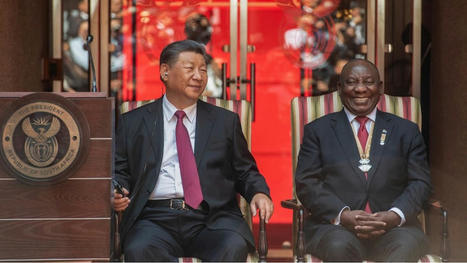
A day ahead of the summit, we will receive President Xi Jinping, President of the People’s Republic of China on his fourth state visit to South Africa.
This Brics Summit and the State Visit by President President Xi Jinping, as well as the many bilateral engagements we will have with President Lula Da Silva of Brazil, Prime Minister Modi of India and many other heads of state on the sidelines of the Summit, have a bearing on our relationships with other countries and South Africa’s place in the world.
To understand why these relations are so important for our country and its people, we need to understand the principles and the values that shape our foreign policy and inform our international relations.
Before the dawn of democracy in 1994, the apartheid South African state was a pariah in the international community, condemned for committing a crime against humanity.
The foreign policy of apartheid South Africa was defined by coercion, destabilisation and military aggression.
Since the advent of democracy, South Africa’s foreign policy has been based on what our forebears inscribed in the Freedom Charter in 1955, when they declared that:
“South Africa shall be a fully independent state which respects the rights and the sovereignty of all nations; South Africa shall strive to maintain world peace and the settlement of all international disputes by negotiation – not war.”
This foreign policy approach is also a product of the efforts of leaders such as the late Oliver Tambo who mounted a vigorous worldwide campaign to secure global support for our just struggle against apartheid.
This put South Africa on the global map in relation to the interests of its people whilst the world condemned its apartheid rulers.
Pivotal to progress
Indeed, our foreign policy is a matter that is vital to our progress as a nation.
Through stronger relations with other countries, manifested through investment and trade relations, we can grow our economy, create more opportunities for new businesses and create jobs.
South Africa’s foreign policy aims to promote our National Interest based on the protection and promotion of our national sovereignty and constitutional order.
It is also aimed at improving the well-being, safety and prosperity of our citizens, and the achievement of a better Africa and world.
The key pillars of our foreign policy include the promotion of human rights, peace and stability and the strengthening of trade and investment ties with other countries.
The foreign policy stance we have taken since the advent of democracy has positioned South Africa as a reliable and influential partner on our continent and in the world.
This has enabled our country to have friendly and valuable relations with countries around the world at political, diplomatic, trade, investment, sporting, social and many other levels.
It is these principles that guide our participation in Brics.
Value of Brics
Together, the members of Brics – Brazil, Russia, India, China and South Africa – make up a quarter of the global economy, they account for a fifth of global trade and are home to more than 40 per cent of the world’s population.
Brics as a formation plays an important role in the world due to its economic power, market potential, political influence and development cooperation.
Yet the value of Brics extends beyond its sheer size.
Brics countries can collectively shape global dynamics, and acting together, have the potential to drive significant changes in the world economy and international relations.
Together, the Brics members have used their collective voice to call for a world that is more equitable, balanced and governed by an inclusive system of global governance.
Being a Brics member has created positive opportunities for South Africa.
It has enabled our country to have a strategic relationship with China.
Based on the strategic relationship between South Africa and the People’s Republic of China we will be signing several agreements during President Xi’s State visit.
We have steadily strengthened trade and investment ties with other Brics countries alongside collaboration in areas like development, skills, technology, security and innovation.
South Africa has benefitted from the New Development Bank, which was established by the Brics countries in 2015.
Our country has been funded by the bank in several infrastructure projects to the value of R100 billion in sectors such as roads, water, transport and energy. South Africa has always championed the interests of Africa within Brics.
To further advance the African development agenda, more than 30 heads of state and government from across Africa will be attending the Brics Summit.
We want to build a partnership between Brics and Africa so that our continent can unlock opportunities for increased trade, investment and infrastructure development.
There are great opportunities for other Brics countries to participate in the African Continental Free Trade Area by locating production and services in various countries on the African continent, including our own, by partnering with local companies and entrepreneurs.
The 15th Brics Summit will discuss a number of issues including the important issue of the possible expansion of the membership of Brics.
More than 20 countries have formally applied to join Brics and several others have expressed an interest in becoming part of the Brics family.
South Africa supports the expansion of the membership of Brics. The value of Brics extends beyond the interests of its current members.
For its efforts to be more effective, Brics needs to build partnerships with other countries that share its aspirations and perspectives.
An expanded Brics will represent a diverse group of nations with different political systems that share a common desire to have a more balanced global order.
In addition to the other African leaders in attendance, we will also be welcoming leaders from several countries of the Global South.
These include countries from the Caribbean and South America, from the Middle East, from West Asia, South Asia and South-East Asia.
This Brics Summit is particularly important as it is being held as the world is confronted by fundamental challenges that are bound to determine the course of international events for years to come.
Global system
Our world has become increasingly complex and fractured as it is increasingly polarised into competing camps.
Multilateralism is being replaced by the actions of different power blocs, all of which we trade with, invest with, and whose technology we use.
It is for this reason that South Africa continues to advocate for an open and rules-based global governance, trade, financial and investment system. It must be a system that does not depend on the exercise of power or unilateralism, but by the advancement of the interests of the peoples of the world.
It is in this rules-based system that we seek to advance African prosperity and industrialisation.
We seek to change the rules to be fairer but ultimately, we want to promote an open system of economic and political relations.
Amid all these challenges, Africa remains at the centre of our foreign policy.
We are firmly committed to strengthening the African Union so that it increases its capacity to support the achievement of greater integration on the continent.
We are working towards the full implementation of the African Continental Free Trade Area, which is set to eliminate trade barriers, boost intra African trade and achieve prosperity for all of Africa.
It will also accelerate manufacturing and industrial capacity on our continent.
The vibrant trading Africa we seek to build depends on Africa being stable and peaceful.
For Africa to thrive, we must silence the guns.
We continue to work within the African Union to end several ongoing conflicts on the continent and restore constitutional and democratic government to countries that have recently experienced coups.
South Africa is directly involved in a number of efforts to bring peace to Africa. We are currently involved in supporting the people of Mozambique and the DRC to ensure that there is peace and stability in their countries.
Trade and investment
The administration I have the honour to lead has been devoted to attracting greater trade and investment into South Africa.
Every visit we make to countries on our continent and across the world and every visit by heads of state from other countries focuses on strengthening economic ties.
When a foreign leader visits our country for a state visit, they are usually accompanied by a business delegation. We are usually accompanied by South African companies when we travel to other countries.
The Business Forums that are held during these visits result in greater trade, investment and business partnerships.
To further strengthen economic ties between African countries and the United States, South Africa is inviting more than 30 African trade ministers and senior US Administration and Congressional representatives to the next forum of the African Growth and Opportunity Act – Agoa – scheduled for November this year.
As part of our ongoing relationship with the countries of the European Union, we will hold the European Union-South Africa Summit later this year in South Africa to foster our investment and trade relations.
Recent trade statistics indicate the success of all our international links.
Within the first three months of this year, we exported R450 billion worth of goods in the mining, manufacturing, and agricultural sectors. Our biggest exports were to China, followed by the United States, Germany, Japan, and then India.
Exports to other African countries account for around a quarter of the value of all our exports.
Our tourism industry is recovering well from the effects of the Covid-19 pandemic. More than four million tourist arrivals were recorded in the first half of this year, almost twice as many arrivals as in the same period last year.
Companies across the globe have established new or expanded ventures in our country in sectors as diverse as energy, mining, vehicle production, the creative sector, manufacturing and many others.
For every rand we attract, jobs are created and sustained.
Policy of non-alignment
Our country is committed to a policy of non-alignment.
We have resisted pressure to align ourselves with any one of the global powers or with influential blocs of nations.
During the ‘Cold War’, the stability and sovereignty of many African countries was undermined because of their alignment with the major powers.
This experience has convinced us of the need to seek strategic partnerships with other countries rather than be dominated by any other country.
While some of our detractors prefer overt support for their political and ideological choices, we will not be drawn into a contest between global powers.
Instead, our country strives to work with all countries for global peace and development.
It is for this reason that South Africa is a member of the Non-Aligned Movement, a forum of 120 countries that are not formally aligned with or against any major power bloc.
Our decision not to align with any one of the global powers does not mean that we are neutral on matters of principle and national interest.
Our non-aligned position exists alongside our active support for the struggles of the oppressed and marginalised in different parts of the world.
We have always believed that the freedom we won – and the international solidarity from which we benefitted – imposes a duty on us is to support the struggles of those who continue to experience colonialism and racial oppression.
That is why we will continue to support the struggles of the people of Palestine and Western Sahara.
We are fully committed to the articles of the United Nations Charter, including the principle that all members shall settle their international disputes by peaceful means.
Most recently, we participated in the African initiative to seek peace in the Ukraine-Russia conflict.
Through this African Peace Initiative our country continues to be involved in processes to ensure that children who were removed from their homes in Ukraine are returned to their families and that prisoners of war are exchanged.
We continue to be involved in the talks regarding the reopening of the Black Sea to facilitate the flow of grain.
We firmly believe that dialogue, mediation and diplomacy is the only viable path to end the current conflict and achieve a durable peace.
Respect
We support the principle of respect for the territorial integrity and sovereignty of all states and peoples.
In the midst of the grave challenges facing humanity, we are determined that a reformed and representative United Nations must be at the centre of global affairs.
Our support for the United Nations exists alongside our firm belief that this premier multilateral institution needs genuine reform to make it more democratic, representative and efficient.
The United Nations Security Council must be transformed into a more inclusive, more effective body that is able to ensure peace and security.
We are pleased that the UN Secretary General Mr Antonio Guterres will attend the Brics Summit at our invitation.
South Africa, as a member of the community of nations, will continue to play a constructive role in world affairs.
To get content containing either thought or leadership enter:
To get content containing both thought and leadership enter:
To get content containing the expression thought leadership enter:
You can enter several keywords and you can refine them whenever you want. Our suggestion engine uses more signals but entering a few keywords here will rapidly give you great content to curate.


 Your new post is loading...


 Scoop.it!