KHOEKHOE-XAM HERITAGE
3.8K views | +0 today
KHOEKHOE-XAM HERITAGE
KROTOASA XAM-KHOEKHOE HERITAGE division of the KROTOASA FOUNDATION seeks to develop Intangible cultural heritage products and services that promote, preserve, and utilize our Khoena and San cultural practices, skills, and knowledge with our priority in Safeguarding our tangible and intangible cultural heritage and sustainable development in South Africa and Africa.
We are committed to implement the Convention adopted by the General Assembly of the State Parties to the Convention with the Republic of South Africa becoming the 184th State to join the 2003 Convention for the Safeguarding of the intangible Cultural Heritage and having deposited our instrument of ratification with UNESCO on 24 January 2025. LKKSTICH shall endeavour, by all appropriate means, to recognize the importance and strengthen the role of intangible cultural heritage as a driver and guarantee of sustainable development., as well as fully integrate the safeguarding of intangible cultural heritage into their development plans, policies and programmes at all levels.

Safeguarding intangible cultural heritage
• Inscription on the list of tangible and intangible Cultural Heritage in need of urgent safeguarding
• Working closely with Government that nomination files demonstrate that elements proposed for inscription on the List of Intangible Cultural Heritage in need of urgent safeguarding satisfies all of the following criteria:
- The element constitutes intangible cultural heritage as defined in Article 2 of the Convention
- The element is in urgent need of safeguarding because its viability is at risk despite the efforts of the Khoena & San people concerned; or
- The elements is in extremely urgent need of safeguarding facing gave threats as a result of which it cannot be expected to survive without immediate safeguarding.
- A safeguarding plan is elaborated that may enable the Khoena & San if applicable to continue the practice and transmission of the element.
- The element has been nominated following the widest possible participation of the Khoena & San people and with our free, prior and informed consent.
- The element is included in an inventory of the intangible cultural heritage present in the territory of South Africa as defined by Article 11 and 12 of the Convention.
- In cases of extreme urgency, South Africa Government has been duly consulted regarding inscription of the element in conformity with Article 17.3 of the Convention.
• KKLSTICH will propose national, subregional or regional programmes, projects and activities for safeguarding intangible cultural heritage to the Committee for selection and promotion as best reflecting the principles and objectives of the Convention.
• KKLSTICH will pay special attention from among our programmes, projects and activities that we will propose, that we understand that the Committee shall select those that best satisfy all of the following criteria, the programmes, projects and activities:
… involves safeguarding as defined in Article 2.3 of the Convention
… Promotes the coordination of efforts for safeguarding intangible cultural heritage on regional, subregional and or international levels.
… reflects the principles and objectives of the Convention.
… has demonstrated effectiveness in contributing to the viability of the intangible cultural heritage concerned.
… is or has been implemented with the participation of the Khoena & San people and with our free, prior and informed consent.
… may serve as a subregional, regional or international model, as the case may be, for safeguarding activities.
… the South African Government, implementing body(ies), and Khoena & San people are willing to cooperate in the dissemination of the best practices, if their programme, project of activity is selected
… features experiences that are susceptible to an assessment of their results
… is primarily applicable to the particular needs of developing countries
• KKLSTICK in partnership with other cultural groups will also focus on the following product:
- Cultural Tourism and Heritage Routes
* Oral Traditions: This includes legends, myths, folktales, and oral histories passed down through generations
* Performing Arts: This encompasses music, dance, theatre, and other artistic performances.
* Social Practices: This includes rituals, customs, and social events that are important to a community
* Festive Events: These include festivals, celebrations, and religious holidays
* Traditional Crafts: This includes the knowledge, skills, and techniques used to produce traditional crafts, such as pottery, weaving, and metalworking
* Traditional Culinary Practices: This includes food preparation techniques, recipes, and the cultural significance of food.
* Religious Sites and Spaces: These are locations where religious practices and rituals take place, such as rivers, mountains and ancestorial lands and holy sites
Your new post is loading...
Scooped by KRII-KROTOASA RESEARCH-INTENSIVE INSTITUTE
August 25, 2023 8:19 PM
Scoop.it!

BRICS Summit 2023 LIVE: Leaders gather in Johannesburg to create a new world order | WION LIVE

South Africa's Ramaphosa, Brazil's Lula, India's Modi and China's Jinping will attend summit in person. Russian President Vladimir Putin will address the summit virtually, while his foreign minister, Sergei Lavrov, attends it in his stead.

#BRICS #SouthAfrica #WIONLIVE

About Channel:

WION The World is One News examines global issues with in-depth analysis. We provide much more than the news of the day. Our aim is to empower people to explore their world. With our Global headquarters in New Delhi, we bring you news on the hour, by the hour. We deliver information that is not biased. We are journalists who are neutral to the core and non-partisan when it comes to world politics. People are tired of biased reportage and we stand for a globalized united world. So for us, the World is truly One.

Please keep discussions on this channel clean and respectful and refrain from using racist or sexist slurs and personal insults.

Subscribe to our channel at https://goo.gl/JfY3NI
Check out our website: http://www.wionews.com
Connect with us on our social media handles:
Facebook: https://www.facebook.com/WIONews
Twitter: https://twitter.com/WIONews

Follow us on Google News for the latest updates

Zee News:- https://bit.ly/2Ac5G60
Zee Business:- https://bit.ly/36vI2xa
DNA India:- https://bit.ly/2ZDuLRY
WION: https://bit.ly/3gnDb5J
Zee News Apps: https://bit.ly/ZeeNewsApps
No comment yet.
Scooped by KRII-KROTOASA RESEARCH-INTENSIVE INSTITUTE
August 25, 2023 8:08 PM
Scoop.it!

The 2023 BRICS Summit: Africa in action

With South Africa hosting the 2023 AGOA Forum and the BRICS Summit, the Africa Center brings together leading experts examining Africa’s growing role on the geopolitical landscape.
No comment yet.
Scooped by KRII-KROTOASA RESEARCH-INTENSIVE INSTITUTE
August 25, 2023 7:58 PM
Scoop.it!

A Common BRICS Currency Is Sometime Away, But We Do Know Its Name

A Common BRICS Currency Is Sometime Away, But We Do Know Its Name | KHOEKHOE-XAM HERITAGE | Scoop.it

A BRICS currency is on the longer-term agenda, but not until certain development points have been passed. This article explains the route. 


Discussions concerning a common BRICS currency are not on the agenda during the current BRICS 2023 summit currently taking place in Johannesburg, however a name from the currency has apparently already been ‘coined’ – the R5.

This is a reference to the five currencies used by the current BRICS members – the Renminbi, Ruble, Rupee, Real and Rand.


Brazil’s former representative at the International Monetary Fund (IMF), Paulo Nogueira Batista Jr, has stated that in time, the five countries – which may have increased in the interim – will need to establish an alternative to the US Dollar in trade due to its use by the United States in imposing or threatening sanctions. But how will the BRICS achieve that aim – if at all?

Step One

Rather than a common currency, the initial stage, which is already occurring, is to increase the trade use of their respective currencies, a position underlined by Indian Foreign Secretary Vinay Mohan Kwatra, who said just prior to the on-going BRICS summit that deliberations among Brazil, Russia, India, China and South Africa have been focused on boosting trade in national currencies instead of on developing a common currency.


“The substantive part of trade and economic exchanges and discussions that have been a part of BRICS discussions, have so far, in a major way, focused on how to increase trade in respective national currencies which… is considerably different from a common currency concept,” Kwatra said.


“You would know that common currency discussions have several prerequisites before you can even talk about a common currency framework. The discussion framework in BRICS and the substance of that discussion framework in BRICS have focussed principally on trade within national currencies” he added.


Brazil’s President Lula da Silva and Russian Foreign Minister Sergey Lavrov have voiced support for the idea of a common currency among BRICS nations. “I am in favour of creating, within the BRICS, a trading currency between our countries, just like the Europeans created the euro,” said Lula during a speech in April.

“Serious, self-respecting countries are aware of what is at stake, see the incompetence of the ‘masters’ of the current international monetary and financial system, and want to create their own mechanisms to ensure sustainable development, which will be protected from outside dictates,” Lavrov was quoted as saying by numerous news outlets in January. He went on to talk about the creation of a currency within the framework of BRICS.


However, India has been cautious in public on this matter. India’s External affairs Minister S Jaishankar stated that there have been no discussion of a BRICS currency. Kwatra’s comments seem to indicate that the grouping’s focus will remain on deepening trade in national currencies.


Thus far, the extent of Intra-BRICS trade using their respective currencies is estimated to be about 30-35% of all transactions among the BRICS nations, with the bulk falling still on using the US dollar and the euro. However, this will shortly change.

Step Two

The second step in liberalising BRICS trade from US dollar and euro use is the introduction of sovereign digital currencies. This is en route: China, India and Russia are all currently holding usage trials of their respective national currencies, which will be backed by, and managed by their respective Central Banks, just as ordinary sovereign currency is. The difference is that this will be a digital version. Brazil and South Africa are not far behind in their developments, except they are not at national trial stage yet. All are about three years ahead of the US dollar and euro, which have only just passed their ‘proof of concept’ mark. Being more complex and interwoven into the global financial systems means it is more difficult for the US and EU to introduce their digital currencies, even though the same technology is well understood.


The introduction of digital sovereign currencies will mean that the BRICS nations will be able to exchange financial data and transactions without the need to go through the global SWIFT transactional system. This allows them to circumnavigate financial and economic sanctions, currently placed on Russia and threatened upon third party countries – and will greatly expand their ability to trade within their own currencies and bypass US dollar and euro usage. China, Russia, and India are preparing to have their digital currency services available to bank clients by early 2025. Brazil and South Africa may be a year to 18 months later.


There will be spin offs. Oher countries, such as Kazakhstan and Kyrgyzstan are also developing digital currencies and are part of the supply chains between Russia and China. Iran and numerous other countries are also all developing digital versions of their sovereign currencies, meaning that the SWIFT global banking network is about to lose its influence.

The BRICS Spread of Digital Currency Use

A little understood aspect of the BRICS in the West is that while much has been made of the disparate nature of the five nations, they are all the lead members of their respective free trade groups. This includes China with RCEP, India with SAARC, Russia with the EAEU and CIS, Brazil with Mercosur, and South Africa with the SAEU.


Then there is the Shanghai Cooperation Organisation (SCO) of which China, India and Russia are all full members.

Collectively, these trade organisations include, apart from the BRICS, another 64 countries. Digital technologies from BRICS are sure to filter down to enable this huge, global network of countries, all of whom can bypass the SWIFT network. This transformation can be largely expected to have been completed by 2030 and will represent a huge shift in global financial dynamics over the coming five-seven years. It will effectively render the G7 and G20 platforms as obsolete, or at least have reduced them to a bank of Western-oriented powers. This will also have a huge impact on the United Nations and how it is currently managed.


A Common BRICS Currency


Therefore, the concept of a common BRICS currency is not really a requirement at this stage. In any event, it will likely manifest itself only after a global digital financial transformation has been completed, while there are other issues about who would run and be responsible for acting as the Central Bank.


This question implies the development, perhaps like the European Union, of an inclusive bloc with common ideologies, technical capabilities, and a desire to remain free of the United States foreign policy demands as are currently implemented on a global basis. That issue is also being discussed, albeit at early stages.

China, India, and Russia – all members of the SCO, have been instrumental in asking the questions as to whether that entity could merge in some form with the EAEU. There have also been initial discussions concerning adding to this the nations who have signed up to the Belt and Road Initiative. Given that 148 countries currently have such agreements in place, this is a significant figure would position the world’s trade in a completely different format to the current organisational structure.


These are longer term views, however one advantage that countries such as China has, is the lack of operational distractions created by ever-changing policies as a result of a surfeit of democratic governance, which in itself is in the process of going off the objective rails.


I do not expect to see any meaningful debate concerning the creation of an Eastern version of the EU anytime soon – partially because there already is one in the form of ASEAN. But when ASEAN creates a Central Bank and a common currency, one can be sure that the BRICS and its numerous allies will likely not be far behind.


No comment yet.
Scooped by KRII-KROTOASA RESEARCH-INTENSIVE INSTITUTE
August 25, 2023 7:51 PM
Scoop.it!

Intra-BRICS Trade and Analysis 2023

Intra-BRICS Trade and Analysis 2023 | KHOEKHOE-XAM HERITAGE | Scoop.it


With the 2023 BRICS summit beginning on August 22, we provide an economic breakdown of all BRICS members and their respective trade with one other    


The BRICS 2023 summit starts in Johannesburg, South Africa tomorrow (Tuesday, August 22) with the Heads of State of Brazil, China, India, and South Africa all attending in person, together with significant trade delegations, including Russia. The Russian President, Vladimir Putin, will attend by video-conference. The BRICS summit is expected to be a key moment in plans that could ultimately challenge the G7 group of nations in global economic and geopolitical influence. In this article we discuss the current position as concerns Intra-BRICS trade.


Background


The first meeting of RIC (Russia, India, and China) was held in 2005 in St. Petersburg. Brazil and South Africa joined the group in February 2011, when the current version of BRICS was completed. However, BRICS is not a formal alliance, and there are differences among members, but over the past decade, with dozens of meetings and summits, it has pursued common interests in strengthening mechanisms.


BRICS countries as a total currently includes about 26% of the total global land mass, and about 42% of the world’s population. This basic clout means that BRICS combined efforts in restructuring the global economy and strengthening economic and financial cooperation have been welcomed by many countries – and been viewed with suspicion elsewhere.


Mutual Economic Cooperation


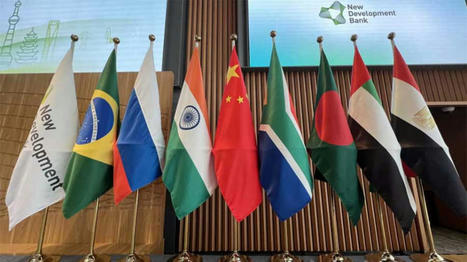
The BRICS have also provided alternatives to existing global mechanisms deemed to be heavily influenced by the collective West and their policies. The BRICS New Development Bank (NDB), established as a partial alternative to the World Bank, has approved over 90 projects worth US$32 billion to support members’ infrastructure.


Economic cooperation was also discussed at the 14th BRICS summit in June 2022. Paying attention to providing a better interfacing in handling global crises, forming a multipolar economic strategy, developing alternative commercial and financial routes, promoting economic recovery, diversifying the economy, minimizing costs, developing electronic commerce, integrating markets, and cooperating with other nations have made BRICS attractive to smaller and other emerging countries.

Practically, BRICS is seen as a union of strong emerging powers with a common currency reserve of about US4 trillion, which has already undertaken achievements in standing against unilateralism and can be useful when positioned as alternatives to Western controlled institutions such as the World Bank, the International Monetary Fund, and Western financial and trade policies in general.


BRICS 2023


2023 is an important turning point in the BRICS development and its future global role.

BRICS combined efforts are seen in cooperation and collaboration in developing alternative payment systems to SWIFT, the gradual development of a non-dollar financial system, the development of a common payment system (BRICS Pay), the increase of trade using respective domestic currencies, and creating a common currency. These are all progressing at different timescales, however the use of respective digital currencies in the settlement of future intra-BRICS trade will be a significant move.


Russia, China, and India are all poised to launch their digital currencies for common usage by early 2025. This will allow trade to be conducted between them without the global SWIFT network and to reduce threats of the same upon other countries. Brazil and South Africa are close behind. In comparison, the United States and European Union, with rather more complex financial markets, have only recently agreed their digital currency protocols – a technical step the majority of BRICS members completed three years ago.


Strengthening the role of the New Development Bank (NDB) will help achieve BRICS national interests. The West’s approach to isolate Russia has created more incentives within the BRICS to increase trade with domestic currencies or create a common currency. The former has happened and is increasing; the latter will take time.


BRICS Expansion
Incentives for official participation in BRICS have increased in 2023. Although “BRICS Plus” was created in 2017 and invited non-BRICS officials, over the last two years, China has supported the concept of expanding cooperation within the ‘BRICS Plus.’ Model. Moscow has also mentioned the potential expansion of BRICS members from 5 to 17 nations. About 40 additional countries are believed to have expressed interest in joining and include heavy hitters such as Argentina, Egypt, Indonesia, Iran, Nigeria, Saudi Arabia, Turkiye, and the UAE.


In the meantime, in addition to reviewing the collective decision of the organization and having the necessary conditions and procedures for the process of accepting new members, the structure of BRICS and the process of accepting new countries may change with the joining of more countries.


Intra-BRICS Trade

CHINA


China’s economy has returned to a sustainable recovery path after COVID-19. Despite ups and downs, foreign trade and investment has continued to grow, and foreign trade was stable during 2022. However, China’s economy is vulnerable to real estate challenges, climate change, tightening global financial conditions, and rising geopolitical tensions.


China’s economic indicators for the first half of 2023 however indicate a steady post-COVID recovery. China’s GDP experienced a healthy growth rate of 5.5% year-on-year in H1 2023, while total GDP reached about US$8.3 trillion. In the second quarter of this year, GDP grew by 6.3% year-on-year.

The per capita disposable income in the first half of 2023 stood at US$2,739, while foreign trade reached US$1.36 trillion in Q1 and grew by almost 6% quarter-on-quarter in Q2.

Various measures to strengthen the economy in 2023 focused on the priority of stimulating economic growth, expanding domestic demand and consumption, improving the flexibility of supply chains, attracting more foreign investment, and reducing unemployment.


China’s foreign trade with other BRICS countries has grown, and China’s foreign trade with other BRICS countries increased by 12.1% in the first five months of 2022 compared to 2021.

Mechanical and electrical products are one of the main export products of China’s exports to other BRICS economies, energy, agriculture, and mining products accounting for about 76.3% of the total value of China’s imports from the BRICS nations.


Signing free trade agreements, establishing common standards for products, optimizing business methods, and removing barriers to market entry is also effectively increasing the trade volume of the five BRICS nations.

Trade between China and other BRICS countries is highly complementary and is expected to maintain growth. That said, the superiority of China in terms of dominating BRICS trade is undeniable.


China-Russia


The volume of mutual trade between China and Russia has increased and reached US$190 billion in 2022. The trade volume between Russia and China in the first six months of 2023 has continued this expansion and has also grown by 20% compared to the same period last year. Russia is China’s main source of coal, crude oil, and gas imports. Since the beginning of this year, there has been an upward trend in energy exports to China, and the scope of agricultural trade and agricultural products is also expanding. Exports from Russia to China increased by 84% in the first five months of 2023.


Prognosis: A rapidly growing and evolving trade partnership, which will accelerate more given increasing use of mutual digital currencies, improving Eurasian connectivity, and a mutual, well-defined desire to break the perceived hegemony of Western managed international trade structures to a more inclusive multilateral platform.


China-India


The trade between India and China touched an all-time high of US$135.98 billion in 2022, while New Delhi’s trade deficit with Beijing crossed the US$100 billion mark for the first time. Despite frosty political relations, bilateral trade is currently steady. The main products that China exported are computers, smart phones, and semiconductors, while India exported iron ore, refined petroleum, and raw aluminium.


Prognosis: Currently stable and showing signs of growth; but remains vulnerable due to political rivalry and disputed territorial security issues. If these can be resolved – and both leaders expressed exactly this desire during August 2023 – trade development could become dynamic if infrastructure connectivity can be improved.


China-Brazil


According to data from the China General Administration of Customs, in 2022, bilateral trade between China and Brazil reached US$165.6 billion, an increase of 8.1% year-on-year. In April this year, the two countries signed multiple trade agreements to boost this further, resulting in bilateral trade reaching US$13.85 billion in June 2023, suggesting that trade levels are stable and have slightly increased, although this may also improve by the year end.


The main products that Brazil exports to China are iron ore, soybeans, and crude petroleum, while China exported semiconductors, office machines, and smart phones. The agreements signed in April will increase collaboration on a range of issues, from aerospace development to infrastructure investment.

Prognosis: Significant planned developments and investments, and mutually compatible trade commodities imply that China-Brazil trade can be expected to show healthy development.


China-South-Africa


South Africa is China’s largest trading partner in Africa, with bilateral trade of US$56.74 billion in 2022. That was an increase of 11% over the previous year, thanks in part to rising commodity prices. 2023 trade levels thus far have shown sustainability and smaller growth. The main products that China exports to South Africa are broadcasting equipment, computers, and coated flat-rolled iron. The main products that South Africa exports to China are gold, diamonds, and iron ore.


Prognosis: South Africa will never be a huge bilateral trade partner for China, however mutually diverse trade is developing and looks sustainable. South Africa’s position as a gateway to Africa can help the PRC establish east coast links and connectivity via the Middle East to the INSTC and trade other BRI trade routes. South Africa may be the smallest BRICS member, but it remains an important geographical player.


China Plus


China is a member of the Regional Comprehensive Economic Partnership (RCEP), a free trade agreement that also includes Australia, Brunei, Cambodia, Indonesia, Japan, South Korea, Laos, Malaysia, Myanmar, New Zealand, the Philippines, Singapore, Thailand, and Vietnam.


China and other RCEP members increased their trade by 7.5% year on year to US$1.82 trillion in 2022. International businesses with operations in China can access the RCEP markets under certain rules of origin conditions.


Overall, ASEAN remains China’s largest trade partner. In the first half of 2023, trade with ASEAN countries accounted for 15.3% of China’s total trade, reaching US$428.96 billion, up 5.4% from 2022. China has a FTA with ASEAN.


INDIA


The Indian economy experienced solid economic growth, recovering from the COVID-19 crisis, with increases of 7.2% GDP in the 2022-23 fiscal year. Over the past decade, India’s policies have taken many initiatives to strengthen the economy, rapid economic growth, and exports.


India’s nominal GDP as of June 2023 is projected to be about US$3.75 trillion marking a significant growth rate of 16.1%.  New Delhi’s attention to the service sector, implementing reforms, increasing industrial production and their exports, appropriate foreign policy, focusing on the information technology (IT) sector, increasing consumption, private investment, taking advantage of existing resources, increasing foreign exchange reserves, increasing investments in the sector, private sector, the continued flow of foreign direct investment and appropriate economic growth. India is now the fifth largest economy in the world.


The construction of industrial infrastructure in India and economic development, while a lack of complete dependence on a specific industry is such that industry, agriculture, services, and the financial sector are important economic and commercial sectors. Over the last decade, India has almost doubled its GDP per capita and can use BRICS as a platform to leverage its global influence.

New Delhi has made strides in signing free trade agreements (FTAs) with its trading partners and has taken several measures to promote trade, including plans for a digital platform and open access to BRICS.


India recorded over US$100 billion in intra-BRICS trade in 2022 and it has traded with all members. BRICS allows India to resolve mutual differences and use it to strengthen relations with Africa and South America.


India-China


For India-China data please see under the China section above.

India-Russia


Russia has rapidly moved from 25th to 7th position among India’s trading partners over the past two years. Between April 2022 and February 2023, bilateral trade reached a record US$45 billion. Almost a third of this volume was mineral products (including ore and fuel). In turn, India exported goods worth US$4.43 billion to the Russian Federation in 2021.These are mainly chemical products, machinery, equipment and vehicles, food products and agricultural raw materials. This trade can be expected to grow given the mutually desirable commodity items the two possess, in addition to improving trade routes shortly to become available via the INSTC.


Prognosis: Rapidly growing trade based on energy, however non-oil trade is also increasing. As Indian and Russian traders and consumers adapt, and supply chains such as the INSTC come online, the bilateral trade development between these two BRICS members is highly promising.


India-Brazil


India is now the 5th largest trading partner of Brazil, with India exporting US$9.72 billion of products during 2022, a significant increase over 2021’s US$6.77 billion. Brazil exported US$6.34 billion to India during 2022, an increase from US$$4.9 billion in 2021.


The main products that India exports to Brazil are refined petroleum, pesticides, and packaged medicaments. The main products that Brazil exports to India are crude petroleum, soybean oil, and gold.

Prognosis: Mutually viable trade commodities and increased shipping routes are making Indian Brazil trade a vibrant case study of mutual trade recognition and effort. With bilateral trade growing at rates of 50% in either direction, this is a hot corridor.


India-South Africa


In 2022, bilateral trade reached just under US$20 billion, in a well-balanced trade relationship with a small increase over 2021. The main products that South Africa exported to India are gold, coal briquettes, and raw copper. The main products that India exports to South Africa are refined petroleum, autos, and special purpose ships.


Prognosis: India’s trade development focus is more on the entire African continent and especially east Africa, rather than South Africa per se. India’s total trade with Africa grew by 9.26% in FY 2022-23 reaching almost US$100 billion, with a goal to double this to US$200 billion by 2030. India doesn’t need South Africa’s regional connections so much as say China or Russia, as it already has a significant African network dating back to the British colonial times. Consequently, South Africa isn’t so important in terms of India’s overall Africa policy, but trade is steady, and opportunities can be found.


India Plus


India is cautious about BRICS expansion. India’s role in the neighbouring SAARC trade organisation is a central part of its foreign policy, while India considers sub-regional cooperation to promote economic growth, social progress, cultural development, and security in South Asia. That said, India can use the strength and power of BRICS expansion to develop a strategy for regional cooperation within SAARC.


The SAARC trade network includes India as well as Afghanistan, Bangladesh, Bhutan, Maldives, Nepal, Pakistan, and Sri-Lanka. India dominates and makes sure multifactional trade does so on its own terms, resulting in a bloc that has been hindered in terms of its true potential. SAARC’s overall GDP is worth about US$4.47 trillion. Nevertheless, SAARC does have its uses and international investors interested in the India market can access SAARC nations under certain conditions if invested there.


India is also a member of BIMSTEC, a similar trade entity that includes Bhutan, Bangladesh, Myanmar, Thailand, Nepal, and Sri Lanka. It also tends to suffer from too much Indian love; however, opportunities exist. Routes east to ASEAN via Myanmar and Thailand may show future promise, as India also has a Free Trade Agreement with ASEAN.


RUSSIA


Russia is an important source of the world’s oil and natural gas resources, as well as minerals, food products, and timber. However, the conflict in Ukraine has affected the Russian economy and its oil exports.

Russia raised its 2023 gross domestic product (GDP) forecast to average a 1.2% growth, while Russian GDP is expected to reach US$2.267 trillion by the end of 2023. The IMF also raised Russia’s economic growth outlook for 2023. However, Russia’s Q2 GDP growth hit 4.9% in 2023, suggesting growth could be higher. The economy has adapted well to sanctions placed upon it while Russian traders have been quick to re-establish and re-position its historical trade corridors east.


Since the middle of 2022, sanctions imposed on Russian export and exports to non-western countries, mainly China and India, have accelerated. In March 2023, the concept document of Russia’s new foreign policy focused on issues such as the multipolar international system, structural transformation of the world economy, new international reserve currencies, and diversification of international economic cooperation mechanisms. This document also specifically calls for developing relations with various regional trade blocs and sees opportunities for the development of global trade and investment.


The development of the Eurasian direction of Russia’s foreign policy and paying more attention to the future of the Eurasian Economic Union (EAEU) is important. Moscow is in a good position among the group that needs energy to sustain their fiscal growth and is a major energy producer for BRICS.


For Russia-China and Russia-India data see the respective country headings above.


Russia-Brazil


Trade volumes between Brazil and Russia reached a record high of close to US$10 billion by the end of 2022, as Brazilian purchases of Russian energy and fertilizers increased. Brazilian consumable products such as meat, cheese and wines are also now appearing in Russian supermarkets. Considering the 2021 Russia-Brazil trade figure was just US$723 million this represents a huge increase in bilateral activity.


The main products that Russia exported to Brazil were mixed mineral and chemical fertilizers, potassic fertilizers, and nitrogenous fertilizers. The main products that Brazil exported to Russia are soybeans, meats, and coffee. Bilateral trade volumes are fairly even.


Prognosis: Brazil has partially stepped into the EU trade gap left by Spain and Portugal with spectacular trade results. With tourism and other trade items likely to be of mutual benefit, this trade corridor can be expected to remain dynamic for the immediate future. Russia is also involved in Brazil’s nuclear power development schemes.


Russia-South Africa


Bilateral trade between Russia and South Africa has increased by 16.4% in 2022 compared to the previous year and has reached US$1.3 billion. Trade with Russia on the other hand is “very low,” to use the words of South Africa’s envoy to Moscow, with exports worth only US$132 million from January to June 2023. However, direct shipping routes have now be established for the first time in over 30 years, while Russia’s hosting of the Russia-Africa Summit in St. Petersburg earlier this year can be expected to yield results.


Prognosis: It’s still early days for this trade corridor however if both sides can engage in improved mutual result, trade can be developed. South Africa’s consumables industry has work to do to develop the Russian market as does its vinicultural sector – South African wines remain rare on Russian supermarket shelves. Trade is small volumes; but increasing. More effort and opportunity searching on both sides is required to inject better dynamics.


Russia Plus


Russia is the lead member in the Eurasian Economic Union (EAEU) a free trade group that also includes Armenia, Belarus, Kazakhstan, and Kyrgyzstan. EAEU total GDP is about US$5 trillion, while intra-EAEU trade increased about 17% in 2022. The bloc also has FTA with Iran, Serbia, and Vietnam while several other countries, including BRICS member India are also involved with FTA negotiations with the EAEU.


Foreign investors incorporated in the EAEU can access these related markets under the pertinent rules of origin conditions.

Russia is also a member of the Commonwealth of Independent States (CIS) which is not a free trade bloc, but members do have individual bilateral trade agreements with each other. The CIS includes all the EAEU countries together with Azerbaijan, Tajikistan, and Uzbekistan.


BRAZIL


For Brazil-China, Brazil-India and Brazil-Russia see the respective partner country profiles above.

With more than 200 million people, Brazil is the largest country and economy in Latin America. With the expansion of trade in Brazil’s developing economy and the internationalization of the economy, Brazil provides food for nearly one and a half billion people.


The role of the government in the economy has been reduced. Brazil’s economy has great potential in the agricultural, industrial, and service sectors but suffers from low productivity.

The presence of Luiz Inacio Lula da Silva as the new president of Brazil in 2023 coincides with the return of Brazil’s foreign policy to a global role of paying attention to BRICS. Brazil’s GDP reached US$1.894 trillion dollars in 2022, growing 2.9% over the previous year. GDP per capita was US$8,831 in 2022.


Almost two-thirds of Brazil’s GDP comes from the service sector, and the economy is characterized by boom and bust cycles. Brazil remains the largest recipient of FDI inflows into Latin America.

In trade within BRICS, Brazil is mainly directed towards Asia (China and India). In 2022, Brazil’s main trading partner was China. Meanwhile, due to the main and important role of Brazil in Mercosur, this country can be the connecting link between BRICS and Mercosur.


The pluralist structure of BRICS fully complements Brazil’s strategic vision. However, like India, Brazil is cautious about BRICS development, believing that expansion should be gradual and maintain a regional balance and prominent roles for the five permanent members.


Brazil-South Africa


Brazil is South Africa’s third-largest trading partner within the BRICS, with 2022 bilateral trade reaching about US$2.3 billion. Brazil exports meats, tractors, and ferroalloys, while South Africa exports platinum, raw aluminium, and pesticides.

Prognosis: Both sides need to explore each other’s trade benefits more and conduct more mutually beneficial research. They appear to have some trade viability if entrepreneurs can become more involved.


Brazil Plus
Brazil is the lead nation in Mercosur, a Free Trade bloc that also includes Argentina, Paraguay, and Venezuela. It has associate trade agreements with Bolivia, Chile, Colombia, Ecuador, Guyana, Peru, and Suriname. The four Mercosur partners have a collective GDP of US$5.2 trillion. Foreign businesses incorporated in Mercosur can access these markets given certain qualifying criteria.


SOUTH AFRICA


South Africa has an advanced infrastructure; it is one of the largest exporters of gold and platinum; it also has financial, legal, communication, energy, and transportation sectors and has the largest stock exchange in Africa.


Tight domestic restrictions led to a slowdown in GDP to US$730.9 billion in 2022 with growth declining to 2% as opposed to the 4.9% achieved in 2021. South Africa also has multiple social issues to resolve. 30% of people live in extreme poverty, inequality is also high, while unemployment was 32.7% as of December 2022. South Africa is trying to prevent poverty, unemployment and inequality, and low intergenerational mobility.


In addition to the lack of electricity, tight financial and monetary policies and headwinds of the global economy have created challenges.

That said, South Africa represents Africa in BRICS and remains an important regional partner in helping open up the wider continental African market. South Africa also helps with the promotion of African interests, support, and the presence of BRICS in the African Continental Free Trade Agreement (AfCFTA), especially in the development of sustainable development infrastructure.


South Africa supports the expansion of BRICS and has managed to increase its trade flow with BRICS countries, especially China. Exports to other BRICS countries are also increasing within South Africa’s export portfolio.

For South Africa’s trade figures with China, India, Russia, and Brazil please see their respective country sections above.


South Africa Plus


South Africa is the lead member of the Southern African Customs Union, which also includes Botswana, Eswatini, Lesotho, and Namibia. It is a relatively advanced trade bloc and yields significant regional trade interest and exports.


It is also a participant in the African Continental Free Trade Agreement (AfCFTA) which came into effect in January 2021. Under the agreement, AfCFTA members – which currently include 54 of the 55 African nations – are committed to eliminating tariffs on most goods and services over a period of 5, 10, or 13 years, depending on the country’s level of development and the nature of the products. General long-term objectives include creating a single, liberalised market; reducing barriers to capital and labour to facilitate investment; developing regional infrastructure; and establishing a continental customs union and development bank.

Prognosis: While the South Africa economy has its issues, its main benefit to its BRICS partners is its influence in pan African affairs.


The country has taken a global lead in many important African and related subjects and is keen to be seen as an important international player. BRICS is helping it achieve this. That said, trade with all BRICS members is increasing and there remain opportunities for South Africa’s entrepreneurs.


The BRICS Vision Ahead


BRICS is facing many challenges, such as internal differences, global economic growth slowdown, geopolitical tensions, coordination problems, disagreements and different priorities of members, along with external pressures.


Economic cooperation within BRICS is still limited, and its cohesion is not especially strong, meaning we can expect an increase in institutionalising the various BRICS initiatives during this summit. There are also likely to discussions concerning BRICS trade liberalization and reducing each other’s import tariffs.

Although BRICS is not an official alliance, broad common interests such as moving towards a multipolar global governance system have brought greater opportunities with huge potential. In this way, it represents a huge consumer market, having a large middle class, natural resources, good communication and networks, a sound legal system, and modern infrastructure.


The existing BRICS 2025 strategy, which was implemented in 2020 and will soon be due for renewal, has been useful in developing trade and mutual investment between BRICS countries, strengthening customs cooperation, inclusive growth, and diversifying cooperation into different sectors.


Related Bloc Relationships


Should institutional connections between BRICS and regional unions such as the EAEU, Mercosur, and the SACU be established, the multilateral trading system will be strengthened. Technologies, especially in digital currencies and trade facilitation are also more likely to be shared, giving the BRICS – and its allies – a far greater trade platform to base themselves on. This is crucially outside the Western based system of management – SWIFT, sanctions, and overly influential policy banking.


This may also involve the Shanghai Cooperation Organisation (SCO) with discussions already taking place about merging; or increasing trade development ties between the two. The SCO is essentially a security bloc but does have a trade remit. It would also bring into the BRICS orbit the SCO members, who include BRICS members China, India, and Russia, in addition to full members Kazakhstan, Kyrgyzstan, Pakistan, Tajikistan and Uzbekistan. There are also four Observer States interested in acceding to full membership in Afghanistan, Belarus, Iran, and Mongolia, and six Dialogue Partners being Armenia, Azerbaijan, Cambodia, Nepal, Sri Lanka and Turkiye. In 2021, the decision was made to start the accession process of Iran to the SCO as a full member, while Egypt, Qatar as well as Saudi Arabia became dialogue partners.


With each of the BRICS members regional heavyweights in their own backyards, the development of BRICS into the major global economic and trade powerhouse has every potential of manifesting itself.


It should also be said that the opportunities of joining BRICS are more than the challenges. The joining of new members to BRICS can have various consequences, even competing with the G20.

In practical terms, the total percentage of the GDP of the current BRICS member countries is 31.5%  of global GDP. That is more than the G7 bloc with 30.7% of global GDP, with the BRICS share almost certain to continue outstripping its Western equivalent as there are many potentials for using BRICS+ formats, with the participation of SCO, MERCOSUR, ASEAN, AfCFTA, SAARC, and so on in creating additional economic cooperation.


Chris Devonshire-Ellis is the Chairman of Dezan Shira & Associates. He may be reached at asia@dezshira.com 

Farzad Ramezani Bonesh is is a researcher and analyst of international affairs. He graduated in political science from the University of Tehran.

No comment yet.
Scooped by KRII-KROTOASA RESEARCH-INTENSIVE INSTITUTE
August 25, 2023 7:37 PM
Scoop.it!

Bolivia Wants To Join BRICS

Bolivia Wants To Join BRICS | KHOEKHOE-XAM HERITAGE | Scoop.it

Asset-rich but relatively poor nation has the fastest GDO growth rate in Latin America  

The ever-growing list of nations ready to enter the BRICS economic bloc now includes Bolivia, according to Foreign Minister Rogelio Mayta. The minister said his nation would attend the summit of the bloc – which is made up of Brazil, Russia, India, China, and South Africa – in Johannesburg set for August 22–24, and that Bolivian President Luis Arce will present his vision for the country’s future economic and social development at the meeting.


“We want to inform you that on June 12, 2023, President Arce officially communicated Bolivia’s willingness to join the group,” Mayta said, explaining that his country wanted to move towards sustainable and inclusive development and strengthen cooperation with emerging economies.


He stated that Bolivia had discussed the matter with all five members of the bloc. “We know that it is a long process, but we are on the right path, working hard for the country,” Mayta said.

Bolivia

GDP: US$45.2 billion

GDP Per Capita: US$3,268

2023 Anticipated Growth Rate: 2.5%

Population: 12.08 million

Bolivia is landlocked, and bordered by Brazil to the north and east, Paraguay to the southeast, Argentina to the south, Chile to the southwest, and Peru to the west.


Bolivia is a charter member of the UN, IMF, NAM,[15] OAS, ACTO, Bank of the South, ALBA, and USAN. Bolivia remains the second poorest country in South America, however it has slashed poverty rates and has the fastest growing economy in South America. It is a developing country, with its main economic activities including agriculture, forestry, fishing, mining, and manufacturing goods such as textiles, clothing, refined metals, and refined petroleum.


Bolivia is very rich in minerals, including tin, silver, lithium, and copper, which will be attractive to BRICS member China especially, who has also invested considerable sums of money into the country via the Belt & Road Initiative, including neighbouring Peru with ports specifically built to handle future Bolivian exports.

In June, the Russian Deputy Foreign Minister Sergey Ryabkov said that nearly 20 countries were willing to join BRICS, describing it as a sign of the bloc’s increased role in the international arena, while Anil Sooklal, South Africa’s ambassador-at-large, put the number at more than 40.


Argentina, Iran, and Algeria were among the countries that formally applied to join BRICS in 2022, with Egypt, Bangladesh, and Ethiopia following suit this year. In late June, it was reported that BRICS could agree to admit a total of five countries to the bloc at the Johannesburg summit, including Saudi Arabia, Indonesia, the United Arab Emirates, Egypt, and Argentina. We provided details of countries who have made applications here.


The BRICS, which began as an informal club of non-Western emerging economies, now accounts for over 40% of the global population and nearly a quarter of the world’s GDP.

RELATED READING


About Us
Silk Road Briefing is written and produced by Dezan Shira & Associates. As global geopolitics change the way supply chains are developing, we provide regional analysis of the emerging trends and where opportunities for foreign investors are. Our firm provides market research and intelligence for issues affecting all the Belt and Road Initiative countries with assistance from our wide business network of over 100 regional offices. To learn more about how we can help your business evaluate the changing dynamics, email us at silkroad@dezshira.com or visit www.dezshira.com  
 
No comment yet.
Scooped by KRII-KROTOASA RESEARCH-INTENSIVE INSTITUTE
August 25, 2023 4:35 AM
Scoop.it!

Protesters at BRICS 

Protesters at BRICS  | KHOEKHOE-XAM HERITAGE | Scoop.it
No comment yet.
Scooped by KRII-KROTOASA RESEARCH-INTENSIVE INSTITUTE
August 25, 2023 4:33 AM
Scoop.it!

PROTESTERS AT BRICS

PROTESTERS AT BRICS | KHOEKHOE-XAM HERITAGE | Scoop.it
No comment yet.
Scooped by KRII-KROTOASA RESEARCH-INTENSIVE INSTITUTE
August 25, 2023 4:30 AM
Scoop.it!

Protesters at the BRICS Summit struggle to keep Ukraine war in the spotlight

Protesters at the BRICS Summit struggle to keep Ukraine war in the spotlight | KHOEKHOE-XAM HERITAGE | Scoop.it
No comment yet.
Scooped by KRII-KROTOASA RESEARCH-INTENSIVE INSTITUTE
August 25, 2023 4:28 AM
Scoop.it!

Protesters at the BRICS Summit struggle to keep Ukraine war in the spotlight

Protesters at the BRICS Summit struggle to keep Ukraine war in the spotlight | KHOEKHOE-XAM HERITAGE | Scoop.it
Protesters at the BRICS Summit struggle to keep Ukraine war in the spotlight© Copyright (c) Daily Maverick , All Rights Reserved

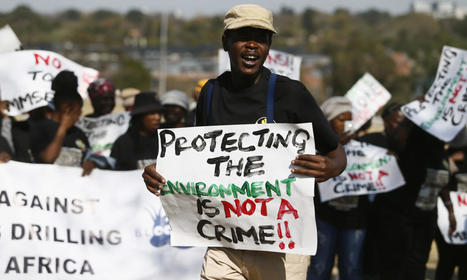
More than 500 protesters representing scores of organisations from Africa, Asia and Europe gathered at Innisfree Park in Sandton on Wednesday to voice their concerns about human rights abuses and demand change from the countries participating in the 15th BRICS Summit. 

[caption id="attachment_1818484" align="alignnone" width="720"]


brics protest© Provided by Daily Maverick

Civil society organisations, community-based organisations, climate and environmental activists protest at Innisfree Park in Sandton on 23 August 2023 during the BRICS summit. (Photo: Felix Dlangamandla)[/caption]

“We just want our voices to be heard. Some of the organisations here can’t protest in their home countries because they could get killed,” said Trevor Ngwane of the United Front, an umbrella body of community and labour groups.

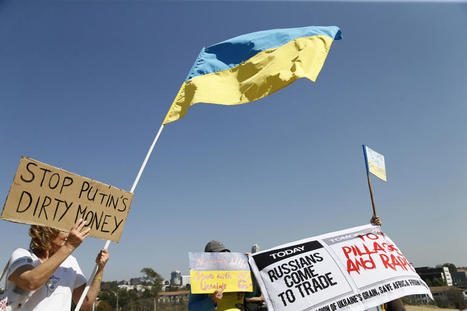
Other organisations at the protest included the Ukrainian Association of South Africa, Abahlali BaseMjondolo and Coastal Fishers Against Total Energies. Some groups were also there to highlight human rights violations taking place in Bangladesh and Kashmir.

[caption id="attachment_1818460" align="alignnone" width="720"]


brics protest© Provided by Daily Maverick

Bangladeshis protest during the BRICS Summit at Innisfree Park in Sandton on 23 August 2023. (Photo: Felix Dlangamandla)[/caption]

[caption id="attachment_1818474" align="alignnone" width="720"]


brics protest© Provided by Daily Maverick

Bangladeshis protest during the BRICS Summit at Innisfree Park in Sandton on 23 August 2023. (Photo: Felix Dlangamandla)[/caption]

[caption id="attachment_1818480" align="alignnone" width="720"]


brics protest© Provided by Daily Maverick

People from Biafra in Nigeria call for support from BRICS countries during a protest at Innisfree Park in Sandton to further their right to self-determination. (Photo: Felix Dlangamandla)[/caption]

The Ukrainian Association of South Africa’s Lesya Karpenko called on BRICS had to denounce Russia’s war in Ukraine.

“They cannot be neutral. We are here to deliver a message to BRICS leaders to stop the war. It is not possible to promote human rights, peace and stability without condemning the war crimes, military aggression and rhetoric threatening nuclear war,” Karpenko said.


Addressing the summit via video link on Wednesday, Russian President Vladimir Putin defended his war on Ukraine.

Read more in Daily Maverick: Putin uses BRICS gathering to justify Russia’s war in Ukraine

[caption id="attachment_1818475" align="alignnone" width="720"]


Protesters at the BRICS Summit struggle to keep Ukraine war in the spotlight© Provided by Daily Maverick

The Justice for Marikana campaign takes part in a protest during the BRICS Summit at Innisfree Park in Sandton on 23 August 2023. (Photo: Felix Dlangamandla)[/caption]

Ngwane criticised the decision to keep the protesters far from the venue.

“Our right to protest has been violated. Instead of protesting where the summit is happening, they have kept us at Innisfree Park – this is a dog park.

[caption id="attachment_1818454" align="alignnone" width="720"]


brics protest© Provided by Daily Maverick

Civil society organisations, community-based organisations, climate and environmental activists protest at Innisfree Park in Sandton on 23 August 2023. (Photo: Felix Dlangamandla)[/caption]

“They say they support the right to protest, that we are a democracy, but then they shove protesters away. Some people here might support the idea of BRICS, but they want to highlight issues they are struggling with,” said Ngwane.

Read more in Daily Maverick: ‘It’s all top-down’ — activists hammer BRICS on human rights and environment

“We feel for the mothers and fathers in Ukraine… we feel for the mothers and fathers in Kashmir, with what (Indian prime minister) Narendra Modi is doing to them back home. The summit can’t be seen as an opportunity just to take photos while they are killing people back home,” said Ngwane.

[caption id="attachment_1818452" align="alignnone" width="720"]


Protesters at the BRICS Summit struggle to keep Ukraine war in the spotlight© Provided by Daily Maverick

Civil society organisations, community-based organisations, climate and environmental activists protest at Innisfree Park in Sandton on 23 August 2023. (Photo: Felix Dlangamandla)[/caption]

Some of their demands include environmental justice for all, sustainable renewable energy policies and for BRICS to take responsibility for mitigating climate change.

Edwin Nefutswane from the Thembelihle Crisis Committee in Lenasia, Johannesburg, said: “We are still commemorating the fallen miners of Marikana… Today is the 15th summit of BRICS and we should assess what progress has come from these summits.

“Yes, some people are happy there is BRICS, but maybe they should look at issues like Russia possibly building nuclear weapons here. Let’s go back and conscientise our people on these things… we are a result of the decisions capitalists take in these summits,” he said.

“The youth might not be into politics, but politics is the reason we have Stage 6 load shedding… political decisions are the reason we are bribed with R350 grants. Enough is enough.” DM

No comment yet.
Scooped by KRII-KROTOASA RESEARCH-INTENSIVE INSTITUTE
August 25, 2023 4:13 AM
Scoop.it!

Minister Naledi Pandor Clarifies Brics Summit Goals, Summit Will Focus on Moving Away from Western Reliance - Briefly.co.za

Minister Naledi Pandor Clarifies Brics Summit Goals, Summit Will Focus on Moving Away from Western Reliance - Briefly.co.za | KHOEKHOE-XAM HERITAGE | Scoop.it

Updated Tuesday, August 22, 2023 at 11:17 AM by  Lebogang Mashego


The Brics Summit is expected to address global superpower influence without being anti-Western International Relations Minister Naledi Pandor explained that discussions will centre around reducing reliance on Western countries and the US dollar Some South Africans believe the top agenda at Brics is a good idea but worry about the countries leading the pack


 JOHANNESBURG - With the Brics Summit finally happening today (22 August), the Minister of International Relations, Naledi Pandor, has clarified some misinterpretations of what Brics is all about. Minister Naledi Pandor says Brics is not pushing for an anti-West agenda.


Images: Rodger Bosch & Tina Fields Source: Getty Images Brics to address global superpower rule While the Brics Summit will focus on moving away from the reliance on Western countries, the minister says it is not an anti-West agenda. According to EWN, Pandor explained this on Monday, 21 August, at the Brics business gala dinner in Midrand, North of Johannesburg.


Pandor said that talks to move away from the reliance on global superpower rule will talk centre stage at the summit. She said the Brics nations (Brazil, Russia, India, China and South Africa) should address geopolitical tensions, threats to human rights and the blatant violation of international laws. According to Bloomberg, Deputy President Paul Mashatile says the summit will also address moving away from depending on the US dollar. This means Brics countries will be looking into the implementation of a common currency.


Vladimir Putin to attend Brics virtually The summit will be attended by the respective Brics nation's leaders except for Russian President Vladimir Putin. Putin decided not to attend after the International Criminal Court (ICC) issued an arrest warrant. RECOMMENDED FOR YOU Jub Jub’s court case postponed to November, reportedly faces 13 charges as... If Putin attended the summit, South Africa would have been compelled to arrest the Russian leader since the country is part of the Roman Statute. However, Putin will still participate in the summit virtually, reports


Reuters. Mzansi weighs in on the Brics Summit CK Yang said: "A multi-polar world will be ideal if only BRICS wasn't led by two of the biggest dictatorships." Rodney Sanders said: "I just wonder whether the government believes and understands the drivel that comes out of their collective mouths." Eduardo Ermitao said: "I hope they include in the BRICS agenda, to include in this new world order, sustainable water delivery to SA citizens.

No comment yet.
Scooped by KRII-KROTOASA RESEARCH-INTENSIVE INSTITUTE
August 25, 2023 3:31 AM
Scoop.it!

BRICS deals signed ahead of summit

The BRICS summit starts today, with more than 40 heads of state expected in Johannesburg to discuss the expansion of the bloc, trade and partnerships in what is being described as a “new world order”.

The inclusion of leaders such as Brazil’s Luiz Inácio Lula da Silva, India’s Narendra Modi and the People’s Republic of China’s Xi Jinping would have been significant in itself, but President Cyril Ramaphosa has also extended invites to African leaders and the Global South.


The Russian Federation will be led by Foreign Minister Sergey Lavrov, while President Vladimir Putin will join the summit via video link.


Putin and Ramaphosa reached a formal agreement for the former not to attend after the International Criminal Court (ICC), of which South Africa is a full member, issued a warrant of arrest against Putin for alleged war crimes related to the war in Ukraine.

By yesterday, the SAPS and the Johannesburg Metro Police Department had cordoned off parts of Sandton’s business district in anticipation of the delegates.


The theme of “BRICS and Africa: Partnership for Mutually Accelerated Growth, Sustainable Development and Inclusive Multilateralism” underpins the bloc’s aims including peaceful resolution of conflict, trade agreements that benefit partners, the development of economies and to commit to the UN Sustainable Development Goals.


One of the issues to be discussed is the expansion of the bloc, with 22 countries, including Türkiye, Indonesia, Egypt and Argentina, having applied to join BRICS. Another issue on the table is how BRICS countries can trade in local currencies.


Professor Anil Sooklal, Ambassador-at-Large for Asia and BRICS and South Africa's BRICS Sherpa, said the summit would run concurrently with the BRICS business forum, which not only provided an opportunity for the bloc’s countries and the private sector to gather, but was also an opportunity for the African sector and private sector from the Global South to engage.


“A large number of countries have converged on South Africa, and the business sector will look at deepening economic interaction, trade opportunities and partnerships.”


Sooklal said the importance of the country chairing the summit was that it was also important for the continent.

“The focus will be on the African Continental Free Trade Area agreement and the opportunity for mutual benefit between BRICS countries and Africa.”


South Africa’s overall trade with its BRICS partners has increased by an average growth of 10% between 2017 and 2021, and the bloc accounted for 21% of South Africa’s global trade last year.

Ebrahim Patel, the Minister of Trade and Industry, speaking at the BRICS business forum in a discussion on the manufacturing sector at Gallagher Convention Centre yesterday, said there was a shift driven by the emergence of new technologies and innovations.


South Africa signed two memorandums of understanding with China at the event to help fast track industrialisation.

One agreement was concluded by the Department of Trade, Industry and Competition (DTIC) with the China Africa Development Fund, making R10 billion available to accelerate the industrialisation of South Africa’s economy, specifically the manufacturing sector.


The other was between the Industrial Development Corporation (IDC) and the Bank of China, which was described as a mutually beneficial agreement for increased trade.

Patel said the BRICS gathering provided an opportunity for reflection and the sharing of ideas, partnerships and opportunities.

“Member countries play a key role in harnessing green industrialisation and digital industrialisation to transform our economics, our societies and the lives of our citizens.


“South Africa is ready to partner with all of the BRICS countries on the development of new energy vehicles and sharing of technologies, raw materials, and of capital and market experience in a mutually beneficial partnership.”

Patel said he wanted to encourage BRICS members to enter into partnerships and joint ventures in new technologies and in green industrialisation.


“Increased investment can be boosted by encouraging your companies to open manufacturing operations in South Africa and on the African continent.”

 
No comment yet.
Scooped by KRII-KROTOASA RESEARCH-INTENSIVE INSTITUTE
August 25, 2023 3:22 AM
Scoop.it!

LIVE: The opening of the BRICS Summit

The 15th BRICS Summit is set to take place in Sandton, Johannesburg from 22 to 24 August 2023.
No comment yet.
Scooped by KRII-KROTOASA RESEARCH-INTENSIVE INSTITUTE
August 25, 2023 3:05 AM
Scoop.it!

Historical' BRICS summit gets underway in Sandton, minus Putin

Clement Manyathela speaks to Russian TV correspondent, Maxim Al Turi.

 
BRICS / Wikimedia Commons: Пресс-служба Президента Российской Федерации© Provided by CapeTalk

RELATED:Calls for multi-polar world order not an anti-West agenda - Pandor


The much anticipated gathering of BRICS leaders has begun, with South Africa playing host in Sandton.


Along with the heads of state of Brazil, India, China and South Africa, dozens more heads of state will attend the three-day summit.


Notable by his absence, however, is Russian President Vladimir Putin who will join the meeting virtually amid growing pressure for his arrest for alleged war crimes linked to the war in Ukraine.

Al Turi says it's a significant meeting.


It's a historical summit because of the expansion that is being discussed, this is a very very important summit and it's good that it's being held in South Africa.

Maxim Al Turi, Russian TV correspondent

Russia has consistently stood for strengthening its position on the African continent in a multi-polar world order.

Maxim Al Turi, Russian TV correspondent


Russia is one of the founding members of the BRICS bloc.

Last month, government made the decision to arrest Putin, should the Russian President come to South Africa, but Al Turi denies the move has soured the relationship between South Africa and Moscow.


It doesn't affect at all the relationship between Moscow and South Africa. It's a very good relationship.

Maxim Al Turi, Russian TV correspondent

Russia is looking at this summit as a very important summit which will play a key role in the future of this organisation.

Maxim Al Turi, Russian TV correspondent

Al Turi says BRICS is becoming a 'symbol of true pillar multi-polarity, which can strengthen the relationships of many countries globally'.


On Monday night, International Relations Minister Naledi Pandor said that calls for a multi-polar world order should not be misunderstood for an anti-West agenda.


Pandor addressed hundreds of delegates at the BRICS business gala dinner in Midrand on Monday evening.

Meanwhile, on the eve of the summit, President Ramaphosa addressed the nation, talking up the trade, diplomatic powers and expansion of BRICS.

No comment yet.
Scooped by KRII-KROTOASA RESEARCH-INTENSIVE INSTITUTE
August 25, 2023 8:09 PM
Scoop.it!

BRICS Summit 2023 LIVE: Brazil, South Africa, India, Russia and China Agree to Expand BRICS

BRICS Summit 2023 LIVE: Brazil, South Africa, India, Russia and China Agree to Expand BRICS

BRICS heads of state arrive for Photo Op at summit venue. South Africa's Ramaphosa, Brazil's Lula, India's Modi and China's Jinping will attend summit in person. Russian President Vladimir Putin will address the summit virtually, while his foreign minister, Sergei Lavrov, attends it in his stead.

--

BRICS | BRICS Summit 2023 | BRICS Summit 2023 LIVE | South Africa | Cyril Ramaphosa | Firstpost | World News | Latest News | Global News | International News

#brics #live #xijinping #china #bricssummit #cyrilramaphosa #southafrica #wangyi #firstpost #worldnews #latestnews #globalnews #internationalnews #trendingnews

Firstpost is an Indian news and media website. Get all the incisive opinions, in-depth analyses and other visual stories that matter to you and the world right here on this channel.

Subscribe to Firstpost channel and press the bell icon to get notified when we go live.
https://www.youtube.com/@Firstpost

Follow Firstpost on Instagram:
https://www.instagram.com/firstpost/

Follow Firstpost on Facebook:
https://www.facebook.com/firstpostin/

Follow Firstpost on Twitter:
https://twitter.com/firstpost
No comment yet.
Scooped by KRII-KROTOASA RESEARCH-INTENSIVE INSTITUTE
August 25, 2023 8:08 PM
Scoop.it!

Ramaphosa gives feedback on outcomes of 2023 BRICS Summit

Thursday is the final day of the 2023 BRICS Summit. #dstv403
No comment yet.
Scooped by KRII-KROTOASA RESEARCH-INTENSIVE INSTITUTE
August 25, 2023 7:55 PM
Scoop.it!

BRICS New Development Bank: Five New Sovereign Investors Expected

BRICS New Development Bank: Five New Sovereign Investors Expected | KHOEKHOE-XAM HERITAGE | Scoop.it

New members expected to include Asian nations as BRICS policy bank expands 

The BRICS New Development Bank (NDB) is currently considering applications for membership from nearly 15 countries, head of the multinational lender Dilma Rousseff said yesterday (August 22).

Rousseff, a former Brazilian president who currently heads the Shanghai-based lender, said it’s likely to accept and approve the admission of four or five new members, but declined to identify the countries. According to her, the NDB currently sees diversification of its geographic representation as one of its top priorities.

“We expect to have lent between US$8 billion and US$10 billion this year” she said, “Our aim is to reach about 30% of everything we lend in local currencies.”


She added that the NDB is planning to start lending in the South African and Brazilian currencies in an attempt to further reduce reliance on the US dollar, as the lender actively promotes a more multipolar international financial system. The bank ceased structuring loans in USD and Euros in 2021.


The NDB has already issued debt in Rand for lending in South Africa and will do “the same thing in Brazil with the Real. We’re going to try to either do a currency swap or issue debt and also in Rupees” she said, adding that the bank already lends in Renminbi.

The BRICS group comprising Brazil, Russia, India, China, and South Africa launched the NDB back in 2014 with the aim of providing funding for infrastructure and sustainable development projects. The bank formally opened for business in 2015, and Bangladesh, the United Arab Emirates, Egypt, and Uruguay are all now NBD shareholders and contributors.


Chris Devonshire-Ellis, of Dezan Shira & Associates states that “Likely new investors into the NBD could include Saudi Arabia and the UAE, which would give the NDB access to the Middle East region. Indonesia is a likely candidate from ASEAN, while Kazakhstan would give a Central Asian base. Argentina needs an alternative to non-Western financial support and would be another key asset in Latin America; and has been promised a succession vote at the current summit. Algeria and Thailand are also both potential candidates.”


No comment yet.
Scooped by KRII-KROTOASA RESEARCH-INTENSIVE INSTITUTE
August 25, 2023 7:43 PM
Scoop.it!

BRICS New Development Bank Issues First South African Rand Bonds

BRICS New Development Bank Issues First South African Rand Bonds | KHOEKHOE-XAM HERITAGE | Scoop.it


The BRICS New Development Bank (NDB) completed the auction for its first South African rand bonds on Tuesday (August 15) as it boosts its local currency fundraising and lending.


The NDB’s two bonds, a 1 billion Rand (US$52.3 million) five-year note and a 500 million Rand three-year note, attracted 2.67 billion rand (US$136 million) of bids in total, according to auction results shared by two of the investors, according to Reuters. The bond sale was arranged by Standard Bank and Absa Bank.

Enoch Godongwana, South Africa’s finance minister said that the NDB, which was founded to give the BRICS members – Brazil, Russia, India, China and South Africa – more control of development financing, was not doing enough local currency lending.


NDB’s Chief Financial Officer Leslie Maasdorp stated that the bank aims to increase local currency lending, most of which has so far been in the Chinese Yuan, from the current 22%, to 30% by 2026, but that there were limits to de-dollarisation.


The South African bond market has struggled in recent years to attract new issuers to match growing demand from domestic investors looking for quality credit assets. NDB’s three-year rand bond was priced at a floating rate of 95 basis points (bps) above the three-month Johannesburg Interbank Average Rate (Jibar), while the five year was priced at Jibar +105 bps.


The most recent comparable South African government bonds were a 4.5-year bond priced at Jibar +90 bps and a seven year priced at Jibar +120 bps.


Raphi Rootshtain, a portfolio manager at South Africa’s listed Sasfin Wealth, commented “It is interesting to note that most of the underlying lending activities in South Africa are to State Owned Companies (SOEs). Effectively the NDB will become the new proxy funding vehicle for SOEs which should come with additional risk.”


Kumeshen Naidoo, head of debt capital markets at Absa Bank said that “The sale had 94% of bids being within or lower than price guidance, while the issuance rates represented the tightest spreads achieved by a non-government issuer in 2023.”

The annual BRICS summit will be held in Johannesburg on August 22.

No comment yet.
Scooped by KRII-KROTOASA RESEARCH-INTENSIVE INSTITUTE
August 25, 2023 7:35 PM
Scoop.it!

India Wants Strict New BRICS Membership Entry Rules

India Wants Strict New BRICS Membership Entry Rules | KHOEKHOE-XAM HERITAGE | Scoop.it


India is insisting on strict rules for the admission of new members into the BRICS group of nations, while Brazil is also opposed to proposals from China to rapidly expand the group. The debate has arisen during preparatory talks for the BRICS summit of leaders, due to take place in Johannesburg in August. India and Brazil have also raised issues regarding the potential accession of Indonesia and Saudi Arabia.


New Delhi is apparently insisting that strict rules must be in place on how and when potential members can join, with about 40 countries indicating eagerness to join having been noted, including 22 official requests. India has proposed that the BRICS nations should seek to invite emerging economies and countries with democratic aspirations such as Argentina and Nigeria, rather than Saudi Arabia, which it views as more autocratic. It also views Riyadh’s involvement as potentially diminishing India’s influence within the Persian Gulf.


Brazil has meanwhile proposed its own vision for the expansion of the bloc which involves creating “observer” and “partner country” categories, before promoting applicants as full members, and is likely to support Indonesia to begin the process. The ‘observer’ and ‘partner’ status is similar to that used within the Shanghai Cooperation Organisation and could be a useful compromise.

In the run-up to the Johannesburg summit, countries such as Saudi Arabia, Iran, Egypt, Bangladesh, Algeria, Argentina, and Ethiopia have all officially applied for membership, while others, including Indonesia, have been invited to attend various meetings. The bloc was hoping to introduce a framework for admitting new members before the August gathering.


Reports had earlier emerged on India’s supposed concerns over BRICS expansion ahead of the leaders’ summit. New Delhi publicly commented on its position during the BRICS foreign ministers’ meeting in Cape Town last month. India’s Foreign Minister, Subrahmanyam Jaishankar, stated then that “This is still a work in progress. We are approaching this with positive intent with an open mind.”

South Africa’s Foreign Minister Naledi Pandor said at the Russia-Africa Summit in St. Petersburg, that BRICS foreign ministers have “done their work” and have decided on a “clear set of guiding principles which we think will assist our leaders as they make a decision.” Whatever the issue, the BRICS format following this August’s summit looks likely to be somewhat different from when it begins.


Silk Road Briefing is written and produced by Dezan Shira & Associates. As global geopolitics change the way supply chains are developing, we provide regional analysis of the emerging trends and where opportunities for foreign investors are. Our firm provides market research and intelligence for issues affecting all the Belt and Road Initiative countries with assistance from our wide business network of over 100 regional offices. To learn more about how we can help your business evaluate the changing dynamics, email us at silkroad@dezshira.com or visit www.dezshira.com  
 
No comment yet.
Scooped by KRII-KROTOASA RESEARCH-INTENSIVE INSTITUTE
August 25, 2023 4:34 AM
Scoop.it!

Protesters at BRICS

Protesters at BRICS | KHOEKHOE-XAM HERITAGE | Scoop.it
No comment yet.
Scooped by KRII-KROTOASA RESEARCH-INTENSIVE INSTITUTE
August 25, 2023 4:33 AM
Scoop.it!

PROTESTERS AT BRICS

PROTESTERS AT BRICS | KHOEKHOE-XAM HERITAGE | Scoop.it
No comment yet.
Scooped by KRII-KROTOASA RESEARCH-INTENSIVE INSTITUTE
August 25, 2023 4:29 AM
Scoop.it!

Protesters at the BRICS Summit struggle to keep Ukraine war in the spotlight

Protesters at the BRICS Summit struggle to keep Ukraine war in the spotlight | KHOEKHOE-XAM HERITAGE | Scoop.it
No comment yet.
Scooped by KRII-KROTOASA RESEARCH-INTENSIVE INSTITUTE
August 25, 2023 4:20 AM
Scoop.it!

PM Modi meets Iranian Prez, several African leaders on sidelines of BRICS summit - Daijiworld.com

PM Modi meets Iranian Prez, several African leaders on sidelines of BRICS summit - Daijiworld.com | KHOEKHOE-XAM HERITAGE | Scoop.it

New Delhi, Aug 25 (IANS): Prime Minister Narendra Modi met Iranian President Ebrahim Raisi on Thursday, on the sidelines of the BRICS summit in Johannesburg.

The two leaders discussed ways to strengthen bilateral cooperation in various fields, including trade and investment, connectivity, energy and counter-terrorism.


Both sides agreed to fast-track infrastructure cooperation, including the Chabahar project. The leaders also exchanged views on regional developments, including Afghanistan.


Prime Minister Modi congratulated President Raisi on joining the BRICS 'family'.

President Raisi congratulated the Prime Minister on the success of Chandrayaan-3 mission and thanked him for India's support for Iran's BRICS membership.


Modi also met a slew of leaders from African nations on the sidelines of the conference.

He met Filipe Jacinto Nyusi, the President of Mozambique.

Both the leaders held productive discussions on ways to further the bilateral ties, including in the areas of parliamentary contacts, defence, counter-terrorism, energy, mining, health, trade and investment, capacity building, maritime cooperation and people-to-people relations.


Modi also met Macky Sall, the President of Senegal, on the sidelines of the BRICS summit.

Both leaders held fruitful discussions on ways to deepen their bilateral partnership across various sectors, including trade and investment, defence and security, energy, mining, agriculture, pharmaceuticals, railways, capacity building, culture and people-to-people ties.


The Prime Minister also held a meeting with Abiy Ahmed Ali, the Prime Minister of Ethiopia.

They held discussions on key areas, including development partnership and capacity building, trade and investment, defence cooperation, ICT, agriculture, skilling of youth and people-to-people linkages. They also exchanged views on important regional and global issues.


Modi congratulated Ahmed on Ethiopia's membership of BRICS.

He appreciated Prime Minster Abiy Ahmed for his participation in the Voice of Global South Summit.


No comment yet.
Scooped by KRII-KROTOASA RESEARCH-INTENSIVE INSTITUTE
August 25, 2023 4:05 AM
Scoop.it!

2023 BRICS Summit | Discussion | China backs plans to expand bloc

The 15th Brics summit enters its second day and high on the agenda will be the expansion of the bloc. At least 20 countries have formally applied to join. Political analyst, Patrick Bond, says things have not been going well for the grouping. He speaks to #eNCA Courtesy #DStv403
No comment yet.
Scooped by KRII-KROTOASA RESEARCH-INTENSIVE INSTITUTE
August 25, 2023 3:28 AM
Scoop.it!

BRICS summit: 'Club governance' means countries won't criticise each other

BRICS summit: 'Club governance' means countries won't criticise each other | KHOEKHOE-XAM HERITAGE | Scoop.it

President Cyril Ramaphosa addresses the 15th BRICS Summit in Sandton, Johannesburg on 22 August 2023. Picture: Jacques Nelles/Eyewitness News


The much-anticipated 15th BRICS summit opened officially on Tuesday evening, with President Cyril Ramaphosa saying it is expected to be the most significant in the group's history.

The five-member group of nations - Brazil, Russia, India, China and South Africa - is holding the three-day event in Sandton, Johannesburg.


RELATED: 'Historical' BRICS summit gets underway in Sandton, minus Putin


As the summit attracts global interest, Professor Malte Brosig (Dept. of International Relations at Wits University), posed the challenge that we should not "get BRICS wrong".


Bruce Whitfield asks Prof. Brosig about BRICS and its significance.

He notes that the enormous media attention the summit is attracting is quite different from the last one held five years ago in 2018.

What is BRICS at this point - an alliance, a club? Whitfield ponders.

The term 'club' is actually quite fitting. I'm using the word 'grouping', but it's not an organisation. An organisation or an alliance would be something where you have a headquarters, you have a foundational treaty, you have sub-bodies and voting, decision making, implementation of policy programmes.... This you don't necessarily have with BRICS, so it's more like a looser foreign policy grouping - but for a reason.

Prof. Malte Brosig, Dept of International Relations - Wits University

It actually makes sense to have a loose grouping and not so much of a strategic alliance because some of the BRICS countries also are in competition with one another (think of China and India). The BRICS grouping, which is not so much focused on hard implementation, makes sense for these countries.

Prof. Malte Brosig, Dept of International Relations - Wits University
 

This sort of "club governance" also has the advantage that member countries do not criticise one another, Professor Brosig points out.

You know from the start if you attend a BRICS summit that it is a friendly environment, very different for example from the United Nations or the G20 where there would be more open confrontation or criticism he says.

We have to understand that many of these countries also have domestic issues, and that's a kind of a safe environment where heads of state actually meet, and that makes it attractive too.

Prof. Malte Brosig, Dept of International Relations - Wits University

Professor Brosig agrees that the future role of an expanding BRICS is a long-term game.


RELATED: Countries clamouring to join 5-member Brics - 19 apply ahead of SA summit

Let's say on the economic front BRICS countries - independent of how strong the individual economic growth is, it is a matter of fact that they make up almost a quarter of the world GDP and the dollar is in decline in terms of the percentage of trade that's cleared in US dollars.

Prof. Malte Brosig, Dept of International Relations - Wits University

BRICS can certainly accelerate that process of gradual de-dollarisation and less hegemonic position of the West, but this will not happen overnight so it is definitely a long game. It'll also be interesting to see how the group actually develops further in terms of membership.

Prof. Malte Brosig, Dept of International Relations - Wits University

Scroll up to listen to Prof. Brosig's analysis


No comment yet.
Scooped by KRII-KROTOASA RESEARCH-INTENSIVE INSTITUTE
August 25, 2023 3:14 AM
Scoop.it!

BRICS Summit | PM Modi meets top scientists in South Africa - The Hindu

BRICS Summit | PM Modi meets top scientists in South Africa - The Hindu | KHOEKHOE-XAM HERITAGE | Scoop.it

Modi held engaging discussions with South African geneticist & CEO of the Academy of Science of South Africa, Dr. Himla Soodyall


Prime Minister Narendra Modi met rocket scientist and CEO of Galactic Energy Ventures, Siyabulela Xuza in South Africa. Photo: Twitter/@narendramodi

Prime Minister Narendra Modi met a noted geneticist and a rocket scientist in South Africa on Thursday and exchanged views on disease screening and the future of energy.


Modi is in South Africa on a three-day visit. He has attended the 15th BRICS Summit and held bilateral meetings with several world leaders to further cement India's relations with those countries.

Modi held engaging discussions with South African geneticist & CEO of the Academy of Science of South Africa, Dr. Himla Soodyall, Spokesperson of the Ministry of External Affairs Arindam Bagchi posted on X.


They exchanged views on the domain of human genetic lines and their application in disease screening. The Prime Minister invited Soodyall to collaborate with Indian institutes in the field of genetics, Bagchi said.


"Had a very interesting conversation with Dr. Himla Soodyall, a leading geneticist of South Africa. She talked about her work and her passion for science and innovation," Modi posted on X.

Modi also had an engrossing exchange of perspectives with rocket scientist and CEO of Galactic Energy Ventures, Siyabulela Xuza.


"During our interaction, Siyabulela Xuza spoke at length about his passion for sustainable development and clean energy, especially for the Global South. He also spoke about his own innovations and passion towards science and space," he wrote on X.


Xuza congratulated Modi on the success of India's Moon mission Chandrayaan-3. India's Chandrayaan-3 on Wednesday became the first space mission to make a soft landing near the south pole of the Moon.

"Mr. Xuza credited Digital India for his success and highlighted his ongoing projects in India. Discussions also covered matters related to the future of energy and finding sustainable solutions," Bagchi said.


Modi arrived in South Africa on Tuesday for the first in-person BRICS Summit after three consecutive years of virtual meetings because of the Covid-19 pandemic.

 
No comment yet.