Your new post is loading...
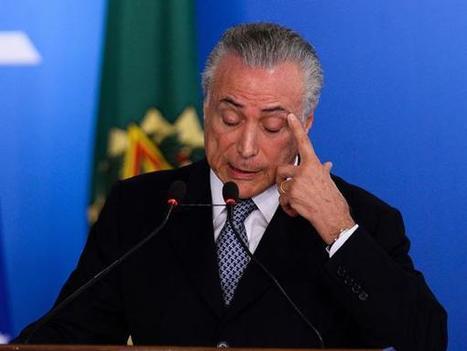
On October 15-16, in Goa, India, President Michel Temer will take part in the 8th Summit of the BRICS countries – the association formed by Brazil, Russia, India, China and South Africa. The coordination of BRICS has been guided by a pragmatic approach which seeks to identify areas of cooperation that have the potential for joint initiatives producing tangible results. To this end, BRICS has been consolidating an agenda of cooperation in the following fields: financial affairs, trade, agriculture, health, science and technology, education, and fight against terrorism, drug trafficking and corruption. In addition to the Goa Declaration, expected outcomes include the signing of memoranda of understanding between customs officials and diplomatic academies of the BRICS countries on environmental cooperation and agricultural research. In 2015, the BRICS countries accounted for a nominal gross domestic product (GDP) of US$ 16.92 trillion, or 23.1% of the gross world product (GWP). BRICS share in global exports have more than doubled since 2001, when the group accounted for 8.1% of world exports. In 2015, the share increased to 19.1%. Between 2006 and 2015, trade among bloc members increased by 163%, going from US$ 93 billion to US$ 244 billion. In the same period, Brazilian exports to other BRICS countries grew by 202%, from US$ 14.25 billion to US$ 45.05 billion. Imports grew by 249%, going from US$ 10.84 billion to US$ 37.87 billion. In 2015, Brazil reported a trade surplus of US$ 5.1 billion in its trade with other BRICS countries. During the Summit, a meeting with the BRICS Business Council and a briefing by the president of the New Development Bank, Indian-born K.V. Kamath, are scheduled to be held. On the 16th, the leaders of the five countries will meet with their counterparts of the Bay of Bengal Initiative for Multi-Sectorial Technical and Economic Cooperation (BIMSTEC) member countries - Banglasedh, Bhutan, Myanmar, Nepal, Sri Lanka and Thailand. Cooperation among the BRICS countries reached a new level with the creation of the New Bank of Development (NDB) and the Contingent Reserve Arrangement, whose respective establishment treaties were singed in Fortaleza in 2014. The NDB aims at funding infrastructure and sustainable development projects. In April of 2015, the Bank approved its first projects, all in the renewable energy field. Brazil will receive a US$ 300 million loan (via the Brazilian Development Bank) for projects on wind energy. The Contingent Reserve Arrangement aims to provide support in response to short-term balance of payments pressures the grouping's member countries may face, therefore, complementing the global financial safety network. The initial total resources of the mechanism will be US$ 100 billion (with an individual commitment of US$ 18 billion from Brazil).
BEIJING: Brazil's interim President Michel Temer's major policy shift has posed a test to the capability of BRICS as the new government has relegated cooperation with the five-nation bloc to "secondary place", Chinese state media said today. Outlining China's thinking towards the political crisis leading to the ouster of President Dilma Roussef, who was suspended from office pending her impeachment trial, a Xinhua news agency's commentary quoted analysts as saying that Brazil's int .. Read more at: http://economictimes.indiatimes.com/articleshow/52723979.cms?utm_source=contentofinterest&utm_medium=text&utm_campaign=cppst
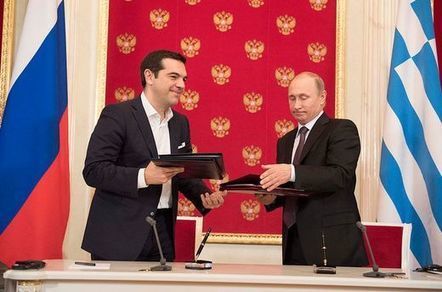
Russia has invited Greece to become the sixth member of the BRICS New Development Bank (NDB) is a bit obscured by U.S. Secretary of State Kerry's visit with Lavrov in Sochi. However, the $100 billion NDB tasked with competing for dominance in...
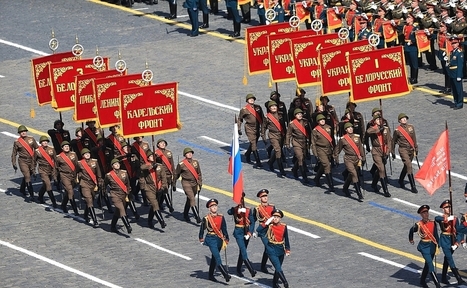
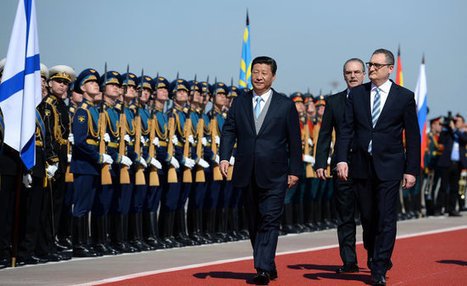
This was the first time Indian and Chinese soldiers participated in a Russian Victory Day parade.
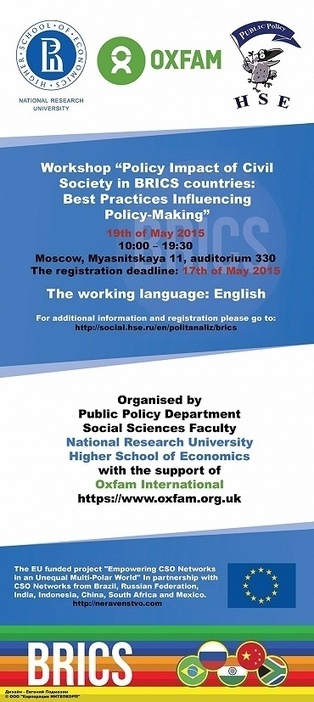
The Workshop “Policy Impact of Civil Society in BRICS countries: Best Practices Influencing Policy-Making”The Workshop “Policy Impact of Civil Society in BRICS countries: Best Practices Influencing Policy-Making”, is held by the Public Policy Department of the Social Sciences Faculty, National Research University Higher School of Economics (NRU HSE) with the support of international organization Oxfam under the EU funded project “Empowering CSO Networks in an Unequal Multi-Polar World” In partnership with CSO Networks from Brazil, Russian Federation, India, Indonesia, China, South Africa and Mexico. The subject of the Workshop is of special importance for Russia because of the forthcoming VII Summit of BRICS and SCO Summit in June, 2015 in Russian Ufa and because of the complicated international politics and economics context for Russian Federation. The goals of the Workshop include:
- developing analytical skills of young researchers and representatives of the civil society; - strengthening their ability to identify the most urgent policy issues of the state and civil society in BRICS countries;
- proposing potential solutions including optimal forms and possible scenarios of more efficient dialogue between Non-Governmental and Governmental actors of public policy-making;
- and presenting the means of increasing the influence of civil society on the state and the political leaders in BRICS countries.
The best practices analysis, and dissemination of positive experience are also among the priorities of the Workshop.
The Program of the Workshop includes 3 parts: the Plenary Session, the Group-work Sessions, and the Debates: - During the Plenary Session the invited experts present the materials about the civil society activities in the BRICS states. The reports include the review of the key policy issues specific to the particular BRICS countries, analysis of the policy-making process, and evaluation of the role and instruments used by the CS to initiate changes in public policy.
- During the Group-work Sessions the participants divide into 5 groups. They initiate the group-work, get acquainted with the key social policy issues in a BRICS country, use the CIVICUS methodology or other alternatives to evaluate the development of civil society, analyze the format and contents of interaction between Non-Governmental and Governmental actors of public policy-making; discuss the practical cases and best practices of such interaction; identify and analyze the prospects of technologies that allow CS to have a more significant impact on policy-making in a particular country; evaluate the effectiveness of extended pressure and citizen control over the government either from within government system or from outside of it.
- The Debates conclude the work and unite the participants again to present the most exemplary public policy cases together with the recommendations for improving the civil society – state dialogue and widening civil society participation in the public policy-making process. After the group-work sessions each group delegates representatives to the two debate teams. The first one is to prove that technologies allowing CS to have stronger impact on policy-making are more efficient when incorporated into government system. The second – that the efficiency of such tools is greater if the emphasis is placed on the external oversight through extended pressure and citizen control over the government.
The target audience includes academic staff (professors and researchers), Russian and foreign students of NRU HSE and other universities, experts and representatives of NGOs, academic, and analytical communities.
Date, time, and location
The date: 19th of May 2015
The time: 10:00 – 19:30
The place: auditorium 330, Myasnitskaya 11, Moscow
The working language: English
Registration
The registration is mandatory. The deadline is 17th of May 2015.
To register please follow the link.
Contact person:
Sergey Parkhomenko, associate professor, Public Policy Department, SSF, NRU HSE
E-mail: policy@hse.ru
ATTENTION! To avoid losses of correspondence please use the title “BRICS” The Workshop Materials:
The Program of the Workshop and other materials will be posted here later: Preliminary program 240415 (PDF, 46 Kb)
07May 2015
President of India: We are looking forward to the outcomes of Russia’s BRICS Presidency
Print
Share
Russia-India bilateral relations cover almost all areas of human activity, said Indian President Shri Pranab Mukherjee in an interview with TASS news agency on the eve of his visit to the Russian Federation.
"Russia was the first country with which India concluded a Declaration on Strategic Partnership. Signing the declaration in October 2000, the countries thereby recognised a significant strengthening of our multi-faceted relations. Within the decade that followed, our relationship evolved into a special and privileged strategic partnership," - the Indian President said.
Shri Pranab Mukherjee also said that in recent years Russia and India have made substantial progress in terms of cooperation in the defence industry and nuclear energy. "At the same time, there is still considerable untapped potential for the further strengthening of our partnership. At the most recent summit, we identified initiatives to take our economic relations to a significantly higher level," the President pointed out.
He went on to say that India's relationship with Russia covers a wide range of issues, including cooperation in multilateral forums and consultations on issues of global security and regional development. "We share similar perspectives on all these matters, including the growing threat of terrorism in the region. We work together within the G20 and BRICS to promote our shared interests, and this year, are looking forward to the outcomes of Russia's Presidency in the BRICS," Shri Pranab Mukherjee said.
The President also noted Russia's decisive contribution to the victory over Nazism and fascism. "I visited Moscow for the commemoration of the 50th anniversary of Victory in 1995, and I remember the solemn fervour of the event. It will be an honour to be part of the commemoration of the 70th Victory anniversary, which will be a recognition of Russia's monumental contribution to the victory over Nazism and fascism. I am very happy that an Indian military contingent will be part of the Victory Day parade for the very first time. The commemoration also reminds us of the need for all countries to actively promote peace for the common good of mankind, and to never forget the lessons of the war," he noted.
24April 2015
State Duma ratifies Contingent Reserve Arrangement Treaty
On 24 April 2015, the State Duma of the Russian Federal Assembly ratified the BRICS Contingent Reserve Arrangement Treaty.
Under this document, if national financial systems encounter dollar liquidity problems the central banks of the BRICS countries will activate the mechanism of supporting their partner by transferring to it financial resources in US dollars on a fixed-term, cost-reimbursable and refundable basis. The concrete parameters of such operations will be established in a special agreement between the central banks.
The Central Bank will be vested with the powers to fulfill Russia's obligations arising from the treaty. According to the financial and economic feasibility study, the implementation of the treaty will not require additional budgetary spending, as all spending will be made from the Bank of Russia's international reserves and other resources as part of its current operations.
06May 2015
Moscow to host discussion on responding to infectious diseases in BRICS countries
Print
Share
On 23 and 24 June, Moscow will host an international conference, "Common threats - joint actions. The response of the BRICS countries to dangerous infectious diseases." The event will be attended by representatives of relevant agencies responsible for sanitary and epidemiological wellbeing and research organisations from BRICS countries, as well as from a number of international bodies. The meeting is being organised by the Russian Federal Service for Surveillance on Consumer Rights Protection and Human Wellbeing (Rospotrebnadzor).
The conference is expected to include an expert discussion of immediate responses to infections threatening people's health and affecting economies and development. The participants will be able to compare notes and discuss pressing issues such as BRICS countries' contribution to fighting Ebola; compliance with the International Medical Sanitary Rules; prospects for cooperation in preventing and combating polio, flu, malaria, HIV/AIDS and other infections; and developing vaccines and diagnostic products.
Based on the discussion, Russia intends to propose to its BRICS partners to draft and approve at a high political level a document reflecting BRICS' role, goals, objectives and contribution to international efforts to strengthen global health security through reducing the threats of dangerous infectious diseases.
On 19 May, Moscow will host the seminar "Civil society in cooperation with the government in the BRICS countries: Comparative analysis of best practices." The event will be attended by representatives from civic associations and the academic and expert communities.
The seminar aims to generate proposals for improving the influence of civil society over the creation of public policy in the BRICS countries.
The event will be organised by the Public Policy Department of the Social Sciences Faculty at the National Research University - Higher School of Economics with support from the Oxfam international independent organisation. The seminar will be held as part of the project "Strengthening the capacity of civil society to combat inequality in the BRICS countries" carried out in cooperation with civil society representatives from seven countries, including Brazil, Russia, India, China, South Africa, Indonesia, and Mexico.
To participate, register online before 17 May 2015.
On 8 May 2015, Russian Labour and Social Security Minister Maxim Topilin met with Chinese Human Resources and Social Security Minister Yin Weimin during the course of Russian-Chinese talks in Moscow.
The ministers discussed issues related to the economic development of both counties, the situation in the labour market and activities in the employment sphere under Russia's current BRICS Presidency and China's G20 Presidency in 2016.
Mr Topilin proposed creating a professional training centre in Russia, China, or other partner countries.
The ministers agreed to discuss the initiative in detail at the first BRICS Labour Ministers Meeting.
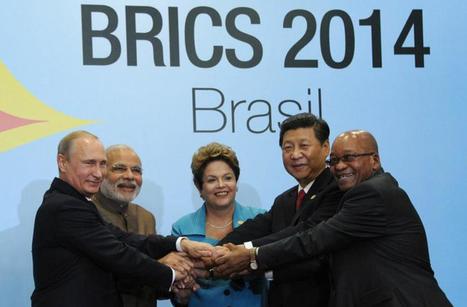
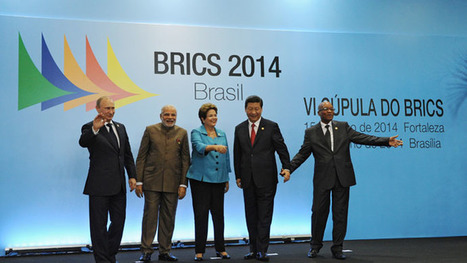
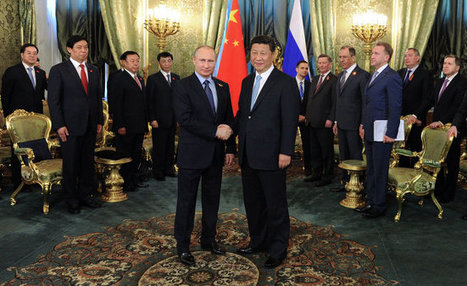
President of the People's Republic of China Xi Jinping, President of South Africa Jacob Zuma and President of India Shri Pranab Mukherjee have arrived in Moscow to attend the celebrations of the 70th anniversary of Victory over Nazism in World War II. Multimedia Heads of BRICS countries arrive in Moscow to attend the celebration marking the 70th anniversary of victory over Nazism in World War II
Agreement on the New Development Bank The Governments of the Federative Republic of Brazil, the Russian Federation, the Republic of India, the People’s Republic of China and the Republic of South Africa, collectively the BRICS countries, RECALLING the decision taken in the fourth BRICS Summit in New Delhi in 2012 and subsequently announced in the fifth BRICS Summit in Durban in 2013 to establish a development bank; RECOGNIZING the work undertaken by the respective finance ministries; CONVINCED that the establishment of such a Bank would reflect the close relations among the BRICS countries, while providing a powerful instrument for increasing their economic cooperation; MINDFUL of a context where emerging market economies and developing countries continue to face significant financing constraints to address infrastructure gaps and sustainable development needs; Have agreed on the establishment of the New Development Bank (NDB), hereinafter referred to as the Bank, which shall operate in accordance with the provisions of the annexed Articles of Agreement, that constitute an integral part of this Agreement. Article 1 Purpose and Functions The Bank shall mobilize resources for infrastructure and sustainable development projects in BRICS and other emerging economies and developing countries, complementing the existing efforts of multilateral and regional financial institutions for global growth and development. To fulfill its purpose, the Bank shall support public or private projects through loans, guarantees, equity participation and other financial instruments. It shall also cooperate with international organizations and other financial entities, and provide technical assistance for projects to be supported by the Bank. Article 2 Membership, Voting, Capital and Shares The founding members of the Bank are the Federative Republic of Brazil, the Russian Federation, the Republic of India, the People’s Republic of China and the Republic of South Africa. The membership shall be open to members of the United Nations, in accordance with the provisions of the Articles of Agreement of the New Development Bank. It shall be open to borrowing and non-borrowing members. The New Development Bank shall have an initial subscribed capital of US$ 50 billion and an initial authorized capital of US$ 100 billion. The initial subscribed capital shall be equally distributed amongst the founding members. The voting power of each member shall equal its subscribed shares in the capital stock of the Bank. Article 3 Headquarters, Organization and Management The Bank will have its Headquarters in Shanghai. The Bank shall have a Board of Governors, a Board of Directors, a President and Vice-Presidents. The President of the Bank shall be elected from one of the founding members on a rotational basis, and there shall be at least one Vice President from each of the other founding members. The operations of the Bank shall be conducted in accordance with sound banking principles. Article 4 Entry into force This Agreement with its Annex shall enter into force when the instruments of acceptance, ratification or approval have been deposited by all BRICS countries, in accordance with the provisions set forth in the Articles of Agreement of the New Development Bank. Done in the city of Fortaleza, on the 15th of July of 2014, in a single original in the English language. ________________________________________________________ FOR THE GOVERNMENT OF THE FEDERATIVE REPUBLIC OF BRAZIL ________________________________________________________ FOR THE GOVERNMENT OF THE RUSSIAN FEDERATION ________________________________________________________ FOR THE GOVERNMENT OF THE REPUBLIC OF INDIA ________________________________________________________ FOR THE GOVERNMENT OF THE PEOPLE'S REPUBLIC OF CHINA ________________________________________________________ FOR THE GOVERNMENT OF THE REPUBLIC OF SOUTH AFRICA ANNEX ARTICLES OF AGREEMENT OF THE NEW DEVELOPMENT BANK The Governments of the Federative Republic of Brazil, the Russian Federation, the Republic of India, the People’s Republic of China, and the Republic of South Africa (collectively the BRICS countries): CONSIDERING the importance of closer economic cooperation among the BRICS countries; RECOGNIZING the importance of providing resources for projects for the promotion of infrastructure and sustainable development in the BRICS countries and other emerging economies and developing countries; CONVINCED of the necessity of creating a new international financial institution in order to intermediate resources for the above mentioned purposes; DESIROUS to contribute to an international financial system conducive to economic and social development respectful of the global environment; HAVE AGREED as follows: Chapter I- Establishment, Purposes, Functions and HeadquartersArticle 1 – EstablishmentThe New Development Bank (hereinafter “the Bank”), established by this Agreement, shall operate in accordance with the following provisions. Article 2 – PurposesThe purpose of the Bank shall be to mobilize resources for infrastructure and sustainable development projects in BRICS and other emerging market economies and developing countries to complement the existing efforts of multilateral and regional financial institutions for global growth and development. Article 3 – FunctionsTo fulfill its purpose, the Bank is authorized to exercise the following functions: (i) to utilize resources at its disposal to support infrastructure and sustainable development projects, public or private, in the BRICS and other emerging market economies and developing countries, through the provision of loans, guarantees, equity participation and other financial instruments; (ii) to cooperate as the Bank may deem appropriate, within its mandate, with international organizations, as well as national entities whether public or private, in particular with international financial institutions and national development banks; (iii) to provide technical assistance for the preparation and implementation of infrastructure and sustainable development projects to be supported by the Bank; (iv) to support infrastructure and sustainable development projects involving more than one country; (v) to establish, or be entrusted with the administration, of Special Funds which are designed to serve its purpose. Article 4 – Headquarters a) The Bank has its headquarters in Shanghai. b) The Bank may establish offices necessary for the performance of its functions. The first regional office shall be in Johannesburg. Chapter II- Membership, Voting, Capital and SharesArticle 5 – Membershipa) The founding members of the Bank are the Federative Republic of Brazil, the Russian Federation, the Republic of India, the People’s Republic of China, and the Republic of South Africa. b) Membership shall be open to members of the United Nations at such times and in accordance with such terms and conditions as the Bank shall determine by a special majority at the Board of Governors. c) Membership of the Bank shall be open to borrowing and non-borrowing members. d) The Bank may accept, as decided by the Board of Governors, International Financial Institutions as observers at the meetings of the Board of Governors. Countries interested in becoming members may also be invited as observers to these meetings. Article 6 – Votinga) The voting power of each member shall be equal to the number of its subscribed shares in the capital stock of the Bank. In the event of any member failing to pay any part of the amount due in respect of its obligations in relation to paid-in shares under Article 7 of this Agreement, such member shall be unable, for so long as such failure continues, to exercise that percentage of its voting power which corresponds to the percentage which the amount due but unpaid bears to the total amount of paid-in shares subscribed to by that member in the capital stock of the Bank. b) Except as otherwise specifically provided for in this Agreement, all matters before the Bank shall be decided by a simple majority of the votes cast. Where provided for in this Agreement, a qualified majority shall be understood as an affirmative vote of two thirds of the total voting power of the members. Where provided for in this Agreement, a special majority shall be understood as an affirmative vote of four of the founding members concurrent with an affirmative vote of two thirds of the total voting power of the members. c) In voting in the Board of Governors, each governor shall be entitled to cast the votes of the member country which he represents. d) In voting in the Board of Directors each director shall be entitled to cast the number of votes that counted toward his election, which votes need not be cast as a unit. Article 7 – Authorized and Subscribed Capitala) The initial authorized capital of the Bank shall be one hundred billion dollars (US$100,000,000,000). The dollar wherever referred to in this Agreement shall be understood as being the official currency of payment of the United States of America. b) The initial authorized capital of the Bank shall be divided into 1,000,000 (one million) shares, having a par value of one hundred thousand dollars (US$ 100,000) each, which shall be available for subscription only by members in accordance with the provisions of this Agreement. The value of 1 (one) share, will also be the minimum amount to be subscribed for participation by a single country. c) The initial subscribed capital of the Bank shall be fifty billion dollars (US$50,000,000,000). The subscribed capital stock shall be divided into paid-in shares and callable shares. Shares having an aggregate par value of ten billion dollars (US$10,000,000,000) shall be paid-in shares, and shares having an aggregate par value of forty billion dollars (US$40,000,000,000) shall be callable shares. d) An increase of the authorized and subscribed capital stock of the Bank, as well as the proportion between the paid in shares and the callable shares may be decided by the Board of Governors at such time and under such terms and conditions as it may deem advisable, by a special majority of the Board of Governors. In such case, each member shall have a reasonable opportunity to subscribe, under the conditions established in Article 8 and under such other conditions as the Board of Governors shall decide. No member, however, shall be obligated to subscribe to any part of such increased capital. e) The Board of Governors shall at intervals of not more than 5 (five) years review the capital stock of the Bank. Article 8 – Subscription of Sharesa) Each member shall subscribe to shares of the capital stock of the Bank. The number of shares to be initially subscribed by the founding members shall be those set forth in Attachment 1 of this Agreement, which specifies the obligation of each member as to both paid-in and callable capital. The number of shares to be initially subscribed by other members shall be determined by the Board of Governors by special majority on the occasion of the acceptance of their accession. b) Shares of stock initially subscribed by founding members shall be issued at par. Other shares shall be issued at par unless the Board of Governors decides in special circumstances to issue them on other terms. c) No increase in the subscription of any member to the capital stock shall become effective, and any right to subscribe thereto is hereby waived, which would have the effect of: (i) reducing the voting power of the founding members below 55 (fifty-five) per cent of the total voting power; (ii) increasing the voting power of the non-borrowing member countries above 20 (twenty) per cent of the total voting power; (iii)increasing the voting power of a non-founding member country above 7 (seven) per cent of total voting power. d) The liability of the members on shares shall be limited to the unpaid portion of their issue price. e) No member shall be liable, by reason of its membership, for obligations of the Bank. f) Shares shall not be pledged nor encumbered in any manner. They shall be transferable only to the Bank. Article 9 – Payment of Subscriptions a) On entry into force of this Agreement, payment of the amount initially subscribed by each founding member to the paid-in capital stock of the Bank shall be made in dollars in 7 (seven) installments as provided for in Attachment 2. The first installment shall be paid by each member within 6 (six) months after entry into force of this Agreement. The second installment shall become due 18 (eighteen) months from the entry into force of this Agreement. The remaining 5 (five) installments shall each become due successively 1 (one) year from the date on which the preceding installment becomes due. b) The Board of Governors shall determine the dates for the payment of amounts subscribed by the members of the Bank to the paid-in capital stock to which the provisions of paragraph (a) of this article do not apply. c) Payment of the amounts subscribed to the callable capital stock of the Bank shall be subject to call only as and when required by the Bank to meet its obligations incurred on borrowing of funds for inclusion in its ordinary capital resources or guarantees chargeable to such resources. In the event of such calls, payment may be made at the option of the member concerned in convertible currency or in the currency required to discharge the obligation of the Bank for the purpose of which the call is made. d) Calls on unpaid subscriptions shall be uniform in percentage on all callable shares. Chapter III- Organization and ManagementArticle 10 – StructureThe Bank shall have a Board of Governors, a Board of Directors, a President, Vice-Presidents as decided by the Board of Governors, and such other officers and staff as may be considered necessary. Article 11 – Board of Governors: composition and powersa) All the powers of the Bank shall be vested in the Board of Governors consisting of one governor and one alternate appointed by each member in such manner as it may determine. Governors shall be at ministerial level, and may be replaced subject to the pleasure of the member appointing him. No alternate may vote except in the absence of his principal. The Board shall on an annual basis select one of the governors as chairperson. b) The Board of Governors may delegate to the Directors authority to exercise any powers of the Board, except the power to: (i) admit new members and determine the conditions of their admission; (ii) increase or decrease the capital stock; (iii) suspend a member; (iv) amend this Agreement; (v) decide appeals from interpretations of this agreement given by the Directors; (vi) authorize the conclusion of general agreements for cooperation with other international organizations; (vii) determine the distribution of the net income of the Bank; (viii) decide to terminate the operations of the Bank and to distribute its assets; (ix) decide on the number of additional Vice-Presidents; (x) elect the President of the Bank; (xi) approve a proposal by the Board of Directors to call capital; (xii) approve the General Strategy of the Bank every 5 (five) years. c) The Board of Governors shall hold an annual meeting and such other meetings as may be provided for by the Board or called by the Directors. Meetings of the Board shall be called by the Directors whenever requested by members, the number of which shall be determined by the Board of Governors from time to time. d) A quorum for any meeting of the Board of Governors shall be a majority of the Governors, exercising not less than two thirds of the total voting power. e) The Board of Governors may by regulation establish a procedure whereby the Directors, when they deem such action to be in the best interests of the Bank, may obtain a vote of the Governors on a specific question without calling a meeting of the Board. f) The Board of Governors, and the Directors to the extent authorized, may adopt such rules and regulations as may be necessary or appropriate to conduct the business of the Bank. g) Governors and alternates shall serve as such without compensation from the Bank. h) The Board of Governors shall determine the salary and terms of the contract of service of the President. i) The Board of Governors shall retain full power to exercise authority over any matter delegated to the Board of Directors under paragraph (a) of Article 12. Article 12 – Board of Directors(a) The Board of Directors shall be responsible for the conduct of the general operations of the Bank, and for this purpose, shall exercise all the powers delegated to them by the Board of Governors, and in particular: (i) in conformity with the general directions of the Board of Governors, take decisions concerning business strategies, country strategies, loans, guarantees, equity investments, borrowing by the Bank, setting basic operational procedures and charges, furnishing of technical assistance and other operations of the Bank; (ii) submit the accounts for each financial year for approval of the Board of Governors at each annual meeting; and (iii) approve the budget of the Bank. (b) Each of the founding members shall appoint 1 (one) Director and 1 (one) alternate. The Board of Governors shall establish by special majority the methodology by which additional Directors and alternates shall be elected, so that the total number of Directors shall be no more than 10 (ten). (c) Directors shall serve a term of 2 (two) years and may be re-elected. A Director shall continue in office until his successor has been chosen and qualified. Alternates shall have full power to act for the respective Director when he is not present. (d) The Board of Directors shall appoint a non-executive chairperson from among the Directors for a mandate of 4 (four) years. If the Director does not serve a full mandate or if he is not re-elected for a second term, the Director that replaces him will serve as chairperson for the remainder of the term. (e) The Board of Directors shall approve the basic organization of the Bank upon proposal by the President, including the number and general responsibilities of the chief administrative and professional positions of the staff. (f) The Board of Directors shall appoint a Credit and Investment Committee and may appoint such other committees as it deems advisable. Membership of such committees need not be limited to Governors, Directors, or alternates. (g) The Board of Directors shall function as a non-resident body, which will meet quarterly, unless the Board of Governors decides otherwise by a qualified majority. If the Board of Governors decides to make the Board of Directors a resident body, the President of the Bank will become henceforth the chairperson of the Board of Directors. (h) A quorum for any meeting of the Directors shall be a majority of the Directors, exercising not less than two-thirds of the total voting power. (i) A member of the Bank may send a representative to attend any meeting of the Board of Directors when a matter especially affecting that member is under consideration. Such right of representation shall be regulated by the Board of Governors. Article 13 – President and Staff a) The Board of Governors shall elect a President from one of the founding members on a rotational basis, who shall not be a Governor or a Director or an alternate for either. The President shall be a member of the Board of Directors, but shall have no vote except a deciding vote in case of an equal division. The President may participate in meetings of the Board of Governors, but shall not vote at such meetings. Without prejudice to the mandate established in item (d) below, the President shall cease to hold office should the Board of Governors so decide by a special majority. b) The President shall be chief of the operating staff of the Bank and shall conduct, under the direction of the Directors, the ordinary business of the Bank, and in particular: (i) being, on this, accountable to the Directors, the President shall be responsible for the organization, appointment and dismissal of the officers and staff, and recommendation of admission and dismissal of Vice Presidents to the Board of Governors; (ii) the President shall head the credit and investment committee, composed also by the Vice-Presidents, that will be responsible for decisions on loans, guarantees, equity investments and technical assistance of no more than a limit amount to be established by the Board of Directors, provided that no objection is raised by any member of Board of Directors within 30 (thirty) days since such project is submitted to the Board. c) There shall be at least 1 (one) Vice-President from each founding member except the country represented by the President. Vice-Presidents shall be appointed by the Board of Governors on the recommendation of the President. Vice-Presidents shall exercise such authority and perform such functions in the administration of the Bank, as may be determined by the Board of Directors. d) The President and each Vice-President shall serve for a 5 (five) year term, non renewable, except for the first term of the first Vice-Presidents, whose mandate shall be for 6 (six) years. e) The Bank, its officers and employees shall not interfere in the political affairs of any member, nor shall they be influenced in their decisions by the political character of the member or members concerned. Only economic considerations shall be relevant to their decisions, and these considerations shall be weighed impartially in order to achieve the purpose and functions stated in Articles 2 and 3. f) The President, Vice-Presidents, officers and staff of the Bank, in the discharge of their offices, owe their duty entirely to the Bank and to no other authority. Each member of the Bank shall respect the international character of this duty and shall refrain from all attempts to influence any of them in the discharge of their duties. Article 14- Publication of Reports and Provision of Informationa) The Bank shall publish an annual report containing an audited statement of the accounts. It shall also transmit quarterly to the members a summary statement of the financial position and a profit-and-loss statement showing the results of its ordinary operations. b) The Bank may also publish such other reports as it deems desirable to carry out its purpose and functions. Article 15- Transparency and AccountabilityThe Bank shall ensure that its proceedings are transparent and shall elaborate in its own Rules of Procedure specific provisions regarding access to its documents. Chapter IV - OperationsArticle 16 – Use of ResourcesThe resources and facilities of the Bank shall be used exclusively to implement the purpose and functions set forth respectively in Articles 2 and 3 of this Agreement. Article 17 – DepositoriesEach member shall designate its central bank as a depository in which the Bank may keep its holdings of such member's currency and other assets of the Bank. If a member has no central bank, it shall, in agreement with the Bank, designate another institution for such purpose. Article 18 – Categories of Operationsa) The operations of the Bank shall consist of ordinary operations and special operations. Ordinary operations shall be those financed from the ordinary capital resources of the Bank. Special operations shall be those financed from the Special Funds resources. b) The ordinary capital of the Bank shall include the following: (i) subscribed capital stock of the Bank, including both paid-in and callable shares, except such part thereof as may be set aside into one or more Special Funds; (ii) funds raised by borrowings of the Bank by virtue of powers conferred by Chapter 5 of this Agreement, to which the commitment to calls provided for in item (c) of Article 9 is applicable; (iii) funds received in repayment of loans or guarantees and proceeds from the disposal of equity investments made with the resources indicated in (i) and (ii) of this paragraph; (iv) income derived from loans and equity investments made from the aforementioned funds or from guarantees to which the commitment to calls set forth in item (c) of Article 9 of this Agreement is applicable; and (v) any other funds or income received by the Bank which do not form part of its Special Funds resources. c) The ordinary capital resources and the Special Funds resources of the Bank shall at all times and in all respects be held, used, committed, invested or otherwise disposed of entirely separate from each other. The financial statements of the Bank shall show the ordinary operations and special operations separately. d) The ordinary capital resources of the Bank shall, under no circumstances, be charged with, or used to discharge, losses or liabilities arising out of special operations or other activities for which Special Fund resources were originally used or committed. e) Expenses appertaining directly to ordinary operations shall be charged to the ordinary capital resources of the Bank. Expenses appertaining directly to the special operations shall be charged to Special Funds resources. Article 19 – Methods of Operationa) The Bank may guarantee, participate in, make loans or support through any other financial instrument, public or private projects, including public-private partnerships, in any borrowing member country, as well as invest in the equity, underwrite the equity issue of securities, or facilitate the access of international capital markets of any business, industrial, agricultural or services enterprise with projects in the territories of borrowing member countries. b) The Bank may co-finance, guarantee or co-guarantee, together with international financial institutions, commercial banks or other suitable entities, projects within its mandate. c) The Bank may provide technical assistance for the preparation and implementation of projects to be supported by the Bank. d) The Board of Governors, by special majority, may approve a general policy under which the Bank is authorized to develop the operations described in the previous items of this article in relation to public or private projects in a non-member emerging economy or developing country, subject to the condition that it involves a material interest of a member, as defined by such policy. e) The Board of Directors, by special majority, may exceptionally approve a specific public or private project in a non-member emerging economy or developing country involving the operations described in the previous items of this article. Sovereign guaranteed operations in non-members will be priced in full consideration of the sovereign risks involved, given the risk mitigators offered, and any other conditions established as the Board of Directors may decide. Article 20 – Limitations on Operationsa) The total amount outstanding in respect of the ordinary operations of the Bank shall not at any time exceed the total amount of its unimpaired subscribed capital, reserves and surplus included in its ordinary capital resources. b) The total amount outstanding in respect of the special operations of the Bank relating to any Special Fund shall not at any time exceed the total amount prescribed in the regulations of that Special Fund. c) The Bank shall seek to maintain reasonable diversification in its investments in equity capital. It shall not assume responsibility for managing any entity or enterprise in which it has an investment, except where necessary to safeguard its investments. Article 21 – Operational PrinciplesThe operations of the Bank shall be conducted in accordance with the following principles: (i) the Bank shall apply sound banking principles to all its operations, ensure adequate remuneration and have in due regard the risks involved; (ii) the Bank shall not finance any undertaking in the territory of a member if that member objects to such financing; (iii) in preparing any country program or strategy, financing any project or by making designation or reference to a particular territory, or geographic area in its documents, the Bank will not deem to have intended to make any judgment as to the legal or other status of any territory or area; (iv) the Bank shall not allow a disproportionate amount of its resources to be used for the benefit of any member. The Bank shall seek to maintain reasonable diversification in all of its investments; (v) the Bank shall place no restriction upon the procurement of goods and services from any country member from the proceeds of any loan, investment or other financing undertaken in the ordinary or special operations of the Banks, and shall, in all appropriate cases, make its loans and other operations conditional on invitations to all member countries to tender being arranged; (vi) the proceeds of any loan, investment or other financing undertaken in the ordinary operations of the Bank or with Special Funds established by the Bank shall be used only for procurement in member countries of goods and services produced in member countries, except in any case in which the Board of Directors determines to permit procurement in a non-member country of goods and services produced in a non-member country in special circumstances making such procurement appropriate; (vii) the Bank shall take the necessary measures to ensure that the proceeds of any loan made, guaranteed or participated in by the Bank, or any equity investment, are used only for the purposes for which the loan or the equity investment was granted and with due attention to considerations of economy and efficiency. Article 22 – Terms and Conditionsa) In the case of loans made, participated in, or guaranteed by the Bank and equity investments, the contract shall establish the terms and conditions for the loan, guarantee or equity investment concerned in accordance with the policies established by the Board of Directors, including, as the case may be, those relating to payment of principal, interest and other fees, charges, commissions, maturities, currency and dates of payment in respect of the loan, guarantee or equity investment, in accordance with the policies of the Bank. In setting such policies, the Board of Directors shall take fully into account the need to safeguard its income. b) In underwriting the sale of securities, the Bank shall charge fees under the terms and conditions established in the policies of the Bank. Article 23 – Special Fundsa) The establishment and administration of Special Funds by the Bank shall be approved by the Board of Governors by a qualified majority and shall follow the purposes set forth in Article 2 of this Agreement. b) Except when the Board of Governors specifies otherwise, the Special Funds shall be accountable and its operations subjected to the Board of Directors. c) The Bank may adopt such special rules and regulations as may be required for the establishment, administration and use of each Special Fund. Article 24 – Provision of CurrenciesThe Bank in its operations may provide financing in the local currency of the country in which the operation takes place, provided that adequate policies are put in place to avoid significant currency mismatch. Article 25 – Methods of Meeting the Losses of the Banka) In cases of default on loans made, participated in or guaranteed by the Bank in its ordinary operations, the Bank shall take, firstly, all necessary actions as it deems appropriate in order to recover the loans made and, secondly, it may modify the terms of the loans, other than the currency of repayment. b) Losses arising in the Bank’s ordinary operation shall be charged: (i) first, to the provisions of the Bank; (ii) second, to net income; (iii) third, against the special reserve; (iv) fourth, against the general reserve and surpluses; (v) fifth, against the unimpaired paid-in capital, and (vi) last, against an appropriate amount of the uncalled subscribed callable capital which shall be called in accordance with the provisions of paragraphs (c) and (d) of Article 9 of these Articles of Agreement. c) In deploying its efforts for credit recovery in case of default, the Bank shall seek the assistance of the authorities of the country where the operation takes place. Chapter V - Borrowing and other Additional Powers Article 26– General PowersIn addition to the powers specified elsewhere in this Agreement, the Bank shall have the power to: (a) borrow funds in member countries or elsewhere, and in this connection to furnish such collateral or other security therefore as the Bank shall determine, provided always that: (i) before making a sale of its obligations in the territory of a member country, the Bank shall have obtained its approval; (ii) where the obligations of the Bank are to be denominated in the currency of a member, the bank shall have obtained its approval; (iii) the Bank shall obtain the approval of the countries referred to in sub-paragraphs (i) and (ii) of this paragraph that the proceeds may be exchanged without restriction for other currencies; and (iv) before determining to sell its obligations in a particular country, the Bank shall consider the amount of previous borrowing, if any, in that country, the amount of previous borrowing in other countries, and the possible availability of funds in such other countries; and shall give due regard to the general principle that its borrowings should to the greatest extent possible be diversified as to country of borrowing. (b) buy and sell securities the Bank has issued or guaranteed or in which it has invested, provided always that it shall have obtained the approval of any country in whose territory the securities are to be bought or sold; (c) guarantee securities in which it has invested in order to facilitate their sale; (d) underwrite, or participate in the underwriting of, securities issued by any entity or enterprise for purposes consistent with the purpose of the Bank; (e) invest funds, not needed in its operations, in such obligations as it may determine, and invest funds held by the Bank for pensions or similar purposes in marketable securities. In doing so, the Bank shall give due consideration to invest such funds in the territories of members in obligations of members or nationals thereof; (f) exercise such other powers and establish such rules and regulations as may be necessary or appropriate in furtherance of its purpose and functions, consistent with the provisions of this Agreement. Article 27 – Notice to be placed on SecuritiesEvery security issued or guaranteed by the Bank shall bear on its face a conspicuous statement to the effect that it is not an obligation of any Government, unless it is in fact the obligation of a particular Government, in which case it shall so state. Chapter VI - Status, Immunities and PrivilegesArticle 28– Purpose of the ChapterTo enable the Bank effectively to fulfill its purpose and carry out the functions entrusted to it, the status, immunities, exemptions and privileges set forth in this Chapter shall be accorded to the Bank in the territory of each member. Article 29– Status a) The Bank shall possess full international personality. b) In the territory of each member the Bank shall possess full juridical personality and, in particular, full capacity to: (i) contract; (ii) acquire and dispose of immovable and movable property; and (iii)institute legal proceedings . Article 30 – Position of the Bank with Regard to Judicial Processa) The Bank shall enjoy immunity from every form of legal process, except in cases arising out of or in connection with the exercise of its powers to borrow money, to guarantee obligations, or to buy and sell or underwrite the sale of securities, in which cases actions may be brought against the Bank in a court of competent jurisdiction in the territory of a country in which the Bank has its headquarters or offices, or has appointed an agent for the purpose of accepting service or notice of process, or has issued or guaranteed securities. b) Notwithstanding the provisions of paragraph (a) of this Article, no action shall be brought against the Bank by any member, or by any agency or instrumentality of a member, or by any entity or person directly or indirectly acting for or deriving claims from a member or from any agency or instrumentality of a member. Members shall have recourse to such special procedures for the settlement of controversies between the Bank and its members as may be prescribed in this Agreement, in the by-laws and regulations of the Bank, or in contracts entered into with the Bank. c) Property and assets of the Bank shall, wheresoever located and by whomsoever held, be immune from all forms of seizure, attachment or execution before the delivery of final judgment against the Bank. Article 31 – Freedom and Immunity of Assets and Archivesa) Property and assets of the Bank, wherever located and by whomsoever held, shall be immune from search, requisition, confiscation, expropriation or any other form of taking or foreclosure by executive or legislative action. b) The archives of the Bank and, in general, all documents belonging to it or held by it, shall be inviolable, wherever located. c) To the extent necessary to carry out the purpose and functions of the Bank and subject to the provisions of this Agreement, all property and other assets of the Bank shall be exempt from restrictions, regulations, controls and moratoria of any nature. Article 32 – Privilege for CommunicationsThe official communications of the Bank shall be accorded by each member the same treatment that it accords to the official communications of other members. Article 33 – Personal Immunities and PrivilegesAll Governors, Directors, alternates, officers, and employees of the Bank shall have the following privileges and immunities: (i) immunity from legal process with respect to acts performed by them in their official capacity, except when the Bank waives this immunity; (ii) when not local nationals, the same immunities from immigration restrictions, alien registration requirements and national service obligations and the same facilities as regards exchange provisions as are accorded by members to the representatives, officials, and employees of comparable rank of other members; (iii)the same privileges in respect of traveling facilities as are accorded by members to representatives, officials, and employees of comparable rank of other members. Article 34 – Exemption from Taxationa) The Bank, its property, other assets, income, transfers and the operations and transactions it carries out pursuant to this Agreement, shall be immune from all taxation, from all restrictions and from all customs duties. The Bank shall also be immune from any obligation relating to the payment, withholding or collection of any tax, or duty. b) No tax shall be levied on or in respect of salaries and emoluments paid by the Bank to Directors, alternates, officers or employees of the Bank, including experts performing missions for the Bank, except where a member, notwithstanding Article 48(d), deposits with its instrument of ratification, acceptance, approval or accession a declaration that such member retains for itself and its political subdivisions the right to tax salaries and emoluments paid by the Bank to citizens or nationals of such member. c) No tax of any kind shall be levied on any obligation or security issued by the Bank, including any dividend or interest thereon, by whomsoever held: (i) which discriminates against such obligation or security solely because it is issued by the Bank; or (ii) if the sole jurisdictional basis for such taxation is the place or currency in which it is issued, made payable or paid, or the location of any office or place of business maintained by the Bank. d) No tax of any kind shall be levied on any obligation or security guaranteed by the Bank, including any dividend or interest thereon, by whomsoever held: i) which discriminates against such obligation or security solely because it is guaranteed by the Bank; or ii) if the sole jurisdictional basis for such taxation is the location of any office or place of business maintained by the Bank. Article 35 – ImplementationEach member, in accordance with its juridical system, shall promptly take such action as is necessary to make effective in its own territory the provisions set forth in the Chapter and shall inform the Bank of the action which it has taken on the matter. Article 36 – Waiver of Immunities, Privileges and ExemptionsThe immunities, privileges and exemptions conferred under this Chapter are granted in the interest of the Bank. The Board of Directors may waive to such extent and upon such conditions as it may determine any of the immunities, privileges and exemptions conferred under this Chapter in cases where such action would, in its opinion, be appropriate in the best interests of the Bank. The President shall have the right and the duty to waive any immunity, privilege or exemption in respect of any officer, employee or expert of the Bank, other than the President and each Vice-President, where, in his or her opinion, the immunity, privilege or exemption would impede the course of justice and can be waived without prejudice to the interests of the Bank. In similar circumstances and under the same conditions, the Board of Directors shall have the right and the duty to waive any immunity, privilege or exemption in respect of the President and each Vice-President. Chapter VII - Withdrawal and Suspension of Members, Temporary Suspension and Termination of Operations of the BankArticle 37– Withdrawala) Any member may withdraw from the Bank by delivering to the Bank at its headquarters written notice of its intention to do so. Such withdrawal shall become finally effective, and the membership shall cease, on the date specified in the notice but in no event less than 6 (six) months after the notice is delivered to the Bank. However, at any time before the withdrawal becomes finally effective, the member may notify the Bank in writing of the cancellation of its notice of intention to withdraw. b) After withdrawing, a member shall remain liable for all direct and contingent obligations to the Bank to which it was subject at the date of delivery of the withdrawal notice, including those specified in Article 39. However, if the withdrawal becomes finally effective, the member shall not incur any liability for obligations resulting from operations of the Bank effected after the date on which the withdrawal notice was received by the Bank. c) Upon receipt of a notice of withdrawal, the Board of Governors shall adopt procedures for settlement of accounts with the withdrawing Member country, no later than the date upon which the withdrawal becomes effective. Article 38 – Suspension of Membershipa) If a member fails to fulfill any of its obligations to the Bank, the Bank may suspend its membership by decision of the Board of Governors by special majority. b) The member so suspended shall automatically cease to be a member of the Bank 1 (one) year from the date of its suspension unless the Board of Governors decides by the same majority to terminate the suspension. c) While under suspension, a member shall not be entitled to exercise any rights under this Agreement, except the right of withdrawal, but shall remain subject to all its obligations. d) The Board of Governors shall adopt regulations as may be necessary for the implementation of this article. Article 39 – Settlement of Accountsa) After a country ceases to be a member, it no longer shall share in the profits or losses of the Bank, nor shall it incur any liability with respect to loans and guarantees entered into by the Bank thereafter. However, it shall remain liable for all amounts it owes the Bank and for its contingent liabilities to the Bank so long as any part of the loans or guarantees contracted by the Bank before the date on which the country ceased to be a member remains outstanding. b) When a country ceases to be a member, the Bank shall arrange for the repurchase of such country's capital stock as a part of the settlement of accounts pursuant to the provisions of this Article; but the country shall have no other rights under this Agreement except as provided in this Article and in Article 46. c) The Bank and the country ceasing to be a member may agree on the repurchase of the capital stock on such terms as are deemed appropriate in the circumstances, without regard to the provisions of the following paragraph. Such agreement may provide, among other things, for a final settlement of all obligations of the country to the Bank. d) If the agreement referred to in the preceding paragraph has not been consummated within 6 (six) months after the country ceases to be a member or such other time as the Bank and such country may agree upon, the repurchase price of such country's capital stock shall be its book value, according to the books of the Bank, on the date when the country ceased to be a member. Such repurchase shall be subject to the following conditions: (i) the payment may be made in such installments, at such times and in such available currencies as the Bank determines, taking into account the financial position of the Bank; (ii) any amount which the Bank owes the country for the repurchase of its capital stock shall be withheld to the extent that the country or any of its subdivisions or agencies remains liable to the Bank as a result of loan or guarantee operations. The amount withheld may, at the option of the Bank, be applied on any such liability as it matures. However, no amount shall be withheld on account of the country's contingent liability for future calls on its subscription pursuant to Article 9(c); (iii) if the Bank sustains net losses on any loans or participations, or as a result of any guarantees, outstanding on the date the country ceased to be a member, and the amount of such losses exceeds the amount of the reserves provided therefore on such date, such country shall repay on demand the amount by which the repurchase price of its shares would have been reduced, if the losses had been taken into account when the book value of the shares, according to the books of the Bank, was determined. In addition, the former member shall remain liable on any call pursuant to Article 9(c), to the extent that it would have been required to respond if the impairment of capital had occurred and the call had been made at the time the repurchase price of its shares had been determined. e) In no event shall any amount due to a country for its shares under this section be paid until 12 (twelve) months after the date upon which the country ceases to be a member. If within that period the Bank terminates operations, all rights of such country shall be determined by the provisions of Articles 41 to 43, and such country shall be considered still a member of the Bank for the purposes of such articles except that it shall have no voting rights. Article 40 – Temporary Suspension of OperationsIn an emergency, the Board of Directors may suspend temporarily operations in respect of new loans, guarantees, underwriting, technical assistance and equity investments pending an opportunity for further consideration and action by the Board of Governors. Article 41 – Termination of OperationsThe Bank may terminate its operations as decided by the Board of Governors by special majority. Upon such termination of operations the Bank shall forthwith cease all activities, except those incidents to the orderly realization, conservation and preservation of its assets and settlement of its obligations. Article 42 – Liability of Members and Payment of Claimsa) The liability of all members arising from the subscriptions to the capital stock of the Bank and in respect to the depreciation of their currencies shall continue until all direct and contingent obligations shall have been discharged. b) All creditors holding direct claims shall be paid out of the assets of the Bank and then out of payments to the Bank on unpaid or callable subscriptions. Before making any payments to creditors holding direct claims, the Board of Directors shall make such arrangements as are necessary, in its judgment, to ensure a pro rata distribution among holders of direct and contingent claims. Article 43 – Distribution of Assetsa) No distribution of assets shall be made to members on account of their subscriptions to the capital stock of the Bank until all liabilities to creditors chargeable to such capital stock shall have been discharged or provided for. Moreover, such distribution must be approved by a decision of the Board of Governors by special majority. b) Any distribution of the assets of the Bank to the members shall be in proportion to capital stock held by each member and shall be effected at such times and under such conditions, as the Bank shall deem fair and equitable. The shares of assets distributed need not be uniform as to type of assets. No member shall be entitled to receive its share in such a distribution of assets until it has settled all of its obligations to the Bank. c) Any member receiving assets distributed pursuant to this article shall enjoy the same rights with respect to such assets as the Bank enjoyed prior to their distribution. Chapter VIII - Amendments, Interpretation and ArbitrationArticle 44 – Amendmentsa) This Agreement may be amended only by decision of the Board of Governors by special majority. b) Any proposal to introduce modifications in this Agreement, whether emanating from a member, a Governor or the Board of Directors, shall be communicated to the chairperson of the Board of Governors who shall bring the proposal before the Board. If the proposed amendment is approved by the Board, the Bank shall ask all members whether they accept the proposed amendment. When the amendment is accepted, ratified or approved by 2/3 (two thirds) of the members, the Bank shall certify the fact by formal communication addressed to all members. c) The amendments shall enter into force for all members 3 (three) months after the date of the formal communication provided for in paragraph (b) of this article, unless the Board of Governors specify a different period. Article 45 – Interpretationa) Any question of interpretation of the provisions of this Agreement arising between any member and the Bank or between any members of the Bank shall be submitted to the Board of Directors for decision. b) Members especially affected by the question under consideration shall be entitled to direct representation before the Board of Directors as provided in Article 12(i). c) In any case where the Board of Directors has given a decision under (a) above, any member may require that the question be submitted to the Board of Governors, whose decision shall be final. Pending the decision of the Board of Governors, the Bank may, so far as it deems it necessary, act on the basis of the decision of the Board of Directors. Article 46 – Arbitrationa) If a disagreement should arise between the Bank and a country which has ceased to be a member, or between the Bank and any member after adoption of a decision to terminate the operation of t
TREATY FOR THE ESTABLISHMENT OF A BRICS CONTINGENT RESERVE ARRANGEMENT Melbourne, June 21, 2014 This BRICS Contingent Reserve Arrangement ("CRA") is between the Federative Republic of Brazil (“Brazil”), the Russian Federation (“Russia”), the Republic of India (“India”), the People’s Republic of China (“China”) and the Republic of South Africa (“South Africa”) (henceforth referred to, individually, as “Party”, and collectively, as the "Parties"). WHEREAS, the Parties agree to establish a self-managed contingent reserve arrangement to forestall short-term balance of payments pressures, provide mutual support and further strengthen financial stability. WHEREAS, the Parties agree that this contingent reserve arrangement shall contribute to strengthening the global financial safety net and complement existing international monetary and financial arrangements. THEREFORE, this Treaty sets out the terms and conditions of such contingent reserve arrangement, as follows: Article 1 - Objective The CRA is a framework for the provision of support through liquidity and precautionary instruments in response to actual or potential short-term balance of payments pressures. Article 2 - Size and Individual Commitments - The initial total committed resources of the CRA shall be one hundred billion dollars of the United States of America (USD 100 billion), with individual commitments as follows:
i. China – USD 41 billion ii. Brazil – USD 18 billion iii. Russia – USD 18 billion iv. India – USD 18 billion v. South Africa – USD 5 billion - The Parties shall be entitled to make a request to access committed resources at any time. Until such time as one of the Parties (the “Requesting Party”) makes such a request and that request is acceded to by the other Parties (the “Providing Parties”) and effected through a currency swap, each Party shall retain full ownership rights in and possession of the resources that it commits to the CRA. While commitments shall not involve outright transfers of funds, committed resources shall be made available for any eligible request.
Article 3 - Governance and Decision-Making - Governance of the CRA shall be constituted by a Council of CRA Governors (the “Governing Council”) and a Standing Committee.
- The Governing Council shall comprise one Governor and one Alternate Governor appointed by each Party. Governors must be a Finance Minister, Central Bank Governor, or hold an equivalent post. The Governing Council shall take decisions by consensus and shall be responsible for high level and strategic decisions of the CRA. It is hereby authorized to:
- i. Review and modify the size of the committed resources of the CRA as well as approve changes in the size of individual commitments;
- ii. Approve the entry of new countries as Parties to the CRA;
- iii. Review and modify the CRA’s instruments;
- iv. Review and modify the framework for maturities, number of renewals, interest rates, spreads, and fees;
- v. Review and modify the preconditions for drawings and renewals;
- vi. Review and modify the provisions concerning default and sanctions;
- vii. Review and modify the provisions concerning access limits and multipliers;
- viii. Review and modify the percentage of access de-linked from IMF arrangements;
- ix. Decide upon the creation of a permanent secretariat or the establishment of a dedicated surveillance unit;
- x. Approve its own procedural rules;
- xi. Review and modify the rules pertaining to the appointment and functions of the coordinator for the Governing Council and the Standing Committee;
- xii. Review and modify voting power and decision rules of the Standing Committee;
- xiii. Review and modify the authority and functions of the Standing Committee;
- xiv. Approve the procedural rules concerning the functioning of the Standing Committee;
- xv. Decide upon any other issues not specifically attributed to the Standing Committee.
- The Standing Committee shall be responsible for the executive level and operational decisions of the CRA and shall comprise one Director and one Alternate Director appointed by each Party; these shall be appointed from central bank officials unless decided otherwise by the respective Party. It is hereby authorized to:
- i. Prepare and submit to the Governing Council its own procedural rules;
- ii. Approve requests for support through the liquidity or precautionary instruments;
- iii. Approve requests for renewals of support through the liquidity or precautionary instruments;
- iv. Approve operational procedures for the liquidity and precautionary instruments;
- v. In exceptional circumstances, determine the waiver of conditions of approval, safeguards and required documents under this Treaty;
- vi. Approve a Party’s encashment request;
- vii. Decide whether to impose sanctions in case of a breach of this Treaty;
- viii. Carry out other functions attributed to it by the Governing Council.
- As a matter of principle, the Standing Committee shall strive for consensus on all matters. The decisions of the Standing Committee pertaining to items C.ii and C.iii shall be taken by simple majority of weighted voting of Providing Parties. The decisions pertaining to items C.v, C.vi and C.vii shall be taken by consensus of the Providing Parties. All other decisions of the Standing Committee shall be taken by consensus.
- Whenever a decision is taken by weighted voting, the weight attributed to each Party’s vote shall be determined as follows: (i) 5 percent of total voting power shall be equally distributed among the Parties; and (ii) the remainder shall be distributed among the Parties according to the relative size of individual commitments.
Article 4 - Instruments The CRA shall include the following instruments: - i. A liquidity instrument to provide support in response to short-term balance of payments pressures.
- ii. A precautionary instrument committing to provide support in light of potential short-term balance of payments pressures.
Article 5 - Access Limits and Multipliers - The Parties shall be able to access resources subject to maximum access limits equal to a multiple of each Party’s individual commitment set forth as follows:
i. China shall have a multiplier of 0.5 ii. Brazil shall have a multiplier of 1 iii. Russia shall have a multiplier of 1 iv. India shall have a multiplier of 1 v. South Africa shall have a multiplier of 2 - The total amount available under both the precautionary and the liquidity instruments shall not exceed the maximum access for each Party.
- A portion (the “De-linked portion”), equal to 30 percent of the maximum access for each Party, shall be available subject only to the agreement of the Providing Parties, which shall be granted whenever the Requesting Party meets the conditions stipulated in Article 14 of this Treaty.
- A portion (the “IMF-linked portion”), consisting of the remaining 70 percent of the maximum access, shall be available to the Requesting Party, subject to both:
- i. The agreement of the Providing Parties, which shall be granted whenever the Requesting Party meets the conditions stipulated in Article 14, and;
- ii. Evidence of the existence of an on-track arrangement between the IMF and the Requesting Party that involves a commitment of the IMF to provide financing to the Requesting Party based on conditionality, and the compliance of the Requesting Party with the terms and conditions of the arrangement.
- Both instruments defined in Article 4 shall have IMF-linked and De-linked portions.
- If a Requesting Party has an on-track arrangement with the IMF, it shall be able to access up to 100 percent of its maximum access limit, subject to the provisions under paragraph (d) above.
Article 6 - Inter-central Bank Agreement In order to carry out the transactions under the liquidity and precautionary instruments mentioned in Article 1, the Central Bank of Brazil, the Central Bank of the Russian Federation, the Reserve Bank of India, the People’s Bank of China and the South African Reserve Bank shall enter into an inter-central bank agreement setting out the required operational procedures and guidelines. Article 7 - Currency Swaps A Party may request support through one of the instruments specified in Article 4 according to the procedures established by the Standing Committee in accordance with Article 13 of this Treaty. Provision of USD to the Requesting Party shall be effected through currency swaps carried out between the Parties’ central banks on the basis of common operational procedures to be defined by the Standing Committee in accordance with Article 3.C.iv and the inter-central bank agreement, entered into pursuant to Article 6. Article 8 - Definitions The following terms shall have the respective meanings specified in this Article: “Requesting Party Currency” shall mean the currency of the Party that requests to draw funds through a currency swap; “Swap Transaction” shall mean a transaction between the Requesting Party’s central bank and a Providing Party’s central bank by which the Requesting Party’s central bank purchases US dollars (USD) from the Providing Party’s central bank in exchange for the Requesting Party Currency, and repurchases on a later date the Requesting Party Currency in exchange for USD; “Drawing” shall mean the purchase, at the Value Date (defined below), of USD by the Requesting Party’s central bank; “De-linked Drawing” shall mean a Drawing by the central bank of a Party that is not engaged in an IMF arrangement; “IMF-linked Drawing” shall mean a Drawing by the central bank of a Party that is engaged in an IMF arrangement; “Business Day” shall mean any day on which markets are open for business in all financial centers needed for the swap transactions to take place; “Trade Date” of a Drawing or renewal of Drawing shall mean the date in which the spot market exchange rate for the Drawing or renewal of Drawing is established; “Value Date” of a Drawing or renewal of Drawing shall mean the date the Requesting and Providing Parties’ central banks credit each other’s accounts. The Value Date shall be the second Business Day after the Trade Date; “Maturity Date” of a Drawing or renewal of Drawing shall mean the date on which the Requesting Party’s central bank shall repurchase the Requesting Party Currency in exchange for USD. If any such Maturity Date should fall on a day which is not a Business Day, the Maturity Date shall be the next Business Day. Article 9 - Coordination - The Party that chairs the BRICS shall act as coordinator for the Governing Council and for the Standing Committee.
- The coordinator shall: (i) convene and chair meetings of the Governing Council and the Standing Committee; (ii) coordinate voting as needed; (iii) provide secretariat services during its term; and (iv) inform the Parties of the activation or renewal of liquidity or precautionary instruments.
- Any Party requesting or receiving support through a liquidity or precautionary instrument – Article 4 – or opting out from participating as a Providing Party or asking for encashment of outstanding claims – Article 15(e) – shall not serve as coordinator. In this case, the next chair of the BRICS shall assume the role of coordinator.
Article 10 - Purchase and Repurchase under a Swap Transaction - The exchange rate that shall apply to each purchase and repurchase under a Swap Transaction shall be based on the prevailing exchange rate (hereinafter referred to as “the Swap Exchange Rate”) between the Requesting Party Currency and the USD in the Requesting Party’s spot market on the Trade Date.
- The Requesting Party’s central bank shall sell the Requesting Party Currency to the Providing Parties’ central banks and purchase USD from them by means of a spot transaction, with a simultaneous agreement by the Requesting Party’s central bank to sell USD and to repurchase the Requesting Party Currency from the Providing Parties’ central banks on the maturity date. The same exchange rate (i.e., the rate of the spot leg) shall be applied to both the spot and the forward legs of the Swap Transaction.
- On the Maturity Date, the Requesting Party’s central bank shall transfer the USD plus interest back to the Providing Parties’ central banks in exchange for the Requesting Party Currency. No interest shall be accrued on the Requesting Party Currency.
Article 11 - Interest Rate Determination - The interest rate to be paid by the Requesting Party on the USD purchased from the Providing Parties shall be an internationally accepted benchmark interest rate for the corresponding maturity of the swap transaction plus a spread. The spread shall increase periodically by a certain margin, up to a predetermined limit.
- In the case of the precautionary instrument, the amount committed but not drawn shall be subject to a commitment fee, to be specified in the inter-central bank agreement.
Article 12 - Maturities - A De-linked Drawing under the liquidity instrument shall have a Maturity Date six months after the Value Date and may be renewed, in whole or in part, three times at most.
- An IMF-linked Drawing under the liquidity instrument shall have a Maturity Date one year after the Value Date and may be renewed, in whole or in part, two times at most.
- If the Requesting Party is not engaged in an IMF arrangement, access to the precautionary instrument shall have a tenure of six months and may be renewed, in whole or in part, three times at most.
- If the Requesting Party is engaged in an IMF arrangement, access to the precautionary instrument shall have a tenure of one year and may be renewed, in whole or in part, two times at most.
- The maturity of a De-linked Drawing under the precautionary instrument shall be of six months and that of an IMF-linked Drawing shall be of one year. The precautionary instrument, once drawn upon, shall not be renewed.
- The Requesting Party may repurchase the Requesting Party Currency in exchange for USD at the Swap Exchange Rate before the Maturity Date. In this case, the accrued interest rate shall be calculated on the basis of the actual number of days elapsed from (and including) the Value Date to (but not including) the early repurchase date.
Article 13 - Procedures for Requesting or Renewing Support through the Liquidity or Precautionary Instruments - A Party that wishes to request support through the liquidity or precautionary instruments, or renewal of such support, shall notify the members of the Standing Committee of the type of instrument, the amount requested, and the envisaged starting date.
- The Requesting Party shall provide evidence that it complies with the safeguards specified in Article 14 below.
- Upon receiving the notification, the CRA coordinator shall convene a Standing Committee meeting to discuss and vote the Requesting Party’s request. The Standing Committee shall decide upon the request up to seven days after its submission.
- Once a request for support through the liquidity instrument is approved, the Requesting Party’s central bank and the Providing Parties’ central banks shall activate Swap Transactions promptly, in a timeframe to be specified in the inter-central bank agreement.
- Once a request for a Drawing under an approved precautionary instrument is made, the Requesting Party’s central bank and the Providing Parties’ central banks shall activate Swap Transactions promptly, in a timeframe to be specified in the inter-central bank agreement.
- If the Requesting Party wishes to renew support through the liquidity instrument, it shall notify the members of the Standing Committee at least fourteen days before the Maturity Date.
- If the Requesting Party wishes to renew support through the precautionary instrument, it shall notify the members of the Standing Committee at least seven days before the expiration of access under such instrument.
Article 14 - Conditions of Approval, Safeguards and Required Documents - When submitting a request for support through the liquidity or precautionary instrument, or renewal of such support, the Requesting Party shall sign and deliver a letter of acknowledgement committing to comply with all obligations and safeguards under this Treaty.
- The Requesting Party shall also comply with the following conditions and safeguards:
(i) Submit all required documents and economic and financial data, as specified by the Standing Committee, and provide clarification to comments; (ii) Ensure that its obligations under this Treaty at all times constitute direct, unsubordinated and unsecured obligations ranking at least pari passu in right of payment with all other present or future direct, unsubordinated and unsecured foreign currency-denominated external indebtedness of the Requesting Party; (iii) Have no arrears with the other Parties or their public financial institutions; (iv) Have no arrears with multilateral and regional financial institutions, including the New Development Bank (NDB); (v) Be in compliance with surveillance and provision of information obligations to the IMF as defined, respectively, in Articles IV, Sections 1 and 3, and VIII, Section 5, of the Articles of Agreement of said institution. Article 15 - Burden Sharing, Opt-out and Encashment Provisions - Providing Parties shall share the disbursement of drawings in proportion to their respective commitments to the CRA, subject to paragraphs (b) and (c) of this Article. In no event shall any Party be required to provide more resources than the amount that it has committed to provide in Article 2(a).
- The approval of a request for support through the liquidity or precautionary instruments under this Treaty suspends, for as long as such support is in place, the Requesting Party’s commitment to participate as a Providing Party in any subsequent request for support through the liquidity or precautionary instruments.
- When a request for support through the liquidity or precautionary instruments, or for renewal of such support is presented, a Party may opt-out from participating as a Providing Party, provided this is justified by its balance of payments and reserve position or by an event of force majeure, such as a war or natural disaster. The Party opting-out shall provide the necessary information to justify its decision. In this case, the other Providing Parties shall provide resources to allow opt-out in proportion to their commitments to the CRA, subject to paragraph (a) of this Article.
- A Providing Party may request encashment of outstanding claims provided this is justified by its balance of payments and reserve position or by an event of force majeure, such as a war or natural disaster. The Providing Party applying for encashment shall provide the necessary information to justify its request. If the request is approved, the other Providing Parties shall provide resources to allow encashment in proportion to their commitments to the CRA, subject to paragraph (a) of this Article.
- A Party that has opted-out or encashed from an outstanding currency swap or has opted out from an outstanding precautionary instrument shall not serve as a coordinator, as defined in Article 9, for the length of the transaction from which the party has opted-out or encashed.
Article 16 - Breaches of Obligations and Sanctions - Failure by a Requesting Party to fulfill payment obligations on the Maturity Date of a Drawing or a renewal of Drawing, unless corrected within 7 days, shall result in the following:
(i) all outstanding obligations of the Requesting Party to repay the Providing Parties under this Treaty shall be immediately due and payable; (ii) the Requesting Party’s eligibility to further Drawings or renewals of Drawings under this Treaty shall be suspended; (iii) any undrawn portion of a precautionary instrument of the Requesting Party shall be cancelled; and (iv) any payments by the Requesting Party of its overdue obligations to the Providing Parties must be made on the same date and in proportion to the amounts due to each Party. - In case of an event of force majeure, the application of the measures above may be suspended.
- In case of a persistent and/or unjustified delay in settling overdue payment obligations, a Requesting Party’s right to participate in any decisions under this Treaty may be suspended. After 30 days of unfulfilled payment obligations, the Providing Parties should consider whether this action is appropriate.
- If, after the expiration of a reasonable period following the decision under paragraph (c), the Requesting Party persists in its failure to settle overdue payment obligations, the Governing Council may require the Requesting Party to withdraw from this Treaty.
- The Requesting Party in breach of a payment obligation should agree to take measures that preserve the net present value of its obligations if the Providing Parties collectively decide to exercise this option.
- In case the Providing Parties decide by consensus at the Governing Council level, the Requesting Party in breach of a payment obligation should agree to a novation of its obligations under this Treaty, including by issuing marketable debt securities that would not be subject to the Requesting Party’s jurisdiction. The Requesting Party should not unreasonably withhold consent to terms and conditions of such debt securities as shall be required by the Providing Parties.
- The Requesting Party would be liable to a late fee in addition to the interest rate applied to the swap transaction to which payment is overdue. This late fee should increase periodically by a certain margin, up to a predetermined limit.
- In case of a breach of any obligation under this Treaty, other than failure by a Requesting Party to fulfill payment obligations, the following sanctions may apply:
(i) all outstanding payment obligations under this Treaty shall be immediately due and payable; (ii) eligibility to further Drawings or renewals of Drawings under this Treaty shall be suspended; (iii) any undrawn portion of a precautionary instrument shall be cancelled; (iv) the right to participate in any decisions under this Treaty may be suspended; (v) after the expiration of a reasonable period following the decision under item (iv), the Governing Council may require the Party to withdraw from this Treaty. - The sanctions applied should be commensurate with the severity of the breach.
Article 17 - Language and Communications - The official language of the CRA shall be English. The English language versions of this Treaty and of any documentation under it shall be the official versions. All written and oral communication between the Parties shall be in English, unless the Parties otherwise agree in writing.
- Any notice, request, document or other communication submitted under this Treaty shall be in writing, shall refer to this Treaty, and shall be deemed fully given or sent when delivered in accordance with the contact details that shall be provided separately by each Party.
Article 18 - Representation and Warranties Each of the Parties hereby warrants and represents that: - It has the full power and authority to enter into and perform its obligations under this Treaty and shall provide evidence of such authority if requested by any other Party;
- This Treaty and the performance by it of its obligations under this Treaty do not contravene any law or other restriction binding upon it or any of its property, and there is no legal or regulatory hindrance which could affect the legality, validity or enforceability of this Treaty or of obligations hereunder or have a material adverse effect upon its ability to perform such obligations;
- All transactions under this Treaty shall be exempt from any administrative or legal obstacles to their completion;
- All payments by it under this Treaty shall be made without withholding or deduction for, or on account of, any present or future taxes, duties, assessments or governmental charges of whatever nature imposed or levied by or on behalf of its country or any authority therein or thereof having power to tax. In the event that the withholding or deduction of such taxes, duties, assessments or governmental charges is required by law, it shall pay such additional amounts as may be necessary in order that the net amounts received by the other Parties after such withholding or deduction shall equal the amounts which would have been received under this Treaty in the absence of such withholding or deduction; and
- It shall not assign, transfer, delegate, charge or otherwise deal in its obligations under this Treaty without prior written consent of the other Parties.
Article 19 - Legal Status of the CRA The CRA does not possess independent international legal personality and cannot enter into agreements, sue or be sued. Article 20 - Dispute Settlement - Any disputes relating to the interpretation of this Treaty shall be solved by consultations in the Governing Council.
- If any dispute, controversy or claim relating to the performance, interpretation, construction, breach, termination or invalidity of any provision in this Treaty shall arise and not be resolved amicably by the Governing Council within a reasonable period, it shall be settled by arbitration in accordance with the Arbitration Rules of the United Nations Commission on International Trade Law (excluding Article 26 thereof) in effect on the date of this Treaty (the “UNCITRAL Arbitration Rules”). In case of resorting to arbitration, the language to be used in the proceedings shall be English and the number of arbitrators shall be three.
- The Parties agree that in any such arbitration and in any legal proceedings for the recognition of an award rendered in an arbitration conducted pursuant to this Article, including any proceeding required for the purposes of converting an arbitral award into a judgment, they shall not raise any defense which they could not raise but for the fact that they are sovereign state entities.
Article 21 - Withdrawal from and Termination of the Treaty - A Party may withdraw from this Treaty by giving notice of such intention to the other Parties six months prior to the date of the envisaged withdrawal. However, withdrawal from the Treaty by any Party is not allowed for a period of five years from its entry into force.
- During this six-month period, the Party that has given notice of such intention shall provide the other Parties with an opportunity to express views on its intention but does not have the right to request or the obligation to provide resources.
- In the event that any obligation under this Treaty, including any obligation for the payment of money, remains outstanding at the time of termination of or withdrawal from this Treaty, all the terms and conditions of this Treaty (except for those entitling the Parties to any Drawing or renewal of a Drawing) shall continue to apply until such obligation has been fulfilled.
Article 22 - Acceptance, Depositary and Amendments a. This Treaty shall be subject to acceptance, ratification or approval, according to the respective domestic procedures of the Parties. b. The instruments of acceptance, ratification or approval shall be deposited with the Federative Republic of Brazil, which shall be the depositary of this Treaty. c. The depositary shall promptly inform all Parties of: (i) the date of deposit of each instrument of acceptance, ratification or approval (ii) the date of the entry into force of this Treaty and of any amendments and changes thereto, and (iii) the date of receipt of a withdrawal notice. d. If the Party that acts as depositary decides to withdraw from this Treaty, all the terms and conditions of Article 21 shall apply, with the exception that: (i) the depositary shall give notice of its intention to the other Parties; and (ii) as of the date of receipt of the depositary’s withdrawal notice, the role of depositary shall be assumed by one of the other Parties, as agreed upon by them. e. This Treaty shall not be subject to unilateral reservations. f. Any proposal to amend this Treaty shall be communicated to the Party that acts as coordinator for the Governing Council, which shall then bring the proposal before the Governing Council. If the proposed amendment is approved, the coordinator shall ask all Parties whether they accept the proposed amendment. If a Party, according to its domestic procedures, accepts the proposed amendment, it shall notify the depositary accordingly. The amendment shall become effective on the date of receipt of the last notification. Any decision of the Governing Council related to modifying Article 2 shall be considered an amendment. Article 23 - Entry into Force This Treaty shall enter into force 30 (thirty) days after the deposit of the fifth instrument of acceptance, according to each Party’s legal requirements. Done in Fortaleza on the
|
The 2016 BRICS summit was the eighth annual BRICS summit, an international relations conference attended by the heads of country or heads of government of the five member countries Brazil, Russia, India, China and South Africa. The summit was held from 15 to 16 October 2016 at the Taj Exotica hotel in Benaulim, Goa, India.[2] India holds the chair of the BRICS from February 2016 to December 2016 Background In July 2015, during the 7th BRICS summit, it was announced that India will host the 8th BRICS summit in 2016.[5] In March 2016, Goa was announced as the venue of the summit.[2] Participants Group photo of BRICS leaders before the start of the summit. BRICS members
Host state and leader are shown in bold text. Member Represented by Title Brazil Michel Temer President Russia Vladimir Putin President India Narendra Modi Prime Minister China Xi Jinping President South Africa Jacob Zuma President Sideline events The first BRICS film festival was held at New Delhi from 2 to 6 September 2016. The five-day film festival screened four films each from the participating States.[6][5] The environment ministers of BRICS states held a meeting on 16 September in Goa and they agreed on a memorandum of understanding and announced the setting up of a joint working group institutionalising their mutual cooperation on environment related issues.[7] The agriculture ministers of BRICS nations held a meeting on 23 September in New Delhi.[8] The first trade fair of the BRICS countries, was held at Pragati Maidan exhibition ground, New Delhi from 12 to 14 October.[9] Controversially, China skipped the event over trade barriers,[10] but was read in the media in India as a snub amidst a diplomatic row following the latter's veto over India's request to name JeM leader Masood Azhar to the UN as a "designated terrorist."[11] The first BRICS U-17 Football Cup was held at Goa from 5 to 15 October. A statement was issued that read the member states "strongly condemn terrorism in all its forms and manifestations and stressed that there can be no justification whatsoever."[12] The group had also decided to set up a credit rating agency at some point in the future. They also called on the BRICS' New Development Bank to focus on funding specific development priorities and to create a network of angel investors. Other agreements included to set up research centres in the fields of agriculture, railways and a BRICS sports council.[13] The final communique focused on promoting "international norms that promote stability and inclusion in common spaces." It suggested that with "mega-regional trading agreements have significantly altered the discourse on cross-border trade, the summit stressed the need for co-operation in crucial matters relating to intellectual property rights and the digital economy." They also highlighted the "centrality" to the WTO trading system, but their endorsement this year is significant. It further reflected a moment in the group's history, which has seen "alternative" powers weighing on the side of liberal, multilateral trading institutions that were conceived by the West. Digital spaces were referred to beyond Internet governance alone, but also to keep cyberspace open for commerce and prevent its "stratification" by exclusive trading regimes.[14] Amongst other independent statements, Jinping issued a statement that read: "The global economy is still going through a treacherous recovery. Because of the impact of both internal and external factors, BRICS countries have somewhat slowed down in economic growth and have faced a number of new challenges in development."[15] He further warned against a backlash to globalisation: "At present the deep-seated impact of the international financial crisis is still unfolding...deep-seated imbalances that triggered the financial crisis. Some countries are getting more inward-looking in their policies. Protectionism is rising and forces against globalisation are posing an emerging risk."[16] Modi also stated that BRICS were a beacon of peace and promise.[17] BRICS-BIMSTEC Summit Group photo of BRICS leaders with heads of delegations of BIMSTEC member states before their meeting. Leaders of BIMSTEC member countries were invited by India, to hold a joint summit with the BRICS for the latter's regional outreach.[18] - Representatives of the BIMSTEC states in attendance
Bilateral meetings Modi was due to meet Putin and Jinping the day before the summit started.[19] On the way to the summit, Jinping stopped in Bangladesh and oversaw deals worth US$13.6 billion being signed, as well as US$20 billion in loan agreements.[20] Following the summit, India and Myanmar's representatives met in New Delhi[21] and signed three MOUs: on cooperation in the power sector; on banking supervision between the Reserve Bank of India and the Central Bank of Myanmar; and on designing an academic and professional building programme for the insurance industry of Myanmar.[22] Controversy On the issue of militancy there was controversy, particularly in light of the aftermath of the 2016 Uri attack and the 2016 Kashmir unrest. While Modi said that BRICS members "agreed that those who nurture, shelter, support and sponsor such forces of violence and terror are as much a threat to us as the terrorists themselves." The final communique did not mention such a consensus or the words "nurture," "shelter" or "sponsor."[23][24] China also did not budge on its stance over both rejecting India's bid for membership in the Nuclear Suppliers Group and over the UNSC veto.[25] Pakistan said that Indian leaders were misleading BRICS members.[26] China's Foreign Ministry spokeswoman Hua Chunying said that China would support its "all-weather ally" amid a campaign by India to isolate Pakistan.[27] Social media in India also called for a boycott of China amid the controversies over the UNSC veto, but Modi sought to further trade.[28] The Tibetan Youth Congress also protested outside China's embassy in New Delhi. Its President Tenzin Jigme issued a statement that read: "As long as the occupation continues, as long as the communist government continues with their hardline stance and policies, ignoring the cries of the Tibetan people, the struggle and resistance of Tibetans will continue. [China must stop its] illegal occupation [of Tibet]." He also expressed concern over the "current critical situation."[29]
18 Mar 2015 - 08:32
Comments 2
69
46
[ThomasPieterse/Flickr]
China is investing heavily in the European countries worst hit by the economic crisis. [ThomasPieterse/Flickr]
The United States has urged countries to think twice before signing up to a new China-led Asian development bank that Washington sees as a rival to the World Bank, after Germany, France and Italy followed Britain in saying they would join.
Berlin, Paris and Rome said in a joint statement Tuesday (17 March) that they want "to become founding members of the Asian Infrastructure Investment Bank (AIIB)".
German Finance Minister Wolfgang Schäuble announced at a joint news conference with visiting Chinese Vice Premier Ma Kai that Germany, Europe's biggest economy and a major trade partner of Beijing, would be a founding member of the AIIB.
The concerted move by US allies to participate in Beijing's flagship economic outreach project is a diplomatic blow to the United States and its efforts to counter the fast-growing economic and diplomatic influence of China.
Europe's participation reflects the eagerness to partner with China's economy, the world's second largest, and comes amid prickly trade negotiations between Brussels and Washington.
Frustration at slow IMF reforms
European Union and Asian governments are frustrated that the US Congress has held up a reform of voting rights in the International Monetary Fund that would give China and other emerging powers more say in global economic governance.
Washington insists it has not actively discouraged countries from joining the new bank, but it has questioned whether the Asian Infrastructure Investment Bank (AIIB) will have sufficient standards of governance and environmental and social safeguards.
"I hope before the final commitments are made anyone who lends their name to this organisation will make sure that the governance is appropriate," Treasury Secretary Jack Lew told U.S. lawmakers.
In a joint statement, the foreign and finance ministers of Germany, France and Italy appeared to brush aside these concerns saying they would work to ensure the new institution "follows the best standards and practices in terms of governance, safeguards, debt and procurement policies".
Chinese media take victory lap
Chinese state media took a victory lap on Wednesday (18 March), gloating over the decision.
"Welcome Germany! Welcome France! Welcome Italy!" said a commentary published by the government's Xinhua news agency, describing the United States as "petulant and cynical".
Calling the triple decision a "brave yet rational move", Xinhua said it contained a stark message for the Americans.
Washington was "trying to forge an anti-AIIB front" among its allies, the commentary said, but "sour grapes over the AIIB makes America look isolated and hypocritical".
"As more and more Western countries mull over joining the China-led lending body, the US will feel lonelier if it continues to be a holdout," it added.
"So Washington, what are you waiting for?"
China touts the $50 billion institution as a tool for financing regional development alongside other lenders such as the World Bank and the Japan-led, Manila-based Asian Development Bank (ADB).
The state-run China Daily insisted in an editorial that even though the new bank was proposed by and headquartered in Beijing, that "does not mean it is Chinese, or an instrument of Chinese soft power".
It sought to take the moral high ground over the latest developments.
‘US obstructionism’
"US obstructionism has been less than effective this time because it has failed to see that Washington and Beijing have no reason to stand against each other on a matter such as this," it added.
"Washington has been urging Beijing to act like a 'responsible' power. The AIIB is Beijing's latest answer to that call."
The Global Times newspaper, affiliated with Communist Party mouthpiece People's Daily, portrayed the European decisions as a clear victory for Beijing.
"Many analysts believe that the current situation proves the US lacks the ability to contain a rising China," it said in an editorial.
"As China has won the race around the AIIB, it has also gained some important rights for the future."
But it also warned against carrying anti-Washington taunts too far.
"An approach that sets the US as an adversary is contrary to China's doctrine."
Background
The World Bank is a United Nations financial institution that provides loans to developing countries for capital programs.
The World Bank's official goal is the reduction of poverty and the achievement of the UN's Millennium Development Goals targets for 2015.
According to its internal rules, all decisions by the World Bank must be guided by a commitment to the promotion of foreign investment and international trade and to the facilitation of capital investment.
Greece has been invited by Russia to become the sixth member of the BRICS New Development Bank (NDB). The $100 billion NDB is expected to compete with Western dominance and become one of the key lending institutions. Read moreBRICS establish $100bn bank and currency pool to cut out Western dominance The invitation was made by Russian Deputy Finance Minister Sergey Storchak on Monday during a phone conversation with Greek Prime Minister Alexis Tsipras, according to a statement on Greece's Syriza party website. Tsipras thanked Storchak, who’s currently a representative of the BRICS Bank for the invitation, and said Greece was interested in the offer. "The Prime Minister thanked Storchak and said he was pleasantly surprised by the invitation for Greece to be the sixth member of the BRICS Development Bank. Tsipras said Greece is interested in the offer, and promised to thoroughly examine it. He will have a chance to discuss the invitation with the other BRICS leaders during the 2015 International Economic Forum in St. Petersburg," the statement said. During the 6th BRICS summit in Fortaleza in June 2014 the members agreed to forge ahead with the $100 billion NDB, as well as a reserve currency pool worth over another $100 billion. In March this year, Russian President Vladimir Putin ratified the NDB. The new bank is expected to challenge the two major Western-led institutions, the World Bank and the International Monetary Fund. It will finance infrastructure projects in the BRICS countries and across other developing countries and is expected to start functioning by the end of 2015, with the headquarters in Shanghai. Strengthening ties Russia and Greece have been strengthening economic cooperation, as both countries have their own issues. While Russia is stuck in a so-called ‘sanctions war’ with the EU and the US, Greece is struggling to repay its multibillion euro debt to the troika of international lenders – the IMF, the ECB and the European Commission. Greece is trying to find a compromise with its international creditors to have a further €7.2 billion bailout unlocked. So far Athens has been settling its IMF repayments on time. The country started repaying €750 million in debt interest Monday, but Finance Minister Yanis Varoufakis warned Greece's finances are “a terribly urgent issue,” and the country could default by next month if no proper measures are taken. Greece’s government has agreed a number of strategic deals with Russia during Prime Minister Alexis Tsipras’ visit to Moscow in April, including participation in the Turkish Stream project that’ll deliver Russian gas to Europe via Greece. It was rumored Russia was ready to help the Athens, but President Putin said Greece hasn’t formally asked Moscow for help. Instead of direct financial assistance Russia could help out by buying Greek state assets in privatization sales, or in other investment projects, the President said in April.
Acknowledgement Civil Society-BRICS Engagement Initiative was jointly undertaken by FIM - Forum for Democratic Global Governance in Montreal, Canada and the Society for Participatory Research in Asia (PRIA), India. We sincerely acknowledge the contributions of our in-country partners from BRICS countries especially the Polis Institute (Brazil), the Isandla Institute (South Africa), the Participation Centre (China) and the Commission on Social Policies, Labour and Living Standards, Civic Chamber of the Russian Federation (Russia). We also acknowledge the insights of other civil society organisations (CSOs) that actively participated and contributed in various in-country consultations. We are thankful to various government officials who participated and contributed in the in-country consultations. This initiative could not have materialised without the leadership of FIM, especially Heather Mackenzie and Nigel Martin. We deeply appreciate their contribution, support and guidance. Rajesh Tandon & Kaustuv Kanti Bandyopadhyay New Delhi, June 2013 Acronyms ASEAN Association of Southeast Asian Nations BTTC BRICS Think Tanks Council CRA Contingent Reserve Arrangement CSO Civil Society Organisation DAC Development Assistance Committee IAEA International Atomic Energy Agency IBSA India, Brazil, South Africa IDS Institute for Development Studies IFI International Financial Institution IMF International Monetary Fund INGO International Non-Governmental Organisation MDG Millennium Development Goal NEPAD New Partnership for Africa’s Development NGO Non-Governmental Organisation OECD Organisation for Economic Co-operation and Development PIDA Programme for Infrastructure Development in Africa SAARC South Asian Association for Regional Co-operation SDG Sustainable Development Goal UN United Nations UNAOC United Nations Alliance of Civilisations UNGA United Nation General Assembly UNSC United Nation Security Council WTO World Trade Organisation Introduction The established global order since post-World War II is changing quite dramatically, particularly with the dawn of the new millennium. It seems the old global order characterised by the North American and European hegemony is gradually being replaced by a new global order, characterised by new forms of co-operation, across many emerging economies in the global south. New forms of alliances are emerging amongst southern nations based on varied interests ranging from regional, geo-political, security, trade, and so on. Examples include, the Association of Southeast Asian Nations (ASEAN), a geo-political and economic organisation of ten countries located in Southeast Asia, formed in 1967; the South Asian Association for Regional Co-operation (SAARC) an organisation of South Asian nations, established in 1985; New Partnership for Africa's Development (NEPAD) a technical agency of the African Union, established in 2001; and Mercosur or Mercosul an economic and political agreement among several Latin American countries, established in 1991. Amongst all these formations, an alliance which has caught the attention of most people and seems to be capable of changing the global order significantly is called BRICS – an alliance of five nations - Brazil, Russia, India, China and South Africa. These five nations are considered to be the most promising economies, though some other economies like Indonesia, Nigeria, Mexico, and Turkey present similar potential. This paper reviews the emergence of BRICS and its perceived potential and limitation. More importantly, it critically examines how it matters to civil society. Does BRICS as an alliance of the 'rising powers' hold any promise to address the shared interests and concerns of civil society in these countries nationally and globally? What does the collective BRICS represent in the emerging architecture of global governance? Should civil society take notice of its agenda and its implications on the citizens? Should civil society engage at all with BRICS? If answers to these open ended questions are found in the affirmative, what should be the modalities and purposes of such engagements? What are the potential pitfalls? In the next Section, BRICS' emerging agendas and interests are analysed before addressing the above questions. This paper has been produced under the project "Civil Society-BRICS Engagement Initiative" supported by FIM – Forum for Democratic Global Governance in Montreal, Canada. The initiative was jointly implemented by PRIA (India), the Polis Institute (Brazil), the Isandla 1 Goldman Sachs (2001) 2 Goldman Sachs (2003) Institute (South Africa),the Participation Centre (China) and the Commission on Social Policies, Labour and Living Standards, Civic Chamber of the Russian Federation (Russia). The main purpose of this paper is to inform civil society about BRICS and initiate deliberations primarily amongst indigenous civil society from BRICS countries and with civil society from other developing countries (affected by BRICS' agenda) with a view to exploring the relevance, scope and modalities of civil society engagement with BRICS. History and Emergence of BRICS In 2001 a Goldman Sachs Report called “Building Better Global Economic BRICs” first coined the phrase BRICs. Another Goldman Sachs Report called “Dreaming with BRICs – The Path to 2 2050” was published in 2003 to further elaborate on the global economic significance of Brazil, Russia, India and China (BRICs). The thrust of the argument of these reports was that the four BRICs countries would together account for 27 per cent of world economy and 40 per cent of its population by 2050. This projection made the policymakers of the world take notice of a grouping which hitherto didnot exist as a collective. It also began to interest bankers, investors and trade negotiators as they saw BRICs as engines of economic growth regionally and globally. However, the political dialogue amongst the four BRICs countries began only in September 2006 when the foreign ministers of these four countries met on the side lines of the United Nation General Assembly (UNGA). As a follow-up, the Finance Ministers of the four BRICs countries met in Sao Paulo (Brazil) on November 7, 2008 and in London on March 13, 2009 (mostly in the context of emerging G20 Heads of States gatherings then convened by the US President George Bush and the British Prime Minister Tony Blair). At the initiative of Russia, the first informal meeting of the four Heads of States from BRICs countries took place on the side lines of the G8 summit in Japan on July 9, 2008. Russia offered to host the first BRICs summit in 2009, and the rest is history. Since its first formal Summit in Yekaterinburg (Russia) in June 2009, the BRICs have had five Summits – the second in Brasilia (Brazil) in April 2010, the third in Sanya (China) in April 2011, the fourth in New Delhi (India) in March 2012 and the fifth in Durban (South Africa) in March History and Emergence of BRICS It was in late December 2010 that South Africa was formally invited to join the collective and the necessary transition from BRICs to BRICS was made. As Cynthia Roberts cites, the then Russian President Dmitry Medvedev, while opening the first formal BRICS Summit in 2009 said that the BRIC should create conditions for a more just world order and described the June 2009 inaugural BRIC summit as an outstandng, historic event marking the emergence of a new format for addressing global problems. The final 4 declaration from the First Summit called for 'a more democratic and just multi-polar world order'. The Summit also called for 'reform of International Financial Institutions (IFIs), United Nations(UN) and World Trade Organisation (WTO).' It reaffirmed that 'the emerging and developing economies must have greater voice and representation in IFIs, and their heads and senior leadership should be appointed through an open, transparent, and merit-based selection process'. It particularly recognised 'the status of India and Brazil in international affairs', and supported 'their aspirations to play a greater role in the United Nations'. In this sense, the primary focus of the BRICs coalition has been to find ways to calibrate their collective strategies in matters related to global finance, trade and economy. Yet, the political implications of BRICs as a countervailing force to American 'unipolarism' and G7 western capitalism was not lost sight of. When the Russian President suggested that the sovereign funds of his country should be invested in other currencies (other than US Dollars), the US Dollar fell by nearly one per cent in value in global trading markets. The declaration from the Summit called for a 'stable, predictable and more diversified international monetary system'. The primary thrust of the First Summit was to develop a shared perspective on issues facing the global economy and its impact on the national economies of the four BRICs countries. However, it also invited the international community to 'minimise the impact of the crisis on development and ensure the achievement of the Millennium Development Goals (MDGs)' and asked the developed countries to 'fulfil their commitment of 0.7 per cent of Gross National Income for the Official Development Assistance and make further efforts in increasing assistance, debt relief, market access and technology transfer for developing countries'. It addition, it reaffirmed the need for stable, sustainable and diversified energy sources, implementation of sustainable development principles, constructive dialogue on climate change (based on the principle of common but differentiated responsibility), and contribution to global food security. By the time the Second Summit was held in Brasilia in April 2010, the global economy was in such turmoil that the Summit was designed to strengthen financial co-operation amongst these four 'emerging markets'. A major co-operation agreement was signed between the National Development Banks of the four countries. The declaration also included preparations for the forthcoming G20 meeting in South Korea in November 2010. The thrust of the declaration was to take such a stand on global political economy issues and matters related to UN reforms that other formations and associations of countries from the developing world could find resonance. The declaration included almost all topics mentioned in the First Summit's declaration but a stronger language and sentiment was used with regard to the reforms of various global governance institutions. It reiterated that 'the International Monetary Fund (IMF) and the World Bank urgently need to address their legitimacy deficits. Reforming these institutions' governance structures requires first and foremost a substantial shift in voting power in favour of emerging market economies and developing countries to bring their participation in decision making in line with their relative weight in the world economy.' It called for 'the voting power reform of the World Bank to be fulfilled in the upcoming Spring Meetings, and expect the quota reform of the IMF to be concluded by the G-20 Summit in November this year'. It emphasised 'the need for an open and merit based selection method, irrespective of nationality, for the heading positions of the IMF and the World Bank and' staff of these institutions needs to better reflect the diversity of their membership'. A strong position was also articulated 'to resist all forms of trade protectionism and fight disguised restrictions on trade.' At the same time stronger support was articulated in favour of 'Russia's bid for accession to the WTO.' In the run up to the Second BRIC Summit a number of inter-ministerial meetings, like the Ministry of Agriculture and Agrarian Development and Ministry of Finance, were also organised. The most interesting inclusion of non-state actors included the first meeting of cooperatives, business forums and a conference of think tanks (which was later referred to as the BRICS Academic Forum). However, any engagement with non-governmental organisations (NGOs) and civil society organisations (CSOs) remained elusive. The only window of opportunity that was made available through the declaration was an affirmation to support the Alliance of Civilisations an initiative of the United Nations (UNAOC) to promote international, intercultural and interreligious dialogue and co-operation. 5 Second BRIC Summit Declaration (2010), Brazil Civil Society – BRICS Engagement : Opportunities and Challenges By the time the Third BRICS Summit was hosted by China in April 2011 in Sanya, South Africa had formally joined the collective and by then it was BRICS. The focus of deliberations hereunder the theme “Broad Vision, Shared Prosperity”was far more explicit on such issues as reforms of Bretton Woods Institutions, Doha Development round of WTO, international 6 terrorism, climate change and the achieving of the MDGs. The Summit declaration continues to call for support to 'a multi-polar, equitable and democratic world order'. A major thrust of the agreements at the China Summit was to strengthen co-operation amongst BRICS countries beyond the official government bodies. Specific focus on co-operation in the areas of science, agriculture, health, sports, arts and culture was mentioned; exchange of scholars, sports persons, youth and various other formations (like trade associations) was explicitly planned as joint programmes of BRICS. It is useful to note that there was still no reference to any exchange or co-operation between NGOs or civil society among BRICS countries. Both the articulation of purposes and programmes of BRICS and its public communications improved during the Third Summit held in China. To reiterate its clear purposes: To arrive at a consensus on how to cope with global challenges and make contributions to resolving global problems. To enhance coordination and collaboration among BRICS countries in international affairs. To further deepen and expand pragmatic co-operation of BRICS in all fields. To further strengthen the bilateral relations among BRICS countries. The fact that all the BRICS nations were present in the United Nation Security Council (UNSC) concurrently during the year 2011, the Sanya declaration acknowledged it as 'a valuable opportunity to work closely together on issues of peace and security'. It denounced any use of force and supported the principle of maintaining the independence, sovereignty, unity and territorial integrity of each nation. The programme of work that evolved during this Summit identified common domestic issues for co-operation more clearly – inequality, knowledge-intensive economic development, social security, inflation and flow of 'hot' money. Beyond economics, focus on inequality and social security broadened the scope of co-operation amongst BRICS. The Fourth BRICS Summit in Delhi Declaration in March 2012 focused the discussions, under the overarching theme, “BRICS Partnership for Global Stability, Security and Prosperity”. The complexity of the Euro Zone crisis, the possibilities of the UN Conference on Sustainable Development (Rio+20) and the Conference of Parties to the Convention on Biological Diversity being hosted in Brazil and India respectively later this year; the upcoming G20 Summit in Mexico, the 8th WTO Ministerial Conference in Geneva, the emerging political scenario in the Middle East and North provided the backdrop for this summit. The commitment to the norms of international law and multilateral decision making for maintaining macroeconomic stability was emphasised. The Summit called for a more representative international financial architecture, with an increase in the voice and representation of developing countries including quota and governance reforms in the IMF to protect the voice and representation of the IMF's poorest members. The World Bank was urged to give greater priority to mobilising resources and meeting the needs of development finance while reducing lending costs and adopting innovative lending tools, while welcoming the candidatures from the developing world for the position of the President of the World Bank. It was reiterated that the Heads of IMF and World Bank be selected through an open and merit-based process and the need for reforming the governance structure that reflects current economic and political reality. A significant articulation included a call to change the nature of the World Bank from an institution that essentially mediates North-South co-operation to an institution that promotes equal partnership with all countries as a way of dealing with development issues and to overcome an out-dated donor-recipient dichotomy. China and Russia reiterated the importance they attach to the status of Brazil, India and South Africa in international affairs and supported their aspiration to play a greater role in the UN. The Finance Ministers of the BRICS countries were directed to consider the possibility of setting up a new Development Bank for mobilising resources for infrastructure and sustainable development projects in BRICS and other emerging economies and developing countries, to supplement the existing efforts of multilateral and regional financial institutions for global growth and development. The recommendations were expected to be shared in the next Summit in South Africa. The Summit called for a resolution to settle the conflicts in the Middle East and North Africa, in particular the Arab-Israel conflict on the basis of the universally recognised international legal framework including the relevant UN Resolutions, the Madrid Principles and the Arab Peace Initiative. Concerns were raised about the current situation in Syria and invited to end all violence and violations of human rights. The leadership of BRICS recognised Iran's right to peaceful uses of nuclear energy consistent with its international obligations including the need for continuity of dialogue between the International Atomic Energy Agency (IAEA) and Iran and in accordance with the provisions of the relevant UN Security Council Resolutions. The Summit shared its commitment to Afghanistan for continued development assistance and co-operation, preferential access to world markets, foreign investment and a clear end-state strategy to attain lasting peace and stability. The Summit called for actions to address the issues related to economic development, eradicating poverty, and combating hunger and malnutrition in many developing countries. It reiterated its support to the forthcoming UN Conference on Sustainable Development (Rio+20) with the principle of common but differentiated responsibilities, Agenda 21 and the Johannesburg Plan of Implementation. It affirmed that the concept of a 'green economy', still to be defined at Rio+20, must be understood in the larger framework of sustainable development and poverty eradication and is a means to achieve these fundamental and overriding priorities, not an end in itself. It resisted the introduction of trade and investment barriers in any form on the grounds of developing a green economy. The Summit also viewed the MDGs to remain as a fundamental milestone in the development agenda. It recognised that there is a storehouse of knowledge, know-how, capacities and best practices available in the BRICS countries that can be shared and on which meaningful cooperation can be built for the benefit of people. Recognising the public health challenges, including universal access to health services, access to health technologies, including medicines, increasing costs and the growing burden of both communicable and non-communicable diseases, the BRICS Health Ministers were directed to take necessary action. The Summit also mentioned the challenges of rapid urbanisation, faced by all developing societies including the BRICS countries and directed the respective authorities to coordinate efforts and learn from best practices and technologies available. A plan of action included organising the first meeting of the BRICS Urbanisation Forum and the second BRICS Friendship Cities and Local Governments Co-operation Forum in 2012 in India. Civil Society – BRICS Engagement : Opportunities and Challenges The Fifth BRICS Summit in Durban was organised in March 2013 under the overarching theme “BRICS and Africa: Partnership for Development, Integration and Industrialisation”. The 8 declaration in continuation with the earlier summit declarations reaffirmed the commitment to the promotion of international law, multilateralism and the central role of the UN and aim to progressively develop BRICS into a full-fledged mechanism of current and long-term coordination on a wide range of key issues of the world economy and politics. One of the most significant decisions included the commitment to provide support to African countries in their industrialisation process through stimulating foreign direct investment, knowledge exchange, capacitybuilding and diversification of imports from Africa within the framework of the NEPAD. It also recognised the need for infrastructure development in Africa through the development of Programme for Infrastructure Development in Africa (PIDA). Two other significant decisions were to set up a new BRICS Development Bank for mobilising resources for infrastructure and sustainable development projects in BRICS, other emerging economies and developing countries, to supplement the existing efforts of multilateral and regional financial institutions for global growth and development. The second decision was to construct a financial safety net through the creation of a self-managed Contingent Reserve Arrangement (CRA) amongst BRICS countries with an initial size of US$ 100 billion. The Summit continued to assert the needs for reforms in the IFIs and other global governance institutions by changing the quota system in a time-bound manner. It maintained its commitment to achieve the MDGs, and also emphasised the need for the UN to assume a central role in determining the priorities in post-2015 development goals and Sustainable Development Goals (SDGs). Opportunities and Challenges of BRICS The relationships between BRICS economies and other developing countries are being considered as mutually beneficial affairs. The expansion of the BRICS' markets has enormous potential to help countries in Africa, Latin America and Asia, which can increase their exports. In return, BRICS can also take advantage of the rapid development of the market in these Opportunities and Challenges of BRICS developing countries to increase their own exports and growth. The BRICS' economies are also increasing their overseas investment with fellow BRICS countries, for example, China is the biggest investor in Brazil for mutual investments. The BRICS have a lot in common. All the BRICS countries have taken a common position against trade protectionism. All the BRICS' economies are also victims of the global financial crisis. This has led to unprecedented co-operation in a bid to reform the international financial and monetary system. It is important that the BRICS countries continue to speak in one voice to increase their say and influence in the reform of the international financial system. Climate change is a common challenge for the BRICS countries. All the BRICS countries are engaged in negotiations with the developed countries on the transfer of environment friendly technologies to the developing countries at a low cost. The most important thing is to learn from each other in pursuing a common development goal. BRICS as a group is expected to act as advocate and practitioner in forging a global partnership for development, with the aim to enhancing the influence of emerging economies in world affairs, in the promotion of a more just, democratic international order with respect to world economy, politics and security. On the whole, the BRICS nations can play a much bigger role in global management by systematically creating frameworks offering policy and development options for the emerging 9 nations. Despite these commonalities BRICS as an entity also faces several challenges from within. One of the challenges is the internal incongruence. “The challenge for BRICS countries has always been the articulation of a common vision, with the member nations being at different stages of political and socio-economic development. While some have evolved economically and militarily they are yet to succeed in enabling plural governance structures, while others who represent modern democratic societies are being challenged domestically by inequalities and fault-lines created by caste, colour, religion and history” (ibid). Deutsche Bank Research said in a report that “economically, financially and politically, China overshadows and will continue to overshadow the other BRICS. China's economy is larger than that of the combined 10 economies of the other three BRIC countries.”As Lin Yueqin mentions, Brazil has a lower growth rate, but it is wealthier than China or India on a per capita basis, the economy of Brazil is potentially more diverse than the other BRICS due to its raw materials and manufacturing potential. South Africa's economy is small relative to those of the four original BRIC members. Even the economies of India and Russia are five times bigger than South Africa. On the other hand, the BRICS countries are also competing against and oppressing one another. Another criticism is that the BRICS is an assumption based projection and in many ways undemocratic. Of great concern is the large scale disregard for human rights and democracy by Russia and China. It is also true that the BRICS countries neither represent a regional coalition nor a global one. In fact, all the five countries hardly share similar strengths or experience similar development challenges. Thus, the notion of the BRICS countries as a set appears somewhat forced or imposed. Relevance of BRICS to Civil Society have Relevance of BRICS to Civil Society a stronger voice at regional and global levels. Principles for CSO engagement with multilateralism point to good practices that are based in well-established lessons and can help to optimise civil society participation in such power shifts. Before strategising what should civil society do to engage with BRICS, it would be useful to clarify the rationale, if any, for such an engagement? To begin with, it is important to recognise that BRICS is emerging as a global influencing mechanism beyond the five BRICS countries. As previous analysis is showing, the BRICS collective is taking positions on several global issues that affect other multi-lateral institutions (like UN, WTO, World Bank, IMF, etc.). They are also taking a common stand with respect to issues such as climate change, MDGs and global terrorism. In essence, therefore, BRICS is emerging as a mechanism whose influence on economic trade and development and the security agenda is having an impact on countries and populations beyond those of the BRICS. At the same time, it is important to acknowledge that BRICS itself is a global governance mechanism of inter-governmental nature. As such a mechanism, it is evolving, and maintaining its structure in a rotating and multi-modal manner. The current practice in BRICS is that the host of the Summit acts as a coordinator of the activities for the following year till the next Summit. So, South Africa is expected to play such a coordinating and leadership role after the Durban Summit. However, BRICS is a 'non-legitimate' global governance mechanism; as many forums have been arguing, in its character, BRICS is similar to G7 or G8 of the previous era, or G20 of the contemporary context. These are groupings of countries with a 'club-like' nature, where membership is by invitation only. Unlike the UN system or even Bretton Woods institutions, such 'clubs' do not have democratic legitimacy; hence, they also lack democratic accountability to citizens and/or shareholders. Other than their own internal processes, such global governance mechanisms (like G7, G8, G20, etc.) they do not 'owe' any external accountability, even though their actions (or inactions) have a global impact on citizens, communities and nations. Therefore, development organisations in particular, and civil society in general, need to understand what BRICS is doing, and what is the impact of its programmes of co-operation, or what they are likely to have on development issues, policies and practices in these five countries, as well as on a global platform. Since the agenda of BRICS co-operation is primarily to advance its own national economic development, first and foremost is the focus of its impact on the populations of these five countries in general, and its poor and the excluded in particular. Such an understanding may create opportunities and spaces for more direct engagement of national/ domestic civil society with the BRICS process in each of the five countries. The starting point for considerations of engagement is the review of the programme of cooperation planned by BRICS Summits in terms of its social and human development agendas. Environment, sustainability and equity concerns need to be kept in focus by civil society while reviewing such BRICS programmes. Given the special thrust of civil society, it has to mainly focus on the concerns of the poor and the marginalised at the centre of its analysis of the BRICS programme of co-operation. For example, all BRICS countries are facing the phenomenon of rapid urbanisation and growing urban poverty; how do they co-operate in addressing this set of issues within their broad concern for inequality? In addition, as BRICS is taking collective positions on many global governance institutions and policies, it is also important that national/domestic civil society reviews these positions from those perspectives as well. For example, a section of the New Delhi Summit discussed the agenda for the Rio Sustainability Conference in June 2012; BRICS tried to develop a common position to influence those negotiations. If civil society from BRICS countries have had concerns about Rio negotiations, and wanted to influence those processes, one channel of influencing that was through BRICS. 12 As Heather Mackenzie argues, CSOs in the BRICS countries must increase their participation in global governance by building sustainable relationships with the BRICS multilateral grouping. From this respect, it is useful to recognise that networks of civil society in each of these five BRICS countries should come together to explore these questions of why to engage, what to engage and how to engage BRICS from their own national/domestic perspective. Some basic pre-conditions should be followed by CSOs while engaging with BRICS. These are as follows. In opening up a dialogue with BRICS, civil society does not, in any way, intend to confer legitimacy upon BRICS as a global governance mechanism. Civil society engaging diplomatically with BRICS will deal only with the issues affecting civil society within all BRICS countries, and/or civil society globally. Civil society engaging diplomatically with BRICS will not present itself as a gate keeper of civil society throughout the BRICS countries. Simultaneously, FIM has adopted the following eight general principles developed by and for civil society to aid civil society actors in their engagement with multilaterals in general; engagement with BRICS could also follow the same. These principles suggest that CSOs: Build and maintain local to global and global to local links; Document and disseminate their practitioner knowledge; Embrace the full diversity of their sector; Understand the broad context of global governance; Are willing and able to engage, and to disengage, diplomatically with those who do not share their vision of the common good; Are actively committed to their long-term vision and goals; Are open and transparent about whom they represent and to whom they are accountable, and Align their practice with their values. In approaching this effort, two factors have to be kept in mind. First, the nature, scale and strength of civil society across these five BRICS countries vary greatly. While civil society is reasonably strong and visible in Brazil, India and South Africa, its nature and pattern is considerably different in China and Russia. In addition, the democratic space for civil society, though shifting constantly, is relatively open in the first three BRICS countries, as compared to China and Russia. Therefore, civil society's engagements with national policy-makers, political leaders and senior officials are very different in character across the BRICS; much more active, constructive and critical engagements are taking place in Brazil and India, as well as in South Africa, than in the other two at this stage. Second, the formal political system of national governance also varies considerably in the BRICS countries. India, Brazil and South Africa follow forms of democratic political systems established in the 1950s, 1980s and 1990s. These can be said to be mature democracies. Russia has acquired a democratic political system only in the late 1990s, and is still evolving. China's political system is characterised by the one party rule. As these historical political realities have evolved, each of these BRICS countries has other alliances and coalitions. India, Brazil and South Africa have the IBSA axis (a coalition that is working regularly). Russia is part of the G8 too. China hosts the Shanghai Co-operation (which brings many Asian countries together with Russia and India). Therefore, the spaces and models of civil society engagements across BRICS have to contend with these complex, evolving and multi-faceted realities. An interesting discussion took place on the idea/ possibility of the New Development Bank in the meeting organised by the Observer Researcher Foundation on “Working Towards BRICS Co-operation, Consultation and Coordination” on July 17, 2012 in New Delhi. The idea to form such a bank evolved from the need for an organisation to perform the role of a financial intermediary and mobilise savings. Emerging Market and Developing Economies (EMDEs) require large investments in infrastructure in order to sustain a high rate of growth; relieve the pressures of urbanisation and chart a course for sustainable development. The underlying idea of the BRICS Development Bank is to make the grouping more cohesive and to rebalance 13 the global economy through a supplementary institution. Subsequently, the idea of the BRICS Development Bank was further developed in New Delhi and Durban Summits, however, a clear contour and modus operandi is yet to emerge. In short, therefore, it seems that the larger social and human development agenda needs to be the thrust of civil society engagement with BRICS. It must have the vantage point of social inclusion and concerns for growing inequality and marginalisation. Its perspectives on social justice, environmental sustainability and gender equality may further inform its approaches. It is interesting to note that some of these issues have found a clear place in the recommendations made by the BRICS Academic Forums. These meetings brought forth the possibilities of BRICS engagement in areas such as climate change, food security and water, urbanisation, universal access to healthcare, skilling and direct investments in education sector, BRICS Development Bank and Impact Investment Fund and technology sharing, innovation and co-operation across industries. On the whole, though there exist interesting entry-points for civil society to engage with BRICS; yet as Nigel mentions, for some BRICS States there may be a lurking doubt that civil societies, and particularly the CSOs, are a western invention and not to be trusted/ relied upon. Therefore it is imperative that the first civil society contact with BRICS must be made by BRICS based civil society only. Probably, it will be wise to acknowledge and utilise the body of knowledge within BRICS based civil society on how to influence inter-state governance through quiet diplomacy. Civil Society Experience of Engaging with BRICS FIM-Forum for Democratic Global Governance launched the Civil Society-BRICS Engagement Initiative in November 2011. Although the project was housed within FIM, essentially the leadership of the project came from civil society within the BRICS countries. Towards that end, FIM and PRIA, India agreed to co-ordinate the initiative in collaboration with the Polis Institute in Brazil, the Isandla Institute in South Africa, the Participation Centre in China and the Commission on Social Policies, Labour and Living Standards, Civic Chamber of the Russian Federation. The primary objective of this initiative was to develop a strategy whereby civil society actors from within the BRICS countries can begin to influence this key multilateral initiative. Following the first round of five official BRICS meetings there has been no evidence of a civil society component to the BRICS outreach. Thus the timing was right for civil society to take a proactive position. The first planning sessions was held in Stockholm on 1-2 November 2011 with participation from civil society leaders from each of the BRICS countries. It was recognised from the outset that the BRICS alliance is new and, at best, partially understood, even by its own leaders. Therefore, civil society actors would consider working on two fronts from the outset. One would be how to best sensitise broad civil society within the BRICS countries to the importance and potential of BRICS. The second priority would be to identify appropriate entry points for engagement and influence within BRICS. These entry points could be issueoriented where an issue of common concern allows for ready collaboration, or countryoriented where one or more BRICS members share the view that civil society engagement is necessary to achieve certain objectives. Following the initial planning meeting in Stockholm, PRIA in consultation with FIM prepared a Briefing Note summarising the emergence, history, purpose and declarations from four official BRICS Summits. This note served as a background document for various in-country consultations with civil society. The objectives of in-country consultations were defined as: (i) informing civil society in the BRICS countries about the current governance, functions, and priorities of BRICS, and, (ii) facilitating civil society engagement with key BRICS actors with a view to influencing their policy priorities and governance processes. Till date in-country consultations have been organised in all five countries as part of this initiative. These are as follows. India Consultation, 23 March 2012 and 31 May 2013 in New Delhi organised by PRIA, India China Consultation, 24 August 2012 in Beijing organised by Participation Centre, China Brazil Consultation, 27 November 2012 in Sao Paulo organised by Polis Institute, Brazil South Africa Consultation, 19 February 2013 in Johannesburg organised by Isandla Institute, South Africa Russia Consultation, 14 June 2013 in Moscow, as part of Civil G20 meeting hosted by Russia The activities carried out under the current Civil Society-BRICS Engagement Initiative have helped develop a deeper understanding of the functioning BRICS and the challenges and opportunities for civil society engagement in the BRICS processes, as well as mapping of other domestic and international initiatives with which the FIM initiative could foster a strategic partnership. One such initiative was “Engaging with the Rising Powers' Impact on Development Studies, Development Policy and Development Practice” currently hosted by the Institute for Development Studies (IDS), Sussex, United Kingdom. FIM and its BRICS partners have been in dialogue with their IDS colleagues with a view to learning from each other, provide complementarities and explore opportunities together. In the run up of the Fifth BRICS Summit held at Durban, South Africa on 26-27 March 2013, FIM, IDS and PRIA also hosted an International Civil Society Meeting on Future Strategies for Civil Society-BRICS Engagement on 19-20 March 2013 at Johannesburg, South Africa. The purpose of the meeting was: (i) sharing experiences and outcomes of in-country consultations; (ii) stock-taking of Civil Society-BRICS Engagement Initiative focusing on revisiting the relevance, challenges, opportunities and pitfalls; and (iii) defining future strategies for civil society engagement with BRICS processes (focusing on thematic priorities, missing agenda, capacities and resources). The in-country consultations, the discussion in various international meetings, and informal discussions with various civil society, academia and BRICS officials underlined the following points. The engagement of civil society with BRICS is pivotal in deepening and broadening the agenda of democratising global governance institutions. This initiative has contributed to fostering dialogues within civil society and consequently developing a broad consensus on continued engagement with BRICS. Many civil societies resonate with the fact that BRICS as a multilateral entity has taken up an ambitious agenda, which may significantly change or at least provide an alternative to the established norms and practices of international development co-operation, thus far driven by the Organisation for Economic Co-operation and Development (OECD)/ Development Assistance Committee (DAC). They also hope that BRICS may significantly intensify the volume and tone of the discourse on democratising global governance institutions, particularly the World Bank, International Monetary Fund, World Trade Organisation and the UN. Since a significant amount of domestic public resources will be committed and spent in other developing countries, civil society and citizens should know how the priorities will be set, and what kind of norms and values will be established to determine these priorities, and so on. All the five BRICS Summits and particularly the Third and the Fourth Summits have called for broadening the co-operation among the five countries beyond governments to include business corporations, academic institutions, sports, culture and people to people interactions. The most flourishing among these are the delegation of business corporations and the BRICS Academic Forum, which has now been formalised through the formation the BRICS Think Tanks Council (BTTC). Given the conspicuous omission of civil society co-operation in any of these BRICS Summits, the argument could be made even stronger by showcasing various relationships that CSOs have nourished and strengthened particularly between India, South Africa and Brazil for the last 15-20 years and increasingly with Chinese and Russian civil society groups. So the argument needs to be made that CSOs must have their rightful place in the BRICS compact, as has been envisaged and mentioned for other actors. Civil society efforts to engage in dialogue with the BRICS officials in all the BRICS countries have shown a positive trend. Notwithstanding the challenges ahead especially to institutionalise such dialogues, none of the officials have outright rejected the relevance of civil society engagement in BRICS. The principal value addition of civil society would come from the expertise available with the CSOs. Over the last three decades, civil society in many BRICS countries has contributed to numerous innovations in social policies like health, education, agriculture, management of natural resources, urban development etc.,which are already included in the BRICS agenda. These innovations have been pursued particularly in the context of internal diversities and scale, protection of rights, affirmative action; enabling participation of the marginalised and so on. Civil society interventions have provided alternative methodologies characterised by a bottom-up approach to development as opposed to seeking top-down technical solutions only. The civil society innovations in inclusive local economic development through promotion of micro enterprises and selfhelp groups have been adopted by many governments including those outside BRICS countries. Civil society particularly in Brazil, South Africa and India has been in the forefront of promoting democratic decentralisation, participatory governance and social accountability practices and policies. Civil society voices have worked at accelerating the reforms in the UN, IMF, WTO and the World Bank long before the official BRICS declarations. However, how far the BRICS country governments can go beyond the parochial national interests is unclear at this stage. So far, the rhetoric is in the right place as far as support to other developing countries is concerned. Though BRICS has clearly articulated its mandate to focus on global economy and 'politics', most of the BRICS agenda seems to be geared towards economic development. Given the diversity of political ideologies within BRICS, civil society needs to be sensitive when engaging on issues related to global political governance. The engagement of International NGOs (INGOs) particularly from the developed countries needs circumspection as some of the BRICS governments are not amenable to open dialogue with such INGOs. Civil society engagement with BRICS, therefore, has to be led by domestic civil society from within BRICS countries. As BRICS has generated considerable interest among academicians evidenced through a number of articles and publications, civil society needs to broaden the engagement with academia in each BRICS country. The civil society-academia-media axis could be a considerable force to generate public debates and discussion on the BRICS policies, programmes and practices. Domestic civil society in each BRICS country is also confronted with the huge dilemma of wholeheartedly engaging with BRICS. On one hand, each BRICS country is globally seen as an emerging economy in terms of economic growth fuelled by economic globalisation and liberalisation; on the other hand, each country also faces gigantic domestic development problems of inequality, pockets of underdevelopment, poverty and marginalisation. Many civil society actors believe that such engagement with BRICS may divert their attention to something distant while many domestic issues require a definitive resolution. Many CSOs feel that there has been a historical lack of engagement between civil society and foreign policy issues; there has been a divide between the development community and the diplomatic community. As a result, the engagement is somewhat snail paced and mutual appreciation is yet to evolve. They also feel that far better information would enable civil society as a sector to formulate a position regarding a unified civil society voice on issues hitherto confined to the foreign policy fraternity. A number of CSOs raised questions like, does civil society understand what the objectives for each BRICS country are in being part of BRICS and do we agree with this assessment or analysis? Is it about better prioritising empowerment, development, trade or aid? Does civil society know and understand what the geo-political objectives of BRICS are, especially in respect of global economics, infrastructure development and poverty reduction? Is BRICS attempting to create a multi-polar world? Does civil society understand how issues are placed on the BRICS agenda, through whom and with whom civil society should be liaising? Crucially, what are the grounds for inclusion and exclusion to the 'BRICS club'? Future Directions for Civil Society-BRICS Engagement The discussion among the partners on 'Future Strategies for Civil Society-BRICS Engagement' suggested the following strategies. Creating an information hub on BRICS for civil society – It was realised that a large section of civil society is not fully aware about the development of BRICS policies, programmes and practices on a regular basis. Civil societies in all BRICS countries do not have regular access to ongoing commentaries and analysis on BRICS. Thus an information bridging role is crucial for informed engagement by civil society. Generating and communicating evidence in support of potential value addition by civil society in BRICS – Civil society in many BRICS countries has made enormous contributions in shaping domestic social and economic development policies and programmes over the last three decades. As BRICS countries are readying to 'export' many such development policies and programmes to other developing countries, the perspectives and contributions of civil society need to be analysed and communicated to the BRICS policy makers. Thus there is a need to undertake BRICS cross-country research studies particularly in two areas – (i) contribution of domestic civil society (in BRICS countries) in shaping the social and economic development policies and programmes, and (ii) transnational engagements of domestic civil society (from BRICS countries). Fostering dialogues between civil society and BRICS policy makers – As BRICS is an emerging entity and continuously developing new areas of co-operation between the governments, there is a need for continuous dialogue between civil society and the BRICS policy makers. The in-country consultations organised in the current phase should be continued in each BRICS country. The in-country and across the BRICS dialogues should be organised in two inter-related ways: (i) by establishing various thematic working groups which could undertake comparative research and convene dialogues for each thematic area, (ii) by engaging with BRICS policy makers for further democratising the functioning of BRICS by including a civil society network among its related affiliations. References Fifth BRICS Summit Declaration (2013), BRICS and Africa: Partnership for Development, Integration and Industrialisation, eThekwini Declaration, Durban: 27 March 2013, available at http://www.brics5.co.za/about-brics/summit-declaration/fifth-summit/, retrieved in March 2013 First BRIC Summit Declaration (2009), Joint Statement of the BRIC Countries Leaders June 16, 2009 Yekaterinburg, Russia, available at http://www.brics5.co.za/aboutbrics/ summit-declaration/first-summit/, retrieved in January 2013 Fourth BRICS Summit Declaration (2012), Delhi Declaration, available at http://www.mea.gov.in/bilateraldocuments. htm?dtl/19158/Fourth+BRICS+Summit++Delhi+Declaration, retrieved on January 2013 Goldman Sachs (2001), Building Better Global Economic BRICs: Global Economics Paper No. 66 available at http://www.goldmansachs.com/our-thinking/archive/archivepdfs/ build-better-brics.pdf retrieved in January 2013 Goldman Sachs (2003), Dreaming with BRICs – The Path to 2050; available at http://www.goldmansachs.com/ceoconfidential/CEO-2003-12.pdfretrieved in January 2013 MacKenzie H., 'Principles for Civil Society Engagement with Multilateralism', published in Heidi Moksnes and Mia Melin (ed), Global Civil Society: Shifting Powers in a Shifting World (2012), Uppsala University; Martin Nigel, (2012), 'Civil Society Strategies and Principles for Dialogue with the BRICS', FIM Forum for Democratic Global Governance; Observer Research Foundation, (2012) Fourth BRICS Academic Forum Meeting, March 2, 2012, New Delhi; available at http://www.observerindia.com/cms/export/orfonline/documents/other/forumdeclaration. pdf, retrieved in January 2013 Observer Research Foundation, (2012), Meeting on “Working towards BRICS cooperation, consultation and coordination”, July 17, 2012, New Delhi, available at http://www.orfonline.com/cms/sites/orfonline/modules/report/ReportDetail.html?cma id=39768&mmacmaid=39769, retrieved in January 2013 Report of Consultation on Civil Society-BRICS Engagement in Moscow, June 14, 2013 Report of the Engagement between South African Civil Society and Government on BRICS, Johannesburg, South Africa; organised by Isandla Institute, South Africa; February 19 2013 (Unpublished) Report of the In-country Consultation on Civil Society-BRICS Engagement Initiative in Beijing, China; August 24, 2012; organised by Participation Centre, China (Unpublished) Report of the In-country Consultation on Civil Society-BRICS Engagement Initiative in Sao Paulo, Brazil, November 27, 2012; organised by Polis Institute, Brazil (Unpublished) Report of the In-country Consultation on Civil Society-BRICS Engagement Initiative in New Delhi, India; organised by PRIA, India; March 23, 2012 (Unpublished) Report of the Workshop on India's Global Development Presences a
The Workshop “Policy Impact of Civil Society in BRICS countries: Best Practices Influencing Policy-Making” The Workshop “Policy Impact of Civil Society in BRICS countries: Best Practices Influencing Policy-Making”, is held by the Public Policy Department of the Social Sciences Faculty, National Research University Higher School of Economics (NRU HSE) with the support of international organization Oxfam under the EU funded project " Empowering CSO Networks in an Unequal Multi-Polar World" In partnership with CSO Networks from Brazil, Russian Federation, India, Indonesia, China, South Africa and Mexico. The subject of the Workshop is of special importance for Russia because of the forthcoming VII Summit of BRICS and SCO Summit in June, 2015 in Russian Ufa and because of the complicated international politics and economics context for Russian Federation. The goals of the Workshop include:
- developing analytical skills of young researchers and representatives of the civil society; - strengthening their ability to identify the most urgent policy issues of the state and civil society in BRICS countries; - proposing potential solutions including optimal forms and possible scenarios of more efficient dialogue between Non-Governmental and Governmental actors of public policy-making; - and presenting the means of increasing the influence of civil society on the state and the political leaders in BRICS countries. The best practices analysis, and dissemination of positive experience are also among the priorities of the Workshop. The Program of the Workshop includes 3 parts: the Plenary Session, the Group-work Sessions, and the Debates: - During the Plenary Session the invited experts present the materials about the civil society activities in the BRICS states. The reports include the review of the key policy issues specific to the particular BRICS countries, analysis of the policy-making process, and evaluation of the role and instruments used by the CS to initiate changes in public policy.
- During the Group-work Sessions the participants divide into 5 groups. They initiate the group-work, get acquainted with the key social policy issues in a BRICS country, use the CIVICUS methodology or other alternatives to evaluate the development of civil society, analyze the format and contents of interaction between Non-Governmental and Governmental actors of public policy-making; discuss the practical cases and best practices of such interaction; identify and analyze the prospects of technologies that allow CS to have a more significant impact on policy-making in a particular country; evaluate the effectiveness of extended pressure and citizen control over the government either from within government system or from outside of it.
- The Debates conclude the work and unite the participants again to present the most exemplary public policy cases together with the recommendations for improving the civil society – state dialogue and widening civil society participation in the public policy-making process. After the group-work sessions each group delegates representatives to the two debate teams. The first one is to prove that technologies allowing CS to have stronger impact on policy-making are more efficient when incorporated into government system. The second – that the efficiency of such tools is greater if the emphasis is placed on the external oversight through extended pressure and citizen control over the government.
The target audience includes academic staff (professors and researchers), Russian and foreign students of NRU HSE and other universities, experts and representatives of NGOs, academic, and analytical communities. Date, time, and location
The date: 19th of May 2015 The time: 10:00 – 19:30 The place: auditorium 330, Myasnitskaya 11, Moscow The working language: English Registration
The registration is mandatory. The deadline is 17th of May 2015. To register please follow the link. Contact person:
Sergey Parkhomenko, associate professor, Public Policy Department, SSF, NRU HSE E-mail: policy@hse.ruATTENTION! To avoid losses of correspondence please use the title “BRICS”
The Workshop Materials:
The Program of the Workshop: Preliminary program 240415 (PDF, 46 Kb)
On 29 April 2015, the Russian Federation Council ratified the BRICS Contingent Reserve Arrangement Treaty.
The document stipulates the establishment of a $100 billion self-governing contingent reserve arrangement in order to counter possible pressure on balances of payments of the BRICS countries and for providing mutual support. Any party can contact other partners at anytime and request financial resources. The total volume of such assistance is calculated for each country using an individual multiplier.
Vladimir Dzhabarov, First Deputy Chair of the Federation Council Committee on Foreign Affairs, said the creation of the BRICS financial reserve would help withstand the pressure of various sanctions.
05May 2015
Russia ratifies Contingent Reserve Arrangement Treaty
President Vladimir Putin signed Federal Law on Ratification of the Agreement on Establishing the BRICS Contingent Reserve Arrangement. The document was posted on the official website for legal information on 2 May.
According to this document, if problems arise with providing national financial systems with dollar liquidity, BRICS central banks will support the partner by transferring a sum in US dollars on the agreed serviceability and repayment terms. The specific parameters of these transactions will be stipulated by a special agreement between the central banks.
Ratifying the Agreement will promote the implementation of Russia's strategic objectives in monetary and financial cooperation as part of the Concept of Russia's BRICS Presidency, including making the international monetary and financial system equitable, stable and efficient and developing privileged bilateral relations with Russia's BRICS partners.
Accreditation for members of the Russian and foreign media wishing to cover the BRICS Summit and the SCO Heads of State Council Meeting, to be held on 8-10 July 2015 in Ufa (the Republic of Bashkortostan), is open. Accreditation requests can be filled out at http://en.brics2015.ru/accred/. In filling out this accreditation form, you are automatically submitting a request to grant you accreditation both for the BRICS Summit and the SCO Heads of State Council Meeting. You do not have to fill out the form again on another website. Accreditation requests must be submitted by 15 June 2015.
A flag representing the Shanghai Cooperation Organisation and BRICS summits, which will take place in Ufa on 8-10 July, has been hoisted on Mount Elbrus. The event took place during the Red Fox Elbrus Race 2015, an annual international extreme winter sports festival, which marked the 70th anniversary of the Victory in the Great Patriotic War.
Sergei Semyonov, a representative of the festival organising committee (Ufa), and Alexander Yakovenko, Chair of the Sport Climbing Committee of the Russian Climbing Federation, participated in the ceremony of mounting the flag on the highest peak in Russia and Europe.
"In 1943, in a fierce battle, the Red Army pushed the Germans away from the Caucasus and threw the flag of Nazi Germany off Elbrus. The mountain was always the focus of attention. It is particularly symbolic that we set up a flag on this peak on the 70th anniversary of the Great Victory," Sergei Semyonov said.
Russia and China expressed support for the continuing development of cooperation mechanisms within BRICS in a statement released after talks between President of the Russian Federation Vladimir Putin and President of the People's Republic of China Xi Jinping in Moscow.
"The parties believe that the BRICS countries should act in the spirit of openness, inclusivity, cooperation and mutual benefit, work together in all areas, and strengthen their partnership. In the near future, they need to complete preparations for the launch of the New Development Bank and the Contingency Reserve Arrangement," the statement reads.
The parties also intend to facilitate sustainable development in African countries. They are committed to deepening the dialogue and strategic cooperation between Africa and BRICS, and will discuss joint efforts toward this end.
"We are grateful to our Chinese friends for actively supporting Russia's Presidency in the Shanghai Cooperation Organisation and BRICS, as well as contributing to preparations for the July summits of these organisations in Ufa, Russia," Vladimir Putin said after the talks.
Xi Jinping noted that BRICS, the SCO and other multilateral associations can make a real difference. "China fully supports Russia's SCO and BRICS presidencies in this year. We stand ready to work with Russia to ensure that these two mechanisms make an even greater contribution to the causes of regional and global peace, development, and prosperity," President Xi said.
Related Links
BRICS could create professional training centre
MEMORANDUM OF UNDERSTANDINGON COOPERATION Among BRICS EXPORT CREDIT INSURANCE AGENCIES Brazilian Guarantees Agency OJSC «Russian Agency for Export Credit and Investment Insurance» Export Credit Guarantee Corporation of India Ltd China Export & Credit Insurance Corporation Export Credit Insurance Corporation of South Africa SOC Ltd Dated July 15, 2014
This Memorandum of Understanding on Cooperation (“MoU”) is entered into by and among the following export credit insurance agencies of the BRICS countries (the Federative Republic of Brazil, the Russian Federation, Republic of India, People’s Republic of China and the Republic of South Africa) respectively: - 1. Brazilian Guarantees Agency (Agência Brasileira Gestora de Fundos Garantidores e Garantias S.A. – “ABGF”), a state-owned company with the purpose of operating in the guarantee, insurance and reinsurance sectors. ABGF’s registered office is at Setor de Autarquia Sul, Quadra 3, Bloco O, 11º andar, Ed. Órgãos Regionais, CEP 70.079-900 – Brasília – DF, Brazil;
- 2. OJSC «Russian Agency for Export Credit and Investment Insurance», Russian Federation (“EXIAR”), fully owned by the State Corporation Bank for Development and Foreign Economic Affairs (Vnesheconombank). EXIAR is a specialized institution playing a strategic role in supporting Russian exports and investments abroad. EXIAR’s registered office is at 3, 1st Zachatievsky Pereulok, Bldg. 1, Moscow, 119034;
- 3. Export Credit Guarantee Corporation of India Ltd, India (“ECGC”), an export credit insurance organization fully owned by Government of India. ECGC is established to provide insurance for exporters and banks in India, and to encourage, facilitate and develop trade between India and other countries. ECGC’s registered office is at Express Towers, 10th Floor, Nariman Point, Mumbai – 400 021, India;
- 4. China Export & Credit Insurance Corporation, P.R. China ("SINOSURE"), an authorized Chinese export credit insurance institution, fully owned by government. SINOSURE’s registered office is at Fortune Times Building, 11 Fenghuiyuan, Xicheng District, Beijing, China; and
- 5. Export Credit Insurance Corporation of South Africa Ltd, South Africa (“ECIC”), an authorized South African export credit insurance company. ECIC is a self-sustained state-owned ECA with its registered office at 349 Witch Hazel Avenue, Highveld Extension 79, Centurion, 0157, South Africa.
hereinafter referred to as “Participant” in singular or collectively as “the Participants”. Whereas the Participants wish to facilitate co-operation between and among them by: - promoting a non-exclusive framework for the development of cooperative efforts between the Participants which will support and encourage trade and investment within the BRICS countries;
- promoting a non-exclusive framework of cooperation of joint projects envisaging the supply of goods and services from their respective countries as part of joint projects in third countries, which will internationally promote products and services of BRICS countries;
- exchanging experience in export credit and investment insurance; and
- exchanging their positions towards international guidelines and regulations on export credits and investment insurance.
THE PARTICIPANTS HAVE REACHED THE FOLLOWING UNDERSTANDING: ARTICLE 1: CO-OPERATION WITH REGARD TO PROJECTS a) The Participants may co-operate in the provision of support for a project in a third country which involves the supply of goods and services from BRICS countries. Each Participant will make its own determination as to whether it will participate in providing support for a project and in accordance with its mandate. b) Where the Participants provide support directly for a project in a third country envisaging, the supply of goods and services from BRICS countries to that project: i. ABGF may, under its guarantee and insurance products, support the supply of Brazilian goods and services; ii. EXIAR may, under its insurance products, support the supply of Russian goods and services; iii. ECGC may, under its insurance products, support the supply of Indian goods and services; iv. SINOSURE may, under its guarantee and insurance products, support the Chinese supply of goods and services; v. ECIC may, under its guarantee and insurance products, support the supply of South African goods and services; vi. the terms and conditions of support will be subject to the Participants’ respective policies and procedures; vii. the Participants will, subject to any legal constraints and any requirements for any Participant’s consent, provide each other with information on the project and the proposed financing. c) In order to provide a single source of export credit support to a project sponsor, each of the Participants, where appropriate, may consider including support for each other’s share of a project under its guarantee or, as the case may be, insurance in respect of that project, subject to their respective domestic rules and regulations on the provision of support for foreign content. d) Where the Participants contemplate co-operating on a project, they may, during the evaluation, approval, negotiation and documentation stages (and subject to any legal constraints or any requirements for any Participant’s consent), share relevant information on the project. Each Party shall use its own documentation and procedures, unless otherwise agreed. e) Where the Participants are involved in a project which experiences difficulties after support has been provided, they may make joint efforts to co-operate in order to remedy those difficulties including addressing defaults on payments and debt recovery. f) All cooperation on specific projects will be governed by separate agreements entered into by the Participants. ARTICLE 2: CONSULTATION AND INFORMATION SHARING a) In order to support and encourage trade and investments between and among the BRICS countries, the Participants agree to assist each other in obtaining information for risk assessment and claims management with regards to projects in their respective countries. b) The Participants may, periodically, share experience on export credit issues and investment insurance in areas of common interest. c) The Participants may share views on existing international guidelines and regulations on export credit and investment insurance and may hold discussions on any possible amendments and/or alterations to such guidelines and regulations which will be favourable to the Participants. ARTICLE 3: CONFIDENTIALITY a) “Confidential Information” means any information provided by one Participant (“Disclosing Participant”) to another Participant (“Receiving Participant”) within the framework of this MoU. b) Notwithstanding the foregoing, the following will not constitute Confidential Information for the purposes of this MoU: (i) information which is already in the public domain or lawfully in the possession of the Receiving Party at the time of its disclosure to the Receiving Party by Disclosing Party and is publicly disclosed after the execution of this Memorandum by the Disclosing Party ; (ii) information which was already known to a Receiving Participant on a nonconfidential basis prior to being furnished to it by a Disclosing Participant; or (iii) information which becomes available to a Receiving Participant on a non-confidential basis from a source other than a Disclosing Participant if such source was not subject to any prohibition against transmitting the information to the Receiving Participant. c) The Participants are herein expressly authorized to disclose all the Confidential Information to their respective Guardian Authorities (governmental authorities responsible for the Participants), upon a commitment not to transfer such information to governments not involved in the instance in question, and to any auditors assigned by their Guardian Authorities to supervise their activities, to the extent necessary for such supervision. The provisions in this Article will apply regardless of the expiration or termination of this MoU and remain in full force and effect. ARTICLE 4: OTHER PROVISIONS a) This MoU shall take effect on the date it is signed by all the Participants. b) This MoU may be reviewed periodically at the request of any of the Participants. c) Any Participants may terminate its participation in this MoU by giving a prior written notice of one (1) month to the other participants of its intention to terminate this MOU. Such termination will not affect any commitments assumed prior to such notification. d) Any disputes arising from the interpretation or application of this MoU shall be settled through consultations between and among the Participants. e) This MoU is only a statement of co-operative intent and sets forth no legal obligations for any Participant. f) All written communications required or permitted under the MoU shall be in English and be directed to the following addresses, which may be amended from time to time by the Participants. FOR ABGF: Agência Brasileira Gestora de Fundos Garantidores e Garantias S.A. BRAZIL ATT: Mr. Marcelo Pinheiro Franco Fax No: +55 (61) 3412-4004 E-mail: mfranco@abgf.gov.br FOR EXIAR: OJSC Russian Agency for Export Credit and Investment Insurance RUSSIAN FEDERATION ATT: Mr. Petr M. Fradkov Chief Executive Officer Fax No: +7 (495) 783 11 22 Email: Fradkov@exiar.ru FOR ECGC: Export Credit Guarantee Corporation of India Limited INDIA ATT: Mr. Narayanaswamy Shankar Chairman-cum-Managing Director Telephone No: +91 22 66590514 Fax No. -+91 22 66590517 Email: cmd@ecgc.in FOR SINOSURE: China Export & Credit Insurance Corporation CHINA ATT: Mr. Tan Jian Fax No. +86 10 6651 2196 Telephone No: +86 10 6658 2316 Email: tanj@sinosure.com.cn FOR ECIC: Export Credit Insurance Corporation of South Africa SOC Ltd SOUTH AFRICA Kutoane O. Kutoane Chief Executive Officer Telephone No: +27 12 471 3800 Email: kkutoane@ecic.co.za In witness whereof the undersigned being duly authorized thereto by the respective Participants, have signed this MOU done at Fortaleza on the 15th day of July 2014 in five originals in the English language. For and on behalf of ABGF Signed................................... Name: Marcelo Pinheiro Franco Position: President For and on behalf of EXIAR Signed................................... Name: Petr M. Fradkov Position: Chief Executive Officer For and on behalf of ECGC Signed................................... Name: Narayanaswamy Shankar Position: Chairman-cum-Managing Director For and on behalf of SINOSURE Signed................................... Name: Wang Yi Position: Chairman For and on behalf of ECIC Signed................................... Name: Kutoane Kutoane Position: Chief Executive Officer
cooperation AGREEMENT ON INNOVATION between Banco Nacional de Desenvolvimento Econômico e Social - BNDES, State Corporation «Bank for Development and Foreign Economic Affairs (Vnesheconombank)», Export-Import Bank of India, China Development Bank Corporation, and Development Bank of Southern Africa Limited
COOPERATION AGREEMENT ON INNOVATION BETWEEN BANCO NACIONAL DE DESENVOLVIMENTO ECONÔMICO E SOCIAL – BNDES, THE STATE CORPORATION BANK FOR DEVELOPMENT AND FOREIGN ECONOMIC AFFAIRS (VNESHECONOMBANK), THE EXPORT-IMPORT BANK OF INDIA, THE CHINA DEVELOPMENT BANK CORPORATION AND THE DEVELOPMENT BANK OF SOUTHERN AFRICA LIMITED THIS BRICS MULTILATERAL COOPERATION AGREEMENT ON INNOVATION IS MADE IN FORTALEZA, BRAZIL, ON 16TH JULY, 2014, AMONGST: (1) Banco Nacional de Desenvolvimento Econômico e Social – BNDES (“BNDES”), a wholly-owned federal government company duly established and validly existing under the laws of the Federative Republic of Brazil (“Brazil”), with its registered head office in Brasilia, Federal District, and principal place of business at 100 Av. República do Chile, the city of Rio de Janeiro, State of Rio de Janeiro, CEP 20031-917; (2) State Corporation «Bank for Development and Foreign Economic Affairs (Vnesheconombank)», a state-owned corporation duly established under the law of the Russian Federation (“Russia”), with its registered head office at 9 Akademika Sakharova Prospekt, Moscow 107996, the Russian Federation; (3) Export-Import Bank of India (“Exim Bank”), a state-owned corporation duly established under the Act of Parliament of the Republic of India (“India”) and having its head office at Floor 21, World Trade Centre Complex, Cuffe Parade, Mumbai-400 005, Republic of India; (4) China Development Bank Corporation (“CDB”), a state-owned corporation duly established under the laws of the People’s Republic of China (“China”), with its head office at No. 18 Fuxingmennei Street, Xicheng District, Beijing, 100031, the People’s Republic of China; and (5) Development Bank of Southern Africa Limited (DBSA), a state-owned development finance institution duly established under the laws of the Republic of South Africa (“South Africa”), with its head office at 1258 Lever Road, Headway Hill, Midrand, 1685, the Republic of South Africa; (hereinafter individually referred to as a “Party” and collectively referred to as the “Parties”) acting in accordance with its respective By-laws:
WHEREAS A) On April 15th 2010, BNDES, Vnesheconombank, Exim Bank and CDB executed the Memorandum on Cooperation pursuant to which a cooperation mechanism was established in order to strengthen and develop long-term relationships amongst those institutions. The following year, on April 13th 2011, BNDES, Vnesheconombank, Exim Bank, CDB and DBSA, executed the Protocol of Accession of the DBSA to the Memorandum on Cooperation whereby DBSA became a party to the initiatives set out in the Memorandum on Cooperation mentioned above. On April 14th 2011, the Parties entered into a Framework Agreement on Financial Cooperation within the BRICS Interbank Cooperation Mechanism (“Framework Agreement”). Under the Framework Agreement the Parties wish to promote and facilitate trade of goods, services, and investment in mutual projects between and among the BRICS Countries. On March 29th 2012, the Parties concluded the Master Agreement on Extending Credit Facility in Local Currency under BRICS Interbank Cooperation Mechanism, as well as the BRICS Multilateral Letter of Credit Confirmation Facility Agreement. Finally, on March 27th 2013, the Parties signed two new instruments: BRICS Multilateral Cooperation and Co-financing Agreement for Sustainable Development and BRICS Multilateral Infrastructure Co-financing Agreement for Africa. B) The Parties wish to further advance the objectives set out in the Framework Agreement and in this instance, more specifically to enhance communication and information sharing among the partner countries in the context of the provisions contained in the Delhi Declaration of the BRICS Leaders. C) The Parties have obtained the relevant internal authorization to enter into this Agreement. NOW, THEREFORE, Given the increasing necessity of the BRICS Countries in fostering innovation initiatives in the future and in order to facilitate the sharing of information about technological innovation programs within the countries and any other countries within which the Parties may operate and the financing of or investment in such programs, the Parties will endeavor, as the need arises, to enter into multilateral or bilateral agreements (“Multilateral Agreement” or “Bilateral Agreement”) aimed at coordinating cooperation, skills transfer and knowledge sharing between and among the Parties. The purposes and intents of this Agreement are to strengthen the relationship between the Parties and establish a framework of cooperation on projects of mutual interest and if necessary the financing of such projects, in accordance with the laws and regulations applicable to each of the Parties. The Parties hereby agree to enter into this BRICS Multilateral Cooperation Agreement on Innovation (hereinafter the “Agreement”) as follows: Clause One OBJECTIVES /PURPOSE OF THIS COOPERATION AGREEMENT 1.1 Subject to the terms agreed to between the relevant Parties in the Multilateral or Bilateral Agreements, the focus of the relevant Multilateral or Bilateral Agreements may include, but not be limited to, projects and initiatives that foster investments in technological innovation with emphasis on infrastructure and sustainable energy, including process and product innovation in different fields, related to industries, services and agribusiness, such as: 1.1.1 promoting knowledge sharing initiatives related to best practices, innovative financing, emerging technologies and financing of innovation projects; 1.1.2 exchanging views, experience and expertise on financing innovation, as and when the Parties mutually deem it to be appropriate; 1.1.3 conducting dialogues and other forms of knowledge sharing, in accordance with each Party’s relevant internal policies and regulations; and 1.1.4 co-financing initiatives aimed at the technological development of areas of mutual interest to the Parties, consistent with the applicable laws and regulations of their respective countries. 1.2 The Agreement aims to increase the priority given by the Parties in seeking cooperation with each other to increase the flow of funding directed towards innovation projects relevant to the development objectives and mandates of the respective Parties. 1.3 For the purpose of furthering effective cooperation amongst the Parties, consultations may be held from time to time at the request of any of the Parties in order to identify new areas of cooperation, review existing operations and discuss any other matters pertaining to innovation financing. Such consultations may be in the form of meetings or other methods of interaction as agreed between and among the Parties. Clause Two MULTILATERAL OR BILATERAL AGREEMENTS 2.1 Whereas this Agreement provides an outline for the cooperation between the Parties, the range of skills, tools, knowledge and technologies shared, together with the exact nature thereof will be limited to those agreed to between and among the Parties to a Multilateral or Bilateral Agreement. 2.2 The execution of any Multilateral or Bilateral Agreement shall be subject to the approval of the relevant regulatory authorities of the Parties to such agreement and to each Party’s internal approval processes. 2.3 These and any other activities agreed between and among the Parties shall be subject to the internal objectives, functions, policies and procedures of the respective Parties. Clause Three MISCELLANEOUS 3.1 The Parties shall endeavor to share all pertinent information relating to the implementation of this Agreement, except for any information which a Party determines, at its own discretion, to be confidential and which is communicated as being confidential in writing. 3.2 The Parties herein agree that the information delivered under this Agreement is subject to the laws, programs and policies of their respective governments and, specifically, to laws regulating banking confidentiality to which each Party may be subject in their respective countries. 3.3 In order to avoid any doubts about rights or obligations related to this Agreement, it is recognized by the Parties that this Agreement is a statement of good faith, intent and mutual understanding of the Parties. This Agreement does not, nor does it intend to create any rights to, or impose any legal obligations or liabilities, financial or otherwise, on any of the Parties hereto or their officers or employees, nor does it bind the Parties to enter into any agreements, nor gives any preferential right for any agreement each Party intends to enter. Nothing contained herein shall confer any legal rights or obligations on third parties. 3.4 Each Party recognizes that the cooperation described in this Agreement is not exclusive and that each Party may enter into similar cooperation agreements with any other party or parties. 3.5 Any dispute arising out of or in connection with this Agreement shall be resolved through consultation on a cooperative basis between and among the Parties. 3.6 Any communication to be made under or in connection with this Agreement shall be made in writing and may be made by fax, letter, or e-mail. 3.7 Except as otherwise agreed in writing by the Parties, each Party shall be responsible for its own costs and expenses in connection with undertaking any action contemplated by this Agreement, including but not limited to salary, travel and lodging and other costs of such Party’s employees. 3.8 The address, including the relevant department or officer for whose attention communication is to be marked, of each of the Parties is set forth below: Banco Nacional de Desenvolvimento Econômico e Social–BNDES Unit: International Division Address: Av. República do Chile 330, 21st floor, Rio de Janeiro, State of Rio de Janeiro, Brazil Postal Code: CEP 20031-170 Telephone: +55212172-8142 Fax: +55212172-6286 E-mail: lbf@bndes.gov.br State Corporation «Bank for Development and Foreign Economic Affairs (Vnesheconombank)» Unit: External Relations Department Address: 9 Akademika Sakharova Prospekt, Moscow, Russia Postal Code: 107996 Telephone: +7 495 782 9485 Fax: +7 495 604 6183 E-mail: iao@veb.ru Export-Import Bank of India Unit: Chief General Manager, Research & Analysis Address: Floor 21, World Trade Centre Complex, Cuffe Parade, Mumbai, India Postal Code: 400 005 Telephone: +91-22-22160364 Fax: +91-22-22180743 E-mail: prahalathan@eximbankindia.in China Development Bank Corporation Unit: International Finance Department Address: No. 18 Fuxingmennei Street, Xicheng District, Beijing, People´s Republic of China Postal Code: 100031 Telephone: +861068307342 Fax: +861068306541 E-mail: zhouzhenheng@cdb.cn Development Bank of Southern Africa Limited Department: Office of the Chief Executive Officer Address: 1258 Lever Road, Headway Hill, Midrand, 1685, South Africa Telephone: +27 (0)11 313 3341 / 3516 Fax: +27 (0)11 206 3341 / 3516 E-mail: ernestd@dbsa.org or any substitute department, address, telephone number, fax number, or e-mail address as any Party may notify to the other Parties. Clause Four EFFECTIVENESS 4.1 This Agreement shall be executed in quintuplet with each Party holding one executed copy, and each such copy shall be treated as an original. 4.2 Any amendments and supplements to this Agreement will be made in the written form and signed by duly authorized representative of each respective Party and shall be an integral part of this Agreement. 4.3 This Agreement shall come into effect from the date of its signing by the authorized persons of all the Parties and shall remain in full force and effect for five (5) years from the date thereof. Thereafter, it will be renewable for further successive periods by mutual written consent of the Parties. Any Party may decide to terminate this Agreement with not less than 60 (sixty) days prior written notice to the other Parties (unless earlier termination is required by law). In this case, the other Parties may, jointly, decide to continue this Agreement excluding the Party that has given the termination notice. The termination of this Agreement shall not result in the termination of any other agreements between and among the Parties. Clause Five PUBLICITY 5.1 Notwithstanding the obligations under Clause 3.2 (confidentiality restrictions) and in order to comply with internal policies, the Parties may publish a summary of this Agreement. Signed at ___________ on 2014 in Five originals in the English language. Banco Nacional de Desenvolvimento Econômico e Social – BNDES Signature: _______________________________ Name: Title: State Corporation «Bank for Development and Foreign Economic Affairs (Vnesheconombank)» Signature: _______________________________ Name: Title: Export-Import Bank of India Signature: _______________________________ Name: Title: China Development Bank Corporation Signature: _______________________________ Name: Title: Development Bank of Southern Africa Limited Signature: _______________________________ Name: Title:
|