Your new post is loading...

|
Scooped by
Dennis Swender
October 31, 2018 1:14 AM
|
CELEBRATING THE POWER OF BILINGUALISM
In schools. In families. In our communities. Learn More
YES! I BELIEVE IN THE POWER OF BILINGUALISM!
Stay Connected SIGN UP FOR OUR NEWSLETTER
THE BILINGUAL ADVANTAGE
Information for parents Arabic / العربية Burmese / မြန်မာစာ French
|
|
Scooped by
Dennis Swender
October 29, 2018 5:00 AM
|
Instead of focusing on the deficits of English language learners, what if we held up their cultures, languages, unique skills, and life experiences as assets?
|
|
Rescooped by
Dennis Swender
from English Word Power
October 11, 2018 1:40 PM
|
|
|
Rescooped by
Dennis Swender
from Learning & Technology News
October 10, 2018 3:00 PM
|
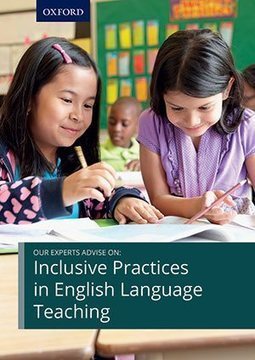
Discover our Expert Panel’s advice on how to identify and support learners with additional educational needs. Pick up practical solutions for creating inclusive language classrooms. Join professional development events on inclusive practices in language teaching.
Via Nik Peachey
|
|
Scooped by
Dennis Swender
October 6, 2018 12:59 AM
|
Helping ELL/ESL Students Succeed is a free professional learning community that focuses on supporting ELL/ESL students to improve their academic achievement.
|
|
Scooped by
Dennis Swender
October 2, 2018 10:52 AM
|
Against all odds, 28 percent of Scottish people still use it.
|
|
Scooped by
Dennis Swender
September 22, 2018 3:46 AM
|
Warren J. Blumenfeld on how laws divide and demean.
|
|
Rescooped by
Dennis Swender
from Linguística
September 21, 2018 11:28 PM
|
Why do we persist in thinking that standard English is right, when it is spoken by only 15% of the British population? Linguistics-loving Harry Ritchie blames Noam Chomsky
Via ghoehn, Claudia Silvina Fochesatto
|
|
Scooped by
Dennis Swender
September 20, 2018 11:55 AM
|
The liberal arts program is aimed at adult and other nontraditional learners, reflecting the growing trend of colleges expanding their footprint online.
|
|
Rescooped by
Dennis Swender
from Digital Delights for Learners
September 20, 2018 11:01 AM
|
Online English word search games for adult ESL students and young learners at all levels of English. We have a giant collection of word search puzzles on topics of general interest and educational subjects. Includes easy, medium difficulty, and hard word search games to practise your English spelling and improve your vocabulary. Suitable for classroom use, self study, or just general entertainment and fun!
Via Sue Lyon-Jones
|
|
Scooped by
Dennis Swender
September 5, 2018 1:51 PM
|
|
|
Rescooped by
Dennis Swender
from Tools for Teachers & Learners
September 3, 2018 4:37 PM
|
Want to improve your English? KnowbleReader helps you learn by reading English news articles and take customized tests. It’s a free Chrome extension, download it now!
Via Nik Peachey
|
|
|
Scooped by
Dennis Swender
October 31, 2018 1:12 AM
|
A new "Speak Your Language" campaign is encouraging schools and parents to preserve home language.
|
|
Scooped by
Dennis Swender
October 27, 2018 6:39 AM
|
Click here to edit the content
|
|
Scooped by
Dennis Swender
October 3, 2018 6:19 AM
|
This paper presents and discusses the findings of ten semi-structured interviews with community language teachers (primarily of Gumbaynggirr) regarding their approaches to, and perceptions of their language education practice, including their
|
|
Scooped by
Dennis Swender
September 24, 2018 2:51 AM
|
I find it hard to believe that foreign-language instruction is an economic imperative, especially since so many people around the world learn English.
|
|
Rescooped by
Dennis Swender
from Linguística
September 21, 2018 11:29 PM
|
|
|
Rescooped by
Dennis Swender
from Linguística
September 21, 2018 11:28 PM
|
Keep the language learning fun going by incorporating more apps in your study routine. Here are 29 of the best language-learning apps for the serious learner!
Via Billy Brick, Claudia Silvina Fochesatto
|
|
Scooped by
Dennis Swender
September 20, 2018 11:17 AM
|
The CARLA Update gives second language teachers timely information on practical resources and professional development opportunities offered by the Center for Advanced Research on Language Acquisition at the University of Minnesota.
Jordan Brant wants to help make Mohawk the first language of his people again.
The 25-year-old grew up on Tyendinaga First Nation east of Belleville but, as is the case with most of Canada's aboriginal families, there were few words spoken in Mohawk at home.
Of the more than 60 distinct languages across the country that were registered in the 2011 census, only a handful, including Cree, Ojibway, Oji-Cree and Dene, remain strong and viable, numbers from Statistics Canada indicate.
Mohawk is among the aboriginal tongues in Canada in danger of disappearing.
That's why Brant was eager to help out on Monday at a March Break camp designed to help aboriginal youth reconnect with their ancestral language, culture and songs.
"I want to learn more about my culture and language," said Kali Martin, 14, of Ohsweken. "Almost nobody knows it anymore."
Kali was one of 14 participants in a Mohawk language and culture camp called Tehotikahrathe:tha (Their Eyes Sparkle), hosted by Laurier Brantford's office of Aboriginal Initiatives.
The program is being offered in partnership with Onkwawenna Kentyohkwa, a community-based organization that teaches the Mohawk language to adults on Six Nations.
Brant is a student there and will graduate from the intensive two-year program in June. He also has a degree in First Nations studies from Western University.
"I feel the most important thing to do to keep your culture alive is to learn the language."
Brant said there is a lot of focus on powwows and other "beads, leathers and feathers" occasions, but little attention paid to aboriginal language.
"For most native people, saying thank you and hello and goodbye is the extent of their language knowledge."
Bonnie Whitlow, aboriginal student support co-ordinator at Laurier, designed the March Break camp after local educators identified indigenous language and culture as a missing piece of the curriculum.
Students at the camp will spend the week learning -- in Mohawk -- Iroquoian social songs, and an abbreviated version of the Thanksgiving Address, the central prayer and invocation for the Haudenosaunee.
The children will learn about Mohawk cultural traditions and how to introduce themselves and their families using the language.
On Monday, they each made Condolence Canes, a pictographic record of the Grand Council confederacy chiefs from clans in the Six Nations.
On the final day of camp, the students will showcase what they've learned and invite friends and family to join them at a social they are hosting.
Whitlow said her March Break camp has attracted attention from universities across Ontario and beyond.
"We're hoping (the participants) will want to continue learning their language," she said. "It's also about putting their feet on campus. We want them to be able to see themselves in a university."
Whitlow, who grew up on Six Nations and went to school in Brantford, said no one in her home spoke Mohawk.
"I always wanted to learn but there was no avenue for it."
She was finally able to take some classes at university and, later, spent a year studying at Onkwawenna Kentyohkwa.
Founded by Brian and Audrey Maracle in 1998, the program has 85 graduates, many of whom have gone on to teach the Mohawk language at the pre-school, elementary, secondary, university and community level.
Whitlow said the loss of language, in large part, results from Canada's residential school system where students were prohibited from speaking their native tongues. She said there's still reluctance among many to speak.
"That's why we have to have programs like this that make it cool and fun."
michelle.ruby@sunmedia.ca
Via Charles Tiayon
|
|
Rescooped by
Dennis Swender
from Tools for Teachers & Learners
September 3, 2018 4:37 PM
|
HelloTalk acts a sandbox that language learners need to practice their skills outside of the classroom. It's a place to test grammar and knowledge acquired from a structured curriculum enabling students see how the language performs its communication functions. With HelloTalk students connect with native speakers and use their language skills to chat about their specific personal interests — topics that there may not be time for during group classroom interactions
Via Nik Peachey
|