Your new post is loading...
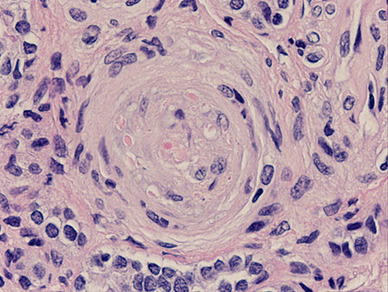
Antineutrophil cytoplasmic autoantibodies (ANCAs) are the probable cause of a distinct form of vasculitis that can be accompanied by necrotizing granulomatosis. Clinical and experimental evidence supports a pathogenesis that is driven by ANCA-induced activation of neutrophils and monocytes, producing destructive necrotizing vascular and extravascular inflammation. Pathogenic ANCAs can originate from precursor natural autoantibodies. Pathogenic transformation might be initiated by commensal or pathogenic microbes, legal or illegal drugs, exogenous or endogenous autoantigen complementary peptides, or dysregulated autoantigen expression. The ANCA autoimmune response is facilitated by insufficient T-cell and B-cell regulation. A putative pathogenic mechanism for vascular inflammation begins with ANCA-induced activation of primed neutrophils and monocytes leading to activation of the alternative complement pathway, which sets in motion an inflammatory amplification loop in the vessel wall that attracts and activates neutrophils with resultant respiratory burst, degranulation, extrusion of neutrophil extracellular traps, apoptosis and necrosis. The pathogenesis of extravascular granulomatosis is less clear, but a feasible scenario proposes that a prodromal infectious or allergic condition positions primed neutrophils in extravascular tissue in which they can be activated by ANCAs in interstitial fluid to produce extravascular necrotizing injury that would initiate an innate granulomatous inflammatory response to wall off the necrotic debris.
Via Krishan Maggon

|
Scooped by
Gilbert C FAURE
August 23, 2014 3:30 AM
|
The cytokine production of PBMCs reflects the autoantibody profile of patients suffering from type 1 diabetes http://t.co/ZsTheTkLcm
|
|
Scooped by
Gilbert C FAURE
August 23, 2014 3:23 AM
|
FDA authorizes Kronus ZnT8Ab Elisa Assay for marketing Pharmaceutical Business Review ZnT8Ab ELISA Assay works by detecting the presence of the ZnT8 autoantibody that is produced by the immune system of many type 1 diabetic patients, in a patient's...

|
Suggested by
Société Francaise d'Immunologie
August 23, 2014 3:22 AM
|
Self-reactive T cells must escape thymic negative selection to mediate pathogenic autoimmunity.
|
|
Suggested by
Société Francaise d'Immunologie
August 22, 2014 4:21 AM
|
We recently demonstrated that hepatic stellate cells induce the differentiation of myeloid-derived suppressor cells (MDSCs) from myeloid progenitors.
|
|
Rescooped by
Gilbert C FAURE
from Immunology
August 21, 2014 3:45 AM
|
Thymocytes and mature T cells are exposed to a broad range of self-peptides of varying reactivity with TCRs. Hogquist and Jameson discuss how differences in self-reactivity and TCR signal strength dictate subsequent cell fates. Self-reactivity was once seen as a potential characteristic of T cells that was eliminated by clonal selection to protect the host from autoimmune pathology. It is now understood that the T cell repertoire is in fact broadly self-reactive, even self-centered. The strength with which a T cell reacts to self ligands and the environmental context in which this reaction occurs influence almost every aspect of T cell biology, from development to differentiation to effector function. Here we highlight recent advances and discoveries that relate to T cell self-reactivity, with a particular emphasis on T cell antigen receptor (TCR) signaling thresholds.
Via Krishan Maggon , Gilbert C FAURE
|
|
Scooped by
Gilbert C FAURE
August 19, 2014 4:55 AM
|
Alopecia areata is driven by cytotoxic T lymphocytes and is reversed by JAK ...
Nature.com
Alopecia areata (AA) is a common autoimmune disease resulting from damage of the hair follicle by T cells.
|
|
Suggested by
Société Francaise d'Immunologie
August 19, 2014 4:50 AM
|
IL-2, a cytokine with pleiotropic effects, is critical for immune cell activation and peripheral tolerance.
|
|
Scooped by
Gilbert C FAURE
August 18, 2014 5:41 AM
|
|
|
Scooped by
Gilbert C FAURE
August 16, 2014 9:29 AM
|
A highly sensitive microsphere-based assay for early detection of Type I diabetes Science Codex This is a concept showing microsphere based detection of an Islet Cell Autoantibody (ICA) - Glutamic Acid Decarboxylase (GAD65) using Rolling Circle...
|
|
Suggested by
Société Francaise d'Immunologie
August 16, 2014 9:27 AM
|
Subepidermal autoimmune blistering dermatoses (AIBD) are prototypic autoantibody-mediated diseases.
|
|
Scooped by
Gilbert C FAURE
August 16, 2014 1:42 AM
|
Scleroderma Research Foundation to Host Live Webinar on Diagnosis and ...
Virtual Press Office (press release)
Dr.
|
|
Scooped by
Gilbert C FAURE
August 8, 2014 3:18 AM
|
by Isharat Yusuf, Jessica Stern, Tom M. McCaughtry, Sandra Gallagher, Hong Sun, Changshou Gao, Thomas Tedder, Gianluca Carlesso, Laura Carter, Ronald Herbst, Yue Wang Background Continuous support from follicular CD4+ T helper (Tfh) cells drives...
|
|
|
Scooped by
Gilbert C FAURE
August 23, 2014 3:31 AM
|
by Allison Sang, Ying-Yi Zheng, Yiming Yin, Igor Dozmorov, Hao Li, Hui-Chen Hsu, John D.
|
|
Scooped by
Gilbert C FAURE
August 23, 2014 3:26 AM
|
Genetic associations and functional characterization of M1 aminopeptidases and ...
Nature.com
... Case Control ConsortiumClayton DG, Wellcome Trust Case Control ConsortiumCardon LR, Wellcome Trust Case Control ConsortiumCraddock N et al.
|
|
Suggested by
Société Francaise d'Immunologie
August 23, 2014 3:23 AM
|
AM14 rheumatoid factor (RF) B cells in the MRL/lpr mice are activated by dual BCR and TLR7/9 ligation and differentiate into plasmablasts via an extrafollicular (EF) route.
|
|
Scooped by
Gilbert C FAURE
August 22, 2014 4:26 AM
|
Autoantibodies to proliferating cell nuclear antigen (PCNA) are specifically, if rarely, present in systemic lupus erythematosus (SLE) patient sera. Even SLE patients lacking PCNA reactivity often...
|
|
Scooped by
Gilbert C FAURE
August 21, 2014 3:53 AM
|
FDA allows marketing of first ZnT8Ab autoantibody test to help diagnose type 1 ...
FDA.gov
Today, the U.S.
|
|
Scooped by
Gilbert C FAURE
August 19, 2014 5:10 AM
|
by Catrin H. Middleton, William Irving, John F. R. Robertson, Andrea Murray, Celine B. Parsy-Kowalska, Isabel K. Macdonald, Jane McElveen, Jared Allen, Graham F. Healey, Brian J. Thomson, Stephen J. Ryder, Stefan Holdenrieder, Caroline J.
|
|
Suggested by
Société Francaise d'Immunologie
August 19, 2014 4:50 AM
|
The mechanisms behind destruction of the adrenal glands in autoimmune Addison’s disease remain unclear.
|
|
Scooped by
Gilbert C FAURE
August 18, 2014 6:16 AM
|
by Huaxia Yang, Hui Liu, Dong Xu, Lidan Zhao, Qian Wang, Xiaomei Leng, Wenjie Zheng, Fengchun Zhang, Fulin Tang, Xuan Zhang Objective To investigate the clinical features, outcome, and risk factors of disease flares in patients with...
|
|
Scooped by
Gilbert C FAURE
August 16, 2014 2:57 PM
|
A new review article covers the diverse pathophysiological pathways that can lead to microangiopathic hemolytic anemia and a procoagulant state with or without damage to the kidneys and other organs.
|
|
Scooped by
Gilbert C FAURE
August 16, 2014 9:28 AM
|
by Cecília Durães, Carla S. Moreira, Inês Alvelos, Adélia Mendes, Liliana R.
|
|
Scooped by
Gilbert C FAURE
August 16, 2014 8:20 AM
|
Protagen AG Launches Landmark First Research Test Kit for Systemic Sclerosis PharmiWeb.com (press release) Autoimmune dysregulation includes lymphocyte activation that causes autoantibody production aberrant cytokine and chemokine release excessive...
|
|
Scooped by
Gilbert C FAURE
August 10, 2014 4:17 AM
|
Virginia Ladd, president of AARDA, shares the organization’s efforts to increase research, awareness, and advocacy for autoimmune patients.
|