Decompensated cirrhosis describes an advanced clinical stage with clinical complications, such as ascites, variceal bleeding or hepatic encephalopathy, associated with considerable mortality. Portal hypertension is the main risk factor for developing decompensation in patients with compensated cirrhosis, whereas systemic inflammation is the key driving force for organ failure, that is, for acute-on-chronic liver failure in later stages of cirrhosis. As portal hypertension and systemic inflammation coexist in patients with cirrhosis, an improved understanding of their interaction and dynamic role in distinct stages of cirrhosis is an important step forward towards the development of urgently needed therapeutic interventions. Based on emerging evidence from clinical and translational studies, a novel concept of different predominant pathomechanisms of decompensated cirrhosis is presented, which includes portal hypertension-predominant, systemic inflammmation-predominant and mixed portal hypertension–systemic inflammation phenotypes. A comprehensive set of biomarkers and surrogates of portal hypertension and systemic inflammation might assist clinicians in identifying a predominance of one over the other cirrhosis phenotype. As survival rates of patients with decompensated cirrhosis have remained detrimental without liver transplantation over the past decades, future studies should build on this knowledge to develop effective portal hypertension and systemic inflammation-directed therapies for this underserved population. Portal hypertension and systemic inflammation are key factors driving decompensation and organ failure in cirrhosis. This Review examines those two factors and, based on their mechanistic interaction, proposes a new concept of the clinical phenotypes in decompensated cirrhosis.
Novartis immunology advancements autoimmune diseases Sjögren’s disease ianalumab rapcabtagene autoleucel systemic lupus erythematosus Cosentyx ACR congress 2025. Discover late-breaking Phase III data from ianalumab trials in Sjögren’s disease, biomarker insights for CAR-T therapy in lupus, and real-world evidence on Cosentyx for psoriatic arthritis. This video explores Novartis's commitment to innovative medicines for complex autoimmune conditions, highlighting potential first-in-class therapies and an investor update on their immunology pipeline. Learn how these developments aim to transform care for millions suffering from rheumatic diseases.
Rinella ME, et al. Reply: A multi-society Delphi consensus statement on new fatty liver disease nomenclature. Hepatology. 2023;79(3):E93–E94.View this article via: PubMed CrossRef Google Scholar Alqahtani SA, et al. Poor awareness of liver disease among adults with NAFLD in the United States.
The age of immunotherapy for type 1 diabetes is upon us! Thrilled by the opportunity to contribute to this review led by Remi Creusot at Columbia University!#immunologymatters #endt1d https://lnkd.in/eQ_E2j5d
I’m pleased to announce that our latest paper, “IgG autoantibodies in bullous pemphigoid induce a pathogenic MyD88-dependent pro-inflammatory response in keratinocytes,” has been published in Nature Communications! Our study reveals that keratinocytes actively drive the pathogenic inflammatory and proteolytic response in bullous pemphigoid by responding to BP-IgG autoantibodies via the MyD88 pathway, rather than acting as passive bystanders. This work advances our understanding of BP and may open up new avenues for targeted therapeutic strategies.
Grateful to my co-authors and all who supported this project.
Read the full article here: https://lnkd.in/eyCA3vZb #bullouspemphigoid #autoimmunity #dermatology #immunology #research
Thrilled to share a huge work conducted with my mentor George Tsokos and friends and colleagues Antonios Kolios & Vasileios Kyttaris.
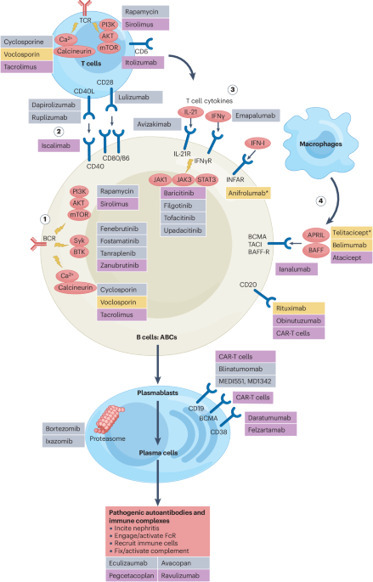
We critically review 20 years of advances in the treatment of #lupus and try to paint the landscape of its near future. As often, many treatments come from an improved understanding of the disease pathogenesis !
The ACR has released its 2025 Systemic Lupus Erythematosus (SLE) treatment guidelines and consensus-based good practice statements, applicable to children and adults with SLE. Overall, the goals of SLE management are to achieve remission or a low level disease activity, reduce morbidity and mortality, and minimize treatment-related adverse events. For treatment of SLE, they recommend universal use of hydroxychloroquine, minimizing glucocorticoid exposure, and early introduction of conventional and/or biologic immunosuppressive therapies.
Patients with Melanoma differentiation-associated gene 5 (MDA5) positive dermatomyositis (DM) are complicated and prone to interstitial lung disease, poor prognosis, and a high mortality. A new study suggests a risk prediction model that may identify of high-risk patients to promote timely diagnosis and treatment.
Here we analyzed the relative contributions of CD4+ regulatory T cells expressing Forkhead box protein P3 (FOXP3) and CD8+ regulatory T cells expressing killer cell immunoglobulin-like receptors to the control of autoreactive T and B lymphocytes in human tonsil-derived immune organoids. FOXP3 and GZMB respectively encode proteins FOXP3 and granzyme B, which are critical to the suppressive functions of CD4+ and CD8+ regulatory T cells. Using CRISPR–Cas9 gene editing, we were able to achieve a reduction of ~90–95% in the expression of these genes. FOXP3 knockout in tonsil T cells led to production of antibodies against a variety of autoantigens and increased the affinity of influenza-specific antibodies. By contrast, GZMB knockout resulted in an increase in follicular helper T cells, consistent with the ablation of CD8+ regulatory T cells observed in mouse models, and a marked expansion of autoreactive CD8+ and CD4+ T cells. These findings highlight the distinct yet complementary roles of CD8+ and CD4+ regulatory T cells in regulating cellular and humoral responses to prevent autoimmunity. Here the authors use a tonsil organoid culture model system to investigate the roles of human CD4+ and CD8+ regulatory T cells in controlling self-reactive immune responses. CD4+ regulatory T cells were stronger regulators of autoreactive B cells, autoantibodies and antigen-specific antibody affinity, whereas CD8+ regulatory T cells predominantly controlled expansion of follicular helper cells and autoreactive CD4+ and CD8+ T cells.
Each November, we observe National Diabetes Month and engage in discussions surrounding prevention, management and the impact of this increasingly common autoimmune disease.
Objective Primary Sjögren’s syndrome (pSS) is a systemic autoimmune exocrinopathy affecting salivary and lacrimal glands. This study presents an exploratory single-cell transcriptomic analysis of labial salivary glands to generate hypotheses about B-cell–associated gene modules in pSS, and to...
Lupus nephritis (LN) is a type of glomerulonephritis and one of the most serious complications of systemic lupus erythematosus (SLE). LN affects 25–60% of patients with SLE, with incidence and prevalence varying by age, sex, ethnicity and socioeconomic factors. LN predominantly develops within 5 years of an SLE diagnosis and, for many patients, it is the initial manifestation that leads to the recognition of SLE. In some patients, LN may develop late in the disease course, highlighting the importance of persistent awareness of its symptoms and signs. Despite an increasing understanding of disease biology and more effective treatment options, LN remains a substantial cause of morbidity and mortality as it can lead to irreversible kidney failure and associated complications. Risk factors for progression to kidney failure include persistent proteinuria, low glomerular filtration rate, hypertension at diagnosis and frequent disease flares. LN pathogenesis involves complex immune dysregulation, with key pathways including type I interferon signalling, calcineurin activation, and B and T cell dysfunction. Several immunomodulatory drugs are used for the management of LN, and treatment paradigms are increasingly shifting towards multi-agent regimens. Along with appropriate pharmacotherapy, multidisciplinary care tailored to the patient’s individual needs, involving rheumatologists, nephrologists, social workers and other health professionals, is crucial for holistically addressing both the immune and non-immune risk factors for progressive kidney function loss and for maximizing kidney lifespan in LN. Lupus nephritis is an autoimmune-mediated glomerulonephritis and a serious complication of systemic lupus erythematosus. In this Primer, Parodis and colleagues describe the epidemiology and pathophysiology of this disease, discuss current diagnosis and management, and highlight the effects on patient quality of life as well as future areas of research.
Great review from Aurore Collet & Sylvain Dubuquoi from our INFINITE - Lille Institute for Translational Research in Inflammation team on "Autoreactive #Bcells in autoimmune diseases: Mechanisms, functions and clinical implications" ! Highlights : • Autoreactive B cells drive key mechanisms in autoimmune diseases pathophysiology. • Autoreactive B cells identification is allowed by ELISpot and flow cytometry. • Autoreactive B cells features are highly heterogeneous between autoimmune diseases. • Autoreactive B cells fuel autoimmunity beyond autoantibody production. • New therapeutic approaches are developed to specifically target autoreactive B cells.
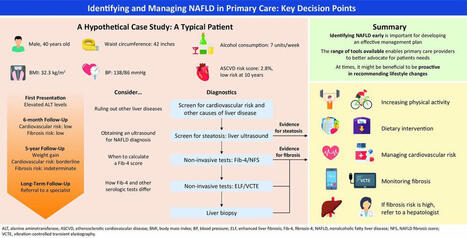
🔥Hot paper on #NonAlcoholicFattyLiverDisease Title: Identifying Patients with Nonalcoholic Fatty Liver Disease in Primary Care: How and for What Benefit? 👥Authors: Dr. Andrew D. Schreine
The human immune system has a formidable arsenal of defenses to detect and eliminate threats. One of its most powerful guardians is the complement system — a dynamic network of proteins that tirelessly patrols our body, looking ever vigilantly for signs of infection or injury. In the presence of danger, these proteins spring into action, unleashing a cascade of inflammatory signals that mobilizes the body’s defenses to neutralize the threats.
To get content containing either thought or leadership enter:
To get content containing both thought and leadership enter:
To get content containing the expression thought leadership enter:
You can enter several keywords and you can refine them whenever you want. Our suggestion engine uses more signals but entering a few keywords here will rapidly give you great content to curate.


 Your new post is loading...
 Scoop.it!