Your new post is loading...

|
Scooped by
Dr. Stefan Gruenwald
February 27, 2019 12:21 AM
|
A radiologist's ability to make accurate diagnoses from high-quality diagnostic imaging studies directly impacts patient outcome. However, acquiring sufficient data to generate the best quality imaging comes at a cost - increased radiation dose for computed tomography (CT) and positron emission tomography (PET) or uncomfortably long scan times for magnetic resonance imaging (MRI). Now researchers with the Athinoula A. Martinos Center for Biomedical Imaging at Massachusetts General Hospital (MGH) have addressed this challenge with a new technique based on artificial intelligence and machine learning, enabling clinicians to acquire higher quality images without having to collect additional data. They describe the technique - dubbed AUTOMAP (automated transform by manifold approximation) - in a paper published in the journal Nature. "An essential part of the clinical imaging pipeline is image reconstruction, which transforms the raw data coming off the scanner into images for radiologists to evaluate," says Bo Zhu, PhD, a research fellow in the MGH Martinos Center and first author of the Nature paper. "The conventional approach to image reconstruction uses a chain of handcrafted signal processing modules that require expert manual parameter tuning and often are unable to handle imperfections of the raw data, such as noise. We introduce a new paradigm in which the correct image reconstruction algorithm is automatically determined by deep learning artificial intelligence. "With AUTOMAP, we've taught imaging systems to 'see' the way humans learn to see after birth, not through directly programming the brain but by promoting neural connections to adapt organically through repeated training on real-world examples," Zhu explains. "This approach allows our imaging systems to automatically find the best computational strategies to produce clear, accurate images in a wide variety of imaging scenarios." The technique represents an important leap forward for biomedical imaging. In developing it, the researchers took advantage of the many strides made in recent years both in the neural network models used for artificial intelligence and in the graphical processing units (GPUs) that drive the operations, since image reconstruction - particularly in the context of AUTOMAP - requires an immense amount of computation, especially during the training of the algorithms. Another important factor was the availability of large datasets ("big data"), which are needed to train large neural network models such as AUTOMAP. Because it capitalizes on these and other advances, Zhu says, the technique would not have been possible five years ago or maybe even one year ago. AUTOMAP offers a number of potential benefits for clinical care, even beyond producing high-quality images in less time with MRI or with lower doses with X-ray, CT and PET. Because of its processing speed, the technique could help in making real-time decisions about imaging protocols while the patient is in the scanner.
|
|
Scooped by
Dr. Stefan Gruenwald
February 25, 2019 10:55 AM
|
Four possible missions to the ice giants are being proposed, including orbiters and a fly-by, to tell us what they’re made of and how such planets form. Uranus and Neptune have never got much attention from us – we’ve only passed each once and never hung around. But that could change. A NASA group has now outlined possible missions to make it to one of these outer worlds to gather data on their composition. This should teach us about them and similar planets in other solar systems. “The preferred mission is an orbiter with an atmospheric probe to either Uranus or Neptune – this provides the highest science value, and allows in depth study of all aspects of either planet’s system: rings, satellites, atmosphere, magnetosphere,” says Amy Simon, co-chair of the Ice Giants Pre-Decadal Study group. There are four proposed missions – three orbiters and a fly-by of Uranus, which would include a narrow angle camera to draw out details, especially of the ice giant’s moons. It would also drop an atmospheric probe to take a dive into Uranus’s atmosphere to measure the levels of gas and heavy elements there. The three must-haves for each orbiter mission are a narrow-angle camera, a doppler imager and a magnetometer, while an orbiter containing 15 instruments would add plasma detectors, infrared and UV imaging, dust detection and microwave radar capability. The orbiter could be either a Neptune mission with an atmospheric probe, a Uranus probe of the same design, or a craft sent to a Uranus that ditches the atmospheric probe for the suite of 15 instruments.
|
|
Scooped by
Dr. Stefan Gruenwald
February 25, 2019 10:50 AM
|
Everything you ever wanted to know about Equifax, Mariott, and the problem with social security numbers. The major recent cyberattacks were the following: -
Inside the Cyberattack That Shocked the US Government
WIRED’s dramatic account of the massive Office of Personnel Management hack. It’s truly the breach that had it all, compromising everything from basic information and Social Security numbers to government background-check data and even fingerprints for tens of millions of people. Plus, Chinese hackers orchestrated an epic heist. -
Yahoo Breach Compromises 3 Billion Accounts
The most accounts ever compromised in one breach. Good times. -
The Equifax Breach Was Entirely Preventable
The Equifax debacle was a turning point in the history of corporate data breaches, because it exposed very sensitive data and put victims at a high risk of identity theft and other invasive attacks, all because of grossly inadequate corporate security protections. WIRED walked through how the company could have prevented the disaster. -
Equifax’s Security Overhaul, a Year After Its Epic Breach
A year after Equifax discovered its breach, WIRED checked in with the company on what it was doing internally to turn things around and prevent another digital security lapse. And while the overhaul sounded positive, experts were still skeptical about whether Equifax can ever be fully trusted again. -
Marketing Firm Exactis Leaks Database With 340 Million Personal Records
A massive data exposure at the targeted-marketing firm Exactis could have compromised hundreds of millions of records. Though no one knows if the data was actually stolen, it was easily accessible on the public internet, and anyone trawling for easy targets could have accessed it. The information would have been particularly valuable to an attacker because it contained detailed profiles on millions of Americans’ basic information, preferences, and habits. -
Startup Breach Exposed Billions of Data Points
The Apollo breach exposed billions of records and is a good example of how enticing “aggregated” data troves are to hackers. When an organization, like the sales intelligence firms Apollo or Exactis, collects data from numerous sources into a single repository, it essentially does criminals’ work for them. Everything is in one place, the data is organized for ease of use, and it’s generally searchable. Often much of the data in these types of breaches was already publicly accessible, but the crucial benefit to attackers is the one-stop shop. -
Facebook’s First Full Data Breach Impacts Up to 90 Million Accounts
Facebook is no stranger to controversies over data mishandling at this point. The data breach it disclosed in September, though, was particularly notable because it was the first known example of an attacker exploiting flaws in Facebook’s architecture to actually break into users’ accounts and steal their data. Unlike the company’s other missteps—which were, of course, problematic in their own ways—this was a true data breach.
|
|
Scooped by
Dr. Stefan Gruenwald
February 24, 2019 11:14 PM
|
An Israeli spacecraft is gearing up for a 2019 Moon mission that features unique partnerships, investigation of the Moon's origin, and closure for an 11-year-old contest designed to spur commercial lunar activities. SpaceIL, a privately funded Israeli non-profit, designed and built a four-legged lander that will touch down in Mare Serenitatis, one of the dark, lunar basins visible to the naked eye from Earth. The craft, which weighs less than 200 kilograms without fuel, will send home high-definition pictures and video before hopping to a new landing spot half a kilometer away. If successful, the mission will make Israel the fourth country to soft-land on the Moon, following Russia, the United States, and China. The overall purpose of the mission, SpaceIL says, is to inspire more Israelis to pursue STEM careers. Three engineers formed the non-profit in 2011 to compete for the Google Lunar X-Prize, a $30 million contest encouraging privately funded groups to land on the Moon. The first team to land, travel 500 meters and transmit imagery would have earned $20 million. A second-place team would have earned $5 million, and another $5 million was up for grabs through stretch goals like visiting an old Apollo site and contributing to STEM diversity. Google withdrew the cash prizes in April 2018 when no group was able to meet the contest deadline, which had already been extended from 2017. A few teams, including SpaceIL, pushed on, and despite a brush with bankruptcy at the end of 2017, SpaceIL announced they would be ready to fly at the end of 2018. The launch has since been delayed until the "beginning of 2019," SpaceIL representatives said in response to emailed questions. The lander, which is in the process of being named through an online contest, will leave Earth aboard a SpaceX Falcon 9 rocket from Florida. SpaceIL is one of at least three customers with spacecraft aboard the flight. The primary payload is an Indonesian telecommunications satellite called PSN-6, built by sat-building company SSL. Another undisclosed rider rumored to be a U.S. government satellite.
|
|
Scooped by
Dr. Stefan Gruenwald
February 24, 2019 10:53 PM
|
Data from clinical trials have long been locked away, some in this principal investigator’s computer bank, some in that pharmaceutical company’s cloud. For years we have been talking about opening up those vaults and freeing these data. The key has finally turned: Data sharing is becoming the new reality. Starting from Jan. 1, 2019, onward, the world’s leading medical journals, including the New England Journal of Medicine, the Lancet, Annals of Internal Medicine, BMJ, and thousands more require authors to disclose whether and how they plan to share de-identified raw data from individual participants in their clinical trials. What’s more, researchers wishing to publish in these journals must declare their data-sharing plans in a public registry, such as ClinicalTrials.gov. It’s a radical departure from where we’ve been. In my former life conducting trials as a scientist in industry and for the National Institutes of Health, when I’d log onto ClinicalTrials.gov to register a new trial, I didn’t have to give a second thought to if or how I’d be sharing data from the trial. Now all researchers need to think about that from the very beginning, even before the first trial participant is enrolled. To be clear, these new journal requirements do not require authors to share their data, so even with this new policy researchers might be tempted not to do so. That’s understandable. Clinical trials are becoming increasingly complex, costly, and time-consuming. Competition among researchers, whether they are in the biopharma industry or in academia, is fiercer than ever.
|
|
Scooped by
Dr. Stefan Gruenwald
February 24, 2019 2:03 AM
|
At this particular moment in Earth’s history – although the sun’s diameter is about 400 times larger than that of the moon – the sun is also about 400 times farther away. So the sun and moon appear nearly the same size as seen from Earth. And that’s why we on Earth can sometimes witness that most amazing of spectacles, a total eclipse of the sun. No one knows the odds, because because we didn't have sufficient star-exoplanet-exomoon triplets to do reliable statistics on. Astronomers have discovered 893 planets in distant solar systems so far (as of June 21, 2013), but we don’t know much about their moons. The sun-moon size similarity, as seen from Earth, is unique among the planets and moons that make up our local family in space, our solar system. In other words, it doesn’t occur with any other planets and moons in our immediate neighborhood of space. But there are billions of undiscovered exosolar systems. So what are the odds of the moon and sun appearing nearly the same size from Earth? No one knows yet. Although it’s fascinating that they are so similar, the sun and moon aren't always the same size as seen from Earth. In fact, even today the moon and sun are rarely exactly the same size. The moon’s distance from Earth varies slightly over the course of a single month. So the moon’s apparent size in our sky is always changing. For part of every month, the moon is in a far part of its orbit from Earth. At such times it isn’t big enough to cover the sun completely. If an eclipse happens then, the outer part of the sun’s surface will appear as a ring around the moon. This type of event is called an annular or ring eclipse. It’s essentially a partial eclipse. The sky doesn’t darken. What’s more, the moon is getting minutely farther away from Earth – by about 4 centimeters – every year. That means that, in past aeons, there were no annular eclipses. All eclipses were total eclipses because the moon in Earth’s sky always appeared bigger than the sun. In present time, some eclipses of the sun by the moon are total, and some are annular, as seen from Earth. But as the aeons pass, and the moon gets ever farther from us, its apparent size in our sky will continue to grow smaller. Eventually, people on Earth won’t see total eclipses. All the solar eclipses will be annular, with the moon not quite big enough to cover the sun completely. Bottom line: The sun’s diameter is about 400 times larger than that of the moon – and the sun is also about 400 times farther from Earth. So the sun and moon appear nearly the same size as seen from Earth. What are the odds?
|
|
Scooped by
Dr. Stefan Gruenwald
February 23, 2019 8:47 PM
|
Astronomers using the NASA/ESA Hubble Space Telescope, along with older data from the Voyager 2 probe, have revealed more about the origin of Neptune's smallest moon. The moon, which was discovered in 2013 and has now received the official name Hippocamp, is believed to be a fragment of its larger neighbour Proteus. A team of astronomers, led by Mark Showalter of the SETI Institute, have used the NASA/ESA Hubble Space Telescope to study the origin of the smallest known moon orbiting the planet Neptune, discovered in 2013. "The first thing we realised was that you wouldn't expect to find such a tiny moon right next to Neptune's biggest inner moon," said Mark Showalter. The tiny moon, with an estimated diameter of only about 34 km, was named Hippocamp and is likely to be a fragment from Proteus, Neptune's second-largest moon and the outermost of the inner moons. Hippocamp, formerly known as S/2004 N 1, is named after the sea creatures of the same name from Greek and Roman mythology. The orbits of Proteus and its tiny neighbour are incredibly close, at only 12 000 km apart. Ordinarily, if two satellites of such different sizes coexisted in such close proximity, either the larger would have kicked the smaller out of orbit or the smaller would crash into the larger one. Instead, it appears that billions of years ago a comet collision chipped off a chunk of Proteus. Images from the Voyager 2 probe from 1989 show a large impact crater on Proteus, almost large enough to have shattered the moon. "In 1989, we thought the crater was the end of the story," said Showalter. "With Hubble, now we know that a little piece of Proteus got left behind and we see it today as Hippocamp."
|
|
Scooped by
Dr. Stefan Gruenwald
February 22, 2019 1:08 AM
|
A new study has found that transplanting the bone marrow of young laboratory mice into old mice prevented cognitive decline in the old mice, preserving their memory and learning abilities. The findings support an emerging model that attributes cognitive decline, in part, to aging of blood cells, which are produced in bone marrow. "While prior studies have shown that introducing blood from young mice can reverse cognitive decline in old mice, it is not well understood how this happens," said Helen Goodridge, PhD, associate professor of Medicine and Biomedical Sciences at Cedars-Sinai and co-senior author of the study. "Our research suggests one answer lies in specific properties of youthful blood cells." If further research confirms similar processes in people, the findings could provide a pathway for designing therapies to slow progression of neurodegenerative diseases, including Alzheimer's, that affect millions of Americans, Goodridge said. In the study, published in the journal Communications Biology, 18-month-old laboratory mice received bone marrow transplants from either 4-month-old mice or mice their own age. Six months later, both transplanted groups underwent standard laboratory tests of activity level and learning, plus spatial and working memory. Mice that received young bone marrow outperformed mice that received old bone marrow. They also outperformed a control group of old mice that did not get transplants. The research team then examined the hippocampus, a region associated with memory, in the mice brains. Recipients of young bone marrow retained more connections, known as synapses, between neurons in the hippocampus than did recipients of old bone marrow, even though they had about the same number of neurons. Synapses are critical to brain performance. Further tests showed a possible reason for the missing synapses. The blood cells made by the young bone marrow reduced the activation of microglia, a type of immune cell in the brain. Microglia support neuron health but can become overactive and participate in disconnection of the synapses. With fewer overactive microglia, neurons would remain healthy and more synapses would survive. "We are entering an era in which there will be more elderly people in the population, along with an increased incidence of Alzheimer's disease, putting a huge burden on the health system," said Clive Svendsen, PhD, director of the Cedars-Sinai Board of Governors Regenerative Medicine Institute, professor of Biomedical Sciences and Medicine and co-senior author of the new study. "Our work indicates that cognitive decline in mice can be significantly reduced by simply providing young blood cells, which act on the brain to reduce the loss of synapses related to aging."
|
|
Scooped by
Dr. Stefan Gruenwald
February 22, 2019 12:59 AM
|
Team led by Professor Ebrahim Karimi uses quantum of light to create new quantum simulator Imagine being stuck inside a maze and wanting to find your way out. How would you proceed? The answer is trial and error. This is how traditional computers with classical algorithms operate to find the solution to a complex problem. Quantum walks present novel tools for redesigning quantum algorithms, universal quantum computations, and quantum simulators. Hitherto, one- and two-dimensional quantum systems (lattices) have been simulated and studied with photonic systems. Prof Karimi and his team now report the photonic simulation of cyclic quantum systems, such as hexagonal structures. They experimentally explore the wavefunction dynamics and probability distribution of a quantum particle located on a six-site system, along with three- and four-site systems while under different initial conditions. Various quantum walk systems employing Hadamard, C-NOT, and Pauli-�Z gates are experimentally simulated, where they find configurations capable of simulating particle transport and probability density localization. This technique can potentially be integrated into small-scale structures using microfabrication, and thus would open a venue towards simulating more complicated quantum systems comprised of cyclic structures.
|
|
Scooped by
Dr. Stefan Gruenwald
February 21, 2019 1:46 PM
|
Barely a day has gone by in the last three years without a new headlinepopping up about Russian state-sponsored hacking groups like Fancy Bear and Sofacy. There's good reason for that. Russia's hackers are prolific, highly skilled... and, as a group, the fastest on the planet. That's the word from the cybersecurity experts at CrowdStrike, who just finished analyzing data on more than 30,000 hacking incidents. According to the company's Adversary Ranking Russia's hackers go from the initial breach to exploring other computers and devices connected to the compromised network (referred to as "breaking out") in just 18 minutes. At second place on CrowdStrike's list is North Korea, but it's not even a close contest. Its hackers clock an average breakout time of 2 hours and 20 minutes. That's nearly 8 times slower than their Russian counterparts. Rounding out the top three is China. Again, it's a significant drop from second to third. CrowdStrike reports an average breakout time of 4 hours. Iran is fourth fastest at just over 5 hours, and organized cybercriminals ranked fifth.
|
|
Scooped by
Dr. Stefan Gruenwald
February 20, 2019 7:57 PM
|
Scientists have discovered tadpole-shaped jets coming out of regions with intense magnetic fields on the Sun. Unlike those living on Earth, these “tadpoles” — formally called pseudo-shocks — are made entirely of plasma, the electrically conducting material made of charged particles that account for an estimated 99 percent of the observable universe. The discovery adds a new clue to one of the longest-standing mysteries in astrophysics.
|
|
Scooped by
Dr. Stefan Gruenwald
February 20, 2019 7:50 PM
|
Manipulation of paramagnetic microparticles can be exploited for drug delivery. Here the authors manipulate a swarm of such particles and control its shape with a magnetic field so that it can elongate reversibly, split into smaller swarms and thus be guided through a maze with multiple parallel channels. Mechanical engineers at the Chinese University of Hong Kong have created nanobots — tiny machines — that engage in swarming behavior, such as is found in bees, bacterial colonies and schools of fish. The researchers, who published their findings in Nature Communications, envision them used to deliver drugs in the body, treat blood clots or assist surgeons in performing complex tasks. “The nanobot swarm can be operated in a controlled fashion with a high speed, which has never been reported before,” said study leader Li Zhang. The researchers were inspired by the way animals swarm in nature: Ants, for instance, can use their bodies to build chains or bridges to get the colony across rough terrain. Zhang’s team used oscillating magnetic fields to influence the movement of the nanobots, which are each less than one micron wide, or a fifth of the size of a red blood cell; they found they could manipulate a bunch of tiny machines into elongating, splitting apart and merging back together.
|
|
Scooped by
Dr. Stefan Gruenwald
February 20, 2019 12:27 PM
|
Hoping to make up ground in the hotly contested artificial intelligence battleground, Chinese Internet giant Baidu Inc. is releasing a tool that allows businesses to create and deploy AI models without coding skills. Announced Saturday, EZDL is a “no-code platform to build custom machine learning models,” designed with ease of use and security in mind, the company said. “EZDL is a service platform that allows users to build custom machine learning models with a drag-and-drop interface,” Yongkang Xie, tech lead of Baidu EZDL, said in a statement. “It takes only four steps to train a deep learning model, built specifically for your unique business needs.” EZDL is focused on three important aspects of machine learning that have already been popularized in numerous software apps: image classification, sound classification and object detection. The tool is aimed at small and medium-sized businesses that don’t have the capability to create their own AI models. One of the most notable claims Baidu makes about EZDL is the small size of the training data sets required to create AI models. For image classification and object recognition, it requires just 20 to 100 images per label, while for sound classification it needs only 50 audio files at the most. The training itself can be completed in just 15 minutes in some cases, or a maximum of one hour for more complex models. Baidu also claims accuracy of more than 90 percent in two-thirds of the models it creates.
|
|
|
Scooped by
Dr. Stefan Gruenwald
February 25, 2019 1:53 PM
|
While AI and big data are more and more used to tackle cancer, experts caution: there cannot be exceptionalism for AI in medicine. It requires rigorous studies, publication of the results in peer-reviewed journals, and clinical validation in a real-world environment, before implementation in patient care. 2019 has begun with news regarding the use of artificial intelligence (AI) and big data in cancer. In the UK, the NHS has started a collaboration with Kheiron Medical to AI algorithms to try to diagnose breast cancer as competently or more than human radiologists, launching a trial on historic scans, Financial Times reports. In the US, Recursion Pharmaceuticals has announced the in-licensing of a clinical-stage drug candidate (REC-2282) for Neurofibromatosis type 2 or NF2, a rare hereditary cancer predisposition syndrome. The drug was identified using their artificial intelligence and big data platform. Many companies – including Google – are developing their own AI and data systems for a better assessment of cancer diagnosis and treatment. Patients’ stratification Those are not, however, the only areas within cancer management that could be benefited by the use of such technologies. Cancer stratification is also part of the list, as a necessary step for a truly personalized care. “The stratification allows further individualization of the treatment and to optimize the R&D pipeline by sub segmenting the target patients in whom the treatment behaves better”, says Ray G. Butler, CEO of Butler Scientifics. Butler explains that his company has developed an automated, comprehensive and intelligent exploratory data analysis software – called AutoDiscovery – “that is being used by biomedical research teams in hospitals and pharmaceutical companies to discover associations of high statistical significance and great clinical relevance but that are somehow hidden in the data collected in their studies”. One of those groups is the Translational Molecular Pathology team at Vall d’Hebrón Research Institute (Barcelona, Spain). As Butler explains, one of their goals was to assess how the immune-histo-chemical expression of the markers that are part of the signalling act as independent predictors of the risk of metastasis or variables of global survival. AutoDiscovery -he says – allowed them to find a correlation supporting their hypothesis that mTOR signalling way has a relevant role in tumor growth. Statistical limitations Various research groups are trying to solve those limitations. In a paper published in Scientific Reports in 2016 (Scientific Reports 2016, 6: 36493), a group from the Bioinformatics Institute at Nanyang Technological University (Singapore) show how their own model of patient classification termed Prognostic Signature Vector Matching (PSVM), combined with the classical machine learning classifiers in an ensemble voting system, “collectively provides a more precise and reproducible patient stratification”. “The use of the multi-test system approach, rather than the search for the ideal classification/prediction method, might help to address limitations of the individual classification algorithm in specific situation” they add. The same argues Enrico Capobianco, a researcher in Statistical Sciences at the Center for Computational Science (University of Miami, USA). “High-throughput technologies, electronic medical records, high-resolution imaging, multiplexed omics, these are examples of fields that are progressing at a fast pace. Because they all yield complex heterogeneous data types, managing such variety and volumes is a challenge. While the computation power required to analyze them is available, the main difficulty consists in interpreting the results” Capobianco writes an article published in Frontiers (Frontiers 2017, doi: 10.3389/ ct.2017.00022). The fact that AI systems are still a black box, given their inability to explain which precise data they have used – and in which way – to get a result, doesn’t help. A way to get accountability of their decisions is needed. The industry is aware of it and there are plenty of research teams and companies trying to solve this key issue: from DARPA’s XAI project (for “eXplainable AI”) to Google’s Testing with Concept Activation Vectors (TCAV). Understanding cancer like never before In a paper published in Current Opinion in Systems Biology in 2017 (Current Opinion in Systems Biology 2017, 4:78-84), Maia and other authors reflect on the benefits and the challenges of using big data systems in oncology. They specifically mention the need of more sophisticated analysis tools and higher processing capacity, along with cheaper storage and faster and more efficient data transfer that must be overcome before personalized medicine finally becomes a reality. In conversation with Cancer World, Maia adds one more: the security of personal data. “The benefits are also many, based on the very own definition of personalized medicine: the right treatment to the right patient in the correct amount at the right time”, Maia points out. “Big data and machine learning methods are helping redefine cancer. Instead of one type of breast cancer, we now can subdivide it in 11 different entities. All of them require different management because they are molecularly different. This means, as an example, that unnecessary drugs won’t be given to certain patients who are known to be likely non-responders, and just by avoiding adverse secondary effects we are already helping”, continues the oncologist. In a paper published recently in Nature Medicine (Nature Medicine 2019, 25:44–56), the researcher and expert on individualized medicine Eric Topol, also professor, director and founder of Scripps Research Translational Institute, states that almost every type of clinician will be using AI technology (and big data as a part of it) in the future. However, or precisely because of that he cautions: “The field is certainly high on promise and relatively low on data and proof. The risk of faulty algorithms is exponentially higher than that of a single doctor–patient interaction, yet the reward for reducing errors, inefficiencies and cost is substantial. Accordingly, there cannot be exceptionalism for AI in medicine: it requires rigorous studies, publication of the results in peer-reviewed journals, and clinical validation in a real-world environment, before roll-out and implementation in patient care”.
|
|
Scooped by
Dr. Stefan Gruenwald
February 25, 2019 10:53 AM
|
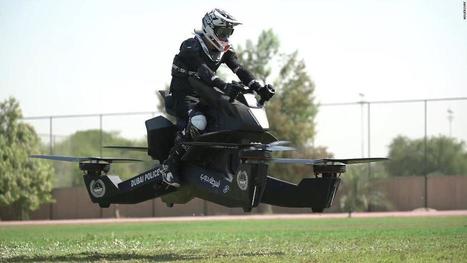
Dubai Police now have a revamped model of the hoverbike -- and they've taken it for a test flight. The flying motorbike is back in Dubai -- and you could see the police riding one in the not-too-distant future. A year after California-based startup Hoversurf showcased its hoverbike at tech expo GITEX in the white and green livery of the Dubai Police, the company has returned with a new model and evidence its electric vertical take-off and landing (eVTOL) vehicle might be, well, taking off. Making good on a deal signed in 2017, Hoversurf has now gifted Dubai Police its first serial production unit of the S3 2019 Hoverbike and has begun training officers to fly it. Brigadier Khalid Nasser Alrazooqi, general director of Dubai Police's artificial intelligence department, described the eVTOL vehicle as a first responder unit used to access hard to reach areas. He said he aims to have hoverbikes in action by 2020. Hoversurf S3 2019 Hoverbike: - Weight: 253 lbs
- Total thrust: 802 lbs
- Max speed: 60 mph
- Safe flying altitude: 16 ft
- Flight time with pilot: 10-25 minutes
- Flight time in drone mode: up to 40 minutes
- Charge time: 2.5 hours
- Price: $150,000
"Currently we have two crews already training (to pilot the hoverbike) and we're increasing the number," he told CNN. Hoversurf chief operating officer Joseph Segura-Conn explained that ideal candidates will be able to ride a motorcycle and have drone operating experiences. Video of one officer learning to pilot the hoverbike appeared online last month. Segura-Conn said Dubai Police have exclusive rights to order as many units as they want: "They're going to let us know in the next month or two if they'd like any more ... If they would like 30 or 40, we'll make it happen for them."
|
|
Scooped by
Dr. Stefan Gruenwald
February 24, 2019 11:27 PM
|
Scientists were delighted when a team of researchers recently found the world's largest bee (Megachile pluto) in Indonesia.
Scientists feared it might be extinct -- until now.
One of the first images of a living Wallace's giant bee. Megachile pluto is the world's largest bee, which is approximately 4 times longer than a European honey bee. A group of researchers made a stunning "rediscovery" of the elusive critter and took the first photos and video of a living Wallace's giant bee on January 25, 2019. The team -- composed of natural history photographer Clay Bolt, entomologist Eli Wyman, behavioral ecologist Simon Robson and ornithologist Glenn Chilton -- spent years studying the bee and slogged around in humid Indonesia forests for days before stumbling upon one.
The rediscovery has renewed hope that more of the region's forests are home to the rare species. The International Union for Conservation of Nature classifies this species as "vulnerable" due to mining and quarrying. Only two other lucky fellows are documented to have seen it in person before. The first was British naturalist Alfred Russel Wallace, who discovered the giant bee in 1858 while exploring the tropical Indonesian island of Bacan. Entomologist Adam Messer became the second in 1981.
|
|
Scooped by
Dr. Stefan Gruenwald
February 24, 2019 11:06 PM
|
Earth seems drenched with water from mountaintop to ocean bottom. But our home planet is a desert compared to some places the solar system, both in terms of its total water volume and the amount of liquid on Earth relative to its size. Consider Jupiter's ice-encrusted moon Europa, which is smaller than Earth's moon. Scientists recently used 20-year-old Voyager data to find even more evidence that Europa has twice as much water as our planet. Even tiny Pluto may have an ocean nearly as large as Earth's. Steve Vance, a planetary scientist at NASA's Jet Propulsion Laboratory, has kept a close eye on research about ocean worlds over the years. He has rounded up estimates of ice thickness and ocean depth throughout the solar system to calculate roughly how much water may exist.
|
|
Scooped by
Dr. Stefan Gruenwald
February 24, 2019 10:44 PM
|
A UN report says the plants and animals crucial to human food systems are in global decline. If these critical species are lost, the report says, it "places the future of our food system under severe threat". The study says that land-use changes, pollution, and climate change are all causing biodiversity loss. While species friendly policies are increasing, they are not growing quickly enough, the scientists add. The UN's Food and Agriculture Organization (FAO), who've put the report together using data gathered in 91 countries, say it is the first such study of its kind. It is essentially the diversity of plants, animals, and other organisms, both wild and domesticated, that provide us with food, fuel and fibers. And it includes those organisms that provide essential services, such as bees and other pollinators, and worms, mangroves, sea grasses and fungi which work to keep soils fertile and purify the air and water. Why is this new report important? The report, called the State of the World's Biodiversity for Food and Agriculture, highlights two key messages. The first is that the world is relying on an ever smaller number of foodstuffs to feed a growing population that's expected to rise to around 10 billion people by 2050. Of the 6,000 plant species cultivated for food, just nine account for 66% of total crop production. The world's livestock production is based on around 40 species with only a handful providing the vast majority of meat, milk and eggs.
|
|
Scooped by
Dr. Stefan Gruenwald
February 23, 2019 8:58 PM
|
Japan’s Hayabusa 2 spacecraft has successfully landed on the surface of the asteroid Ryugu, a historic moment in space exploration that could provide fascinating details on the origins of life on Earth. The spacecraft touched down on Ryugu, having descended from a stable orbit about 20 kilometers above the surface. Taking place some 310 million kilometers from Earth—well past the point where even communication at light-speed is too slow for real-time control—the entire descent was automated, and took about 23 hours. As it gently contacted the surface, the Hayabusa 2 spacecraft should have had a closing speed of just seven centimeters per second. If all proceeded according to plan, a meter-long sampling arm successfully fired a bullet-like projectile into the surface, causing up to 0.1 gram of material to be collected in a sample capsule to be transported back to Earth in late 2020. The spacecraft took images before, during and after the attempted sample collection, which will be the only way to know whether the mechanism has been successful. After leaving the surface, Hayabusa 2 took about half a day to return to its home position above the asteroid. “This is really exciting, because this is the first time in history that we [may have] got a sample of a carbonaceous asteroid,” says Patrick Michel from the Côte d'Azur Observatory in France, a co-investigator on the mission.
|
|
Scooped by
Dr. Stefan Gruenwald
February 23, 2019 12:12 AM
|
There’s some bad news for people who have suffered heart attacks: Healing may not come from within. Researchers have debated for years whether hearts have their own stem cells. If they existed, those cells could produce new heart muscle cells and might help the organ repair itself after injury. Now that debate may finally be over. After following the fate of dividing cells in the hearts of mice, researchers have concluded that there are no heart stem cells. Instead, heart attacks and other injuries to the organ signal immune cells and scar-forming cells called fibroblasts to divide and attempt to close the wound, the team reports online December 7, 2018 in the PNAS. Human hearts probably also lack stem cells, evidence suggests. “This study is fairly definitive that there is not a population of stem cells within the heart that gives rise to new muscle,” says Deepak Srivastava, a cardiologist and developmental biologist at the Gladstone Institutes in San Francisco who was not involved in the study. Other researchers agree the study seems to settle the matter. “It can certainly seem like this is a letdown,” says Ronald Vagnozzi, a cardiac cell biologist at Cincinnati Children’s Hospital. On the bright side, “this paper is a rich resource of information” that may help scientists better understand what happens in the heart during development and after a heart attack, he says. That knowledge may help researchers limit heart attack damage. Scientists thought the heart might have stem cells because previous research indicated that a small number of heart muscle cells are made throughout life, says Hans Clevers, a stem cell biologist at Hubrecht Institute in Utrecht, the Netherlands, who led the new study. Still, only about 1 percent or less of heart muscle cells get replaced, according to research measuring the cells for carbon 14 released from Cold War–era nuclear bomb tests (SN: 4/25/09, p. 11). Measuring levels of carbon 14 in people who were born before the bombs went off can tell researchers how often the new cells are made. But exactly where those new muscle cells come from was a mystery. Scientists had three major theories — that the new heart cells are born from stem cells within the organ itself, that the cells are born from stem cells that enter the blood from elsewhere in the body and integrate into the heart, or that heart muscle cells can divide and produce more of themselves. Clevers’ group created mice in which dividing cells in the heart make a red fluorescent protein that allowed researchers to track the cells. Then, the team analyzed which genes were turned on in those cells to figure out their identities. There was no evidence of stem cells, and only already existing heart muscle cells, called cardiomyocytes, made new muscle cells. But those heart muscle cells divided and made new cells infrequently; only 11 of about 8 million cardiomyocytes were caught dividing in 1.5-year-old mice. That rate didn’t improve after a heart attack, something scientists thought might happen if the heart had reason to repair itself. After an injury, “you come back one month, two months, a year later, but you see not a single new cardiomyocyte,” Clevers says. Instead, rapidly dividing immune cells flood into the site of the injury, accompanied by dividing fibroblasts, which make connective tissue and create a scar over a wound. Understanding the scarring process may lead to ways to limit heart attack damage, Clevers says, but he doubts that the heart can repair itself. Heart self-repair may not be a lost cause, Srivastava says. He and colleagues are working on ways to coax heart muscle cells to produce more of themselves.
|
|
Scooped by
Dr. Stefan Gruenwald
February 22, 2019 1:04 AM
|
Fairy circles are round gaps in arid grassland that are distributed very uniformly over the landscape and only occur along the Namib Desert in southern Africa and in parts of Australia. Various theories circulate about the actual cause of these unusual spatial patterns, ranging from poisonous Euphorbia plants or rising gases, to ants, termites or plant competition for sparse water resources. Scientists from the University of Göttingen, Australia and Israel have now got to the bottom of their cause with soil investigations and drones. The results suggest that the fairy circles in Australia were caused by processes such as the weathering of the soil by heavy rainfall, extreme heat and evaporation. The extensive data collected by the researchers argued against a causal relationship to underground termite structures.
|
|
Scooped by
Dr. Stefan Gruenwald
February 22, 2019 12:54 AM
|
Measurements of gravitational waves from approximately 50 binary neutron stars over the next decade will definitively resolve an intense debate about how quickly our universe is expanding, according to findings from an international team that includes University College London (UCL) and Flatiron Institute cosmologists. The cosmos has been expanding for 13.8 billion years. Its present rate of expansion, known as "the Hubble constant," gives the time elapsed since the Big Bang. However, the two best methods used to measure the Hubble constant have conflicting results, which suggests that our understanding of the structure and history of the universe -- the "standard cosmological model" -- may be incorrect. The study, published today in Physical Review Letters, shows how new independent data from gravitational waves emitted by binary neutron stars called "standard sirens" will break the deadlock between the conflicting measurements once and for all. "We've calculated that by observing 50 binary neutron stars over the next decade, we will have sufficient gravitational wave data to independently determine the best measurement of the Hubble constant," said lead author Dr. Stephen Feeney of the Center for Computational Astrophysics at the Flatiron Institute in New York City. "We should be able to detect enough mergers to answer this question within five to 10 years." The Hubble constant, the product of work by Edwin Hubble and Georges Lemaître in the 1920s, is one of the most important numbers in cosmology. The constant "is essential for estimating the curvature of space and the age of the universe, as well as exploring its fate," said study co-author UCL Professor of Physics & Astronomy Hiranya Peiris. "We can measure the Hubble constant by using two methods -- one observing Cepheid stars and supernovae in the local universe, and a second using measurements of cosmic background radiation from the early universe -- but these methods don't give the same values, which means our standard cosmological model might be flawed." Feeney, Peiris and colleagues developed a universally applicable technique that calculates how gravitational wave data will resolve the issue.
|
|
Scooped by
Dr. Stefan Gruenwald
February 21, 2019 1:40 PM
|
While robots and computers will probably never completely replace doctors and nurses, machine learning/deep learning and AI are transforming the healthcare industry, improving outcomes, and changing the way doctors think about providing care. Machine learning is improving diagnostics, predicting outcomes, and just beginning to scratch the surface of personalized care. Imagine walking in to see your doctor with an ache or pain. After listening to your symptoms, she inputs them into her computer, which pulls up the latest research she might need to know about how to diagnose and treat your problem. You have an MRI or an X-ray and a computer helps the radiologist detect any problems that could be too small for a human to see. Finally, a computer looks at your medical records and family history and compares that with the best and most recent research to suggest a treatment protocol to your doctor that is specifically tailored to your needs. Industry analysts predict that 30 percent of providers will use cognitive analytics with patient data by 2018. It’s all starting to happen, and the implications are exciting. Diagnosis CBI insights identified 22 companies developing new programs for imaging and diagnostics. This is an especially promising field into which to introduce machine learning because computers and deep learning algorithms are getting more and more adept at recognizing patterns — which, in truth, is what much of diagnostics is about. An IBM-backed group called Pathway Genomics is developing a simple blood test to determine if early detection or prediction of certain cancers is possible. Lumiata has developed predictive analytics tools that can discover accurate insights and make predictions related to symptoms, diagnoses, procedures, and medications for individual patients or patient groups. Treatment IBM’s Watson has been tasked with helping oncologist make the best care decisions for their patients. The Care Trio team has developed a three-pronged approach that helps doctors devise and understand the best care protocols for cancer patients. The CareEdit tool helps teams create clinical practice guidelines that document the best course of treatment for different types of cancers. CareGuide uses the information from CareEdit into a “clinical decision support system” to help doctors choose the right treatment plan for an individual patient.
|
|
Scooped by
Dr. Stefan Gruenwald
February 20, 2019 7:55 PM
|
What is a black hole? That may seem like an odd question. Given the centrality of black holes to theoretical work across many fields of physics today, how can there be any uncertainty about it? Black holes (and their analogues) are objects of theoretical study in almost everything from optics to solid-state to superfluids to ordinary hydrodynamics and thermodynamics to high-energy particle physics to astrophysics to cosmology to classical, semi-classical and quantum gravity; and of course they are central subjects of observational work in much of astronomy. That fact perhaps provides part of the answer about the uncertainty: there is not so much uncertainty about a single, canonical answer, but rather there are too many good possible answers to the question, not all consistent with each other. That is what makes the question of interest. There is likely no other physical system of fundamental importance about which so many different answers are to be had for its definition, and so many reasons to be both satisfied and dissatisfied with all of them. Beatrice Bonga, a theoretical physicist, summed up the situation admirably (personal communication): “Your five word question is surprisingly difficult to answer ... and I definitely won’t be able to do that in five words.”
|
|
Scooped by
Dr. Stefan Gruenwald
February 20, 2019 12:28 PM
|
Using light, a prototype “green” material can purify enough daily drinking water for four people in just one hour. In tests, it killed nearly 100 percent of bacteria in 10 liters of water, researchers report February 7 in Chem. This new material, a 2-D sheet of graphitic carbon nitride, is a photocatalyst: It releases electrons when illuminated to create destructive oxygen-based chemicals that destroy microbes. The design avoids pitfalls of other similar technology. Today’s most effective photocatalysts contain metals that can leach into water as toxic pollutants. Others are non-metallic, like the new 2-D sheets, but are less efficient because they hold onto electrons more tightly. Materials scientist Guoxiu Wang of the University of Technology Sydney and colleagues created ultrathin sheets of graphitic carbon nitride and added chemical groups like acids and ketones that lure electrons toward the sheets’ edges. There, the electrons jump onto oxygen atoms in water to form such microbe-dissolving oxygen chemicals as hydrogen peroxide. The design killed 99.9999 percent of bacteria, including E. coli, in a 50-milliliter water sample. That’s as efficient as the best metal-based catalyst. And it killed microbes more quickly than previous best metal-free photocatalysts, which take over an hour to achieve what the new design did in 30 minutes. The team then attached the nanosheets to the inside surface of plastic bags, purifying 10 liters of water in an hour.
|