Your new post is loading...

|
Scooped by
Dr. Stefan Gruenwald
April 1, 2019 1:53 PM
|
Scientists just activated the world’s biggest “brain”: a supercomputer with a million processing cores and 1,200 interconnected circuit boards that together operate like a human brain. Ten years in the making, it is the world’s largest neuromorphic computer—a type of computer that mimics the firing of neurons—scientists announced on Nov. 2, 2018. Dubbed Spiking Neural Network Architecture, or SpiNNaker, the computer powerhouse is located at the University of Manchester in the United Kingdom, and it “rethinks the way conventional computers work,” project member Steve Furber, a professor of computer engineering at the University of Manchester, said in a statement. But SpiNNaker doesn’t just “think” like a brain. It creates models of the neurons in human brains, and it simulates more neurons in real time than any other computer on Earth, according to the statement. “Its primary task is to support partial brain models: for example, models of cortex, of basal ganglia, or multiple regions expressed typically as networks of spiking [or firing] neurons,” Furber told Live Science in an email. Since April 2016, SpiNNaker has been simulating neuron activity using 500,000 core processors, but the upgraded machine has twice that capacity, Furber explained. With the support of the European Union’s Human Brain Project—an effort to construct a virtual human brain—SpiNNaker will continue to enable scientists to create detailed brain models. But now it has the capacity to perform 200 quadrillion actions simultaneously, university representatives reported in the statement. While some other computers may rival SpiNNaker in the number of processors they contain, what sets this platform apart is the infrastructure connecting those processors. In the human brain, 100 billion neurons simultaneously fire and transmit signals to thousands of destinations. SpiNNaker’s architecture supports an exceptional level of communication among its processors, behaving much like a brain’s neural network does, Furber explained. “Conventional supercomputers have connectivity mechanisms that are much less well suited to real-time brain modeling,” he said. “SpiNNaker is, I believe, capable of modeling larger spiking neural networks in biological real time than any other machine.” Previously, when SpiNNaker was operating with only 500,000 processors, it modeled 80,000 neurons in the cortex, the brain region that moderates data from the senses. Another SpiNNaker simulation of the basal ganglia, a brain area affected by Parkinson’s disease, hints at the computer’s potential as a tool for studying brain disorders, according to the statement.
|
|
Scooped by
Dr. Stefan Gruenwald
March 31, 2019 10:03 PM
|
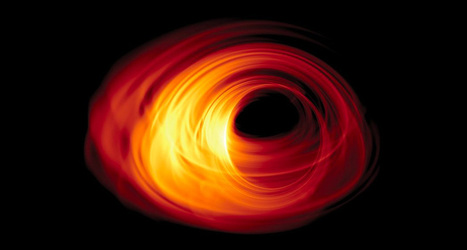
The Event Horizon Telescope (EHT), a network of eight radio observatories spanning the globe, has set its sights on a pair of behemoths: Sagittarius A*, the supermassive black hole at the Milky Way’s center, and an even more massive black hole 53.5 million light-years away in galaxy M87. In April 2017, the observatories teamed up to observe the black holes’ event horizons, the boundary beyond which gravity is so extreme that even light can’t escape. After almost two years of rendering the data, scientists are gearing up to release the first images in April, 2019. What does a black hole really look like? Black holes live up to their names: The great gravitational beasts emit no light in any part of the electromagnetic spectrum, so they themselves don’t look like much. But astronomers know the objects are there because of a black hole’s entourage. As a black hole’s gravity pulls in gas and dust, matter settles into an orbiting disk, with atoms jostling one another at extreme speeds. All that activity heats the matter white-hot, so it emits X-rays and other high-energy radiation. The most voraciously feeding black holes in the universe have disks that outshine all the stars in their galaxies. The EHT’s image of the Milky Way’s Sagittarius A*, also called SgrA*, is expected to capture the black hole’s shadow on its accompanying disk of bright material. Computer simulations and the laws of gravitational physics give astronomers a pretty good idea of what to expect. Because of the intense gravity near a black hole, the disk’s light will be warped around the event horizon in a ring, so even the material behind the black hole will be visible. And the image will probably look asymmetrical: Gravity will bend light from the inner part of the disk toward Earth more strongly than the outer part, making one side appear brighter in a lopsided ring. Does general relativity hold up close to a black hole? The exact shape of the ring may help break one of the most frustrating stalemates in theoretical physics. The twin pillars of physics are Einstein’s theory of general relativity, which governs massive and gravitationally rich things like black holes, and quantum mechanics, which governs the weird world of subatomic particles. Each works precisely in its own domain. But they can’t work together. “General relativity as it is and quantum mechanics as it is are incompatible with each other,” says physicist Lia Medeiros of the University of Arizona in Tucson. “Rock, hard place. Something has to give.” If general relativity buckles at a black hole’s boundary, it may point the way forward for theorists. Since black holes are the most extreme gravitational environments in the universe, they’re the best environment to crash test theories of gravity. It’s like throwing theories at a wall and seeing whether — or how — they break. If general relativity does hold up, scientists expect that the black hole will have a particular shadow and thus ring shape; if Einstein’s theory of gravity breaks down, a different shadow. Medeiros and her colleagues ran computer simulations of 12,000 different black hole shadows that could differ from Einstein’s predictions. “If it’s anything different, [alternative theories of gravity] just got a Christmas present,” says Medeiros, who presented the simulation results in January in Seattle at the American Astronomical Society meeting. Even slight deviations from general relativity could create different enough shadows for EHT to probe, allowing astronomers to quantify how different what they see is from what they expect.
|
|
Scooped by
Dr. Stefan Gruenwald
March 31, 2019 1:22 PM
|
One important requirement to see quantum effects is to remove all thermal energy from the particle motion, i.e. to cool it as close as possible to absolute zero temperature. Researchers are now one step closer to reaching this goal by demonstrating a new method for cooling levitated nanoparticles. Tightly focused laser beams can act as optical "tweezers" to trap and manipulate tiny objects, from glass particles to living cells. The development of this method has earned Arthur Ashkin the last years Nobel prize in physics. While most experiments thus far have been carried out in air or liquid, there is an increasing interest for using optical tweezers to trap objects in ultra-high vacuum: such isolated particles not only exhibit unprecedented sensing performance, but can also be used to study fundamental processes of nanoscopic heat engines, or quantum phenomena involving large masses. A key element in these research efforts is to obtain full control over the particle motion, ideally in a regime where the laws of quantum physics dominate its behavior. Previous attempts to achieve this, have either modulated the optical tweezer itself, or immersed the particle into additional light fields between highly reflecting mirror configurations, i.e. optical cavities. However, laser noise and large required laser intensities have posed a substantial limit to these methods. "Our new cooling scheme is directly borrowed from the atomic physics community, where similar challenges for quantum control exist," says Uros Delic, lead author of the recent study published in Physical Review Letters by researchers at the University of Vienna, the Austrian Academy of Sciences and the Massachusetts Institute of Technology (MIT), which was headed by Markus Aspelmeyer. The idea goes back to early works from Innsbruck physicist Helmut Ritsch and from US physicists Vladan Vuletic and Steve Chu, who realized that it is sufficient to use the light that is scattered directly from the optical tweezer itself if the particle is kept inside an initially empty optical cavity. A nanoparticle in an optical tweezer scatters a tiny part of the tweezer light in nearly all directions. If the particle is positioned inside an optical cavity a part of the scattered light can be stored between its mirrors. As a result, photons are preferentially scattered into the optical cavity. However, this is only possible for light of specific colors, or said differently, specific photon energies. If we use tweezer light of a color that corresponds to a slightly smaller photon energy than required, the nanoparticles will "sacrifice" some of their kinetic energy to allow photon scattering into the optical cavity. This loss of kinetic energy effectively cools its motion. The method has been demonstrated for atoms before by Vladan Vuletic, a coauthor of this work. This is, however, the first time it has been applied to nanoparticles and used to cool in all three directions of motion. "Our cooling method is much more powerful than all the previously demonstrated schemes. Without the constraints imposed by laser noise and laser power quantum behavior of levitated nanoparticles should be around the corner," says Delic.
|
|
Scooped by
Dr. Stefan Gruenwald
March 31, 2019 12:21 PM
|
Scientists have named five new species of frogs found across the island of Madagascar. The largest could sit on your thumbnail, the smallest is hardly longer than a grain of rice. Scientists at Ludwig-Maximilians-Universitaet (LMU) in Munich and the Bavarian State Collection of Zoology have named five new species of frogs found across the island of Madagascar. The largest could sit on your thumbnail, the smallest is hardly longer than a grain of rice. Madagascar, an island a little larger than mainland France, has more than 350 frog species. This number of recognized species is constantly rising, and many of the newly named species are very small. Mark D. Scherz, a PhD candidate at LMU Munich, and Dr. Frank Glaw, Head of the Herpetology Section at the Bavarian State Collection of Zoology in Munich, together with colleagues at the Technical University of Braunschweig and the University of Antananarivo have named five new species of tiny frogs found across the island. Their study appears in the online journal PLOS ONE. The five new species belong to a group of frogs commonly referred to as 'narrow-mouthed' frogs, a highly diverse family found on every continent except Antarctica and Europe. Although most narrow-mouthed frogs are small to moderately large, many are tiny. In fact, the group includes the smallest frog in the world -- Paedophryne amauensis from Papua New Guinea, mature specimens of which reach a length of only 7.7 mm. What's remarkable is that, in the smallest frogs, "miniaturization" has evolved independently -- often several times within a single region, as highlighted in this new study. Three of the new species belong to a group that is wholly new to science, which the authors have formally dubbed Mini. The other two new species, Rhombophryne proportionalis and Anodonthyla eximia, are also just 11-12 mm long, and are much smaller than their closest relatives. "When frogs evolve small body size, they start to look remarkably similar, so it is easy to underestimate how diverse they really are," says Mark D. Scherz, lead author on the new study. "Our new genus name, Mini, says it all. Adults of the two smallest species Mini mum and Mini scule are 8-11 mm long, and even the largest member of the genus, Miniature, at 15 mm, could sit on your thumbnail with room to spare."
|
|
Scooped by
Dr. Stefan Gruenwald
March 31, 2019 11:41 AM
|
Paleontologists have found a fossil site in North Dakota that contains animals and plants killed and buried within an hour of the meteor impact that killed the dinosaurs 66 million years ago. This is the richest K-T boundary site ever found, incorporating insects, fish, mammals, dinosaurs and plants living at the end of the Cretaceous, mixed with tektites and rock created and scattered by the impact. The find shows that dinosaurs survived until the impact. A study to be published Monday in the Proceedings of the National Academy of Sciences offers a scientific first: a detailed snapshot of the terrible moments right after the Chicxulub impact -- the most cataclysmic event known to have befallen life on Earth. At a site called Tanis in North Dakota's Hell Creek Formation, a team of paleontologists whose headquarters are at the University of Kansas unearthed a motherlode of exquisitely-preserved animal and fish fossils -- creatures that lived in and around a deeply chiseled river connected to the ancient Western Interior Seaway -- that were killed suddenly in events triggered by the Chicxulub impact. The fossils were crammed into a "rapidly emplaced high-energy onshore surge deposit" along the KT boundary that contained associated ejecta and iridium impactite associated with the impact about 66 million years ago -- an impact that eradicated about 75 percent of Earth's animal and plant species. "A tangled mass of freshwater fish, terrestrial vertebrates, trees, branches, logs, marine ammonites and other marine creatures was all packed into this layer by the inland-directed surge," said lead author Robert DePalma, a KU doctoral student in geology who works in the KU Biodiversity Institute and Natural History Museum. "Timing of the incoming ejecta spherules matched the calculated arrival times of seismic waves from the impact, suggesting that the impact could very well have triggered the surge." DePalma, who discovered the fossil motherlode, said the find outlines how the impact could have devastated areas very far from the crater quite rapidly. "A tsunami would have taken at least 17 or more hours to reach the site from the crater, but seismic waves -- and a subsequent surge -- would have reached it in tens of minutes," he said. "As the 2011 Tohoku earthquake in Japan showed us, seismic shaking can cause surges far from the epicenter," he said. "In the Tohoku example, surges were triggered nearly 5,000 miles away in Norway just 30 minutes after impact. So, the KT impact could have caused similar surges in the right-sized bodies of water worldwide, giving the first rapid 'bloody nose' to those areas before any other form of aftermath could have reached them." According to KU researchers, even before the surge arrived, Acipenseriform fish (sturgeon) found at the site already had inhaled tiny spherules ejected from the Chicxulub impact. "The fish were buried quickly, but not so quickly they didn't have time to breathe the ejecta that was raining down to the river," said co-author David Burnham, preparator of vertebrate paleontology at the KU Biodiversity Institute. "These fish weren't bottom feeders, they breathed these in while swimming in the water column. We're finding little pieces of ejecta in the gill rakers of these fish, the bony supports for the gills. We don't know if some were killed by breathing this ejecta, too." The number and quality of preservation of the fossils at Tanis are such that Burnham dubs it the "lagerstätte" of the KT event -- paleontologist-speak for a landmark sedimentary deposit with exceptionally intact specimens. He said this is especially true as the fish are cartilaginous, not bony, and are less prone to fossilization. "The sedimentation happened so quickly everything is preserved in three dimensions -- they're not crushed," Burnham said. "It's like an avalanche that collapses almost like a liquid, then sets like concrete. They were killed pretty suddenly because of the violence of that water. We have one fish that hit a tree and was broken in half." Indeed, the Tanis site contains many hundreds of articulated ancient fossil fish killed by the Chicxulub impact's aftereffects and is remarkable for the biodiversity it reveals alone.
|
|
Scooped by
Dr. Stefan Gruenwald
March 31, 2019 10:56 AM
|
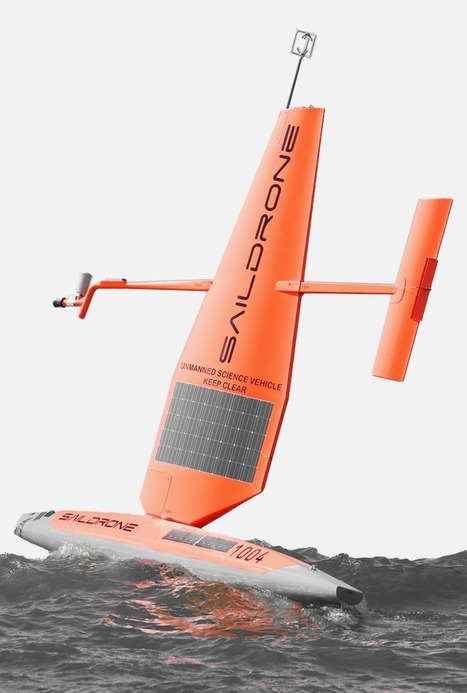
SailDrone makes wind powered + solar powered ocean drones to understand planetary systems affecting humanity. The company designs, manufactures, and operates their global fleet sail-drones — monitoring the state of the planet in real time. Their data sets can be used by commercial enterprise, research institutions, or private groups on specific missions. SailDrone is making world history by offering high resolution, ocean data collection at-scale. Their sail-drone is 20 feet long, 18 feet high above the water, weighs 600 pounds. It can operate indefinitely: the wind is propulsion that pushes it along, a solar power panel charges the batteries that run the on-board computers + communications equipment. The sail-drones navigate automatically using GPS, a system that uses space satellites to map the Earth. The craft is completely submersible and designed to handle the harsh effects of salt water. The sail-drones can autonomously travel 1,000s of miles: taking measurements of wind speed + wind direction, temperature, humidity, radiation, salinity, chlorphyll, pH level. Scientists in marine biology are using SailDrone’s fleet to monitor the Earth’s ecology + fisheries — tracking factors affecting food and climate for sea life. In the past, researchers relied on data collected by large ships that cost $10,000+ per day to operate. Also, large ships can only approach shallow water of at least 66 feet. But sail-drones can travel into waters close to shore — as shallow as 10 feet — and continue to take measurements. Another benefit is that sail-drones can stay afloat in rough weather, continuing to function — sailing the oceans without stopping for 12 months at a time. But big ships must avoid extreme storm weather or dock at shore — re-routing and interrupting science and commercial ocean missions.
|
|
Scooped by
Dr. Stefan Gruenwald
March 31, 2019 10:49 AM
|
Plants need water and carbon dioxide to grow. These are the two essential ingredients for photosynthesis. Now, researchers have found a more efficient way to reduce water use and improve plant growth without impacting on carbon use. They used a synthetic approach to the opening and closing of the stomata, these are the pores in the leaves of plants through which carbon dioxide enters for photosynthesis. Stomata are also the main route for water loss in plants. Previous attempts to reduce water usage by manipulating these pores has generally come at a cost in carbon dioxide use. Crop irrigation accounts for roughly 70 per cent of fresh water use on the planet and its use has expanded at unsustainable rates over the past three decades. The new method successfully reduces plant water use without any cost to plant growth or carbon use. The findings demonstrate the feasibility to improve plant growth by circumventing this carbon-water trade off.
|
|
Scooped by
Dr. Stefan Gruenwald
March 29, 2019 1:24 PM
|
Over seven decades ago, in 1941 to be exact, Isaac Asimov wrote a short story that was called “Reason” (PDF), in which energy was captured from the sun and was subsequently transmitted via microwave beams to nearby planets from a space station. Flash forward to today, scientists are looking to make that very science fiction dream a reality for inhabitants on Earth. There has been tremendous research on space-based solar power (SBSP) or space solar power (SSP) since the mid 20th century. Here is a timeline of the various international studies and projects related to SBSP. With SBSP, we could solve our energy and greenhouse gas emission problems with little environmental impact. Professor Sergio Pellegrino of CalTech recently explained that an SBSP system would receive eight times more energy than Earth itself does. With SBSP’s continuous massive energy output capability and the fact that our sun is slated to exist for another 2-3 billion years, we can safely assume we will not run out of this energy source anytime soon. One of NASA’s most extensive studies ever devised, the Satellite Power System Concept Development and Evaluation Program (PDF) was specifically on SBSP and cost of more than $50 million, taking place from 1976 to 1980. Another fundamental study NASA funded to re-evaluate and understand the feasibility of SBSP was the Space Solar Power Exploratory Research and Technology (PDF) program. An enormous amount of solid research was accomplished in the study, but the general conclusion was that: Large-scale SSP is a very complex integrated system of systems that requires numerous significant advances in current technology and capabilities… A technology roadmap has been developed that lays out potential paths for achieving all needed advances – albeit over several decades…
— John C. Mankins, 7 September 2000 With all that being said, let’s dive in to better understand this exponential technology and its viability. SO WHAT EXACTLY IS SPACE-BASED SOLAR POWER? Space-based solar power is the concept of capturing solar energy in outer space and transferring it directly to Earth or other nearby planets. In simple terms, we would put some mechanism in outer space to capture the sun’s energy almost continuously and transmit that energy to Earth. This would happen day or night, rain or shine. Once we have received the energy on Earth at a rectenna (a special antenna for receiving energy), we can then easily distribute the power through our normal methods. Easy enough. There are many ideas related to the SBSP mechanism configuration and architecture we could utilize. Location of the SBSP system, satellite architecture, energy collection, and energy transmission are a few basic areas to look at when understanding the different SBSP systems. Given the number of proposed concepts, we will only look at a few of the more notable options.
|
|
Scooped by
Dr. Stefan Gruenwald
March 28, 2019 5:10 PM
|
An international study led by ANU has found a fungal disease has caused dramatic population declines in more than 500 amphibian species, including 90 extinctions, over the past 50 years. The disease, which eats away at the skin of amphibians, has completely wiped out some species, while causing more sporadic deaths among other species. Amphibians, which live part of their life in water and the other part on land, mainly consist of frogs, toads and salamanders. The deadly disease, chytridiomycosis, is present in more than 60 countries - the worst affected parts of the world are Australia, Central America and South America. Lead researcher Dr Ben Scheele said the team found that chytridiomycosis is responsible for the greatest loss of biodiversity due to a disease. "The disease is caused by chytrid fungus, which likely originated in Asia where local amphibians appear to have resistance to the disease," said Dr Scheele from the Fenner School of Environment and Society at ANU. He said the unprecedented number of declines places chytrid fungus among the most damaging of invasive species worldwide - similar to rats and cats in terms of the number of species each of them endangers. "Highly virulent wildlife diseases, including chytridiomycosis, are contributing to the Earth's sixth mass extinction," Dr Scheele said.
|
|
Scooped by
Dr. Stefan Gruenwald
March 28, 2019 5:07 PM
|
Researchers at MIT and in China have found a new way to make cathodes for lithium batteries, offering improvements in the amount of power for both a given weight and a given volume. Scientists around the globe have been on a quest for batteries that pack a punch but are smaller and lighter than today's versions, potentially enabling electric cars to travel further or portable electronics to run for longer without recharging. Now, researchers at MIT and in China say they've made a major advance in this area, with a new version of a key component for lithium batteries, the cathode. The team describes their concept as a "hybrid" cathode, because it combines aspects of two different approaches that have been used before, one to increase the energy output per pound (gravimetric energy density), the other for the energy per liter (volumetric energy density). The synergistic combination, they say, produces a version that provides the benefits of both, and more. The work is described today in the journal Nature Energy, in a paper by Ju Li, an MIT professor of nuclear science and engineering and of materials science and engineering; Weijiang Xue, an MIT postdoc; and 13 others. Today's lithium-ion batteries tend to use cathodes (one of the two electrodes in a battery) made of a transition metal oxide, but batteries with cathodes made of sulfur are considered a promising alternative to reduce weight. Today, the designers of lithium-sulfur batteries face a tradeoff. The cathodes of such batteries are usually made in one of two ways, known as intercalation types or conversion types. Intercalation types, which use compounds such as lithium cobalt oxide, provide a high volumetric energy density -- packing a lot of punch per volume because of their high densities. These cathodes can maintain their structure and dimensions while incorporating lithium atoms into their crystalline structure. The other cathode approach, called the conversion type, uses sulfur that gets transformed structurally and is even temporarily dissolved in the electrolyte. "Theoretically, these [batteries] have very good gravimetric energy density," Li says. "But the volumetric density is low," partly because they tend to require a lot of extra materials, including an excess of electrolyte and carbon, used to provide conductivity. In their new hybrid system, the researchers have managed to combine the two approaches into a new cathode that incorporates both a type of molybdenum sulfide called Chevrel-phase, and pure sulfur, which together appear to provide the best aspects of both. They used particles of the two materials and compressed them to make the solid cathode. "It is like the primer and TNT in an explosive, one fast-acting, and one with higher energy per weight," Li says. Among other advantages, the electrical conductivity of the combined material is relatively high, thus reducing the need for carbon and lowering the overall volume, Li says. Typical sulfur cathodes are made up of 20 to 30 percent carbon, he says, but the new version needs only 10 percent carbon. The net effect of using the new material is substantial. Today's commercial lithium-ion batteries can have energy densities of about 250 watt-hours per kilogram and 700 watt-hours per liter, whereas lithium-sulfur batteries top out at about 400 watt-hours per kilogram but only 400 watt-hours per liter. The new version, in its initial version that has not yet gone through an optimization process, can already reach more than 360 watt-hours per kilogram and 581 watt-hours per liter, Li says. It can beat both lithium-ion and lithium-sulfur batteries in terms of the combination of these energy densities.
|
|
Scooped by
Dr. Stefan Gruenwald
March 28, 2019 11:36 AM
|
Scientific American is the essential guide to the most awe-inspiring advances in science and technology, explaining how they change our understanding of the world and shape our lives. Octopuses and their kin (cuttlefish and squid) stand apart from other invertebrates, having evolved with much larger nervous systems and greater cognitive complexity. The majority of their neurons are found in the arms, which can independently taste and touch and also control basic motions without input from the brain. Octopus brains and vertebrate brains have no common anatomy but support a variety of similar features, including forms of short- and long-term memory, versions of sleep, and the capacities to recognize individual people and explore objects through play.
|
|
Scooped by
Dr. Stefan Gruenwald
March 27, 2019 10:13 PM
|
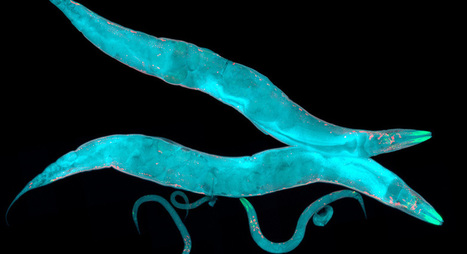
An enzyme-blocking molecule can extend the lifespan of Caenorhabditis elegans roundworms by as much as 45 percent, largely by modulating a cannabinoid biological pathway, according to a new study. The scientists, whose work is published on March 25 2019 in Nature Chemical Biology, also showed that the lifespan-extending cannabinoid pathway in C. elegans is related in unexpected ways to cannabinoid pathways found in humans and other mammals. "This study reveals a new life-extension pathway, but more broadly, it introduces a powerful method for applying chemical probes to lab animals such as worms to discover biology that may be relevant to humans," says study senior author Benjamin Cravatt, PhD, Professor and Gilula Chair of Chemical Biology at Scripps Research. Cravatt is known for his development of advanced "chemical proteomics" methods for studying enzymes and the biological pathways they regulate. In the new study his team deployed these methods to investigate aging in C. elegans roundworms. The tiny worms normally live for just a few weeks -- compared to two or three years for lab mice -- making them, in principle, more practical for lifespan studies. Lifespan studies using C. elegans worms typically involve the deletion or silencing of a particular gene in the embryonic stage of life to see if that extends the average lifespan of affected animals. The Cravatt team's approach, by contrast, was to use small-molecule compounds to disrupt enzyme-related pathways in adult worms, in the hope that this would uncover pathways that regulate lifespan. "The beauty of this approach is that any lifespan-extending compounds we identify can be useful tools to study whether the same mechanisms and targets also modulate aging in mammals," says study co-author Michael Petrascheck, PhD, associate professor in the Department of Molecular Medicine at Scripps Research. The team used a library of about 100 such compounds, all known to inhibit enzymes called serine hydrolases in mammals. "Metabolic processes are very important in determining the rate of aging and lifespan, and serine hydrolases are major metabolic enzymes, so we thought there was a good chance we'd find an important aging-related enzyme this way," says study first author Alice Chen, a graduate student in the Cravatt lab. After finding ways to get the compounds through the tough outer skin of the worms, Chen tested them on worms that were 1 day into adulthood, and found that some of the compounds extended average worm lifespan by at least 15 percent. One, a carbamate compound called JZL184, extended worm lifespan by 45 percent at the optimal dose. More than half the worms treated with JZL184 were still alive and apparently healthy at 30 days, a time when virtually all untreated worms were dead of old age. JZL184 was originally developed by the Cravatt lab as an inhibitor of the mammalian enzyme monoacylglycerol lipase (MAGL), whose normal job includes the breakdown of a molecule called 2-AG. The latter is an important neurotransmitter and is known as an endogenous cannabinoid ("endocannabinoid") because it activates one of the receptors hit by the main psychoactive component in cannabis. Curiously however, a corresponding MAGL enzyme does not exist in C. elegans worms, so JZL184's target in these animals was a mystery. Chen soon found, though, that one of the main target enzymes for JZL184 in worms was fatty acid amide hydrolase 4 (FAAH-4). Although FAAH-4 and MAGL are not related in terms of their amino-acid sequences or 3-D folds, further experiments revealed, surprisingly, that FAAH-4 in worms does what MAGL does in humans and other mammals: it breaks down 2-AG. 2-AG has been linked to aging in mammals; one recent study found evidence that its levels fall in the brains of aging mice, likely due to greater MAGL activity. The results suggest, then, that studying the FAAH-4/2-AG pathway in worms could one day yield lifespan-extending strategies for humans. "It seems at least plausible at this point that both worms and mammals have a cannabinoid-related signaling pathway that affects longevity and possibly aging-related disorders," Cravatt says. The study demonstrates more generally how libraries of small-molecule compounds and associated proteomics techniques can be used to reveal biological pathways that evolutionarily distant lab animals such as worms have in common with humans. "In principle, with this approach one can quickly find a compound that has a desired biological effect and also find the target through which it works, all in a live and relatively complex model organism," Cravatt says.
|
|
Scooped by
Dr. Stefan Gruenwald
March 27, 2019 10:05 PM
|
UChicago scientists find substantial runoff fed rivers for more than a billion years. Long ago on Mars, water carved deep riverbeds into the planet's surface -- but we still don't know what kind of weather fed them. Scientists aren't sure, because their understanding of the Martian climate billions of years ago remains incomplete. A new study by University of Chicago scientists catalogued these rivers to conclude that significant river runoff persisted on Mars later into its history than previously thought. According to the study, published March 27, 2019, in Science Advances, the runoff was intense -- rivers on Mars were wider than those on Earth today -- and occurred at hundreds of locations on the red planet. This complicates the picture for scientists trying to model the ancient Martian climate, said lead study author Edwin Kite, assistant professor of geophysical sciences and an expert in both the history of Mars and climates of other worlds. "It's already hard to explain rivers or lakes based on the information we have," he said. "This makes a difficult problem even more difficult." But, he said, the constraints could be useful in winnowing the many theories researchers have proposed to explain the climate. Mars is crisscrossed with the distinctive tracks of long-dead rivers. NASA's spacecraft have taken photos of hundreds of these rivers from orbit, and when the Mars rover Curiosity landed in 2012, it sent back images of pebbles that were rounded -- tumbled for a long time in the bottom of a river. It's a puzzle why ancient Mars had liquid water. Mars has an extremely thin atmosphere today, and early in the planet's history, it was also only receiving a third of the sunlight of present-day Earth, which shouldn't be enough heat to maintain liquid water "Indeed, even on ancient Mars, when it was wet enough for rivers some of the time, the rest of the data looks like Mars was extremely cold and dry most of the time," Kite said. Seeking a better understanding of Martian precipitation, Kite and his colleagues analyzed photographs and elevation models for more than 200 ancient Martian riverbeds spanning over a billion years. These riverbeds are a rich source of clues about the water running through them and the climate that produced it. For example, the width and steepness of the riverbeds and the size of the gravel tell scientists about the force of the water flow, and the quantity of the gravel constrains the volume of water coming through. Their analysis shows clear evidence for persistent, strong runoff that occurred well into the last stage of the wet climate, Kite said. The results provide guidance for those trying to reconstruct the Martian climate, Kite said. For example, the size of the rivers implies the water was flowing continuously, not just at high noon, so climate modelers need to account for a strong greenhouse effect to keep the planet warm enough for average daytime temperatures above the freezing point of water.
|
|
|
Scooped by
Dr. Stefan Gruenwald
March 31, 2019 11:21 PM
|
Aiming a laser beam at an aircraft isn't a harmless prank: The sudden flash of bright light can incapacitate the pilot, risking the lives of passengers and crew. But because attacks can happen with different colored lasers, such as red, green or even blue, scientists have had a difficult time developing a single method to impede all wavelengths of laser light. Today, researchers report liquid crystals that could someday be incorporated into aircraft windshields to block any color of bright, focused light. The researchers will present their results today at the American Chemical Society (ACS) Spring 2019 National Meeting & Exposition. According to the Federal Aviation Administration, 6,754 laser strikes on aircraft were reported in 2017. "We were approached by collaborators in the aviation department at our university about the growing problem happening at airports across the world, where people were shooting lasers at planes during takeoff and landing, the critical phases of flight," says Jason Keleher, Ph.D., the project's principal investigator. Such attacks, which cause bright flashes of light in the cockpit, can distract pilots or inflict temporary or permanent visual damage, depending on the wavelength and intensity of the laser. "We wanted to come up with a solution that didn't require us to completely re-engineer an aircraft's windshield, but instead adds a layer to the glass that harnesses the existing power system for windshield defrosting," says Daniel Maurer, an undergraduate student. Keleher and Maurer are at Lewis University. Rather than being integrated into the windshield, previous approaches have included pull-down windscreens or goggles that pilots don during takeoff and landing. However, these can be inconvenient because they require the flight crew to take these precautions whether or not they are actually being targeted. An even bigger problem is that these strategies work only for specific wavelengths of laser light. "They don't block everything," Maurer says. "They're usually targeted toward green lasers because those are used for the majority of the attacks."
|
|
Scooped by
Dr. Stefan Gruenwald
March 31, 2019 1:23 PM
|
Scientists have used an imaging technique to reconstruct the brain architecture and neural networks of the thylacine – better known as the Tasmanian tiger – an extinct carnivorous marsupial native to Tasmania. The study, published in PLOS ONE, used magnetic resonance imaging (MRI) and diffusion tensor imaging (DTI) to scan postmortem specimens of two thylacine brain specimens, both of which were about 100 years old.
The results, when compared to the Tasmanian tiger’s closest living relative, the Tasmanian devil, suggest that the larger-brained thylacine had more cortex devoted to planning and decision-making.
“The natural behavior of the thylacine was never scientifically documented,” says Gregory Berns, a neuroscientist at Emory University and the lead author of the study. “Our reconstruction of its white matter tracts, or neural wiring, between different regions of its brain is consistent with anecdotal evidence that the thylacine occupied a more complex, predatory ecological niche versus the scavenging niche of the Tasmanian devil.”
The comparative study also supports theories of brain evolution suggesting that as brains grow larger they become more modular, or divided into sections associated with discrete functions, Berns says.
Kenneth Ashwell, an anatomist at the University of New South Wales School of Medical Sciences and an expert on the brain evolution of marsupials and monotremes, co-authored the study.
“The technology for imaging the preserved brains of rare, extinct and endangered species is an exciting innovation in the study of brain evolution,” Ashwell says. “It will allow us to track pathways and study functional connections that could never be analyzed through older experimental techniques.”
|
|
Scooped by
Dr. Stefan Gruenwald
March 31, 2019 12:30 PM
|
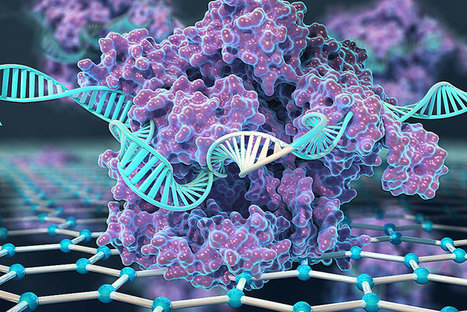
The device could be used to rapidly diagnose genetic diseases or to evaluate the accuracy of gene-editing techniques Most methods for the detection of nucleic acids require many reagents and expensive and bulky instrumentation. Here, scientists now report the development and testing of a graphene-based field-effect transistor that uses clustered regularly interspaced short palindromic repeats (CRISPR) technology to enable the digital detection of a target sequence within intact genomic material. Termed CRISPR–Chip, the biosensor uses the gene-targeting capacity of catalytically deactivated CRISPR-associated protein 9 (Cas9) complexed with a specific single-guide RNA and immobilized on the transistor to yield a label-free nucleic-acid-testing device whose output signal can be measured with a simple handheld reader. The team used the CRISPR–Chip to analyze DNA samples collected from HEK293T cell lines expressing blue fluorescent protein, and clinical samples of DNA with two distinct mutations at exons commonly deleted in individuals with Duchenne muscular dystrophy. In the presence of genomic DNA containing the target gene, CRISPR–Chip generates, within 15 min, with a sensitivity of 1.7 fM and without the need for amplification, a significant enhancement in output signal relative to samples lacking the target sequence. The CRISPR–Chip expands the applications of CRISPR–Cas9 technology to the on-chip electrical detection of nucleic acids.
|
|
Scooped by
Dr. Stefan Gruenwald
March 31, 2019 12:18 PM
|
New research from Washington University in St. Louis explains the cellular processes that allow a sun-loving microbe to "eat" electricity -- transferring electrons to fix carbon dioxide to fuel its growth. Led by Arpita Bose, assistant professor of biology in Arts & Sciences, and Michael Guzman, a PhD candidate in her laboratory, a Washington University team showed how a naturally occurring strain of Rhodopseudomonas palustris takes up electrons from conductive substances like metal oxides or rust. The work is described in a March 22, 2019 paper in the journal Nature Communications. The study builds on Bose's previous discovery that R. palustris TIE-1 can consume electrons from rust proxies like poised electrodes, a process called extracellular electron uptake. R. palustris is phototrophic, which means that it uses energy from light to carry out certain metabolic processes. The new research explains the cellular sinks where this microbe dumps the electrons it eats from electricity. "It clearly shows for the first time how this activity -- the ability for the organism to eat electricity -- is connected to carbon dioxide fixation," said Bose, a Packard Fellow who studies microbial metabolisms and their influence on biogeochemical cycling. This mechanistic knowledge can help inform efforts to harness the microbe's natural ability for sustainable energy storage or other bioenergy applications -- a potential that has caught the attention of the Department of Energy and Department of Defense. "R. palustris strains can be found in wild and exotic places like a rusty bridge in Woods Hole, Massachusetts where TIE-1 was isolated from," Bose said. "Really, you can find these organisms everywhere. This suggests that extracellular electron uptake might be very common." Guzman added: "The main challenge is that it's an anaerobe, so you need to grow it in an environment that doesn't have oxygen in order for it to harvest light energy. But the flip side to that is that those challenges are met with a lot of versatility in this organism that a lot of other organisms don't have."
|
|
Scooped by
Dr. Stefan Gruenwald
March 31, 2019 11:07 AM
|
On the morning of Aug. 17, 2017, after traveling for more than a hundred million years, the aftershocks from a massive collision in a galaxy far, far away finally reached Earth.
These ripples in the fabric of spacetime, called gravitational waves, tripped alarms at two ultra-sensitive detectors called LIGO, sending texts flying and scientists scrambling. One of the scientists was Prof. Daniel Holz at the University of Chicago. The discovery had provided him the information he needed to make a groundbreaking new measurement of one of the most important numbers in astrophysics: the Hubble constant, which is the rate at which the universe is expanding.
The Hubble constant holds the answers to big questions about the universe, like its size, age and history, but the two main ways to determine its value have produced significantly different results. Now there was a third way, which could resolve one of the most pressing questions in astronomy—or it could solidify the creeping suspicion, held by many in the field, that there is something substantial missing from our model of the universe.
"In a flash, we had a brand-new, completely independent way to make a measurement of one of the most profound quantities in physics," said Holz. "That day I'll remember all my life."
As LIGO turns back on April 1, 2019, Holz and other scientists are preparing for more data that could shed light on some of the universe's biggest questions.
|
|
Scooped by
Dr. Stefan Gruenwald
March 31, 2019 10:53 AM
|
Scientists have discovered a new way the gut talks to the brain — by sending messages about the salt content of the stomach and intestines. This information is one signal the body uses to control thirst. Satiation is the process by which eating and drinking reduce appetite. For thirst, oropharyngeal cues have a critical role in driving satiation by reporting to the brain the volume of fluid that has been ingested. By contrast, the mechanisms that relay the osmolarity of ingested fluids remain poorly understood, until now. Scientists have recently been able to show that the water and salt content of the gastrointestinal tract are precisely measured and then rapidly communicated to the brain to control drinking behavior in mice. They could demonstrate that this osmo-sensory signal is necessary and sufficient for satiation during normal drinking, involves the vagus nerve and is transmitted to key forebrain neurons that control thirst and vasopressin secretion. Using micro-endoscopic imaging, they show that individual neurons compute homeostatic need by integrating this gastrointestinal osmo-sensory information with oropharyngeal and blood-borne signals. These findings reveal how the fluid homeostasis system monitors the osmolarity of ingested fluids to dynamically control drinking behavior.
|
|
Scooped by
Dr. Stefan Gruenwald
March 29, 2019 1:25 PM
|
Looking to the future, NASA and other space agencies have high hopes for the field of extra-solar planet research. In the past decade, the number of known exoplanets has reached just shy of 4000, and many more are expected to be found once next-generations telescopes are put into service. And with so many exoplanets to study, research goals have slowly shifted away from the process of discovery and towards characterization. The purpose of the decadal survey is to consider previously-made progress in various fields of research and to set priorities for the coming decade. As such, the survey provides crucial guidance to NASA, the National Space Foundation (NSF), and the Department of Energy as they plan their astronomy and astrophysics research goals for the future.
|
|
Scooped by
Dr. Stefan Gruenwald
March 28, 2019 5:13 PM
|
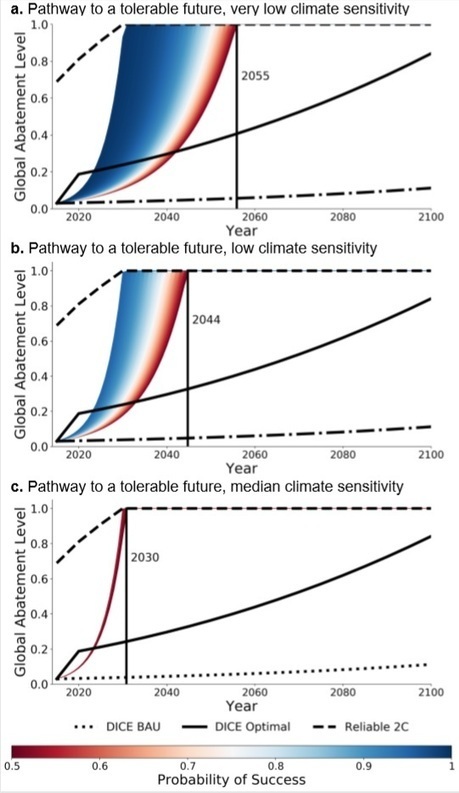
A new comprehensive study of climate change has painted over 5 million pictures of humanity’s potential future, and few foretell an Earth that has not severely warmed. But with immediate action and some luck, there are pathways to a tolerable climate future, according to a research team led by Tufts University. By adapting a popular computational climate change assessment model to better account for uncertainties in human activity and the atmosphere's sensitivity to carbon dioxide levels, the researchers created a novel method for exploring the consequences of different climate change futures to better inform policy decisions. The work is detailed in a paper published today in the journal Nature Climate Change. While modern assessment models integrate human activity and climate, within each exist uncertainties that can affect the outcome of the model. For instance, uncertainties in population growth, the economy, technological advancement, and the climate's sensitivity to greenhouse gases could all affect the predicted results of policies and laws designed to curb global warming. The improved model described in the study helped identify scenarios which led to a more tolerable climate future by exploring a wide range of variation within each uncertainty. "The consequences of severe warming can be dire. Given this potential for poor outcomes, it can be dangerous to consider only a few expert elicited scenarios," said Jonathan Lamontagne, Ph.D., assistant professor of Civil and Environmental Engineering at Tufts University and lead author of the study. "Planners need robust frameworks that broadly explore the uncertainty space for unforeseen synergies and failure mechanisms." The model used in the study accounts for uncertainties in human activity and climate by exploring millions of scenarios, some of which reveal pathways to a world where warming is limited to 2-degrees Celsius by the year 2100 -- a goal most climate experts say is required for a "tolerable" future. The massive analysis shows that meeting that target is exceptionally difficult in all but the most optimistic climate scenarios. One pathway is to immediately and aggressively pursue carbon-neutral energy production by 2030 and hope that the atmosphere's sensitivity to carbon emissions is relatively low, according to the study. If climate sensitivity is not low, the window to a tolerable future narrows and in some scenarios, may already be closed. The researchers emphasize that rapid carbon reduction strategies provide a hedge against the possibility of high climate sensitivity scenarios. "Despite massive uncertainties in a multitude of sectors, human actions are still the driving factor in determining the long-term climate. Uncertainty is sometimes interpreted as an excuse for delaying action. Our research shows that uncertainty can be a solid reason to take immediate action," said Lamontagne.
|
|
Scooped by
Dr. Stefan Gruenwald
March 28, 2019 5:08 PM
|
Astronomers who study stars are providing a valuable assist to the planet-hunting astronomers pursuing the primary objective of NASA’s new TESS Mission. In fact, asteroseismologists – stellar astronomers who study seismic waves (or “starquakes”) in stars that appear as changes in brightness – often provide critical information for finding the properties of newly discovered planets. This teamwork enabled the discovery and characterization of the first planet identified by TESS for which the oscillations of its host star can be measured. The planet – TOI 197.01 (TOI is short for “TESS Object of Interest”) – is described as a “hot Saturn” in a recently accepted scientific paper. That’s because the planet is about the same size as Saturn and is also very close to its star, completing an orbit in just 14 days, and therefore very hot. The Astronomical Journal will publish the paper written by an international team of 141 astronomers. Daniel Huber, an assistant astronomer at the University of Hawaii at Manoa’s Institute for Astronomy, is the lead author of the paper. Steve Kawaler, a professor of physics and astronomy; and Miles Lucas, an undergraduate student, are co-authors from Iowa State University. “This is the first bucketful of water from the firehose of data we’re getting from TESS,” Kawaler said. TESS – the Transiting Exoplanet Survey Satellite, led by astrophysicists from the Massachusetts Institute of Technology – launched from Florida’s Cape Canaveral Air Force Station on April 18, 2018. The spacecraft’s primary mission is to find exoplanets, planets beyond our solar system. The spacecraft’s four cameras are taking nearly month-long looks at 26 vertical strips of the sky – first over the southern hemisphere and then over the northern. After two years, TESS will have scanned 85 percent of the sky.
|
|
Scooped by
Dr. Stefan Gruenwald
March 28, 2019 5:04 PM
|
A woman in Scotland can feel virtually no pain due to a mutation in a previously-unidentified gene, according to a research article. She also experiences very little anxiety and fear, and may have enhanced wound healing due to the mutation, which the researchers say could help guide new treatments for a range of conditions, they report in the British Journal of Anesthesia. "We found this woman has a particular genotype that reduces activity of a gene already considered to be a possible target for pain and anxiety treatments," said one of the study's lead researchers, Dr James Cox (UCL Medicine). "Now that we are uncovering how this newly-identified gene works, we hope to make further progress on new treatment targets." At age 65, the woman sought treatment for an issue with her hip, which turned out to involve severe joint degeneration despite her experiencing no pain. At age 66, she underwent surgery on her hand, which is normally very painful, and yet she reported no pain after the surgery. Her pain insensitivity was diagnosed by Dr Devjit Srivastava, Consultant in Anesthesia and Pain Medicine at an NHS hospital in the north of Scotland and co-lead author of the paper. The woman tells researchers she has never needed painkillers after surgery such as dental procedures. She was referred to pain geneticists at UCL and the University of Oxford, who conducted genetic analyses and found two notable mutations. One was a microdeletion in a pseudogene, previously only briefly annotated in medical literature, which the researchers have described for the first time and dubbed FAAH-OUT. She also had a mutation in the neighboring gene that controls the FAAH enzyme. Further tests by collaborators at the University of Calgary, Canada, revealed elevated blood levels of neurotransmitters that are normally degraded by FAAH, further evidence for a loss of FAAH function. The FAAH gene is well-known to pain researchers, as it is involved in endocannabinoid signaling central to pain sensation, mood and memory. The gene now called FAAH-OUT was previously assumed to be a 'junk' gene that was not functional. The researchers found there was more to it than previously believed, as it likely mediates FAAH expression. Mice that do not have the FAAH gene have reduced pain sensation, accelerated wound healing, enhanced fear-extinction memory and reduced anxiety.
|
|
Scooped by
Dr. Stefan Gruenwald
March 27, 2019 10:16 PM
|
Physicists in the College of Arts and Sciences at Syracuse University have confirmed that matter and antimatter decay differently for elementary particles containing charmed quarks. Distinguished Professor Sheldon Stone says the findings are a first, although matter-antimatter asymmetry has been observed before in particles with strange quarks or beauty quarks. He and members of the College's High-Energy Physics (HEP) research group have measured, for the first time and with 99.999-percent certainty, a difference in the way D0 mesons and anti-D0 mesons transform into more stable byproducts. Mesons are subatomic particles composed of one quark and one antiquark, bound together by strong interactions. "There have been many attempts to measure matter-antimatter asymmetry, but, until now, no one has succeeded," says Stone, who collaborates on the Large Hadron Collider beauty (LHCb) experiment at the CERN laboratory in Geneva, Switzerland. "It's a milestone in antimatter research." The findings may also indicate new physics beyond the Standard Model, which describes how fundamental particles interact with one another. "Till then, we need to await theoretical attempts to explain the observation in less esoteric means," he adds. Every particle of matter has a corresponding antiparticle, identical in every way, but with an opposite charge. Precision studies of hydrogen and antihydrogen atoms, for example, reveal similarities to beyond the billionth decimal place. When matter and antimatter particles come into contact, they annihilate each other in a burst of energy -- similar to what happened in the Big Bang, some 14 billion years ago. "That's why there is so little naturally occurring antimatter in the Universe around us," says Stone, a Fellow of the American Physical Society, which has awarded him this year's W.K.H. Panofsky Prize in Experimental Particle Physics. The question on Stone's mind involves the equal-but-opposite nature of matter and antimatter. "If the same amount of matter and antimatter exploded into existence at the birth of the Universe, there should have been nothing left behind but pure energy. Obviously, that didn't happen," he says in a whiff of understatement. Thus, Stone and his LHCb colleagues have been searching for subtle differences in matter and antimatter to understand why matter is so prevalent. The answer may lie at CERN, where scientists create antimatter by smashing protons together in the Large Hadron Collider (LHC), the world's biggest, most powerful particular accelerator. The more energy the LHC produces, the more massive are the particles -- and antiparticles -- formed during collision. It is in the debris of these collisions that scientists such as Ivan Polyakov, a postdoc in Syracuse's HEP group, hunt for particle ingredients.
"We don't see antimatter in our world, so we have to artificially produce it," he says. "The data from these collisions enables us to map the decay and transformation of unstable particles into more stable byproducts." HEP is renowned for its pioneering research into quarks -- elementary particles that are the building blocks of matter. There are six types, or flavors, of quarks, but scientists usually talk about them in pairs: up/down, charm/strange and top/bottom. Each pair has a corresponding mass and fractional electronic charge.
In addition to the beauty quark (the "b" in "LHCb"), HEP is interested in the charmed quark. Despite its relatively high mass, a charmed quark lives a fleeting existence before decaying into something more stable. Recently, HEP studied two versions of the same particle. One version contained a charmed quark and an antimatter version of an up quark, called the anti-up quark. The other version had an anti-charm quark and an up quark. Using LHC data, they identified both versions of the particle, well into the tens of millions, and counted the number of times each particle decayed into new byproducts. "The ratio of the two possible outcomes should have been identical for both sets of particles, but we found that the ratios differed by about a tenth of a percent," Stone says. "This proves that charmed matter and antimatter particles are not totally interchangeable."
|
|
Scooped by
Dr. Stefan Gruenwald
March 27, 2019 10:08 PM
|
A team led by Cornell astronomer Lisa Kaltenegger has published a catalog of 1,822 stars that the new Transiting Exoplanet Surveying Satellite will be able to scan for possible Earth-like planets in their orbits. NASA's new Transiting Exoplanet Survey Satellite (TESS) is designed to ferret out habitable exoplanets, but with hundreds of thousands of sunlike and smaller stars in its camera views, which of those stars could host planets like our own? TESS will observe 400,000 stars across the whole sky to catch a glimpse of a planet transiting across the face of its star, one of the primary methods by which exoplanets are identified. A team of astronomers from Cornell University, Lehigh University and Vanderbilt University has identified the most promising targets for this search in the new "TESS Habitable Zone Star Catalog," published in Astrophysical Journal Letters. Lead author is Lisa Kaltenegger, professor of astronomy at Cornell, director of Cornell's Carl Sagan Institute and a member of the TESS science team. The catalog identifies 1,822 stars for which TESS is sensitive enough to spot Earth-like planets just a bit larger than Earth that receive radiation from their star equivalent to what Earth receives from our sun. For 408 stars, TESS can glimpse a planet just as small as Earth, with similar irradiation, in one transit alone. "Life could exist on all sorts of worlds, but the kind we know can support life is our own, so it makes sense to first look for Earth-like planets," Kaltenegger said. "This catalog is important for TESS because anyone working with the data wants to know around which stars we can find the closest Earth-analogs." Kaltenegger leads a program on TESS that is observing the catalog's 1,822 stars in detail, looking for planets. "I have 408 new favorite stars," said Kaltenegger. "It is amazing that I don't have to pick just one; I now get to search hundreds of stars." Confirming an exoplanet has been observed and figuring out the distance between it and its star requires detecting two transits across the star. The 1,822 stars the researchers have identified in the catalog are ones from which TESS could detect two planetary transits during its mission. Those orbital periods place them squarely in the habitable zone of their star. The habitable zone is the area around a star at which water can be liquid on a rocky planet's surface, therefore considered ideal for sustaining life. As the researchers note, planets outside the habitable zone could certainly harbor life, but it would be extremely difficult to detect any signs of life on such frozen planets without flying there. The catalog also identifies a subset of 227 stars for which TESS can not only probe for planets that receive the same irradiation as Earth, but for which TESS can also probe out farther, covering the full extent of the habitable zone all the way to cooler Mars-like orbits. This will allow astronomers to probe the diversity of potentially habitable worlds around hundreds of cool stars during the TESS mission's lifetime. The stars selected for the catalog are bright, cool dwarfs, with temperatures roughly between 2,700 and 5,000 degrees Kelvin. The stars in the catalog are selected due to their brightness; the closest are only approximately 6 light-years from Earth. "We don't know how many planets TESS will find around the hundreds of stars in our catalog or whether they will be habitable," Kaltenegger said, "but the odds are in our favor. Some studies indicate that there are many rocky planets in the habitable zone of cool stars, like the ones in our catalog. We're excited to see what worlds we'll find."
|