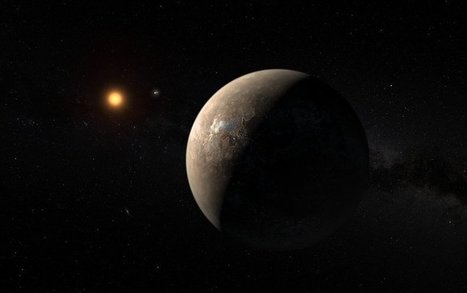
Astronomers say they may have detected a second planet around Proxima Centauri, our solar system’s nearest neighboring star.
Announced at Breakthrough Discuss, an annual invitation-only interdisciplinary meeting held by the Breakthrough Initiatives, the planet’s existence remains unconfirmed—for now. Dubbed Proxima c, it would be a so-called super-Earth, with a minimum mass roughly six times that of our planet’s. Its nearly 1900-day orbit would likely make it a frigid, inhospitable place, orbiting some 1.5 times the Earth-sun distance from Proxima Centauri—which is a red dwarf star some four light-years away that is much smaller and dimmer than our familiar yellow sun. If confirmed, the newfound world would join Proxima b, a roughly Earth-mass planet discovered in 2016 in a more clement orbit around Proxima Centauri.
According to the scientists making the presentation (Mario Damasso of Turin Observatory and Fabio Del Sordo of the University of Crete), the tentative detection is based upon the same expansive multi-year dataset that first revealed Proxima b—with the addition of more than 60 further measurements of the star taken in 2017. The measurements, primarily gathered through the European Southern Observatory’s (ESO) HARPS instrument, look for planets by the telltale wobbling they induce upon their host stars. The strength of such wobbles provides an estimate of the world’s mass; the wobble’s period yields the planet’s orbit.
Among other incidental evidence, the wobble of Proxima c—a subtle swerve in the position of Proxima Centauri by slightly more than a meter per second—appeared in earlier observations to be of borderline significance, but was pushed into firmer territory by the last few years of additional measurements. The search for Proxima Centauri's planets has been spearheaded by the international Pale Red Dot planet-hunting team. The results are summarized in a paper that has been submitted to a peer-reviewed journal.
Can water reach minus 263 degrees Celsius without turning into ice? Yes it can, say researchers from ETH Zurich and the University of Zurich, if it is confined in nanometre-scale lipid channels.
Making ice cubes is a simple process: you take a plastic ice-cube tray like you'd find in most households, fill it with water and put it in the freezer. Before long, the water crystallizes and turns to ice.
If you were to analyze the structure of ice crystals, you'd see that the water molecules are arranged in regular 3-dimensional lattice structures. In water, by contrast, the molecules are unorganized, which is the reason that water flows.
Glassy water
Led by Professors Raffaele Mezzenga and Ehud Landau, a group of physicists and chemists from ETH Zurich and the University of Zurich have now identified an unusual way to prevent water from forming ice crystals, so even at extreme sub-zero temperatures it retains the amorphous characteristics of a liquid.
In a first step, the researchers designed and synthesized a new class of lipids (fat molecules) to create a new form of "soft" biological matter known as a lipidic mesophase. In this material, the lipids spontaneously self-assemble and aggregate to form membranes, behaving in a similar way as natural fat molecules. These membranes then adopt a uniform arrangement to form a network of connected channels that measure less than one nanometer in diameter. Temperature and water content, as well as the novel structure of the designed lipid molecules determine the structure that the lipidic mesophase takes.
No space for water crystals
What's so special about this structure is that -- unlike in an ice-cube tray -- there is no room in the narrow channels for water to form ice crystals, so it remains disordered even at extreme sub-zero temperatures. The lipids don't freeze either.
Using liquid helium, the researchers were able to cool a lipidic mesophase consisting of a chemically modified monoacylglycerol to a temperature as low as minus 263 degrees Celsius, which is a mere 10 degrees above the absolute zero temperature, and still no ice crystals formed. At this temperature, the water became "glassy," as the researchers were able to demonstrate and confirm in a simulation. Their study of this unusual behaviour of water when confined within a lipidic mesophase was recently published in the journal Nature Nanotechnology.
"The key factor is the ratio of lipids to water," explains Professor Raffaele Mezzenga from the Laboratory of Food & Soft Materials at ETH Zurich. Accordingly, it is the water content in the mixture that determines the temperatures at which the geometry of the mesophase changes. If, for example, the mixture contains 12 percent water by volume, the structure of the mesophase will transition at about minus 15 degrees Celsius from a cubic labyrinth to a lamellar structure.
Natural antifreeze for bacteria
"What makes developing these lipids so tricky is their synthesis and purification," says Ehud Landau, Professor of Chemistry at the University of Zurich. He explains that this is because lipid molecules have two parts; one that is hydrophobic (repels water) and one that is hydrophilic (attracts water). "This makes them extremely difficult to work with," he says.
The soft biomaterial formed from the lipid membranes and water has a complex structure that minimizes the water's contact with the hydrophobic parts and maximizes its interface with the hydrophilic parts. The researchers modeled the new class of lipids on membranes of certain bacteria. These bacteria also produce a special class of self-assembling lipids that can naturally confine water in their interior, enabling the microorganisms to survive in very cold environments. "The novelty of our lipids is the introduction of highly strained three-membered rings into specific positions within the hydrophobic parts of the molecules," says Landau. "These enable the necessary curvature to produce such tiny water channels and prevent lipids to crystallize."
Cornell astronomers say that life already has survived the kind of fierce radiation found on such faraway planets as Proxima-B, 4.24 light years from Earth, and they have proof: you.
Rocky, Earth-like planets orbiting our closest stars could host life, according to a new study that raises the excitement about exoplanets. When rocky, Earth-like planets were discovered orbiting in the habitable zone of some of our closest stars, excitement skyrocketed -- until hopes for life were dashed by the high levels of radiation bombarding those worlds.
Proxima-b, only 4.24 light years away, receives 250 times more X-ray radiation than Earth and could experience deadly levels of ultraviolet radiation on its surface. How could life survive such a bombardment? Cornell University astronomers say that life already has survived this kind of fierce radiation, and they have proof: you.
Lisa Kaltenegger and Jack O'Malley-James make their case in a new paper, published in Monthly Notices of the Royal Astronomical Society. Kaltenegger is associate professor of astronomy and director of Cornell's Carl Sagan Institute, at which O'Malley-James is a research associate.
All of life on Earth today evolved from creatures that thrived during an even greater UV radiation assault than Proxima-b, and other nearby exoplanets, currently endure. The Earth of 4 billion years ago was a chaotic, irradiated, hot mess. Yet in spite of this, life somehow gained a toehold and then expanded. The same thing could be happening at this very moment on some of the nearest exoplanets, according to Kaltenegger and O'Malley-James. The researchers modeled the surface UV environments of the four exoplanets closest to Earth that are potentially habitable: Proxima-b, TRAPPIST-1e, Ross-128b and LHS-1140b.
These planets orbit small red dwarf stars which, unlike our sun, flare frequently, bathing their planets in high-energy UV radiation. While it is unknown exactly what conditions prevail upon the surface of the planets orbiting these flaring stars, it is known that such flares are biologically damaging and can cause erosion in planetary atmospheres. High levels of radiation cause biological molecules like nucleic acids to mutate or even shut down.
O'Malley-James and Kaltenegger modeled various atmospheric compositions, from ones similar to present-day Earth to "eroded" and "anoxic" atmospheres -- those with very thin atmospheres that don't block UV radiation well and those without the protection of ozone, respectively. The models show that as atmospheres thin and ozone levels decrease, more high-energy UV radiation reaches the ground. The researchers compared the models to Earth's history, from nearly 4 billion years ago to today.
Although the modeled planets receive higher UV radiation than that emitted by our own sun today, this is significantly lower than what Earth received 3.9 billion years ago. "Given that the early Earth was inhabited," the researchers wrote, "we show that UV radiation should not be a limiting factor for the habitability of planets orbiting M stars. Our closest neighboring worlds remain intriguing targets for the search for life beyond our solar system."
"Never have so many Arctic indicators been brought together in a single paper." And the findings spell trouble for the entire planet.
A new research paper by American and European climate scientists focused on Arctic warming published Monday reveals that the "smoking gun" when it comes to changes in the world's northern polar region is rapidly warming air temperatures that are having—and will continue to have—massive and negative impacts across the globe.
The new paper—titled "Key Indicators of Arctic Climate Change: 1971–2017"—is the work of scientists at the International Arctic Research Center at the University of Alaska Fairbanks and the Geological Survey of Denmark and Greenland in Copenhagen (GUES).
"The Arctic system is trending away from its 20th century state and into an unprecedented state, with implications not only within but beyond the Arctic." —Jason Box, GUES "The Arctic system is trending away from its 20th century state and into an unprecedented state, with implications not only within but beyond the Arctic," said Jason Box of the GUES, lead author of the study. "Because the Arctic atmosphere is warming faster than the rest of the world, weather patterns across Europe, North America, and Asia are becoming more persistent, leading to extreme weather conditions. Another example is the disruption of the ocean circulation that can further destabilize climate: for example, cooling across northwestern Europe and strengthening of storms."
John Walsh, chief scientist at AUF's research center, was the one who called arctic air temperatures the "smoking gun" discovered during the research—a finding the team did not necessarily anticipate.
"I didn't expect the tie-in with temperature to be as strong as it was," Walsh said. "All the variables are connected with temperature. All components of the Arctic system are involved in this change."
The study is the first of its kind to combine observations of physical climate indicators—such as snow cover, rainfall, and seasonal measurements of sea ice extent—with biological impacts, such as a mismatch in the timing of flowers blooming and pollinators working. According to Walsh, "Never have so many Arctic indicators been brought together in a single paper."
Yoshua Bengio, winner of the prestigious Turing award for his work on deep learning, is establishing international guidelines for the ethical use of AI.
Yoshua Bengio is one of three computer scientists who last week shared the US$1-million A. M. Turing award — one of the field’s top prizes. The three artificial-intelligence (AI) researchers are regarded as the founders of deep learning, the technique that combines large amounts of data with many-layered artificial neural networks, which are inspired by the brain. They received the award for making deep neural networks a “critical component of computing”.
The other two Turing winners, Geoff Hinton and Yann LeCun, work for Google and Facebook, respectively; Bengio, who is at the University of Montreal, is one of the few recognized gurus of machine learning to have stayed in academia full time.
But alongside his research, Bengio, who is also scientific director of the Montreal Institute for Learning Algorithms (MILA), has raised concerns about the possible risks from misuse of technology. In December, he presented a set of ethical guidelines for AI called the Montreal declaration at the Neural Information Processing Systems (NeurIPS) meeting in the city.
Nature sat down with Bengio in London in January.
Do you see a lot of companies or states using AI irresponsibly?
There is a lot of this, and there could be a lot more, so we have to raise flags before bad things happen. A lot of what is most concerning is not happening in broad daylight. It’s happening in military labs, in security organizations, in private companies providing services to governments or the police.
What are some examples?
Killer drones are a big concern. There is a moral question, and a security question. Another example is surveillance — which you could argue has potential positive benefits. But the dangers of abuse, especially by authoritarian governments, are very real. Essentially, AI is a tool that can be used by those in power to keep that power, and to increase it. Another issue is that AI can amplify discrimination and biases, such as gender or racial discrimination, because those are present in the data the technology is trained on, reflecting people’s behavior.
This article will be used in my paper because it discusses the potential ways AI can be abused and how, with the track we are on, ethical implications of these technologies will not really play a role. It is basically murphy's law, anything that can happen will happen and companies are on a fast track to using and abusing this technology which seems to be proof that if we get the technology, we will run simulations regardless of the ethical implications.
The article is an interview with Yoshua Bengio, who is a Turing award winner for deep learning.
==Self-regulation is not going to work. Do you think that voluntary taxation works? It doesn’t. Companies that follow ethical guidelines would be disadvantaged with respect to the companies that do not. It’s like driving. Whether it’s on the left or the right side, everybody needs to drive in the same way; otherwise, we’re in trouble.
==Yoshua Bengio is one of three computer scientists who last week shared the US$1-million A. M. Turing award — one of the field’s top prizes.\ They received the award for making deep neural networks a “critical component of computing”.
Google says its planned Dunant cable from Virginia to France will transmit 250 terabits per second, enough to zap the Library of Congress through it three times a second.
Google states that the fiber optic cable it's building across the Atlantic Ocean will be the fastest of its kind. When the cable goes live next year, the company estimates it will transmit around 250 terabits per second, fast enough to zap all the contents of the Library of Congress from Virginia to France three times every second. That's about 56 percent faster than Facebook and Microsoft's Marea cable, which can transmit about 160 terabits per second between Virginia and Spain.
Fiber-optic networks work by sending light over thin strands of glass. Fiber-optic cables, which are about the diameter of a garden hose, enclose multiple pairs of these fibers. Google’s new cable is so fast because it carries more fiber pairs. Today, most long-distance undersea cables contain six or eight fiber-optic pairs. Google said Friday that its new cable, dubbed Dunant, is expected to be the first to include 12 pairs, thanks to new technology developed by Google and SubCom, which designs, manufactures, and deploys undersea cables.
Dunant might not be the fastest for long: Japanese tech giant NEC says it has technology that will enable long-distance undersea cables with 16 fiber-optic pairs. And Vijay Vusirikala, head of network architecture and optical engineering at Google, says the company is already contemplating 24-pair cables.
The surge in intercontinental cables, and their increasing capacity, reflect continual growth in internet traffic. They enable activists to livestream protests to distant countries, help companies buy and sell products around the world, and facilitate international romances.
"Many people still believe international telecommunications are conducted by satellite," says NEC executive Atsushi Kuwahara. "That was true in 1980, but nowadays, 99 percent of international telecommunications is submarine."
Fish slime could be key to the development of new antibiotics, researchers say. Antibiotic resistance is a growing danger, with experts warning of a return to a situation where everyday infections could become life-threatening.
The NHS is aiming to cut antibiotic use by 15% by 2024 in a bid to tackle the problem – which has been called a danger to humanity – while the government has also announced it is looking into offering incentives to drug companies to come up with new antibiotics. But academics are also on the case. Now researchers say new antibiotics might be found in the layer of mucus that coats the outer surface of young fish.
While the mucus itself helps protect fish from harmful bacteria, fungi and viruses, the team are interested in the collection of microbes it is home to – the so-called microbiome – and the substances it produces. “We believe the microbes in the mucus add chemistry to the antiseptic power of the mucus and that new bioactive compounds might be discovered from the fish microbiome,” said Dr Sandra Loesgen, the head of the research group behind the work at Oregon State University.
The research, presented at the American Chemical Society spring national meeting in Orlando, Florida, involved the team swabbing 17 species of fish caught off the southern California coast.
In total, 47 different strains of bacteria found in the mucus of the fish were grown separately and the cocktails of substances they produced were collected and tested for their antimicrobial prowess.
The team say a number of the strains produced chemical mixtures that were able to tackle the methicillin-resistant Staphylococcus aureus, or MRSA, with a smaller proportion able to tackle E coli. Some also proved effective against the problematic yeast Candida albicans, and even colon cancer cells.
NASA has selected two missions that have the potential to open new windows on one of the earliest eras in the history of our solar system – a time less than 10 million years after the birth of our sun. The missions, known as Lucy and Psyche, were chosen from five finalists and will proceed to mission formulation.
The above diagram illustrates the path Lucy will take during its 12-year journey, which will take it close by four L4 asteroids, two L5 asteroids, and one main-belt asteroid for good measure.
Astronomy: Roen Kelly after Southwest Research Institute
Over the course of more than a decade, Lucy will venture out to the orbit of Jupiter to explore six different Trojans — targeting asteroids in both the Greek and Trojan camps — along with a main-belt asteroid for good measure.
With the help of Lucy, astronomers will soon explore the dim diamonds in the sky known as the Trojans asteroids. And because these ancient relics likely hold valuable information concerning Jupiter's core and the infant solar system, the first results of the mission cannot come soon enough.
Researchers are trialling the use of drones to monitor coffee plant health in Thailand in a bid to prevent the spread of disease.
Around 95 million cups of coffee are drunk a day in the UK alone, but the coffee plant is susceptible to a fungal disease known as coffee rust. This disease is devastating to the plant and can wipe out vast swathes of crops or even entire plantations.
If a coffee plantation is hit by disease it can destroy an entire family's livelihood. In the lower-income regions where coffee is grown, farmers also tend not to use expensive fungicides that could prevent the disease. This is also because they want to grow coffee without using chemicals to secure organic certification.
Now, a team led by Dr. Oliver Windram from the Department of Life Sciences at Imperial are hoping to be able to prevent the spread of coffee rust using drones, and have been testing this out in the coffee growing areas of Thailand.
The idea is that if farmers can spot that disease has started to affect their crops, they can remove the affected plants to prevent it spreading further. This method would also allow them to control disease without chemical fungicides.
A pair of researchers, one with the University of Maryland the other with Southwest Research Institute, has found what they believe is a plausible explanation for the existence of the ocean beneath the surface of one of Saturn's moons. In their paper published in the journal Nature Astronomy, Marc Neveu and Alyssa Rhoden describe the computer model they built to replicate conditions near Saturn over time and what they showed.
Saturn has over 60 moons, ranging in size from tiny globes less than 300 meters across to the giant moon Titan, which has a larger circumference than Mercury. Some of the moons orbit close to the planet, others quite far away. Scientists believe that only one of Saturn's moons, Enceladus, has a subsurface ocean. In this new effort, the researchers sought to determine why Enceladus is unique in the Saturn system.
The researchers started by noting that Saturn has just five inner moons, each of which is large enough to have a subsurface ocean and close enough to the planet to melt ice. They also noted that prior work by others has suggested that all of the inner moons likely developed as a result of coalesced material pulled together from debris around the planet, which would have included ice. They also noted that all five of the moons are impacted by the gravitational pull of the planet, and from one another. And finally, they noted that prior researchers have created computer models meant to mimic the tides on Saturn's moons and their geology, but to date, no models had been created to model both—the only kind of model that might explain why only one of the moons has a subsurface ocean.
The researchers designed their model to mimic the behavior of Saturn and its moons over the course of the past 4.5 billion years. The model showed that Enceladus developed a subsurface ocean because of its unique gravitational interactions with the other moons—they forced Enceladus into an oblong orbit. They also found that Saturn's pull on the moon continually distorted it, and that the flexing heated the moon's interior, allowing the water underground to remain liquid. None of the other four moons had conditions similar enough to allow water to remain liquid beneath their surfaces.
Someone could hack into your pacemaker or insulin pump and potentially kill you, just by intercepting and analyzing wireless signals. This hasn't happened in real life yet, but researchers have been demonstrating for at least a decade that it's possible.
Before the first crime happens, Purdue University engineers have tightened security on the "internet of body." Now, the network you didn't know you had is only accessible by you and your devices, thanks to technology that keeps communication signals within the body itself.
The work appears in the journal Scientific Reports. Study authors include Shreyas Sen, an assistant professor of electrical and computer engineering at Purdue, and his students, Debayan Das, Shovan Maity and Baibhab Chatterjee. "The challenge has not only been keeping this communication within the body so that no one can intercept it, but also getting higher bandwidth and less battery consumption," he said.
Body fluids carry electrical signals very well. So far, so-called "body area networks" have used Bluetooth technology to send signals on and around the body. These electromagnetic waves can be picked up within at least a 10-meter radius of a person.
Sen's team has demonstrated a way for human body communication to occur more securely – not going beyond a centimeter off the skin and using 100 times less energy than traditional Bluetooth communication. This is possible through a device that couples signals in the electro-quasistatic range, which is much lower on the electromagnetic spectrum. Sen's group is working with government and industry to incorporate this device into a dust-sized integrated circuit.
Achrioptera is a taxon of extremely large and exceptionally colorful stick insects endemic to Madagascar and the Comoros Archipelago. The phylogenetic position of the Achriopterini, comprising the genera Achrioptera and Glawiana, is based on a multigene phylogeny and it has been concluded that it is a sister group to other Madagascan phasmids (Anisacanthidae) rather than to Neotropical or Australo-Pacific groups as it was suggested in a previous study based on morphology. These recent results also point to unresolved relationships (potential paraphyly of Achrioptera), taxonomic issues (elevation of A. punctipes cliquennoisi to species level), and detection of cryptic diversity (in A. impennis), demonstrating the need of additional research.
A DNA barcoding approach based on COI sequences of Achrioptera species revealed a clear discrimination between closely related and morphologically similar species. Applying integrative taxonomy using multiple lines of evidence, the taxonomists demonstrated that the well-known species with blue males from Montagne des Français and Foret d'Orangea in the far north of Madagascar, previously attributed to Achrioptera fallax, represents a new species, which is now described as Achrioptera manga sp. nov. based on morphological, chromatic, and genetic (mitochondrial and nuclear) differences.
A species description from more than two centuries ago has fooled scientists until now.
In the latter part of the 18th century, Johan Fabricius was busy churning out scientific names for new insects. A student of the so-called father of modern taxonomy, Carolus Linnaeus, and one of the most productive entomologists in history, Fabricius put monikers to about 10,000 species. We have him to thank for classifying orders (though he called them classes) of insects based on their mouthparts—a practice that is still used today.
Fabricius’ penchant for classification meant he was often on the move, traveling between various countries to examine specimens in museums and private collections. At some point during his globetrotting, Fabricius examined insect illustrations made by William Jones, an English entomologist who drew a number of specimens from various collections. These pictures led Fabricius to publish a description in 1793 of a butterfly species of uncertain origin—a paper that everyone promptly forgot, according to Alberto Zilli, a moth curator at the Natural History Museum in London.
Fabricius first described Hesperia busiris as a butterfly in the skipper family. In Jones’ drawing, the antennae have a well-developed club at the end similar to other skipper specimens, but the shape of the wings and the wing and body pattern look nothing like other species in the family. Since a second specimen of this butterfly was never discovered, Hesperia busiris was included in a number of subsequent butterfly catalogues over the years.
The trail of this missing mystery butterfly—which has likely since gone extinct—has eluded biologists for 200 years despite the specimen passing under the scrutiny of some of the most famous entomologists of the 18th century. But academic detective work by Zilli and his colleague may have finally revealed the identity of the elusive insect.
In a new study published recently in Systematic Entomology, Zilli and Nick Grishin, a butterfly researcher at the University of Texas, examined illustrations and engravings from centuries past and tracked the movement of specimens through museums and private collections to solve the mystery of the missing butterfly.
“Hesperia busiris, one of the ‘rarest butterflies ever,’ eventually proved to be a moth, although no less a rare one, entering the ranks of moth species known only from unique specimens,” the study concludes.
There's a new addition to the family tree: an extinct species of human that's been found in the Philippines. It's known as Homo luzonensis, after the site of its discovery on the country's largest island Luzon. Its physical features are a mixture of those found in very ancient human ancestors and in more recent people. That could mean primitive human relatives left Africa and made it all the way to South-East Asia, something not previously thought possible.
The find shows that human evolution in the region may have been a highly complicated affair, with three or more human species in the region at around the time our ancestors arrive. One of these species was the diminutive "Hobbit" - Homo floresiensis - which survived on the Indonesian island of Flores until 50,000 years ago.
Prof Chris Stringer, from London's Natural History Museum, commented: "After the remarkable finds of the diminutive Homo floresiensis were published in 2004, I said that the experiment in human evolution conducted on Flores could have been repeated on many of the other islands in the region. "That speculation has seemingly been confirmed on the island of Luzon... nearly 3,000km away."
Researchers have developed a new design method to create soft robots that may help in caregiving for elderly family members.
The world's elderly population is booming. The number of older people -- those age 60 years or older -- is expected to more than double by 2050 and is growing faster than all younger age groups across the globe. This trend comes with an increasing demand for caregivers capable of providing 24-hour care, not only at hospitals or nursing homes, but also at private homes and apartments. Already, caregiving robots are programmed to ask questions a nurse would ask and can monitor patients for falls. These robotic assistants are expected to become increasingly marketable and reach 450,000 by 2045 because of the expected caregiver shortage in the United States.
"Unfortunately, the external hard structure of current caregiving robots prevents them from a safe human-robot interaction, limiting their assistance to mere social interaction and not physical interaction," said Ramses Martinez, an assistant professor in the School of Industrial Engineering and in the Weldon School of Biomedical Engineering in Purdue's College of Engineering. "After all, would you leave babies or physically or cognitively impaired old people in the hands of a robot?"
Recent advances in material science have enabled the fabrication of robots with deformable bodies or the ability to reshape when touched, but the complex design, fabrication, and control of soft robots currently hinders the commercialization of this technology and its use for at-home applications.
Martinez and other Purdue University researchers have developed a new design method that shows promise in enabling the efficient design and fabrication of soft robots using a 3D printer. The technology is published in the April 8 edition of Advanced Functional Materials. A video showing the technology is available at https://www.youtube.com/watch?v=nDpzuLbtzDM.
The design process involves three steps. First, a user makes a computer-aided design file with the shape of the robot. The user then paints the CAD file to show which directions the different joints of the soft robot will move. A fast computer algorithm takes a few seconds to convert the CAD model into a 3D architected soft machine (ASM) that can be printed using any conventional 3D printer. The architected soft machines move like humans, except instead of muscles they rely on miniaturized motors that pull from nylon lines tied to the ends of their limbs. They can be squeezed and stretched to more than 900 percent of their original length. A video is available at https://www.youtube.com/watch?v=V0L0lP0g4tg.
The Event Horizon Telescope Collaboration observed the supermassive black holes at the center of M87 and our Milky Way galaxy (SgrA*) finding the dark central shadow in accordance with General Relativity, further demonstrating the power of this 100 year-old theory.
Animations and simulations with English text: L. R. Weih & L. Rezzolla (Goethe University Frankfurt) https://youtu.be/jvftAadCFRI
Video of observation of M87 courtesy of: C. M. Fromm, Y. Mizuno & L. Rezzolla (Goethe University Frankfurt) https://youtu.be/meOKmzhTcIY
Video of observation of SgrA* courtesy of C. M. Fromm, Y. Mizuno & L. Rezzolla (Goethe University Frankfurt) Z. Younsi (University College London) https://youtu.be/VnsZj9RvhFU
Video of telescopes in the array 2017: C. M. Fromm & L. Rezzolla (Goethe University Frankfurt) https://youtu.be/Ame7fzBuFnk
Animations and simulations (no text): L. R. Weih & L. Rezzolla (Goethe University Frankfurt) https://youtu.be/XmvpKFSvB7A
Dangerous airborne viruses are rendered harmless on-the-fly when exposed to energetic, charged fragments of air molecules, University of Michigan researchers have shown. They hope to one day harness this capability to replace a century-old device: the surgical mask.
The U-M engineers have measured the virus-killing speed and effectiveness of nonthermal plasmas -- the ionized, or charged, particles that form around electrical discharges such as sparks. A nonthermal plasma reactor was able to inactivate or remove from the airstream 99.9% of a test virus, with the vast majority due to inactivation. Achieving these results in a fraction of a second within a stream of air holds promise for many applications where sterile air supplies are needed.
"The most difficult disease transmission route to guard against is airborne because we have relatively little to protect us when we breathe," said Herek Clack, U-M research associate professor of civil and environmental engineering. To gauge non-thermal plasmas' effectiveness, researchers pumped a model virus -- harmless to humans -- into flowing air as it entered a reactor. Inside the reactor, borosilicate glass beads are packed into a cylindrical shape, or bed. The viruses in the air flow through the spaces between the beads, and that's where they are inactivated.
"In those void spaces, you're initiating sparks," Clack said. "By passing through the packed bed, pathogens in the air stream are oxidized by unstable atoms called radicals. What's left is a virus that has diminished ability to infect cells."
Notably, during these tests researchers also tracked the amount of viral genome that was present in the air. In this way, Clack and his team were able to determine that more than 99% of the air sterilizing effect was due to inactivating the virus that was present, with the remainder of the effect due to filtering the virus from the air stream.
"The results tell us that nonthermal plasma treatment is very effective at inactivating airborne viruses," said Krista Wigginton, assistant professor of civil and environmental engineering. "There are limited technologies for air disinfection, so this is an important finding."
The experiment and its results are published in the Journal of Physics D: Applied Physics.
Cells may die from accidental cell death (ACD) or regulated cell death (RCD). ACD is a biologically uncontrolled process, whereas RCD involves tightly structured signaling cascades and molecularly defined effector mechanisms. A growing number of novel non-apoptotic forms of RCD have been identified and are increasingly being implicated in various human pathologies.
This article critically reviews the current state of the art regarding non-apoptotic types of RCD, including necroptosis, pyroptosis, ferroptosis, entotic cell death, netotic cell death, parthanatos, lysosome-dependent cell death, autophagy-dependent cell death, alkaliptosis and oxeiptosis. The in-depth comprehension of each of these lethal subroutines and their intercellular consequences may uncover novel therapeutic targets for the avoidance of pathogenic cell loss.
Vietnam’s animal species decline is intense. For example, in a single remote national preserve set aside for the saola and other rare animals, 23,000 cheap but fatally efficient wire snares were found in 2015, the most recent year tallied. Tens of thousands more of these snares are placed each year, as fast as they can be confiscated. Despite intensive surveys, no verifiable sighting of a saola has occurred since a photo was taken of one, six years ago. The last rhino was shot by poachers in the Cat Tien National Park in 2010. Tigers have been effectively hunted out of existence. Only tiny populations of bears and elephants hang on in small, vulnerable pockets. Nearly all of the many primate species are at risk of extinction.
Some of this carnage supplies national appetites for Eastern traditional medicine in Vietnam and neighboring China. Examples from a lengthy catalog of purported remedies include: tiger penises for impotence, bear bile for cancer, rhino horn for a hangover, loris bile to ease the serious airway infections that arise from Vietnam’s air pollution.
Even more of the motivation, surveys have found, “is to supply the rampant demand for wildlife meat in urban restaurants, which is very much a status issue,” said Barney Long, director of species conservation for the nonprofit group Global Wildlife Conservation.
“This is not bush meat where poor people are hunting for food,” he said. “It’s a status symbol to take your business or government colleagues out for a wildlife meal. And honestly it’s on a scale that is mind boggling. We’re talking not about one or two species, but whole communities of wildlife disappearing.”
After further scouting, my wife and I decided to go anyway, arranging to fly into Hanoi, in the north, and move quickly to Vietnam’s green outback. Then we would head south to Ho Chi Minh City, the former Saigon, for a circuit of the parks and natural areas there.
Over the course of our two-week trip, we found that some exquisite wild species hold out, though in threatened circumstances. And we were fortunate, if half-willing, witnesses to the struggle by native Vietnamese, and their international conservation allies, to halt what amounts to animal genocide.
An international team of researchers has put a theory speculated by the late Stephen Hawking to its most rigorous test to date, and their results have ruled out the possibility that primordial black holes smaller than a tenth of a millimeter make up most of dark matter. Details of their study have been published in this week's Nature Astronomy.
Scientists know that 85 per cent of the matter in the Universe is made up of dark matter. Its gravitational force prevents stars in our Milky Way from flying apart. However, attempts to detect such dark matter particles using underground experiments, or accelerator experiments including the world's largest accelerator, the Large Hadron Collider, have failed so far.
This has led scientists to consider Hawking's 1974 theory of the existence of primordial black holes, born shortly after the Big Bang, and his speculation that they could make up a large fraction of the elusive dark matter scientists are trying to discover today.
An international team of researchers, led by Kavli Institute for the Physics and Mathematics of the Universe Principal Investigator Masahiro Takada, PhD candidate student Hiroko Niikura, Professor Naoki Yasuda, and including researchers from Japan, India and the US, have used the gravitational lensing effect to look for primordial black holes between Earth and the Andromeda galaxy.
Gravitational lensing, an effect first suggested by Albert Einstein, manifests itself as the bending of light rays coming from a distant object such as a star due to the gravitational effect of an intervening massive object such as a primordial black hole. In extreme cases, such light bending causes the background star to appear much brighter than it originally is.
However, gravitational lensing effects are very rare events because it requires a star in the Andromeda galaxy, a primordial black hole acting as the gravitational lens, and an observer on Earth to be exactly in line with one another. So to maximize the chances of capturing an event, the researchers used the Hyper Suprime-Cam digital camera on the Subaru telescope in Hawaii, which can capture the whole image of the Andromeda galaxy in one shot.
Taking into account how fast primordial black holes are expected to move in interstellar space, the team took multiple images to be able to catch the flicker of a star as it brightens for a period of a few minutes to hours due to gravitational lensing.
From 190 consecutive images of the Andromeda galaxy taken over seven hours during one clear night, the team scoured the data for potential gravitational lensing events. If dark matter consists of primordial black holes of a given mass, in this case masses lighter than the moon, the researchers expected to find about 1000 events. But after careful analyses, they could only identify one case. The team's results showed primordial black holes can contribute no more than 0.1 per cent of all dark matter mass. Therefore, it is unlikely the theory is true.
NASA’s Transiting Exoplanet Survey Satellite, TESS, has discovered a third small planet outside our solar system, scientists announced this week at the annual American Astronomical Society meeting in Seattle.
The new planet, named HD 21749b, orbits a bright, nearby dwarf star about 53 light years away, in the constellation Reticulum, and appears to have the longest orbital period of the three planets so far identified by TESS. HD 21749b journeys around its star in a relatively leisurely 36 days, compared to the two other planets — Pi Mensae b, a “super-Earth” with a 6.3-day orbit, and LHS 3844b, a rocky world that speeds around its star in just 11 hours. All three planets were discovered in the first three months of TESS observations.
The surface of the new planet is likely around 300 degrees Fahrenheit — relatively cool, given its proximity to its star, which is almost as bright as the sun. “It’s the coolest small planet that we know of around such a nearby star,” says Diana Dragomir, a postdoc in MIT’s Kavli Institute for Astrophysics and Space Research, who led the new discovery. “We know a lot about atmospheres of hot planets, but because it’s very hard to find small planets that orbit farther from their stars, and are therefore cooler, we haven’t been able to learn much about these smaller, cooler planets. But here we were lucky, and caught this one, and can now study it in more detail.”
The planet is about three times the size of Earth, which puts it in the category of a “sub-Neptune.” Surprisingly, it is also a whopping 23 times as massive as the Earth. But it is unlikely that the planet is rocky and therefore habitable; it’s more likely made of gas, of a kind that is much more dense than the atmospheres of either Neptune or Uranus.
On April 1, 2019, a telescope dome in Arizona opened to the sky to test the performance of a new assembly of lenses built for a new instrument called DESI.
DESI, the Dark Energy Spectroscopic Instrument, will mobilize 5,000 swiveling robots – each one pointing a thin strand of fiber-optic cable – to gather the light from about 35 million galaxies. The little robots are designed to fix on a series of preselected sky objects that are as distant as 12 billion light-years away. By studying how these galaxies are drifting away from us, DESI will provide precise measurements of the accelerating rate at which the universe is expanding. This expansion rate is caused by an invisible force known as dark energy, which is one of the biggest mysteries in astrophysics and accounts for about 68 percent of all mass and energy in the universe. In this video, DESI project participants share their insight and excitement about the project and its potential for new and unexpected discoveries.
Earth wasn't the only potentially habitable planet in the early Solar System. What happened to Mars and what happened to Venus?
If you could travel back in time to the early stages of the Solar System, some 4.5 billion years ago, you wouldn't find one life-friendly world, but three. Venus, Earth, and Mars all looked very similar from a planetary perspective, as they all had substantial surface gravity and atmospheres similar to Earth's in thickness. There were volcanoes, watery oceans, and complex interactions that enabled these worlds to retain the heat they absorbed from the Sun.
Moreover, the compositions of their atmosphere were similar, all rich in hydrogen, ammonia, methane, nitrogen and water vapor. For a time, conditions were favorable to life arising on all three worlds, but it didn't last. Venus experienced a runaway greenhouse effect, boiling its oceans after perhaps 200 million years. But Mars lasted far longer before becoming inhospitable: over a billion years. These are their stories.
It's remarkable that worlds that are so different from one another might have had such similar histories in their early stages. Both Earth and Mars likely experienced catastrophic early collisions, with Earth's creating our Moon and Mars's creating three moons, the largest of which likely fell back onto Mars at a later date.
All three worlds — Venus, Earth, and Mars — were shaped by external impacts and internal geologic processes, formed mountain ranges atop extensive highlands, and great basins stretching across the dramatic lowlands. They had molten, liquid interiors, which caused large amounts of volcanic eruptions, adding both volatiles and carbon dioxide to the atmosphere and creating relatively smooth ocean bottoms. The liquid water that survived became planet-wide oceans, completely covering the lowland areas.
Europe's Mars Express spacecraft has confirmed a June 2013 detection of methane — a possible sign of Red Planet life — by NASA's Curiosity rover.
Reports of methane detection in the Martian atmosphere have been intensely debated. The presence of methane could enhance habitability and may even be a signature of life. However, no detection has been confirmed with independent measurements.
Now, scientists report a firm detection of 15.5 ± 2.5 ppb by volume of methane in the Martian atmosphere above Gale Crater on 16 June 2013, by the Planetary Fourier Spectrometer onboard Mars Express, one day after the in situ observation of a methane spike by the Curiosity rover.
Methane was not detected in other orbital passages. The detection uses improved observational geometry, as well as more sophisticated data treatment and analysis, and constitutes a contemporaneous, independent detection of methane. The scientists performed ensemble simulations of the Martian atmosphere, using stochastic gas release scenarios to identify a potential source region east of Gale Crater. This detailed geological analysis points to a source in this region, where faults of Aeolis Mensae may extend into proposed shallow ice of the Medusae Fossae Formation and episodically release gas trapped below or within the ice. This identification of a probable release location will provide focus for future investigations into the origin of methane on Mars.
All animals – from humans to mice, jellyfish to fruit flies – are armed with an immune system to defend against infections. The immune system’s first line of defense often involves a group of short proteins called antimicrobial peptides. These proteins are found anywhere that germs and microbes come into contact with the body, including the skin, eyes and lungs. In many cases, it is unclear how individual antimicrobial peptides work. For example, which germs are they most effective against? Do they work alone, or in a mixture of other antimicrobial peptides?
To learn more about a protein, scientists can often delete the gene that encodes it and observe what happens. Antimicrobial peptides, however, are small proteins encoded by a large number of very short genes, which makes them difficult to target with most genetic tools. Fortunately, gene editing via the CRISPR/Cas9 system can overcome many of the limitations of more traditional methods; this allowed Hanson et al. to systematically remove the antimicrobial peptide genes from fruit flies to explore how these proteins work.
In the experiments, all 14 antimicrobial peptide genes known from fruit flies were removed, and the flies were then infected with a variety of bacteria and fungi. Hanson et al. found that the antimicrobial peptides were effective against many bacteria, but unexpectedly they were far more important for controlling one general kind of bacterial infection, but not another kind. Further experiments showed that some of these proteins work alone, targeting only a particular species of microbes. This finding suggested that animals might fight infections by very specific bacteria with a very specific antimicrobial peptide rather than with a mixture.
To get content containing either thought or leadership enter:
To get content containing both thought and leadership enter:
To get content containing the expression thought leadership enter:
You can enter several keywords and you can refine them whenever you want. Our suggestion engine uses more signals but entering a few keywords here will rapidly give you great content to curate.


 Your new post is loading...