Your new post is loading...

|
Scooped by
Dr. Stefan Gruenwald
April 25, 2019 3:29 PM
|
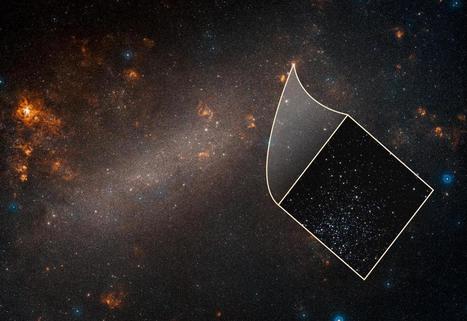
The universe is expanding considerably faster than it should be, NASA has confirmed. The space agency’s Hubble Space Telescope shows that it is growing about 9 per cent faster than had been expected, based on the trajectory it started with shortly after the Big Bang, according to astronomers. While such a discrepancy had already been suggested, the new measurements reduce the chance this is a mistake to just one in 100,000. Such a confirmation could require astronomers to find new physics theories to explain the universe‘s strange behavior. “This mismatch has been growing and has now reached a point that is really impossible to dismiss as a fluke. This is not what we expected,” says Adam Riess, Bloomberg Distinguished Professor of physics and astronomy at Johns Hopkins University, Nobel laureate and the project’s leader. The speed of the universe’s expansion, known as the Hubble constant, is a central part of physics and our understanding of the universe. But it has repeatedly been observed to behave unexpectedly – the more astronomers find out about it, the more wrong it appears – in ways that have forced scientists to wonder whether our assumptions about it had been wrong. The research saw Professor Riess and his team analyse light from 70 stars in a galaxy near ours, known as the Large Magellanic Cloud, using a new method that allowed them to capture the stars quickly. The stars they observed are called Cepheid variables, and change brightness predictably, allowing them to be used to measure intergalactic distances. The new method allowed the researchers to measure many more of those stars far more quickly. Normally, Hubble can only look at one star each time it takes one of its 90-minute orbits around Earth, but the new method allowed it to see dozens in that same time.
|
|
Scooped by
Dr. Stefan Gruenwald
April 25, 2019 1:29 PM
|
The technology could one day restore the voices of people who have lost the ability to speak due to paralysis and other forms of neurological damage. A state-of-the-art brain-machine interface created by UC San Francisco neuroscientists can generate natural-sounding synthetic speech by using brain activity to control a virtual vocal tract – an anatomically detailed computer simulation including the lips, jaw, tongue and larynx. The study was conducted in research participants with intact speech, but the technology could one day restore the voices of people who have lost the ability to speak due to paralysis and other forms of neurological damage. Stroke, traumatic brain injury, and neurodegenerative diseases such as Parkinson’s disease, multiple sclerosis and amyotrophic lateral sclerosis (ALS, or Lou Gehrig’s disease) often result in an irreversible loss of the ability to speak. Some people with severe speech disabilities learn to spell out their thoughts letter-by-letter using assistive devices that track very small eye or facial muscle movements. However, producing text or synthesized speech with such devices is laborious, error-prone, and painfully slow, typically permitting a maximum of 10 words per minute, compared to the 100 to 150 words per minute of natural speech. The new system being developed in the laboratory of Edward Chang, MD – described April 24, 2019, in Nature – demonstrates that it is possible to create a synthesized version of a person’s voice that can be controlled by the activity of their brain’s speech centers. In the future, this approach could not only restore fluent communication to individuals with severe speech disability, the authors say, but could also reproduce some of the musicality of the human voice that conveys the speaker’s emotions and personality. “For the first time, this study demonstrates that we can generate entire spoken sentences based on an individual’s brain activity,” said Chang, a professor of neurological surgery and member of the UCSF Weill Institute for Neuroscience. “This is an exhilarating proof of principle that with technology that is already within reach, we should be able to build a device that is clinically viable in patients with speech loss.”
|
|
Scooped by
Dr. Stefan Gruenwald
April 25, 2019 1:23 PM
|
Two days ahead of its first-quarter earnings disclosure, the company had an event to explain its autonomous technology to investors. The talks were probably denser than the average shareholder was expecting but it was an opportunity to see how Tesla will deliver a self-driving car and it announced that Tesla robo-taxis will be available next year. To kick things off, the company shared that it had built its very own computer for self-driving cars. The neural network chip was built from the ground up; the project started back in 2016. Each computer (which is stored behind the glove box) has redundancy so that if one chip fails, the second chip can take over. This is the company's first time building its own silicon. CEO Elon Musk was quick to boast that Tesla " which has never designed a chip, designed the best chip in the world." Musk reiterated what he's said before about the hardware available in Teslas. "All Tesla cars right now have everything necessary for self-driving available today. All you need to do is improve the software." That hardware includes the company's reliance on cameras and radar. When the subject of LiDAR (Light Detection and Ranging) came up, Musk said "LiDAR is a fool's errand. Anyone that's relying on LiDAR is doomed." He later added that "it's fricking stupid. It's expensive and unnecessary." Most other carmakers are using or are planning on using LiDAR for their driver's assistance features. The technology's cost has come down while its ability to see further down the road has increased. Coupled with radar and cameras, it's an additional tool for vehicles to see the world. In its presentation, Tesla noted that the attendees arrived at the event using their eyes (and not lasers). An odd argument against LiDAR since people can't see 360 degrees but a Tesla can see the world like that thanks to eight cameras. A human doesn't have eight eyes. As for the way the vehicle's see and interact with the world, the company noted that for things like "cut-ins" (when a car pulls in front of another car) the company has been training its neural network using real-world interactions with vehicles. It then trains the system to understand the movements of cars as they are about to change lanes.
|
|
Scooped by
Dr. Stefan Gruenwald
April 22, 2019 2:25 PM
|
A bioengineered molecular ‘grenade’ unleashes a poison when ingested by specific bacteria, offering scientists a potential method for killing pathogens without harming beneficial microbes. Bacterial cells often contain plasmids, ring-shaped structures made of DNA. Didier Mazel at the Pasteur Institute in Paris and his colleagues created plasmids that carry the genetic blueprint for an anti-bacterial toxin. The plasmids also carry genes that serve as switches. These switches allow toxin to be produced only after the plasmids are nestled inside antibiotic-resistant Vibrio cholerae, the bacterium that causes cholera. The researchers then loaded these plasmid ‘weapons’ into donor bacteria, which transferred them to V. cholerae cells. The plasmids killed 100% of antibiotic-resistant cholera bacteria in a lab sample. They also killed cholera bacteria that had infected brine shrimp (Artemia nauplii) and zebrafish (Danio rerio) — but left the harmless bacteria in the animals’ microbiomes unscathed. The plasmids’ genetic switches can be customized to direct the poisonous grenades to detonate inside a wide range of pathogens, the authors write.
|
|
Scooped by
Dr. Stefan Gruenwald
April 22, 2019 2:17 PM
|
An experimental gene therapy has restored functioning immune systems to seven young children with a severe disorder that would have sentenced them to a life of isolation to avoid potentially deadly infections. They are now with family at home, and an eighth child is slated to be released from hospital at the end of this week. The children have mutations in a gene that is crucial for immune-system development, causing a disorder called X-linked severe combined immunodeficiency (SCID-X1). The gene-therapy treatment replaces the mutated gene, called IL2RG, with a corrected copy. SCID-X1 and related disorders are sometimes called ‘bubble-boy’ diseases because of the plastic enclosures that were once used to protect affected children from possible infection. For them, even a common cold can be fatal. But seven of the babies in the study1, which was published on 17 April in The New England Journal of Medicine, now have immune systems that can protect them against common childhood ailments. “They are all toddlers now, exploring life and attending day cares,” says Ewelina Mamcarz, a physician at St. Jude Children’s Research Hospital in Memphis, Tennessee, and a lead author on the study.
|
|
Scooped by
Dr. Stefan Gruenwald
April 22, 2019 2:07 PM
|
The smallest planet in our solar system has a massive solid inner core. In its final trip around Mercury before crash-landing in 2015, NASA’s MESSENGER mission zoomed in close to the planet, enabling scientists to make detailed measurements of its gravity, spin and internal structure. Those data, researchers report April 10 in Geophysical Research Letters, suggest Mercury has a solid inner core about 2,000 kilometers in diameter, making up about half of Mercury’s entire core. Scientists already knew that Mercury’s core was huge, taking up about 85 percent of the planet. In 2007, radar observations made from Earth detected small oscillations in Mercury’s spin rate that suggested the core was at least partially liquid. Then MESSENGER data revealed that the planet has a weak magnetic field generated by circulation of molten metal in that liquid core. But it wasn’t clear if Mercury, like Earth, also has a solid inner core. To study the planet’s interior structure, MESSENGER measured Mercury’s distribution of mass by tracking tiny shifts in the spacecraft’s orbiting speed caused by subtle variations in gravitational pull. Using those data, scientists were able to estimate what sort of interior composition would best explain how Mercury spins.
|
|
Scooped by
Dr. Stefan Gruenwald
April 22, 2019 2:02 PM
|
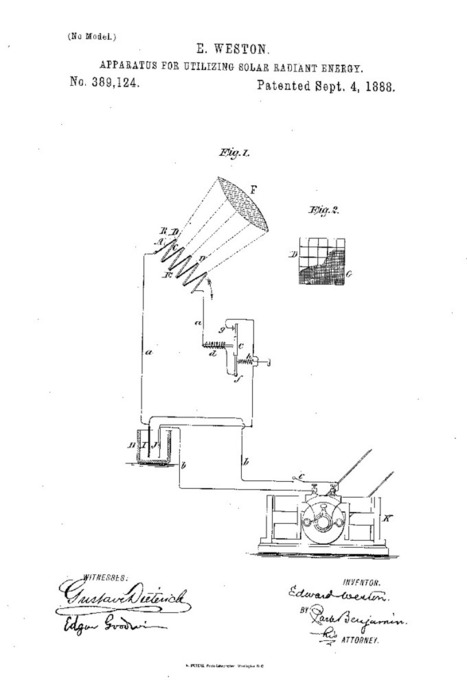
Inventors have been advancing solar technology for more than a century and a half, and improvements in efficiency and aesthetics keep on coming. Long before the first Earth Day was celebrated on April 22, 1970, generating awareness about the environment and support for environmental protection, scientists were making the first discoveries in solar energy. It all began with Edmond Becquerel, a young physicist working in France, who in 1839 observed and discovered the photovoltaic effect— a process that produces a voltage or electric current when exposed to light or radiant energy. A few decades later, French mathematician Augustin Mouchot was inspired by the physicist’s work. He began registering patents for solar-powered engines in the 1860s. From France to the U.S., inventors were inspired by the patents of the mathematician and filed for patents on solar-powered devices as early as 1888.
|
|
Scooped by
Dr. Stefan Gruenwald
April 22, 2019 1:53 PM
|
Explorers have dreamt for centuries of a Fountain of Youth, with healing waters that rejuvenate the old and extend life indefinitely. SIRT6 is often called the "longevity gene" because of its important role in organizing proteins and recruiting enzymes that repair broken DNA; additionally, mice without the gene age prematurely, while mice with extra copies live longer. Researchers have long hypothesized that if more efficient DNA repair is required for a longer lifespan, organisms with longer lifespans may have evolved more efficient DNA repair regulators. Is SIRT6 activity therefore enhanced in longer-lived species? To test this theory, the researchers analyzed DNA repair in 18 rodent species with lifespans ranging from 3 years (mice) to 32 years (naked mole rats and beavers). Scientists found that the rodents with longer lifespans also experience more efficient DNA repair because the products of their SIRT6 genes—the SIRT6 proteins—are more potent. That is, SIRT6 is not the same in every species. Instead, the gene has co-evolved with longevity, becoming more efficient so that species with a stronger SIRT6 live longer. "The SIRT6 protein seems to be the dominant determinant of lifespan," Bohmann, one of the scientists, says. "We show that at the cell level, the DNA repair works better, and at the organism level, there is an extended lifespan." The researchers then analyzed the molecular differences between the weaker SIRT6 protein found in mice versus the stronger SIRT6 found in beavers. They identified five amino acids responsible for making the stronger SIRT6 protein "more active in repairing DNA and better at enzyme functions," one member of the study says. When the researchers inserted beaver and mouse SIRT6 into human cells, the beaver SIRT6 better reduced stress-induced DNA damage compared to when researchers inserted the mouse SIRT6. The beaver SIRT6 also better increased the lifespan of fruit flies versus fruit flies with mouse SIRT6. Species with even more robust SIRT6? Although it appears that human SIRT6 is already optimized to function, "we have other species that are even longer lived than humans," another study member says. Next steps in the research involve analyzing whether species that have longer lifespans than humans—like the bowhead whale, which can live more than 200 years—have evolved even more robust SIRT6 genes.
|
|
Scooped by
Dr. Stefan Gruenwald
April 21, 2019 3:27 AM
|
Astronomers have discovered the brightest gravitationally lensed object ever seen at a time when the universe was less than one billion years old. With the help of multiple, world-class telescopes in Hawaii – Gemini Observatory, James Clerk Maxwell Telescope (JCMT), United Kingdom Infra-Red Telescope (UKIRT), and W. M. Keck Observatory on Maunakea, Hawaii Island, as well as the Panoramic Survey Telescope and Rapid Response System (Pan-STARRS1) operated by the University of Hawaii Institute for Astronomy on Haleakala, Maui – the researchers discovered that the brilliant beacon is a quasar, the core of a galaxy with a black hole ravenously eating material surrounding it. The results are published in The Astrophysical Journal Letters and were announced this afternoon during a press conference at the 233rd Meeting of the American Astronomical Society in Seattle. Though the quasar is very far away – 12.8 billion light-years – astronomers can detect it because a galaxy closer to Earth acts as a lens and makes the quasar look extra bright. The gravitational field of the closer galaxy warps space itself, bending and amplifying the distant quasar’s light. This effect is called gravitational lensing. Though researchers have searched for these very remote quasars for over 20 years, a rare and fortuitous celestial alignment made this one visible to them. “We don’t expect to find many quasars brighter than that in the whole observable universe,” said lead investigator Xiaohui Fan, Regents’ Professor of Astronomy at the University of Arizona’s Steward Observatory. The super-bright quasar, cataloged as J043947.08+163415.7, could hold the record of being the brightest lensed quasar in the early universe for some time, making it a unique object for follow-up studies.
|
|
Scooped by
Dr. Stefan Gruenwald
April 21, 2019 3:16 AM
|
A German pharmaceutical company called Farmako just registered a patent for a process in which genetically modified tequila bacterium produce a range of biosynthetic cannabinoids — the stuff that you usually get by growing marijuana plants — by feeding on sugar. The process that could make producing cannabinoids like tetrahydrocannabinol, better known as THC, a thousand times cheaper, according to the company. Yeast Vs. Bacteria Last month, Futurism reported on a team of researchers at UC Berkeley who figured out a way to manufacture THC and cannabidiol (CBD) from specially bioengineered brewer’s yeast. Farmako claims its new technique represents the first production of cannabinoids through biosynthesis without the use of yeast. Farmako argues that using bacteria instead of yeast could make the process of extracting cannabinoids much easier on an industrial scale, as the cannabinoids and the yeast cells have to be broken up after synthesis. The bacteria, on the other hand, “releases the produced cannabinoids directly into the surrounding medium,” said Patrick Schmitt, co-founder of Farmako, in a press release. “This allows continuous production without interruption.” The newly named bacterium Zymomonas cannabinoidis — a gene-edited version of Zymomonas mobilis, which is used to produce tequila — can not only produce cannabinoids by eating sugar, but it can also produce a massive range of “more than 180 known cannabinoids,” according to the press release. To stop the bacterium from producing alcohol, the team removed genes from the bacterial genome. To switch between cannabinoids, “only a single gene has to be exchanged,” said Schmitt, co-founder of Farmako.
|
|
Scooped by
Dr. Stefan Gruenwald
April 16, 2019 11:25 PM
|
The powerful gene-editing technique called CRISPR-Cas has been in the news a lot. And not all the news has been good: A Chinese scientist stunned the world last year when he announced he had used CRISPR to create genetically modified babies. But scientists have long hoped CRISPR-Cas — a technology that allows scientists to make very precise modifications to DNA — could eventually help cure many diseases. And now scientists are taking tangible first steps to make that dream a reality. For example, NPR has learned that a U.S. CRISPR-Cas study that had been approved for cancer at the University of Pennsylvania in Philadelphia has finally started. A university spokesman on Monday confirmed for the first time that two patients had been treated using CRISPR. One patient had multiple myeloma, and one had sarcoma. Both had relapsed after undergoing standard treatment. The revelation comes as several other human trials of CRISPR are starting or are set to start in the U.S., Canada and Europe to test CRISPR's efficacy in treating various diseases. "2019 is the year when the training wheels come off and the world gets to see what CRISPR can really do for the world in the most positive sense," says Fyodor Urnov, a gene-editing scientist at the Altius Institute for Biomedical Sciences in Seattle and the University of California, Berkeley.
|
|
Scooped by
Dr. Stefan Gruenwald
April 16, 2019 7:50 PM
|
Scientists in Israel unveiled a 3D print of a heart with human tissue and vessels on Monday, calling it a first and a “major medical breakthrough” that advances possibilities for transplants. While it remains a far way off, scientists hope one day to be able to produce hearts suitable for transplant into humans as well as patches to regenerate defective hearts. The heart produced by researchers at Tel Aviv University is about the size of a rabbit heart. It marked “the first time anyone anywhere has successfully engineered and printed an entire heart replete with cells, blood vessels, ventricles and chambers,” said Tal Dvir, who led the project. “People have managed to 3D-print the structure of a heart in the past, but not with cells or with blood vessels,” he said. But the scientists said many challenges remain before fully working 3D printed hearts would be available for transplant into patients. Journalists were shown a 3D print of a heart about the size of a cherry, immersed in liquid, at Tel Aviv University on Monday as the researchers announced their findings, published in the peer-reviewed journal Advanced Science. Researchers must now teach the printed hearts “to behave” like real ones. The cells are currently able to contract, but do not yet have the ability to pump.
|
|
Scooped by
Dr. Stefan Gruenwald
April 12, 2019 10:47 PM
|
Melting ice sheets in Greenland and the Antarctic as well as ice melt from glaciers all over the world are causing sea levels to rise. Glaciers alone lost more than 9,000 billion tons of ice since 1961, raising water levels by 27 millimeters, an international research team under the lead of the University of Zürich has now found. Glaciers have lost more than 9,000 billion tons (that is 9,625,000,000,000 tons) of ice between 1961 and 2016, which has resulted in global sea levels increasing by 27 millimeters in this period. The largest contributors were glaciers in Alaska, followed by the melting ice fields in Patagonia and glaciers in the Arctic regions. Glaciers in the European Alps, the Caucasus and New Zealand were also subject to significant ice loss; however, due to their relatively small glacierized areas they played only a minor role when it comes to the rising global sea levels. Combination of field observations and satellite measurements For the new study, the international research team combined glaciological field observations with geodetic satellite measurements. The latter digitally measure the surface of the Earth, providing data on ice thickness changes at different points in time. The researchers were thus able to reconstruct changes in the ice thickness of more than 19,000 glaciers worldwide. This was also possible thanks to the comprehensive database compiled by the World Glacier Monitoring Service from its worldwide network of observers, to which the researchers added their own satellite analyses. "By combining these two measurement methods and having the new comprehensive dataset, we can estimate how much ice has been lost each year in all mountain regions since the 1960s," explains Michael Zemp, who led the study. "The glaciological measurements made in the field provide the annual fluctuations, while the satellite data allows us to determine overall ice loss over several years or decades." 335 billion tons of ice lost each year The global mass loss of glacier ice has increased significantly in the last 30 years and currently amounts to 335 billion tons of lost ice each year. This corresponds to an increase in sea levels of almost 1 millimeter per year. "Globally, we lose about three times the ice volume stored in the entirety of the European Alps -- every single year!" says glaciologist Zemp. The melted ice of glaciers therefore accounts for 25 to 30 percent of the current increase in global sea levels. This ice loss of all glaciers roughly corresponds to the mass loss of Greenland's Ice Sheet, and clearly exceeds that of the Antarctic.
|
|
|
Scooped by
Dr. Stefan Gruenwald
April 25, 2019 1:30 PM
|
Researchers have developed a process to use magnetics with brain-like networks to program and teach devices such as personal robots, self-driving cars and drones to better generalize about different objects. Computers and artificial intelligence continue to usher in major changes in the way people shop. It is relatively easy to train a robot's brain to create a shopping list, but what about ensuring that the robotic shopper can easily tell the difference between the thousands of products in the store? Purdue University researchers and experts in brain-inspired computing think part of the answer may be found in magnets. The researchers have developed a process to use magnetics with brain-like networks to program and teach devices such as personal robots, self-driving cars and drones to better generalize about different objects. "Our stochastic neural networks try to mimic certain activities of the human brain and compute through a connection of neurons and synapses," said Kaushik Roy, Purdue's Edward G. Tiedemann Jr. Distinguished Professor of Electrical and Computer Engineering. "This allows the computer brain to not only store information but also to generalize well about objects and then make inferences to perform better at distinguishing between objects." Roy presented the technology during the annual German Physical Sciences Conference earlier this month in Germany. The work also appeared in the Frontiers in Neuroscience. The switching dynamics of a nano-magnet are similar to the electrical dynamics of neurons. Magnetic tunnel junction devices show switching behavior, which is stochastic in nature. The stochastic switching behavior is representative of a sigmoid switching behavior of a neuron. Such magnetic tunnel junctions can be also used to store synaptic weights. The Purdue group proposed a new stochastic training algorithm for synapses using spike timing dependent plasticity (STDP), termed Stochastic-STDP, which has been experimentally observed in the rat's hippocampus. The inherent stochastic behavior of the magnet was used to switch the magnetization states stochastically based on the proposed algorithm for learning different object representations. The trained synaptic weights, encoded deterministically in the magnetization state of the nano-magnets, are then used during inference. Advantageously, use of high-energy barrier magnets (30-40KT where K is the Boltzmann constant and T is the operating temperature) not only allows compact stochastic primitives, but also enables the same device to be used as a stable memory element meeting the data retention requirement. owever, the barrier height of the nano-magnets used to perform sigmoid-like neuronal computations can be lowered to 20KT for higher energy efficiency.
|
|
Scooped by
Dr. Stefan Gruenwald
April 25, 2019 1:27 PM
|
Physicists at the University of Zurich have developed an amazingly simple device that allows heat to flow temporarily from a cold to a warm object without an external power supply. Intriguingly, the process initially appears to contradict the fundamental laws of physics. If you put a teapot of boiling water on the kitchen table, it will gradually cool down. However, its temperature is not expected to fall below that of the table. It is precisely this everyday experience that illustrates one of the fundamental laws of physics -- the second law of thermodynamics -- which states that the entropy of a closed natural system must increase over time. Or, more simply put: Heat can flow by itself only from a warmer to a colder object, and not the other way round. Cooling below room temperature The results of a recent experiment carried out by the research group of Prof. Andreas Schilling in the Department of Physics at the University of Zurich (UZH) appear at first sight to challenge the second law of thermodynamics. The researchers managed to cool a nine-gram piece of copper from over 100°C to significantly below room temperature without an external power supply. "Theoretically, this experimental device could turn boiling water to ice, without using any energy," says Schilling. Creating oscillating heat currents To achieve this, the researchers used a Peltier element, a component commonly used, for example, to cool minibars in hotel rooms. These elements can transform electric currents into temperature differences. The researchers had already used this type of element in previous experiments, in connection with an electric inductor, to create an oscillating heat current in which the flow of heat between two bodies perpetually changed direction. In this scenario, heat also temporarily flows from a colder to a warmer object so that the colder object is cooled down further. This kind of "thermal oscillating circuit" in effect contains a "thermal inductor." It functions in the same way as an electrical oscillating circuit, in which the voltage oscillates with a constantly changing sign. Laws of physics remain intact Until now, Schilling's team had only operated these thermal oscillating circuits using an energy source. The researchers have now shown for the first time that this kind of thermal oscillating circuit can also be operated "passively," i.e. with no external power supply. Thermal oscillations still occurred and, after a while, heat flowed directly from the colder copper to a warmer heat bath with a temperature of 22°C, without being temporarily transformed into another form of energy. Despite this, the authors were also able to show that the process does not actually contradict any laws of physics. To prove it, they considered the change in entropy of the whole system and showed that it increased with time -- fully in accordance with the second law of thermodynamics.
|
|
Scooped by
Dr. Stefan Gruenwald
April 25, 2019 1:18 PM
|
Most scientists agree that a "mass extinction" event is underway on Earth, with species disappearing hundreds of time quicker under the influence of human activity. But this is not the first: over the last half-billion years there have been five major wipeouts in which well over half of living creatures disappeared within a geological blink of the eye. All told, more than 90 percent of organisms that have ever strode, swam, soared or slithered on Earth are now gone. Here are the biggest die-offs, each showing up in the fossil record at the boundary between two geological periods: Ordovician extinction When: about 445 million years ago Species lost: 60-70 percent Likely cause: Short but intense ice age Devonian extinction When: about 375-360 million years ago Species lost: up to 75 percent Likely cause: oxygen depletion in the ocean Permian extinction When: about 252 million years ago Species lost: 95 percent Possible causes: asteroid impact, volcanic activity Triassic extinction When: about 200 million years ago Species lost: 70-80 percent Likely causes: multiple, still debated Cretaceous extinction When: about 66 million years ago Species lost: 75 percent Likely cause: asteroid strike
|
|
Scooped by
Dr. Stefan Gruenwald
April 22, 2019 2:22 PM
|
A team of researchers from the Strasbourg Astronomical Observatory, Bologna Observatory and the University of Stockholm has identified a stream of stars that was torn off the globular cluster ω Centauri. Searching through the 1.7 billion stars observed by the ESA Gaia mission, they have identified 309 stars that suggest that this globular cluster may actually be the remnant of a dwarf galaxy that is being torn apart by the gravitational forces of our Galaxy. In 1677, Edmond Halley gave the name “omega Centauri” (ω Cen) to what he thought was a star in the Centaurus constellation. Later in 1830 John Herschel realized that it was in fact a globular cluster that could be resolved into individual stars. We now know that ω Centauri is the most massive globular cluster in the Milky Way: it is about 18,000 light years from us and contains several million stars that are about 12 billion years old. The nature of this object has been the subject of much debate: is it really a globular cluster, or could it be the heart of a dwarf galaxy whose periphery has been dispersed by the Milky Way? This last hypothesis is based on the fact that ω Cen contains several stellar populations, with a large range of metallicities (i.e. heavy element content) that betray a formation over an extended period of time. An additional argument in favor of this hypothesis would be to find debris from the cluster scattered along its orbit in the Milky Way. Indeed, when a dwarf galaxy interacts with a massive galaxy like our own, stars are torn off by gravitational tidal forces, and these stars remain visible for a time as stellar streams, before becoming dispersed in the vast volumes of interstellar space surrounding the massive galaxy. Gaia has measured the motions of the stars on the celestial sphere with such a high precision, that researchers identified several star streams. This identification was performed with the use of an algorithm called STREAMFINDER. One of them, named “Fimbulthul” (after one of the rivers in Norse mythology that existed at the beginning of the world), contains 309 stars stretching over 18° in the sky. By modeling the trajectories of the stars, the team showed that the Fimbulthul structure is a stellar tidal stream torn off ω Cen, extending up to 28° from the cluster. Spectroscopic observations of five stars of this stream with the Canada-France Hawaii Telescope show that their velocities are very similar, and that they have metallicities comparable to the stars of ω Cen itself, which reinforces the idea that the tidal stream is linked to ω Cen. The researchers were then able to show that the stream is also present in the very crowded area of sky in the immediate vicinity of the cluster. Further modeling of the tidal stream will constrain the dynamical history of the dwarf galaxy that was the progenitor of ω Cen, and could help to find even more stars lost by this system into the halo of the Milky Way. This story was based on the paper "Identification of the Long Stellar Stream of the Prototypical Massive Globular Cluster omega Centauri" appearing today in Nature Astronomy. The work in this paper is also based upon the following article: "The Streams of the Gaping Abyss: A Population of Entangled Stellar Streams Surrounding the Inner Galaxy".
|
|
Scooped by
Dr. Stefan Gruenwald
April 22, 2019 2:09 PM
|
One of the most important tools for managing the opioid crisis may soon be a lot more available. On Friday, the Food and Drug Administration announced it had granted approval for a generic version of the naloxone nasal spray, a drug used to rapidly reverse potentially fatal opioid overdoses. The new generic is by Teva Pharmaceuticals, an Israeli-based company that specializes in generic drugs. The spray will be approved for use by anyone to help with an overdose, regardless of their medical training. “In the wake of the opioid crisis, a number of efforts are underway to make this emergency overdose reversal treatment more readily available and more accessible,” Douglas Throckmorton, deputy center director for regulatory programs in the FDA’s Center for Drug Evaluation and Research, said in a statement. “In addition to this approval of the first generic naloxone nasal spray, moving forward we will prioritize our review of generic drug applications for naloxone.” Though naloxone has been off-patent since the 1980s, various companies have patented and gotten FDA approval for different versions of drug delivery. Teva’s product is the first naloxone nasal spray generic approved for community use with no medical training, for example, but the brand-name version (Adapt Pharma’s Narcan) is already approved for that same use, as is a branded auto-injectable version (Kaleo’s Enzio).
|
|
Scooped by
Dr. Stefan Gruenwald
April 22, 2019 2:05 PM
|
The chemistry of the universe began with helium hydride. Scientists have just seen it in outer space for the first time. Helium hydride ions, thought to be the first type of molecule to form in the universe, have finally been spotted in space. These charged molecules, each made of a neutral helium atom and a positively charged hydrogen atom, first emerged within about 100,000 years after the Big Bang. Back then, the universe was composed almost entirely of hydrogen and helium, and helium hydride was the only molecule that these two elements could create when they collided. Although researchers have seen helium hydride ions in the lab, these molecules have never been definitively detected in space. The discovery of helium hydride in a nearby planetary nebula ends a decades-long search for these seminal molecules and helps confirm our understanding of chemistry in the infant universe, researchers report online April 17, 2019 in Nature. During three flights in May 2016, the airborne Stratospheric Observatory for Infrared Astronomy observed a planetary nebula about 3,000 light-years away called NGC 7027. This shell of stellar material was blown off a sunlike star when its core collapsed into a white dwarf about 600 years ago. In the light emitted by the hot, dense cloud of gas, researchers detected helium hydride’s signature wavelength of infrared radiation. The helium hydride ions seen in NGC 7027 were created in the planetary nebula, rather than being leftover from the early universe. But their existence confirms that helium hydride ions can exist outside the lab, which means that theoretical simulations of the primordial cosmos aren’t in serious need of revision.
|
|
Scooped by
Dr. Stefan Gruenwald
April 22, 2019 1:58 PM
|
High-fidelity simulations by MIT nuclear researchers point the way to optimizing heat transfer in current and next-generation reactors. Engineers must manage a maelstrom in the core of operating nuclear reactors. Nuclear reactions deposit an extraordinary amount of heat in the fuel rods, setting off a frenzy of boiling, bubbling, and evaporation in surrounding fluid. From this churning flow, operators harness the removal of heat. In search of greater efficiencies in nuclear systems, scientists have long sought to characterize and predict the physics underlying these processes of heat transfer, with only modest success. But now a research team led by Emilio Baglietto, an associate professor of nuclear science and engineering at MIT, has made a significant breakthrough in detailing these physical phenomena. Their approach utilizes a modeling technology called computational fluid dynamics (CFD). Baglietto has developed new CFD tools that capture the fundamental physics of boiling, making it possible to track rapidly evolving heat transfer phenomena at the microscale in a range of different reactors, and for different operating conditions. “Our research opens up the prospect of advancing the efficiency of current nuclear power systems and designing better fuel for future reactor systems,” says Baglietto. The group, which includes Etienne Demarly, a doctoral candidate in nuclear science and engineering, and Ravikishore Kommajosyula, a doctoral candidate in mechanical engineering and computation, describes its work in the March 11 issue of Applied Physics Letters.
|
|
Scooped by
Dr. Stefan Gruenwald
April 22, 2019 1:50 PM
|
A team of researchers at NTT Corporation has developed a way to use light-based computer hardware that allows it to to compete with silicon. In their paper published in the journal Nature Photonics, the group describes their research, the devices they created and how well they worked. Computer scientists have known for some time that the era of increasing computer speed by modifying silicon-based computer parts is coming to an end. To that end, many have turned to quantum computing as the way to speed up computers—but to date, such efforts have not led to useful machines and there is no guarantee they ever will. Because of that, others in the computer business are looking for other options, such as using light to move data around inside of computers instead of electrons. Currently, light is generally only used to carry data long distances. In this new effort, the researchers report that they have developed computing devices based partially on light that performed as well as electron-based hardware. The idea of using only light as a data medium in computer hardware is still a long way off—instead, engineers are focusing on using light in areas where it seems feasible and electrons everywhere else. Because of that computer devices must be able to convert between the two mediums, a problem that until now has prevented such devices from being built. Prior efforts have required too much power to be feasible and the conversion process has been too slow. To get around both problems, the researchers developed a new kind of photonic crystal that was able to diffuse light in a way that allowed it to follow a designated path on demand and to also be absorbed when needed to be used for generating current. The crystal was also able to work in reverse. The researchers report that they were able to create electrical-to-optical devices as well was optical-to-electrical devices. They then used the devices they built to make an electro-optical modulator that ran at 40 Gbps and used just 42 attoJoules per bit. They also built a photoreceiver that ran at 10 Gbps, which they note, did not require an amplifier. The team then combined the two devices to be able to create a transistor.
|
|
Scooped by
Dr. Stefan Gruenwald
April 21, 2019 3:20 AM
|
The genealogist’s dream of testing old, spit-laced artifacts is coming true—but raising questions about who controls dead people’s DNA. Last fall, Gilad Japhet, the founder of a DNA-testing company, got up at an industry conference to talk about his grandmother Rosa’s love letters. Japhet’s company, MyHeritage, sells cheek swabs to people interested in their family history. It now has 2.5 million people in its DNA database, making it the third largest behind 23andMe and AncestryDNA. But Japhet wasn’t satisfied with only testing the living; he wanted to test the dead. Which brings us to the love letters—or really, the envelopes they came in. The envelopes were sealed by his grandmother, and the stamps on them presumably licked by her. “Maybe our ancestors did not realize it,” Japhet said, a smile growing on his face, “when they were licking those stamps and the envelope flaps, they were sealing their precious DNA for you forever.” Then he made the big announcement: MyHeritage would soon begin offering DNA testing on old stamps and envelopes. He didn’t stop there. If you can test the letters of your grandmother, why not those of historical figures? Japhet is a prodigious collector of autographs, and he revealed that he possessed handwritten letters from Albert Einstein and Winston Churchill. In an intriguing if provocative PR move, he promised that “their DNA is coming to MyHeritage very, very soon.” In the past year, genealogists have been abuzz about the possibility of getting DNA out of old stamps and envelopes. In addition to MyHeritage, a British company called Living DNA began informally offering the service for $400 to $600 last year, and a small Australian start-up called Totheletter DNA, which specializes in DNA from envelopes and stamps, launched a similarly priced service in July. MyHeritage says its own service should debut later this year. (A spokesperson declined to comment on when Einstein and Churchill’s DNA profiles will be uploaded to the company’s site.)
|
|
Scooped by
Dr. Stefan Gruenwald
April 21, 2019 3:02 AM
|
Before NASA’s Cassini spacecraft plunged into Saturn’s depths, it performed a final 2017 flyby of Titan, Saturn’s largest moon. This remote world is the only place in the solar system other than Earth that hosts large bodies of standing liquid. Titan’s liquid is methane and ethane instead of water. But these lakes and seas make the moon one of the most interesting places in our solar system. And researchers are just starting to learn how these bodies of liquid change with Saturn’s seasons. Seasonal changes Cassini’s last tour of Saturn’s moon revealed that some of its northern lakes are 300 feet deep, but small in surface area and perched atop high hills. The shape and location of the lakes hints strongly that the lakes are similar to karstic lakes on Earth, where liquid eats away at and eventually collapses the bedrock around it. On Earth, this happens with water and limestone, but on Titan, it would be liquid methane and the icy organic materials that make up Titan’s surface layers. Researchers published their finding April 15 in Nature Astronomy. In a second study, also published in Nature Astronomy, a different group of researchers discovered what they call “phantom lakes” on Titan’s surface in the northern hemisphere. These lakes appear in earlier Cassini data and disappear later on. Scientists take this to mean the lakes are shallow, and dry out and disappear as seasons change on Titan. A full seasonal year on Titan is roughly one Saturnian orbit, or 30 Earth years. And since Cassini spent 13 years studying the Saturn system, it had an excellent vantage point to watch the northern hemisphere grow warmer with the onset of summer, while the southern hemisphere descended into winter.
|
|
Scooped by
Dr. Stefan Gruenwald
April 16, 2019 7:54 PM
|
We've seen autonomous aircraft doing everything from spraying crops to surveying wildlife, and now the Swiss air rescue organization Rega has announced a drone that's capable of searching for and finding missing people all on its own. Thanks to an array of on-board sensors, including a daylight camera, a thermal camera, an infrared camera, and a phone-tracking tool, the Rega drone is able to scan large areas of terrain for anyone who has got themselves into trouble in the mountains. Custom-made algorithms crunch the data coming through from the various cameras on the Rega drone and identify potential sightings of people – any promising leads are then relayed to operators back at base. It can work in poor visibility too, conditions which can sometimes ground the standard air rescue helicopters. Where the new aircraft has the edge over most commercially available drones is the way in which it can operate for several hours at a distance of several kilometers, without being directly controlled by a human operator. The drone comprises three rotor blades with a diameter of just over 2 meters (6.5 ft). Designed to fly at an altitude of 80-100 meters (262-328 ft), it uses satellite navigation techniques to methodically cover a predefined area autonomously. It comes with anti-collision systems for avoiding power lines and other aircraft too.
|
|
Scooped by
Dr. Stefan Gruenwald
April 12, 2019 11:05 PM
|
Nature has evolved protein-based substances with mechanical properties that rival even the best synthetic materials. For example, pound for pound, spider silk is stronger and tougher than steel. But unlike steel, the natural fiber cannot be mass-produced. Today, scientists report a new method that takes advantage of engineered bacteria to produce spider silk and other difficult-to-make proteins that could be useful during future space missions. The researchers will present their results today at the American Chemical Society (ACS) Spring 2019 National Meeting & Exposition. "In nature, there are a lot of protein-based materials that have amazing mechanical properties, but the supply of these materials is very often limited," says Fuzhong Zhang, Ph.D., the project's principal investigator. "My lab is interested in engineering microbes so that we can not only produce these materials, but make them even better." If produced in sufficient quantities, spider silk could be used for a variety of applications, ranging from bullet-proof fabric to surgical sutures. But spider silk isn't easy to farm -- spiders produce tiny quantities, and some species turn cannibalistic when kept in groups. Therefore, scientists have tried engineering bacteria, yeast, plants and even goats to produce spider silk, but they haven't yet been able to fully replicate the natural fiber's mechanical properties. Part of the problem is that spider silk proteins are encoded by very long, highly repetitive sequences of DNA. Spiders have evolved ways to keep these sequences in their genome. But when scientists put this type of DNA into other organisms, the genes are very unstable, often getting snipped or otherwise altered by the host's cellular machinery. Zhang and colleagues at Washington University in St. Louis wondered if they could break the long, repetitive sequences into shorter blocks that bacteria could handle and make into proteins. Then, the researchers could assemble the shorter proteins into the longer spider silk fiber. The team introduced genes to bacteria that encoded two pieces of the spider silk protein, each flanked by a sequence called a split intein. Split inteins are naturally occurring protein sequences with enzymatic activity: Two split inteins on different protein fragments can join and then cut themselves out to yield an intact protein. After introducing the genes, the researchers broke open the bacteria and purified the short pieces of spider silk protein. Mixing the fragments caused them to join together through the "glue" of the split intein sequence, which then cut itself out to yield the full-length protein. When spun into fibers, the microbially produced spider silk had all of the properties of natural spider silk, including exceptional strength, toughness and stretchability. The researchers obtained more silk with this method than they could from spiders (as much as two grams of silk per liter of bacterial culture), and they are currently trying to increase the yield even more. The researchers can make various repetitive proteins simply by swapping out the spider silk DNA and putting other sequences into bacteria. For example, the researchers used the technique to make a protein from mussels that adheres strongly to surfaces. The protein could someday be applied as an underwater adhesive. Now, the researchers are working on streamlining the process so that the protein-joining reaction can occur inside bacterial cells. This would improve the efficiency and potential automation of the system because researchers wouldn't have to purify the two pieces of the protein and then incubate them together.
|