Your new post is loading...

|
Scooped by
Dr. Stefan Gruenwald
May 20, 2019 11:00 AM
|
New research suggests that the Big Bang that birthed the cosmos occurred 12.5 billion years ago. We've all lost track of time at one point or another, but astronomers really go all in. Recent studies show they may have overestimated the age of the universe by more than a billion years — a surprising realization that is forcing them to rethink key parts of the scientific story of how we got from the Big Bang to today. The lost time is especially vexing because, in a universe full of mysteries, its age has been viewed as one of the few near-certainties. By 2013, the European Planck space telescope's detailed measurements of cosmic radiation seemed to have yielded the final answer: 13.8 billion years old. All that was left to do was to verify that number using independent observations of bright stars in other galaxies. Then came an unexpected turn of events. A few teams, including one led by Nobel laureate Adam Riess of the Space Telescope Science Institute in Baltimore, set out to make those observations. Instead of confirming Planck's measurements, they started getting a distinctly different result. "It was getting to the point where we say, 'Wait a second, we're not passing this test — we're failing the test!'" says Riess, co-author of a new paper about the research to be published in Astrophysical Journal. He estimates that his results, taken at face value, indicate a universe that is only 12.5 billion to 13 billion years old.
|
|
Scooped by
Dr. Stefan Gruenwald
May 20, 2019 10:49 AM
|
After years of preparation, new definitions for the basic units of mass, temperature and more have now gone into effect. The new kilogram has finally arrived. Updates to scientists’ system of measurement went into force May 20, redefining the kilogram and several other units in the metric system. The revamp does away with some outdated standards — most notably, a metal cylinder kept in a vault near Paris that has defined the kilogram for 130 years. Tinkering with units allows scientists to more precisely measure weights, temperatures, electric currents and other quantities laid out in the International System of Units used around the globe. The kilogram, the basic unit of mass, is now defined by a quantum quantity known as the Planck constant. That value, an immutable constant of nature, is the same everywhere in space and time. That’s an improvement over the Parisian artifact, which could have changed slightly if gunk or scratches marred its surface. Also redefined, according to an agreement reached in November 2018 at the 26th General Conference on Weights and Measures in Versailles, France, are the kelvin, the unit of temperature; the ampere, the unit of electric current; and the mole, the unit for an amount of substance. Scientists now have their sights set on updating the unit of time: the second. Currently, the second is defined by atomic clocks made of cesium atoms. Those atoms absorb a certain frequency of light. The wiggling of the light’s electromagnetic waves functions like the pendulum on a grandfather clock, rhythmically keeping time. One second is defined as 9,192,631,770 oscillations of the light. But a new generation of atomic clocks, known as optical atomic clocks, outdo the cesium clocks. “Their performance is a lot better than what currently defines the second,” says physicist Andrew Ludlow of the National Institute of Standards and Technology in Boulder, Colo. Because those optical atomic clocks operate at a higher frequency, their “ticks” are more closely spaced, making them about 100 times more precise than cesium clocks.
|
|
Scooped by
Dr. Stefan Gruenwald
May 20, 2019 10:39 AM
|
A team led by Gabriel Blaj, a staff scientist at the SLAC National Accelerator Laboratory and Stanford University, has generated what may be the loudest possible underwater sound. Using SLAC's Linac Coherent Light Source (LCLS) X-ray laser, the researchers blasted tiny jets of water to create incredible sound pressures above 270 decibels. There is loud, really loud, and rock concert loud, but how loud really is too loud? Surprisingly, there is an actual upper limit to just how intense a noise can be. Most people who've taken science class have heard of the decibel scale, which measures the loudness of sound. At the very lowest end of the scale there's the limit of human hearing – things like the buzz of a mosquito 10 feet away. At 55 decibels we have the sound of normal conversations, an alarm clock hits 80 decibels, a chain saw at 100 decibels, and the painful sound of a jet taking off 100 m (330 ft) away at 130 decibels. The scale goes the way up to that of a rock concert at 150 decibels (and you thought we were kidding). Oddly enough, in air, a sound can't get any higher than about 194 decibels and in water it's around 270. This is because sound is an example of something where the measurements break down at either end of the scale.
|
|
Scooped by
Dr. Stefan Gruenwald
May 15, 2019 1:47 PM
|
Researchers have been trying for many years to build a quantum computer that industry could scale up, but the building blocks of quantum computing, qubits, still aren’t robust enough to handle the noisy environment of what would be a quantum computer. A theory developed only two years ago proposed a way to make qubits more resilient through combining a semiconductor, indium arsenide, with a superconductor, aluminum, into a planar device. Now, this theory has received experimental support in a device that could also aid the scaling of qubits. This semiconductor-superconductor combination creates a state of “topological superconductivity,” which would protect against even slight changes in a qubit’s environment that interfere with its quantum nature, a renowned problem called “decoherence.” The device is potentially scalable because of its flat “planar” surface – a platform that industry already uses in the form of silicon wafers for building classical microprocessors. The work, published in Nature, was led by the Microsoft Quantum lab at the University of Copenhagen’s Niels Bohr Institute, which fabricated and measured the device. The Microsoft Quantum lab at Purdue University grew the semiconductor-superconductor heterostructure using a technique called molecular beam epitaxy, and performed initial characterization measurements.
A recent study demonstrates that a combination of two materials, aluminum and indium arsenide, forming a device called a Josephson junction could make quantum bits more resilient.
|
|
Scooped by
Dr. Stefan Gruenwald
May 15, 2019 1:34 PM
|
The Spectroscopic Time-Resolving Observatory for Broadband Energy X-rays (STROBE-X) is a mission concept for an X-ray observatory that will specialize in rapid time variability. The satellite would gather information from black holes, neutron stars, transient events and cosmic explosions such as the violent destruction of stars in the grip of black holes and binary neutron star collisions. The estimated cost to build the observatory is $880 million.
"We hope the Decadal Survey will specifically say that STROBE-X should be done," said Maccarone, a Presidential Research Excellence Professor in the Texas Tech Department of Physics & Astronomy. "But even if they just say that high-collecting-area X-ray timing and spectroscopy are important, we should have a good chance to have our mission fly."
Paul Ray, an astronomer with NRL's High Energy Astrophysics and Applications section, led the study for the STROBE-X mission concept.
"The physical conditions in exotic systems like black holes and neutron stars are impossible to recreate in any earthbound laboratory," Ray said. "So, a mission like this is the best way to expand our understanding."
The STROBE-X mission concept calls for an agile 5,000-kilogram satellite with a wide field monitor to detect and localize transient events and monitor the state of variable sources. These observations would trigger the satellite to train its huge, primary instruments onto an object of interest. It also would respond to notifications from ground-based observatories.
The primary instruments would have more than 10 times the collecting area of previous X-ray instruments – technology made possible by the latest advances in solid state X-ray detectors and lightweight X-ray concentrating optics. Measurements with these instruments can determine the spin of black holes, the radius of neutron stars and the elements created in explosive events.
|
|
Scooped by
Dr. Stefan Gruenwald
May 15, 2019 1:24 PM
|
An innovative new solar-cell design which has the capability to drive down costs of solar cell manufacture, has been created by scientists at the University of Sheffield and energy technology company Power Roll. In a study published in the journal Energy and Environmental Science, collaborating researchers from the University of Sheffield and Power Roll have demonstrated how a unique architecture based on a surface embossed with micro-grooves could also make solar power more efficient. Researchers showed that by coating opposing walls of micro-grooves with different electrical contacts, and then filling the groove with a solution-processable semiconductor, it was possible to create a new type of back contacted solar cell. The innovative 3D design removes many of the manufacturing process steps required by existing PV modules and allows new materials to be used that would not usually be appropriate in regular solar cells. Professor David Lidzey, from the Department of Physics and Astronomy at Sheffield, who has led on the collaboration with Power Roll, said: “There is global interest in using solar cells to generate low carbon, green electricity. The design of the back contacted solar module is both innovative and elegant, and can potentially reduce optical losses within the device.’’
|
|
Scooped by
Dr. Stefan Gruenwald
May 15, 2019 1:20 PM
|
Unprecedented fly-through combines the visible and infrared vision of the Hubble and Spitzer space telescopes Astronomers and visualization specialists from NASA’s Universe of Learning program have combined visible and infrared vision of the Hubble and Spitzer space telescopes to create an unprecedented, three-dimensional, fly-through view of the picturesque Orion Nebula, a nearby star-forming region. Viewers experience this nearby stellar nursery “close up and personally” as the new digital visualization ferries them among newborn stars, glowing clouds heated by intense radiation, and tadpole-shaped gaseous envelopes surrounding protoplanetary disks. Using actual scientific imagery and other data, combined with Hollywood techniques, a team at the Space Telescope Science Institute in Baltimore, Maryland, and the Caltech/IPAC in Pasadena, California, has created the best and most detailed multi-wavelength visualization yet of this photogenic nebula. The fly-through enables people to experience and learn about the universe in an exciting new way. The three-minute video clip, which shows the Orion Nebula in both visible and infrared light, was released to the public today. It is available to planetariums and other centers of informal learning worldwide to help audiences explore fundamental questions in science such as, “How did we get here?” “Being able to fly through the nebula’s tapestry in three dimensions gives people a much better sense of what the universe is really like,” explained the Space Telescope Science Institute’s visualization scientist Frank Summers, who led the team that developed the movie. “By adding depth and structure to the amazing images, this fly-through helps elucidate the universe for the public, both educating and inspiring,” added Summers. “Looking at the universe in infrared light gives striking context for the more familiar visible-light views. This movie provides a uniquely immersive chance to see how new features appear as we shift to wavelengths of light normally invisible to our eyes,” said Robert Hurt, lead visualization scientist at IPAC. Video Link
|
|
Scooped by
Dr. Stefan Gruenwald
May 15, 2019 1:04 AM
|
To the naked eye, our Galaxy appears as the Milky Way: an irregular, unevenly luminous band of dim light. Invisible from urban habitats and barely visible from many suburban locations, the Milky Way is actually bright enough, when located at the zenith of a dark sky site on a moonless night, to cast shadows on the ground. It will be useful to summarize briefly how our understanding has progressed from this naked eye view to the Galaxy model of modern astronomy.
|
|
Scooped by
Dr. Stefan Gruenwald
May 14, 2019 4:40 PM
|
The Smithsonian made available a new online interactive that allows users to explore a three-dimensional (3D) visualization of the remnants of a supernova, or exploded star.
Designed for use by both general audiences and high school science classrooms, the free materials, available at s.si.edu/supernova, include an interactive simulation, a 360° video, and a multimedia instructional package.
The project was created by the Smithsonian Center for Learning and Digital Access in conjunction with the Center for Astrophysics | Harvard & Smithsonian (CfA), a collaboration that includes the Smithsonian Astrophysical Observatory.
To create the visualizations, the project uses data from the Chandra X-ray Observatory and Spitzer Space Telescope, the National Optical Astronomy Observatory’s Mayall Telescope, and the MIT/Michigan/Dartmouth Observatory’s Hiltner Telescope.
“Journey” features the data visualization work of Kimberly Arcand, visualization and emerging technology lead for Chandra, which is operated and controlled on behalf of NASA by the CfA.
“All of that data has to be translated and processed in a way that humans can see, so it’s really important to be able to study our Universe using different kinds of light,” said Arcand. “Each band of light gives you different information, so it’s like adding puzzle pieces to fit into the greater whole.”
|
|
Scooped by
Dr. Stefan Gruenwald
May 14, 2019 4:33 PM
|
Located some 262 light-years from Earth, Spica looks like a single star. But it’s at least two stars. Both are larger and hotter than our sun, and they’re separated by only 11 million miles (less than 18 million km), orbiting their common center of gravity in only four days. That’s in contrast to 93.3 million miles (150 million km) for Earth’s distance from our sun, and one year for the length of Earth’s orbit. The two stars in the Spica system are individually indistinguishable from a single point of light, even with a telescope. The dual nature of this star was revealed only by analysis of its light with a spectroscope, an instrument that splits light into its component colors. The two stars are so close, and they orbit so quickly around each other, that their mutual gravity distorts each star into an egg shape. It’s thought that the pointed ends of these egg-shaped stars face each other as they whirl around. Slight magnitude variations may be evidence for such a distortion. The magnitude changes could be the result of the stars showing more or less surface area as they move through different orientations in their orbits The light from these two stars, taken together, is on average more than 2,200 times brighter than our sun’s light. Their diameters are estimated to be 7.8 and 4 times the sun’s diameter.
|
|
Rescooped by
Dr. Stefan Gruenwald
from Papers
May 14, 2019 4:17 PM
|
Led by dozens of top theorists, with input from mathematicians, researchers have already classified a huge swath of phases that can arise in one or two spatial dimensions by relating them to topology: the math that describes invariant properties of shapes like the sphere and the torus. They’ve also begun to explore the wilderness of phases that can arise near absolute zero in 3-D matter.
Via Complexity Digest
|
|
Rescooped by
Dr. Stefan Gruenwald
from Soggy Science
May 14, 2019 3:51 PM
|
Explorer, retired naval officer and our 2019 AGS Gala Awards Night guest speaker, Victor Vescovo, has broken the record for the world's deepest ever dive. In the last month, he and his team made multiple dives to the depths of the Mariana Trench (10,927m) in the Pacific Ocean. It took 3.5 hours to reach the record-breaking depth in his 4.6m-long, 3.7m-high submersible DSV Limiting Factor, built to withstand the immense pressure of the deep (equivalent to the weight of 50 jumbo jets). “It is almost indescribable how excited all of us are about achieving what we just did,” says Victor. “This submarine and its mother ship, along with its extraordinarily talented expedition team, took marine technology to an unprecedented new level by diving – rapidly and repeatedly – into the deepest, harshest area of the ocean. We feel like we have just created, validated, and opened a powerful door to discover and visit any place, any time, in the ocean – which is 90 per cent unexplored.” Victor spent hours exploring the bottom of the trench — a flat, beige basin covered with a thick layer of silt — collecting biological and rock samples. He found colourful rocky structures, possibly created by microbes on the seabed, other-worldly creatures . Sadly, he also spotted the ever-pervasive mark of humankind — plastic (a plastic bag and lolly wrappers). The team now plans to test the creatures they collected to see if they contain microplastics — a recent study found this was a widespread problem, even for animals living in the deep. “It was very disappointing to see obvious human contamination of the deepest point in the ocean,” Victor says.
Via Grant W. Graves
|
|
Scooped by
Dr. Stefan Gruenwald
May 13, 2019 2:18 PM
|
In a thought experiment, Physicist Freeman Dyson popularized the concept of a structure that could trap nearly 100 percent of a star’s energy. Dyson claimed that advanced civilizations or extraterrestrials might use massive structures to capture the power of their host star. He said that looking for signs of these structures in space would lead us to other intelligent lifeforms. This concept inspired what later became known as a Dyson Sphere - a hypothetical megastructure that would surround the Sun, soaking up its light and converting it into useful energy. Today, there are a few different Dyson inspired designs. The classic Dyson Shell, for instance, is often portrayed in sci-fi works. The solid structure, the size of a planetary orbit, contains solar habitats, each powered by their host star’s light. But this megastructure would be impossible for humanity to pull off due to the fact that the materials needed to build it don’t exist yet. On top of that, environmental and gravitational stresses of the Sun would destroy the shell almost immediately. Instead, some astro-engineers believe a Dyson Swarm is the most practical design for our solar system. This concept would require the construction of an army of advanced solar panels which would orbit the Sun, capturing its light from all directions. The solar panels would collect the Sun’s radiation and continuously transmit the energy wirelessly back to Earth. Still, futurists say building a Dyson Swarm would require extreme measures like mining Mercury for materials - eventually destroying the planet. But if we manage to successfully create a sun harvesting megastructure, it will extend humanity’s survival in the solar system and provide the power needed to colonize other planets. Considering all the advanced technology needed to make this happen though, it will be a very long time until any sort of Dyson Sphere takes the leap from science fiction to reality. But, like Freeman Dyson, some people believe that aliens might already be using Dyson Sphere-like structures. And they point to a mysterious dimming star - known as Tabby's star - as potential evidence. Believers say that the dimming is a sign of a structure surrounding the star. While many astronomers say that the dimming is likely just caused by dust. But in the far-fetched chance that there is an advanced civilization out there soaking up all the energy in the universe, let’s just hope that they’ll use their power for good, not evil.
|
|
|
Scooped by
Dr. Stefan Gruenwald
May 20, 2019 10:50 AM
|
The people who lived at Huseby-Kiev in western Sweden 10,000 years ago made their living by hunting and fishing. That doesn't sound surprising until you consider that this was a landscape that had, until recently, been covered by ice sheets 4km (2.5 miles) thick. How they occupied the re-emerging landscape is a bit of a mystery. We don't know much about who they actually were, where they came from, or how they made their way into Sweden as the ice receded. In the 1990s, archaeologists recovered a few chewed-up lumps of birch bark pitch, some of which still held fingerprints and tooth marks left behind from millennia ago. Using this ancient chewing gum, archaeologist Natalija Kashuba of Uppsala University recently recovered DNA from two women and one man who had lived, worked, and apparently chewed gum on the shores of ancient Sweden. That means we can now link DNA from ancient people to their artifacts, and that's a big clue about how people migrated into Scandinavia after the Ice Age. When Kashuba and her colleagues compared the DNA from all three pieces of chewing gum to databases of ancient DNA from other sites, it turned out that the two women and the man from Huseby-Kiev were closely related to the Scandinavian hunter-gatherer group—but their genomes looked more like Mesolithic people from western Europe than from Russia. It's the first time archaeologists have found Scandinavian hunter-gatherer DNA clearly linked with stone tools, and it shows that people in Scandinavia 10,000 years ago were already using the newer eastern European method of pressure-flaking. It also shows that the spread of the new technology wasn't just carried by people from eastern Europe. The two groups were trading ideas, not just genes. On a smaller scale, the DNA samples in the three unassuming lumps of pitch reveal something about the lives and culture of people 10,000 years ago. The tooth marks in the gum came from deciduous teeth (which most people call baby teeth), suggesting that making stone tools wasn't strictly adult work. And two of the three genomes were genetically female, which suggests that tool-making also wasn't a gender-specific job. As DNA sequencing technology improves, archaeologists are finding ancient DNA in surprising places. Earlier this year, the stem of a clay pipe revealed the genome of an enslaved woman who once lived in Maryland. Kashuba and her colleagues say that gums, resins, and similar materials from around the world may also be good sources of ancient DNA, even in places where few human bones have managed to preserve DNA from the distant past. They also suggest that these materials may hold proteins and other molecules which could offer clues about ancient people's diets and microbiomes.
|
|
Scooped by
Dr. Stefan Gruenwald
May 20, 2019 10:47 AM
|
Particles inside protons seem to be linked on a scale smaller than a trillionth of a millimeter. Protons are complicated. The subatomic particles are themselves composed of smaller particles called quarks and gluons. Now, data from the Large Hadron Collider hint that protons’ constituents don’t behave independently. Instead, they are tethered by quantum links known as entanglement, three physicists report in a paper published April 26, 2019 at arXiv.org. Quantum entanglement has previously been probed on scales much larger than a proton. In experiments, entangled particles seem to instantaneously influence one another, sometimes even when separated by distances as large as thousands of kilometers. Although scientists suspected that entanglement occurs within a proton, signs of that phenomenon hadn’t been experimentally demonstrated inside the particle, which is about a trillionth of a millimeter across. “The idea is, this is a quantum mechanical particle which, if you look inside it, … it’s itself entangled,” says theoretical physicist Piet Mulders of Vrije Universiteit Amsterdam, who was not involved with the research. In the new study, the team analyzed collisions of protons, which had been accelerated to high speeds and slammed together at the Large Hadron Collider in Geneva. Using data from the CMS experiment there, the researchers studied the entropy resulting from entanglement within the proton. Entropy is a property that depends on the number of possible states a system can take on, on a microscopic level. An analogy is a deck of cards: A shuffled deck has multiple ways that it could be ordered, whereas an ordered deck has only one, so the scrambled cards have higher entropy. If entanglement exists within a proton, there will be additional entropy as a result of those linkages. That entropy can be teased out by counting the number of particles produced in each collision. The amount of entropy the researchers found agreed with that expected assuming the quarks and gluons were entangled, the physicists report in their paper, which is now awaiting peer review before publication in a journal. The indication of entanglement is not yet definitive, says theoretical physicist Stefan Floerchinger of Heidelberg University in Germany, who was not involved in the study. To conclusively confirm entanglement, strict tests are needed to rule out other possible explanations. Instead, he says, the researchers’ study is “more of a door opener,” and could lead to further research that could clarify the internal physics of protons.
|
|
Scooped by
Dr. Stefan Gruenwald
May 18, 2019 12:17 PM
|
Quantum mechanics have long confounded physicists, but a new experiment has suggested that two different objective realities can be measured and verified. Based on the Wigner's friend thought experiment, the experiment showed that two people can measure a photon's polarization differently, yet be able to objectively prove their results. The scientific method relies on facts, established through repeated measurements and agreed upon universally, independently of who observed them. In quantum mechanics, the objectivity of observations is not so clear, most dramatically exposed in Eugene Wigner’s eponymous thought experiment where two observers can experience fundamentally different realities. While observer-independence has long remained inaccessible to empirical investigation, recent no-go-theorems construct an extended Wigner’s friend scenario with four entangled observers that allows us to put it to the test. In a state-of-the-art 6-photon experiment, physicists recent experiment realize this extended Wigner’s friend scenario, experimentally violating the associated Bell-type inequality by 5 standard deviations. This result lends considerable strength to interpretations of quantum theory already set in an observer-dependent framework and demands for revision of those which are not. https://arxiv.org/pdf/1902.05080.pdf
|
|
Scooped by
Dr. Stefan Gruenwald
May 15, 2019 1:44 PM
|
Physicists report the first direct observation of two-neutrino double electron capture for Xenon-124, the process it uses to decay. New finding puts the half-life of Xenon-124 close to 18 sextillion years. That’s 18,000,000,000,000,000,000,000. Existing theory predicts the isotope’s radioactive decay has a half-life that surpasses the age of the universe “by many orders of magnitude,” but no evidence of the process has appeared until now. An international team of physicists report the first direct observation of two-neutrino double electron capture for Xenon-124, the physical process it uses to decay. Their paper appears in Nature. While most xenon isotopes have half-lives of less than 12 days, researchers think a few are exceptionally long-lived, and essentially stable. Xenon-124 is one of those, though researchers have estimated its half-life at 160 trillion years as it decays into Tellurium-124. Scientists presume the universe is merely 13 to 14 Billion years old. Half-life doesn’t mean it takes that long for each atom to decay. The number simply indicates how long, on average, it will take for the bulk of a radioactive material to reduce itself by half. Still, the chance of seeing such an incident for xenon 124 is vanishingly small—unless one gathers enough xenon atoms and puts them in the “most radio-pure place on Earth,” says Christopher Tunnell, assistant professor of physics and astronomy and of computer science at Rice University. “A key point here is that we have so many atoms, so if any decays, we’ll see it. We have a (literal) ton of material.” That place, set deep inside a mountain in Italy, is a chamber that contains a ton of highly purified liquid xenon shielded in every possible way from radioactive interference. Called the XENON1T experiment, it’s the latest in a series of chambers designed to find the first direct evidence of dark matter, the mysterious substance thought to account for most of the matter in the universe.
|
|
Scooped by
Dr. Stefan Gruenwald
May 15, 2019 1:26 PM
|
Which of Earth's features were essential for the origin and sustenance of life? And how do scientists identify those features on other worlds? A team of investigators with array of expertise ranging from geochemistry to planetary science to astronomy published this week an essay in Science urging the research community to recognize the vital importance of a planet's interior dynamics in creating an environment that's hospitable for life. With our existing capabilities, observing an exoplanet's atmospheric composition will be the first way to search for signatures of life elsewhere. However, Carnegie's Anat Shahar, Peter Driscoll, Alycia Weinberger, and George Cody argue that a true picture of planetary habitability must consider how a planet's atmosphere is linked to and shaped by what's happening in its interior. For example, on Earth, plate tectonics are crucial for maintaining a surface climate where life can thrive. What's more, without the cycling of material between its surface and interior, the convection that drives the Earth's magnetic field would not be possible and without a magnetic field, we would be bombarded by cosmic radiation. "We need a better understanding of how a planet's composition and interior influence its habitability, starting with Earth," Shahar said. "This can be used to guide the search for exoplanets and star systems where life could thrive, signatures of which could be detected by telescopes." It all starts with the formation process. Planets are born from the rotating ring of dust and gas that surrounds a young star. The elemental building blocks from which rocky planets form—silicon, magnesium, oxygen, carbon, iron, and hydrogen—are universal. But their abundances and the heating and cooling they experience in their youth will affect their interior chemistry and, in turn, things like ocean volume and atmospheric composition. "One of the big questions we need to ask is whether the geologic and dynamic features that make our home planet habitable can be produced on planets with different compositions," Driscoll explained. The Carnegie colleagues assert that the search for extraterrestrial life must be guided by an interdisciplinary approach that combines astronomical observations, laboratory experiments of planetary interior conditions, and mathematical modeling and simulations.
|
|
Scooped by
Dr. Stefan Gruenwald
May 15, 2019 1:22 PM
|
Astronomers may have spotted a neutron star being swallowed by a black hole for the first time, marked by a belch of gravitational waves rippling across the cosmos. If confirmed, the detection by the twin Ligo detectors in the US and the Virgo detector in Italy would be the first evidence that black holes and neutron stars can pair up in binary systems. The observations could also reveal new details about the nature of such dramatic mergers, including whether the neutron star was ripped apart before crossing the black hole’s threshold or whether it slid seamlessly into oblivion. Patrick Brady, spokesman for the Ligo collaboration and professor of physics at the University of Wisconsin-Milwaukee, said the signal from the possible collision, which took place on 26 April, needed further analysis before the team could be confident it was a real event rather than a random blip in the background noise. “It’s like listening to somebody whisper a word in a busy cafe, it can be difficult to make out the word or even to be sure that the person whispered at all,” he said. “It will take some time to reach a conclusion about this candidate.” He put the chances of the observations being a glitch in the data at 14%. Ligo and Virgo pick up the tiny ripples in the fabric of space and time that are sent out across the cosmos when two massive objects collide. The possible detection came just a day after the Ligo and Virgo detectors identified a cataclysmic merger of two neutron stars for only the second time. Since the beginning of their third observational campaign on 1 April, the detectors have also spotted three black hole mergers. Neutron stars are the smallest, densest stars known to exist. They are about 12 miles wide, and a teaspoon of neutron star material has a mass of about a billion tonnes. They have a smooth crust of pure neutrons, 10 Billion times stronger than steel. They are the collapsed remnants of giant stars, after a supernova explosion – even more massive stars go on to form black holes.
|
|
Scooped by
Dr. Stefan Gruenwald
May 15, 2019 1:08 AM
|
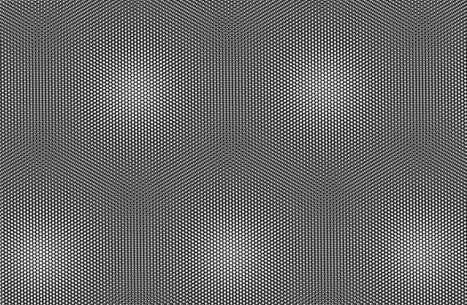
Recently, there was an exciting discovery in the Graphene field of research. It was found that if you take two layers of graphene, and rotate one of the layers by a “magic angle” of 1.1°, then you can create a superconductor. A superconductor is a kind of material that conducts electricity with zero resistance. That means you could transport electrical power without any energy loss. Or you could create so much electrical current that it creates a powerful magnet (used in MRI machines). Superconductors also have special magnetic properties that allow for magnetic levitation (used in maglev trains). But superconductors need to be cooled below a certain temperature to work, otherwise they’re just ordinary materials. So, why would you ever try rotating two layers of graphene? Graphene is simply a layer of carbon atoms that form a hexagonal pattern. If you overlay two hexagonal patterns with a bit of rotation, you create what’s called a Moiré pattern. Basically, in some regions, the two layers of graphene are aligned, and in other regions, they are misaligned. In the image above, the regions of alignment appear “brighter” than the regions of misalignment (try squinting if you can’t see it). The regions of alignment and misalignment alternate in a repeating pattern. The repeating pattern of alignment and misalignment form a hexagonal grid. That grid is called the superlattice. The researchers who discovered this say that there’s an entire series of magic angles, and 1.1° is only the first one. I thought they meant that 1.1° is the smallest angle, but actually it’s the largest! The next few magic angles are 0.5°, 0.35°, 0.24°, and 0.2°. Apparently these angles are very precise. Physicists have predicted that something strange would happen at these angles for years, and it took an experimentalist to build a device that could control the angles precisely enough. Rotating the graphene by the magic angle is not, by itself, sufficient to create a superconductor. Magic angle graphene is a kind of material called a mott insulator, which actually conducts electricity very poorly. However, the most famous kind of unconventional superconductors, the cuprates, are created by “doping” mott insulators (which means introducing impurities). So the researchers tried doping magic angle graphene, and they found a superconductor. The superconductor only works at a temperature of 1.7 degrees above absolute zero, which isn’t much, but the similarity to cuprates means it could be a useful tool to understand what’s really going on.
|
|
Scooped by
Dr. Stefan Gruenwald
May 14, 2019 4:48 PM
|
Researchers at the University of Bristol have reached new heights of sophistication in detecting magnetic fields with extreme sensitivity at room temperature by combining machine learning with a quantum sensor. The findings, published in Physical Review X, could lead to a new generation of MRI scanners which use magnetic fields and radio waves to produce detailed images of the inside of the body, as well as further potential uses within biology and material science. These findings were achieved using a combination of machine learning techniques—where computers adapt and learn from experience as humans and animals naturally do—and quantum sensing devices. Researchers from the Quantum Engineering and Technology Labs (QETLabs) at the University of Bristol, in collaboration with the Institute for quantum optics of the University of Ulm and Microsoft, have demonstrated this using a quantum sensor based on the electron-spin in a Nitrogen-vacancy (NV) centre in a diamond. Nitrogen-vacancy (NV) centers are atomic defects that can be found or created in a diamond. They allow one to interact with single electrons, which can in turn be used for sensing both electric and magnetic fields. Their unique combination of high spatial resolution and sensitivity has led to the investigation of scenarios where the activity of single neurons is monitored and mapped down to the nanoscale. However, such Nanoscale nuclear magnetic resonance applications are limited by the noise of the optical readout available at room temperature in state-of-the-art setups. Dr. Anthony Laing, University of Bristol lead researcher, said: "We expect that the deployment of our techniques can unlock unexplored regimes in a new generation of sensing experiments, where real-time tracking and enhanced sensitivities are crucial ingredients to explore phenomena at the nanoscale."
|
|
Scooped by
Dr. Stefan Gruenwald
May 14, 2019 4:38 PM
|
An international group of scientists led by the University of Cambridge has finished designing the 'brain' of the Square Kilometre Array (SKA), the world's largest radio telescope. When complete, the SKA will enable astronomers to monitor the sky in unprecedented detail and survey the entire sky much faster than any system currently in existence. The SKA's Science Data Processor (SDP) consortium has concluded its engineering design work, marking the end of five years' work to design one of two supercomputers that will process the enormous amounts of data produced by the SKA's telescopes. The SDP consortium, led by the University of Cambridge, has designed the elements that will together form the 'brain' of the SKA. SDP is the second stage of processing for the masses of digitised astronomical signals collected by the telescope's receivers. In total, close to 40 institutions in 11 countries took part. The UK government, through the Science and Technology Facilities Council (STFC), has committed £100m to the construction of the SKA and the SKA Headquarters, as its share as a core member of the project. The global headquarters of the SKA Organisation are located in the UK at Jodrell Bank, home to the iconic Lovell Telescope "It's been a real pleasure to work with such an international team of experts, from radio astronomy but also the High-Performance Computing industry," said Maurizio Miccolis, SDP's Project Manager for the SKA Organisation. "We've worked with almost every SKA country to make this happen, which goes to show how hard what we're trying to do is." The role of the consortium was to design the computing hardware platforms, software, and algorithms needed to process science data from the Central Signal Processor (CSP) into science data products. "SDP is where data becomes information," said Rosie Bolton, Data Centre Scientist for the SKA Organisation. "This is where we start making sense of the data and produce detailed astronomical images of the sky." To do this, SDP will need to ingest the data and move it through data reduction pipelines at staggering speeds, to then form data packages that will be copied and distributed to a global network of regional centres where it will be accessed by scientists around the world. SDP itself will be composed of two supercomputers, one located in Cape Town, South Africa and one in Perth, Australia. "We estimate SDP's total compute power to be around 250 PFlops – that's 25% faster than IBM's Summit, the current fastest supercomputer in the world," said Maurizio. "In total, up to 600 petabytes of data will be distributed around the world every year from SDP –enough to fill more than a million average laptops."
|
|
Scooped by
Dr. Stefan Gruenwald
May 14, 2019 4:29 PM
|
Caltech’s Division of Physics, Mathematics and Astronomy and The Feynman Lectures Website have released a new, modern online edition of the Feynman Lectures on Physics. This edition has been designed for ease of reading on devices of any size or shape; text, figures and equations can all be zoomed without degradation. This HTML5-based edition features LaTeX equations rendered by MathJax JavaScript, and scalable vector graphic (SVG) figures. Your browser must support javascript and permit scripts from mathjax.org. LocalStorage must be enabled. We recommend using a modern browser; some older browsers may not display this edition correctly. PNG figures (that degrade when scaled) may be served to browsers that do not support SVG. We do not support versions of Internet Explorer older than 8.0. For information about MathJax features and accessibility options, right-click on any display equation. There are three volumes: - Volume I – mainly mechanics, radiation, and heat
- Volume II – mainly electromagnetism and matter
- Volume III – quantum mechanics
See this new but classic publication now (in a modern, HTML5 capable browser)
|
|
Rescooped by
Dr. Stefan Gruenwald
from Papers
May 14, 2019 4:11 PM
|
Scientists seek a single description of reality. But modern physics allows for many different descriptions, many equivalent to one another, connected through a vast landscape of mathematical possibility. Did nature have any choice in picking its fundamental laws? Albert Einstein famously believed that, given some general principles, there is essentially a unique way to construct a consistent, functioning universe. In Einstein’s view, if we probed the essence of physics deeply enough, there would be one and only one way in which all the components — matter, radiation, forces, space and time — would fit together to make reality work, just as the gears, springs, dials and wheels of a mechanical clock uniquely combine to keep time. The current Standard Model of particle physics is indeed a tightly constructed mechanism with only a handful of ingredients. Yet instead of being unique, the universe seems to be one of an infinitude of possible worlds. We have no clue why this particular combination of particles and forces underlies nature’s structure. Why are there six “flavors” of quarks, three “generations” of neutrinos, and one Higgs particle? Furthermore, the Standard Model comes with 19 constants of nature — numbers like the mass and charge of the electron — that have to be measured in experiments. The values of these “free parameters” seem to be without any deeper meaning. On the one hand, particle physics is a wonder of elegance; on the other hand, it is a just-so story. If our world is but one of many, how do we deal with the alternatives? The current point of view can be seen as the polar opposite of Einstein’s dream of a unique cosmos. Modern physicists embrace the vast space of possibilities and try to understand its overarching logic and interconnectedness. From gold diggers they have turned into geographers and geologists, mapping the landscape in detail and studying the forces that have shaped it. The game changer that led to this switch of perspective has been string theory. At this moment it is the only viable candidate for a theory of nature able to describe all particles and forces, including gravity, while obeying the strict logical rules of quantum mechanics and relativity. The good news is that string theory has no free parameters. It has no dials that can be turned. It doesn’t make sense to ask which string theory describes our universe, because there is only one. The absence of any additional features leads to a radical consequence. All numbers in nature should be determined by physics itself. They are no “constants of nature,” only variables that are fixed by equations (perhaps intractably complicated ones).
Via Complexity Digest
|
|
Scooped by
Dr. Stefan Gruenwald
May 14, 2019 12:32 PM
|
New global survey increases the number of known marine viruses 12-fold. Nearly 200,000 different kinds of viruses swirl in the world’s oceans, according to a new study, Quanta Magazine reports. The new count is 12 times higher than what the previous census of marine viruses recorded in 2016. The reasons for the jump, researchers says, include extensive expeditions to collect samples and improved tools for genetic analysis. Metagenomic assembly of 145 marine viromes uncovered 195,728 viral populations. Read mapping revealed discrete sequence boundaries among >99% viral populations. Viral communities separated into five distinct ecological zones in the global ocean. Viral macro- and microdiversity did not follow the latitudinal diversity gradient Roughly 90% of the viruses identified were new to science, they report today in Cell. This new appreciation of the viral diversity of the seas could help clarify the role of such microbes in the ocean’s carbon cycle, where they can kill or manipulate bacteria that might otherwise capture or release carbon dioxide from the atmosphere.
|