Your new post is loading...

|
Scooped by
Dr. Stefan Gruenwald
October 2, 2019 11:12 PM
|
Astronomers have uncovered two historic events in which the Andromeda Galaxy underwent major changes to its structure. The findings shed light not only on the evolution and formation of the Andromeda Galaxy, but to our own Milky Way Galaxy as well. Two of the facilities in NSF's National Optical-Infrared Astronomy Research Laboratory, Kitt Peak National Observatory and the International Gemini Observatory, played critical roles in the research, now published in the latest issue of the journal Nature. Large galaxies like the one we live in, the Milky Way, are believed to grow through repeated merging with smaller, dwarf galaxies. Gas and dwarf galaxies in the vast cosmic web follow the gravitational paths laid out by dark matter — traversing filaments, they migrate slowly toward collections of dark matter and assemble into large galaxies. As dwarf galaxies are pulled in by gravity, they are also pulled apart, leaving behind long trailing streams of stars and compact star clusters. Astronomers have uncovered evidence for two major migration events in the history of our large galactic neighbor, the Andromeda Galaxy (also known as M31). The more recent migration event occurred a few billion years ago and the older event many billions of years before that. The evidence for the two events comes from “galactic archaeology,” the use of the motions and properties of stars and stellar clusters to reconstruct the formation and evolutionary history of galaxies. In the case of the Andromeda Galaxy, the team of galactic archaeologists, led by Dr. Dougal Mackey (Australian National University) and Professor Geraint Lewis (University of Sydney), measured the velocities of 77 of the Andromeda Galaxy’s compact star clusters, using the 4-meter Mayall telescope at Kitt Peak National Observatory, the 8-meter Gemini North telescope on Maunakea, Hawai‘i, and other facilities. The star clusters are all located in the outer halo of the galaxy. The outer regions of the galaxy are of particular interest because the dynamical signature of migration events persists longer there. “By tracing the faint remains of dwarf galaxies with star clusters, we’ve been able to recreate the way the Andromeda Galaxy drew them in at different times, from what’s known as the ‘cosmic web’ of matter that threads the Universe,” Lewis said.
|
|
Scooped by
Dr. Stefan Gruenwald
October 2, 2019 10:53 PM
|
New research from the Google-owned firm hints that AI may be a better way of assessing if someone is at risk of acute kidney injury. But there are still questions about how it handles patient data In 2017, DeepMind started trialling a new app with the Royal Free hospital in London. Called Streams, it was intended to help clinicians identify and monitor acute kidney injury (AKI) – a condition linked to 100,000 deaths in the UK every year. But unlike most of DeepMind’s headline-grabbing work, Streams doesn’t contain a jot of artificial intelligence. Instead, the app brings together medical information, such as blood test results and vital signs, and notifies clinicians when a patient’s kidney health deteriorates, using a well-established formula for evaluating kidney function. Now DeepMind has provided the first hints that using artificial intelligence might be a much better way of assessing whether someone is at risk of AKI. In a paper published in the scientific journal Nature, DeepMind researchers showed that they had created a machine learning algorithm capable of predicting AKI up to 48 hours before it happened. Using a vast database from the US Department of Veterans Affairs the team at DeepMind trained an algorithm to predict whether a patient would suffer AKI, and in 90 per cent of the worst cases, when patients ended up requiring dialysis, the algorithm’s predictions were accurate. DeepMind’s clinical lead, Dominic King, hopes that using AI to predict patient deterioration would allow clinicians to intervene earlier. In the case of AKI, rehydration, antibiotics or altering medications can help restore patients’ kidney function fairly easily. “Currently we pick these things up too late and harm is caused to patients, and we think there's a real opportunity for these AI systems to be able to predict and prevent rather than just what currently happens, which is clinicians almost firefighting and running around problems that have already developed,” King says.
|
|
Rescooped by
Dr. Stefan Gruenwald
from Päivät
October 1, 2019 3:56 PM
|
Here is the solution to her puzzle on the TED website "There are about 7,000 languages spoken around the world -- and they all have different sounds, vocabularies and structures. But do they shape the way we think? Cognitive scientist Lera Boroditsky shares examples of language -- from an Aboriginal community in Australia that uses cardinal directions instead of left and right to the multiple words for blue in Russian -- that suggest the answer is a resounding yes. 'The beauty of linguistic diversity is that it reveals to us just how ingenious and how flexible the human mind is,' Broditsky says. Human minds have invented not one cognitive universe, but 7,000." Follow Dr. Broditsky to Pormpuraaw, a small Aboriginal community on the western edge of Cape York in northern Australia. She went there because of the way the locals, the Kuuk Thaayorre, talk about space. Instead of words like "right," "left," "forward," and "back," which, as commonly used in English, define space relative to an observer, the Kuuk Thaayorre, like many other Aboriginal groups, use cardinal-direction terms — north, south, east, and west — to define space. This is done at all scales, which means you have to say things like "There's an ant on your southeast leg" or "Move the cup to the north northwest a little bit." One obvious consequence of speaking such a language is that you have to stay oriented at all times, or else you cannot speak properly. The normal greeting in Kuuk Thaayorre is "Where are you going?" and the answer should be something like " Southsoutheast, in the middle distance." If you don't know which way you're facing, you can't even get past "Hello." The result is a profound difference in navigational ability and spatial knowledge between speakers of languages that rely primarily on absolute reference frames (like Kuuk Thaayorre) and languages that rely on relative reference frames (like English). Simply put, speakers of languages like Kuuk Thaayorre are much better than English speakers at staying oriented and keeping track of where they are, even in unfamiliar landscapes or inside unfamiliar buildings. What enables them — in fact, forces them — to do this is their language. Having their attention trained in this way equips them to perform navigational feats once thought beyond human capabilities. Because space is such a fundamental domain of thought, differences in how people think about space don't end there. People rely on their spatial knowledge to build other, more complex, more abstract representations. Representations of such things as time, number, musical pitch, kinship relations, morality, and emotions have been shown to depend on how we think about space. So if the Kuuk Thaayorre think differently about space, do they also think differently about other things, like time? This is why Dr. Broditsky and her collaborator Alice Gaby came to Pormpuraaw to find out. To test this idea, we gave people sets of pictures that showed some kind of temporal progression (e.g., pictures of a man aging, or a crocodile growing, or a banana being eaten). Their job was to arrange the shuffled photos on the ground to show the correct temporal order. We tested each person in two separate sittings, each time facing in a different cardinal direction. If you ask English speakers to do this, they'll arrange the cards so that time proceeds from left to right. Hebrew speakers will tend to lay out the cards from right to left, showing that writing direction in a language plays a role. So what about folks like the Kuuk Thaayorre, who don't use words like "left" and "right"? What will they do? The Kuuk Thaayorre did not arrange the cards more often from left to right than from right to left, nor more toward or away from the body. But their arrangements were not random: there was a pattern, just a different one from that of English speakers. Instead of arranging time from left to right, they arranged it from east to west. That is, when they were seated facing south, the cards went left to right. When they faced north, the cards went from right to left. When they faced east, the cards came toward the body and so on. This was true even though we never told any of our subjects which direction they faced. The Kuuk Thaayorre not only knew that already (usually much better than Dr. Broditsky herself did), but they also spontaneously used this spatial orientation to construct their representations of time. Which is amazing. A transcript of the talk is here
Via Skuuppilehdet
|
|
Scooped by
Dr. Stefan Gruenwald
October 1, 2019 12:55 PM
|
When it comes to Earth, life has thrived, finding its way into every possible ecological niche, adapting itself through evolution to handle bitter cold, intense heat, the intense pressures at the bottom of the oceans, even cities, living right next to human beings.
But could Earth be better? Could there be planets which are super habitable? If there's one thing the field of astronomy has taught us, it's that we're not special. We're not the center of the Solar System. This isn't a special place or time in the universe. And that probably means Earth isn't the best place for life. It's the best place for humans, but not for life.
According to a paper in 2013, Penn State astrobiologist Ravi Kumar Kopparapu and others calculated where the edges of a star's habitable zone should truly be, based on modern climate data. They calculated that a habitable zone around a sunlike star should be between 0.99 and 1.7 times the distance from the Earth to the sun. Which means that the Earth is actually right on the inner edge of the sun's habitable zone. Like, just barely. If it was any closer to the sun, we'd experience a runaway greenhouse effect, like Venus. You probably want to be closer to the middle of the habitable zone, where orbital variations won't push your planet into extremes.
The Earth is relatively young. Considering the fact that the planet has only been around for 4.5 billion years now, and only figured out multicellular life in the last few hundred million years.
The sun is heating up, and since we're so close, we've actually only got a few hundred million years, a billion years at the most before temperatures rise and the oceans evaporate. But what if life could have gotten billions of more years of evolution to work out new, more diverse forms of life?
You think a platypus is unusual, just imagine what you'd get with 2 billion more years of evolution. Or 20 billion. Planets now have been found orbiting G, K and M-type stars by the Kepler Space Telescope. In a 2016 paper called Superhabitable Worlds, Rene Heller and John Armstrong run through the conditions that might make the most habitable possible planet. This is a very readable paper, with lots of cool ideas. If you're a science fiction writer looking for some world-building ideas, definitely check it out. They propose that stars with less mass than the sun, classified as K stars, are probably the best candidates for diversity since they're long-lived and relatively stable. A K-type star will have a lifetime of 20-70 billion years without those pesky red dwarf megaflares. You would want other planets in the star system, capable of redirecting asteroids and comets with their gravity to deliver water and other chemicals needed for life. Thanks for that, Jupiter. And ideally, you want multiple habitable planets in the same system, capable of sending life back and forth. A process known as panspermia. Make your habitable planet the moon of a gas giant to get powerful tidal forces that would keep fresh volcanic material erupting to the surface. Better yet, have a binary planet, where two worlds orbit one another, delivering tidal forces and exchanging lifeforms back and forth. And we're just getting started! Make the planet bigger and you'll get more surface area for water to circulate temperatures (more on that in a second), but also more surface area for lifeforms to exploit various niches. So, we're talking about a bigger, more massive planet. Once you get about twice the mass of the Earth, plate tectonics start to shut down, so try to stay under that amount. You also want a world that's big enough and hot enough in its interior for the movement of iron alloys in its core to maintain a planet-wide magnetosphere. You're probably worried about surface gravity, but a planet with double the mass of the Earth only needs to be about 40 percent larger to have about the same surface gravity.
|
|
Scooped by
Dr. Stefan Gruenwald
October 1, 2019 12:49 PM
|
NASA recently announced the Artemis lunar exploration program, consolidating its plans plans to land humans on the moon by 2024 and establish a sustainable base there by 2028. This ambitious initiative revives an old question: Will the unique qualities of the lunar surface enable new frontiers in astronomy? A few decades ago, astronomers had already begun to contemplatedifferent ways their observations could benefit from the absence of an atmosphere on the moon. First, energetic particles such as gamma rays, x-rays, ultraviolet photons or cosmic rays would not be blocked by an atmospheric blanket as they are on earth, and hence they would reach telescopes with large collecting areas mounted to the lunar surface.Second, observatories sensitive to optical, infrared, millimeter or radio waves could reach their diffraction limit without the blurring or absorption associated with passage through turbulent air. Arrays of detectors could therefore constitute giant interferometers with unprecedented angular resolution. Third, the lack of an ionosphere would allow radio observatories to receive signals at very low frequencies, below the terrestrial cutoff of 10 kilohertz.This would open a new spectral window into the universe, allowing to map the three-dimensional distribution of hydrogen atoms from their first appearance 0.4 million year after the big bang and through the cosmic dawn, using the highly redshifted 21-centimeter line. Although exciting and path breaking in their own right, these visions were all formulated well before the emergence of the frontier of astrobiology associated with the search for extraterrestrial life. Can the moon provide clues for extraterrestrial life? A new paper I wrote with Manasvi Lingam answers this question in the affirmative. The idea is to consider the moon’s surface as a fishing net for interstellar objects collected over time and potentially deliver building blocks of life from the habitable environments around other stars.
|
|
Scooped by
Dr. Stefan Gruenwald
October 1, 2019 12:40 PM
|
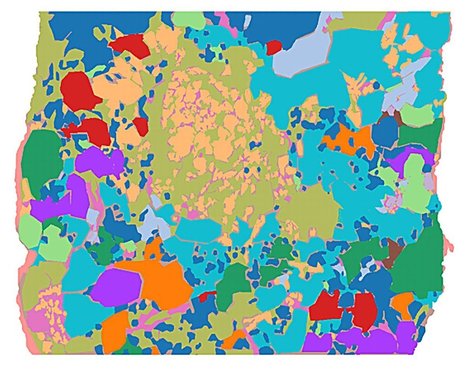
Researchers in Sweden and the U.S. have devised a new method for studying individual cells in human tissue, which could lead to even earlier detection of diseases such as cancer and ALS. The method offers a 1,400-fold increase in spatial resolution. Published in the scientific journal, Nature Methods, the study was performed by researchers from KTH Royal Institute of Technology and the Broad Institute of MIT and Harvard. The technology builds on transcriptomics, or the mapping of the cell's molecular fingerprints. RNA-sequencing provides a tool for studying different functions within tissues but the molecular profile only reveals so much. The cell's position in the tissue also has several stories to tell, including how different diseases occur. Methods for studying active genes in individual cells from tissue have evolved dramatically. At the forefront of this research are various microfluidic systems where researchers have been able to isolate individual cells and then carry out so-called massive parallel RNA-sequencing. This method has enabled the profiling of hundreds of thousands of cells from tissue, but provides no information about the cell's origin in the tissue. At the same time, other spatial and molecular methods that capture detailed information about the position of cells in frozen or solid tissue have been developed. Yet such methods still demand knowledge of which genes—or biomarkers—researchers want to investigate, which in turn requires relatively large and expensive instruments. In addition, it is usually only possible to study hundreds of genes at one time, out of thousands of active ones.
|
|
Scooped by
Dr. Stefan Gruenwald
October 1, 2019 12:37 PM
|
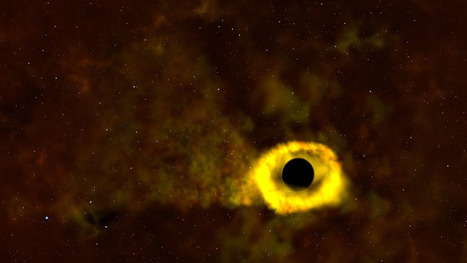
For the first time, NASA’s planet-hunting Transiting Exoplanet Survey Satellite (TESS) watched a black hole tear apart a star in a cataclysmic phenomenon called a tidal disruption event. Follow-up observations by NASA’s Neil Gehrels Swift Observatory and other facilities have produced the most detailed look yet at the early moments of one of these star-destroying occurrences. “TESS data let us see exactly when this destructive event, named ASASSN-19bt, started to get brighter, which we’ve never been able to do before,” said Thomas Holoien, a Carnegie Fellow at the Carnegie Observatories in Pasadena, California. “Because we identified the tidal disruption quickly with the ground-based All-Sky Automated Survey for Supernovae (ASAS-SN), we were able to trigger multiwavelength follow-up observations in the first few days. The early data will be incredibly helpful for modeling the physics of these outbursts.” A paper describing the findings, led by Holoien, was published in the Sept. 27, 2019, issue of The Astrophysical Journal and is now available online.
|
|
Scooped by
Dr. Stefan Gruenwald
September 25, 2019 8:42 PM
|
Atmospheric methane has been rising rapidly in the atmosphere over the past decade, contributing to global climate change. Unlike the late 20th century when the rise in atmospheric methane was accompanied by an enrichment in the heavier carbon stable isotope (13C) of methane, methane in recent years has become more depleted in 13C. This depletion has been widely interpreted as indicating a primarily biogenic source for the increased methane. Here we show that part of the change may instead be associated with emissions from shale-gas and shale-oil development. Previous studies have not explicitly considered shale gas, even though most of the increase in natural gas production globally over the past decade is from shale gas. The methane in shale gas is somewhat depleted in 13C relative to conventional natural gas. Correcting earlier analyses for this difference, we conclude that shale-gas production in North America over the past decade may have contributed more than half of all of the increased emissions from fossil fuels globally and approximately one-third of the total increased emissions from all sources globally over the past decade.
|
|
Scooped by
Dr. Stefan Gruenwald
September 24, 2019 12:04 AM
|
Cassini data suggested that Saturn's rings were only 10 to 100 million years old. A new study suggests that a "ring rain" onto Saturn makes the rings look younger than they really are, and that in fact Saturn's rings date back billions of years. Cassini data seemed to indicate rings lasting only 10 million to 100 million years. A new study suggests that dusty and organic material ejected from Saturn’s rings – a “ring rain” – could make the rings appear younger than they really are, and that in fact could mean that Saturn's rings date back billions of years. As things stand now, we don’t know if Saturn’s rings are young or old; we only know that astronomers are continuing to learn about them.
|
|
Scooped by
Dr. Stefan Gruenwald
September 23, 2019 11:57 PM
|
University of Washington astrobiologist Rory Barnes has created software that simulates multiple aspects of planetary evolution across billions of years, with an eye toward finding and studying potentially habitable worlds. Barnes, a UW assistant professor of astrobiology, astronomy and data science, released the first version of VPLanet, his virtual planet simulator, in August. He and his co-authors described it in a paper accepted for publication in the Publications of the Astronomical Society of the Pacific. “It links different physical processes together in a coherent manner,” he said, “so that effects or phenomena that occur in some part of a planetary system are tracked throughout the entire system. And ultimately the hope is, of course, to determine if a planet is able to support life or not.” VPLanet’s mission is three-fold, Barnes and co-authors write. The software can: - simulate newly discovered exoplanets to assess their potential to possess surface liquid water, which is a key to life on Earth and indicates the world is a viable target in the search for life beyond Earth
- model diverse planetary and star systems regardless of potential habitability, to learn about their properties and history, and
- enable transparent and open science that contributes to the search for life in the universe
The first version includes modules for the internal and magnetic evolution of terrestrial planets, climate, atmospheric escape, tidal forces, orbital evolution, rotational effects, stellar evolution, planets orbiting binary stars and the gravitational perturbations from passing stars. It’s designed for easy growth. Fellow researchers can write new physical modules “and almost plug and play them right in,” Barnes said. VPLanet can also be used to complement more sophisticated tools such as machine learning algorithms. An important part of the process, he said, is validation, or checking physics models against actual previous observations or past results, to confirm that they are working properly as the system expands. “Then we basically connect the modules in a central area in the code that can model all members of a planetary system for its entire history,” Barnes said. And though the search for potentially habitable planets is of central importance, VPLanet can be used for more general inquiries about planetary systems. “We observe planets today, but they are billions of years old,” he said. This is a tool that allows us to ask: ‘How do various properties of a planetary system evolve over time?’”
|
|
Scooped by
Dr. Stefan Gruenwald
September 23, 2019 11:48 PM
|
In a new scientific paper, Google researchers claim for the first time to have demonstrated "quantum supremacy," where a quantum computer outperforms a traditional one. In what may be a huge milestone in computing, Google says it has achieved "quantum supremacy," an experimental demonstration of the superiority of a quantum computer over a traditional one. The claim, made in a new scientific paper, is the most serious indication yet that the promise of quantum computers—an emerging but unproven type of machine—is becoming reality, including their potential to solve formerly ungraspable mathematical problems. Essentially, Google purports to have pulled off a stunt on a quantum computer that no classical machine—not even the world's most powerful supercomputer—can replicate. Fortune obtained a copy of Google's paper, which was posted to NASA.gov earlier this week before being taken down. The Financial Times first reported the news. A Google spokesperson declined to confirm the authenticity of the paper and its results. NASA did not respond immediately to a request for comment. A source at Google familiar with the situation suggested, however, that NASA accidentally published the paper early, before its team's claims could be thoroughly vetted through scientific peer review, a process that could take anywhere from weeks to months. If the paper holds up under the scrutiny of the scientific community, it will herald a watershed moment in quantum science. Its central claim counters doubt that some unforeseen law of nature may prevent quantum computers from operating as hoped. "Quantum speedup is achievable in a real-world system and is not precluded by any hidden physical laws," the Google researchers write. Further, they predict that quantum computing power will "grow at a double exponential rate," besting even the exponential rate that defined Moore's Law, a trend that observed traditional computing power to double roughly every two years.
|
|
Scooped by
Dr. Stefan Gruenwald
September 18, 2019 1:26 AM
|
NASA engineers are studying the feasibility of a giant starshade that could be remotely positioned to block out a targeted sun, allowing a precisely positioned space telescope tens of thousands of kilometers away to directly image Earth-size exoplanets that otherwise would be drowned out in the star’s glare. In the system currently being modeled, the starshade would unfold in space like a flower blossom, expanding to a diameter of 26 meters (85 feet) or so. The exoplanet-hunting telescope would then be positioned up to 40,000 kilometers (25,000 miles) away. For that system to work, the two spacecraft would have to maintain their precise separation to within 1 meter (3 feet). “The distances we’re talking about for the starshade technology are kind of hard to imagine,” said Michael Bottom, an engineer working on the project at NASA’s Jet Propulsion Laboratory in Pasadena, California. “If the starshade were scaled down to the size of a drink coaster, the telescope would be the size of a pencil eraser and they’d be separated by about 60 miles [100 kilometers]. “Now imagine those two objects are free-floating in space. They’re both experiencing these little tugs and nudges from gravity and other forces, and over that distance we’re trying to keep them both precisely aligned to within about 2 millimeters.” Thousands of exoplanets have been found by studying slight changes in a star’s light as it is tugged ever so slightly from side to side by the gravity of an orbiting planet or by monitoring how a star’s light periodically dims when a planet passes in front of it as viewed from the vicinity of Earth. But blocking out most of a star’s light would permit more direct observations like imaging and spectroscopic analysis of the constituents in an exoplanet’s atmosphere. A space-based starshade offers a potential solution that could lead to profound discoveries. Bottom and JPL engineer Thibault Flinois are assessing technology gaps that need to be resolved before a starshade mission could be launched. One of those is making sure the separation distance, and the starshade’s orientation, can be precisely controlled. The specifics of starshade missions depend on the size of the telescope. For the current study, the JPL engineers envisioned using a telescope the size of NASA’s proposed Wide Field Infrared Survey Telescope – WFIRST – with a 2.4-meter primary mirror. Bottom wrote a computer program that would allow sensors to detect interference patterns caused by light leaking around the edges of a slightly-out-of-alignment starshade. Flinois and his colleagues then developed algorithms incorporating the alignment data to autonomously generate thruster firing commands to keep the starshade precisely aligned.
|
|
Scooped by
Dr. Stefan Gruenwald
September 17, 2019 1:04 PM
|
Supersmart algorithms won't take all the jobs, But they are learning faster than ever, doing everything from medical diagnostics to serving up ads. Even if progress on making artificial intelligence smarter stops tomorrow, don’t expect to stop hearing about how it’s changing the world. Big tech companies such as Google, Microsoft, and Amazon have amassed strong rosters of AI talent and impressive arrays of computers to bolster their core businesses of targeting ads or anticipating your next purchase. They’ve also begun trying to make money by inviting others to run AI projects on their networks, which will help propel advances in areas such as health care or national security. Improvements to AI hardware, growth in training courses in machine learning, and open source machine-learning projects will also accelerate the spread of AI into other industries. Artificial general intelligence As yet nonexistent software that displays a humanlike ability to adapt to different environments and tasks, and transfer knowledge between them. Meanwhile, consumers can expect to be pitched more gadgets and services with AI-powered features. Google and Amazon in particular are betting that improvements in machine learning will make their virtual assistants and smart speakers more powerful. Amazon, for example, has devices with cameras to look at their ownersand the world around them. The commercial possibilities make this a great time to be an AI researcher. Labs investigating how to make smarter machines are more numerous and better-funded than ever. And there’s plenty to work on: Despite the flurry of recent progress in AI and wild prognostications about its near future, there are still many things that machines can’t do, such as understanding the nuances of language, common-sense reasoning, and learning a new skill from just one or two examples. AI software will need to master tasks like these if it is to get close to the multifaceted, adaptable, and creative intelligence of humans. One deep-learning pioneer, Google’s Geoff Hinton, argues that making progress on that grand challenge will require rethinking some of the foundations of the field. As AI systems grow more powerful, they will rightly invite more scrutiny. Government use of software in areas such as criminal justice is often flawed or secretive, and corporations like Facebook have begun confronting the downsides of their own life-shaping algorithms. More powerful AI has the potential to create worse problems, for example by perpetuating historical biases and stereotypes against women or black people. Civil-society groups and even the tech industry itself are now exploring rules and guidelines on the safety and ethics of AI. For us to truly reap the benefits of machines getting smarter, we’ll need to get smarter about machines.
|
|
|
Scooped by
Dr. Stefan Gruenwald
October 2, 2019 11:05 PM
|
Last week Google released several thousand deepfake videos to help researchers build tools that use artificial intelligence to spot altered videos that could spawn political misinformation, corporate sabotage, or cyberbullying. Google’s videos could be used to create technology that offers hope of catching deepfakes in much the way spam filters catch email spam. In reality, though, technology will only be part of the solution. That’s because deepfakes will most likely improve faster than detection methods, and because human intelligence and expertise will be needed to identify deceptive videos for the foreseeable future. Deepfakes have captured the imagination of politicians, the media, and the public. Video manipulation and deception have long been possible, but advances in machine learning have made it easy to automatically capture a person’s likeness and stitch it onto someone else. That’s made it relatively simple to create fake porn, surreal movie mashups, and demos that point to the potential for political sabotage. There is growing concern that deepfakes could be used to sway voters in the 2020 presidential election. A report published this month by researchers at NYU identified deepfakes as one of eight factors that may contribute to disinformation during next year’s race. A recent survey of legislation found that federal and state lawmakers are mulling around a dozen bills to tackle deepfakes. Virginia has already made it illegal to share nonconsensual deepfake porn; Texas has outlawed deepfakes that interfere with elections. Tech companies have promoted the idea that machine learning and AI will head off such trouble, starting with simpler forms of misinformation. In his testimony to Congress last October, Mark Zuckerberg promised that AI will help it identify fake news stories. This would involve using algorithms trained to distinguish between accurate and misleading text and images in posts.
|
|
Scooped by
Dr. Stefan Gruenwald
October 1, 2019 5:56 PM
|
They are 250-million-year-old "evolutionary remnants" most lose before birth, scientists say. Babies in the womb have extra lizard-like muscles in their hands that most will lose before they are born, medical scans reveal. They are probably one of the oldest, albeit fleeting, remnants of evolution seen in humans yet, biologists say, in the journal Development. They date them as 250 million years old - a relic from when reptiles transitioned to mammals. It is unclear why the human body makes and then deletes them just before birth. Biologists say the developmental step may be what makes thumbs dextrous. Thumbs, unlike other digits, retain an extra muscle. Rarely, some children and adults have been found to have a few of the extra finger and hand muscles but never all of the dorsometacarpales the biologists saw when they looked at 3D scans of embryos and fetuses at seven to 13 weeks' gestation. When they do persist, they are sometimes linked with limb deformities. And the biologists say their findings, in 15 developing babies, might help shed light on these types of birth defects. Lead author Dr Rui Diogo, from the Howard University, in the US, said: "We have a lot of muscles going to the thumb, very precise thumb movements, but we lost a lot of muscles that are going to the other digits. In our evolution, we do not need them so much. Why are they there? Probably, we cannot just say in evolution, 'Look, I will delete from scratch, from day zero, the muscle going to digits two, three, four, five and I will just keep the one going to the thumb.' Probably it is not so easy. Probably you have to form this layer of this muscle and then it disappears on the other digits but persists on the thumbs."
|
|
Scooped by
Dr. Stefan Gruenwald
October 1, 2019 3:34 PM
|
A tapeworm is essentially a very long, parasitic towel with a grappling hook for a head. It attaches itself to the internal organs of its host with its fiendish head spines, and it absorbs nutrients through its tagliatelle-shaped body. Once fastened, it does very little. It has no mouth or gut, no circulatory or respiratory systems. Its sparse nerves culminate in a cluster that could barely be called a brain. And yet, this very simple creature can manipulate the minds of more complex animals—even without infecting them. Consider Schistocephalus solidus. Like many tapeworms, this one has a complicated life cycle. It reproduces in the guts of waterbirds, which excrete its eggs in their droppings. After the tapeworm eggs hatch, the larvae infect small crustaceans called copepods. These are eaten by stickleback fish, which are then eaten by waterbirds, completing the cycle. The tapeworm doesn’t passively go along for this convoluted ride. When it enters sticklebacks, it somehow changes their behavior so they swim toward warmer water, where the worm can grow more quickly; at maximum size, it can make up half of a stickleback’s weight. The tapeworm also emboldens its hosts. They’re more likely to venture outside the safety of a shoal. They’re less likely to flee from predators. And consequently, they’re more likely to be eaten by birds. Nicolle Demandt and Benedikt Saus from the University of Munster developed a simple way of assessing the tapeworm’s control over its host. They would put groups of sticklebacks in a tank, lure them to the surface with floating patches of food, and then attack them with an artificial “bird”—a fake beak on a bent stick that could be jabbed into the water with a handle. “We built it from Lego,” says Jörn Peter Scharsack, who led the study. “It’s very simple but very efficient.” After the attacks, groups of uninfected fish would flee to the bottom of the tank, to hide among the plants there. By contrast, infected sticklebacks stuck to the danger zone. “These guys, they don’t care,” says Scharsack. “If you try to scare them they hardly respond.” Their bold behavior could also influence their peers. Like many animals that live in shoals and flocks, sticklebacks are incredibly sensitive to the actions of their neighbors. Small decisions made by individuals can translate into large collective movements by the group. And if certain individuals are infected by a mind-controlling parasite, to an extent, the group is too.
|
|
Scooped by
Dr. Stefan Gruenwald
October 1, 2019 12:51 PM
|
What happens when particles don't collide, but miss, in the world's largest particle accelerator? New physics! The search narrows for a mysterious form of matter predicted from Einstein's theory of special relativity. After more than a decade of looking, scientists at the world's largest particle collider believe that they are on the verge of finding it. But the researchers are not searching in the exploded guts of particles smashed together at nearly light speed. Instead, physicists at the Large Hadron Collider (LHC), a 17-mile (27 kilometers) ring buried underground near the border between France and Switzerland, are looking for the missing matter, called a color glass condensate, by studying what happens when particles don't collide, but instead zoom past each other in near misses. In the Standard Model of particle physics, the theory which describes the zoo of subatomic particles, 98% of the visible matter in the universe is held together by fundamental particles called gluons. These aptly named particles are responsible for the force that glues together quarks to form protons and neutrons. When protons are accelerated to near the speed of light, a strange phenomenon occurs: The concentration of gluons inside them skyrockets. "In these cases, gluons split into pairs of gluons with lower energies, and such gluons split themselves subsequently, and so forth," Daniel Tapia Takaki, an associate professor of physics and astronomy at the University of Kansas, said in a statement. "At some point, the splitting of gluons inside the proton reaches a limit at which the multiplication of gluons ceases to increase. Such a state is known as the color glass condensate, a hypothesized phase of matter that is thought to exist in very high-energy protons and as well as in heavy nuclei." According to Brookhaven National Laboratory, the condensate could explain many unsolved mysteries of physics, such as how particles are formed in high-energy collisions, or how matter is distributed within particles. However, confirming its existence has eluded scientists for decades. But in 2000, physicists at Brookhaven's Relativistic Heavy Ion Collider found the first signs that the color glass condensate could exist. When the lab smashed together gold atoms stripped of their electrons, they found a strange signal in the particles streaming out of the collisions, hinting that the atoms' protons were jam-packed with gluons and beginning to form the color glass condensate. Further experiments with colliding heavy ions at the LHC have had similar results. However, colliding protons together at relativistic speeds can only give a fleeting glimpse of the protons' innards before the subatomic particles violently explode. Probing the insides of protons takes a more gentle approach. If protons find themselves whizzing past each other in the accelerator, the storm of photons they release can cause proton-on-photon collisions. These so-called ultra-peripheral collisions are the key to understanding the inner workings of high-energy protons. "When a high-energy light wave hits a proton, it produces particles — all kinds of particles — without breaking the proton," Tapia Takaki, said in a statement. "These particles are recorded by our detector and allow us to reconstruct an unprecedentedly high-quality picture of what's inside." Tapia Takaki and an international collaboration of scientists are now using this method to track down the elusive color glass condensate. The researchers published early results of their study in the August issue of The European Physical Journal C. For the first time, the team was able to indirectly measure the density of gluons at four different energy levels. At the highest level, they found evidence that a color glass condensate was just beginning to form. The experimental results "…are very exciting, giving new information about the gluon dynamics in the proton, [b]ut there are many theoretical questions that have not been answered," Victor Goncalves, a professor of physics at the Federal University of Pelotas in Brazil and a co-author of the study, said in the statement.
|
|
Scooped by
Dr. Stefan Gruenwald
October 1, 2019 12:42 PM
|
A giant world discovered around a tiny star is putting a new spin on how planets form. Astronomers reported Thursday they've found a Jupiter-like planet orbiting a star that's a mere 12% the mass of our sun. There may even be another big gas planet lurking in this system 31 light-years away. The Spanish-led team wrote in the journal Science that the newly confirmed planet did not form the usual, gradual way, where a solid core of merging particles takes shape before a gas buildup. Instead, in a surprise to scientists, the planet seems to have arisen straight from gas. Lead author Juan Carlos Morales of the Institute of Space Studies of Catalonia said the planet may be almost as big as its star. A year there is about 200 days. "It was very exciting finding this planet because it was completely unexpected," Morales wrote in an email. The results indicate "a new population of massive planets may also exist around low-mass stars."
|
|
Scooped by
Dr. Stefan Gruenwald
October 1, 2019 12:39 PM
|
Using the Subaru, Keck and Gemini Telescopes, an international team of astronomers has discovered a collection of 12 galaxies that existed about 13.0 billion years ago. This is the earliest protocluster ever found. One of the 12 galaxies is a giant object, known as Himiko, which was discovered a decade ago by the Subaru Telescope and named for a mythological queen in ancient Japan. This discovery suggests that large structures such as protoclusters already existed when the universe was only about 800 million years old, 6 percent of its present age. In the present universe, galaxy clusters can contain hundreds of members, but how these clusters form is a big question in astronomy. To understand the formation of clusters, astronomers search for possible progenitors in the ancient universe. A protocluster is a dense system of dozens of galaxies in the early universe, growing into a cluster. Yuichi Harikane, a JSPS fellow at the National Astronomical Observatory of Japan who led the team of astronomers explains, "A protocluster is a rare and special system with an extremely high density, and not easy to find. To overcome this problem, we used the wide field of view of the Subaru Telescope to map a large area of the sky and look for protoclusters." In the map of the universe made by the Subaru Telescope, the team discovered a protocluster candidate, z66OD, where galaxies are 15 times more concentrated than normal for that era. The team then conducted follow-up spectroscopic observations using the W.M. Keck Observatory and Gemini North telescope, and confirmed 12 galaxies which existed 13.0 billion years ago, making it the earliest protocluster known to date.
|
|
Scooped by
Dr. Stefan Gruenwald
October 1, 2019 12:35 PM
|
By transferring the state of electrons, Rochester research brings scientists one step closer to creating fully functional quantum computers. Quantum information science has the potential to revolutionize modern technology by providing resource-efficient approaches to computing1, communication2 and sensing3. Although the physical qubits in a realistic quantum device will inevitably suffer errors, quantum error correction creates a path to fault-tolerant quantum information processing4. Quantum error correction, however, requires that individual qubits can interact with many other qubits in the processor. Engineering such high connectivity can pose a challenge for platforms such as electron spin qubits5, which naturally favor linear arrays. A group of physicists now present an experimental demonstration of the transmission of electron spin states via the Heisenberg exchange interaction in an array of spin qubits. Heisenberg exchange coupling—a direct manifestation of the Pauli exclusion principle, which prevents any two electrons with the same spin state from occupying the same orbital—tends to swap the spin states of neighboring electrons. By precisely controlling the wavefunction overlap between electrons in a semiconductor quadruple quantum dot array, the scientists were able to generate a series of coherent SWAP operations to transfer both single-spin and entangled states back and forth in the array without moving any electrons. Because the process is scalable to large numbers of qubits, state transfer through Heisenberg exchange will be useful for multi-qubit gates and error correction in spin-based quantum computers.
|
|
Scooped by
Dr. Stefan Gruenwald
September 24, 2019 12:06 AM
|
A promising semiconductor material could be improved if flaws previously thought irrelevant to performance are reduced, according to research published today in Nature Communications. A group of researchers at Rensselaer Polytechnic Institute and other universities has shown that a specific defect impacts the ability of halide perovskite to hold energy derived from light in the form of electrons. “Defects could be good or bad in semiconductors,” said Jian Shi, associate professor of materials science engineering. “For some reason, people did not pay attention to dislocations in halide perovskite, but we have shown that this defect is a problem in halide perovskite.” Research on halide perovskite has rapidly improved the efficiency of the material from about a 3% conversion of light to electrical energy to 25% — equivalent to state-of-the-art silicon solar cells — over the course of a decade. Researchers wrestled with silicon for decades to reach that material’s current level of efficiency. Halide perovskite also has promising carrier dynamics, which are roughly defined as the length of time that light energy absorbed by the material is retained in the form of an excited electron. To make a good prospect for solar energy conversion, electrons in the material must retain their energy long enough to be harvested by an electrode attached to the material, thus completing the conversion of light to electrical energy. The material had long been considered “defect tolerant,” meaning flaws like missing atoms, shoddy bonds across grains of the crystal, and a mismatch known as crystallographic dislocation were not believed to have much impact on efficiency. More recent research has questioned that assumption and found that some defects do affect aspects of the crystal’s performance. Shi’s team tested whether the defect of crystallographic dislocation impacts carrier dynamics by growing the crystal on two different substrates. One substrate had a strong interaction with the halide perovskite as it was being deposited, producing a higher density of dislocations. The other had a weaker interaction and produced a lower density of dislocations. The results show that dislocations negatively impact the carrier dynamics of halide perovskite. Reducing dislocation densities by more than one order of magnitude is found to lead to an increase of electron lifetime by four times.
|
|
Scooped by
Dr. Stefan Gruenwald
September 24, 2019 12:01 AM
|
Researchers at the University of Illinois at Urbana-Champaign have constructed a quantum-mechanical state in which the colors of three photons are entangled with each other. The state is a special combination, called a W state, that retains some entanglement even if one of the three photons is lost, which makes it useful for quantum communication. Such entangled states also enable novel quantum applications and tests of fundamental physics. The uniqueness of this work is that the researchers used color, or the energy of the photons, as the entangling degree of freedom, while previous work used polarization. The energy of a photon cannot be easily changed, which reduces the possibility of errors when the energy-entangled W state is propagating over a long distance. The state was verified for the first time by measuring information about the two-photon sub-systems. Their findings are published in Physical Review Letters. "People have created polarization-entangled W states before," noted Bin Fang, the graduate student on the project. "However, this is the first discrete energy-entangled W state and the first three-photon entangled state created in an optical fiber." To create the state, the researchers shine a laser into a glass fiber. Through a process called spontaneous four-wave mixing, four laser photons interact with the fiber and are annihilated to create two pairs of photons at different colors (for example, two pairs of red and green photons). These four photons are used to construct the 3-photon W state. One of them is detected to be green, leaving the other three entangled as a W state, which is comprised of all possible iterations of two red photons and a green photon at once. Researchers on this project are graduate student Bin Fang and principal investigator Virginia Lorenz, associate professor of physics Credit: University of Illinois Grainger College of Engineering The illustration that the researchers use is that of traffic lights. "Like three traffic lights that always signal two stops and a go, the photons' colors always end up being two reds and a green, but the specific combination is not set until we make a measurement—a feature of the quantum mechanical nature of photons," said Virginia Lorenz, associate professor of physics and the principal investigator. Compared to other types of three-particle entanglement, the W state is useful for quantum communication in that, if one of the photons is lost, the other two retain some entanglement, meaning the communication is able to continue. "Another new aspect of this research is that we found a path to verify the state is the one we aimed for that circumvents a complicated color conversion step, " said Lorenz. "Our theorist collaborators came up with a way to fairly straightforwardly show that the W state exists."
|
|
Scooped by
Dr. Stefan Gruenwald
September 23, 2019 11:55 PM
|
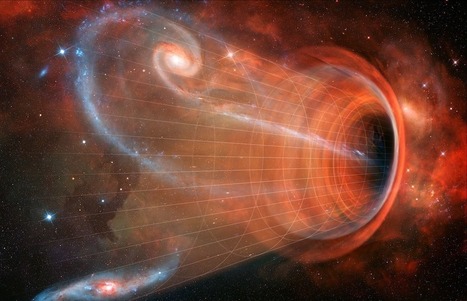
NASA's Black Hole Mathematics (download and learn!) If you could journey through the cosmos' most monstrous objects, what tales — if any — would you be able to tell? So there you are, about to leap into a black hole. What could possibly await should — against all odds — you somehow survive? Where would you end up and what tantalizing tales would you be able to regale if you managed to clamor your way back? The simple answer to all of these questions is, as Professor Richard Massey explains, "Who knows?" As a Royal Society research fellow at the Institute for Computational Cosmology at Durham University, Massey is fully aware that the mysteries of black holes run deep. "Falling through an event horizon is literally passing beyond the veil — once someone falls past it, nobody could ever send a message back," he said. "They'd be ripped to pieces by the enormous gravity, so I doubt anyone falling through would get anywhere." If that sounds like a disappointing — and painful — answer, then it is to be expected. Ever since Albert Einstein's general theory of relativity was considered to have predicted black holes by linking space-time with the action of gravity, it has been known that black holes result from the death of a massive star leaving behind a small, dense remnant core. Assuming this core has more than roughly three-times the mass of the sun, gravity would overwhelm to such a degree that it would fall in on itself into a single point, or singularity, understood to be the black hole's infinitely dense core. The resulting uninhabitable black hole would have such a powerful gravitational pull that not even light could avoid it. So, should you then find yourself at the event horizon — the point at which light and matter can only pass inward, as proposed by the German astronomer Karl Schwarzschild — there is no escape. According to Massey, tidal forces would reduce your body into strands of atoms (or 'spaghettification', as it is also known) and the object would eventually end up crushed at the singularity. The idea that you could pop out somewhere — perhaps at the other side — seems utterly fantastical. What about a wormhole? Or is it? Over the years scientists have looked into the possibility that black holes could be wormholes to other galaxies. They may even be, as some have suggested, a path to another universe. Such an idea has been floating around for some time: Einstein teamed up with Nathan Rosen to theorise bridges that connect two different points in space-time in 1935. But it gained some fresh ground in the 1980s when physicist Kip Thorne — one of the world's leading experts on the astrophysical implications of Einstein's general theory of relativity — raised a discussion about whether objects could physically travel through them. "Reading Kip Thorne's popular book about wormholes is what first got me excited about physics as a child," Massey said. But it doesn't seem likely that wormholes exist. Indeed, Thorne, who lent his expert advice to the production team for the Hollywood movie Interstellar, wrote: "We see no objects in our universe that could become wormholes as they age," in his book "The Science of Interstellar" (W.W. Norton and Company, 2014). Thorne told Space.com that journeys through these theoretical tunnels would most likely remain science fiction, and there is certainly no firm evidence that a black hole could allow for such a passage.
|
|
Scooped by
Dr. Stefan Gruenwald
September 23, 2019 3:07 PM
|
Researchers have used the world's smallest MRI machine to map the magnetic fields of individual atoms for the first time ever. In a world-first, scientists have captured an image of the magnetic field of an atom, opening the door to new ways to interacting with matter on a quantum level for researchers and commercial applications of quantum phenomenon, like quantum computing. Researchers at the Center for Quantum Nanoscience (QNS) at the Institute for Basic Science, part of Ewha Womans University in Seoul, South Korea, have used the smallest magnetic resonance imaging (MRI) machine in the world to capture the magnetic fields of individual atoms for the first time. Published recently in the journal Nature Physics, the QNS team's work opens the door to a whole new way of interacting with matter on a quantum level, implicating everything from basic research to the commercial and industrial applications of quantum phenomenon, like lasers, quantum computing, and medical diagnostics. “I am very excited about these results," said Professor Andreas Heinrich, director of QNS. "It is certainly a milestone in our field and has very promising implications for future research.” MRI machines work by measuring the relative densities of 'spins,' the source of the magnetic force between electrons and protons. Normally, MRI machines need many billions of these spins to make an image, but the process at the macro level is the same as for a single atom, so recording the magnetic field of a single atom requires creating a way of detecting a single magnetic field among billions of others. To do this, the QNS scientists used a scanning tunneling microscope (STM), the tip of which is as sharp as a single atom and which allows scientists to interact with individual atoms as they scan along a surface. The researchers chose to focus on two atoms in particular, iron and titanium, that are both magnetically active and thanks to their precision placement on a surface of magnesium oxide, the atoms themselves were already visible to researchers using the STM as normal. To detect the magnetic fields of the atoms, the scientists attached another magnetically active 'spin cluster' to the metal tip of the STM, which they then passed over the atoms like before. Now, however, the researchers could record the pull or repulsion of the atom's magnetic field, exactly the way commonly used magnets of opposite or similar charge behave, as detected by the spin cluster on the STM's tip. Doing so gave the researchers an incredibly detailed, 3D view of the magnetic field being generated by the single atom they were passing over. What's more, the iron atoms and the titanium atoms interacted with the spin cluster on the tip in characteristically different ways and to different degrees, making it possible to determine the type of atom being passed over from its interaction with the spin cluster on the tip of the STM. "It turns out that the magnetic interaction we measured depends on the properties of both spins, the one on the tip and the one on the sample," said lead author Dr. Philip Willke. "For example, the signal that we see for iron atoms is vastly different from that for titanium atoms. This allows us to distinguish different kinds of atoms by their magnetic field signature and makes our technique very powerful.” The researchers hope that their technique will make it possible to explore even more complex structures on the nanoscale, such as the spin distributions of atoms within chemical compounds or allow for precision control of magnetic material such as those used by modern magnetic storage devices. "Many magnetic phenomena take place on the nanoscale, including the recent generation of magnetic storage devices,” said study co-author Dr. Yujeong Bae. “We now plan to study a variety of systems using our microscopic MRI."
|
|
Scooped by
Dr. Stefan Gruenwald
September 17, 2019 1:06 PM
|
Researchers from the Department of Atomically Resolved Dynamics of the Max Planck institute for the Structure and Dynamics of Matter (MPSD) at the Center for Free-Electron Laser Science in Hamburg, the University of Hamburg and the European Molecular Biology Laboratory (EMBL) outstation in Hamburg have developed a new method to watch biomolecules at work. This method dramatically simplifies starting enzymatic reactions by mixing a cocktail of small amounts of liquids with protein crystals. Determination of the protein structures at different times after mixing can be assembled into a time-lapse sequence that shows the molecular foundations of biology. The functions of biomolecules are determined by their motions and structural changes. Yet it remains a formidable challenge to understand these dynamic motions. One method that illuminates them is time-resolved X-ray crystallography, where the reaction of a biological molecule is triggered and then snapshots are taken as it reacts. However, triggering these reactions is extremely challenging as it usually involves lasers and protein reactions that can be started by light. The new 'Liquid Application Method for time-resolved Analyses' (LAMA) overcomes the need for optical triggers. It is tailored to the study of biologically relevant reaction time-scales, which are on the order of milliseconds (10-3) to seconds or even minutes. These time-scales are of particular interest to biologists and pharmaceutical researchers as they often reveal the structural changes relevant to a particular biological function or the turnover of a drug. The paper describing the method and its application has just been published in Nature Methods. The highly intense micro-focused X-ray beams available on EMBL beamline P14-2 allowed the interrogation of the system on a millisecond time-scale. Importantly, the new 'LAMA' method makes the whole experiment a lot simpler than previous approaches. To start a reaction, a few picoliters (10-12 liter) of the reactant are mixed with microcrystals of the target protein. Reaction snapshots are then recorded as the enzyme proceeds with the turnover of the reactant. Excitingly, this new method has great potential on existing and up-coming high-brilliance synchrotron radiation sources, allowing many more researchers to carry out time-resolved crystallography studies.
|