Your new post is loading...

|
Scooped by
Dr. Stefan Gruenwald
November 18, 2019 12:48 PM
|
Even before MMA was a combat sport, it was a unique type of astronomy. Today, it's opening up the Universe as never before. On February 24, 1987, a spectacular signal was seen as never before. From 165,000 light-years away, the first signals from a recently destroyed star — a core-collapse supernova — arrived on Earth. Humans had witnessed supernovae before, both within the Milky Way and in galaxies beyond our own, but this one was special. The first hint of its arrival didn't come in the form of light, but rather in a signal never measured before: in the form of neutrinos. It wasn't until hours later that the light arrived, corresponding to the extra time it took the shock wave occurring in the star's interior to reach the surface. Whereas light interacts with the material composing the progenitor star, neutrinos simply pass right through it, giving them a significant head start. For the first time, an astronomical event beyond our Solar System had emitted both light and particles that were observed on Earth. The era of Multi-Messenger Astronomy was born. Although it's still a term that few non-astronomers are familiar with, it truly is the future of studying the Universe. Originally, astronomy was confined to a very narrow regime: the only signals we were capable of receiving were in the form of visible light. Since that's what our eyes had adapted to see, those were the tools we had at our disposal to examine the Universe. For countless millennia, human eyes viewed the Sun, Moon, planets, stars, and the fuzzy, distant nebulae we now know to be galaxies as they slowly but surely migrated across the sky. Even after the invention of the telescope, astronomy was still confined to what we could perceive in visible light. All the telescope did, essentially, was to enhance our light-gathering power by using mirrors and/or lenses to increase the light-collecting area far beyond the limits of even the most thoroughly dilated pupil. Instead of thousands of stars, these tools would reveal hundreds of thousands, millions, and eventually billions of them.
|
|
Scooped by
Dr. Stefan Gruenwald
November 18, 2019 12:45 PM
|
Shrouded in mystery since their discovery, the phenomenon of black holes continues to be one of the most mind-boggling enigmas in our universe. In recent years, many researchers have made strides in understanding black holes using observational astronomy and an emerging field known as gravitational wave astronomy, first hypothesized by Albert Einstein, which directly measures the gravitational waves emitted by black holes. Through these findings on black hole gravitational waves, which were first observed in 2015 by the Laser Interferometer Gravitational-Wave Observatories (LIGO) in Louisiana and Washington, researchers have learned exciting details about these invisible objects and developed theories and projections on everything from their sizes to their physical properties. Still, limitations in LIGO and other observation technologies have kept scientists from grasping a more complete picture of black holes, and one of the largest gaps in knowledge concerns a certain type of black hole: those of intermediate-mass, or black holes that fall somewhere between supermassive (at least a million times greater than our sun) and stellar (think: smaller, though still 5 to 50 times greater than the mass of our sun). That could soon change thanks to new research out of Vanderbilt on what's next for gravitational wave astronomy. The study, led by Vanderbilt astrophysicist Karan Jani and featured today as a letter in Nature Astronomy, presents a compelling roadmap for capturing 4- to 10-year snapshots of intermediate-mass black hole activity.
|
|
Scooped by
Dr. Stefan Gruenwald
November 18, 2019 12:42 PM
|
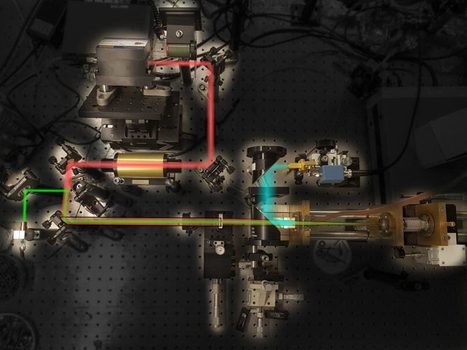
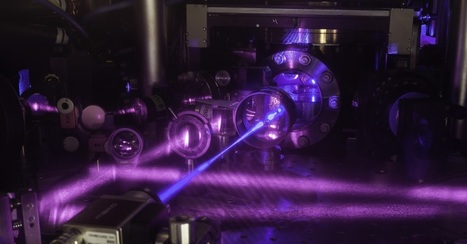
The terahertz frequency range — which sits in the middle of the electromagnetic spectrum between microwaves and infrared light — offers the potential for high-bandwidth communications, ultrahigh-resolution imaging, precise long-range sensing for radio astronomy, and much more. But this section of the electromagnetic spectrum has remained out of reach for most applications. That is because current sources of terahertz frequencies are bulky, inefficient, have limited tuning or have to operate at low temperature. Now, researchers from the Harvard John A. Paulson School of Engineering and Applied Sciences (SEAS), in collaboration with MIT and the U.S. Army, have developed a compact, room temperature, widely tunable terahertz laser. The research was published today (November 15, 2019) in the journal Science. “This laser outperforms any existing laser source in this spectral region and opens it up, for the first time, to a broad range of applications in science and technology,” said Federico Capasso, the Robert L. Wallace Professor of Applied Physics and Vinton Hayes Senior Research Fellow in Electrical Engineering at SEAS and co-senior author of the paper. “There are many needs for a source like this laser, things like short range, high bandwidth wireless communications, very high-resolution radar, and spectroscopy,” said Henry Everitt, Senior Technologist with the U.S. Army CCDC Aviation & Missile Center and co-senior author of the paper.
|
|
Scooped by
Dr. Stefan Gruenwald
November 8, 2019 3:02 AM
|
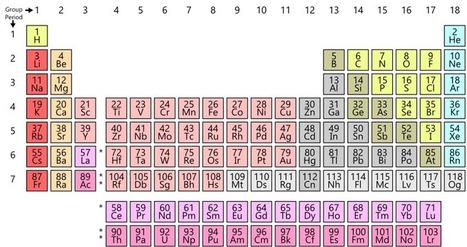
2019 is the International Year of the Periodic Table of Elements. Here, we discuss the history of the periodic table as well as the designated year. Elements 113, 115, 117 and 118 — fill out the seventh row of the periodic table of the elements. All are superheavies. That’s why they sit at the base right of the bench (see above). Naming rights classically go to those who find an element. And that’s what happen here. Element 113 was found by scientists at RIKEN in Wako, Japan. They have requested to call it Nihonium, to be shortened as Nh. This name comes from Nihon. It’s Japanese for “Land of the Rising Sun,” which is what a lot of people call Japan. Element 115 will turn out to be Moscovium, abridged as Mc. It refers to the Moscow area. And that was where the combined organization for Nuclear Research is based (Dubna). It exposed number 115 in a teamwork with researchers at Lawrence Livermore National Laboratory in California and Oak Ridge National Laboratory (ORNL) in Tennessee. That's why Tennessee also gets a periodic table entry. It’s the home location of ORNL, Vanderbilt University & the University of Tennessee. So element 117 will become Tennessine and will be represented by the symbol Ts. Russian physicist Yuri Oganessian was involved in the detection of several superheavy elements. So the group behind number 118 determined to name it after him. It becomes Oganesson — or Og. “I see it as thrilling to be familiar with that international collaborations were at the core of these discovery,” says Jan Reedijk at the Leiden organization of Chemistry in the Netherlands. He contacts the labs involved with the recently discovered elements and invite their scientists to propose names for them. Those names, Reedijk says, at the present “make the discovery somewhat tangible,” meaning seemingly more real. Element names have to follow certain rules. Allowed is: names of a scientist, a place or geographic location, a mineral, a mythological nature or concept, or some feature that is trait of the element.The recently recommended names are now open to appraisal by IUPAC and the public. Following that, the names will be official. And that’s not the finish of activities to tweak the periodic table. Physicists are already probing for still heavier elements. These would sit in a new eighth row on the table. Some scientists as well are working to confirm that copernicium is genuine. Somewhat smaller than the latest elements, it would be number 112. To evaluate all of this continuing work, chemists and physicists are collaborating to set up a latest group. They will evaluate claims of any new additions of elements.
|
|
Scooped by
Dr. Stefan Gruenwald
November 8, 2019 2:21 AM
|
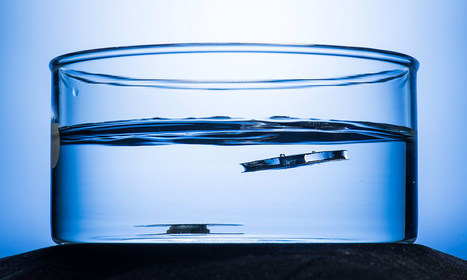
Researchers, inspired by diving bell spiders and rafts of fire ants, have created a metallic structure that is so water repellent, it refuses to sink—no matter how often it is forced into water or how much it is damaged or punctured. Could this lead to an unsinkable ship? A wearable flotation device that will still float after being punctured? Electronic monitoring devices that can survive in long term in the ocean? All of the above, says Chunlei Guo, professor of optics and physics, whose lab describes the structure in ACS Applied Materials and Interfaces .The structure uses a groundbreaking technique the lab developed for using femtosecond bursts of lasers to “etch” the surfaces of metals with intricate micro- and nanoscale patterns that trap air and make the surfaces superhydrophobic, or water repellent.
|
|
Scooped by
Dr. Stefan Gruenwald
November 8, 2019 2:17 AM
|
For the first time in 19 years, a team of scientists have detected a new strain of HIV. The strain is a part of the Group M version of HIV-1, the same family of virus subtypes to blame for the global HIV pandemic, according to Abbott Laboratories, which conducted the research along with the University of Missouri, Kansas City. The findings were published Wednesday, November 7th in the Journal of Acquired Immune Deficiency Syndromes. HIV has several different subtypes or strains, and like other viruses, it has the ability to change and mutate over time.
This is the first new Group M HIV strain identified since guidelines for classifying subtypes were established in 2000. It is important to know what strains of the virus are circulating to ensure that tests used to detect the disease are effective. "It can be a real challenge for diagnostic tests," Mary Rodgers, a co-author of the report and a principal scientist at Abbott, said. Her company tests more than 60% of the world's blood supply, she said, and they have to look for new strains and track those in circulation so "we can accurately detect it, no matter where it happens to be in the world." Dr. Anthony Fauci, director of the National Institute of Allergy and Infectious Diseases, said current treatments for HIV are effective against this strain and others. However, identifying a new strain provides a more complete map of how HIV evolves.
|
|
Scooped by
Dr. Stefan Gruenwald
November 5, 2019 11:44 AM
|
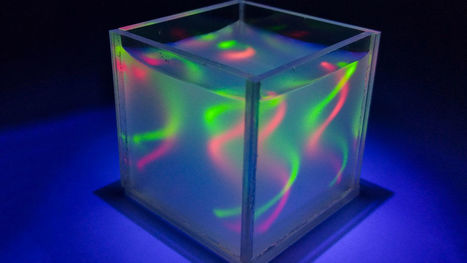
New technique makes it easier to build stable “tissues” 3D-printed tissues and organs could revolutionize transplants, drug screens, and lab models—but replicating complicated body parts such as gastric tracts, windpipes, and blood vessels is a major challenge. That’s because these vascularized tissues are hard to build up in traditional solid layer-by-layer 3D printing without constructing supporting scaffolding that can later prove impossible to remove. One potential solution is replacing these support structures with liquid—a specially designed fluid matrix into which liquid designs could be injected before the “ink” is set and the matrix is drained away. But past attempts to make such aqueous structures have literally collapsed, as their surfaces shrink and their structures crumple into useless blobs. So, researchers from China turned to water-loving, or hydrophilic, liquid polymers that create a stable membrane where they meet, thanks to the attraction of their hydrogen bonds. The researchers say various polymer combinations could work; they used a polyethylene oxide matrix and an ink made of a long carbohydrate molecule called dextran. They pumped their ink into the matrix with an injection nozzle that can move through the liquid and even suck up and rewrite lines that have already been drawn. The resulting liquid structures can hold their shape for as long as 10 days before they begin to merge, the team reported last month in Advanced Materials. Using their new method, the researchers printed an assortment of complex shapes—including tornadoesque whirls, single and double helices (above), branched treelike shapes, and even one that resembles a goldfish. Once printing is finished, the shapes are set by adding polyvinyl alcohol to the inky portion of the structure. That means, the scientists say, that complex 3D-printed tissues made by including living cells in the ink could soon be within our grasp.
|
|
Scooped by
Dr. Stefan Gruenwald
November 4, 2019 7:32 PM
|
Wyss Institute, Harvard Medical School study offers hope for single genetic treatment for multiple age-related ills. New research from the Wyss Institute for Biologically Inspired Engineering at Harvard University and Harvard Medical School (HMS) suggests that it may be possible someday to tend to multiple ailments with one treatment. In the Wyss study, a single administration of an adeno-associated virus (AAV)-based gene therapy, which delivered combinations of three longevity-associated genes to mice, dramatically improved or completely reversed multiple age-related diseases, suggesting that a systems-level approach to treating such diseases could improve overall health and lifespan. The research is reported in PNAS. “The results we saw were stunning and suggest that holistically addressing aging via gene therapy could be more effective than the piecemeal approach that currently exists,” said first author Noah Davidsohn, a former research scientist at the Wyss Institute and HMS who is now chief technology officer of Rejuvenate Bio. “Everyone wants to stay as healthy as possible for as long as possible, and this study is a first step toward reducing the suffering caused by debilitating diseases.” The study was conducted in the lab of Wyss core faculty member George Church as part of Davidsohn’s postdoctoral research into the genetics of aging. Davidsohn, Church, and their co-authors homed in on three genes that had been shown to confer increased health and lifespan benefits in mice that were genetically engineered to overexpress them: FGF21, sTGFβR2, and αKlotho. They hypothesized that providing extra copies of those genes to nonengineered mice via gene therapy would similarly combat age-related diseases and bring health benefits. The team created separate gene therapy constructs for each gene using the AAV8 serotype as a delivery vehicle, and injected them into mouse models of obesity, Type 2 diabetes, heart failure, and renal failure both individually and in combination with the other genes to see whether there was a positive synergistic effect. FGF21 caused complete reversal of weight gain and Type 2 diabetes in obese, diabetic mice following a single gene therapy administration, and its combination with sTGFβR2 reduced kidney atrophy by 75 percent in mice with renal fibrosis. Heart function in mice with heart failure improved by 58 percent when they were given sTGFβR2 alone or in combination with either of the other two genes, showing that a combined therapeutic treatment of FGF21 and sTGFβR2 could successfully treat all four age-related conditions, therefore improving health and survival. Administering all three genes together resulted in slightly worse outcomes, likely from an adverse interaction between FGF21 and αKlotho, which remains to be studied.
|
|
Scooped by
Dr. Stefan Gruenwald
November 4, 2019 7:19 PM
|
Doctors in Australia say they have identified a second case of twins apparently created from one egg and two sperm, a boy-girl combination in whom the mother’s DNA is identical in both babies but the father’s DNA varies in each twin. They’re being called semi-identical twins and a new study in the New England Journal of Medicine suggests that such twins are extraordinarily rare. The only other reported case was uncovered in 2007. Virtually all twins are either fraternal (where two eggs and two sperm have created two separate embryos) or identical (where one embryo splits in two before resuming normal development for each child). “This is confirming there is this third type of twinning where it’s not fraternal and it’s not identical. It’s this strange place in between,” chief author Dr Michael Terrence Gabbett of Queensland University of Technology in Brisbane told Reuters in a telephone interview. Each sperm cell contains half the father’s DNA. But it’s not identical from sperm to sperm because each man is a mixture of the genetic material from his parents, and each time a slightly different assortment of that full DNA set gets divided to go into a sperm. For example, some sperm will contain a copy of the father’s Y chromosome that makes the child develop into a boy and some will carry the father’s X chromosome, which makes the child a girl. In the case of the Australian twins, who live in Brisbane and are now four-and-a-half years old, the mother’s egg was fertilized with one sperm carrying an X chromosome and one with a Y. Because an ultrasound taken early in the pregnancy showed that both fetuses shared the same placenta, doctors assumed the fetuses were identical twins. But when an ultrasound eight weeks later revealed that one child was male and the other female, something considered impossible for identical twins, the Gabbett team knew something extraordinary had happened. The researchers say it appears that after fertilization, the DNA from the egg and two sperm divided, then got divvied up to create three embryos. Two of these had enough egg DNA and sperm DNA to make viable embryos. The remaining embryo, with only sperm DNA, was not viable. The twin boy and girl were found to have 100% of their mother’s DNA in common, but were only 78% identical in the paternal DNA they carry.
|
|
Rescooped by
Dr. Stefan Gruenwald
from Popular Science
November 4, 2019 5:22 PM
|
Researchers are using the gene-editing tool to boost the fruit’s defences and prevent the extinction of a major commercial variety. The race to engineer the next-generation banana is on. The Colombian government confirmed last month that a banana-killing fungus has invaded the Americas — the source of much of the world’s banana supply. The invasion has given new urgency to efforts to create fruit that can withstand the scourge. Scientists are using a mix of approaches to save the banana. A team in Australia has inserted a gene from wild bananas into the top commercial variety — known as the Cavendish — and are currently testing these modified bananas in field trials. Researchers are also turning to the powerful, precise gene-editing tool CRISPR to boost the Cavendish’s resilience against the fungus, known as Fusarium wilt tropical race 4 (TR4). Breeding TR4 resistance into the Cavendish using conventional methods isn’t possible because the variety is sterile and propagated by cloning. So the only way to save the Cavendish may be to tweak its genome, says Randy Ploetz, a plant pathologist at the University of Florida in Homestead. The variety accounts for 99% of global banana shipments. James Dale, a biotechnologist at Queensland University of Technology in Brisbane, Australia, started getting enquiries about his genetically modified (GM) bananas in July, as the first rumors surfaced that TR4 had reached Colombia. “Then Colombia declared a national emergency,” Dale says, “and now the amount of interest is through the roof.” An appealing alternative This isn’t the first time that a commercial banana variety has faced extinction. In the first half of the 1900s, another strain of the Fusarium fungus called TR1 nearly wiped out the era’s top banana, the Gros Michel. But farmers had a backup in the Cavendish, which was resistant to TR1, tough enough to withstand handling during export and had a broadly acceptable texture and taste. By the 1960s, big banana growers such as Chiquita, now based in Fort Lauderdale, Florida, were switching to the Cavendish.
Via Neelima Sinha
The new theory suggests that time does not PASS and that everything is ever-present. In fact, time is not linear as we have been thinking all along, and everything around us is ever present. The researchers indicates that time should be regarded as a dimension of spacetime, as relativity theory holds — so it does not pass by us in some way, because spacetime doesn’t. Instead, time is part of the uniform larger fabric of the universe, not something moving around inside it.According to a scientist, everything that has happened, and everything that will happen is in fact occurring at this very moment as time is positioned in space. The new theory proposed by Dr. Bradford Skow, an associated professor of philosophy at the Massachusetts Institute of Technology (MIT) indicates that if we were to look down on the universe, we would actually observe time and events spreading out in all directions. So what does this actually mean? Well, it suggests that time as we know it is incorrect, in other words, it’s not linear as we have been thinking all along. In fact, everything around us is ever present. The new theory is detailed in Dr. Skow’s book, Objective Beginning, where he writes: “When you ask people, ‘Tell me about the passage of time,’ they usually make a metaphor. “They say time flows like a river, or we move through time like a ship sailing through the sea.” The author argues that he “wouldn’t want to believe in that unless I saw good arguments for it.” In “Objective Becoming,” Skow aims to convince readers that things could hardly be otherwise. To do so, he spends much of the book considering competing ideas about time — the ones that assume time does pass or move by us in some way. “I was interested in seeing what kind of view of the universe you would have if you took these metaphors about the passage of time very, very seriously,” Skow says. e='text-align:justify'>“They say time flows like a river, or we move through time like a ship sailing through the sea.” The author argues that he “wouldn’t want to believe in that unless I saw good arguments for it.” Dr. Skow believes that in a so-called ‘block universe- a theory which states that the past, present and future exist simultaneously. In other words, this means that once an even has occurred, it continues to exist somewhere in space-time.
Via Sepp Hasslberger
|
|
Scooped by
Dr. Stefan Gruenwald
October 31, 2019 8:46 PM
|
It sounds like a junior high school riddle—”What lives 3,000 feet below the ocean surface, is about the size of a marble, and looks like the back side of a pig?” MBARI marine biologists have pondering this riddle for years, having seen a number of these strange, round organisms during deep dives in Monterey Canyon. MBARI biologist Karen Osborn and her colleagues recently came up with an answer to this riddle by combining modern DNA analysis with traditional methods of scientific observation. What they discovered was a new species of deep-sea worm, but a worm like no other. In a recent scientific paper, they gave this little creature a Latin name: Chaetopterus pugaporcinus. Although this animal looks unlike any adult worm known to science, coauthor Greg Rouse noticed that it had some features in common with the larvae (young) of a group of worms called chaetopterids. However, as Osborn and her coauthors wrote, “If the specimens described here are larvae, they are remarkable for their size, which . . . is five to ten times larger than any known chaetopterid larvae.” The animals also lacked certain body parts typically found on chaetopterid larvae. At this point, the researchers began to suspect that they might have an adult worm on their hands (or in their sampling containers). However, all known adult chaetopterid worms have elongated, segmented bodies, and spend their lives inside parchment-like tubes attached to the seafloor. The concentric ovals are body segments that have been flattened against a single central segment that has ballooned out to form the bulk of the worm’s body. Looking closely at specimens of the new worm, the researchers found that although the worms had segmented bodies, one of their middle segments was inflated like a balloon, giving the animals a distinctive gum-ball shape. All the other segments were compressed up against the front and back of the inflated segment, like a cartoon character whose nose and hind-parts have been flattened in an unfortunate accident. Even after the scientists figured out that they had found a new chaetopterid worm, there was no easy way to classify the creature because of its unique features. Chaetopterid worms are a pretty motley bunch in the first place, with dozens of species living in a wide variety of seafloor habitats. As Osborn put it, Chaetopterus is “a genus fraught with taxonomic controversy.”
|
|
Scooped by
Dr. Stefan Gruenwald
October 31, 2019 7:28 PM
|
Only two spacecraft have ever escaped our solar system to dip into interstellar space. Now NASA wants to go back—and soon. Interstellar space exploration has long been the stuff of science fiction, a technological challenge that many engineers believe humans just aren’t up to yet. But an ongoing study by a group of NASA-affiliated researchers is challenging this assumption. The researchers have a vision for a mission that could be built with existing technology. Indeed, the group says that if their mission is selected by NASA it could fly as soon as 2030. “This is humanity’s first explicit step into interstellar space,” says Pontus Brandt, a physicist at the Johns Hopkins Applied Physics Laboratory who is working on the interstellar probe study. The lab kicked off its Interstellar Probe study last summer at the behest of NASA’s Heliophysics division. A year in, they are now hashing out the nitty-gritty engineering details of such a mission. At the end of 2021, Brandt and his colleagues will submit it for inclusion in the National Academies of Sciences, Engineering, and Medicine’s Heliophysics decadal survey, which determines sun-related mission priorities for the next 10 years. The basic idea for the interstellar mission is to launch a spacecraft weighing less than 1,700 pounds on NASA’s massive Space Launch System rocket, which is expected to be ready by 2021. That will get it traveling across our solar system like any other probe. To give it another boost, it will then use a gravity assist to sling the craft to speeds well over 100,000 miles per hour. The team at the Applied Physics Lab is currently considering two types of gravity assists—a “plain vanilla” assist that swings the probe around Jupiter and another that swings it around the sun. Using the sun is advantageous, because the spacecraft can reach far higher speeds than it can from a Jupiter assist. But the spacecraft would have to pass several times closer to the sun than the Parker Solar Probe, which recently became the closest human-made object to pass by the star. This requires some serious heat shielding, but at a certain point the heat shield becomes so bulky that it reduces the spacecraft’s speed the closer it gets to the sun. The task for Brandt and his colleagues will be to find the sweet spot that takes the craft to interstellar space as fast as possible. “It’s time we have a vision we can actually execute,” says Ralph McNutt, a physicist at the Applied Physics Laboratory. “Up to now, people haven’t thought about this as an engineering problem. They kick the can down the road, saying, ‘Well, we just need a little bit more new technology.’” NASA’s interstellar probe has a more modest goal compared to other interstellar mission proposals, like Breakthrough Starshot, which aims to send a thumbnail-sized craft to another star. Instead, NASA wants to launch a probe that will last for 50 years and travel 92 billion miles—about 1,000 times the distance from Earth to the sun. To put this in perspective, Voyager 1 and Voyager 2, the only spacecraft to make it to interstellar space, are currently around 13 billion miles away from Earth. It took those spacecraft nearly four decades to cover this distance, but NASA’s new interstellar probe could make it there in less than 15 years.
|
|
|
Scooped by
Dr. Stefan Gruenwald
November 18, 2019 12:47 PM
|
This year marks the 20th anniversary of the first time an optical-frequency comb was used to measure the atomic hydrogen 1S-2S optical transition frequency, which was achieved at the Max-Planck-Institut für Quantenoptik (MPQ) in Garching, Germany. Menlo Systems, which was founded soon afterwards as a spin-off from MPQ, has been commercializing and pioneering the technology ever since. Today, optical frequency combs (OFCs) are routinely employed in applications as diverse as time and frequency metrology, spectroscopy, telecommunications, and fundamental physics. The German company’s fibre-based systems, and its proprietary “figure 9” laser mode-locking technology, have set the precedent for the most stable, reliable, robust, and compact optical frequency combs available on the market today. An optical frequency comb exploits laser light that comprises up to 106 equidistant, phase-stable frequencies to measure other unknown frequencies with exquisite precision, and with absolute traceability when compared against a radiofrequency standard. The most common and versatile approach to create an OFC is to stabilize an ultrafast mode-locked laser, in which pulses of light bounce back and forth in an optical cavity. The frequency spectrum of the resulting pulse train is a series of very sharp peaks that are evenly spaced in frequency, like the teeth of a comb. Through the so-called self-referencing technique, the first tooth of the comb – called the carrier-to-envelope offset frequency – is well fixed to a certain position. When the spacing of the comb teeth is referenced to a known frequency, such as the radiofrequency generated by a cesium atomic clock or a hydrogen maser, the absolute frequency of a light source can be accurately measured by interfering it with the nearest tooth on the comb with respect to the OFC reference. The device thus provides a way of making very accurate spectroscopic measurements of atomic and molecular transitions, and offers a versatile and unique way of comparing atomic clocks.
|
|
Scooped by
Dr. Stefan Gruenwald
November 18, 2019 12:43 PM
|
Scientists have long been puzzled by the existence of so-called "buckyballs"—complex carbon molecules with a soccer-ball-like structure—throughout interstellar space. Now, a team of researchers from the University of Arizona has proposed a mechanism for their formation in a study published in the Astrophysical Journal Letters. Carbon 60, or C60 for short, whose official name is Buckminsterfullerene, comes in spherical molecules consisting of 60 carbon atoms organized in five-membered and six-membered rings. The name "buckyball" derives from their resemblance to the architectural work of Richard Buckminster Fuller, who designed many dome structures that look similar to C60. Their formation was thought to only be possible in lab settings until their detection in space challenged this assumption. For decades, people thought interstellar space was sprinkled with lightweight molecules only: mostly single atoms, two-atom molecules and the occasional nine or 10-atom molecules. This was until massive C60 and C70 molecules were detected a few years ago. Researchers were also surprised to find that that they were composed of pure carbon. In the lab, C60 is made by blasting together pure carbon sources, such as graphite. In space, C60 was detected in planetary nebulae, which are the debris of dying stars. This environment has about 10,000 hydrogen molecules for every carbon molecule.
|
|
Scooped by
Dr. Stefan Gruenwald
November 18, 2019 12:04 PM
|
In a provocative paper published in the journal Nature Astronomy argues that the universe may curve around and close in on itself like a sphere, rather than lying flat like a sheet of paper as the standard theory of cosmology predicts. The authors reanalyzed a major cosmological data set and concluded that the data favors a closed universe with 99% certainty — even as other evidence suggests the universe is flat. The data in question — the Planck space telescope’s observations of ancient light called the cosmic microwave background (CMB) — “clearly points towards a closed model,” said Alessandro Melchiorri of Sapienza University of Rome. He co-authored the new paper with Eleonora di Valentino of the University of Manchester and Joseph Silk, principally of the University of Oxford. In their view, the discordance between the CMB data, which suggests the universe is closed, and other data pointing to flatness represents a “cosmological crisis” that calls for “drastic rethinking.” However, the team of scientists behind the Planck telescope reached different conclusions in their 2018 analysis. Antony Lewis, a cosmologist at the University of Sussex and a member of the Planck team who worked on that analysis, said the simplest explanation for the specific feature in the CMB data that di Valentino, Melchiorri and Silk interpreted as evidence for a closed universe “is that it is just a statistical fluke.” Lewis and other experts say they’ve already closely scrutinized the issue, along with related puzzles in the data. “There is no dispute that these symptoms exist at some level,” said Graeme Addison, a cosmologist at Johns Hopkins University who was not involved in the Planck analysis or the new research. “There is only disagreement as to the interpretation.”
|
|
Scooped by
Dr. Stefan Gruenwald
November 8, 2019 2:26 AM
|
The olfactory bulbs (OBs) are the first site of odor representation in the mammalian brain, and their unique ultrastructure is considered a necessary substrate for spatiotemporal coding of smell. Given this, we were struck by the serendipitous observation at MRI of two otherwise healthy young left-handed women, yet with no apparent OBs. Standardized tests revealed normal odor awareness, detection, discrimination, identification, and representation. Functional MRI of these women’s brains revealed that odorant-induced activity in piriform cortex, the primary OB target, was similar in its extent to that of intact controls. Finally, review of a public brain-MRI database with 1,113 participants (606 women) also tested for olfactory performance, uncovered olfaction without anatomically defined OBs in ∼0.6% of women and ∼4.25% of left-handed women. Thus, humans can perform the basic facets of olfaction without canonical OBs, implying extreme plasticity in the functional neuroanatomy of this sensory system.
|
|
Scooped by
Dr. Stefan Gruenwald
November 8, 2019 2:19 AM
|
The powerful gene-editing technique known as CRISPR has raised a lot of hope in recent years for its potential to offer new ways to treat many diseases, including cancer. But until now, scientists have released very little information about results of tests in patients. Now, researchers revealed data from the first study involving U.S. cancer patients who received cells genetically modified with CRISPR. The highly anticipated results, while quite preliminary, seem to be encouraging, scientists say. "This is a very important first step," says Dr. Edward Stadtmauer, a professor in oncology at the University of Pennsylvania and the study's principal investigator. "We hope this is the beginning of the next generation of engineering cells to help many different diseases and many different tumors." Stadtmauer stresses that the trial was not designed to determine whether the approach actually works — only whether it is safe and feasible. "This treatment is not ready for prime time," he says. "But it is definitely very promising." Other researchers agree. "I'm just so excited about this," says Jennifer Doudna of the University of California, Berkeley, who contributed to the discovery and development of CRISPR techniques. "It's an important step on the path toward using CRISPR-Cas genome editing in patients and shows the potential of this technology to be a safe and effective therapy," Doudna says. Dr. Michel Sadelain, who is doing related research at Memorial Sloan Kettering Cancer Center in New York, says he's glad to see the editing of genes move into the clinic this way, though he stresses that patients will have to be followed much longer to gain confidence that the approach is truly safe.
|
|
Scooped by
Dr. Stefan Gruenwald
November 8, 2019 2:16 AM
|
When dinosaurs ruled the Earth, the planet was on a completely different side of the galaxy. A new animation by NASA scientist Jessie Christiansen shows just how long the dinosaurs' reign lasted, and how short the era of humans has been in comparison, by tracing our solar system's movement through the Milky Way. Our sun orbits the galaxy's center, completing its rotation every 250 million years or so. So Christiansen's animation shows that last time our solar system was at its current point in the galaxy, the Triassic Period was in full swing and dinosaurs were just beginning to emerge. Many of the most iconic dinosaurs roamed Earth when the planet was in a very different part of the Milky Way. Christiansen got the idea to illustrate this history when she was leading a stargazing party at California Institute of Technology in Pasadena. Attendees were astonished when she mentioned that our solar system had been across the galaxy when dinosaurs roamed. "That was the first time I realized that those time scales — archaeological, fossil record time scales and astronomical time scales — actually kind of match along together," Christiansen told Business Insider. "Then I had this idea that I could map out dinosaur evolution through the galaxy's rotation."
|
|
Rescooped by
Dr. Stefan Gruenwald
from Biomimicry
November 5, 2019 11:43 AM
|
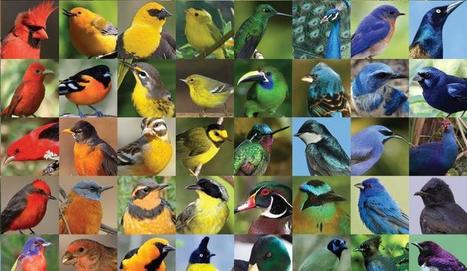
Birds display a rainbow palette of colors, many of which come from special arrangements of melanin, the pigment that gives color to our skin. Researchers at the University of Akron have developed a safe and stable pigment based on the melanin structures. In the colorful world in which we live, colors are significant for not only aesthetics and pleasure, but also for communication, signaling, and security. Colors are produced through either absorption of light by molecules -- pigmentary colors -- or scattering of light by nanostructures -- structural colors. Structural colors enable the creation of a spectrum of non-fading colors without pigments, potentially replacing toxic metal oxides and organic pigments. However, there are challenges. Many traditional structural colors are iridescent and thus not useful for wide-angle displays. Recent examples of non-iridescent structural colors have been found to lack sufficient color saturation in the absence of absorbing materials to reduce incoherent scattering. Core-shell nanoparticles with a shell refractive index (RI) similar to water have been used to tune the spacing between cores to achieve optimal scattering for non-iridescent colors, but only in solution. Even though both bottom-up and top-down methods have been widely used, there is a demand for a scalable process for mass production of structural colors. In this research, scientists from The University of Akron, Northwestern University, and University of Ghent demonstrate a feasible solution for producing structural colors inspired by bird feathers. Their findings have been published on Science Advances, an open access online journal established by Science. Nature provides many spectacular examples of structural colors, such as duck wing feathers and wild turkey feathers. In continuation of their earlier research that unraveled the fundamental properties of melanin -- a family of natural pigments found in skin, hair, eyes and the plumage of brightly colored birds -- these examples served as bio-inspiration for the design of core-shell synthetic melanin nanoparticles for the production of bright structural colors. Melanin has been around for millions of years. "Melanin is an important biomaterial that has so far been underutilized in materials science and technological applications," states Dr. Ali Dhinojwala, H. A. Morton Professor of Polymer Science and one of the principal investigators on the project. In this most recent research work, the team has found that tiny packets of synthetic melanin produce structural color when they are packed into semi-ordered spherical particles. Structural color occurs through the interaction of light with materials that have patterns on a sub-micron scale, which reflect light to make some wavelengths brighter and others darker. "The chemistry we use to make these particles is based on the main ingredient that goes into making melanin," said Dhinojwala. "Then we take these melanin particles and self-assemble into a structure using a very straight forward process. It is similar to things we see in our homes, like mixing oil and water together creating emulsions. Those emulsions essentially allow us to assemble these particles into photonic inks which we call photonic supraballs."
Via Miguel Prazeres
|
|
Scooped by
Dr. Stefan Gruenwald
November 4, 2019 7:23 PM
|
A clever new study shows that blue whales lean on their memory to guide their epic migrations. The blue whales of the North Pacific spend their winters in their breeding grounds off California and Costa Rica. Come spring, they swim up the coast of North America toward the food-rich summer waters of the Pacific Northwest. They could make the journey in two months (and they do, on the reverse trip back south). Instead, they take twice that time, pausing to gorge themselves on blooms of krill that appear along the way. It’s a leisurely season-long tour of a continent-wide buffet line. Scientists can get a good sense of this changing buffet by measuring the concentrations of chlorophyll in different patches of ocean. This green pigment reflects the amount of plankton, which in turn is eaten by krill. The more chlorophyll there is, the more food a blue whale might find. By comparing chlorophyll counts to whale movements, Abrahms and her team expected to see that “they follow the timing of their prey, as it becomes available,” she says. But they were surprised to learn that the animals very rarely tracked contemporary waves of krill. Instead, their movements were strongly correlated with 10-year historical averages of chlorophyll. Put it this way: You could predict a blue whale’s movements with far more accuracy by looking at where their food has been than where their food currently is.
|
|
Rescooped by
Dr. Stefan Gruenwald
from Popular Science
November 4, 2019 7:17 PM
|
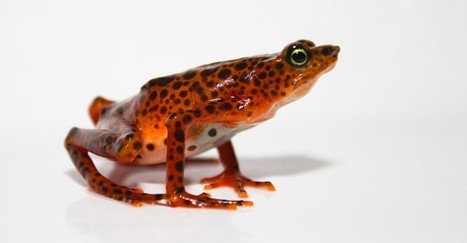
A doomsday fungus known as Bd has condemned more species to extinction than any other pathogen. A century ago, a strain of pandemic flu killed up to 100 million people—5 percent of the world’s population. In 2013, a new mystery illness swept the western coast of North America, causing starfish to disintegrate. In 2015, a big-nosed Asian antelope known as the saiga lost two-thirds of its population—some 200,000 individuals—to what now looks to be a bacterial infection. But none of these devastating infections comes close to the destructive power of Bd—a singularly apocalyptic fungus that’s unrivaled in its ability not only to kill animals, but to delete entire species from existence. Bd—Batrachochytrium dendrobatidis in full—kills frogs and other amphibians by eating away at their skin and triggering fatal heart attacks. It’s often said that the fungus has caused the decline or extinction of 200 amphibian species, but that figure is almost two decades out-of-date. New figures, compiled by a team led by Ben Scheele from the Australian National University, are much worse. Scheele’s team estimates that the fungus has caused the decline of 501 amphibian species—about 6.5 percent of the known total. Of these, 90 have been wiped out entirely. Another 124 have fallen by more than 90 percent, and their odds of recovery are slim. Never in recorded history has a single disease burned down so much of the tree of life. “It rewrote our understanding of what disease could do to wildlife,” Scheele says.
Via Neelima Sinha
|
|
Rescooped by
Dr. Stefan Gruenwald
from Papers
November 4, 2019 5:16 PM
|
Researchers have discovered a surprising mathematical relationship in the brain’s representations of sensory information, with possible applications to AI research. The human brain is often described in the language of tipping points: It toes a careful line between high and low activity, between dense and sparse networks, between order and disorder. Now, by analyzing firing patterns from a record number of neurons, researchers have uncovered yet another tipping point — this time, in the neural code, the mathematical relationship between incoming sensory information and the brain’s neural representation of that information. Their findings, published in Nature in June, suggest that the brain strikes a balance between encoding as much information as possible and responding flexibly to noise, which allows it to prioritize the most significant features of a stimulus rather than endlessly cataloging smaller details. The way it accomplishes this feat could offer fresh insights into how artificial intelligence systems might work, too. A balancing act is not what the scientists initially set out to find. Their work began with a simpler question: Does the visual cortex represent various stimuli with many different response patterns, or does it use similar patterns over and over again? Researchers refer to the neural activity in the latter scenario as low-dimensional: The neural code associated with it would have a very limited vocabulary, but it would also be resilient to small perturbations in sensory inputs. Imagine a one-dimensional code in which a stimulus is simply represented as either good or bad. The amount of firing by individual neurons might vary with the input, but the neurons as a population would be highly correlated, their firing patterns always either increasing or decreasing together in the same overall arrangement. Even if some neurons misfired, a stimulus would most likely still get correctly labeled.
Via Complexity Digest
|
|
Scooped by
Dr. Stefan Gruenwald
November 4, 2019 5:12 PM
|
A new way of removing carbon dioxide from a stream of air could provide a significant tool in the battle against climate change. The new system can work on the gas at virtually any concentration level, even down to the roughly 400 parts per million currently found in the atmosphere. Most methods of removing carbon dioxide from a stream of gas require higher concentrations, such as those found in the flue emissions from fossil fuel-based power plants. A few variations have been developed that can work with the low concentrations found in air, but the new method is significantly less energy-intensive and expensive, the researchers say. The technique, based on passing air through a stack of charged electrochemical plates, is described in a new paper in the journal Energy and Environmental Science, by MIT postdoc Sahag Voskian, who developed the work during his PhD, and T. Alan Hatton, the Ralph Landau Professor of Chemical Engineering. The device is essentially a large, specialized battery that absorbs carbon dioxide from the air (or other gas stream) passing over its electrodes as it is being charged up, and then releases the gas as it is being discharged. In operation, the device would simply alternate between charging and discharging, with fresh air or feed gas being blown through the system during the charging cycle, and then the pure, concentrated carbon dioxide being blown out during the discharging. As the battery charges, an electrochemical reaction takes place at the surface of each of a stack of electrodes. These are coated with a compound called polyanthraquinone, which is composited with carbon nanotubes. The electrodes have a natural affinity for carbon dioxide and readily react with its molecules in the airstream or feed gas, even when it is present at very low concentrations. The reverse reaction takes place when the battery is discharged — during which the device can provide part of the power needed for the whole system — and in the process ejects a stream of pure carbon dioxide. The whole system operates at room temperature and normal air pressure.
|
|
Scooped by
Dr. Stefan Gruenwald
October 31, 2019 7:49 PM
|
Most estimates of global mean sea-level rise this century fall below 2 m (7 ft). This quantity is comparable to the positive vertical bias of the principle digital elevation model (DEM) used to assess global and national population exposures to extreme coastal water levels, NASA’s SRTM. CoastalDEM is a new DEM utilizing neural networks to reduce SRTM error. Scientists now show – employing CoastalDEM—that 190 M people (150–250 M, 90% CI) currently occupy global land below projected high tide lines for 2100 under low carbon emissions, up from 110 M today, for a median increase of 80 M. These figures triple SRTM-based values. Under high emissions, CoastalDEM indicates up to 630 M people live on land below projected annual flood levels for 2100, and up to 340 M for mid-century, versus roughly 250 M at present. We estimate one billion people now occupy land less than 10 m above current high tide lines, including 250 M below 1 m.
|