Your new post is loading...

|
Scooped by
Dr. Stefan Gruenwald
August 2, 2023 6:59 PM
|
A Russian adversary has been linked to 94 new domains, suggesting that the group is actively modifying its infrastructure in response to public disclosures about its activities. Cybersecurity firm Recorded Future linked the new infrastructure to a threat actor it tracks under the name BlueCharlie, a hacking crew that's broadly known by the names Blue Callisto, Callisto (or Calisto), COLDRIVER, Star Blizzard (formerly SEABORGIUM), and TA446. BlueCharlie was previously given the temporary designation Threat Activity Group 53 (TAG-53). "These shifts demonstrate that these threat actors are aware of industry reporting and show a certain level of sophistication in their efforts to obfuscate or modify their activity, aiming to stymie security researchers," the company said in a new technical report shared with The Hacker News. BlueCharlie is assessed to be affiliated with Russia's Federal Security Service (FSB), with the threat actor linked to phishing campaigns aimed at credential theft by making use of domains that masquerade as the login pages of private sector companies, nuclear research labs, and NGOs involved in Ukraine crisis relief. It's said to be active since at least 2017. "Calisto collection activities probably contribute to Russian efforts to disrupt Kiev supply-chain for military reinforcements," Sekoia noted earlier this year. "Moreover, Russian intelligence collection about identified war crime-related evidence is likely conducted to anticipate and build counter narrative on future accusations." Another report published by NISOS in January 2023 identified potential connections between the group's attack infrastructure to a Russian company that contracts with governmental entities in the country. "BlueCharlie has carried out persistent phishing and credential theft campaigns that further enable intrusions and data theft," Recorded Future said, adding the actor conducts extensive reconnaissance to increase the likelihood of success of its attacks. The latest findings reveal that BlueCharlie has moved to a new naming pattern for its domains featuring keywords related to information technology and cryptocurrency, such as cloudrootstorage[.]com, directexpressgateway[.]com, storagecryptogate[.]com, and pdfsecxcloudroute[.]com. Seventy-eight of the 94 new domains are said to have been registered using NameCheap. Some of the other domain registrars used include Porkbun and Regway. To mitigate threats posed by state-sponsored advanced persistent threat (APT) groups, it's recommended that organizations implement phishing-resistant multi-factor authentication (MFA), disable macros by default in Microsoft Office, and enforce a frequent password reset policy. "While the group uses relatively common techniques to conduct attacks (such as the use of phishing and a historical reliance on open-source offensive security tools), its likely continued use of these methods, determined posture, and progressive evolution of tactics suggests the group remains formidable and capable," the company said.
|
|
Scooped by
Dr. Stefan Gruenwald
August 2, 2023 5:06 PM
|
Important ocean currents that redistribute heat, cold and precipitation between the tropics and the northernmost parts of the Atlantic region will shut down around the year 2060 if current greenhouse gas emissions persist. This is the conclusion based on new calculations from the University of Copenhagen that contradict the latest report from the IPCC. Contrary to what we may imagine about the impact of climate change in Europe, a colder future may be in store. In a new study, researchers from the University of Copenhagen's Niels Bohr Institute and Department of Mathematical Sciences predict that the system of ocean currents which currently distributes cold and heat between the North Atlantic region and tropics will completely stop if we continue to emit the same levels of greenhouse gases as we do today. Using advanced statistical tools and ocean temperature data from the last 150 years, the researchers calculated that the ocean current, known as the Thermohaline Circulation or the Atlantic Meridional Overturning Circulation (AMOC), will collapse -- with 95 percent certainty -- between 2025 and 2095. This will most likely occur in 34 years, in 2057, and could result in major challenges, particularly warming in the tropics and increased storminess in the North Atlantic region. "Shutting down the AMOC can have very serious consequences for Earth's climate, for example, by changing how heat and precipitation are distributed globally. While a cooling of Europe may seem less severe as the globe as a whole becomes warmer and heat waves occur more frequently, this shutdown will contribute to an increased warming of the tropics, where rising temperatures have already given rise to challenging living conditions," says Professor Peter Ditlevsen from the Niels Bohr Institute. "Our result underscores the importance of reducing global greenhouse gas emissions as soon as possible," says the researcher. The calculations, just published in the scientific journal, Nature Communications, contradict the message of the latest IPCC report, which, based on climate model simulations, considers an abrupt change in the thermohaline circulation very unlikely during this century. Early warning signals already present The researchers' prediction is based on observations of early warning signals that ocean currents exhibit as they become unstable. These Early Warning Signals for the Thermohaline Circulation have been reported previously, but only now has the development of advanced statistical methods made it possible to predict just when a collapse will occur.
|
|
Scooped by
Dr. Stefan Gruenwald
August 2, 2023 4:57 PM
|
For the first time, researchers have trained a machine learning model in outer space, on board a satellite. This achievement could enable real-time monitoring and decision making for a range of applications, from disaster management to deforestation. Data collected by remote-sensing satellites is fundamental for many key activities, including aerial mapping, weather prediction, and monitoring deforestation. Currently, most satellites can only passively collect data, since they are not equipped to make decisions or detect changes. Instead, data has to be relayed to Earth to be processed, which typically takes several hours or even days. This limits the ability to identify and respond to rapidly emerging events, such as a natural disaster. To overcome these restrictions, a group of researchers led by DPhil student Vít Růžička (Department of Computer Science, University of Oxford), took on the challenge of training the first machine learning program in outer space. During 2022, the team successfully pitched their idea to the Dashing through the Stars mission, which had issued an open call for project proposals to be carried out on board the ION SCV004 satellite, launched in January 2022. During the autumn of 2022, the team uplinked the code for the program to the satellite already in orbit. The researchers trained a simple model to detect changes in cloud cover from aerial images directly onboard the satellite, in contrast to training on the ground. The model was based on an approach called few-shot learning, which enables a model to learn the most important features to look for when it has only a few samples to train from. A key advantage is that the data can be compressed into smaller representations, making the model faster and more efficient. Vít Růžička explained: 'The model we developed, called RaVAEn, first compresses the large image files into vectors of 128 numbers. During the training phase, the model learns to keep only the informative values in this vector; the ones that relate to the change it is trying to detect (in this case, whether there is a cloud present or not). This results in extremely fast training due to having only a very small classification model to train.' Whilst the first part of the model, to compress the newly-seen images, was trained on the ground, the second part (which decided whether the image contained clouds or not) was trained directly on the satellite. Normally, developing a machine learning model would require several rounds of training, using the power of a cluster of linked computers. In contrast, the team's tiny model completed the training phase (using over 1300 images) in around one and a half seconds.
|
|
Scooped by
Dr. Stefan Gruenwald
July 31, 2023 3:39 PM
|
Maya Bodnick, a student at Harvard University, conducted an experiment to determine if GPT-4, an AI language model, was capable of passing college exams in the humanities and social sciences. Bodnick had GPT-4 write seven essays on topics such as economic concepts, presidentialism in Latin America, and a literary analysis. She then submitted the essays to professors for grading, without revealing whether they were written by herself or GPT-4. The results were impressive, with GPT-4 receiving grades ranging from A to B-. It achieved an average GPA of 3.57, which Bodnick called “respectable.” She noted that GPT-4 wrote all the essays based on the given prompts. Bodnick disclosed that she submitted GPT-4’s answers without any edits, but with two exceptions. First, she combined multiple responses to meet the word count requirement, as GPT-4 could only generate up to 750 words at a time. Second, she asked the evaluators to disregard any missing citations that GPT-4 couldn’t provide, which would normally be essential for academic work. The evaluators praised GPT-4’s essays, commenting on their clarity, well-structured arguments, and detailed analysis. Only one essay received a lower grade, with the evaluator noting a flowery writing style and a lack of consideration for positive aspects of presidentialism and economic factors. Bodnick believes that GPT-4’s performance suggests AI-generated essays could receive favorable grades at most universities, though possibly lower at institutions such as Princeton or UC Berkeley. She suggests that AI technology could revolutionize the teaching and learning methods in the humanities and social sciences. Cheating on essays has become easier, and with advancements in technology, including citation capabilities, it may become even more challenging to detect plagiarism. As for the future, Bodnick questions the effectiveness of text detection systems, as OpenAI’s detector was withdrawn due to accuracy issues. She suggests that exams should involve personal conversations to mitigate concerns about AI writing essays. The fact that GPT-4 passed her exams hints at potential developments in Bodnick’s future field.professional field.
|
|
Rescooped by
Dr. Stefan Gruenwald
from Virus World
July 28, 2023 3:37 PM
|
The animal is a previously unknown species that may help researchers unlock secrets of surviving harsh environments. A female microscopic roundworm that spent the last 46,000 years in suspended animation deep in the Siberian permafrost was revived and started having babies in a laboratory dish. By sequencing the genome of this Rip Van Winkle roundworm, scientists revealed it to be a new species of nematode, which is described in a study published Thursday in the journal PLOS Genetics. Nematodes today are among the most ubiquitous organisms on Earth, inhabiting the soil, the water and the ocean floor. “The vast majority of nematode species have not been described,” William Crow, a nematologist at the University of Florida who was not involved in the study, wrote in an email. The ancient Siberian worm could be a species that has since gone extinct, he said. “However, it very well could be a commonly occurring nematode that no one got around to describing yet." Published in Plos Genetics (July 27, 2023): https://doi.org/10.1371/journal.pgen.1010798
Via Juan Lama
|
|
Scooped by
Dr. Stefan Gruenwald
July 28, 2023 3:21 PM
|
Scientists for the first time have witnessed pieces of metal crack, then fuse back together without any human intervention, overturning fundamental scientific theories in the process. If the newly discovered phenomenon can be harnessed, it could usher in an engineering revolution -- one in which self-healing engines, bridges and airplanes could reverse damage caused by wear and tear, making them safer and longer-lasting. The research team from Sandia National Laboratories and Texas A&M University described their findings today in the journal Nature. "This was absolutely stunning to watch first-hand," said Sandia materials scientist Brad Boyce. "What we have confirmed is that metals have their own intrinsic, natural ability to heal themselves, at least in the case of fatigue damage at the nanoscale," Boyce said. Fatigue damage is one way machines wear out and eventually break. Repeated stress or motion causes microscopic cracks to form. Over time, these cracks grow and spread until -- snap! The whole device breaks, or in the scientific lingo, it fails. The fissure Boyce and his team saw disappear was one of these tiny but consequential fractures -- measured in nanometers. "From solder joints in our electronic devices to our vehicle's engines to the bridges that we drive over, these structures often fail unpredictably due to cyclic loading that leads to crack initiation and eventual fracture," Boyce said. "When they do fail, we have to contend with replacement costs, lost time and, in some cases, even injuries or loss of life. The economic impact of these failures is measured in hundreds of billions of dollars every year for the U.S." Although scientists have created some self-healing materials, mostly plastics, the notion of a self-healing metal has largely been the domain of science fiction. "Cracks in metals were only ever expected to get bigger, not smaller. Even some of the basic equations we use to describe crack growth preclude the possibility of such healing processes," Boyce said. Unexpected discovery confirmed by theory's originator In 2013, Michael Demkowicz -- then an assistant professor at the Massachusetts Institute of Technology's department of materials science and engineering, now a full professor at Texas A&M -- began chipping away at conventional materials theory. He published a new theory, based on findings in computer simulations, that under certain conditions metal should be able to weld shut cracks formed by wear and tear. The discovery that his theory was true came inadvertently at the Center for Integrated Nanotechnologies, a Department of Energy user facility jointly operated by Sandia and Los Alamos national laboratories. "We certainly weren't looking for it," Boyce said. Khalid Hattar, now an associate professor at the University of Tennessee, Knoxville, and Chris Barr, who now works for the Department of Energy's Office of Nuclear Energy, were running the experiment at Sandia when the discovery was made. They only meant to evaluate how cracks formed and spread through a nanoscale piece of platinum using a specialized electron microscope technique they had developed to repeatedly pull on the ends of the metal 200 times per second.
|
|
Scooped by
Dr. Stefan Gruenwald
July 28, 2023 3:13 PM
|
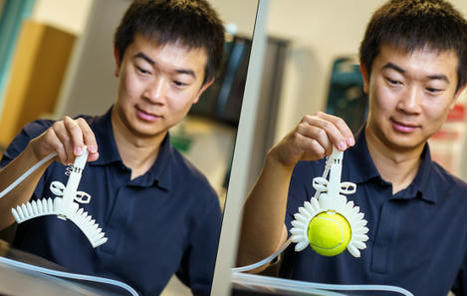
Inspired by the effortless way humans handle objects without seeing them, a team led by engineers at the University of California San Diego has developed a new approach that enables a robotic hand to rotate objects solely through touch, without relying on vision. Using their technique, the researchers built a robotic hand that can smoothly rotate a wide array of objects, from small toys, cans, and even fruits and vegetables, without bruising or squishing them. The robotic hand accomplished these tasks using only information based on touch. This work could aid in the development of robots that can manipulate objects in the dark. The team recently presented their work at the 2023 Robotics: Science and Systems Conference. To build their system, the researchers attached 16 touch sensors to the palm and fingers of a four-fingered robotic hand. Each sensor costs about $12 and serves a simple function: detect whether an object is touching it or not. What makes this approach unique is that it relies on many low-cost, low-resolution touch sensors that use simple, binary signals -- touch or no touch -- to perform robotic in-hand rotation. These sensors are spread over a large area of the robotic hand. This contrasts with a variety of other approaches that rely on a few high-cost, high-resolution touch sensors affixed to a small area of the robotic hand, primarily at the fingertips. There are several problems with these approaches, explained Xiaolong Wang, a professor of electrical and computer engineering at UC San Diego, who led the current study. First, having a small number of sensors on the robotic hand minimizes the chance that they will come in contact with the object. That limits the system's sensing ability. Second, high-resolution touch sensors that provide information about texture are extremely difficult to simulate, not to mention extremely expensive. That makes it more challenging to use them in real-world experiments. Lastly, a lot of these approaches still rely on vision. "Here, we use a very simple solution," said Wang. "We show that we don't need details about an object's texture to do this task. We just need simple binary signals of whether the sensors have touched the object or not, and these are much easier to simulate and transfer to the real world."
|
|
Scooped by
Dr. Stefan Gruenwald
July 28, 2023 12:31 PM
|
Pulsar Fusion, a UK aerospace company, is making significant strides in the development of a groundbreaking nuclear fusion rocket engine, according to those close to the project. Set to become the largest practical fusion engine ever built, the 26-foot (8-meter) fusion chamber is currently being assembled in Bletchley, England, with plans for its first firing in 2027. This ambitious project aims to create exhaust speeds exceeding 500,000 miles (800,000 kilometers) per hour, making it the hottest place in the solar system during operation, according to the company. The researchers at Pulsar Fusion have set their sights on reaching temperatures of several hundred million degrees within the fusion chamber, surpassing the heat of the Sun itself. Dr. James Lambert, the chief financial officer of Pulsar Fusion, highlights the primary challenge of containing the super-hot plasma within an electromagnetic field. Lambert likens the behavior of the plasma to a weather system, making it extremely difficult to predict using conventional techniques. Controlling the turbulent plasma as it reaches temperatures in the hundreds of millions of degrees has proven elusive, causing the fusion reaction to cease. This unpredictability is attributed to the complex science of magnetohydrodynamics and gyrokinetics, as the state of the plasma is constantly changing. While scientists and researchers have reported achievements in fusion temperatures at facilities like the Lawrence Livermore Laboratory in 2022, Pulsar Fusion aims to make more frequent and consistent advancements by leveraging the latest technology and research. To enhance its understanding of super-hot plasma behavior under electromagnetic confinement, Pulsar Fusion has partnered with Princeton Satellite Systems. The duo is expected to utilize data from the record-holding PFRC-2 reactor, located at the Princeton Plasma Physics Laboratory in New Jersey, and feed it into supercomputer simulations. The goal of these simulations should enable researchers to better predict plasma behavior and guide iterative design improvements for the rocket engine prototype, according to those involved. Richard Dinan, the CEO of Pulsar Fusion, said the potential impact of its fusion rocket technology. The company’s current satellite engines already achieve exhaust speeds of up to 25 miles (40 kilometers) per second, but engineers aim to surpass this by more than tenfold with fusion propulsion. If the Pulsar rocket test successfully achieves fusion temperatures during the planned demonstration for aerospace partners in 2027, it could significantly reduce mission times to Mars and enable flight times to Saturn to be reduced from eight years to two. Ultimately, this technology could empower humanity to explore and venture beyond our solar system. Throughout the development process, Pulsar Fusion intends to remain committed to keeping its existing partners informed at each step. The company plans to commence early firings in 2025 to validate progress. Additionally, the company envisions conducting a test firing in orbit, further advancing the fusion capabilities required for interstellar space travel.
|
|
Scooped by
Dr. Stefan Gruenwald
July 27, 2023 7:26 PM
|
Google is testing a tool that uses AI to write news stories and has started pitching it to publications, according to a new report from The New York Times. The tech giant has pitched the AI tool to The New York Times, The Washington Post and The Wall Street Journal’s owner, News Corp. The tool, internally codenamed “Genesis,” can take in information and then generate news copy. Google reportedly believes that the tool can serve as a personal assistant for journalists by automating some tasks in order to free up time for others. The tech giant sees the tool as a form of “responsible technology.” The New York Times reports that some executives who were pitched on the tool saw it as “unsettling,” noting that it seemed to disregard the effort that went into producing accurate news stories. “In partnership with news publishers, especially smaller publishers, we’re in the earliest stages of exploring ideas to potentially provide AI-enabled tools to help journalists with their work,” a Google spokesperson said in a statement to TechCrunch. “For instance, AI-enabled tools could assist journalists with options for headlines or different writing styles,” the spokesperson added. “Our goal is to give journalists the choice of using these emerging technologies in a way that enhances their work and productivity, just like we’re making assistive tools available for people in Gmail and in Google Docs. Quite simply these tools are not intended to, and cannot, replace the essential role journalists have in reporting, creating, and fact-checking their articles.” The report comes as several news organizations, including NPR and Insider, have notified employees that they intend to explore how AI could responsibly be used in their newsrooms. Some news organizations, including The Associated Press, have long used AI to generate stories for things like corporate earnings, but these news stories represent a small fraction of the organization’s articles overall, which are written by journalists.
|
|
Scooped by
Dr. Stefan Gruenwald
July 26, 2023 11:05 AM
|
Are we on the brink of an AI apocalypse? According to a recent survey, most U.S. citizens share Elon Musk’s concerns about the potential threat artificial intelligence poses to humanity’s future. What a poll shows: A majority of Americans, 61% to be exact, believe that the fast-paced growth of AI could endanger the future of humanity and over two-thirds expressed concerns about its potential negative impacts, reported Reuters, citing a survey conducted by Ipsos. As per the findings, the proportion of U.S. citizens who anticipate negative consequences from AI is three times higher than those who don’t, with 61% of the 4,415 adults surveyed expressing concerns over the potential hazard of AI and only 22% disagreeing. Rest 17% of the people were uncertain. The aforementioned online survey included 4,415 U.S. adults and has a credible interval with a margin of error of plus or minus two percentage points, the report stated. Why It’s Important: Landon Klein, director of U.S. policy of the Future of Life Institute, which is behind the “open letter” demanding a six-month pause in AI research “more powerful” than OpenAI’s GPT-4, said that the poll’s findings show that “a broad swath of Americans worry about the negative effects of AI,” the report noted. “We view the current moment similar to the beginning of the nuclear era, and we have the benefit of public perception that is consistent with the need to take action.” Musk, who co-founded OpenAI in 2015, along with Apple co-founder Steve Wozniak and over 1000 others, signed an open letter. Although Musk’s intention behind signing the letter has been questioned, considering the tech billionaire’s plans to launch his own chatGPT-rival called “TruthGPT.” Benzinga research has found that the exponential growth of OpenAI’s chatGPT has made AI a ubiquitous part of everyday life, leading to a surge of interest in the field and sparking an AI arms race between tech giants like Microsoft Corporation and Alphabet Inc., eager to showcase their own AI breakthroughs. In May 2023, Geoffrey Hinton, who recently left his job at Google citing the need to talk more freely about the risks posed by AI, stated that risks posed by AI to humanity could be more pressing than those of climate change. However, others like the godfather of virtual reality, Jaron Lanier, Bill Gates and Jürgen Schmidhuber have a different view and disagree with the sentiment.
|
|
Scooped by
Dr. Stefan Gruenwald
July 23, 2023 1:18 PM
|
Recently, researchers have published an important white paper identifying activities in particle physics where burgeoning quantum-computing technologies could be applied. The paper, authored by experts from CERN, DESY, IBM Quantum and over 30 other organisations, is now available on ArXiv. With quantum-computing technologies rapidly improving, the paper sets out where these could be applied within particle physics, in order to help tackle computing challenges related not only to the Large Hadron Collider’s ambitious upgrade program, but also to other colliders and low energy experiments world-wide. The paper was produced by a working group set up at the first-of-its-kind “QT4HEP” conference, held at CERN last November. Over the last eight months, the 46 people in this working group have worked hard to identify areas where quantum-computing technologies could provide a significant boon. The areas identified relate to both theoretical and experimental particle physics. The paper then maps these areas to “problem formulations” in quantum computing. This is an important step in ensuring that the particle physics community is well positioned to benefit from the massive potential of breakthrough new quantum computers when they come online. “Quantum computing is very promising, but not every problem in particle physics is suited to this mode of computing,” says Alberto Di Meglio, head of the CERN Quantum Technology Initiative (CERN QTI). “It’s important to ensure that we are ready and that we can accurately identify the areas where these technologies have the potential to be most useful for our community.” In terms of theoretical particle physics, the authors identify promising areas related to evolution of the quantum states, lattice-gauge theory, neutrino oscillations, and quantum field theories in general as well. The considered applications include quantum dynamics, hybrid quantum/classical algorithms for static problems in lattice gauge theory, optimisation, and classification. The lead authors of the paper CERN QTI’s Alberto Di Meglio, DESY’s Karl Jansen, and IBM Quantum’s Ivano Tavernelli, state that “with quantum computing we address problems in those areas that are very hard – or even impossible to tackle with classical methods. “In this way,” Jansen says, “we can explore the physical systems to which we still do not have access.” On the experimental side, the authors identify areas related to jet and track reconstruction, extraction of rare signals, for-and-beyond Standard Model problems, parton showers, and experiment simulation. These are then mapped to classification, regression, optimisation, and generation problems. Members of the working group behind this paper will now begin a process of selecting specific use cases from the activities listed in the paper to be taken forward through the CERN’s and DESY’s participation in the IBM Quantum Network, and collaboration with IBM Quantum, under its “100x100 Challenge”. IBM Quantum is long-standing collaborator to CERN QTI and the Center for Quantum Technologies and Applications (CQTA) at DESY.
|
|
Scooped by
Dr. Stefan Gruenwald
July 15, 2023 6:31 PM
|
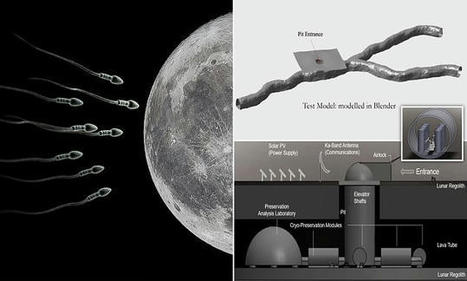
The lunar gene bank - which could also house seed and spore samples - is envisaged as being built under the lunar surface, in a hollow, cooled lava tube. Extinction insurance for planet earth is envisioned by sending sperm and egg samples from 6.7 million species to the moon for safekeeping. How could earth species be destroyed to require a “backup”? - To protect Earth’s species diversity, we presently store genetic material in vaults
- Material including seeds and spores could be used to recover lost species
- But gene banks on Earth are vulnerable to the catastrophes they insure against
- US experts propose to more safely store specimens in lava tubes on the moon
- The deposits would be cryogenically frozen and tended by levitating robots
The lunar gene bank — which could also house seed and spore samples — is envisaged as being built under the lunar surface, in a hollow, cooled lava tube. Specimens deposited in the ark would be kept refrigerated at cryogenic temperatures, with the facility powered by solar panels on the lunar surface. The ark would preserve Earth’s genetic diversity in the event of a global catastrophe, such as might be caused by climate change, a supervolcano or an asteroid impact. Earth is naturally a volatile environment,’ said study author and mechanical engineer Jekan Thanga of the University of Arizona. ‘As humans, we had a close call about 75,000 years ago with the Toba supervolcano eruption, which caused a 1,000-year cooling period and, according to some, aligns with an estimated drop in human diversity,’ he added. ‘Because human civilization has such a large footprint, if it were to collapse, that could have a negative cascading effect on the rest of the planet.’ The idea of creating gene banks to restore lost biodiversity in the future is not new — more than a million seed samples are currently stored in the Svalbard Global Seed Vault on the island of Spitsbergen in the Artic Sea, for example. However, Professor Thanga and colleagues explained that locating such facilities on Earth leaves them also vulnerable to accidental loss. Climate change, for example, has the potential to push many species into terminal decline in the future — and, at the same time, the rising sea levels which will accompany global warming will see the Svalbard vault lost beneath the waves. Removed but still accessible, the moon may present a safer location. Building a genetic storage facility on the moon would be a significant undertaking — but one that Professor Thanga says would be possible. Read full story here…
|
|
Scooped by
Dr. Stefan Gruenwald
July 15, 2023 12:22 PM
|
The Federal Aviation Administration (FAA) has given approval to Alef Aeronautics to test its flying car. The $300,000 eVTOL (electric vertical takeoff and landing) craft is also designed to be driven on roads. The company received a special airworthiness certification from the FAA to conduct test flights of its two-passenger vehicle. "We're excited to receive this certification,” said Jim Dukhovny, Alef’s CEO. “It allows us to move closer to bringing people an environmentally friendly and faster commute, saving individuals and companies hours each week. This is one small step for planes, one giant step for cars." The California company, which is accepting pre-orders of the vehicles, said 440 were ordered in the last quarter of 2022. The vehicle sales would represent at least $132 million of revenue if delivered. The pre-orders include a large number by an aviation company in Hong Kong, according to Alef Aeronautics. "Alef is aiming to deliver the first real flying car in history, and to receive so many early pre-orders is incredible validation of the market potential we're looking to satisfy," said Dukhovny. “We're extremely pleased to see orders from both individual and corporate consumers in such a short space of time after our unveiling. This is a great investment in the key sustainable transportation on the ground and in the air." The flying vehicle is intended to fit within existing road systems for driving and parking. Alef Aeronautics joins a growing number of companies designing, developing and testing flying vehicles. Some are aimed at carrying things while others are intended to carry people.
|
|
|
Scooped by
Dr. Stefan Gruenwald
August 2, 2023 5:10 PM
|
Humans are a species of Earth. We are connected to Earth through evolution. However, we are also connected to space through evolution. We are made of heavy elements generated by fusion in the cores of stars. We are warmed by the radiation of the closest star to us, the Sun. We exist because that star formed into a ball of fusing hydrogen in the local space under the influence of the gravitational force and the nuclear strong force, and because nearby star dust formed into a planet, Earth. Is it unreasonable to assume that human life had as part of its causal chain the formation of a star and a planet? The counterexample of Earth life evolving into existence without an actual Earth and without the power of the Sun suggests the stated assumption is a plausible initial causation. What does the evolutionary connection of humans to a star and a planet mean for their ability to inhabit space? If human life is existentially dependent upon Earth, then we hypothesize that any human enterprise attempting to establish itself in space outside of Earth without an equivalent system will be unsustainable. We present a new theory and the supporting scientific research that human sustainability in space depends upon conditions that have been evolutionarily established within the Earth ecosphere1 by universal law. To open the presented theory, the tools of analysis and abductive reasoning will be astrophysics initially, classical physics more broadly, and the burgeoning science of ecological thermodynamics theory (Nielsen et al., 2020). The proof begins with a cosmological review of the evolution of Earth and the Sun into islands of order in the entropy of an expanding space. All life evolved within the context of this order and a collection of evolving conditions. The sustainment of human life is dependent upon the sustainment of this order with its conditions. The level of detail provided in this Introduction section is to assist with understanding how materials acted on by conservative forces are captured in semi-reversible cycles that utilize energy from the Sun to build dissipative structures in the form of self-restoring heat engines. This will be contrasted with human-designed, technological systems that attempt to perform the same functions using non-self-restoring means. The objective is to understand what is required for sustainable human habitation in space. What will be revealed is that human sustainability is about more than just diversity and energy efficiency; it is about self-restoring order, capacity, and organization.
|
|
Scooped by
Dr. Stefan Gruenwald
August 2, 2023 5:02 PM
|
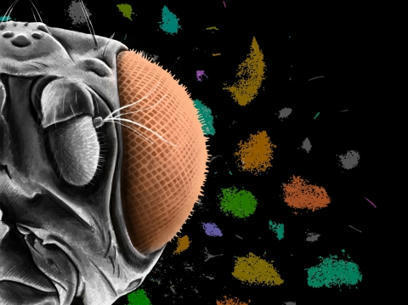
Researchers have discovered new types of cells in the brain of developing flies thanks to a new method that creates cell-type-specific genetic tools. The study, published in the journal Proceedings of the National Academy of Sciences (PNAS), combines single-cell sequencing data with a novel algorithm to identify pairs of genes that point to previously unknown cells in the brains of fruit flies. Fruit flies (also known as Drosophila) have long been used as a model organism to study fundamental questions about the development and function of the brain. Instead of the 86 billion neurons found in humans, fruit flies have about 100,000 neurons -- making research into the brain a more manageable, yet still complex, endeavor. The use of genetic tools that can distinguish different types of cells in fruit flies has revolutionized the study of neural circuits in the brain, allowing scientists to understand circuit development, function, and behavior in a precise manner. "A hallmark of the central nervous system is the diversity of different cell types that are responsible for so many different functions," said Claude Desplan, Silver Professor of Biology and Neural Science at NYU and the study's senior author. Previous research in Desplan's lab used single-cell sequencing to determine that there are approximately 200 cell types in the developing fly's visual system. Single-cell sequencing reveals gene expression, so when cells have the same gene expression patterns, they are likely doing the same job and are therefore the same cell type. Scientists were able to identify roughly half of the 200 cell types in the developing fly's visual system based on their gene expression and prior studies, but they lacked a way to more easily study and label the other 100 cell types. Existing tools that allowed precise manipulation of neural circuits of adult fruit flies often failed to label the same neurons during development, rendering these tools unfit to study cells in the developing brain. "Moreover, the previous approach to identifying cell types involves laborious testing of numerous gene candidate combinations. We knew we needed a much more efficient approach to label specific cell types, and were able to tap into the growing amount of single-cell sequencing data that is available," said Yu-Chieh David Chen, a postdoctoral associate in NYU's Department of Biology and the study's first author.
|
|
Scooped by
Dr. Stefan Gruenwald
August 2, 2023 4:55 PM
|
A new image of the galaxy cluster known as "El Gordo" is revealing distant and dusty objects never seen before, and providing a bounty of fresh science. The infrared image, taken by NASA's James Webb Space Telescope, displays a variety of unusual, distorted background galaxies that were only hinted at in previous Hubble Space Telescope images. El Gordo is a cluster of hundreds of galaxies that existed when the universe was 6.2 billion years old, making it a "cosmic teenager." It's the most massive cluster known to exist at that time. ("El Gordo" is Spanish for the "Fat One.") The team targeted El Gordo because it acts as a natural, cosmic magnifying glass through a phenomenon known as gravitational lensing. Its powerful gravity bends and distorts the light of objects lying behind it, much like an eyeglass lens. "Lensing by El Gordo boosts the brightness and magnifies the sizes of distant galaxies. This lensing effect provides a unique window into the distant universe," said Brenda Frye of the University of Arizona. Frye is co-lead of the PEARLS-Clusters branch of the Prime Extragalactic Areas for Reionization and Lensing Science (PEARLS) team and lead author of one of four papers analyzing the El Gordo observations. The Fishhook Within the image of El Gordo, one of the most striking features is a bright arc represented in red at upper right. Nicknamed "El Anzuelo" (The Fishhook) by one of Frye's students, the light from this galaxy took 10.6 billion years to reach Earth. Its distinctive red color is due to a combination of reddening from dust within the galaxy itself and cosmological redshift due to its extreme distance. By correcting for the distortions created by lensing, the team was able to determine that the background galaxy is disk-shaped but only 26,000 light-years in diameter -- about one-fourth the size of the Milky Way. They also were able to study the galaxy's star formation history, finding that star formation was already rapidly declining in the galaxy's center, a process known as quenching. "We were able to carefully dissect the shroud of dust that envelops the galaxy center where stars are actively forming," said Patrick Kamieneski of Arizona State University, lead author on a second paper. "Now, with Webb, we can peer through this thick curtain of dust with ease, allowing us to see firsthand the assembly of galaxies from the inside out."
|
|
Scooped by
Dr. Stefan Gruenwald
July 28, 2023 3:59 PM
|
Intel's CEO Pat Gelsinger was very bullish on AI during the company’s recent earnings call — telling investors that Intel plans to “build AI into every product that we build.” Later this year, Intel will ship Meteor Lake, its first consumer chip with a built-in neural processor for machine learning tasks. (AMD recently did the same, following Apple and Qualcomm.) But while Intel previously suggested to us that only its premium new Ultra chips might have those AI coprocessors, it sounds like Gelsinger expects AI will eventually be in everything Intel sells. Gelsinger often likes to talk up the “four superpowers” or “five superpowers” of technology companies, which originally included both AI and cloud, but today, he’s suggesting that AI and cloud don’t necessarily go hand in hand. Gelsinger explains: "Today, you’re starting to see that people are going to the cloud and goofing around with ChatGPT writing a research paper and, you know, that’s like super cool, right? And kids are of course simplifying their homework assignments that way, but you’re not going to do that for every client — because becoming AI enabled, it must be done on the client for that to occur, right? You can’t go to the cloud. You can’t round trip to the cloud. All of the new effects: real-time language translation in your zoom calls, real-time transcription, automation inferencing, relevance portraying, generated content and gaming environments, real-time creator environments through Adobe and others that are doing those as part of the client, new productivity tools — being able to do local legal brief generations on a clients, one after the other, right? Across every aspect of consumer, developer and enterprise efficiency use cases, we see that there’s going to be a raft of AI enablement and those will be client-centered. Those will also be at the edge. You can’t round trip to the cloud. You don’t have the latency, the bandwidth, or the cost structure to round trip, say, inferencing at a local convenience store to the cloud. It will all happen at the edge and at the client." “AI is going to be in every hearing aid in the future, including mine,” he said at a different point in the call. “Whether it’s a client, whether it’s an edge platform for retail and manufacturing and industrial use cases, whether it’s an enterprise data center, they’re not going to stand up a dedicated 10-megawatt farm.” On the one hand, of course Intel’s CEO would say this. It’s Nvidia, not Intel, which makes the kind of chips that power the AI cloud. Nvidia’s the one that rocketed to a $1 trillion market cap because it sold the right kind of shovels for the AI gold rush. Intel needs to find its own way in. But on the other hand, it’s true that not everyone wants everything in the cloud — including cloud provider Microsoft, which still makes a substantial chunk of its money selling licenses for Windows PCs.
|
|
Scooped by
Dr. Stefan Gruenwald
July 28, 2023 3:33 PM
|
New research from UM and its partners suggests artificial intelligence can match the top 1% of human thinkers on a standard test for creativity. The study was directed by Dr. Erik Guzik, an assistant clinical professor in UM's College of Business. He and his partners used the Torrance Tests of Creative Thinking, a well-known tool used for decades to assess human creativity. The researchers submitted eight responses generated by ChatGPT, the application powered by the GPT-4 artificial intelligence engine. They also submitted answers from a control group of 24 UM students taking Guzik's entrepreneurship and personal finance classes. These scores were compared with 2,700 college students nationally who took the TTCT in 2016. All submissions were scored by Scholastic Testing Service, which didn't know AI was involved. The results placed ChatGPT in elite company for creativity. The AI application was in the top percentile for fluency -- the ability to generate a large volume of ideas -- and for originality -- the ability to come up with new ideas. The AI slipped a bit -- to the 97th percentile -- for flexibility, the ability to generate different types and categories of ideas. "For ChatGPT and GPT-4, we showed for the first time that it performs in the top 1% for originality," Guzik said. "That was new." He was gratified to note that some of his UM students also performed in the top 1%. However, ChatGTP outperformed the vast majority of college students nationally. Guzik tested the AI and his students during spring semester. He was assisted in the work by Christian Gilde of UM Western and Christian Byrge of Vilnius University. The researchers presented their work in May at the Southern Oregon University Creativity Conference. "We were very careful at the conference to not interpret the data very much," Guzik said. "We just presented the results. But we shared strong evidence that AI seems to be developing creative ability on par with or even exceeding human ability." Guzik said he asked ChatGPT what it would indicate if it performed well on the TTCT. The AI gave a strong answer, which they shared at the conference: "ChatGPT told us we may not fully understand human creativity, which I believe is correct," he said. "It also suggested we may need more sophisticated assessment tools that can differentiate between human and AI-generated ideas." He said the TTCT is protected proprietary material, so ChatGPT couldn't "cheat" by accessing information about the test on the internet or in a public database. Guzik has long been interested in creativity. As a seventh grader growing up in the small town of Palmer, Massachusetts, he was in a program for talented-and-gifted students. That experience introduced him to the Future Problem Solving process developed by Ellis Paul Torrance, the pioneering psychologist who also created the TTCT. Guzik said he fell in love with brainstorming at that time and how it taps into human imagination, and he remains active with the Future Problem Solving organization -- even meeting his wife at one of its conferences.
|
|
Scooped by
Dr. Stefan Gruenwald
July 28, 2023 3:17 PM
|
A young planet whirling around a petulant red dwarf star is changing in unpredictable ways orbit-by-orbit. It is so close to its parent star that it experiences a consistent, torrential blast of energy, which evaporates its hydrogen atmosphere -- causing it to puff off the planet. But during one orbit observed with NASA's Hubble Space Telescope, the planet looked like it wasn't losing any material at all, while an orbit observed with Hubble a year and a half later showed clear signs of atmospheric loss. This extreme variability between orbits shocked astronomers. "We've never seen atmospheric escape go from completely not detectable to very detectable over such a short period when a planet passes in front of its star," said Keighley Rockcliffe of Dartmouth College in Hanover, New Hampshire. "We were really expecting something very predictable, repeatable. But it turned out to be weird. When I first saw this, I thought 'That can't be right.'" Rockcliffe was equally puzzled to see, when it was detectable, the planet's atmosphere puffing out in front of the planet, like a headlight on a fast-bound train. "This frankly strange observation is kind of a stress-test case for the modeling and the physics about planetary evolution. This observation is so cool because we're getting to probe this interplay between the star and the planet that is really at the most extreme," she said. Located 32 light-years from Earth, the parent star AU Microscopii (AU Mic) hosts one of the youngest planetary systems ever observed. The star is less than 100 million years old (a tiny fraction of the age of our Sun, which is 4.6 billion years old). The innermost planet, AU Mic b, has an orbital period of 8.46 days and is just 6 million miles from the star (about 1/10th the planet Mercury's distance from our Sun). The bloated, gaseous world is about four times Earth's diameter. AU Mic b was discovered by NASA's Spitzer and TESS (Transiting Exoplanet Survey Satellite) space telescopes in 2020. It was spotted with the transit method, meaning telescopes can observe a slight dip in the star's brightness when the planet crosses in front of it. Red dwarfs like AU Microscopii are the most abundant stars in our Milky Way galaxy. They therefore should host the majority of planets in our galaxy. But can planets orbiting red dwarf stars like AU Mic b be hospitable to life? A key challenge is that young red dwarfs have ferocious stellar flares blasting out withering radiation. This period of high activity lasts a lot longer than that of stars like our Sun. The flares are powered by intense magnetic fields that get tangled by the roiling motions of the stellar atmosphere. When the tangling gets too intense, the fields break and reconnect, unleashing tremendous amounts of energy that are 100 to 1,000 times more energetic than our Sun unleashes in its outbursts. It's a blistering fireworks show of torrential winds, flares, and X-rays blasting any planets orbiting close to the star. "This creates a really unconstrained and frankly, scary, stellar wind environment that's impacting the planet's atmosphere," said Rockcliffe. Under these torrid conditions, planets forming within the first 100 million years of the star's birth should experience the most amount of atmospheric escape. This might end up completely stripping a planet of its atmosphere. "We want to find out what kinds of planets can survive these environments. What will they finally look like when the star settles down? And would there be any chance of habitability eventually, or will they wind up just being scorched planets?" said Rockcliffe. "Do they eventually lose most of their atmospheres and their surviving cores become super-Earths? We don't really know what those final compositions look like because we don't have anything like that in our solar system." While the star's glare prevents Hubble from directly seeing the planet, the telescope can measure changes in the star's apparent brightness caused by hydrogen bleeding off the planet and dimming the starlight when the planet transits the star. That atmospheric hydrogen has been heated to the point where it escapes the planet's gravity. The never-before-seen changes in atmospheric outflow from AU Mic b may indicate swift and extreme variability in the host red dwarf's outbursts. There is so much variability because the star has a lot of roiling magnetic field lines. One possible explanation for the missing hydrogen during one of the planet's transits is that a powerful stellar flare, seen seven hours prior, may have photoionized the escaping hydrogen to the point where it became transparent to light, and so was not detectable. Another explanation is that the stellar wind itself is shaping the planetary outflow, making it observable at some times and not observable at other times, even causing some of the outflow to "hiccup" ahead of the planet itself. This is predicted in some models, like those of John McCann and Ruth Murray-Clay from the University of California at Santa Cruz, but this is the first kind of observational evidence of it happening and to such an extreme degree, say researchers.
|
|
Scooped by
Dr. Stefan Gruenwald
July 28, 2023 3:11 PM
|
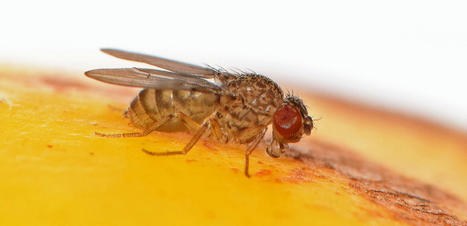
For the first time, scientists have managed to induce virgin birth in an animal that usually reproduces sexually: the fruit fly Drosophila melanogaster. Once induced in this fruit fly, this ability is passed on through the generations: the offspring can reproduce either sexually if there are males around, or by virgin birth if there aren't. For most animals, reproduction is sexual -- it involves a female's egg being fertilized by a male's sperm. Virgin birth, or 'parthenogenesis', is the process by which an egg develops into an embryo without fertilization by sperm -- a male is not needed. The offspring of a virgin birth are not exact clones of their mother but are genetically very similar, and are always female. "We are the first to show that you can engineer virgin births to happen in an animal -- it was very exciting to see a virgin fly produce an embryo able to develop to adulthood, and then repeat the process," said Dr Alexis Sperling, a researcher at the University of Cambridge and first author of the paper. She added: "In our genetically manipulated flies, the females waited to find a male for half their lives -- about 40 days -- but then gave up and proceeded to have a virgin birth." In the experiments, only 1-2% of the second generation of female flies with the ability for virgin birth produced offspring, and this occurred only when there were no male flies around. When males were available, the females mated and reproduced in the normal way. Switching to a virgin birth can be a survival strategy: a one-off generation of virgin births can help to keep the species going. The study has been published in the journal Current Biology. To achieve their results, researchers first sequenced the genomes of two strains of another species of fruit fly, called Drosophila mercatorum. One strain needs males to reproduce, the other reproduces only through virgin birth. They identified the genes that were switched on, or switched off, when the flies were reproducing without fathers. With the candidate genes for virgin birth ability identified in Drosophila mercatorum, the researchers altered what they thought were the corresponding genes in the model fruit fly, Drosophila melanogaster. It worked: The flies suddenly acquired the ability for virgin birth. The research involved over 220,000 virgin fruit flies and took six years to complete.Key to the discovery was the fact that this work was done in Drosophila melanogaster -- the researchers say it would have been incredibly difficult in any other animal. This fly has been the 'model organism' for research in genetics for over 100 years and its genes are very well understood. Sperling, who carried out this work in the Department of Genetics, has recently moved to Cambridge Crop Science Centre to work on crop pests and hopes to eventually investigate why virgin birth in insects may be becoming more common, particularly in pest species. "If there's continued selection pressure for virgin births in insect pests, which there seems to be, it will eventually lead to them reproducing only in this way. It could become a real problem for agriculture because females produce only females, so their ability to spread doubles," said Sperling. The females of some egg-laying animals -- including birds, lizards and snakes, can switch naturally to give birth without males. But virgin birth in animals that normally sexually reproduce is rare, often only observed in zoo animals, and usually happens when the female has been isolated for a long time and has little hope of finding a mate.
|
|
Scooped by
Dr. Stefan Gruenwald
July 28, 2023 12:27 PM
|
The unreleased generative imaging tool doesn’t shy away from nudity and gore, and puts MidJourney on notice. OpenAI has been privately testing a new iteration of its generative artificial intelligence (AI) imaging model over the past several months, and early samples leaked by YouTuber MattVidPro show it outperforming previous image generators. “Extremely exciting—this blows anything we've seen before out of the water, it's insane,” Matt said in a preview he posted to YouTube. “Midjourney cannot compete at this level—I don't even think Midjourney version six would be able to compete at this level.” Don't expect to try it out anytime soon, however. Access is extremely limited. The unpublished model is likely an upgrade of DALL-E 2 and is being tested through an invite-only preview inside ChatGPT-4. Matt said there are only around 400 people worldwide who have access to this new OpenAI image generator. While limited, the image samples demonstrate the AI's advanced skills. It produced sharp images with lighting and reflections that mimic real photos. The model recreated detailed paintings down to visible brush strokes. It also recreated brand names like "Snickers" and logos of well-known brands like Subway flawlessly on generated products, and achieved reasonably good spelling in rendered text. While current image generators struggle with coherent hands, the examples showed realistic, properly proportioned hands. Backgrounds also appeared more convincing than competing AI systems. OpenAI apparently removed its safety filters to test the model's full potential. Users said it can generate violent content and nudity without hesitation. However, knowing OpenAI’s stance towards NSFW content, it’s highly unlikely that an official public version is released under such standards. “It's OpenAI so you can bet they're going to nanny this thing down like they do for everything before they release it,” Matt observed. Some experts have criticized OpenAI for “dumbing down” its models to avoid potential controversy. Some studies even suggest that OpenAI trained ChatGPT to have a strong political bias in its outputs. Nonetheless, the consistent quality shown in the samples is a leap forward. It highlights OpenAI's ongoing efforts to improve generative AI capabilities. The company may reveal more on its progress later this year, especially if the field of image recognition and generation helps improve the robustness of its star product: a multimodal GPT-4 capable of understanding text, images, and drafts in one prompt. For now, the technology remains confined to closed testing with a minuscule number of users.
|
|
Scooped by
Dr. Stefan Gruenwald
July 26, 2023 7:17 PM
|
Large language models (LLMs) and Vision-Language Models (VLMs) have been proven to excel at multiple tasks, such as commonsense reasoning. Powerful as these models can be, they are not grounded in the 3D physical world, which involves richer concepts such as spatial relationships, affordances, physics, layout, and so on. In this current work, researchers propose to inject the 3D world into large language models and introduce a whole new family of 3D-LLMs. Specifically, 3D-LLMs can take 3D point clouds and their features as input and perform a diverse set of 3D-related tasks, including captioning, dense captioning, 3D question answering, task decomposition, 3D grounding, 3D-assisted dialog, navigation, and so on. Using three types of prompting mechanisms that they were able to design, enabled them to collect over 300k 3D-language data covering these tasks. To efficiently train 3D-LLMs, they first utilized a 3D feature extractor that obtains 3D features from rendered multi-view images. Then, they used 2D VLMs as backbones to train their 3D-LLMs. By introducing a 3D localization mechanism, 3D-LLMs can better capture 3D spatial information. Experiments on ScanQA showed that this model outperforms state-of-the-art baselines by a large margin (e.g., the BLEU-1 score surpasses state-of-the-art score by 9%). Furthermore, experiments on held-in datasets for 3D captioning, task composition, and 3D-assisted dialogue show that this model outperforms 2D VLMs. Qualitative examples also show that this model could perform more tasks beyond the scope of existing LLMs and VLMs. Project Page: : https://vis-www.cs.umass.edu/3dllm/.
|
|
Scooped by
Dr. Stefan Gruenwald
July 24, 2023 11:30 AM
|
The process of reconstructing experiences from human brain activity offers a unique lens into how the brain interprets and represents the world. Recently, the Google team and international collaborators introduced a method for reconstructing music from brain activity alone, captured using functional magnetic resonance imaging (fMRI). This approach uses either music retrieval or the MusicLM music generation model conditioned on embeddings derived from fMRI data. The generated music resembles the musical stimuli that human subjects experienced, with respect to semantic properties like genre, instrumentation, and mood. The scientists investigate the relationship between different components of MusicLM and brain activity through a voxel-wise encoding modeling analysis. Furthermore, they analyze which brain regions represent information derived from purely textual descriptions of music stimuli.
|
|
Scooped by
Dr. Stefan Gruenwald
July 18, 2023 12:35 AM
|
Signs of life beyond Earth could take forms that are clearly artificial – radio or light signals, or even evidence of large-scale engineering. Our first confirmed proof of life beyond Earth might not involve biology at all. It’s possible that we might intercept communication through electromagnetic waves, like radio, or find telescopic evidence of epic engineering. While the search remains largely focused on non-technological life, NASA scientists also have begun to consider what technological traces of intelligent life – “technosignatures” – might look like. They wouldn’t come from planets in our solar system, but rather far-flung exoplanets that we cannot see up close. Among the possibilities are laser or radio pulses, signs of artificial chemicals in the atmospheres of distant planets, or “Dyson spheres” – massive structures built around stars to collect their energy. And as acceptance in the scientific community slowly grows, a field once derided as a search for “little green men” is showing early signs of blossoming into a mature, serious investigation. “That’s something we’ve worked very hard on: to establish our legitimacy, and distance ourselves from pseudo-science,” said Jill Tarter, an astronomer known for decades as a leader in the search for intelligent life beyond Earth. “If anything, my conviction that this is an important and reasonable thing to do has increased.” Jill Tarter is the co-founder and former director of the Center for SETI (Search for Extraterrestrial Intelligence) Research at the SETI Institute, as well as the inspiration for the main character in Carl Sagan’s 1985 novel “Contact.” She says one of the biggest challenges today is moving the search for signs of technology beyond just radio signals. “We still want to look at all the sky all the time, at all wavelengths,” Tarter said, including pulses of laser light that might be used for communication. Another challenge is short-lived “transient” signals, one-time events that can be bright and energetic. Mixed among the many natural sources for such signals, like gamma-ray bursts or supernovae, might be artificial transients from distant civilizations – an engineered signal lasting less than a few minutes. But teasing them apart likely would require enormous amounts of computer time. "We’re trying to figure out how to do that,” Tarter said. “That is our focus now.” This is the fifth in a series of articles on how NASA is searching for life in the cosmos. Read Part 1 | Part 2 | Part 3 | Part 4
|
|
Scooped by
Dr. Stefan Gruenwald
July 15, 2023 6:26 PM
|
In total 12 people have walked on the moon. Neil Armstrong made history by becoming the first person to set foot on the moon. 1 + 2. Apollo 11 - July 21, 1969 Neil Armstrong made history by becoming the first person to set foot on the lunar surface, before he he was followed by crewmate Edwin 'Buzz' Aldrin. 3 + 4. Apollo 12 - November 19 and 20, 1969 Pete Conrad and Alan Bean were the moon walkers on the Apollo 12 mission. The Apollo 12 crew experienced two lightning strikes just after their Saturn V rocket launched. 5 + 6. Apollo 14 - February 5, 1971 Alan Shepard and Edgar Mitchell were part of the Apollo 14 mission. They launched on January 31, 1971, and landed in the Fra Mauro region of the moon, the original destination for Apollo 13. 7 + 8. Apollo 15 - July 31, 1971 Dave Scott and James Irwin landed on the moon and stayed for three days, until August 2. 9 + 10. Apollo 16 - April 21, 1972 John Young and Charlie Duke were the next men to walk on the moon. When the crew reached lunar orbit, the mission almost had to be aborted because of a problem with the command and service module's main engine. 11 + 12. Apollo 17 - December 11, 1972 The final people to walk on the moon were Eugene (Gene) Cernan and Harrison (Jack) Schmitt. Before he left the moon, Cernan scratched the initials of his daughter Tracy into the lunar regolith. Since the moon does not experience weather conditions like wind or rain to erode anything away, her initials should stay there for a very long time.
|