Your new post is loading...

|
Scooped by
Dr. Stefan Gruenwald
April 27, 2020 8:38 PM
|
SpaceX is gearing up for its first crewed flight for NASA with the Falcon 9 and Dragon spacecraft, but Elon Musk’s spaceflight firm is also planning for the future with the Starship. This vessel, previously known as the BFR, is an extremely ambitious project that will eventually give SpaceX enough power to venture to the outer solar system. First, it has to remain intact during pressure testing, something the latest SN4 vehicle has finally achieved. The Starship is still in the early phases of construction and testing. Last year, SpaceX successfully tested the “Starhopper” prototype with one of the company’s new Raptor engines. However, the full-scale prototypes haven’t fared well in pressure testing. SN1 blew its top in February, and both SN2 and SN3 suffered similar fates during the “cryo” testing phase, which simulates a full-pressure tank in the vacuum of space. SN4 is the first version of the rocket to survive that test. The success of the SN4 prototype is a big step forward for the Starship program. The next step is to set up a static fire test with a single Raptor engine on the SN4. That could happen as soon as next week. Assuming it’s still in one piece, SpaceX will then conduct a brief flight up to 500 feet (150 meters) before setting down. Elon Musk says that the next variant (predictably called SN5) will feature the full-scale tank and a trio of Raptor engines. The final design calls for six Raptor engines on the Starship and a further 37 of them on the Super Heavy stage. SpaceX has big plans for the Starship. Along with its Super Heavy launch stage, the Starship will be able to carry large payloads to Mars and beyond. Musk even promises Mars colonization programs with the Starship. The spacecraft will also be able to send smaller missions to the outer planets, something that was previously only possible with government-operated launch platforms. It will probably take several more versions of the Starship before the craft is ready for orbital flight, and that says nothing about the Super Heavy platform. The rocket will need that extra boost to reach distant places like the Moon and Mars. Eventually, SpaceX will fly Japanese billionaire Yusaka Maezawa on a trip around the moon. Musk has been hesitant to put a date on that with the recent setbacks, but previous reports pegged 2023 for the launch.
|
|
Scooped by
Dr. Stefan Gruenwald
April 24, 2020 12:43 PM
|
A transformative treatment is giving hope to some patients with metastatic skin cancers. Checkpoint inhibitors work by preventing tumor cells from hijacking, and therefore avoiding, the cellular immune response that should eliminate them. Their discovery came about in the late 1990s, when two groups of researchers from the United States and Japan uncovered a series of interactions between cell-surface receptors and proteins that led to the death of immune T cells. T cells are the cells that would normally lead the charge against cancer and other threats. They have a receptor on their surface called PD-1 (programmed cell death protein 1). When that receptor is engaged, it triggers the T cell to rupture — one of the many checkpoints that have evolved to help keep the immune system from over-reacting. The protein that engages that receptor is PD-L1 (PD ligand 1). It turns out that many human cancers also produce PD-L1, the factor that tumors are using to hijack the checkpoint and engage the T-cell death receptor to stop the response against them. Scientists showed that inhibiting this tumor-hijacked checkpoint could unleash an immune response against the tumor. The first checkpoint inhibitor drug, ipilimumab, was approved by the US Food and Drug Administration in March 2011 for the treatment of melanoma that had spread or that could not be treated surgically. Compared with a melanoma vaccine, itself a new therapeutic approach being trialled, the drug significantly improved survival rates. Although it worked in only around one in five patients, the benefits in those patients were dramatic, Larkin says. “We really had a sense then of the possibilities.” Ipilimumab was followed by pembrolizumab in September 2014, and nivolumab just three months later. All of these, and newer checkpoint inhibitors, are now in widespread use, although they’re expensive for patients, particularly in countries without public health insurance schemes. A course of intravenous checkpoint inhibitor therapy can cost US$150,000–250,000 per year. The most spectacular results so far with checkpoint inhibitor therapy have come from trials combining two different checkpoint inhibitors, such as ipilimumab and nivolumab. Larkin and Wolchok were both involved in the CheckMate 067 study, which began in July 2013 and compared ipilimumab alone with nivolumab alone, and with ipilimumab plus nivolumab in 945 people with advanced untreated melanoma. “It was a blinded trial, so you didn’t know which treatment the patients were getting,” Larkin says. “And it was really striking that some patients who had symptoms or were quite sick were improving really, really quickly, which we’d never seen before.” The combination was so successful that a paper published in the New England Journal of Medicine in late 2019 showed that 52% of patients were alive after five years, compared with 44% of patients on nivolumab alone and 26% of patients on ipilimumab alone (J. Larkin et al. N. Engl. J. Med. 381, 1535–1546; 2019). As often with clinical trials, checkpoint inhibitors were first tested in the most severely affected patients, those whose cancer was untreatable with surgery or which had spread despite existing treatments. But with each new trial showing unprecedented survival rates, questions would arise as to whether these drugs should be used earlier in the disease, even before it had spread.
|
|
Scooped by
Dr. Stefan Gruenwald
April 24, 2020 10:08 AM
|
In recent years, astronomers have begun to address a staggering possibility — the universe we can observe, and in which we live, may be one of many that makes up the cosmos. The idea of multiple universes, or multiverses, poses the notion of the universe existing like a giant sponge. Each bubble is a distinct universe, like ours, but others could exist separated by giant voids. What’s the evidence for all this? First, measurements of distant supernovae suggest the expansion of the cosmos is accelerating. Second, more and more evidence supports the inflationary scenario of the early history of the universe. Third, ideas about inflation suggest many Big Bangs may have occurred. Fourth, recent notions about string theory suggest universes of very different types may have formed. Altogether, these notions suggest it was possible, if not probable, that multiple universes of different types formed in the past, and they coexist with the familiar cosmos we can see.
Even without other universes, astronomers know the universe is larger than what we see with our telescopes. The view horizon now spans about 14 billion light-years; and if you count the knowledge that distant objects have expanded far beyond what we now see, the “currently” existing horizon is at least 40 billion light-years across. FORTUNATE UNIVERSE. Physical constants took on values given by chance processes when the universe was born. But if they were any different, we couldn't exist. Accepting an inflation-based universe of the size we see, Jaume Garriga of the University of Barcelona and Alexander Vilenkin of Tufts University have proposed a cosmos peppered with numerous “O-regions,” observable universes like ours. Part of the idea goes that inflation, the hyperexpansion in the early universe, never completely stopped. It stopped where we are, producing our O-region, and many others. But in other areas of the universe at large, it continues. This creates a concept called eternal inflation — a universe unlike a simple sphere, instead rather like a sponge, pocked with holes that are bubble universes. How convincing is this to astrophysicists? Tegmark remains open. “As scientists,” he says, “We’re not testing the general idea of a multiverse. We’re testing inflation — a mathematical theory that predicts a multiverse and all kinds of other stuff.” Vilenkin looks ahead to an exciting future of learning more about multiverses. “By doing measurements in our own region,” he says, “We can test our predictions for what lies beyond.”
|
|
Scooped by
Dr. Stefan Gruenwald
April 22, 2020 11:08 PM
|
Artificial-intelligence methods are moving into cancer research. AI technologies encompass several methods. One, called machine learning, uses data that have been manually preprocessed and makes predictions according to what the AI learns. Deep learning, by contrast, can identify complex patterns in raw data. It is used in self-driving cars, speech-recognition software, game-playing computers — and to spot cell nuclei in massive microscopy data sets. Deep learning has its origins in the 1940s, when scientists built a computer model that was organized in interconnected layers, like neurons in the human brain. Decades later, researchers taught these ‘neural networks’ to recognize shapes, words and numbers. But it wasn’t until about five years ago that deep learning began to gain traction in biology and medicine. A major driving force has been the explosive growth of life-sciences data. With modern gene-sequencing technologies, a single experiment can produce gigabytes of information. The Cancer Genome Atlas, launched in 2006, has collected information on tens of thousands of samples spanning 33 cancer types; the data exceed 2.5 petabytes (1 petabyte is 1 million gigabytes). And advances in tissue labelling and automated microscopy are generating complex imaging data faster than researchers can possibly mine them. “There’s definitely a revolution going on,” says Emma Lundberg, a bioengineer at the KTH Royal Institute of Technology in Stockholm. Deep-learning models can process raw data, but first they must be trained with annotated information. It takes vast amounts of labelled data to train deep-learning models. But that’s not always easy to come by, says Casey Greene, a computational biologist at the University of Pennsylvania in Philadelphia. “Data are cheap, but labelled data are expensive.” In the genomics realm, sequences are abundant and publicly available. But their associated descriptions, or metadata, are often missing, wrong or unstandardized, says Emily Flynn, a doctoral candidate in biomedical informatics at Stanford University in California. A researcher wanting to train a model to detect non-small-cell lung cancer in samples from patients, for example, might well find data sets variously labelled ‘nsclc’, ‘non small-cell’ or ‘non small cell LC’ — differences that confound analysis tools. Or samples might be labelled ‘disease: glioblastoma’ and ‘disease: yes’, says biostatistician Colin Dewey at the University of Wisconsin–Madison. To help organize those data, Dewey created a computational pipeline called MetaSRA, which uses text-mining techniques to standardize and store metadata on public sequences. And Greene and colleagues have built refine.bio, a repository that harmonizes data on expression and RNA sequencing. Working with Stanford bioengineer Russ Altman, Flynn is using machine-learning techniques to infer missing labels from gene-expression data to improve annotations in refine.bio. In bioimaging, the problem lies more in annotation. To label a set of histopathology slides, for example, “someone has to go in and draw a bounding box around the parts that are cancer”, Greene says. “And that person probably makes a lot of money.” Now developers are training deep-learning algorithms to label nuclei and other structures in cell images, while the Image Data Resource and other online repositories are making it easier for researchers to share and find life-sciences images.
|
|
Rescooped by
Dr. Stefan Gruenwald
from Papers
April 22, 2020 10:38 PM
|
How does AI need to evolve in order to better support more effective decision-making in managing the many complex problems we face at every scale, from global climate change, collapsing ecosystems, international conflicts and extremism, through to all the dimensions of public policy, economics, and governance that affect human well-being? Research in complex decision-making at an individual human level (understanding of what constitutes more, and less, effective decision-making behaviors, and in particular the many pathways to failures in dealing with complex problems), informs a discussion about the potential for AI to aid in mitigating those failures and enabling a more robust and adaptive (and therefore more effective) decision-making framework, calling for AI to move well-beyond the current envelope of competencies. Recent AI advances such as deep learning and generative adversarial networks have demonstrated impressive results in many domains—superhuman precision in classification tasks, beating human world champions in Go, and generation of images that are hard for humans to discriminate from reality, to name just a few. But what are the prospects for advances in AI to deliver the kind of decision support capability that is needed by those charged with managing the most challenging, indeed wicked, problems? And can those advances be achieved by research that continues to set goals based on beating human performance, or on fooling human discrimination? Despite all its successes, the best examples of AI are still very specialized applications that focus on well-defined domains, and that generally require a vast amount of training data to achieve their high performance. Such applications can certainly be components of an AI decision support system for managing very complex problems, but the factors discussed in the two previous sections imply that much more is needed: not just depth in narrow aspects, but breadth of scope by connecting the necessary components so as to create a virtual environment which is a sufficiently valid model of the problem and its context, and in which decision-makers can safely explore and test options for robustness and effectiveness, while being supported in maintaining effective decision making behaviors and resisting the less effective ones. The following section develops a more detailed set of desiderata for such an AI support system. The resurgence of interest in Artificial General Intelligence seems a promising avenue for the kinds of advances that are needed, but it is telling that AGI is most often explicitly pursued through the lens of the touted general intelligence that humans possess (Adams et al., 2012), in other words still focusing on what we believe we are good at, rather than exploring the most critical parts of the very much larger space of what we are not good enough at. But is human intelligence truly general? The claim rests principally on our ability to learn, and this is certainly a core requirement for future intelligent systems. But we should also acknowledge that the human brain is the product of our particular evolutionary history and sports the evidence of its contingencies in many kluges, biases and peculiarities (Marcus, 2009). It would be reasonable to suppose that other more efficient, more general, more powerful and less flawed designs are possible. Obviously there is still an immense amount to be learned about how human intelligence actually works and how the detailed structure and architecture of the brain produces it. And there will certainly be many insights that can be implemented in novel AI developments—for example the recent breakthroughs in understanding the workings of the neocortex (Hawkins et al., 2019), and the comprehensive program to develop cognitive models of how humans build compositionally structured causal models of the world grounded in their capacities for intuitive physics and intuitive psychology, so as to apply them to development of advanced AI systems (Tenenbaum et al., 2011; Lake et al., 2017). However, there is also an argument to be made that relying too much on guiding further development of AI on what is known about human intelligence, risks reproducing some of its limitations, or at least misses opportunities to deliberately and specifically mitigate them so as to extend and complement human capability.
Via Complexity Digest
|
|
Scooped by
Dr. Stefan Gruenwald
April 20, 2020 5:56 AM
|
New data throws more support behind the theory that neutrinos are the reason the universe is dominated by matter. The current laws of physics do not explain why matter persists over antimatter -- why the universe is made of 'stuff'. Scientists believe equal amounts of matter and antimatter were created at the beginning of the universe, but this would mean they should have wiped each other out, annihilating the universe as it began. Instead, physicists suggest there must be differences in the way matter and antimatter behave that explain why matter persisted and now dominates the universe. Each particle of matter has an antimatter equivalent, and neutrinos are no different, with an antimatter equivalent called antineutrinos. They should be exact opposites in their properties and behavior, which is what makes them annihilate each other on contact. Now, an international team of researchers that make up the T2K Collaboration, including Imperial College London scientists, have found the strongest evidence yet that neutrinos and antineutrinos behave differently, and therefore may not wipe each other out. Dr Patrick Dunne, from the Department of Physics at Imperial, said: "This result brings us closer than ever before to answering the fundamental question of why the matter in our universe exists. If confirmed -- at the moment we're over 95 per cent sure -- it will have profound implications for physics and should point the way to a better understanding of how our universe evolved." Previously, scientists have found some differences in behaviour between matter and antimatter versions of subatomic particles called quarks, but the differences observed so far do not seem to be large enough to account for the dominance of matter in the universe. However, T2K's new result indicates that the differences in the behavior of neutrinos and antineutrinos appear to be quite large. Neutrinos are fundamental particles but do not interact with normal matter very strongly, such that around 50 trillion neutrinos from the Sun pass through your body every second. Neutrinos and antineutrinos can come in three 'flavors', known as muon, electron and tau. As they travel, they can 'oscillate' -- changing into a different flavor. The fact that muon neutrinos oscillate into electron neutrinos was first discovered by the T2K experiment in 2013. To get the new result, the team fired beams of muon neutrinos and antineutrinos from the J-PARC facility at Tokai, Japan, and detected how many electron neutrinos and antineutrinos arrived at the Super-Kamiokande detector 295km away. They looked for differences in how the neutrinos or antineutrinos changed flavor, finding neutrinos appear to be much more likely to change than antineutrinos. The available data also strongly discount the possibility that neutrinos and antineutrinos are as just likely as each other to change flavor. Dr Dunne said: "What our result shows is that we're more than 95 per cent sure that matter neutrinos and antineutrinos behave differently. This is big news in itself; however we do already know of other particles that have matter-antimatter differences that are too small to explain our matter-dominated universe. "Therefore, measuring the size of the difference is what matters for determining whether neutrinos can answer this fundamental question. Our result today finds that unlike for other particles, the result in neutrinos is compatible with many of the theories explaining the origin of the universe's matter dominance." While the result is the strongest evidence yet that neutrinos and antineutrinos behave differently, the T2K Collaboration is working to reduce any uncertainties and gather more data by upgrading the detectors and beamlines, including the new Hyper-Kamiokande detector to replace the Super-Kamiokande. A new experiment, called DUNE, is also under construction in the US. Imperial is involved in both. Imperial researchers have been involved in the T2K Collaboration since 2004, starting with conceptual designs on whiteboards and research and development on novel particle detector components that were key to building this experiment, which was finally completed and turned on in 2010.
|
|
Scooped by
Dr. Stefan Gruenwald
April 17, 2020 4:59 PM
|
"It's not rocket science" may be a tired cliché, but that doesn't mean designing rockets is any less complicated. Time, cost and safety prohibit testing the stability of a test rocket using a physical build "trial and error" approach. But even computational simulations are extremely time consuming. A single analysis of an entire SpaceX Merlin rocket engine, for example, could take weeks, even months, for a supercomputer to provide satisfactory predictions. One group of researchers at The University of Texas at Austin is developing new "scientific machine learning" methods to address this challenge. Scientific machine learning is a relatively new field that blends scientific computing with machine learning. Through a combination of physics modeling and data-driven learning, it becomes possible to create reduced-order models - simulations that can run in a fraction of the time, making them particularly useful in the design setting. The goal of the work, led by Karen Willcox at the Oden Institute for Computational Engineering and Sciences, is to provide rocket engine designers with a fast way to assess rocket engine performance in a variety of operating conditions. "Rocket engineers tend to explore different designs on a computer before building and testing," Willcox said. "Physical build and test is not only time-consuming and expensive, it can also be dangerous." But the stability of a rocket's engine, which must be able to withstand a variety of unforeseen variables during any flight, is a critical design target engineers must be confident they have met before any rocket can get off the ground. The cost and time it takes to characterize the stability of a rocket engine comes down to the sheer complexity of the problem. A multitude of variables affect engine stability, not to mention the speed at which things can change during a rocket's journey. The research by Willcox is outlined in a recent paper co-authored by Willcox and published online by AIAA Journal. It is part of a Center of Excellence on Multi-Fidelity Modeling of Rocket Combustion Dynamics funded by the Air Force Office of Scientific Research and Air Force Research Laboratory.
|
|
Scooped by
Dr. Stefan Gruenwald
April 16, 2020 8:20 PM
|
Using a novel multiplexed immuno-biosensor, Hememics is trying to provide a rapid detection solution of COVID-19 anywhere in the world. Rapid, cost-effective and real-time biomarker measurements are essential for quick and effective diagnosis and treatment of emerging diseases like COVID-19. Hememics has developed a diagnostic test platform that can yield sensitive, selective, and measurable signals in response to specific antibodies and antigens in 60 seconds or less, with a single nasal swab or drop of blood. Testing is simple and could be administered by any health care worker, anywhere: ambulances, emergency rooms, community clinics, and makeshift hospitals. Most importantly, this Bluetooth® connected technology transmits the test results to a cloud-based data management network, enabling real-time geographical alerts of outbreaks or travel screening at airports, borders, and transportation terminals. The multiplex chip device can simultaneously detect up to 17 pathogens from blood or nasal swab.
|
|
Scooped by
Dr. Stefan Gruenwald
April 16, 2020 7:32 PM
|
It's been nearly 30 years in the making, but scientists with the Very Large Telescope (VLT) collaboration in the Atacama Desert in Chile have now measured, for the very first time, the unique orbit of a star orbiting the supermassive black hole believed to lie at the center of our Milky Way galaxy. The path of the star (known as S2) traces a distinctive rosette-shaped pattern (similar to a spirograph), in keeping with one of the central predictions of Albert Einstein's general theory of relativity. The international collaboration described their results in a new paper in the journal Astronomy and Astrophysics. “General relativity predicts that bound orbits of one object around another are not closed, as in Newtonian gravity, but precess forwards in the plane of motion," said Reinhard Genzel, director at the Max Planck Institute for Extraterrestrial Physics (MPE) in Garching, Germany. "This famous effect—first seen in the orbit of the planet Mercury around the Sun—was the first evidence in favor of general relativity. One hundred years later we have now detected the same effect in the motion of a star orbiting the compact radio source Sagittarius A* (SagA*) at the center of the Milky Way."
|
|
Scooped by
Dr. Stefan Gruenwald
April 16, 2020 7:21 PM
|
An artificial intelligence tool accurately predicted which patients newly infected with the COVID-19 virus would go on to develop severe respiratory disease, a new study found. The work was led by NYU Grossman School of Medicine and the Courant Institute of Mathematical Sciences at New York University, in partnership with Wenzhou Central Hospital and Cangnan People's Hospital, both in Wenzhou, China. Named "SARS-CoV-2," the new virus causes the disease called "coronavirus disease 2019" or "COVID-19." As of March 30, the virus had infected 735,560 patients worldwide. According to the World Health Organization, the illness has caused more than 34,830 deaths to date, more often among older patients with underlying health conditions. The New York State Department of Health has reported more than 33,700 cases to date in New York City. Published on March 30 2020 in the journal Computers, Materials & Continua, the study also revealed the best indicators of future severity, and found that they were not as expected. "While work remains to further validate our model, it holds promise as another tool to predict the patients most vulnerable to the virus, but only in support of physicians' hard-won clinical experience in treating viral infections," says corresponding study author Megan Coffee, MD, PhD, clinical assistant professor in the Division of Infectious Disease & Immunology within the Department of Medicine at NYU Grossman School of Medicine. "Our goal was to design and deploy a decision-support tool using AI capabilities -- mostly predictive analytics -- to flag future clinical coronavirus severity," says co-author Anasse Bari, PhD, a clinical assistant professor in Computer Science at the Courant institute. "We hope that the tool, when fully developed, will be useful to physicians as they assess which moderately ill patients really need beds, and who can safely go home, with hospital resources stretched thin."
|
|
Scooped by
Dr. Stefan Gruenwald
April 16, 2020 4:28 PM
|
Four fossilized monkey teeth discovered deep in the Peruvian Amazon provide new evidence that more than one group of ancient primates journeyed across the Atlantic Ocean from Africa, according to new USC research just published in the journal Science. The teeth are from a newly discovered species belonging to an extinct family of African primates known as parapithecids. Fossils discovered at the same site in Peru had earlier offered the first proof that South American monkeys evolved from African primates.
The monkeys are believed to have made the more than 900-mile trip on floating rafts of vegetation that broke off from coastlines, possibly during a storm. “This is a completely unique discovery,“ said Erik Seiffert, PhD, the study’s lead author and Professor of Clinical Integrative Anatomical Sciences at Keck School of Medicine of USC. “It shows that in addition to the New World monkeys and a group of rodents known as caviomorphs – there is this third lineage of mammals that somehow made this very improbable transatlantic journey to get from Africa to South America.”
Researchers have named the extinct monkey Ucayalipithecus perdita. The name comes from Ucayali, the area of the Peruvian Amazon where the teeth were found, pithikos, the Greek word for monkey and perdita, the Latin word for lost.
|
|
Scooped by
Dr. Stefan Gruenwald
April 16, 2020 4:23 PM
|
Since its discovery in 2017, an air of mystery has surrounded the first known interstellar object to visit our solar system, an elongated, cigar-shaped body named 'Oumuamua (Hawaiian for "a messenger from afar arriving first"). How was it formed, and where did it come from? A new study published April 13 in Nature Astronomy offers a first comprehensive answer to these questions. First author Yun Zhang at the National Astronomical Observatories of the Chinese Academy of Sciences and coauthor Douglas N. C. Lin at the University of California, Santa Cruz, used computer simulations to show how objects like 'Oumuamua can form under the influence of tidal forces like those felt by Earth's oceans. Their formation theory explains all of 'Oumuamua's unusual characteristics. "We showed that 'Oumuamua-like interstellar objects can be produced through extensive tidal fragmentation during close encounters of their parent bodies with their host stars, and then ejected into interstellar space," said Lin, professor emeritus of astronomy and astrophysics at UC Santa Cruz. Discovered on October 19, 2017, by the Panoramic Survey Telescope and Rapid Response System 1 (Pan-STARRS1) in Hawaii, 'Oumuamua is absolutely nothing like anything else in our solar system, according to Zhang. Its dry surface, unusually elongated shape, and puzzling motion even drove some scientists to wonder if it was an alien probe. "It is really a mysterious object, but some signs, like its colors and the absence of radio emission, point to 'Oumuamua being a natural object," Zhang said. "Our objective is to come up with a comprehensive scenario, based on well understood physical principles, to piece together all the tantalizing clues," Lin said. Astronomers had expected that the first interstellar object they detected would be an icy body like a comet. Icy objects like those populating the Oort cloud, a reservoir of comets in the outermost reaches of our solar system, evolve at very large distances from their host stars, are rich in volatiles, and are often tossed out of their host systems by gravitational interactions. They are also highly visible due to the sublimation of volatile compounds, which creates a comet's coma (or "tail") when it is warmed by the sun. 'Oumuamua's dry appearance, however, is similar to rocky bodies like the solar system's asteroids, indicating a different ejection scenario.
|
|
Scooped by
Dr. Stefan Gruenwald
April 16, 2020 4:21 PM
|
During a stroll, a woman's breathing becomes a slight bit shallower, and a monitor in her clothing alerts her to get a telemedicine check-up. A new study details how a sensor chip smaller than a ladybug records multiple lung and heart signals along with body movements and could enable such a future socially distanced health monitor. The core mechanism of the chip developed by researchers at the Georgia Institute of Technology involves two finely manufactured layers of silicon, which overlay each other separated by the space of 270 nanometers -- about 0.005 the width of a human hair. They carry a minute voltage. Vibrations from bodily motions and sounds put part of the chip in flux, making the voltage flux, too, thus creating readable electronic outputs. In human testing, the chip has recorded a variety of signals from the mechanical workings of the lungs and the heart with clarity, signals that often escape meaningful detection by current medical technology. "Right now, medicine looks to EKGs (electrocardiograms) for information on the heart, but EKGs only measure electrical impulses. The heart is a mechanical system with muscles pumping and valves opening and shutting, and it sends out a signature of sounds and motions, which an EKG does not detect. EKGs also say nothing about lung function," said Farrokh Ayazi, Ken Byers Professor in Georgia Tech's School of Electrical and Computer Engineering. Stethoscope-accelerometer combo The chip, which acts as an advanced electronic stethoscope and accelerometer in one, is aptly called an accelerometer contact microphone. It detects vibrations that enter the chip from inside the body while keeping out distracting noise from outside the body's core like airborne sounds "If it rubs on my skin or shirt, it doesn't hear the friction, but the device is very sensitive to sounds coming at it from inside the body, so it picks up useful vibrations even through clothing," Ayazi said. The detection bandwidth is enormous -- from broad, sweeping motions to inaudibly high-pitched tones. Thus, the sensor chip records all at once fine details of the heartbeat, pulse waves traversing the body's tissues, respiration rates, and lung sounds. It even tracks the wearer's physical activities such as walking. The signals are recorded in sync, potentially offering the big picture of a patient's heart and lung health. For the study, the researchers successfully recorded a "gallop," a faint third sound after the "lub-dub" of the heartbeat. Gallops are normally elusive clues of heart failure. The researchers published their results in the journal npj Digital Medicine on February 12, 2020. The research was funded by the Georgia Research Alliance, the Defense Advanced Research Projects Agency (DARPA), the National Science Foundation, and the National Institutes of Health. Study coauthor Divya Gupta, M.D., a cardiologist at Emory University, collaborated in testing the chip on human participants.
|
|
|
Scooped by
Dr. Stefan Gruenwald
April 26, 2020 11:59 AM
|
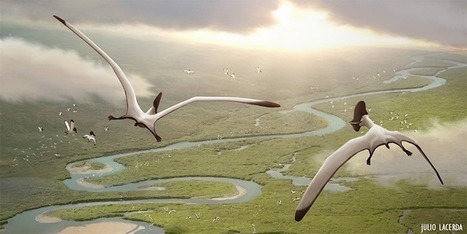
The largest flying animal of all time lived very near the end of the Dinosaur Age. This giant called Quetzalcoatlus was as tall as a giraffe on all fours, and its wings spanned over 10 meters, as much as a small aircraft. It probably weighed close to 250 kilograms or more. Quetzalcoatlus shared North America with the terrifying likes of Tyrannosaurus, playing second to the dinosaur on the food chain. Pterosaurs like this were the pinnacle of their evolution. It was once thought that the very biggest Quetzalcoatlus were unable to fly or had to make us of rising air thermals to even stay aloft. New research suggests that pterosaur torsos were packed to the brim with dense muscle. They launched via a push-up motion, using just their arms, and from there onward used a method known as dynamic soaring. The biggest pterosaurs could stay in the air with just a few flaps of their wings. An animal like Quetzalcoatlus could probably travel for 16,000 kilometers non-stop, relying on just a few flaps to stay airborne and then soaring the rest of the way. All of this is a testament to their glory and their success. It was only a celestial event that could wipe out Quetzalcoatlus and its kin. In this case, it was the infamous asteroid that crashed into the Earth 66 million years ago, the one that heralded the end of the Age of the Dinosaurs, The pterosaurs and their neighbors, as well as numerous other creatures were gone for good, but their legacy still remained. Paleontology has been evolving at a breakneck speed since its origins in the 18th Century. We know more about pterosaurs and their lifestyle than we could have ever hoped to, and there is still more to be discovered.
|
|
Scooped by
Dr. Stefan Gruenwald
April 24, 2020 10:56 AM
|
Researchers at Washington University School of Medicine in St. Louis have used induced pluripotent stem cells produced from the skin of a patient with a rare, genetic form of insulin-dependent diabetes, transformed the stem cells into insulin-producing cells, used the CRISPR gene-editing tool to correct a defect that caused the diabetes, and implanted the cells into mice to reverse diabetes in the animals. Using induced pluripotent stem cells produced from the skin of a patient with a rare, genetic form of insulin-dependent diabetes called Wolfram syndrome, researchers transformed the human stem cells into insulin-producing cells and used the gene-editing tool CRISPR-Cas9 to correct a genetic defect that had caused the syndrome. They then implanted the cells into lab mice and cured the unrelenting diabetes in those mice. The findings, from researchers at Washington University School of Medicine in St. Louis, suggest the CRISPR-Cas9 technique may hold promise as a treatment for diabetes, particularly the forms caused by a single gene mutation, and it also may be useful one day in some patients with the more common forms of diabetes, such as type 1 and type 2. The study is published online April 22 in the journal Science Translational Medicine. Patients with Wolfram syndrome develop diabetes during childhood or adolescence and quickly require insulin-replacement therapy, requiring insulin injections multiple times each day. Most go on to develop problems with vision and balance, as well as other issues, and in many patients, the syndrome contributes to an early death. "This is the first time CRISPR has been used to fix a patient's diabetes-causing genetic defect and successfully reverse diabetes," said co-senior investigator Jeffrey R. Millman, PhD, an assistant professor of medicine and of biomedical engineering at Washington University. "For this study, we used cells from a patient with Wolfram syndrome because, conceptually, we knew it would be easier to correct a defect caused by a single gene. But we see this as a stepping stone toward applying gene therapy to a broader population of patients with diabetes."
|
|
Scooped by
Dr. Stefan Gruenwald
April 23, 2020 11:47 PM
|
Work for everyone is hard right now. COVID-19 makes it a challenge to stay focused and motivated. How is the open source community responding to the global pandemic? Since the end of January 2020, the community has contributed to thousands of open source repositories that mention coronavirus or COVID-19. These repositories consist of datasets, models, visualizations, web and mobile applications, and more, and the majority are written in JavaScript and Python.
|
|
Scooped by
Dr. Stefan Gruenwald
April 22, 2020 10:50 PM
|
Have you ever wondered what kind of rocks make up those bright and dark splotches on the moon? Well, the USGS has just released a new authoritative map to help explain the 4.5-billion-year-old history of our nearest neighbor in space. For the first time, the entire lunar surface has been completely mapped and uniformly classified by scientists from the USGS, in collaboration with NASA and the Lunar Planetary Institute. The lunar map, called the "Unified Geologic Map of the Moon," will serve as the definitive blueprint of the moon's surface geology for future human missions and will be invaluable for the international scientific community, educators and the public-at-large. The digital map is available online now and shows the moon's geology in incredible detail (1:5,000,000 scale). "People have always been fascinated by the moon and when we might return," said current USGS Director and former NASA astronaut Jim Reilly. "So, it's wonderful to see USGS create a resource that can help NASA with their planning for future missions." To create the new digital map, scientists used information from six Apollo-era regional maps along with updated information from recent satellite missions to the moon. The existing historical maps were redrawn to align them with the modern data sets, thus preserving previous observations and interpretations. Along with merging new and old data, USGS researchers also developed a unified description of the stratigraphy, or rock layers, of the moon. This resolved issues from previous maps where rock names, descriptions and ages were sometimes inconsistent. "This map is a culmination of a decades-long project," said Corey Fortezzo, USGS geologist and lead author. "It provides vital information for new scientific studies by connecting the exploration of specific sites on the moon with the rest of the lunar surface."
|
|
Rescooped by
Dr. Stefan Gruenwald
from Soggy Science
April 22, 2020 10:34 PM
|
Researchers from the Max Planck Institute for Marine Microbiology and the MARUM -- Center for Marine Environmental Sciences, Bremen have discovered a microbe that feeds on ethane at deep-sea hot vents. They also succeeded in cultivating this microbe in the laboratory. What is particularly remarkable is that the mechanism by which it breaks down ethane is reversible. In the future, this could allow to use these microbes to produce ethane as an energy source. The study has now been published in the journal mBio. Unlike animals, which only digest proteins, carbohydrates and fats, microorganisms also feed on a variety of other organic compounds. Even natural gas does not stop them. Researchers from Bremen have now discovered a microbe in the deep sea that eats ethane, which, with a share of up to 15%, is the second most common component of natural gas. Life in the extreme The research group led by Gunter Wegener from the Max Planck Institute for Marine Microbiology, in cooperation with researchers from other institutes, discovered the previously unknown microbe in the seafloor of the Guaymas Basin at a water depth of 2000 meters in the Gulf of California. "The Guaymas Basin is a natural laboratory teeming with new species," Wegener said. "Responsible for this extraordinary diversity are hot fluids gushing out of the seafloor, which attract many different species. Already today, we have discovered many organisms in this habitat." Degrading natural gas in teamwork Some natural gas components such as propane or butane can be broken down by bacteria alone. However, in order to degrade the main components of natural gas -- methane and ethane -- two different organisms are necessary according to the present state of research, which form a so-called consortium: Archaea, which break down the natural gas, and bacteria, which couple the electrons released in the process to sulfate, an abundant compound in the ocean. Studying the biochemical processes in the consortia in the laboratory has been extremely challenging up to now: These organisms grow very slowly and only divide every few months. Thus, there was always little biomass available. First time in laboratory culture This is different with the ethane producers that have now been discovered: "These consortia are growing much faster," reported Cedric Hahn, PhD student at the Max Planck Institute for Marine Microbiology and first author of the study. The cells double every week. "The laboratory cultures keep me pretty busy. But this way we now have enough biomass for extensive analyses. For example, we were able to identify key intercellular intermediates in ethane degradation. Also, we present the first complete genome of a natural gas-degrading archaea in this study." The newly discovered archaea was named Ethanoperedens thermophilum, which means "heat-loving ethane-eater." Its partner bacteria are familiar from other consortia. Katrin Knittel, who has been working on the topic since the discovery of the first methane-munching consortia, said: "We have found gene sequences of these archaea at many deep-sea vents. Now we finally understand their function."
Via Grant W. Graves
|
|
Scooped by
Dr. Stefan Gruenwald
April 17, 2020 11:07 PM
|
There are more than 200,000 kinds of viruses in the world’s oceans. Some are giant viruses, so named because they tend to be about 10 times bigger than the average virus. They’re still tiny—the largest is only one-fifth the size of a red blood cell—which may explain why they went undiscovered until 2003. Since then, researchers have learned some basic facts—the viruses mostly infect amoebas and phytoplankton, for example—but scientists are still trying to figure out what makes them tick. In the new study, microbiologists led by Frank Aylward of Virginia Polytechnic Institute and State University didn’t scour the oceans. Instead, they went hunting in public databases, scanning thousands of mostly marine genomes for the DNA fingerprints of giant viruses. They extracted 501 suspected giant virus genomes, mapping them against 121 known reference genomes to create a family tree. Their results, published this month in Nature Communications, show that giant viruses are extremely diverse, splitting into 54 distinct groups. Several genomes were new to science and likely represent new species. In addition to the usual genes that allow a virus to infect its host and multiply, many also contained genes for metabolism, the process that converts food into energy in all living cells. This was a surprise because viruses don’t eat. And strangely, these genes weren’t a recent addition, says first author Mohammad “Monir” Moniruzzaman: Many had been evolving in the viruses for millions of years. “If your goal is simply to find a new host and multiply,” he asks, why do you need these genes? All of this could have a dramatic impact on sea life. Phytoplankton suck the greenhouse gas carbon dioxide from the atmosphere as they photosynthesize. They also form the base of the entire food web, the interconnected “who-eats-whom” relationships between predator and prey. Still, researchers are just beginning to study what the larger impacts could be. Frederik Schulz, a microbiologist at the Joint Genome Institute, says the new work comes to “similar conclusions” as those found by his own team. But he cautions against speculating too broadly. Just because a gene helps living organisms metabolize, doesn’t mean it does the same thing for viruses. Both groups agree that cultivating giant viruses in the laboratory would allow researchers to see what these genes really do. “As much as I can tell lots of stories,” Moniruzzaman says, “you really need to verify them in the lab.”
|
|
Scooped by
Dr. Stefan Gruenwald
April 17, 2020 12:14 AM
|
https://tinyurl.com/t6yec4s In an ideal world, protein structure prediction can be used to determine the three-dimensional shape of a protein from its amino acid sequence. This problem is of fundamental importance as the structure of a protein largely determines its function. However, protein structures can often be difficult to determine experimentally. Considerable progress has recently been made by leveraging genetic information obtained by high-throughput sequencing technologies. It is possible to infer which amino acid residues are in contact by analyzing covariation in homologous sequences, which aids in the prediction of protein structures. Deepmind now shows that they can train a neural network to make accurate predictions of the distances between pairs of residues, which convey more information about the structure than contact predictions. Using this information, they were able to construct a potential of mean force that can accurately describe the shape of a protein. They find that the resulting potential can be optimized by a simple gradient descent algorithm to generate structures without complex sampling procedures. The resulting system, named AlphaFold, achieves high accuracy, even for sequences with fewer homologous sequences. In the recent Critical Assessment of Protein Structure Prediction (CASP13)—a blind assessment of the state of the field—AlphaFold created high-accuracy structures (with template modeling (TM) scores of 0.7 or higher) for 24 out of 43 free modeling domains, whereas the next best method, which used sampling and contact information, achieved such accuracy for only 14 out of 43 domains. AlphaFold represents a considerable advance in protein-structure prediction. We expect this increased accuracy to enable insights into the function and malfunction of proteins, especially in cases for which no structures for homologous proteins have been experimentally determined. Read more on Computational Predictions of Protein Structures Associated with CoVID19 released recently by Deepmind.
|
|
Scooped by
Dr. Stefan Gruenwald
April 16, 2020 8:12 PM
|
In 2020, Earth has either broken historic monthly climate records, or come close, as the planet continues its relentless warming trend. The American economy has seriously sputtered during the coronavirus pandemic, but the planet's relentless warming trend hasn't. After Earth experienced its second-hottest year in 140 years of record-keeping in 2019, the first few months of this year have either broken historic monthly records, or come close. January 2020 was the warmest January on record. February 2020 was the second hottest such month on record. And on Monday, the European Union's climate monitoring agency EU Copernicus reported that March 2020 was "on par" with the second and third warmest Marches on record. Earth's warming atmosphere is reacting to a skyrocketing rise of the potent greenhouse gas carbon dioxide — now at its highest levels in at least 800,000 years, but more likely millions of years. This same gas (though much more of it) is responsible for the blistering temperatures on Venus. "The continued onslaught of record and near-record global temperatures is a reminder that, while we’re understandably preoccupied with another crisis (the Coronavirus pandemic), a more formidable one in the grand schemes of things looms in the background," said climate scientist Michael Mann, director of the Earth System Science Center at Penn State University. The consequences of a warmer atmosphere are countless. Most glaciers on Earth are fast receding. Wildfires are overpowering us. Meanwhile, the oceans absorb over 90 percent of the heat created by human activities. These boosted, above-average water temperatures amplify the marine heat waves that cause the bleaching and widespread deaths of coral. "As I write this sentence, the Great Barrier Reef is suffering its third major bleaching event in the space of five years, an unprecedented and foreboding development," said Mann. "The ever-worsening nature of the climate crisis and the need to address it must guide any policy actions that are taken to address the Coronavirus crisis."
|
|
Scooped by
Dr. Stefan Gruenwald
April 16, 2020 7:24 PM
|
Scientists at Osaka University developed a customizable computing device using nanofabricated switches than can be rewired to optimize AI applications using 80% less power. These devices can be used as flexible computing platform for artificial intelligence tasks. Scientists at Osaka University built a new computing device from field-programmable gate arrays (FPGA) that can be customized by the user for maximum efficiency in artificial intelligence applications. Compared with currently used rewireable hardware, the system increases circuit density by a factor of 12. Also, it is expected to reduce energy usage by 80%. This advance may lead to flexible artificial intelligence (AI) solutions that provide enhanced performance while consuming much less electricity. AI is becoming a part of everyday life for almost all consumers. Ridesharing smartphone apps like Uber, Gmail's spam filters, and smart-home devices like Siri and Nest all rely on AI. However, implementing these algorithms often require a large amount of computing power, which means large electricity bills, as well as big carbon footprints. Systems that could -- like the human brain -- be rewired to optimize the computer circuitry for each task would provide greatly enhanced energy efficiency. Normally, we think of hardware, which includes the physical logic gates and transistors of a computer's processor, as fixed by the manufacturer. However, field-programmable gate arrays are specialized logical elements that can be rewired "in the field" by the user for custom logic applications. The research team used non-volatile "via-switches" that remain connected until the user decided to reconfigure them. Using novel nanofabrication methods, they were able to pack twelve times more elements into a grid-like "crossbar" layout. By reducing the distance electronic signals need to be routed, the devices ended up needing 80% less power. "Our system based on field-programmable gate arrays has a very fast design cycle. It can be reprogrammed daily if desired to get the most computing power for each new AI application," first author Masanori Hashimoto says. The use of via-switches also eliminates the need for the programing silicon area that was necessary in previous FPGA devices. "Via-switch FPGA is suitable as a high-performance implementation platform of the latest AI algorithms," says senior author Jaehoon Yu.
|
|
Scooped by
Dr. Stefan Gruenwald
April 16, 2020 4:29 PM
|
A long-held mystery in the field of nuclear physics is why the universe is composed of the specific materials we see around us. In other words, why is it made of "this" stuff and not other stuff? Specifically of interest are the physical processes responsible for producing heavy elements -- like gold, platinum and uranium -- that are thought to happen during neutron star mergers and explosive stellar events. Scientists from the U.S. Department of Energy's (DOE) Argonne National Laboratory led an international nuclear physics experiment conducted at CERN, the European Organization for Nuclear Research, that utilizes novel techniques developed at Argonne to study the nature and origin of heavy elements in the universe. The study may provide critical insights into the processes that work together to create the exotic nuclei, and it will inform models of stellar events and the early universe. The nuclear physicists in the collaboration are the first to observe the neutron-shell structure of a nucleus with fewer protons than lead and more than 126 neutrons -- "magic numbers" in the field of nuclear physics. At these magic numbers, of which 8, 20, 28, 50 and 126 are canonical values, nuclei have enhanced stability, much as the noble gases do with closed electron shells. Nuclei with neutrons above the magic number of 126 are largely unexplored because they are difficult to produce. Knowledge of their behavior is crucial for understanding the rapid neutron-capture process, or r-process, that produces many of the heavy elements in the universe. The r-process is thought to occur in extreme stellar conditions such as neutron-star mergers or supernovae. These neutron rich environments are where nuclei can rapidly grow, capturing neutrons to produce new and heavier elements before they have chance to decay. This experiment focused on the mercury isotope 207Hg. The study of 207Hg could shed light on the properties of its close neighbors, nuclei directly involved in key aspects of the r-process. "One of the biggest questions of this century has been how the elements formed at the beginning of the universe," said Argonne physicist Ben Kay, the lead scientist on the study. "It's difficult to research because we can't just go dig up a supernova out of the earth, so we have to create these extreme environments and study the reactions that occur in them." To study the structure of 207Hg, the researchers first used the HIE-ISOLDE facility at CERN in Geneva, Switzerland. A high-energy beam of protons was fired at a molten lead target, with the resulting collisions producing hundreds of exotic and radioactive isotopes. They then separated 206Hg nuclei from the other fragments and used CERN's HIE-ISOLDE accelerator to create a beam of the nuclei with the highest energy ever achieved at that accelerator facility. They then focused the beam at a deuterium target inside the new ISOLDE Solenoidal Spectrometer (ISS). "No other facility can make mercury beams of this mass and accelerate them to these energies," said Kay. "This, coupled with the outstanding resolving power of the ISS, allowed us to observe the spectrum of excited states in 207Hg for the first time."
|
|
Scooped by
Dr. Stefan Gruenwald
April 16, 2020 4:26 PM
|
An international team of scientists led by the University of the Witwatersrand in South Africa, has been able to reconstruct, in the smallest details, the skulls of some of the world's oldest known dinosaur embryos in 3D, using powerful and non-destructive synchrotron techniques at the ESRF, the European Synchrotron in France. They found that the skulls develop in the same order as those of today's crocodiles, chickens, turtles and lizards. The findings are published recently in Scientific Reports. University of the Witwatersrand scientists publish 3D reconstructions of the ~2cm-long skulls of some of the world's oldest dinosaur embryos in an article in Scientific Reports. The embryos, found in 1976 in Golden Gate Highlands National Park (Free State Province, South Africa) belong to South Africa's iconic dinosaur Massospondylus carinatus, a 5-meter long herbivore that nested in the Free State region 200 million years ago. The scientific usefulness of the embryos was previously limited by their extremely fragile nature and tiny size. In 2015, scientists Kimi Chapelle and Jonah Choiniere, from the University of Witwatersrand, brought them to the European Synchrotron (ESRF) in Grenoble, France for scanning. At the ESRF, an 844 metre-ring of electrons travelling at the speed of light emits high-powered X-ray beams that can be used to non-destructively scan matter, including fossils. The embryos were scanned at an unprecedented level of detail -- at the resolution of an individual bone cell. With these data in hand, and after nearly 3 years of data processing at Wits' laboratory, the team was able to reconstruct a 3D model of the baby dinosaur skull. "No lab CT scanner in the world can generate these kinds of data," said Vincent Fernandez, one of the co-authors and scientist at the Natural History Museum in London (UK). "Only with a huge facility like the ESRF can we unlock the hidden potential of our most exciting fossils. This research is a great example of a global collaboration between Europe and the South African National Research Foundation," he adds. Up until now, it was believed that the embryos in those eggs had died just before hatching. However, during the study, lead author Chapelle noticed similarities with the developing embryos of living dinosaur relatives (crocodiles, chickens, turtles, and lizards). By comparing which bones of the skull were present at different stages of their embryonic development, Chapelle and co-authors can now show that the Massospondylus embryos were actually much younger than previously thought and were only at 60% through their incubation period. The team also found that each embryo had two types of teeth preserved in its developing jaws. One set was made up of very simple triangular teeth that would have been resorbed or shed before hatching, just like geckos and crocodiles today. The second set were very similar to those of adults, and would be the ones that the embryos hatched with. "I was really surprised to find that these embryos not only had teeth, but had two types of teeth. The teeth are so tiny; they range from 0.4 to 0.7mm wide. That's smaller than the tip of a toothpick!," explains Chapelle. The conclusion of this research is that dinosaurs developed in the egg just like their reptilian relatives, whose embryonic developmental pattern hasn't changed in 200 million years. "It's incredible that in more than 250 million years of reptile evolution, the way the skull develops in the egg remains more or less the same. Goes to show -- you don't mess with a good thing!," concludes Jonah Choiniere, professor at the University of Witwatersrand and also co-author of the study.
|
|
Scooped by
Dr. Stefan Gruenwald
April 16, 2020 4:22 PM
|
A supernova at least twice as bright and energetic, and likely much more massive than any yet recorded has been identified by an international team of astronomers, led by the University of Birmingham. The team, which included experts from Harvard, Northwestern University and Ohio University, believe the supernova, dubbed SN2016aps, could be an example of an extremely rare 'pulsational pair-instability' supernova, possibly formed from two massive stars that merged before the explosion. Their findings are published today in Nature Astronomy. Such an event so far only exists in theory and has never been confirmed through astronomical observations. Dr Matt Nicholl, of the School of Physics and Astronomy and the Institute of Gravitational Wave Astronomy at the University of Birmingham, is lead author of the study. He explains: "We can measure supernovae using two scales -- the total energy of the explosion, and the amount of that energy that is emitted as observable light, or radiation. "In a typical supernova, the radiation is less than 1 per cent of the total energy. But in SN2016aps, we found the radiation was five times the explosion energy of a normal-sized supernova. This is the most light we have ever seen emitted by a supernova." In order to become this bright, the explosion must have been much more energetic than usual. By examining the light spectrum, the team were able to show that the explosion was powered by a collision between the supernova and a massive shell of gas, shed by the star in the years before it exploded. "While many supernovae are discovered every night, most are in massive galaxies," said Dr Peter Blanchard, from Northwestern University and a coauthor on the study. "This one immediately stood out for further observations because it seemed to be in the middle of nowhere. We weren't able to see the galaxy where this star was born until after the supernova light had faded." The team observed the explosion for two years, until it faded to 1 per cent of its peak brightness. Using these measurements, they calculated the mass of the supernova was between 50 to 100 times greater than our sun (solar masses). Typically supernovae have masses of between 8 and 15 solar masses.
|