Your new post is loading...

|
Scooped by
Dr. Stefan Gruenwald
April 16, 2020 4:19 PM
|
Researchers at Lund University in Sweden have succeeded in restoring mobility and sensation of touch in stroke-afflicted rats by reprogramming human skin cells to become nerve cells, which were then transplanted into the rats' brains. The study has now been published in the Proceedings of the National Academy of Sciences (PNAS). "Six months after the transplantation, we could see how the new cells had repaired the damage that a stroke had caused in the rats' brains," says Professor Zaal Kokaia, who together with senior professor Olle Lindvall and researcher Sara Palma-Tortosa at the Division of Neurology is behind the study. Several previous studies from the Lund team and others have shown that it is possible to transplant nerve cells derived from human stem cells or from reprogrammed cells into brains of rats afflicted by stroke. However, it was not known whether the transplanted cells can form connections correctly in the rat brain in a way that restores normal movement and feeling. "We have used tracking techniques, electron microscopy and other methods, such as light to switch off activity in the transplanted cells, as a way to show that they really have connected correctly in the damaged nerve circuits. We have been able to see that the fibres from the transplanted cells have grown to the other side of the brain, the side where we did not transplant any cells, and created connections. No previous study has shown this," says Zaal Kokaia, who, even though he and colleague Olle Lindvall have studied the brain for several decades, is surprised by the results. "It is remarkable to find that it is actually possible to repair a stroke-damaged brain and recreate nerve connections that have been lost. The study kindles hope that in the future it could be possible to replace dead nerve cells with new healthy nerve cells also in stroke patients, even though there is a long way to go before achieving that," says Olle Lindvall.
|
|
Scooped by
Dr. Stefan Gruenwald
April 16, 2020 4:01 PM
|
When a patient with puzzling neurological symptoms enrolled in the Undiagnosed Diseases Network, researchers led by Dr. Hugo J. Bellen were set on solving the mystery. The patient presented with an unidentified late-onset neurodegenerative disorder. The team named this new syndrome "Mitchell disease" in reference to the first patient to be diagnosed with this disorder and looked to identify its genetic basis. "On comparing the patient's and his parents' DNA, the team identified a mutation in the patient that resulted in a single amino acid substitution (N237S) in the ACOX1 protein. This change was seen only in the patient and was not present in either of his parents' DNA, indicating that the patient had a de novo, or new, mutation on this gene,' said Bellen, professor at Baylor College of Medicine and investigator at the Jan and Dan Duncan Neurological Research Institute at Texas Children's Hospital and also a Howard Hughes Medical Institute investigator. "With the help of the online gene-matching tool GeneMatcher, we found two more patients who had the same new mutation in the ACOX1 gene." All three patients, who ranged from 3 to 12 years old at the time of disease onset, had remarkably similar clinical features, including degeneration of peripheral nerves that caused a progressive loss of mobility and hearing. The three individuals had identical gene variants, a clear indication that ACOX1 dysfunction likely was the cause of the symptoms. A medical mystery The finding that an ACOX1 mutation was linked to Mitchell disease initially baffled the researchers. The only known ACOX1-related disorder described in the medical literature at that time presented earlier in infancy with seizures, severe cognitive decline, neuro-inflammation and accumulation of very-long-chain-fatty acids in plasma and, more importantly, was caused by the lack of the ACOX1 protein—none of which was true for these three patients. "The brain has large amounts of lipids, which are critical for the proper functioning of the nervous system. Abnormal breakdown of lipids in the brain and peripheral nervous system is associated with several neurodegenerative diseases," Bellen said. The gene ACOX1 is involved in lipid breakdown. It produces an enzyme called Acyl-CoA oxidase 1 that initiates a series of reactions that break down very-long-chain-fatty acids in small intracellular organelles called peroxisomes.
|
|
Scooped by
Dr. Stefan Gruenwald
April 16, 2020 2:41 PM
|
While the star it orbits is much smaller than our Sun, it gets about 75% of the sunlight Earth does. NASA's Jet Propulsion Laboratory managed Kepler mission development. A team of transatlantic scientists, using reanalyzed data from NASA's Kepler space telescope, has discovered an Earth-size exoplanet orbiting in its star's habitable zone, the area around a star where a rocky planet could support liquid water. Scientists discovered this planet, called Kepler-1649c, when looking through old observations from Kepler, which the agency retired in 2018. While previous searches with a computer algorithm misidentified it, researchers reviewing Kepler data took a second look at the signature and recognized it as a planet. Out of all the exoplanets found by Kepler, this distant world - located 300 light-years from Earth - is most similar to Earth in size and estimated temperature. This newly revealed world is only 1.06 times larger than our own planet. Also, the amount of starlight it receives from its host star is 75% of the amount of light Earth receives from our Sun - meaning the exoplanet's temperature may be similar to our planet's as well. But unlike Earth, it orbits a red dwarf. Though none have been observed in this system, this type of star is known for stellar flare-ups that may make a planet's environment challenging for any potential life. "This intriguing, distant world gives us even greater hope that a second Earth lies among the stars, waiting to be found," said Thomas Zurbuchen, associate administrator of NASA's Science Mission Directorate in Washington. "The data gathered by missions like Kepler and our Transiting Exoplanet Survey Satellite [TESS] will continue to yield amazing discoveries as the science community refines its abilities to look for promising planets year after year." There is still much that is unknown about Kepler-1649c, including its atmosphere, which could affect the planet's temperature. Current calculations of the planet's size have significant margins of error, as do all values in astronomy when studying objects so far away. But based on what is known, Kepler-1649c is especially intriguing for scientists looking for worlds with potentially habitable conditions. There are other exoplanets estimated to be closer to Earth in size, such as TRAPPIST-1f and, by some calculations, Teegarden c. Others may be closer to Earth in temperature, such as TRAPPIST-1d and TOI 700d. But there is no other exoplanet that is considered to be closer to Earth in both of these values that also lies in the habitable zone of its system. "Out of all the mislabeled planets we've recovered, this one's particularly exciting - not just because it's in the habitable zone and Earth-size, but because of how it might interact with this neighboring planet," said Andrew Vanderburg, a researcher at the University of Texas at Austin and first author on the paper released today in The Astrophysical Journal Letters. "If we hadn't looked over the algorithm's work by hand, we would have missed it." Kepler-1649c orbits its small red dwarf star so closely that a year on Kepler-1649c is equivalent to only 19.5 Earth days. The system has another rocky planet of about the same size, but it orbits the star at about half the distance of Kepler-1649c, similar to how Venus orbits our Sun at about half the distance that Earth does. Red dwarf stars are among the most common in the galaxy, meaning planets like this one could be more common than we previously thought.
|
|
Scooped by
Dr. Stefan Gruenwald
April 10, 2020 2:56 PM
|
Apple and Google announced a system for tracking the spread of the new coronavirus, allowing users to share data through Bluetooth Low Energy (BLE) transmissions and approved apps from health organizations. The new system, which is laid out in a series of documents and white papers, would use short-range Bluetooth communications to establish a voluntary contact-tracing network, keeping extensive data on phones that have been in close proximity with each other. Official apps from public health authorities will get access to this data, and users who download them can report if they’ve been diagnosed with COVID-19. The system will also alert people who download them to whether they were in close contact with an infected person. Apple and Google will introduce a pair of iOS and Android APIs in mid-May and make sure these health authorities’ apps can implement them. During this phase, users will still have to download an app to participate in contact-tracing, which could limit adoption. But in the months after the API is complete, the companies will work on building tracing functionality into the underlying operating system, as an option immediately available to everyone with an iOS or Android phone. Contact tracing — which involves figuring out who an infected person has been in contact with and trying to prevent them from infecting others — is one of the most promising solutions for containing COVID-19, but using digital surveillance technology to do it raises massive privacy concerns and questions about effectiveness. Earlier this week, the American Civil Liberties Union raised concerns about tracking users with phone data, arguing that any system would need to be limited in scope and avoid compromising user privacy. Unlike some other methods — like, say, using GPS data — this Bluetooth plan wouldn’t track people’s physical location. It would basically pick up the signals of nearby phones at 5-minute intervals and store the connections between them in a database. If one person tests positive for the novel coronavirus, they could tell the app they’ve been infected, and it could notify other people whose phones passed within close range in the preceding days. The system also takes a number of steps to prevent people from being identified, even after they’ve shared their data. While the app regularly sends information out over Bluetooth, it broadcasts an anonymous key rather than a static identity, and those keys cycle every 15 minutes to preserve privacy. Even once a person shares that they’ve been infected, the app will only share keys from the specific period in which they were contagious. Crucially, there is no centrally accessible master list of which phones have matched, contagious or otherwise. That’s because the phones themselves are performing the cryptographic calculations required to protect privacy. The central servers only maintain the database of shared keys, rather than the interactions between those keys. Contact tracing can help slow the spread of COVID-19 and can be done without compromising user privacy. The method still has potential weaknesses. In crowded areas, it could flag people in adjacent rooms who aren’t actually sharing space with the user, making people worry unnecessarily. It may also not capture the nuance of how long someone was exposed — working next to an infected person all day, for example, will expose you to a much greater viral load than walking by them on the street. And it depends on people having apps in the short term and up-to-date smartphones in the long term, which could mean it’s less effective in areas with lower connectivity. It’s also a relatively new program, and Apple and Google are still talking to public health authorities and other stakeholders about how to run it. This system probably can’t replace old-fashioned methods of contact tracing — which involve interviewing infected people about where they’ve been and who they’ve spent time with — but it could offer a high-tech supplement using a device that billions of people already own.
|
|
Scooped by
Dr. Stefan Gruenwald
April 10, 2020 2:37 PM
|
More than 12,000 individuals applied for the job of astronaut in NASA’s 2020 call for interest in the Artemis Generation. Those chosen for the program will be involved in Artemis missions to our Moon and beyond. “We’ve entered a bold new era of space exploration with the Artemis program,” said NASA Administrator Jim Bridenstine. “We are thrilled to see so many incredible Americans apply to join us.” “The next class of Artemis Generation astronauts will help us explore more of the Moon than ever before and lead us to the Red Planet,” said Bridenstine. This campaign was announced earlier this year and spread across the internet with a social media campaign entitled #BeAnAstronaut. This isn’t the first time NASA’s sent out a general call for applications for future astronauts – and it won’t be the last. This time around, NASA’s education requirements included a master’s degree in a science, technology, math, or engineering field. The application period for the most recent call before this most recent call included a 2-month window, and this most recent call only opened for one month. NASA has 48 astronauts in their active astronaut corps here in April of 2020. As they’ve suggested this week, “more will be needed to serve as crew aboard spacecraft bound for multiple destinations and propel exploration forward as part of Artemis missions and beyond.” Over the past 60 years, NASA’s selected 350 people to train as astronaut candidates. Once selected, new candidates will enter a program of approximately two years of “initial skills training.” This training will include spacewalking, robotics, and spacecraft systems, as well as what NASA described as “expeditionary behavior skills, such as leadership, followership, and teamwork.”
|
|
Scooped by
Dr. Stefan Gruenwald
April 10, 2020 2:16 PM
|
A new survey by Genetic Engineering & Biotechnology News (GEN) reveals 35 active drug development programs in North America, Europe and China. As the world scrambles to monitor and contain the COVID-19 outbreak, drug companies are racing to develop or repurpose treatments to combat the potential pandemic. The death toll continues to climb. The first U.S. death associated with the SARS-CoV-2 virus was reported in Washington state February 29. As of March 2, according to the Center for Systems Science and Engineering (CSSE) at Johns Hopkins University, 3,048 people in 11 countries had died worldwide, nearly all of them (96% or 2,914) in China. CSSE also reported 89,198 confirmed cases in 67 countries, including 80,026 (90%) in China and 86 in the U.S. Of those confirmed cases, just over half (45,175) have recovered. A new survey by Genetic Engineering & Biotechnology News (GEN) reveals 35 active drug development programs in North America, Europe, and China. Those 35 include treatments that have received the greatest public attention in recent days, being developed by companies that range from pharma giants like GlaxoSmithKline and Sanofi, to small and large biotechs such as Moderna and Gilead Sciences. Gilead has begun clinical trials in China after peer-reviewed journals showed its antiviral candidate, remdesivir, having positive results in a case involving an American patient and Chinese in vitro tests. China’s status as the center of the SARS-CoV-2 outbreak is reinforced by a statistic tucked at the bottom of a report published February 28 by the state-run Xinhua news agency: Of 234 clinical trials registered with the Chinese Clinical Trial Registry, nearly half (105) focus on treatments for COVID-19. Many of those trials are included in the 60 studies listed in ClinicalTrials.gov whose descriptions include the term COVID-19, as well as the seven studies whose descriptions include SARS-CoV-2. The U.S. website lists 331,715 trials in 209 countries. In the Xinhua report, Wu Yuanbin, director-general of Science and Technology for social Development with China’s Ministry of Science and Technology (MOST), announced the publication of guidelines for clinical studies of drugs and vaccines intended to combat the deadly viral outbreak. The guideline gives priority to drugs that are already marketed, and whose efficacy has been proven in animal and in vitro studies. Yet repurposing existing drugs is just one proverbial arrow in the quiver of drug developers and health agencies worldwide, as seen in GEN’s A-List of top 35 treatments under development and/or clinical study for COVID-19, as disclosed by drug developers and/or authorities in recent weeks. Because some of the experimental treatments have yet to be named, or identified, each prospective treatment is listed by its developer, followed by the treatment name or description, the type of treatment including its mechanism, and a brief status update summarizing recent developments.
|
|
Scooped by
Dr. Stefan Gruenwald
April 10, 2020 2:08 PM
|
COVID-19 is currently a big threat to global health. However, no specific antiviral agents are available for its treatment. In this present work, medical scientists explore the feasibility of convalescent plasma (CP) transfusion to rescue severe patients. The results from 10 severe adult cases showed that one dose (200 mL) of CP was well tolerated and could significantly increase or maintain the neutralizing antibodies at a high level, leading to disappearance of viremia in 7 d. Meanwhile, clinical symptoms and paraclinical criteria rapidly improved within 3 d. Radiological examination showed varying degrees of absorption of lung lesions within 7 d. The obtained results indicate that CP can serve as a promising rescue option for severe COVID-19, while the randomized trial is warranted.
|
|
Scooped by
Dr. Stefan Gruenwald
April 9, 2020 7:25 PM
|
For the 30th anniversary of one of the most iconic images taken by NASA's Voyager mission, a new version of the image known as "the Pale Blue Dot." Planet Earth is visible as a bright speck within the sunbeam just right of center and appears softly blue, as in the original version published in 1990 (see PIA00452). This updated version uses modern image-processing software and techniques to revisit the well-known Voyager view while attempting to respect the original data and intent of those who planned the images. In 1990, the Voyager project planned to shut off the Voyager 1 spacecraft's imaging cameras to conserve power and because the probe, along with its sibling Voyager 2, would not fly close enough to any other objects to take pictures. Before the shutdown, the mission commanded the probe to take a series of 60 images designed to produce what they termed the "Family Portrait of the Solar System." Executed on Valentine's Day 1990, this sequence returned images for making color views of six of the solar system's planets and also imaged the Sun in monochrome. The popular name of this view is traced to the title of the 1994 book by Voyager imaging scientist Carl Sagan, who originated the idea of using Voyager's cameras to image the distant Earth and played a critical role in enabling the family portrait images to be taken. The image of Earth was originally published by NASA in 1990. It is republished here to commemorate the 30th anniversary of the Family Portrait of the Solar System (see PIA00451) and the Pale Blue Dot image in particular. The planet occupies less than a single pixel in the image and thus is not fully resolved. (The actual width of the planet on the sky was less than one pixel in Voyager's camera.) By contrast, Jupiter and Saturn were large enough to fill a full pixel in their family portrait images. The direction of the Sun is toward the bottom of the view (where the image is brightest). Rays of sunlight scattered within the camera optics stretch across the scene. One of those light rays happens to have intersected dramatically with Earth. From Voyager 1's vantage point — a distance of approximately 3.8 billion miles (6 billion kilometers) — Earth was separated from the Sun by only a few degrees. The close proximity of the inner planets to the Sun was a key factor preventing these images from being taken earlier in the mission, as our star was still close and bright enough to damage the cameras with its blinding glare. The view is a color composite created by combining images taken using green, blue and violet spectral filters by the Voyager 1 Narrow-Angle Camera. They were taken at 4:48 GMT on Feb. 14, 1990, just 34 minutes before Voyager 1 powered off its cameras forever. Like the original version, this is technically a "false-color" view, as the color-filter images used were mapped to red, green and blue, respectively. The brightness of each color channel was balanced relative to the others, which is likely why the scene appears brighter but less grainy than the original. In addition, the color was balanced so that the main sunbeam (which overlays Earth) appears white, like the white light of the Sun. At its original resolution, the newly processed color image is 666 by 659 pixels in size; this is Figure A. The main image is an enlarged version. The image was processed by JPL engineer and image processing enthusiast Kevin M. Gill with input from two of the image's original planners, Candy Hansen and William Kosmann.
|
|
Scooped by
Dr. Stefan Gruenwald
April 9, 2020 3:53 PM
|
Google researchers say they've developed a technique that enables robots in the real world to learn from motion capture data of dogs and other animals. What they did: Using a data set of motion capture data recorded from various sensors attached to a dog, the researchers taught a quadruped robot named Laikago several different movements that are hard to achieve through traditional hand-coded robotic controls. How they did it: First, they used the motion data from the real dog to construct simulations of each maneuver, including a dog trot, side-step, and … a dog version of classic ’80s dance move, the running man. (The last one was not, in fact, performed by the real dog itself. The researchers manually animated the simulated dog to dance to see if that would translate to the robot as well.) They then matched together key joints on the simulated dog and the robot to make the simulated robot move in the exact same way as the animal. Using reinforcement learning, it then learned to stabilize the movements and correct for differences in weight distribution and design. Finally, the researchers were able to port the final control algorithm into a physical robot in the lab—though some moves, like the running man, weren’t entirely successful. Why it matters: Teaching robots the complex and agile movements necessary to navigate the real world has been a long-standing challenge in the field. Imitation learning of this kind instead allows such machines to easily borrow the agility of animals and even humans. Future work: Jason Peng, the lead author on the paper, says there are still a number of challenges to overcome. The heaviness of the robot limits its ability to learn certain maneuvers, like big jumps or fast running. Additionally, capturing motion sensor data from animals isn’t always possible. It can be incredibly expensive and requires the animal’s cooperation. (A dog is friendly; a cheetah, not so much.) The team plans to try using animal videos instead, which would make their technique far more accessible and scalable.
|
|
Scooped by
Dr. Stefan Gruenwald
April 7, 2020 8:15 PM
|
LIGO has been up and running for a few years now, and with O3 (the third observation run) currently underway, a lot of debate still happens in the literature about the nature of LIGO sources. In general relativity, black holes are fully described using only three numbers: the charge, mass, and spin. In almost all cases, we assume that astrophysical black holes have negligible charges. However, the mass and spin of black holes can have a range of different values, and the distribution of these values in the LIGO sources we see can tell us the origin of the sources. One explanation of how to get two black holes to merge contends that a binary star system coevolved through the main sequence, eventually becoming a black hole binary. On the other hand, this study continues a line of inquiry into what is sometimes called the dynamical channel of black hole mergers. In the extremely dense environment of star clusters, when you get a lot of things bouncing around in a small volume, you’re bound to form at least a few binaries. As a result, the binaries will look very different than those formed through normal stellar evolution. A recent paper now focuses in particular on the dynamics within globular clusters, extremely old spherical clusters of 104 to 106 stars. The extra sauce in this study is acknowledging the distinction between first and second generation (1G and 2G) black holes. 1G black holes form normally through stellar evolution off the Main Sequence. Eventually, a couple of these 1G black holes will merge to form a 2G black hole. So why does this matter? It’s commonly thought that the compact object initial mass function has a mass gap that occurs between about 50-130 M☉ (solar masses) due to mass loss from pulsational pair instability in massive stars. Even if you believe that this is true, nothing prevents two black holes merging into a 70 M☉ black hole. So, if LIGO detects a high mass component in a binary within this higher mass gap, we know they were dynamically formed.
|
|
Scooped by
Dr. Stefan Gruenwald
April 7, 2020 7:48 PM
|
Researchers in Japan released some truly fascinating footage. Using special ‘high-sensitivity’ cameras and laser beams, they’re able to capture microdroplets that are 1/10,000 of a millimeter in size—droplets that are invisible to the naked eye, and may contribute to the spread of COVID-19. The video was captured as a collaboration between Japan’s NHK broadcasting organization and the Japanese Association for Infectious Diseases. While the scientific jury is still out on how effectively coronavirus can be transmitted in droplets this small—a study published in the New England Journal of Medicine in mid-March said aerosol transmission was “plausible”—the video and study referenced above is focused on showing just how many of these invisible droplets we emit and how long they remain suspended in the air. As the footage shows, it’s not just coughing and sneezing that release mircodroplets, simply having a conversation does as well. One very important medical note: this does not “confirm” that COVID-19 can be transmitted in this way. It’s unclear how much virus you would need to be exposed to in order to be infected, and each of these tiny droplets would obviously contain far less than the “macro” droplets produced by a sneeze or a cough. “We still don’t know how high a concentration of viable SARS-CoV-2 is needed in practice to infect a human being, though this is something we are looking to model in the future,” Dylan Morris, co-author of the New England Journal of Medicine study, told Live Science last month, emphasizing that the risk is greatest in a hospital setting.
|
|
Scooped by
Dr. Stefan Gruenwald
April 7, 2020 7:21 PM
|
In a recent preprint paper, researchers at Alphabet's DeepMind detail MuZero, an algorithm that effectively teaches itself how to play Atari and board games. Constructing agents with planning capabilities has long been one of the main challenges in the pursuit of artificial intelligence. Tree-based planning methods have enjoyed huge success in challenging domains, such as chess and Go, where a perfect simulator is available. However, in real-world problems the dynamics governing the environment are often complex and completely unknown. In this present work, computer scientists present the MuZero algorithm which, by combining a tree-based search with a learned model, achieves superhuman performance in a range of challenging and visually complex domains, without any knowledge of their underlying dynamics. MuZero learns a model that, when applied iteratively, predicts the quantities most directly relevant to planning: the reward, the action-selection policy, and the value function. When evaluated on 57 different Atari games - the canonical video game environment for testing AI techniques, in which model-based planning approaches have historically struggled - the new algorithm achieved a new state of the art. When evaluated on Go, chess and shogi, without any knowledge of the game rules, MuZero matched the superhuman performance of the AlphaZero algorithm that was supplied with the game rules.
|
|
Scooped by
Dr. Stefan Gruenwald
April 6, 2020 4:44 PM
|
Singapore, Hong Kong, South Korea, and Taiwan had flattened the curve. Then travelers from the US and Europe began reimporting the virus. ON ANY DIGITAL dashboard tracking the spread of Covid-19, on any graphic comparing country-by-country case curves or death tolls, they were the champs. Singapore, Hong Kong, Taiwan, South Korea—leaders there saw what was headed their way from China in the early days of the new coronavirus, before it became a pandemic. They remembered what happened two decades ago with SARS: People died, economies suffered. So they locked down their immigration hardest and soonest, deployed public health workers to follow up contacts of cases, got their hospitals shored up, and started publishing clear and consistent information and data. They flattened their curves before the rest of the world understood there would be curves to flatten. But in recent weeks, those curves have taken another chilling turn. The numbers of new cases in these places are creeping upward. Hong Kong’s slow and steady case count started going up on March 18, and took an 84-case jump on March 28. After months of new cases barely brushing double digits. Singapore’s count jumped by 47 on March 16, 2020, and since then the city-state has had three days with more than 70 new cases each. Taiwan’s new-cases-in-a-day peaked at 5 in late January … and then jumped into the high 20s per day in, again, mid-March. South Korea had 86 new cases on April 3. These new case numbers are still low, especially compared with the United States, which had 983 new cases on March 16 and 29,874 new cases on April 2, or Italy, which (hopefully) peaked on March 21 with 6,557 new cases. What’s alarming about the numbers of new cases in the would-be success-story locations is that they’re happening at all—that the numbers were going down, and now they’re creeping up. From the outside, that looks like a worst-case scenario: the return of the disease after a country eases off the measures to combat it. But that appearance is deceiving. The bad new numbers come from somewhere else—literally. And that might have lessons for the next phase of the pandemic in the US. The real problem is that viruses don’t know what a border is. These countries are experiencing “reimportation” of the disease, infections that are the result of inbound travelers from places that aren’t winning their fight against Covid-19. All these countries are, after all, on the same planet. In Singapore, Hong Kong, South Korea, and Taiwan, a few earlier cases from China made it through the barrier and got into the community. That resulted, throughout February, in community infections, or “unlinked local cases.” Those were worrying, but the overall spread was still slow—until the pandemic went transnational, and boomeranged back around. “There were just a small number, and then they kind of disappeared,” says Ben Cowling, an epidemiologist at the University of Hong Kong. But at the end of February and early March we started to get more imported cases from Europe. Hong Kong got a lot from Europe, the US, and other parts of the world, and Taiwan got a lot from the US.”
|
|
|
Scooped by
Dr. Stefan Gruenwald
April 16, 2020 4:03 PM
|
NASA's Wide Field Infrared Survey Telescope (WFIRST) will search for planets outside our solar system toward the center of our Milky Way galaxy, where most stars are. Studying the properties of exoplanet worlds will help us understand what planetary systems throughout the galaxy are like and how planets form and evolve. The NASA mission will identify planets with large orbits, similar to our solar system's far-flung giants, Uranus and Neptune. Combining WFIRST's findings with results from NASA's Kepler and Transiting Exoplanet Survey Satellite (TESS) missions will complete the first planet census that is sensitive to a wide range of planet masses and orbits, bringing us a step closer to discovering habitable Earth-like worlds beyond our own. To date, astronomers have found most planets when they pass in front of their host star in events called transits, which temporarily dim the star's light. WFIRST data can spot transits, too, but the mission will primarily watch for the opposite effect - little surges of radiance produced by a light-bending phenomenon called microlensing. These events are much less common than transits because they rely on the chance alignment of two widely separated and unrelated stars drifting through space. "Microlensing signals from small planets are rare and brief, but they're stronger than the signals from other methods," said David Bennett, who leads the gravitational microlensing group at NASA's Goddard Space Flight Center in Greenbelt, Maryland. "Since it's a one-in-a-million event, the key to WFIRST finding low-mass planets is to search hundreds of millions of stars." In addition, microlensing is better at finding planets in and beyond the habitable zone - the orbital distances where planets might have liquid water on their surfaces.
|
|
Scooped by
Dr. Stefan Gruenwald
April 16, 2020 3:52 PM
|
Partners HealthCare, Biogen Inc., and Broad Institute of MIT and Harvard today announced a consortium that will build and share a COVID-19 biobank. The biobank will help scientists study a large collection of de-identified biological and medical data to advance knowledge and search for potential vaccines and treatments. Biogen will help employees who wish to volunteer connect with the project. The volunteers are among the first people in Massachusetts to be diagnosed with and recover from COVID-19, as well as close contacts of those individuals, including people who were not tested or who may not have had symptoms.
According to researchers, this unique, clustered group of patients with a common exposure will offer a valuable lens into why some people show signs of disease and others are asymptomatic. It may also shed light on why among those with symptoms, some have more severe symptoms than others. Researchers will also examine blood samples from recovered patients to evaluate the levels of neutralizing antibodies against SARS-CoV-2 and other aspects of their immune profile, which may point the way toward short- and long-term therapeutic options.
Biogen employees who contracted and have recovered from COVID-19, as well as people identified as close contacts of those individuals -- regardless of whether they were confirmed as having COVID-19 -- are eligible to participate. Partners HealthCare, Massachusetts General Hospital and Brigham and Women’s Hospital are coordinating the outreach and sample collection effort.
|
|
Scooped by
Dr. Stefan Gruenwald
April 15, 2020 2:20 AM
|
OpenAI's Microscope project visualizes popular machine learning models at the neuron level to enable advances like reverse engineering neural networks. OpenAI Microscope is a collection of visualizations of every significant layer and neuron of several common “model organisms” which are often studied in interpretability. Microscope makes it easier to analyze the features that form inside these neural networks, and we hope it will help the research community as we move towards understanding these complicated systems. Who is this for? While we’re making this available to anyone who’s interested in exploring how neural networks work, we think the primary value is in providing persistent, shared artifacts to facilitate long-term comparative study of these models. We also hope that researchers with adjacent expertise — neuroscience, for instance — will find value in being able to more easily approach the internal workings of these vision models. How do I use it? Can you point me at some interesting things? The OpenAI Microscope is based on two concepts, a location in a model and a technique. Metaphorically, the location is where you point the microscope, the technique is what lens you affix to it. Our models are composed of a graph of “nodes” (the neural network layers), which are connected to each other through “edges.” Each op contains hundreds of “units”, which are roughly analogous to neurons. Most of the techniques we use are useful only at a specific resolution. For instance, feature visualization can only be pointed at a “unit”, not its parent “node”. The circuits collaboration is a great place to find interesting units to look at, from low-level features like curve detectors (eg. 3b:379,406,385,343,342,388, ...) to high level features like pose-invariant dog detectors (eg.4b:409,418) or car detectors (4c:447). What visualizations are available in Microscope? We’re currently including a couple visualizations we find particularly helpful in the microscope, including feature visualizations, DeepDream, dataset examples (images that cause neurons to fire strongly), and synthetic tuning curves (neuroscience-inspired plots of how units respond to synthetic image families). We expect to add more over time. Each technique is explained when it is shown.
|
|
Scooped by
Dr. Stefan Gruenwald
April 10, 2020 2:41 PM
|
A new intranasal vaccine using an RNA virus for gene delivery protects against fatal MERS coronavirus infections in mice. The researchers are now applying the same strategy to develop a vaccine for SARS-CoV-2, the virus that causes COVID-19. No vaccines exist that protect people against infections by coronaviruses, including SARS-CoV-2, which causes COVID-19, or the ones that cause SARS and MERS. As COVID-19 continues to wreak havoc, many labs around the world have developed a laser-like focus on understanding the virus and finding the best strategy for stopping it. Recently in mBio, a journal of the American Society of Microbiology, a team of interdisciplinary researchers describes a promising vaccine candidate against the MERS virus. Since the MERS (Middle East Respiratory Syndrome) outbreak began in 2012, more than 850 people have died, and studies suggest the virus has a case fatality rate of more than 30%. In the new paper, the researchers suggest that the approach they took for a MERS virus vaccine may also work against SARS-CoV-2. The vaccine's delivery method is an RNA virus called parainfluenza virus 5 (PIV5), which is believed to cause a condition known as kennel cough in dogs but appears harmless to people. The researchers added an extra gene to the virus so that infected cells would produce the S, or spike, glycoprotein known to be involved in MERS infections. "We know people have been exposed to PIV5, but it seems to be an innocuous virus in humans," said pediatric pulmonologist and coronavirus expert Paul McCray, M.D., at the University of Iowa, in Iowa City, who co-led the new study with virologist Biao He, Ph.D., at the University of Georgia, in Athens. "PIV5 doesn't seem to cause a cytopathic effect." The MERS virus cannot replicate in mice, so to test the vaccine McCray developed a mouse model that mimics human infections. The mice had been genetically engineered to express DPP4, the protein used by the MERS virus as an entry point for human cells. Lab tests showed that a single dose of the vaccine, given intranasally, effectively caused infected cells to produce the S protein, which in turn triggered immune responses against the protein in the animal host. Four weeks after the mice received the vaccine, they were exposed to a strain of the MERS virus, adapted to the mice to cause a lethal infection. The MERS virus was also given to groups of mice that had received a different PIV5 vaccine -- one without the genes for the S protein -- or an intramuscular vaccine with inactivated MERS virus. All the mice immunized with the modified PIV5 virus survived MERS virus infection. In contrast, all the mice immunized with the PIV5 without S died from the infection. The intramuscular vaccine of inactivated MERS virus only protected 25% of the mice from a lethal infection. The mice that received inactivated MERS virus showed above-average levels of eosinophils, white blood cells that indicate infection or inflammation. This connection raises a safety concern for inactivated MERS virus as a potential vaccine, said He. The study demonstrates that an intranasal, PIV5-based vaccine is effective against MERS in mice, said He, and should be investigated for its potential against other dangerous coronaviruses, including SARS-CoV-2. "We're quite interested in using viruses as gene delivery vehicles," said McCray, who has also investigated similar strategies as a way to treat cystic fibrosis. Now, like colleagues around the world, McCray and He have both focused their research efforts on SARS-CoV-2, taking a similar tack to working with mouse models of infection and testing vaccines.
|
|
Scooped by
Dr. Stefan Gruenwald
April 10, 2020 2:29 PM
|
There's nothing that's special, on a cosmic scale, about our place in the Universe. Not only are the laws of physics the same everywhere we look, but the Universe itself has the same large-scale properties everywhere. In all directions and at all locations, the number of galaxies, the amount of clustering, the cosmic expansion rate, and a whole host of other measurable properties are virtually identical. On the largest scales, the Universe really does appear to be the same everywhere. But there are many different, independent ways to test the idea that the Universe is the same in all directions: what astrophysicists call "isotropy." In a new study in the April 2020 issue of Astronomy & Astrophysics, a new technique, analysis, and data set are all applied to this puzzle, and the authors claim that the Universe's expansion rate is different dependent on which direction we look. It's an interesting result if true, but there are lots of reasons to be skeptical. It is eminently possible — and tremendously interesting and even revolutionary if true — that our assumptions about the magnitude and scale of anisotropies in the Universe are flawed. If so, it will be data about the large-scale structure of the Universe, going well beyond our local corner of space, that demonstrates it. X-ray clusters, such as the ones discussed and analyzed here, might be the first robust test that discovers it, if so. But this new study is only a clue in that direction, one with many reasonable objections. The sample size is small. The correlation used is new and its universality is dubious. Foreground effects are not sufficiently modeled. And the data itself could be a lot better. Although the authors look to upcoming eROSITA data as the next step along this path, they should be looking farther afield. A truly next-generation X-ray observatory, like ESA's Athena or NASA's Lynx, is the tool really needed to gather the decisive data, along with complementary large-field, deep optical surveys that we're expecting from ESA's Euclid, NASA's WFIRST, and the Vera Rubin Observatory's LSST. The Universe's expansion may not be the same in all directions, but it's going to take a lot more than this one study to prove it.
|
|
Rescooped by
Dr. Stefan Gruenwald
from Virology News
April 10, 2020 2:15 PM
|
With coronavirus on the rampage, perhaps the people who don’t believe in vaccinations will rethink their irresponsible position. The person credited with saving the most lives ever is Edward Jenner, inventor of the smallpox vaccine. The disease had a much higher mortality rate than the novel coronavirus that is confining many people to their homes right now; about 80% of children and 60% of adults who contracted smallpox died of it. In the 20th century alone, it killed more than 300 million people before the vaccine eradicated it worldwide in 1979. The polio vaccine is estimated to have saved 10 million people from paralysis just since 1988, and prevented 500,000 deaths, according to the World Health Organization. A global vaccination campaign for measles that began in 2000 prevented an estimated 23 million deaths by 2018, the organization reported. But despite these extraordinary victories of science over disease, too many people have forgotten or are unaware of the havoc that certain diseases visited on the world before vaccines became available to fight them. This collective amnesia has allowed for the rise of the anti-vaccine movement, whose irresponsible adherents believe vaccines exist to line the pockets of Big Pharma. They ignore the fact that the smallpox vaccine was so overwhelmingly successful at eradicating the disease that it no longer is routinely given. Then there are the wild claims that autism is linked to vaccines, based on a fraudulent study that was long ago debunked. As social distancing and other efforts to rein in the spread of COVID-19 are ramped up, people are understandably hoping for an Edward Jenner-like miracle in the form of a vaccine that would protect against the virus. When a scourge is upon us, immunization starts looking pretty good. There’s encouraging news on this score, and discouraging news as well. This week, people have seen what seems like a bright promise in the darkness: a volunteer in Seattle receiving the first dose of an experimental vaccine against the novel coronavirus. It was developed by a Massachusetts company called Moderna, one of dozens of companies searching for a vaccine across the world. Israeli officials recently announced that a group of research scientists there were on the verge of offering a new vaccine candidate, as well. A San Diego biotech company is also working on the problem. The speed of development has been made possible in part through the help of Chinese scientists who worked on sequencing the genetic material of the virus that causes COVID-19. But as fast as all this sounds, don’t expect a coronavirus vaccine clinic to be opening near you anytime soon. Despite the claims of the anti-vaccine crowd that vaccines aren’t tested thoroughly enough before coming to market, they actually go through a longer and tougher process than most other drugs. Without fast-tracking, it usually takes 10 to 15 years for them to gain final approval in the United States.
Via Ed Rybicki
|
|
Scooped by
Dr. Stefan Gruenwald
April 9, 2020 8:00 PM
|
With many stuck at home during the pandemic, Americans have been spending more of their lives online. This is how our habits have changed. Stuck at home during the coronavirus pandemic, with movie theaters closed and no restaurants to dine in, Americans have been spending more of their lives online. But a New York Times analysis of internet usage in the United States from SimilarWeb and Apptopia, two online data providers, reveals that our behaviors shifted, sometimes starkly, as the virus spread and pushed us to our devices for work, play and connecting. In the past few years, users of these services were increasingly moving to their smartphones, creating an industrywide focus on mobile. Now that we are spending our days at home, with computers close at hand, Americans appear to be remembering how unpleasant it can be to squint at those little phone screens. Facebook, Netflix and YouTube have all seen user numbers on their phone apps stagnate or fall off as their websites have grown, the data from SimilarWeb and Apptopia indicates. SimilarWeb and Apptopia both draw their traffic numbers from several independent sources to create data that can be compared across the internet.
|
|
Scooped by
Dr. Stefan Gruenwald
April 9, 2020 7:21 PM
|
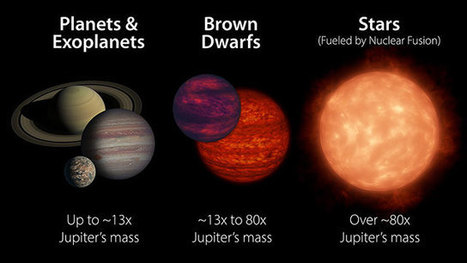
Not quite planets and not quite stars, brown dwarfs are cosmic in-betweeners. Learning about their atmospheres could help us understand giant planets around other stars. For the first time, scientists have directly measured wind speed on a brown dwarf, an object larger than Jupiter (the largest planet in our solar system) but not quite massive enough to become a star. To achieve the finding, they used a new method that could also be applied to learn about the atmospheres of gas-dominated planets outside our solar system. Described in a paper in the journal Science, the work combines observations by a group of radio telescopes with data from NASA's recently retired infrared observatory, the Spitzer Space Telescope, managed by the agency's Jet Propulsion Laboratory in Southern California. Officially named 2MASS J10475385+2124234, the target of the new study was a brown dwarf located 32 light-years from Earth - a stone's throw away, cosmically speaking. The researchers detected winds moving around the planet at 1,425 mph (2,293 kph). For comparison, Neptune's atmosphere features the fastest winds in the solar system, which whip through at more than 1,200 mph (about 2,000 kph).
|
|
Scooped by
Dr. Stefan Gruenwald
April 8, 2020 11:37 AM
|
The treatment uses the blood sera from recovered COVID-19 patients to treat those who are critically ill or to boost immunity for those at high risk of contracting the disease. The U.S. Food and Drug Administration approved a clinical trial Friday that will allow Johns Hopkins University researchers to test a therapy for COVID-19 that uses plasma from recovering patients. Arturo Casadevall, a Johns Hopkins infectious disease expert, proposed the use of convalescent plasma to treat critically ill COVID-19 patients and to boost the immune systems of health care providers and first responders. He assembled a team of physicians and scientists from around the United States to establish a network of hospitals and blood banks that can collect, isolate, and process blood plasma from COVID-19 survivors. "The ability to carry out a prophylaxis trial will tell us whether plasma is effective in protecting our health care workers and first responders from COVID-19," said Casadevall, a Bloomberg Distinguished Professor who holds joint appointments in the Johns Hopkins Bloomberg School of Public Health and the Johns Hopkins School of Medicine. The strategy of isolating plasma is a long-established technology and recent advances make it as safe as a blood transfusion. The FDA's approval allows the team of researchers to begin testing the technique's effectiveness in boosting the immune systems of health care providers, first responders, and others at high risk of exposure to SARS-CoV-2, the virus that causes COVID-19. Currently there are no proven drug therapies or effective vaccines for treating the disease. Casadevall and his team believe using plasma from recovered patients could provide immediate immunity to the most at-risk individuals.
|
|
Scooped by
Dr. Stefan Gruenwald
April 7, 2020 8:05 PM
|
Some 484 million miles from coronavirus-beleaguered Earth lies the gas giant Jupiter, and its stormy, magnificent atmosphere. One of the latest images NASA's Juno spacecraft sent back to Earth shows a view of the planet's churning northern region. Juno captured it on Feb. 17, during a "close" swing by Jupiter — which means Juno was some 15,610 miles above these clouds. Of particular interest amid the swirling clouds and spinning storms are the thin, hazy bands, which run from top to bottom in the image. They are atmospheric particles floating above Jupiter's famous, tumultuous clouds. "Scientists don't yet know exactly what these hazes are made of or how they form," writes NASA. A full suite Juno's imagery of Jupiter — "the king of planets" — can be found here.
|
|
Scooped by
Dr. Stefan Gruenwald
April 7, 2020 7:28 PM
|
Researchers use a ferroelectric glass electrolyte within an electrochemical cell to create batteries. A new type of battery combines negative capacitance and negative resistance within the same cell, allowing the cell to self-charge without losing energy, which has important implications for long-term storage and improved output power for batteries. These batteries can be used in extremely low-frequency communications and in devices such as blinking lights, electronic beepers, voltage-controlled oscillators, inverters, switching power supplies, digital converters and function generators, and eventually for technologies related to modern computers. In Applied Physics Reviews, from AIP Publishing, Helena Braga and colleagues at the University of Porto in Portugal and the University of Texas at Austin, report making their very simple battery with two different metals, as electrodes and a lithium or sodium glass electrolyte between them. “The glass electrolyte we developed was lithium-rich, and so I thought that we could make a battery in which the electrolyte would feed both electrodes with lithium ions, on charge and discharge with no need for lithium metal,” said Braga. This work is significant, because it unifies the theory behind all solid-state devices – such as batteries, capacitors, photovoltaics and transistors – where the different materials in electrical contact exhibit the properties of the combined material instead of those of the individual materials. “When one of the materials is an insulator or dielectric, such as an electrolyte, it will locally change its composition to form capacitors that can store energy and align the Fermi levels within the device,” said Braga. In a battery, the open circuit potential difference between electrodes is due to an electrical need to align the Fermi levels, a measure of the energy of the least tightly held electrons within a solid, which is also responsible for the polarity of the electrodes. The chemical reactions come later and are fed by this electrical potential energy stored in the capacitors.“Our electrochemical cells, which in principle are simpler than batteries, are all about self-organization, which is the substance of life,” Braga said. To contribute to a more sustainable world, self-cycling can be stopped or mitigated by not allowing a leap in the Fermi levels or by configuring a negative resistance to happen. “This can be obtained by having the negative electrode of the same material as the positive ions of the electrolyte,” said Braga. “It gives rise to a device that self-charges without self-cycling – increasing the energy stored in it – as opposed to the natural degradation of the electrochemical process that makes the energy stored decrease by dissipation of heat. The latter has applications in all energy storage devices, such as batteries and capacitors, and can substantially improve their autonomy.”
|
|
Scooped by
Dr. Stefan Gruenwald
April 7, 2020 12:10 PM
|
Apeiron Biologics has secured approvals from regulatory agencies in Austria, Germany and Denmark to conduct a Phase II clinical trial of APN01 for the treatment of Covid-19. APN01 is the recombinant version of the human angiotensin-converting enzyme 2 (rhACE2) with a dual mechanism of action. The protein drug candidate is designed to imitate human ACE2 used by the virus to enter host cells. It is believed to possess the potential to inhibit the Covid-19 infection and reduce lung injury. The inhibition is expected to be possible as the virus attaches to soluble ACE2/APN01, rather than ACE2 on the cell surface, making the virus incapable of further infecting the cells. In addition, the drug candidate mitigates the harmful inflammatory reactions in the lungs and protects against acute lung injury (ALI)/acute respiratory distress syndrome (ARDS). Apeiron Biologics CEO Peter Llewellyn-Davies said: “Based on its unique dual mechanism of action, APN01 has the potential to be the first drug approved to treat Covid-19 that specifically targets the new SARS-CoV-2 virus. “We look forward to dosing the first patient in our Phase II trial shortly,with the goal of providing a safe and effective treatment option for severely infected COVID-19 patients in urgent need of help.” The randomized, double-blind Phase II trial will assess APN01 compared to placebo in up to 200 patients at ten sites in Austria, Denmark and Germany. Primary objective is safety and clinical efficacy of APN01 in severe Covid-19 patients who require invasive mechanical ventilation. The trial’s secondary objectives include measurable biological biomarker changes.
|