Your new post is loading...

|
Scooped by
Dr. Stefan Gruenwald
February 8, 2012 10:44 AM
|
Steve Vogt is the UC Santa Cruz astrophysicist who discovered Zarmina, the first recorded Earthlike planet outside our solar system. He told io9 what a human colony there would be like, and why he believes the planet already harbors life.
|
|
Scooped by
Dr. Stefan Gruenwald
February 6, 2012 4:46 PM
|
Enough solar energy strikes the earth in one hour to power our civilization for a year, and futurists like Ray Kurzweil see us moving to an all-solar civilization in the span of a single human lifetime. Leaves are the ultimate solar panel. If we're going to power more of the world with the sun, we're going to need to imitate plants, one way or another. There are a number of competing visions for how a solar leaf will work and what it might be made from. Daniel Nocera at MIT is working on a combination of catalysts that use sunlight to--like a leaf--directly convert water into hydrogen. Another group of MIT researchers have successfully printed solar cells onto paper, conjuring visions of a future in which solar cells are as cheap as the morning paper.
|
|
Scooped by
Dr. Stefan Gruenwald
February 6, 2012 1:10 PM
|
Humanity’s advances to date have been accompanied by great leaps in the density, diversity, and virtuality of our societies, and in the miniaturization and efficiency of our technologies. Among these and other variables determining social progress, two stand out as particularly special. The more our intelligence gains access to “Inner Space,” both to the domain of very small size scales (“Physical Inner Space”), and to the domain of very powerful brain-based and computer-based simulations (“Virtual Inner Space”) the faster we learn to generate major new economic, social, and adaptation benefits for civilization. This “race to Inner Space” may turn out to be the dominant developmental trend for our species.
|
|
Rescooped by
Dr. Stefan Gruenwald
from Singularity Scoops
February 5, 2012 11:10 PM
|
|
|
Rescooped by
Dr. Stefan Gruenwald
from Singularity Scoops
February 5, 2012 11:09 PM
|
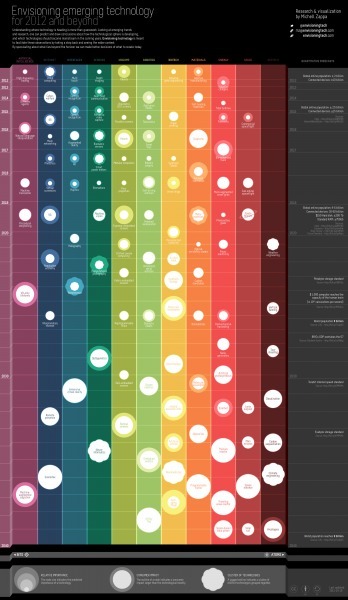
1. Energy Revolution - Mass produced fission, fusion, and maybe cold fusion
2. Memristors and other significant computing and electronic improvements.
3. Robotics
4. Urbanization Broad Group skyscrapers, Tata flat packed buildings
5. Space
6. Supersmartphones, exoskeletons and wearable systems
7. Hyperbroadband
8. Energy Efficiency - superconductors, thermoelectrics, improved grid
9. Additive manufacturing
10. Not so mundane - neuromorphic chips, quantum computers, photonics
11. Automated transportation (leading to robotic cars and planes)
12. Supermaterials
13. Improve medicine and public health
14. Synthetic biology and recombineering
15. Sensors everywhere
16. Education transformed and accelerated innovation Further reading: http://siliconangle.com/blog/2012/01/13/see-the-future-through-big-data/
Via Frederic Emam-Zade Gerardino
|
|
Rescooped by
Dr. Stefan Gruenwald
from Singularity Scoops
February 5, 2012 9:59 PM
|
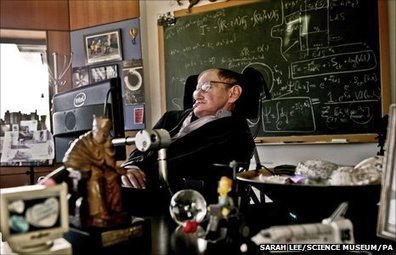
To mark his 70th birthday, physicist Professor Stephen Hawking answered a selection of questions from listeners to Radio 4's Today Programme. Topics ranged from the origins of the universe to the prospects for extra terrestrial life and the impact on Einstein's theory of relativity should neutrinos be confirmed to travel faster than light.
Via Frederic Emam-Zade Gerardino
|
|
Scooped by
Dr. Stefan Gruenwald
February 5, 2012 12:12 PM
|
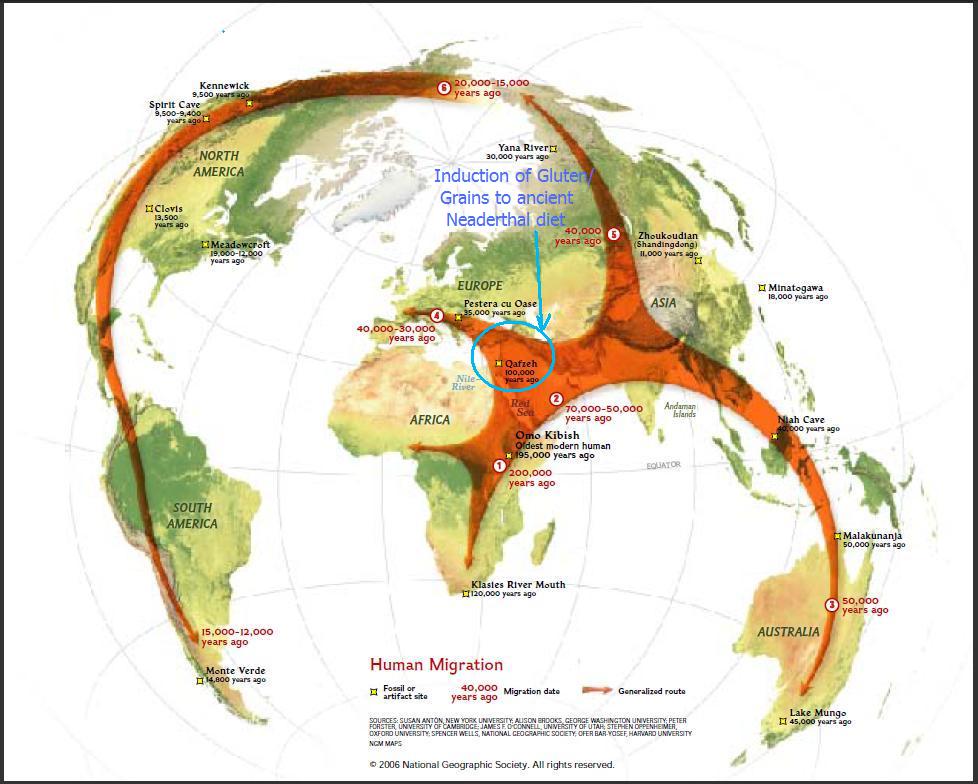
Where do you really come from? And how did you get to where you live today? DNA studies suggest that all humans today descend from a group of African ancestors who—about 60,000 years ago—began a remarkable journey. The Genographic Project (http://genographic.nationalgeographic.com) is seeking to chart new knowledge about the migratory history of the human species by using sophisticated laboratory and computer analysis of DNA contributed by hundreds of thousands of people from around the world. In this unprecedented and of real-time research effort, the Genographic Project is closing the gaps of what science knows today about humankind's ancient migration stories.
|
|
Scooped by
Dr. Stefan Gruenwald
February 5, 2012 12:02 PM
|
Viruses are the smallest living things known to science, and yet they hold the entire planet in their sway. We’re most familiar with the viruses that give us colds or the flu, but viruses also cause a vast range of other diseases, including one disorder that makes people sprout branch-like growths as if they were trees. Viruses have been a part of our lives for so long, in fact, that we are actually part virus: the human genome contains more DNA from viruses than our own genes. Meanwhile, scientists are discovering viruses everywhere they look: in the soil, in the ocean, even in deep caves miles underground. The world’s oceans alone are home to an astonishing 1,000,000,000,000,000,000,000,000,000,000 viruses
|
|
Scooped by
Dr. Stefan Gruenwald
February 5, 2012 11:49 AM
|
In many ways, life is like a computer. An organism's genome is the software that tells the cellular and molecular machinery—the hardware—what to do. But instead of electronic circuitry, life relies on biochemical circuitry—complex networks of reactions and pathways that enable organisms to function. Now, researchers at the California Institute of Technology (Caltech) have built the most complex biochemical circuit ever created from scratch, made with DNA-based devices in a test tube that are analogous to the electronic transistors on a computer chip. NEW LINK
|
|
Scooped by
Dr. Stefan Gruenwald
February 5, 2012 12:14 PM
|
IBM Research (NYSE: IBM) scientists, in collaboration with the Center for Probing the Nanoscale at Stanford University, have demonstrated magnetic resonance imaging (MRI) with volume resolution 100 million times finer than conventional MRI. By extending MRI to such fine resolution, the scientists have created a microscope that, with further development, may ultimately be powerful enough to unravel the structure and interactions of proteins, paving the way for new advances in personalized healthcare and targeted medicine. This achievement stands to impact the study of materials – from proteins to integrated circuits – for which a detailed understanding of atomic structure is essential.
|
|
Scooped by
Dr. Stefan Gruenwald
February 5, 2012 11:14 AM
|
Bacteria found on the bottom of the Arctic Ocean might have the longest life-cycle on Earth, surviving for as much as 100 million years in hibernation while waiting for the ice to thaw enough for them to be viable again.
|
|
Scooped by
Dr. Stefan Gruenwald
February 5, 2012 11:13 AM
|
University of Illinois engineers developed a pen with conductive silver ink that can write electric circuits and interconnects directly on paper and other surfaces. The pen may have bested the sword long ago, but now it's challenging wires and soldering irons.
|
|
Scooped by
Dr. Stefan Gruenwald
February 5, 2012 10:40 AM
|
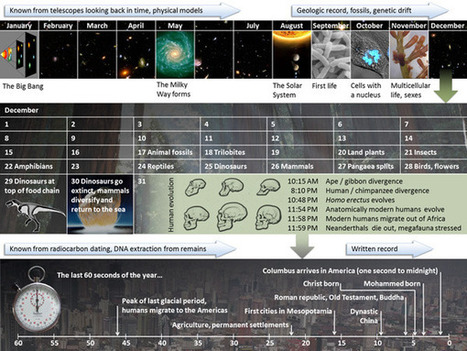
Why does the universe exist? For that matter, why do people? Can you even be sure that you do? 13.7 billion years ago, the universe was born in a cosmic fireball. Roughly 10 billion years later, the planet we call Earth gave birth to life, which eventually led to you. The probability of that sequence of events is absolutely minuscule, and yet it still happened.
|
|
|
Scooped by
Dr. Stefan Gruenwald
February 7, 2012 2:32 PM
|
Described as a “knowledge collider,” and now with a pledge of one billion euros from the European Union, the Living Earth Simulator is a new big data and supercomputing project that will attempt to uncover the underlying sociological and psychological laws that underpin human civilization. In the same way that CERN’s Large Hadron Collider smashes together protons to see what happens, the Living Earth Simulator (LES) will gather knowledge from a Planetary Nervous System (PNS — yes, really) to try to predict societal fluctuations such as political unrest, economic bubbles, disease epidemics, and so on. Orchestrated by FuturICT, which is basically a consortium of preeminent scientists, computer science centers around the world, and high-power computing (HPC) installations, the Living Earth Simulator hopes to correlate huge amounts of data — including real-time sources such as Twitter and web news — and extant, but separate approaches currently being used by other institutions, into a big melting pot of information. To put it into scientific terms, the LES will analyze techno-socio-economic-environmental (!) systems. From this, FuturICT hopes to reveal the tacit agreements and hidden laws that actually govern society, rather than the explicit, far-removed-from-reality bills and acts that lawmakers inexorably enact.
|
|
Scooped by
Dr. Stefan Gruenwald
February 6, 2012 3:29 PM
|
An 83 year-old woman in Belgium had a severely infected jawbone, and researchers and doctors were able to replace it with the world's first 3D printed jaw. 3D printing is an innovative process that allows engineers to essentially spray layers of a material (a plastic or metal for instance) on top of each other in order to create a solid 3D form. 3D printing has allowed engineers to make beautiful art pieces, airplanes and food replacements but until now they’ve not been able to create a bone replacement that was ready to be tested in an actual person — though research is underway at many institutes using a plethora of materials.
|
|
Rescooped by
Dr. Stefan Gruenwald
from Singularity Scoops
February 6, 2012 1:05 PM
|
|
|
Rescooped by
Dr. Stefan Gruenwald
from Singularity Scoops
February 6, 2012 11:48 AM
|
In its "5 in 5" forecast, IBM predicts the power to control things with thoughts will be common in five years.
Via Frederic Emam-Zade Gerardino
|
|
Rescooped by
Dr. Stefan Gruenwald
from Singularity Scoops
February 5, 2012 10:59 PM
|
|
|
Rescooped by
Dr. Stefan Gruenwald
from Singularity Scoops
February 5, 2012 10:48 PM
|
2011 was an amazing year of accelerating developments in science and technology. These articles offer a good summary. - Ed.
Via Frederic Emam-Zade Gerardino
|
|
Scooped by
Dr. Stefan Gruenwald
February 5, 2012 12:06 PM
|
A massive database cataloging the human genome's functional elements -- including genes, RNA transcripts, and other products -- is being made available as an open resource to the scientific community, classrooms, science writers, and the public, thanks to an international team of researchers.
|
|
Scooped by
Dr. Stefan Gruenwald
February 5, 2012 11:59 AM
|
Myostatin (also known as growth differentiation factor 8 or GDF8) is a secreted TGF beta protein family member that inhibits muscle differentiation and growth. Myostatin is produced primarily in skeletal muscle cells, circulates in the blood and acts on muscle tissue, by binding a cell-bound receptor called the activin type II receptor. Animals lacking myostatin or animals treated with substances such as follistatin that block the binding of myostatin to its receptor have significantly larger muscles. Thus, reduction of myostatin could potentially benefit the livestock industry, with even a 20 percent reduction in myostatin levels potentially having a large effect on the development of muscles.
|
|
Scooped by
Dr. Stefan Gruenwald
February 5, 2012 11:30 AM
|
Lockheed Martin Corporation has agreed to purchase the first D-Wave One quantum computing system from D-Wave Systems Inc. (http://www.dwavesys.com). Lockheed Martin plans to use this “quantum annealing processor” for some of Lockheed Martin’s “most challenging computation problems.” D-wave press releases: http://tinyurl.com/3bharqo
|
|
Scooped by
Dr. Stefan Gruenwald
February 5, 2012 11:20 AM
|
While genes partly shape how our body ages, environmental influences change our DNA as we age - methylation patterns shift as we grow older and contribute to aging-related disease. Using saliva samples contributed by 34 pairs of identical male twins between the ages of 21 and 55, UCLA researchers scoured the men's genomes and identified 88 sites on the DNA that strongly correlated methylation to age. They replicated their findings in a general population of 31 men and 29 women between the ages of 18 and 70.
|
|
Scooped by
Dr. Stefan Gruenwald
February 5, 2012 11:10 AM
|
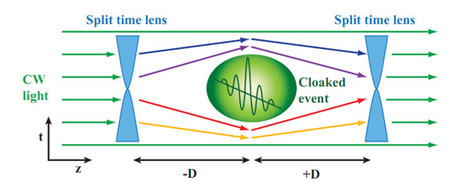
Moti Fridman and his colleagues at Cornell University in Ithaca, go one step further. They designed and built a cloak that hides events in time. Time cloaking is possible because of a kind of duality between space and time in electromagnetic theory. In particular, the diffraction of a beam of light in space is mathematically equivalent to the temporal propagation of light through a dispersive medium. In other words, diffraction and dispersion are symmetric in spacetime.
|
|
Scooped by
Dr. Stefan Gruenwald
February 5, 2012 12:19 PM
|
Albinism (from Latin albus, white) is a form of hypopigmentary congenital disorder, characterized by a partial lack or total absence of melanin pigment in the eyes, skin and hair, or more rarely in the eyes alone. Due to this, animals (and humans too) are unusually pale. The eyes of an animal with albinism occasionally appear red because of the underlying retinal blood vessels showing through where there is not enough pigment to cover them.
|