Your new post is loading...

|
Scooped by
Dr. Stefan Gruenwald
August 19, 2020 1:26 PM
|
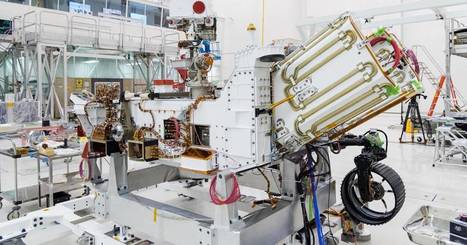
NASA new Mars rover, Perseverance, is on a mission to search for signs of ancient life on the Red Planet. It’s the agency’s largest and most autonomous Martian explorer yet. It’s also the first to be powered entirely with American plutonium.
At the heart of Perseverance is a small “nuclear battery” the size of a beer keg called a radioisotope thermoelectric generator, or RTG. Unlike the nuclear reactors that create electricity on Earth, RTGs don’t have to initiate or sustain a fission reaction to generate power. They don’t even have any moving parts. Instead, they passively harvest the natural heat produced by the decay of plutonium-238 and convert it into electricity. They can reliably provide energy and heat to a spacecraft for decades—the two plutonium-powered Voyager probes launched in the late 1970s are still transmitting from interstellar space—and have been NASA’s go-to power source for more than two dozen deep-space missions.
“Plutonium-238 is a unique isotope of plutonium that principally decays by alpha radiation, and because of that, it generates a lot of heat,” says Robert Wham, the plutonium supply program manager at Oak Ridge National Laboratory, which is now responsible for making the stuff for NASA. “For a small spacecraft like Perseverance, you don’t want fission power. You just want thermal decay.”
Perseverance is only the second Mars rover to use nuclear power as its main source of electrical energy. The agency’s first three rovers—Sojourner, Spirit, and Opportunity—all used solar power, but this meant they ran the risk of losing power completely when enough dust accumulated on the panels. Starting with Curiosity, which arrived on the Red Planet in 2012, NASA engineers switched to nuclear power as the rover’s main source of energy. It was a bold choice considering that, at the time, the US stockpile of nuclear fuel for space missions was dwindling and there wasn’t a single facility in the US capable of making more.
Plutonium-238 is handled in a hot cell at the Radioisotope Engineering Development Center at ORNL Plutonium-238 isn’t used in nuclear weapons (that’s its sister isotope, plutonium-239). But as the Cold War wound down in the late 1980s, the US stopped manufacturing all flavors of plutonium to comply with disarmament protocols. “Most of the plutonium-238 was from the Savannah River Site, which at the time was a defense facility rather than a national lab,” says Wham, referring to the South Carolina site that formerly produced most of the materials for US nuclear weapons. Today, the Savannah River Site is one of the most contaminated places on the planet, unfortunately, due to the nuclear waste buried on the premises from these activities.
When the US got out of the plutonium business, it left NASA with a cache of a few dozen kilograms of plutonium-238 to ration for all future missions. It wasn’t much; the Perseverance rover alone uses nearly 5 kilograms of plutonium. At some point, this stockpile was bound to run out; a 2009 report by the National Academy of Sciences predicted that the US had only enough plutonium for a few more deep-space missions. That left the US with a few unpalatable options: Abandon exploration of the outer solar system, purchase plutonium from abroad, or start making it again domestically.
|
|
Scooped by
Dr. Stefan Gruenwald
August 19, 2020 1:16 PM
|
When a massive star reaches the end of its life, it can explode in a process known as a supernova. The massive star – much more massive than our sun – runs out of fuel in its core. Gravity forces the core to collapse on itself, causing a shockwave to form and spew stellar material into space. Metals, along with heavy elements such as carbon, are expelled into the universe. Ninety-nine percent of the star’s energy, however, is released in the form of neutrinos, small chargeless particles that barely interact with the matter surrounding them. When some of them arrive on Earth, they arrive in three flavors – electron, muon and tau – in a burst a few tens of seconds long. Along with the fact they rarely interact with matter, each of these neutrinos contains only a relatively small amount of energy, which makes them even harder to observe on Earth. Scientists have observed supernova neutrinos one time, in 1987. About two dozen neutrinos interacted in several particle detectors located across the globe, and those neutrinos gave us insight into the life cycle of massive stars and how they die. However, two dozen neutrinos aren’t enough to tell us everything about how supernovae occur. Dozens of different theories and models exist to describe the supernova explosion process. To fully describe it, we need to observe more neutrinos from core-collapse supernovae. DUNE scientists will study streams of neutrinos emitted by exploding stars. DUNE’s unique strength is its sensitivity to a particular type of neutrino called the electron neutrino, which will provide scientists with supernova data not available from any other experiment. Enter the international Deep Underground Neutrino Experiment, hosted by Fermilab. DUNE will study neutrino properties and look for new physics, along with waiting for supernova neutrinos to arrive. The experiment will comprise two particle detectors – a “near detector” at Fermilab and a “far detector” located 1,300 kilometers away at the Sanford Underground Research Facility in South Dakota. The far detector is where most of the supernova neutrinos would be detected. The detector’s massive size – 70,000 tons of liquid argon – along with its impressive sensitivity means that thousands of neutrinos could be observed during the next supernova in our galaxy. The DUNE collaboration has published a paper about DUNE’s capability for performing supernova physics. The paper discusses what kind of activity DUNE scientists expect to see in their detectors during a supernova burst, how DUNE will know once a supernova occurs, and what results DUNE will be able to extract from the supernova neutrinos. DUNE will be sensitive primarily to the electron flavor component of the neutrinos — a new type to add to our collection of supernova neutrino data, which so far is made up only of 1987’s sample of antielectron neutrinos. This sensitivity to electron neutrinos sets DUNE apart from other experiments; it is the only experiment in the world that will provide a precise measurement of the electron flavor. When the supernova neutrinos and argon atoms interact, the protons and neutrons making up the argon atom can be elevated to a higher-energy state. The argon atom then de-excites, and a variety of particles can be emitted as a result. These include gamma rays, neutrons and protons, all of which could leave signals in the DUNE detector. The primary signatures DUNE will look for come from electrons emitted in the interaction. Both the short electron tracks and secondary particles (even shorter “blips”) make up the dominant supernova signals in DUNE. The neutrinos will leave the exploding star as the core collapse is ongoing. DUNE should be able to distinguish between different stages of the supernova burst because of the different interactions and signals it leaves behind. This can help place constraints on the supernova flux – the number of neutrinos leaving the supernova per second – and the explosion mechanism. Different supernova flux models will produce different numbers of neutrino interactions and signals in the DUNE detector. For one particular flux model, called the pinched-thermal model, several parameters control the neutrino energies and number of interactions expected. The paper describes the development of a method that measures the flux model parameters from the expected DUNE supernova signal. DUNE’s signal can be affected by the detector’s particular characteristics, detector thresholds and input models. Those uncertainties must be taken into account for the most accurate measure of the flux parameters.
|
|
Scooped by
Dr. Stefan Gruenwald
August 18, 2020 12:26 PM
|
For the first time ever, scientists have witnessed the interaction of a new phase of matter known as ”time crystals”. The discovery, published in Nature Materials, may lead to applications in quantum information processing because time crystals automatically remain intact – coherent – in varying conditions. Protecting coherence is the main difficulty hindering the development of powerful quantum computers. Dr Samuli Autti, lead author from Lancaster University, said: “Controlling the interaction of two time crystals is a major achievement. Before this, nobody had observed two time crystals in the same system, let alone seen them interact. Controlled interactions are the number one item on the wish list of anyone looking to harness a time crystal for practical applications, such as quantum information processing.” Time crystals are different from a standard crystal – like metals or rocks - which is composed of atoms arranged in a regularly repeating pattern in space. First theorized in 2012 by Nobel Laureate Frank Wilczek and identified in 2016, time crystals exhibit the bizarre property of being in constant, repeating motion in time despite no external input. Their atoms are constantly oscillating, spinning, or moving first in one direction, and then the other. An international team of researchers from Lancaster, Yale, Royal Holloway London, and Aalto University in Helsinki observed time crystals by using Helium-3 which is a rare isotope of helium with one missing neutron. The experiment was carried out in Aalto University. They cooled superfluid helium-3 to within one ten thousandth of a degree from absolute zero (0.0001K or -273.15°C). The researchers then created two time crystals inside the superfluid, and allowed them to touch. The scientists observed the two time crystals interacting and exchanging constituent particles flowing from one time crystal to the other one, and back – a phenomenon known as the Josephson effect. Time crystals have great potential for practical applications. They could be used to improve current atomic clock technology - complex timepieces that keep the most accurate time that we can possibly achieve. They could also improve technology such as gyroscopes, and systems that rely on atomic clocks, such as GPS.
|
|
Scooped by
Dr. Stefan Gruenwald
August 18, 2020 12:19 PM
|
A new blood test demonstrated remarkable promise in discriminating between persons with and without Alzheimer’s disease and in persons at known genetic risk may be able to detect the disease as early as 20 years before the onset of cognitive impairment, according to a large international study published today in the Journal of the American Medical Association (JAMA) and simultaneously presented at the Alzheimer’s Association International Conference. For many years, the diagnosis of Alzheimer’s has been based on the characterization of amyloid plaques and tau tangles in the brain, typically after a person dies. An inexpensive and widely available blood test for the presence of plaques and tangles would have a profound impact on Alzheimer’s research and care. According to the new study, measurements of phospho-tau217 (p-tau217), one of the tau proteins found in tangles, could provide a relatively sensitive and accurate indicator of both plaques and tangles—corresponding to the diagnosis of Alzheimer’s—in living people. “The p-tau217 blood test has great promise in the diagnosis, early detection, and study of Alzheimer’s,” said Oskar Hansson, MD, PhD, Professor of Clinical Memory Research at Lund University, Sweden, who leads the Swedish BioFINDER Study and senior author on the study who spearheaded the international collaborative effort. “While more work is needed to optimize the assay and test it in other people before it becomes available in the clinic, the blood test might become especially useful to improve the recognition, diagnosis, and care of people in the primary care setting.” Researchers evaluated a new p-tau217 blood test in 1,402 cognitively impaired and unimpaired research participants from well-known studies in Arizona, Sweden, and Colombia. The study, which was coordinated from Lund University in Sweden, included 81 Arizona participants in Banner Sun Health Research Institute’s Brain Donation program who had clinical assessments and provided blood samples in their last years of life and then had neuropathological assessments after they died; 699 participants in the Swedish BioFINDER Study who had clinical, brain imaging, cerebrospinal fluid (CSF), and blood-based biomarker assessments; and 522 Colombian autosomal dominant Alzheimer’s disease (ADAD)-causing mutation carriers and non-carriers from the world’s largest ADAD cohort.
|
|
Scooped by
Dr. Stefan Gruenwald
August 17, 2020 7:23 PM
|
Paper by Oxford University physicist Subir Sarkar and his colleagues challenges how conclusions about cosmic acceleration and dark energy were reached. Physicists who proved cosmic acceleration shared a Nobel Prize. Sarkar used statistical analysis to question key data, but his methodology also has has detractors. Is our Universe's expansion speeding up? The 2011 Nobel Prize went to three scientists for proving just that. But what if the evidence they used to come up with this conclusion was wrongly interpreted and the supposed cosmic acceleration is simply an artifact of our movement through a local part of the Universe? In the big picture, there's no speeding up. What's also not there is the mysterious dark energy, thought to be creating that acceleration, says a new paper from a group of physicists who take issue with the supernovae-related evidence that was used to come up with the original Nobel-worthy conclusion. The Nobel Prize for the cosmic acceleration idea, if you're wondering, was won by Saul Perlmutter, Brian Schmidt, and Adam Riess for "for the discovery of the accelerating expansion of the Universe through observations of distant supernovae". They used evidence from exploded stars called "la supernovae" or "standard candles" to show that the Universe's expansion was getting faster. These kinds of supernovas are so bright that we actually know their absolute brightness. This fact allows scientists to calculate the distance of these explosions from Earth, while studying the red shift in the light they emit points to the Universe's rate of expansion. In 1998, groups led by Perlmutter and Schmidt found light from 50 supernova to be dimmer than it was supposed to be, leading them to conclude that cosmic expansion was actually accelerating (thanks to dark energy – a yet-to-be-directly-observed enigmatic force that supposedly takes up 68% of all mass-energy in the Universe while causing it to expand). But while the expansion has become accepted as science fact, there have been some who see things differently. Following up on his 2015 paper on this subject, Oxford University physicist Subir Sarkar and his colleagues at the Niels Bohr Institute and the Paris Institute of Astrophysics now published a second study taking issue with the idea of a Universe growing with acceleration. As explained in Physics World, by statistically analyzing a sample of 740 la supernovae in their 2015 paper, Sarkar's team found "only marginal" support for cosmic acceleration with low statistical significance. The difference in their approach was in how they looked at the procedures used to calculate the absolute brightness of supernovae and how their light is absorbed by dust that gets in the way. Now, in the second paper, to be published in Astronomy and Astrophysics, the scientists continue to assail the supernovae evidence and the idea of cosmic acceleration by pointing to anomalies in the red-shift data and how calculations with respect to the Cosmic Microwave Background (CMB) are carried out. "If you look at supernovae in only a small part of the sky, it would look like you had cosmic acceleration," Sarkar says. "But we are saying that it is just a local effect, that we are non-Copernican observers. It has nothing to do with the overall dynamics of the universe and therefore nothing to do with dark energy."
|
|
Scooped by
Dr. Stefan Gruenwald
August 10, 2020 8:39 PM
|
Detailed computer simulations have found that a cosmic contraction can generate features of the universe that we observe today. The standard story of the birth of the cosmos goes something like this: Nearly 14 billion years ago, a tremendous amount of energy materialized as if from nowhere. In a brief moment of rapid expansion, that burst of energy inflated the cosmos like a balloon. The expansion straightened out any large-scale curvature, leading to a geometry that we now describe as flat. Matter also thoroughly mixed together, so that now the cosmos appears largely (though not perfectly) featureless. Here and there, clumps of particles have created galaxies and stars, but these are just minuscule specks on an otherwise unblemished cosmic canvas. That theory, which textbooks call inflation, matches all observations to date and is preferred by most cosmologists. But it has conceptual implications that some find disturbing. In most regions of space-time, the rapid expansion would never stop. As a consequence, inflation can’t help but produce a multiverse — a technicolor existence with an infinite variety of pocket universes, one of which we call home. To critics, inflation predicts everything, which means it ultimately predicts nothing. “Inflation doesn’t work as it was intended to work,” said Paul Steinhardt, an architect of inflation who has become one of its most prominent critics. In recent years, Steinhardt and others have been developing a different story of how our universe came to be. They have revived the idea of a cyclical universe: one that periodically grows and contracts. They hope to replicate the universe that we see — flat and smooth — without the baggage that comes with a bang. To that end, Steinhardt and his collaborators recently teamed up with researchers who specialize in computational models of gravity. They analyzed how a collapsing universe would change its own structure, and they ultimately discovered that contraction can beat inflation at its own game. No matter how bizarre and twisted the universe looked before it contracted, the collapse would efficiently erase a wide range of primordial wrinkles. “It’s very important, what they claim they’ve done,” said Leonardo Senatore, a cosmologist at Stanford University who has analyzed inflation using a similar approach. There are aspects of the work he hasn’t yet had a chance to investigate, he said, but at first glance “it looks like they’ve done it.”
|
|
Scooped by
Dr. Stefan Gruenwald
August 10, 2020 4:46 PM
|
In case you haven’t heard, companies are making meat out of plants. Burgers out of soy and coconut. Fried chicken out of jackfruit. Steaks out of “cooked wheat gluten.” Brands like Impossible Foods and Beyond Meat have expanded into fast food, infiltrating chains like Burger King and Dunkin’ with meatless patties and breakfast sausage. Meat people — that’s animal meat people, meaning ranchers and farmers and their lobbyists — say the competition is welcome. But, in 24 states this year, they have worked to pass legislation to make it illegal for plant-based food to be called meat. The measures’ supporters don’t want vegan or vegetarian food items to be called burgers, steaks or dogs. In Louisiana, Francis Thompson, a Democratic state senator who sponsored a bill banning meat words, said in session that the issue had gone unchecked for far too long. “Broccoli is not rice,” he said. “And certainly tofu burgers are not meat.” Today we are also seeing signs of a race to produce cultured meats along with several other stem cell generated animal products. These biotech startups include: 1. Perfect Foods – Berkeley, California startup focused on animal-free dairy products. 2. Clara Foods – San Francisco-based startup that started as the New Harvest Egg Project and was incubated by IndieBio in 2015. Clara Foods is making egg whites from yeast instead of eggs. 3. Memphis Meats – San Leandro, California startup that made a prototype of a cultured meatball in 2016. 4. Mosa Meat – Maastricht, Netherlands startup that is an outgrowth of Mark Post’s cultured burger, which was tasted in London in 2013. 5. Gelzen – San Francisco-based startup that was incubated by IndieBio in 2015. Gelzen is developing a proprietary protein production platform that uses bacteria and yeast to produce gelatin 6. SuperMeat – Israeli startup that launched an Indiegogo campaign in 2016 to create cultured chicken meat 7. Sothic Bioscience – Cork-based startup incubated by IndieBio in 2015. Sothic Bioscience is building a platform for biosynthetic horseshoe crab blood production. Horseshoe crab blood contains limulus amebocyte lysate (LAL), which is used to validate medical equipment and medication. 8. Gingko Bioworks – Boston-based organism design company culturing fragrances and designing custom microbes. 9. Beyond Meat – Hong Kong based startup focused on plant-based meats. 10. Shojinmeat – Japanese biohacker community developing cultured meat. 11. Muufri – San Francisco-based startup that started as the New Harvest Dairy Project and was incubated by IndieBio in 2014. Muufri is making milk from yeast instead of cows. 12. Afineur – Brooklyn-based startup using biotechnology and smart fermentations to improve the nutritional profile and taste of plant based food, starting with craft coffee. 13. Impossible Foods – California startup developing plant-based meat and dairy products made without animals. In July 2016, Impossible Foods introduced the “Impossible Burger,” a burger that “looks, cooks, smells, sizzles and tastes like conventional ground beef but is made entirely from plants.” 14. Spiber – Japanese-based company decoding the gene responsible for the production of fibroin in spiders and then bioengineering bacteria with recombinant DNA to produce the protein, which they then spin into their artificial silk. 15. Bolt Thread – California-based company creating engineered silk fibers based on proteins found in spider silk that can be produced at commercial scale. Bolt examines the DNA of spiders and then replicates those genetic sequences in other ingredients to create a similar silk fiber. Bolt’s silk is made primarily of sugar, water, salts, and yeast, which combined forms a liquid silk protein. 16. Modern Meadow – Brooklyn-based startup growing collagen, a protein you find in animal skin, to make biofabricated leather. 17. New Harvest – Non-profit research institute dedicated to the field of cellular agriculture, focused on the development of animal-free eggs, milk, meat, and more.
|
|
Scooped by
Dr. Stefan Gruenwald
August 10, 2020 4:34 PM
|
Microbes found themselves buried in the dirt 101.5 million years ago, back before even Tyrannosaurus rex when Earth’s biggest meat-eating dinosaur, called Spinosaurus roamed the planet. Time passed, continents shifted, oceans rose and fell, great apes emerged, and eventually human beings evolved with the curiosity and skills to dig up those ancient cells. And now, in a Japanese lab, researchers have brought the single-celled organisms back to life. Researchers aboard the drill ship JOIDES Resolution collected sediment samples from the bottom of the ocean 10 years ago. The samples came from 328 feet (100 meters) below the 20,000-foot-deep (6,000 m) bottom of the South Pacific Gyre. That's a region of the Pacific Ocean with very few nutrients and little oxygen available for life to survive on, and the researchers were looking for data on how microbes get along in such a remote part of the world. "Our main question was whether life could exist in such a nutrient-limited environment or if this was a lifeless zone," Yuki Morono, a scientist at the Japan Agency for Marine-Earth Science and Technology and lead author of a new paper on the microbes, said in a statement. "And we wanted to know how long the microbes could sustain their life in a near-absence of food. Their results indicate that even cells found in 101.5 million-year-old sediment samples are capable of waking up when oxygen and nutrients become available. "At first, I was very skeptical, but we found that up to 99.1% of the microbes in sediment deposited 101.5 million years ago were still alive and were ready to eat," Morono said. The microbes had ceased all noticeable activity. But when offered nutrients and other necessities of life they became active again. To make sure their sample wasn't contaminated with modern microbes, the researchers cracked open the sediment in a highly sterile environment, selecting the microbial cells present and feeding them nutrients exclusively a tiny tube designed not to allow in contaminants. The cells responded, many of them quickly. They quickly gobbled up nitrogen and carbon. Within 68 days, the total cell count had quadrupled from the original 6,986.
|
|
Scooped by
Dr. Stefan Gruenwald
August 10, 2020 4:17 PM
|
The coronavirus disease 2019 (COVID-19) pandemic, caused by infection with the severe acute respiratory syndrome coronavirus-2 (SARS-CoV-2), is having a deleterious impact on health services and the global economy, highlighting the urgent need for an effective vaccine. Such a vaccine would need to rapidly confer protection after one or two doses and would need to be manufactured using components suitable for scale up. A team of scientists now developed an Alphavirus-derived replicon RNA vaccine candidate, repRNA-CoV2S, encoding the SARS-CoV-2 spike (S) protein. The RNA replicons were formulated with lipid inorganic nanoparticles (LIONs) that were designed to enhance vaccine stability, delivery, and immunogenicity. The researchers could show that a single intramuscular injection of the LION/repRNA-CoV2S vaccine in mice elicited robust production of anti–SARS-CoV-2 S protein IgG antibody isotypes indicative of a type 1 T helper cell response. A prime/boost regimen induced potent T cell responses in mice including antigen-specific responses in the lung and spleen. Prime-only immunization of aged (17 months old) mice induced smaller immune responses compared to young mice, but this difference was abrogated by booster immunization. In non-human primates, prime-only immunization in one intramuscular injection site or prime/boost immunizations in five intramuscular injection sites elicited modest T cell responses and robust antibody responses. The antibody responses persisted for at least 70 days and neutralized SARS-CoV-2 at titers comparable to those in human serum samples collected from individuals convalescing from COVID-19. These data support further development of LION/repRNA-CoV2S as a vaccine candidate for prophylactic protection against SARS-CoV-2 infection.
|
|
Scooped by
Dr. Stefan Gruenwald
August 7, 2020 11:10 AM
|
For most medical professionals, artificial intelligence (AI) will be an accelerant and enabler, not a threat. It would be good business for AI companies as well to help, rather than attempt to replace, medical professionals. It’s no secret that healthcare costs have risen faster than inflation for decades. Some experts estimate that healthcare will account for over 20% of the US GDP by 2025. Meanwhile, doctors are working harder than ever before to treat patients as the U.S. physician shortage continues to grow. Many medical professionals have their schedules packed so tightly that much of the human element which motivated their pursuit of medicine in the first place is reduced. In healthcare, artificial intelligence (AI) can seem intimidating. At the birthday party of a radiologist friend, she gently expressed how she felt her job would be threatened by AI in the coming decade. Yet, for most of the medical profession, AI will be an accelerant and enabler, not a threat. It would be good business for AI companies as well to help, rather than attempt to replace, medical professionals.
|
|
Scooped by
Dr. Stefan Gruenwald
August 3, 2020 11:48 PM
|
Could the Higgs boson still surprise us? Since its discovery in 2012, the ATLAS and CMS Collaborations at CERN have been actively studying the properties of this latest and most mysterious addition to the Standard Model of particle physics. In the Standard Model, the Brout-Englert-Higgs mechanism predicts the Higgs boson will interact with matter particles (quarks and leptons, known as fermions) with a strength proportional to the particle’s mass. It also predicts the Higgs boson will interact with the force carrier particles (W and Z bosons) with a strength proportional to the square of the particle’s mass. Therefore, by measuring the Higgs boson decay and production rates, which depend on the interaction strength to these other particles, ATLAS physicists can perform a fundamental test of the Standard Model. At the European Physical Society Conference on High-Energy Physics (EPS-HEP) in Ghent, Belgium, the ATLAS Collaboration released a new preliminary result searching for Higgs boson decays to a muon and antimuon pair (H → μμ). The new, more sensitive result uses the full Run 2 dataset, analyzing almost twice as many Higgs boson events as the previous ATLAS result (released in 2018, for the ICHEP conference). Both the ATLAS and CMS Collaborations have already observed the Higgs boson decaying to tau lepton – the muon’s heavier cousin, belonging to the third “generation” of fermions. Since muons are much lighter than tau leptons, the Higgs boson decay to a muon pair is expected to occur about 300 times less often than that to a tau-lepton pair. Despite this scarceness, the H → μμ decay offers the best opportunity to measure the Higgs interaction with second-generation fermions at the LHC, providing new insights into the origin of mass for different fermion generations.
|
|
Scooped by
Dr. Stefan Gruenwald
July 29, 2020 11:33 AM
|
A Nature study authored by a global team of scientists and led by Sumit Chanda, Ph.D., professor at Sanford Burnham Prebys Medical Discovery Institute, has identified 21 existing drugs that stop the replication of SARS-CoV-2, the virus that causes COVID-19. The scientists analyzed one of the world’s largest collections of known drugs for their ability to block the replication of SARS-CoV-2, and reported 100 molecules with confirmed antiviral activity in laboratory tests. Of these, 21 drugs were determined to be effective at concentrations that could be safely achieved in patients. Notably, four of these compounds were found to work synergistically with remdesivir, a current standard-of-care treatment for COVID-19. “Remdesivir has proven successful at shortening the recovery time for patients in the hospital, but the drug doesn't work for everyone who receives it. That’s not good enough,” says Chanda, director of the Immunity and Pathogenesis Program at Sanford Burnham Prebys and senior author of the study. “As infection rates continue to rise in America and around the world, the urgency remains to find affordable, effective, and readily available drugs that can complement the use of remdesivir, as well as drugs that could be given prophylactically or at the first sign of infection on an outpatient basis.”
Extensive testing conducted
In the study, the research team performed extensive testing and validation studies, including evaluating the drugs on human lung biopsies that were infected with the virus, evaluating the drugs for synergies with remdesivir, and establishing dose-response relationships between the drugs and antiviral activity. Of the 21 drugs that were effective at blocking viral replication, the scientists found: - 13 have previously entered clinical trials for other indications and are effective at concentrations, or doses, that could potentially be safely achieved in COVID-19 patients.
- Two are already FDA approved: astemizole (allergies), clofazamine (leprosy), and remdesivir has received Emergency Use Authorization from the agency (COVID-19).
- Four worked synergistically with remdesivir, including the chloroquine derivative hanfangchin A (tetrandrine), an antimalarial drug that has reached Phase 3 clinical trials.
|
|
Scooped by
Dr. Stefan Gruenwald
July 27, 2020 11:39 AM
|
Strategic networking is key to career success, and not just for humans. A new study of wild bottlenose dolphins reveals that in early life, dolphins devote more time to building connections that could give them an edge later on. Researchers at Georgetown University and Duke University report that dolphins under age 10 seek out peers and activities that could help them forge bonds and build skills they'll need in adulthood. The results were published July 14 in the journal Behavioral Ecology. The team analyzed nearly 30 years' worth of records for more than 1700 wild bottlenose dolphins in Shark Bay in Western Australia. Since the 1980s, researchers have been taking boats out into this remote bay and noting things like the sex, age and behavior of any dolphins they encountered. For the current study, the team focused on data collected on youngsters from weaning to age 10, looking at who they hung out with and how they spent their time when no adults were around. Around 3 or 4 years old, dolphins leave the protection of their mothers to venture off on their own, living in ever-changing groups that come together, split up and come together again in different combinations. The study revealed that, even though young dolphins flit from group to group as often as every ten minutes throughout the day, they tend to spend more time with a few close friends. These companions aren't just friends because they share the same areas of water and bump into each other more often, the research shows. "These relationships reflect true preferences," said first author Allison Galezo, a biology Ph.D. student in professor Susan Alberts' lab at Duke.
|
|
|
Scooped by
Dr. Stefan Gruenwald
August 19, 2020 1:18 PM
|
A new deepfake art installation reimagines the story of the moon landings, revealing threats to both democracy and history, It has been 50 years since man set foot on the moon - a moment of triumph, technology and staggering engineering. But what if things hadn't gone to plan? At the time of the landing, then US president Richard Nixon had prepared a statement to read in case things went wrong, and astronauts Neil Armstrong or Buzz Aldrin were left stranded on the lunar surface. Decades later, a new art installation has used the latest deepfake technology to reimagine the story of the moon landing. The undelivered speech, written by presidential speechwriter William Safire, was stored in the National Archives and finally made public in 1999 during the 30th anniversary of the Apollo 11 landing. “In Event of Moon Disaster’’, which opened Friday at the International Documentary Festival (IDFA) in Amsterdam, was produced at the MIT Center for Advanced Virtuality and directed by Francesca Panetta, the centre’s creative director, and Halsey Burgund, an MIT research affiliate.
|
|
Scooped by
Dr. Stefan Gruenwald
August 18, 2020 12:34 PM
|
“This is the way the world ends,” said T. S. Elliot in his famous poem, “Not with a bang but a whimper.” These days, scientists consider the heat-death of the universe to be the whimper, but a new theoretical analysis predicts that the cosmos will breathe its final gasp in the form of exploding black dwarfs. Trillions upon trillions of years from now, long after the last stars have fizzled out, the heaviest black dwarfs will start to go supernova, according to new research published in Monthly Notices of the Royal Astronomical Society. Black dwarfs are the frozen remnants of white dwarfs, which themselves are the remnants of low-mass stars. The sole author of the study, astrophysicist Matt Caplan from Illinois State University, says these explosions will be “the last interesting thing to happen in the universe,” as he explained in an ISU press release. The universe could end in any number of ways, but the current best guess is that it’ll continue to expand long after everything inside it has been torn to shreds, including galaxies, solar systems, stars, and even atoms. By the time black dwarfs are set to pop, the universe will be “cold and lifeless,” Caplan wrote in an email to me. “The expansion of the universe will have long since separated all remaining objects by distances so enormous that no light will ever be able to reach from one to another,” he said. “Every object will find itself in a universe completely devoid of anything else in every direction. It will be cold and near absolute zero.” When extant stars go supernova, it’s on account of excess iron in their cores—the result of internal nuclear reactions. The same cannot be said for smaller stars, which eventually burn out and shrink into white dwarfs. According to theory, white dwarfs will eventually lose their luster and freeze in the far future, transitioning into black dwarfs. “Without a heat source, they simply cool off for all eternity, until they turn ‘black’ and no longer shine,” said Caplan. “It’s a bit like taking a hot skillet off the oven—all it can do is cool.” These hypothetical objects would be roughly the size of Earth but with masses approaching that of our Sun. Importantly, nuclear reactions will still occur inside these dense, frozen worlds, but at appreciably slower rates than normal. And as the new study predicts, these reactions will result in a steady buildup of iron, though at cosmologically vast timescales. With this in mind, Caplan crunched the numbers to estimate how long it will take for these black dwarfs to produce enough iron to trigger a supernova explosion.
|
|
Scooped by
Dr. Stefan Gruenwald
August 18, 2020 12:22 PM
|
The extinction of prehistoric megafauna like the woolly mammoth, cave lion, and woolly rhinoceros at the end of the last ice age has often been attributed to the spread of early humans across the globe. Although overhunting led to the demise of some species, a study appearing August 13, 2020 in the journal Current Biology found that the extinction of the woolly rhinoceros may have had a different cause: climate change. By sequencing ancient DNA from 14 of these megaherbivores, researchers found that the woolly rhinoceros population remained stable and diverse until only a few thousand years before it disappeared from Siberia, when temperatures likely rose too high for the cold-adapted species. "It was initially thought that humans appeared in northeastern Siberia fourteen or fifteen thousand years ago, around when the woolly rhinoceros went extinct. But recently, there have been several discoveries of much older human occupation sites, the most famous of which is around thirty thousand years old," says senior author Love Dalén, a professor of evolutionary genetics at the Centre for Palaeogenetics, a joint venture between Stockholm University and the Swedish Museum of Natural History. "So, the decline towards extinction of the woolly rhinoceros doesn't coincide so much with the first appearance of humans in the region. If anything, we actually see something looking a bit like an increase in population size during this period." To learn about the size and stability of the woolly rhinoceros population in Siberia, the researchers studied the DNA from tissue, bone, and hair samples of 14 individuals. "We sequenced a complete nuclear genome to look back in time and estimate population sizes, and we also sequenced fourteen mitochondrial genomes to estimate the female effective population sizes," says co-first author Edana Lord, a PhD student at the Centre for Palaeogenetics. By looking at the heterozygosity, or genetic diversity, of these genomes, the researchers were able to estimate the woolly rhino populations for tens of thousands of years before their extinction. "We examined changes in population size and estimated inbreeding," says co-first author Nicolas Dussex, a postdoctoral researcher at the Centre for Palaeogenetics. "We found that after an increase in population size at the start of a cold period some 29,000 years ago, the woolly rhino population size remained constant and that at this time, inbreeding was low." This stability lasted until well after humans began living in Siberia, contrasting the declines that would be expected if the woolly rhinos went extinct due to hunting. "That's the interesting thing," says Lord. "We actually don't see a decrease in population size after 29,000 years ago. The data we looked at only goes up to 18,500 years ago, which is approximately 4,500 years before their extinction, so it implies that they declined sometime in that gap." The DNA data also revealed genetic mutations that helped the woolly rhinoceros adapt to colder weather. One of these mutations, a type of receptor in the skin for sensing warm and cold temperatures, has also been found in woolly mammoths. Adaptations like this suggest the woolly rhinoceros, which was particularly suited to the frigid northeast Siberian climate, may have declined due to the heat of a brief warming period, known as the Bølling-Allerød interstadial, that coincided with their extinction towards the end of the last ice age.
|
|
Scooped by
Dr. Stefan Gruenwald
August 17, 2020 7:29 PM
|
The dust clouds around supermassive black holes are the perfect breeding ground for an exotic new type of planet. Supermassive black holes are among the most exciting and puzzling objects in the universe. These are the giant, massive bodies that sit at the heart of most, perhaps all, galaxies. Indeed, they may be the seeds from which all galaxies grow. Supermassive black holes are at least a hundred thousand times the mass of our Sun. They are often surrounded by thick clouds of gas that radiate vast amounts of energy. When this happens, they are called active galactic nuclei. Discovering the properties of these clouds, and their curious central residents, is an ongoing exercise for astrophysicists. Now researchers have a new phenomenon to consider — the idea that planets can form in the massive clouds of dust and gas around supermassive black holes. Last year, Keichi Wada at Kagoshima University in Japan, and a couple of colleagues showed that under certain conditions planets ought to form in these clouds. These black hole planets, or blanets as the team call them, would be quite unlike any conventional planet and raise the possibility of an entirely new class of objects for astronomers to dream about. Protoplanetary Disk The generally agreed theory of planet formation is that it occurs in the protoplanetary disk of gas and dust around young stars. When dust particles collide, they stick together to form larger clumps that sweep up more dust as they orbit the star. Eventually, these clumps grow large enough to become planets. Wada and others in his research team say a similar process should occur around supermassive black holes. These are surrounded by huge clouds of dust and gas that bear some similarities to the protoplanetary disks around young stars. As the cloud orbits the black hole, dust particles should collide and stick together forming larger clumps that eventually become blanets. The scale of this process is vast compared to conventional planet formation. Supermassive black holes are huge, at least a hundred thousand times the mass of our Sun. But ice particles can only form where it is cool enough for volatile compounds to condense. This turns out to be around 100 trillion kilometers from the black hole itself, in an orbit that takes about a million years to complete. Birthdays on blanets would be few and far between!
|
|
Scooped by
Dr. Stefan Gruenwald
August 10, 2020 9:18 PM
|
Using a quantum computer to simulate time travel, researchers have demonstrated that, in the quantum realm, there is no “butterfly effect.” In Ray Bradbury’s 1952 science fiction story, “A Sound of Thunder,” a character used a time machine to travel to the deep past, where he stepped on a butterfly. Upon returning to the present time, he found a different world. This story is often credited with coining the term “butterfly effect,” which refers to the extremely high sensitivity of a complex, dynamic system to its initial conditions. In such a system, early, small factors go on to strongly influence the evolution of the entire system. In the research, information—qubits, or quantum bits—“time travel” into the simulated past. One of them is then strongly damaged, like stepping on a butterfly, metaphorically speaking. Surprisingly, when all qubits return to the “present,” they appear largely unaltered, as if reality is self-healing. “On a quantum computer, there is no problem simulating opposite-in-time evolution, or simulating running a process backwards into the past,” said Nikolai Sinitsyn, a theoretical physicist at Los Alamos National Laboratory and coauthor of the paper with Bin Yan, a post doc in the Center for Nonlinear Studies, also at Los Alamos. “So we can actually see what happens with a complex quantum world if we travel back in time, add small damage, and return. We found that our world survives, which means there’s no butterfly effect in quantum mechanics.” Yan and Sinitsyn found that simulating a return to the past to cause small local damage in a quantum system leads to only small, insignificant local damage in the present. This effect has potential applications in information-hiding hardware and testing quantum information devices. Information can be hidden by a computer by converting the initial state into a strongly entangled one. “We found that even if an intruder performs state-damaging measurements on the strongly entangled state, we still can easily recover the useful information because this damage is not magnified by a decoding process,” Yan said. “This justifies talks about creating quantum hardware that will be used to hide information.” This new finding could also be used to test whether a quantum processor is, in fact, working by quantum principles. Since the newfound no-butterfly effect is purely quantum, if a processor runs Yan and Sinitsyn’s system and shows this effect, then it must be a quantum processor. To test the butterfly effect in quantum systems, Yan and Sinitsyn used theory and simulations with the IBM-Q quantum processor to show how a circuit could evolve a complex system by applying quantum gates, with forwards and backwards cause and effect. Presto, a quantum time-machine simulator. In the team’s experiment, Alice, a favorite stand-in agent used for quantum thought experiments, prepares one of her qubits in the present time and runs it backwards through the quantum computer. In the deep past, an intruder – Bob, another favorite stand-in – measures Alice’s qubit. This action disturbs the qubit and destroys all its quantum correlations with the rest of the world. Next, the system is run forward to the present time. According to Ray Bradbury, Bob’s small damage to the state and all those correlations in the past should be quickly magnified during the complex forward-in-time evolution. Hence, Alice should be unable to recover her information at the end. But that’s not what happened. Yan and Sinitsyn found that most of the presently local information was hidden in the deep past in the form of essentially quantum correlations that could not be damaged by minor tampering. They showed that the information returns to Alice’s qubit without much damage despite Bob’s interference. Counterintuitively, for deeper travels to the past and for bigger “worlds,” Alice’s final information returns to her even less damaged. “We found that the notion of chaos in classical physics and in quantum mechanics must be understood differently,” Sinitsyn said. Paper: Bin Yan and Nikolai A. Sinitsyn. Recovery of Damaged Information and the Out-of-Time-Ordered Correlators, Phys. Rev. Lett. 125, 040605 (2020); available online at https://doi.org/10.1103/PhysRevLett.125.040605. Authors: Bin Yan and Nikolai Sinitsyn.
|
|
Scooped by
Dr. Stefan Gruenwald
August 10, 2020 4:55 PM
|
There are a handful of people left on Earth who have been alive in three separate centuries, says Rachel Nuwer. What can they – and those of a similarly extreme age – teach us? Reaching a hundredth birthday is always cause for celebration, but these days there are so many centenarians around that scientists don’t even bother trying to keep track of them all. Indeed, in 2012 the United Nations estimated that there were about 316,600 people over 100 living around the world. By 2050, that number – unbelievably – is expected to rise to over three million. A much more exclusive club, therefore, are the supercentenarians, or people who live to 110 or older. The Gerontology Research Group, a global team headquartered in Los Angeles, maintains the go-to database for keeping track of the oldest among us. Until this week, there were 53 supercentenarians. Sadly, the death of the oldest, Misao Okawa of Japan, was announced on 1 April. She was 117. Okawa was born in 1898, and there are now just four living people – three Americans and one Italian, all women – who were born before 1900. That is, they have lived to see three centuries. You might call these four people “tricenta-centenarians*” if giving their group a name (although language experts may have a better suggestion), and what makes them unique is that the world won’t see another set until 2100. This loss will likely happen in less than a decade, as supercentenarians tend to hold their venerated title only fleetingly. Time’s unrelenting march means there’s a steady turnover of the world’s oldest, causing experts across many fields – biology, history, cultural anthropology – to scramble to learn what they can from these extraordinary people while they are still here. And it’s not only their health secrets that they stand to teach us. The most obvious reason to study the oldest people alive today is for clues to healthy ageing. Supercentenarians often “seem to be born with slower clocks than the rest of us,” says Stuart Kim, a developmental biologist at Stanford University. When supercentenarians are 60, they appear to be 40; when they are 90, they seem about 70. “When you meet them,” Kim says, “they all look and act 20 years younger than they actually are.”
|
|
Scooped by
Dr. Stefan Gruenwald
August 10, 2020 4:38 PM
|
The James Webb Space Telescope will vastly expand our understanding of the cosmos with its gigantic mirror and powerful suite of scientific instruments. However, we’re going to have to wait a bit longer for the breakthroughs to start. NASA has announced yet another delay for the mission. Instead of launching in early 2021, NASA is now targeting October 31, 2021. NASA has been planning the James Webb Space Telescope (JWST) for longer than some people reading this have been alive. The initial design phase began in 1997 with the intention of launching in 2007. Clearly, that did not happen as we’re now 13 years past the launch date, and the telescope is still sitting on Earth. The planned launch has slipped year after year as the cost to produce the instrument has grown by leaps and bounds. Currently, the JWST has cost about $10 billion. It could all pay off when the telescope reaches its station at the Earth-Sun L2 Lagrangian point. The large mirror and sensitive mid-infrared instruments will allow the JWST to see fainter, older objects than Hubble. But the construction process has been devilishly complex, requiring several radical redesigns along the way to ensure the best chance of success. Unlike Hubble, which is in orbit of Earth, the Webb telescope is going to be too far away for a quick repair mission if something goes wrong. Naturally, NASA is testing the JWST in excruciating detail now that the two halves of the spacecraft are connected and all the systems integrated. The team was concerned about the timeline earlier this year as new technical challenges loomed. Last week, the project completed electrical testing, but the team still needs to go over ground systems, vibration and acoustics, and environmental tests. Adding the COVID-19 pandemic on top of that has forced an unavoidable delay. So, that March 2021 launch won’t happen. Instead, NASA has set October 31, 2021 as the target date. Prior to this Halloween launch, the telescope will fold up to fit inside the ESA’s Ariane 5 rocket fairing. Unfolding properly will be the telescope’s first real test. If the mirror doesn’t align correctly or the sunshield gets stuck, the observatory might not function at all. We’ll just have to accept the new delay — rushing this project won’t help. More info:
|
|
Scooped by
Dr. Stefan Gruenwald
August 10, 2020 4:31 PM
|
The collaboration between Oxford-based Reaction Engines and the UK the Science and Technology Facilities Council could see kerosene replaced in the role of jet fuel. - Ammonia burns less easily than kerosene-based fuels and so could be safer
- To be used to power an engine, ammonia needs to be burnt along with hydrogen
- This can be released from ammonia itself by applying heat and a special catalyst
- Heat exchangers and catalytic reactors could be added to a jet with few changes
- The ammonia-based fuel would only produce water vapour and nitrogen waste
Zero-emissions aeroplanes could take to the skies 'within years' thanks to British scientists who are developing technology that will allow them to run on ammonia. Unlike kerosene-based jet fuel, ammonia is less of a fire hazard and burns without releasing the greenhouse gas carbon dioxide that contributes to climate change. In 2008 Virgin Atlantic became the first airline to power a commercial flight using biofuel. The flight, between London's Heathrow and Amsterdam, used a fuel made from a mixture of Brazilian babassu nuts and coconuts which provided 20 per cent of the engine's power. 'This pioneering flight will enable those of us who are serious about reducing our carbon emissions to go on developing the fuels of the future,' said CEO Richard Branson at the time. Many airlines are now looking into incorporate biofuels on commercial flights. In 2011, Alaska Airlines operated 75 flights on a cooking oil blend. In 2014, a Finnish airline used a mix of recycled cooking oil and jet fuel to power a long-distance flight. Finnair said it will be able to reduce its net carbon dioxide emission by 50 to 80 per cent by switching to a more sustainable and environmentally-friendly fuel source. But biofuel is more than twice the price of conventionally produced jet fuel and it is too costly for any airline to operate with it exclusively. In 2017 a Chinese airline boss flew 186 passengers and 15 crew members from Beijing to Chicago with the help of recycled cooking oil. Sun Jianfeng, the President of China's largest private air carrier Hainan Airlines, was the captain of the 11-hour flight which flew across the Pacific recently. Last year, Singapore Airlines also launched their first-ever flight powered by cooking oil. The aircraft was powered by a combination of hydro-processed esters and fatty acids - a sustainable biofuel produced from used cooking oils - and conventional jet fuel. By 2020 Qantas aims to have biofuel-based flights running regularly.
|
|
Scooped by
Dr. Stefan Gruenwald
August 7, 2020 11:20 AM
|
Scientists have used satellite observations to create a set of high-resolution 3D maps of the entire Great Barrier Reef – a critical step towards identifying, managing and protecting what lies beneath the waters. Sitting off the east coast of Australia, the Great Barrier Reef is the world’s largest coral reef system, covering more than 344 000 sq km. The reef’s diversity of life faces numerous threats such as climate change, pollution, fishing and outbreaks of the coral-preying crown-of-thorns starfish. While these coral reefs are ecologically significant, they have proven difficult to map from survey vessels or aircraft owing to their shallow nature and remoteness. The German aquatic remote sensing company EOMAP has used satellites to overcome these hurdles. The result is the largest project of its kind ever conducted in Australia: a high-resolution, 3D map of the entire reef system. To produce the map, the company combined satellite optical imagery with tide information and existing ocean floor topography data. High-resolution optical satellite data are best suited for clear water to depths of 20 m under calm weather conditions. The map will aid ‘big picture’ assessments of the Great Barrier Reef. This includes water quality, measuring responses to man-made and natural effects, and helping to predict the likely impacts of climate change, such as rising sea levels and increasingly frequent tropical cyclone. The map will also help target priority areas for collecting more detailed information. With the vast improvements this promises for modeling ocean currents, scientists can predict crown-of-thorns starfish larval paths to where they are next likely to inhabit the Reef.
|
|
Scooped by
Dr. Stefan Gruenwald
August 4, 2020 12:33 PM
|
Based on ALMA observations and a theoretical follow-up study, scientists suggest that a neutron star might be hiding deep inside the remains of Supernova 1987A. Two teams of astronomers have made a compelling case in the 33-year-old mystery surrounding Supernova 1987A. Based on observations of the Atacama Large Millimeter/submillimeter Array (ALMA) and a theoretical follow-up study, the scientists provide new insight for the argument that a neutron star is hiding deep inside the remains of the exploded star. This would be the youngest neutron star known to date. Ever since astronomers witnessed one of the brightest explosions of a star in the night sky, creating Supernova they have been searching for a compact object that should have formed in the leftovers from the blast. Because particles known as neutrinos were detected on Earth on the day of the explosion (23 February 1987), astronomers expected that a neutron star had formed in the collapsed center of the star. But when scientists could not find any evidence for that star, they started to wonder whether it subsequently collapsed into a black hole instead. For decades the scientific community has been eagerly awaiting a signal from this object that has been hiding behind a very thick cloud of dust. The “blob”
Recently, observations from the ALMA radio telescope provided the first indication of the missing neutron star after the explosion. Extremely high-resolution images revealed a hot “blob” in the dusty core of SN 1987A, which is brighter than its surroundings and matches the suspected location of the neutron star. “We were very surprised to see this warm blob made by a thick cloud of dust in the supernova remnant,” said Mikako Matsuura from Cardiff University and a member of the team that found the blob with ALMA. “There has to be something in the cloud that has heated up the dust and which makes it shine. That’s why we suggested that there is a neutron star hiding inside the dust cloud.” Even though Matsuura and her team were excited about this result, they wondered about the brightness of the blob. “We thought that the neutron star might be too bright to exist, but then Dany Page and his team published a study that indicated that the neutron star can indeed be this bright because it is so very young,” said Matsuura.
|
|
Rescooped by
Dr. Stefan Gruenwald
from Mucosal Immunity
July 29, 2020 11:41 AM
|
Eosinophils are granulocytes, typically implicated as end-stage effector cells in type-II immune responses. They are capable of producing a wide array of pre-formed molecules which render them with vast potential to influence a wide variety of processes. Nonetheless, eosinophil research has traditionally focused on their role in anti-helminthic responses and pathophysiological processes in type-II immune disorders, such as allergy and asthma, where eosinophilia is a hallmark phenotype. However, a number of key studies over the past decade have placed this restricted view of eosinophil function into question, presenting additional evidence for eosinophils as critical regulators of various homeostatic processes including immune maintenance, organ development, and tissue regeneration. Eosinophils develop in the bone marrow from GATA-binding factor 1 (GATA1) positive common granulocyte-monocyte precursor cells, which also give rise to basophils and mast cells. Differentiation into eosinophils is distinguished by the requirement for high GATA1 expression and is largely dependent on various cytokines including the eosinophil-specific factor, IL-5. These cells exit the bone marrow niche into the circulation as mature cells with a relatively short half-life (estimated to be between 3 and 18 h) where they represent <5% of total circulating leukocytes under homeostatic conditions. Eosinophil chemotaxis is primarily dependent on surface expression of C-C chemokine receptor 3 (CCR3), a receptor for eotaxins, which regulates their migration and extravasation into all tissues. Eotaxins include three family members, CCL11/eotaxin-1, CCL24/eotaxin-2, and CCL26/eotaxin3, each exhibiting distinct, albeit overlapping, patterns of tissue expression. The primary sources of eotaxins within tissues are stromal in origin, such as fibroblasts, smooth muscle cells and endothelial cells, but they can also be produced by epithelial cells.
Via Gilbert C FAURE
|
|
Scooped by
Dr. Stefan Gruenwald
July 27, 2020 11:44 AM
|
Scientists at the University of California, Davis, have successfully produced a bull calf, named Cosmo, who was genome-edited as an embryo so that he’ll produce more male offspring. The research was presented in a poster today (July 23) at the American Society of Animal Science meeting. Using the genome-editing technology CRISPR, researchers can make targeted cuts to the genome or insert useful genes, which is called a gene knock-in. Using the genome-editing technology CRISPR, researchers can make targeted cuts to the genome or insert useful genes, which is called a gene knock-in. In this case, scientists successfully inserted or knocked-in the cattle SRY gene, the gene that is responsible for initiating male development, into a bovine embryo. It's the first demonstration of a targeted gene knock-in for large sequences of DNA via embryo-mediated genome editing in cattle. "We anticipate Cosmo's offspring that inherit this SRY gene will grow and look like males, regardless of whether they inherit a Y chromosome," said Alison Van Eenennaam, animal geneticist with the UC Davis Department of Animal Science. MORE MALES, MORE BEEF Van Eenennaam says part of the motivation to produce more male cattle is that male cattle are about 15 percent more efficient at converting feed into weight gain. They are more fuel-efficient than females. Additionally, they tend to be processed at a heavier weight. It could also be a win for the environment, with fewer cattle needed to produce the same amount of beef. "Ranchers could produce some females as replacements and direct a higher proportion of male cattle for market," said Joey Owen, a postdoctoral researcher in animal science who is leading the project with Van Eenennaam. A LONG JOURNEY The SRY gene was inserted into bovine chromosome 17, which is a genomic safe harbor site. That ensures the genetic elements function predictably and don't disrupt the expression or regulation of adjacent genes. Chromosome 17 was chosen after unsuccessful attempts to knock-in the gene on the X chromosome, which would have resulted in a bull that produced only male offspring. Cosmo is expected to produce 75 percent male offspring -- the normal 50 percent XY animals, and another 25percent XX animals that inherit the SRY gene. "It took two and a half years to develop the method to insert a gene into the developing embryo and another two years to successfully establish a pregnancy," said Owen. But in April of 2020, a healthy 110-pound male calf was born. "This has been a real labor of love," said Van Eenennaam.
|