Your new post is loading...

|
Scooped by
Dr. Stefan Gruenwald
March 22, 2022 1:43 PM
|
The count of confirmed exoplanets just ticked past the 5,000 mark, representing a 30-year journey of discovery led by NASA space telescopes. Not so long ago, we lived in a universe with only a small number of known planets, all of them orbiting our Sun. But a new raft of discoveries marks a scientific high point: More than 5,000 planets are now confirmed to exist beyond our solar system. The planetary odometer turned on March 21, 2022, with the latest batch of 65 exoplanets – planets outside our immediate solar family – added to the NASA Exoplanet Archive. The archive records exoplanet discoveries that appear in peer-reviewed, scientific papers, and that have been confirmed using multiple detection methods or by analytical techniques. The 5,000-plus planets found so far include small, rocky worlds like Earth, gas giants many times larger than Jupiter, and “hot Jupiters” in scorchingly close orbits around their stars. There are “super-Earths,” which are possible rocky worlds bigger than our own, and “mini-Neptunes,” smaller versions of our system’s Neptune. Add to the mix planets orbiting two stars at once and planets stubbornly orbiting the collapsed remnants of dead stars. “It’s not just a number,” said Jessie Christiansen, science lead for the archive and a research scientist with the NASA Exoplanet Science Institute at Caltech in Pasadena. “Each one of them is a new world, a brand-new planet. I get excited about every one because we don’t know anything about them.” We do know this: Our galaxy likely holds hundreds of billions of such planets. The steady drumbeat of discovery began in 1992 with strange new worlds orbiting an even stranger star. It was a type of neutron star known as a pulsar, a rapidly spinning stellar corpse that pulses with millisecond bursts of searing radiation. Measuring slight changes in the timing of the pulses allowed scientists to reveal planets in orbit around the pulsar.
|
|
Scooped by
Dr. Stefan Gruenwald
March 15, 2022 1:11 PM
|
We can now decode pigs' emotions. Using thousands of acoustic recordings gathered throughout the lives of pigs, from their births to deaths, an international team of researchers is the first in the world to translate pig grunts into actual emotions across an extended number of conditions and life stages. The research is led by the University of Copenhagen, the ETH Zurich and the France's National Research Institute for Agriculture, Food and Environment (INRAE), and can be used to improve animal welfare in the future. Is a pig grunt worth a thousand words? Perhaps so. In a new study, an international team of researchers from Denmark, Switzerland, France, Germany, Norway and the Czech Republic have translated pig grunts into emotions. The findings have been published recently in Scientific Reports. Using more than 7,000 audio recordings of pigs, the researchers designed an algorithm that can decode whether an individual pig is experiencing a positive emotion ('happy' or 'excited'), a negative one ('scared' or 'stressed') or somewhere in between. The recordings were collected in a wide range of situations encountered by commercial pigs, both positive and negative, from when they are born until their deaths. "With this study, we demonstrate that animal sounds provide great insight into their emotions. We also prove that an algorithm can be used to decode and understand the emotions of pigs, which is an important step towards improved animal welfare for livestock," says Associate Professor Elodie Briefer of the University of Copenhagen's Department of Biology at the University of Copenhagen, who co-led the study. Short grunts are 'happy pig' grunts The researchers recorded pig sounds in both commercial and experimental scenarios, which based on the behavior of the pigs, are either associated with a positive and negative emotion. Positive situations included, for example, those when piglets suckle from their mothers or when they are being united with their family after being separated. The emotionally negative situations included, among others, separation, fights between piglets, castration and slaughter. In experimental stables, the researchers also created various mock scenarios for the pigs, designed to evoke more nuanced emotions in the middle of the spectrum. These included an arena with toys or food and a corresponding arena without any stimuli. The researchers also placed new and unfamiliar objects in the arena for the pigs to interact with. Along the way, the pigs' calls, behavior and heartrates were monitored and recorded when possible. The researchers then analyzed the more than 7000 audio recordings to see if there was a pattern in the sounds as a function of the emotions, and if they could discern the positive situations and emotions from the negative ones. As already revealed in previous research, the researchers collected more high-frequency calls (such as screams and squeals) in negative situations. At the same time, low-frequency calls (such as barks and grunts) occurred both in situations where the pigs experienced positive or negative emotions. The situations between the extremes were particularly interesting. With an even more thorough analysis of the sound files, the researchers found a new pattern that revealed what the pigs experienced in certain situations in even greater detail.
|
|
Scooped by
Dr. Stefan Gruenwald
March 15, 2022 1:04 PM
|
This weekend, an astronomer spotted a small asteroid just hours before the space rock crashed into Earth's atmosphere and met its fiery demise. On Friday (March 11, 2022), astronomer Krisztián Sárneczky was observing the sky at the Piszkésteto Mountain Station, which is part of the Konkoly Observatory near Budapest in Hungary. During his observations, he spotted an asteroid, now dubbed 2022 EB5 by the Minor Planet Center. Scientists estimate that the space rock was about 10 feet (3 meters) wide (no big deal for an asteroid). But the sighting soon got a lot more interesting: Just 30 minutes after the discovery, data showed that the space rock was a mere two hours away from colliding with Earth's atmosphere. This is "probably a once in a lifetime" experience for an "asteroid hunter," Sárneczky told Space.com. Sárneczky has been searching regularly for near-Earth asteroids at Piszkésteto since August 2020, he told Space.com. The asteroid struck Earth's atmosphere just north of Iceland at 5:22 p.m. EST (2222 GMT) on Friday, Earthsky.org reported. Scientists estimated that 2022 EB5 was traveling at about 39,600 miles per hour (66,600 kilometers per hour), slower than Earth's speed in orbit of about 64,800 mph (108,000 km/h). 2022 EB5 looked like "a star-like, fast-moving object shifting against the background stars. Like a normal near-Earth asteroid," Sárneczky said, additionally sharing that this was the 64th near-Earth object he had discovered. Experts believe the space rock burned up in our atmosphere, creating a bright meteor often referred to as a fireball, or shooting star, in the sky. Because of the asteroid's small size, it is highly unlikely that the space rock survived the journey. Most likely, it completely burned up in Earth's atmosphere and at this time, no resulting meteorite has been found. According to amateur astronomer and orbital simulation expert Tony Dunn, the discovery of 2022 EB5 before its collision was a rare event.
|
|
Scooped by
Dr. Stefan Gruenwald
March 14, 2022 5:26 PM
|
Scientists have developed a powerful, inclusive new tool for genomic research that boosts efforts to develop more precise treatments for many diseases by leveraging a better representation of the genetic diversity of people around the world. The new tool will allow researchers to compare natural variations in our genes against genome sequences collected from a diverse group of people. Until now, scientists have compared these variations with a "reference genome" primarily sequenced from a few volunteers (~70% from one person) living near laboratories involved in the Human Genome Project almost 20 years ago. This represented genomes from a small number of people in a small number of countries. The new software tool, called "Giraffe," enables the use of a reference point that is far more diverse and inclusive. Instead of relying on a single reference genome, Giraffe uses a "pangenome" that incorporates information about genome sequences from people around the world. This will give scientists a much more global perspective and help them understand why diseases often strike certain groups disproportionately. "A major advantage of Giraffe is that it enables fast and sensitive comparison of short-read human genome sequences to a pangenome, which is essential for the widespread use of reference graphs that reduce bias in the human genome reference," said researcher Stephen S. Rich, PhD, of the University of Virginia School of Medicine's Center for Public Health Genomics. "Since the current effort in genomics is to move from a European-Caucasian base to a global representation, Giraffe can better define genetic variation in non-white populations and, as a result, have a major impact on precision medicine and application to understanding the genetic risk of disease."
|
|
Scooped by
Dr. Stefan Gruenwald
March 10, 2022 11:22 AM
|
For the first time, MIT neuroscientists have identified a population of neurons in the human brain that lights up when we hear singing, but not other types of music. These neurons, found in the auditory cortex, appear to respond to the specific combination of voice and music, but not to either regular speech or instrumental music. Exactly what they are doing is unknown and will require more work to uncover, the researchers say. "The work provides evidence for relatively fine-grained segregation of function within the auditory cortex, in a way that aligns with an intuitive distinction within music," says Sam Norman-Haignere, a former MIT postdoc who is now an assistant professor of neuroscience at the University of Rochester Medical Center. The work builds on a 2015 study in which the same research team used functional magnetic resonance imaging (fMRI) to identify a population of neurons in the brain's auditory cortex that responds specifically to music. In the new work, the researchers used recordings of electrical activity taken at the surface of the brain, which gave them much more precise information than fMRI. "There's one population of neurons that responds to singing, and then very nearby is another population of neurons that responds broadly to lots of music. At the scale of fMRI, they're so close that you can't disentangle them, but with intracranial recordings, we get additional resolution, and that's what we believe allowed us to pick them apart," says Norman-Haignere. Norman-Haignere is the lead author of the study, which appears today in the journal Current Biology. Josh McDermott, an associate professor of brain and cognitive sciences, and Nancy Kanwisher, the Walter A. Rosenblith Professor of Cognitive Neuroscience, both members of MIT's McGovern Institute for Brain Research and Center for Brains, Minds and Machines (CBMM), are the senior authors of the study.
|
|
Scooped by
Dr. Stefan Gruenwald
March 7, 2022 7:40 PM
|
Very low concentrations of the popular organic insecticide spinosad have profound effects on beneficial insect species, including vision loss and neurodegeneration, new research led by the University of Melbourne has found. The study, published in ELife, used the vinegar fly Drosophila to analyse the impact of chronic exposure to low concentrations (0.2 parts per million) of spinosad and the resulting physiological impacts on the brain and other tissues. Spinosad is commonly used to control insect pests including thrips, leafminers, spider mites, mosquitoes, ants and fruit flies, in both commercial and domestic settings. “Within a matter of 20 days, tiny doses of spinosad can have an alarming impact on the brains of adult Drosophila. Observing sections of brain tissue under microscope demonstrated there was an average of 17 per cent of the fly brains destroyed due to exposure,” said Dr Felipe Martelli from Monash University, who completed this work as part of his PhD at the University of Melbourne.
|
|
Scooped by
Dr. Stefan Gruenwald
March 3, 2022 7:30 PM
|
A huge amount of mysterious dark energy is necessary to explain cosmological phenomena, such as the accelerated expansion of the Universe, using Einstein's theory. But what if dark energy was just an illusion and general relativity itself had to be modified? A new SISSA study, published in Physical Review Letters, offers a new approach to answer this question. Thanks to huge computational and mathematical effort, scientists produced the first simulation ever of merging binary neutron stars in theories beyond general relativity that reproduce a dark-energy like behavior on cosmological scales. This allows the comparison of Einstein's theory and modified versions of it, and, with sufficiently accurate data, may solve the dark energy mystery. For about 100 years now, general relativity has been very successful at describing gravity on a variety of regimes, passing all experimental tests on Earth and the solar system. However, to explain cosmological observations such as the observed accelerated expansion of the Universe, we need to introduce dark components, such as dark matter and dark energy, which still remain a mystery. Enrico Barausse, astrophysicist at SISSA (Scuola Internazionale Superiore di Studi Avanzati) and principal investigator of the ERC grant GRAMS (GRavity from Astrophysical to Microscopic Scales) questions whether dark energy is real or, instead, it may be interpreted as a breakdown of our understanding of gravity. "The existence of dark energy could be just an illusion," he says, "the accelerated expansion of the Universe might be caused by some yet unknown modifications of general relativity, a sort of 'dark gravity'." The merger of neutron stars offers a unique situation to test this hypothesis because gravity around them is pushed to the extreme. "Neutron stars are the densest stars that exist, typically only 10 kilometers in radius, but with a mass between one or two times the mass of our Sun," explains the scientist. "This makes gravity and the spacetime around them extreme, allowing for abundant production of gravitational waves when two of them collide. We can use the data acquired during such events to study the workings of gravity and test Einstein's theory in a new window."
|
|
Scooped by
Dr. Stefan Gruenwald
March 1, 2022 3:22 PM
|
On Monday night, in between the hourly air alarms reverberating outside his home, Oleg Kutkov stuck his SpaceX Starlink dish outside of his window in Kiev, Ukraine, and pointed it up at the sky. To his surprise, he got a signal in just 10 seconds from one of SpaceX’s satellites overhead, indicating he was receiving broadband internet. “I honestly didn’t believe that it would work,” Kutkov tells The Verge. “I thought there might be some problems with obstructions, might be some problems with my Dishy. But no, it just connected. I got really good speed, really good connectivity.” “I HONESTLY DIDN’T BELIEVE THAT IT WOULD WORK” Kutkov has actually had a Starlink dish for a few months now, but wasn’t able to use it. A software and communications engineer, he bought his off eBay — where dishes range from $2,000 to $3,000 — in order to reverse engineer the device and learn more about it. The person he bought the dish from transferred his US account to Kutkov, though there wasn’t much Kutkov could do with it, as Starlink service wasn’t available yet in Ukraine. He wrote an article in late 2021 about his reverse engineering efforts, which garnered him some contacts within SpaceX, he says. He had also tried switching the address on his account from a US address to his own in Ukraine, but SpaceX support told him his location wasn’t supported. Kutkov paid for the account anyway “to keep service alive for my experiments and... just in case,” he said through a Twitter message. But this week, everything changed. Over the weekend, Mykhailo Fedorov, Ukraine’s vice prime minister, tweeted at SpaceX CEO Elon Musk, asking him to provide his company’s Starlink service to Ukraine to help in the fight against the Russian invasion. Starlink is SpaceX’s developing internet-from-space program, which envisions launching tens of thousands of satellites to low Earth orbit to beam broadband down to the surface. To tap into the system, individuals must have one of SpaceX’s user terminals or dishes. (Kutkov refers to his as Dishy, likely a nod to SpaceX’s nickname for the antennas, Dishy McFlatface.) SpaceX’s satellites must also tap into gateways on the ground, which are connected to existing fiber-optic infrastructure.
|
|
Scooped by
Dr. Stefan Gruenwald
February 22, 2022 2:50 PM
|
Laser beams can do more than just heat things up; they can cool them down too. That is nothing new for physicists who have devoted themselves to precision spectroscopy and the development of optical atomic clocks. But what is new is the extremely low temperature that researchers at the QUEST Institute at the Physikalisch-Technische Bundesanstalt (PTB) have been able to reach with their highly charged ions—this type of ion has never been cooled down as far as 200 µK before. The team working on this succeeded by combining their established methods which include the laser cooling of coupled ions and methods from the field of quantum computing. The application of quantum algorithms ensured that ions that are too dissimilar for traditional laser cooling to work effectively could be cooled down together after all. This means that we are getting closer to an optical atomic clock with highly charged ions, and this clock might have the potential to be even more accurate than existing optical atomic clocks. The results have been published in the journal Physical Review X.
|
|
Scooped by
Dr. Stefan Gruenwald
February 22, 2022 2:44 PM
|
Physicists are checking whether dark matter tickles different types of detectors, nudges starlight, warms planetary cores, or even lodges in rocks. Ever since astronomers reached a consensus in the 1980s that most of the mass in the universe is invisible—that “dark matter” must glue galaxies together and gravitationally sculpt the cosmos as a whole — experimentalists have hunted for the non-luminous particles. They first set out in pursuit of a heavy, sluggish form of dark matter called a weakly interacting massive particle, or WIMP—the early favorite candidate for the cosmos’s missing matter because it could solve another, unrelated puzzle in particle physics. Over the next decades, teams of physicists set up ever larger targets, in the form of huge crystals and multi-ton vats of exotic liquids, hoping to catch the rare jiggle of an atom when a WIMP banged into it. But all of these detectors have stayed quiet, and physicists are increasingly contemplating a broader spectrum of possibilities. On the heavy end, they say the universe’s invisible matter could clump into black holes as heavy as stars. At the other extreme, dark matter could spread out in a fine mist of particles thousands of trillions of trillions of times lighter than electrons. With new hypotheses come new detection methods. Kathryn Zurek, a theoretical physicist at the California Institute of Technology, said that if current WIMP experiments don’t see anything, “then I think there’s going to be a substantial part of the field that’s going to shift into these new kinds of experiments.” Already, the work has begun. Here are a few of the many new fronts in the search for dark matter. WIMPs would have enough heft to occasionally bowl over a whole atom. But in case dark matter is lighter, some experimentalists are setting up smaller bowling pins. A gentler rain of dark matter particles weighing less than protons could occasionally knock electrons free from their host atoms. The first experiment designed specifically to pick up this dark matter is the Sub-Electron-Noise Skipper CCD Experimental Instrument (Sensei), which uses technology similar to that of digital cameras to amplify signals from unexpectedly emancipated electrons inside materials. When a Sensei prototype switched on with just one-tenth of a gram of silicon, it didn’t find dark matter. Even so, the team’s results, published in 2018, instantly ruled out certain models. “We just turned on and we had the world’s best limits,” said Tien-Tien Yu, a physicist at the University of Oregon and a Sensei collaboration member, “because there were no limits before.” Recent results from a 2-gram version of Sensei extend those limits, and now Yu and her colleagues are preparing to deploy a 10-gram version in an underground laboratory in Canada, away from interfering cosmic rays. Other groups are designing alternative low-cost experiments targeting the same low-hanging fruit.
|
|
Scooped by
Dr. Stefan Gruenwald
February 18, 2022 7:04 PM
|
The Webb team continues to make progress in aligning the observatory’s mirrors. Engineers have completed the first stage in this process, called “Segment Image Identification.” The resulting image shows that the team has moved each of Webb’s 18 primary mirror segments to bring 18 unfocused copies of a single star into a planned hexagonal formation. With the image array complete, the team has now begun the second phase of alignment: “Segment Alignment.” During this stage, the team will correct large positioning errors of the mirror segments and update the alignment of the secondary mirror, making each individual dot of starlight more focused. When this “global alignment” is complete, the team will begin the third phase, called “Image Stacking,” which will bring the 18 spots of light on top of each other. “We steer the segment dots into this array so that they have the same relative locations as the physical mirrors,” said Matthew Lallo, systems scientist and Telescopes Branch manager at the Space Telescope Science Institute. “During global alignment and Image Stacking, this familiar arrangement gives the wavefront team an intuitive and natural way of visualizing changes in the segment spots in the context of the entire primary mirror. We can now actually watch the primary mirror slowly form into its precise, intended shape!”
|
|
Scooped by
Dr. Stefan Gruenwald
February 18, 2022 1:33 PM
|
AI voice company Sonantic created an audio deepfake that can tease and flirt with humans. The capability of artificial intelligence does not end in simulating a human's facial expression. The capability of artificial intelligence does not end in simulating a human's facial expression. Over the past years, other companies have focused on bringing unique AI-generated voices that exactly mimic a human speech. For instance, AI voice firm Sonantic recently unveiled its interest in audio deepfakes. In this regard, the startup developed a machine-operated voice that could tease or flirt with someone. Sonantic Creates a Flirtatious AI In an interview with the tech site, John Flynn, the co-founder of Sonantic, said that they have ended up choosing love as the "general theme." The company's CTO added that the goal for the company is bringing subtle emotions by means of modeling them. According to CEO Zeena Qureshi, the company relies on the "Photoshop for voice" software, which helps them tweak the AI's mood when delivering the phrases or sentences. The software is also helpful in selecting an ideal type of AI voice that was originally taken from real-life actors. Sonantic said that its software offers more "in-depth" customization than its competitors use. Interestingly, the AI voice could also deliver emotions including joy, sadness, fear, anger, and more, not to mention its capability to tease and flirt with humans. "I think that's the main difference - our ability to direct and control and edit and sculpt a performance," Flynn said in Sonantic blog. He added that they have partnered with entertainment studios mostly under triple-A. He mentioned that they also established a collaboration with Mercedes for its digital assistant for the cars. There's also a "director mode," which gives more detailed adjustments in pitch and intensity of delivery. Other than that, it also adjusts laughs, growls, and even breaths. Audio Deepfakes Are Stellar Creations For Sonantic, this breakthrough was an achievement in creating fresh audio deepfakes through machine learning. To get the best out of the AI voices, further polishing is still needed, specifically done manually. After all, synthesizing AI voice can bring advantages to several industries, including gaming and entertainment. It makes sense why developers alter the type of voices. This attention-grabbing process makes voice acting unique and suitable depending on the situation. While deepfake voices can be used for imitating human speech, they can also be used with bad intentions. Deepfake Vocals According to Tech Times, the hackers could deceive the bank employees into knowing that they were associated with the bank. There was an ongoing business transaction at that time. The bank robbers reportedly used AI-enhanced voice simulation to stage a $35 million heist. Regarding deepfakes, Chinese regulators intensified the crackdown by proposing new restrictions for the use of AI technology. The authorities also aimed to promote socialist values on several platforms.
|
|
Scooped by
Dr. Stefan Gruenwald
February 16, 2022 4:27 PM
|
Tiny fragments of DNA combined with fluorescent probes can be used to take temperature at the nanoscale. Scientists from the University of Montreal, Canada have developed the world’s smallest programmable thermometer, known as Nano-thermometer from DNA. This could recast nanotechnology. Scientists made this Nano-thermometer from actual DNA. This new device is nearly about 20,000 thousand times tinier as compared to human hair. This new device is made from getting inspiration of “heated DNA always unfolds at a specific temperature”. It can be used in different sectors like Physics, Chemistry and atomic & molecular levels and engineering. This technology has become as a solution to the problem of checking temperature changes in nano-technology. Currently, these devices are so big for doing such things. A scientist has cultivated DNA structure which can fold and unfold at a certain temperature. They got this idea from natural minute thermometers. Alexis Valle Belisle, Professor at University of Montreal said, “In recent years, biochemists also discovered that biomolecules such as proteins and RNA (Ribonucleic Acid, an important molecule with long chains of nucleotides, like DNA) are employed as Nano-thermometers in living organism and report temperature variation by folding or unfolding.” Researchers are making some slight adjustment to the product so that it can be combined with new electronic devices. In the field of Science and Technology, this device allows the researcher to answer other problematical questions which have been gone unanswered for years. Were the questions like, can human body runs hotter than 37 degrees Celsius on the natural scale? Or what if naturally occurring Nanomachines overheat when operating at a high rate? Arnaud Desrosiers, one of the researchers from the team, said, “By adding optical reporters to these DNA structures, we can, therefore, create 5nm wide thermometer that produces an easily detectable signal as a function of temperature.” Some key feature of this Nano-thermometer: - It is 5 nanometres wide in the size which is 20,000 times smaller than a human hair.
- It is reversible, robust and efficient.
- It has different applications in different sectors like, in various nanotechnology fields: cell imaging, nano-fluidics, Nano-medicine, Nano-electronics, nano-material, and artificial biology.
- It is used to create super strong structures, repairing cells and help Nano-computing to become more efficient.
|
|
|
Scooped by
Dr. Stefan Gruenwald
March 16, 2022 2:49 PM
|
Everything you can see, and everything you could possibly see, right now, assuming your eyes could detect all types of radiations around you -- is the observable universe. In light, the farthest we can see comes from the cosmic microwave background, a time 13.8 billion years ago when the universe was opaque like thick fog. Some neutrinos and gravitational waves that surround us come from even farther out, but humanity does not yet have the technology to detect them. The featured image illustrates the observable universe on an increasingly compact scale, with the Earth and Sun at the center surrounded by our Solar System, nearby stars, nearby galaxies, distant galaxies, filaments of early matter, and the cosmic microwave background. Cosmologists typically assume that our observable universe is just the nearby part of a greater entity known as "the universe" where the same physics applies. However, there are several lines of popular but speculative reasoning that assert that even our universe is part of a greater multiverse where either different physical constants occur, different physical laws apply, higher dimensions operate, or slightly different-by-chance versions of our standard universe exist.
|
|
Scooped by
Dr. Stefan Gruenwald
March 15, 2022 1:08 PM
|
Rogue DNA fragment causes pigmentation loss. Kyoto University has discovered for the first time a genetic cause of albinism, or loss of pigmentation, in the small kangaroo-like wallaby. Wallabies naturally have a brown or gray coat, which is what geneticists call a wild-type gene expression, or phenotype. Research team leader Akihiko Koga noticed that cases of white baby wallabies being born to wild-type mothers were reported from different countries. "I wondered if there was a recent common ancestor as the source of albinism," says Koga. The opportunity to investigate this hypothesis arrived on one fateful day in 2015 when a pale-skinned wallaby was born to a normal colored mother at Noichi Zoo in Kochi, Japan. The team examined the gene for the enzyme tyrosinase or TYR, known for its role in producing melanin, the natural skin pigment. In the TYR gene, they discovered that an extra DNA fragment led to the mutation, that is the loss of the last two-thirds portion of the gene protein. This is akin to copying and pasting a word inside a tweet before posting it, causing an equal length of text at the end of the tweet to exceed the word count; this figuratively "pushes" the essential word off the end, rendering the tweet incomplete and confusing. The mutation was caused by a copy of the genetic material of a retrovirus, such as HIV, and inserted into the host wallaby. This copy is called an endogenous retrovirus, which was detected using a simple polymerase chain reaction, or PCR, test which is currently in common use for determining viral infections, such as sars-Covid. Easier said than done as the mutant gene was elusive and challenging to find in mammalian albinos, including primates and racoon dogs. But the team succeeded with a marsupial. "We found this inserted fragment in a wallaby, which we fittingly named walb," mentions Koga. The walb gene insertion is likely to have occurred by one of the following three processes: - endogenization, which is infection by an exogenous virus -- derived from another organism;
- reinfection by an earlier generation virus; or
- retrotransposition, defined as a relocation of an endogenous retrovirus within a cell.
While the process has not yet been identified at this point, Koga's team has deduced that it is a recent evolutionary event. Such mutant genes tend to remove themselves from the family tree if its genetic expression is disadvantageous for the wallaby's survival in the wild.
|
|
Scooped by
Dr. Stefan Gruenwald
March 14, 2022 5:36 PM
|
The search for alien life has been restricted to using life on Earth as the reference, essentially looking for “life as we know it” beyond Earth. For astrobiologists looking for life on other planets, there are simply no tools for predicting the features of “life as we don’t know it.” In new research published in the Proceedings of the National Academy of Sciences (PNAS), a team of scientists has tackled this restriction by identifying universal patterns in the chemistry of life that do not appear to depend on specific molecules. “We want to have new tools for identifying and even predicting features of life as we don’t know it,” says co-author Sara Imari Walker of Arizona State University. “To do so, we are aiming to identify the universal laws that should apply to any biochemical system. This includes developing quantitative theory for the origins of life, and using theory and statistics to guide our search for life on other planets.” On Earth, life emerges from the interplay of hundreds of chemical compounds and reactions. Some of these compounds and reactions are found across all organisms, creating a universally shared biochemistry for all life on Earth. This notion of universality, though, is specific to known biochemistry and does not allow for predictions about examples not yet observed. “We are not just the molecules that are part of our bodies; we, as living things, are an emergent property of the interactions of the many molecules we are made of,” says Walker, who is an associate professor at ASU’s School of Earth and Space Exploration and School of Complex Adaptive Systems and the deputy director of ASU’s Beyond Center. “What our work is doing is aiming to develop ways of turning that philosophical insight into testable scientific hypotheses.”
|
|
Scooped by
Dr. Stefan Gruenwald
March 14, 2022 5:23 PM
|
Researchers from the University of Oxford's Big Data Institute have taken a major step towards mapping the entirety of genetic relationships among humans: a single genealogy that traces the ancestry of all of us. The study has been published today in Science. The past two decades have seen extraordinary advancements in human genetic research, generating genomic data for hundreds of thousands of individuals, including from thousands of prehistoric people. This raises the exciting possibility of tracing the origins of human genetic diversity to produce a complete map of how individuals across the world are related to each other. Until now, the main challenges to this vision were working out a way to combine genome sequences from many different databases and developing algorithms to handle data of this size. However, a new method published today by researchers from the University of Oxford's Big Data Institute can easily combine data from multiple sources and scale to accommodate millions of genome sequences. Dr Yan Wong, an evolutionary geneticist at the Big Data Institute, and one of the principal authors, explained: "We have basically built a huge family tree, a genealogy for all of humanity that models as exactly as we can the history that generated all the genetic variation we find in humans today. This genealogy allows us to see how every person's genetic sequence relates to every other, along all the points of the genome." Since individual genomic regions are only inherited from one parent, either the mother or the father, the ancestry of each point on the genome can be thought of as a tree. The set of trees, known as a "tree sequence" or "ancestral recombination graph," links genetic regions back through time to ancestors where the genetic variation first appeared.
|
|
Scooped by
Dr. Stefan Gruenwald
March 7, 2022 7:50 PM
|
A nuclear war would quickly bring cataclysmic climate change. A recent scientific paper, in sync with countless studies, concludes that in the aftermath of nuclear weapons blasts in cities, "smoke would effectively block out sunlight, causing below-freezing temperatures to engulf the world." Researchers estimate such conditions would last for 10 years. The Federation of American Scientists predicts that "a nuclear winter would cause most humans and large animals to die from nuclear famine in a mass extinction event similar to the one that wiped out the dinosaurs." While there's a widespread myth that the danger of nuclear war has diminished, this illusion is not the only reason why the climate movement has failed to include prevention of nuclear winter on its to-do list. Notably, the movement's organizations rarely even mention nuclear winter. Another factor is the view that unlike climate change, which is already happening and could be exacerbated or mitigated by policies in the years ahead, nuclear war will either happen or it won't. That might seem like matter-of-fact realism, but it's more like thinly disguised passivity wrapped up in fatalism. In the concluding chapter of his 2017 book "The Doomsday Machine," Daniel Ellsberg warns: "The threat of full nuclear winter is posed by the possibility of all-out war between the United States and Russia. ... The danger that either a false alarm or a terrorist attack on Washington or Moscow would lead to a preemptive attack derives almost entirely from the existence on both sides of land-based missile forces, each vulnerable to attack by the other: each, therefore, kept on a high state of alert, ready to launch within minutes of warning." Ellsberg adds that "the easiest and fastest way to reduce that risk — and indeed, the overall danger of nuclear war — is to dismantle entirely" the Minuteman III missile force of ICBMs comprising the land-based portion of U.S. nuclear weaponry. A recent issue of The Nation includes an article that Ellsberg and I wrote to emphasize the importance of shutting down all ICBMs. Here are some of its key points: - "Four hundred ICBMs now dot the rural landscapes of Colorado, Montana, Nebraska, North Dakota and Wyoming. Loaded in silos, those missiles are uniquely — and dangerously — on hair-trigger alert. Unlike the nuclear weapons on submarines or bombers, the land-based missiles are vulnerable to attack and could present the commander in chief with a sudden use-them-or-lose-them choice."
- Former Defense Secretary William Perry wrote five years ago: "First and foremost, the United States can safely phase out its land-based intercontinental ballistic missile (ICBM) force, a key facet of Cold War nuclear policy. Retiring the ICBMs would save considerable costs, but it isn't only budgets that would benefit. These missiles are some of the most dangerous weapons in the world. They could even trigger an accidental nuclear war."
- "Contrary to uninformed assumptions, discarding all ICBMs could be accomplished unilaterally by the United States with no downsides. Even if Russia chose not to follow suit, dismantling the potentially cataclysmic land-based missiles would make the world safer for everyone on the planet."
- Frank von Hippel, a former chairman of the Federation of American Scientists who is co-founder of Princeton's Program on Science and Global Security, wrote this year: "Strategic Command could get rid of launch on warning and the ICBMs at the same time. Eliminating launch on warning would significantly reduce the probability of blundering into a civilization-ending nuclear war by mistake. To err is human. To start a nuclear war would be unforgivable."
- "Better sooner than later, members of Congress will need to face up to the horrendous realities about intercontinental ballistic missiles. They won't do that unless peace, arms-control and disarmament groups go far beyond the current limits of congressional discourse — and start emphasizing, on Capitol Hill and at the grassroots, the crucial truth about ICBMs and the imperative of eliminating them all."
At the same time that the atmospheric levels of greenhouse gases have continued to increase, so have the dangers of nuclear war. No imperatives are more crucial than challenging the fossil fuel industry and the nuclear weapons industry as the terrible threats to the climate and humanity that they are.
|
|
Scooped by
Dr. Stefan Gruenwald
March 7, 2022 7:38 PM
|
Synthetically generated faces are not just highly photorealistic, they are nearly indistinguishable from real faces…. Perhaps most interestingly, we find that synthetically generated faces are more trustworthy than real faces. This may be because synthesized faces tend to look more like average faces which themselves are deemed more trustworthy. Regardless of the underlying reason, synthetically generated faces have emerged on the other side of the uncanny valley. This should be considered a success for the fields of computer graphics and vision. At the same time, easy access to such high-quality fake imagery has led and will continue to lead to various problems, including more convincing online fake profiles and—as synthetic audio and video generation continues to improve—problems of nonconsensual intimate imagery, fraud, and disinformation campaigns, with serious implications for individuals, societies, and democracies.
|
|
Scooped by
Dr. Stefan Gruenwald
March 1, 2022 3:43 PM
|
The teen famous for tracking Elon Musk's jet has a new target: Russian oligarchs. He set up a new Twitter account called Russian Oligarch Jets which is tracking the air travel of Russia's elite. The automated account was formed amid new sanctions against Vladimir Putin's inner circle. The teen who made headlines for tracking Elon Musk's private jet travel is behind the new account. The new account, called Russian Oligarch Jets, has started tracking the whereabouts of some of Russia's wealthiest business executives, posting when and where their aircraft take off and land. The automated feed posted its first tweet Sunday after the US sanctioned several members of Russian President Vladimir Putin's inner circle and pledged to hunt down and freeze their assets, including their yachts and mansions. Russian billionaires are still crisscrossing the globe on private jets and yachts despite the sanctions, which are meant to financially cripple Russia's elite in retaliation for Russia's invasion of Ukraine. CNBC reported Monday that some of Russia's wealthiest business executives had started moving their megayachts to Montenegro and the Maldives, possibly in an effort to keep them from being seized. And it seems Russian billionaires' jets and helicopters are on the move too. The Oligarch Jets account has already tracked several flights by aircraft owned by the Russian billionaire Roman Abramovich, including a helicopter trip in the Caribbean on Monday.
|
|
Scooped by
Dr. Stefan Gruenwald
February 22, 2022 2:53 PM
|
The third-largest crater on the dwarf planet Ceres was geologically active at least once many millions of years after its formation. In a recent study published today in the journal Nature Communications, researchers from the Max Planck Institute for Solar System Research (MPS) in Göttingen, the University of Münster (WWU) and the National Institute of Science Education and Research (NISER) in Bhubaneswar, India present the most detailed study of Urvara crater to date. For the first time, they evaluated camera images from the last phase of NASA's Dawn mission, which reveal geological structures only a few meters in size. The Dawn spacecraft entered orbit around the dwarf planet in 2015 and studied it up close for about three and a half years. Like Occator crater, Urvara crater may have been the scene of cryovolcanic activity, the researchers argue. The study supports the picture that a global saline ocean extended beneath Ceres' crust, some of which may still be liquid today.
Numerous large craters cover the surface of dwarf planet Ceres, the largest body in the asteroid belt at about 960 kilometers in diameter. Probably the most striking of these craters is Occator located in the northern hemisphere. The bright spots in its interior, which were already clearly visible during Dawn's approach phase, turned out to be saline remnants of a subsurface brine, which rose to the surface through cryovolcanic processes until recent geological times. In another large crater, called Ernutet, there is evidence of exposed organic compounds and thus very complex chemistry. In their latest publication, researchers led by the MPS now turn their attention to Urvara crater. Located in the southern hemisphere, it is Ceres' third largest crater, with a diameter of 170 kilometers. The impact that formed it about 250 million years ago is thought to have revealed material from depths of up to 50 kilometers.
|
|
Scooped by
Dr. Stefan Gruenwald
February 22, 2022 2:48 PM
|
The ability of cells to self-organize into specific patterns in tissues that serve a function is a universal feature of life. The stripes of a zebra, our eyelashes, the spiral of seeds in a sunflower and the maze patterns of snakeskins are just a few examples. Another well-known and much studied pattern is the compound eye of the fruit fly. This eye is a highly patterned hexagonal lattice of 800 clusters of photoreceptor cells. How does an amorphous blob of cells develop into this precise and familiar pattern? Northwestern University researchers have discovered that the formation of the pattern involves mechanical forces, not just chemical signals transmitted between cells.Using first-of-its-kind live imaging, the researchers saw cells moving into position as the eye develops; the cells are not static as previously believed. This major discovery provides principles that should extend to other pattern systems. "There is a constellation of patterns everywhere you look," said Richard Carthew, professor of molecular biosciences in the Weinberg College of Arts and Sciences. "But there is no master artist. In this study we are trying to understand how one pattern—a pattern of great beauty—forms itself in the body. To our surprise, we found the cells are pushed and pulled into position with certain rules, like a chess game." The new study will be published 02/22/22 in the online life sciences and biomedicine journal eLife. Carthew and Madhav Mani, assistant professor of engineering sciences and applied mathematics at the McCormick School of Engineering, are co-corresponding authors of the paper. Kevin Gallagher, a Ph.D. student in molecular biosciences and a member of Carthew's lab, is the paper's first author. "This work helps us better understand how life builds itself," said Mani, a quantitative biologist. "The process is still mysterious. We study the fruit fly eye because it is a model system and has been leveraged to teach us a lot. There are amazing engineering principles to learn from life. We approached this study with an open mind and have learned something new about self-assembly." "With our custom-built tools, we were able to see something no one else has seen before— a dynamic view of eye development," said Gallagher, also a quantitative biologist. "That the cells were moving location was a complete surprise. What we saw didn't add up to the historical paradigm. It's pretty crazy."
|
|
Scooped by
Dr. Stefan Gruenwald
February 22, 2022 2:36 PM
|
Five years ago, astronomers revealed a spectacular collection of other worlds: the TRAPPIST-1 system. Newspapers from around the world printed the discovery on their front pages: Astronomers had found that a red dwarf star called TRAPPIST-1 was home to a close-knit family of seven Earth-size planets. NASA announced the system Feb. 22, 2017 (More on TRAPPIST-1) Using telescopes on the ground and in space, scientists revealed one of the most unusual planetary systems yet found beyond our Sun and opened the tantalizing question: Are any of these worlds habitable – a suitable home for life? Five years later, the planets are still enigmatic. Since the first announcement, subsequent studies have revealed that the TRAPPIST-1 planets are rocky, that they could be almost twice as old as our solar system, and that they are located 41 light-years from Earth. But a real game-changer will be the recently launched James Webb Space Telescope (Webb). Larger and more powerful than any previous space telescope, Webb will look for signs of atmospheres on the TRAPPIST-1 planets. “That folks are even able to ask the question about whether a planet around another star is habitable – that just boggles my mind,” said Sean Carey, manager of the Exoplanet Science Institute at NASA’s Jet Propulsion Laboratory in Southern California. Carey was part of the team that helped discover some of the TRAPPIST-1 planets using data from the now-retired Spitzer Space Telescope. A prime target for Webb is the fourth planet from the star, called TRAPPIST-1e. It’s right smack in the middle of what scientists call the habitable zone, also known as the Goldilocks zone. This is the orbital distance from a star where the amount of heating is right to allow liquid water on the surface of a planet. Though the planets are tightly packed around TRAPPIST-1, the red dwarf star is not only far cooler than our Sun, it is less than 10% its size. In fact, if the entire system were placed in our own solar system, it would fit within the orbit of our innermost planet, Mercury.
|
|
Scooped by
Dr. Stefan Gruenwald
February 18, 2022 7:00 PM
|
A tiny parasitoid wasp species is revealed in a new study to comprise at least 16 different species, identical in appearance but genetically distinct. Some undiscovered species are hiding right under our noses. Ormyrus labotus, a tiny parasitoid wasp known to science since 1843, has long been considered a generalist, laying its eggs in more than 65 different species of other insects. But a new study in Insect Systematics and Diversity suggests wasps currently called Ormyrus labotus are actually at least 16 different species, identical in appearance but genetically distinct, each parasitizing a narrower range of host species. Shown here are wasp specimens collected by researchers at the University of Iowa that all matched the description of Ormyrus labotus. But, by combining genetic analysis with data on the wasps’ physical attributes and ecological factors, the researchers say these wasps all belong to separate species—a finding that underlines the importance of seeking out the world’s “hidden diversity.”
|
|
Scooped by
Dr. Stefan Gruenwald
February 18, 2022 1:05 PM
|
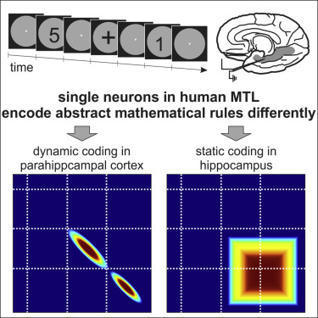
The brain has neurons that fire specifically during certain mathematical operations. This is shown by a recent study conducted by the Universities of Tübingen and Bonn. The findings indicate that some of the neurons detected are active exclusively during additions, while others are active during subtractions. They do not care whether the calculation instruction is written down as a word or a symbol. The results have now been published in the journal Current Biology. Most elementary school children probably already know that three apples plus two apples add up to five apples. However, what happens in the brain during such calculations is still largely unknown. The current study by the Universities of Bonn and Tübingen now sheds light on this issue. The researchers benefited from a special feature of the Department of Epileptology at the University Hospital Bonn. It specializes in surgical procedures on the brains of people with epilepsy. In some patients, seizures always originate from the same area of the brain. In order to precisely localize this defective area, the doctors implant several electrodes into the patients. The probes can be used to precisely determine the origin of the spasm. In addition, the activity of individual neurons can be measured via the wiring. Some neurons fire only when summing up Five women and four men participated in the current study. They had electrodes implanted in the so-called temporal lobe of the brain to record the activity of nerve cells. Meanwhile, the participants had to perform simple arithmetic tasks. "We found that different neurons fired during additions than during subtractions," explains Prof. Florian Mormann from the Department of Epileptology at the University Hospital Bonn. It was not the case that some neurons responded only to a "+" sign and others only to a "-" sign: "Even when we replaced the mathematical symbols with words, the effect remained the same," explains Esther Kutter, who is doing her doctorate in Prof. Mormann's research group. "For example, when subjects were asked to calculate '5 and 3', their addition neurons sprang back into action; whereas for '7 less 4,' their subtraction neurons did." This shows that the cells discovered actually encode a mathematical instruction for action. The brain activity thus showed with great accuracy what kind of tasks the test subjects were currently calculating: The researchers fed the cells' activity patterns into a self-learning computer program. At the same time, they told the software whether the subjects were currently calculating a sum or a difference. When the algorithm was confronted with new activity data after this training phase, it was able to accurately identify during which computational operation it had been recorded. Prof. Andreas Nieder from the University of Tübingen supervised the study together with Prof. Mormann. "We know from experiments with monkeys that neurons specific to certain computational rules also exist in their brains," he says. "In humans, however, there is hardly any data in this regard." During their analysis, the two working groups came across an interesting phenomenon: One of the brain regions studied was the so-called parahippocampal cortex. There, too, the researchers found nerve cells that fired specifically during addition or subtraction. However, when summing up, different addition neurons became alternately active during one and the same arithmetic task. Figuratively speaking, it is as if the plus key on the calculator were constantly changing its location. It was the same with subtraction. Researchers also refer to this as "dynamic coding."
|