Your new post is loading...

|
Scooped by
Dr. Stefan Gruenwald
February 16, 2022 3:41 PM
|
We've known for a long time that asteroids can have moons — heck, NASA is even slamming a probe into a tiny moon to test the idea that we can move one out of the way should it be headed for Earth — and it's estimated that a significant fraction of asteroids have smaller satellite asteroids orbiting them. A handful of trinary asteroids have recently been found, where the main rock is orbited by two others. But now, astronomers have found the first known quadruple (technically a quaternary) asteroid: 130 Elektra, which has three moons! At least. Elektra is one of the larger main-belt asteroids between Mars and Jupiter, discovered in 1873. It's a lumpy potato, as so many asteroids are, about 260 x 200 x 164 kilometers in size. It's on a mildly elliptical orbit which is decently tipped relative to the plane of the solar system by about 22°. Observations in 2003 using the huge Keck telescope revealed the first satellite, which is perhaps 6 kilometers across and has an orbit about 1,300 kilometers from Elektra. That large distance and relative size made it easier to discover; the second one is only 2 kilometers wide and closer in at 500 kilometers. The incredible high-resolution camera SPHERE on the huge Very Large Telescope was used to find the second moon in a series of observations taken over three weeks in December 2014. SPHERE is capable of ridiculously detailed images, and mounted on a 10-meter telescope it can also spot very faint objects. I point this out because the third moon was discovered recently in those older images using new processing techniques (link to paper). The moon was in the data the whole time, but it was invisible to the processing techniques available in 2005. Any bright object seen in a telescope will have a halo around it, light scattered by the optics. In this case the glow from Elektra's halo completely hid the moon at the time, but the team of scientists reprocessing the old data were able to model that glow using a sophisticated algorithm and subtract it from the image. The large main belt asteroid Elektra (center) is now known to have (at least) three moons, the third (S/2014 (130) 2, in blue) found in old data using new techniques. When they did, the third moon popped out in images taken over three nights in the original 2014 observing campaign. Unfortunately the geometry of the moon and Elektra at the time make it impossible to get a good orbital fit for the moon, but they estimate it's about a 1.6 km across and has an elliptical orbit with an orbital period of about 16 hours. The orbit itself is about 688 km across on its long axis. That means on average this third moon is 344 km from Elektra, which is close, considering the asteroid was about 270 million km from Earth when the images were taken. To drive home how difficult this was, the third moon is about 1/1,500th as bright as Elektra itself, but the halo from the main asteroid was 1/150th as bright, ten times brighter than the moon. I've done exactly this sort imaging processing work with Hubble images, and it's painstaking and difficult. This is impressive work. The naming convention for asteroid moons is to use the letter S for satellite followed by the year it was discovered, the number of the parent asteroid in parentheses, and a sequential number for the order of discovery in that year. The first then is S/2003 (130) 1, the second S/2014 (130) 1, and the third new one S/2014 (130) 2. It's a bit hard to read, but a consistent naming convention is pretty important when you're trying to keep track of all these beasties. How did these moons form? Likely from an impact, another asteroid slamming into the main body of Elektra and ejecting debris which then coalesced to form the moons. Maybe it took multiple impacts to form them, since the orbits are all so different. This is similar to how our own Moon formed, and Pluto's smaller moons may have been created the same way in a massive impact that formed its main moon Charon.
|
|
Scooped by
Dr. Stefan Gruenwald
February 15, 2022 6:25 PM
|
Researchers have long studied how gravity might emerge from a two-dimensional surface in hyperbolic spaces such as this one. In our own universe, the surface would be infinitely far away. While the other three forces of nature are all due to the activity of quantum fields, our best theory of gravity describes it as bent spacetime. For decades, physicists have tried to use quantum field theories to describe gravity, but those efforts are incomplete at best. One of the most promising of those efforts treats gravity as something like a hologram—a three-dimensional effect that pops out of a flat, two-dimensional surface. Currently, the only concrete example of such a theory is the AdS/CFT correspondence, in which a particular type of quantum field theory, called a conformal field theory (CFT), gives rise to gravity in so-called anti-de Sitter (AdS) space. In the bizarre curves of AdS space, a finite boundary can encapsulate an infinite world. Juan Maldacena, the theory’s discoverer, has called it a “universe in a bottle.” But our universe isn’t a bottle. Our universe is largely flat. Any bottle that would contain our flat universe would have to be infinitely far away in space and time. Physicists call this cosmic capsule the “celestial sphere.” Physicists want to determine the rules for a CFT that can give rise to gravity in a world without the curves of AdS space. They’re looking for a CFT for flat space—a celestial CFT. The celestial CFT would be even more ambitious than the corresponding theory in AdS/CFT. Since it lives on a sphere of infinite radius, concepts of space and time break down. As a consequence, the CFT wouldn’t depend on space and time; instead, it could explain how space and time come to be. Recent research results have given physicists hope that they’re on the right track. These results use fundamental symmetries to constrain what this CFT might look like. Researchers have discovered a surprising set of mathematical relationships between these symmetries—relationships that have appeared before in certain string theories, leading some to wonder if the connection is more than coincidence. “There’s a very large, amazing animal out here,” said Nima Arkani-Hamed, a theoretical physicist at the Institute for Advanced Study in Princeton, New Jersey. “The thing we’re going to find is going to be pretty mind-blowing, hopefully.”
|
|
Scooped by
Dr. Stefan Gruenwald
February 12, 2022 3:16 PM
|
A team of astronomers using the European Southern Observatory’s Very Large Telescope (ESO’s VLT) in Chile have found evidence of another planet orbiting Proxima Centauri, the closest star to our Solar System. This candidate planet is the third detected in the system and the lightest yet discovered orbiting this star. At just a quarter of Earth’s mass, the planet is also one of the lightest exoplanets ever found. “The discovery shows that our closest stellar neighbor seems to be packed with interesting new worlds, within reach of further study and future exploration,” explains João Faria, a researcher at the Instituto de Astrofísica e Ciências do Espaço, Portugal and lead author of the study published today in Astronomy & Astrophysics. Proxima Centauri is the closest star to the Sun, lying just over four light-years away. The newly discovered planet, named Proxima d, orbits Proxima Centauri at a distance of about four million kilometers, less than a tenth of Mercury’s distance from the Sun. It orbits between the star and the habitable zone — the area around a star where liquid water can exist at the surface of a planet — and takes just five days to complete one orbit around Proxima Centauri. The star is already known to host two other planets: Proxima b, a planet with a mass comparable to that of Earth that orbits the star every 11 days and is within the habitable zone, and candidate Proxima c, which is on a longer five-year orbit around the star. Proxima b was discovered a few years ago using the HARPS instrument on ESO’s 3.6-meter telescope. The discovery was confirmed in 2020 when scientists observed the Proxima system with a new instrument on ESO’s VLT that had greater precision, the Echelle SPectrograph for Rocky Exoplanets and Stable Spectroscopic Observations (ESPRESSO). It was during these more recent VLT observations that astronomers spotted the first hints of a signal corresponding to an object with a five-day orbit. As the signal was so weak, the team had to conduct follow-up observations with ESPRESSO to confirm that it was due to a planet, and not simply a result of changes in the star itself. “After obtaining new observations, we were able to confirm this signal as a new planet candidate,” Faria says. “I was excited by the challenge of detecting such a small signal and, by doing so, discovering an exoplanet so close to Earth.” At just a quarter of the mass of Earth, Proxima d is the lightest exoplanet ever measured using the radial velocity technique, surpassing a planet recently discovered in the L 98-59 planetary system. The technique works by picking up tiny wobbles in the motion of a star created by an orbiting planet’s gravitational pull. The effect of Proxima d’s gravity is so small that it only causes Proxima Centauri to move back and forth at around 40 centimeters per second (1.44 kilometers per hour). “This achievement is extremely important,” says Pedro Figueira, ESPRESSO instrument scientist at ESO in Chile. “It shows that the radial velocity technique has the potential to unveil a population of light planets, like our own, that are expected to be the most abundant in our galaxy and that can potentially host life as we know it. This result clearly shows what ESPRESSO is capable of and makes me wonder about what it will be able to find in the future,” Faria adds. ESPRESSO’s search for other worlds will be complemented by ESO’s Extremely Large Telescope (ELT), currently under construction in the Atacama Desert, which will be crucial to discovering and studying many more planets around nearby stars. More information This research was presented in the paper “A candidate short-period sub-Earth orbiting Proxima Centauri” (doi:10.1051/0004-6361/202142337) to appear in Astronomy & Astrophysics.
|
|
Scooped by
Dr. Stefan Gruenwald
February 9, 2022 4:59 PM
|
NASA’s Parker Solar Probe has taken its first visible light images of the surface of Venus from space. Smothered in thick clouds, Venus’ surface is usually shrouded from sight. But in two recent flybys of the planet, Parker used its Wide-Field Imager, or WISPR, to image the entire nightside in wavelengths of the visible spectrum – the type of light that the human eye can see – and extending into the near-infrared. The images, combined into a video, reveal a faint glow from the surface that shows distinctive features like continental regions, plains, and plateaus. A luminescent halo of oxygen in the atmosphere can also be seen surrounding the planet. “We’re thrilled with the science insights Parker Solar Probe has provided thus far,” said Nicola Fox, division director for the Heliophysics Division at NASA Headquarters. “Parker continues to outperform our expectations, and we are excited that these novel observations taken during our gravity assist maneuver can help advance Venus research in unexpected ways.” Such images of the planet, often called Earth’s twin, can help scientists learn more about Venus’ surface geology, what minerals might be present there, and the planet’s evolution. Given the similarities between the planets, this information can help scientists on the quest to understand why Venus became inhospitable and Earth became an oasis. “Venus is the third brightest thing in the sky, but until recently we have not had much information on what the surface looked like because our view of it is blocked by a thick atmosphere,” said Brian Wood, lead author on the new study and physicist at the Naval Research Laboratory in Washington, DC. “Now, we finally are seeing the surface in visible wavelengths for the first time from space.”
|
|
Scooped by
Dr. Stefan Gruenwald
February 8, 2022 4:56 PM
|
It is one of the only confirmed intermediate-mass black holes, an object that has long been sought by astronomers. Astronomers discovered a black hole unlike any other. At one hundred thousand solar masses, it is smaller than the black holes we have found at the centers of galaxies, but bigger than the black holes that are born when stars explode. This makes it one of the only confirmed intermediate-mass black holes, an object that has long been sought by astronomers. "We have very good detections of the biggest, stellar-mass black holes up to 100 times the size of our sun, and supermassive black holes at the centers of galaxies that are millions of times the size of our sun, but there aren't any measurements of black between these. That's a large gap," said senior author Anil Seth, associate professor of astronomy at the University of Utah and co-author of the study. "This discovery fills the gap." The black hole was hidden within B023-G078, an enormous star cluster in our closest neighboring galaxy Andromeda. Long thought to be a globular star cluster, the researchers argue that B023-G078 is instead a stripped nucleus. Stripped nuclei are remnants of small galaxies that fell into bigger ones and had their outer stars stripped away by gravitational forces. What's left behind is a tiny, dense nucleus orbiting the bigger galaxy and at the center of that nucleus, a black hole. "Previously, we've found big black holes within massive, stripped nuclei that are much bigger than B023-G078. We knew that there must be smaller black holes in lower mass stripped nuclei, but there's never been direct evidence," said lead author Renuka Pechetti of Liverpool John Moores University, who started the research while at the University of Utah. "I think this is a pretty clear case that we have finally found one of these objects." The study published on Jan. 11, 2022, in The Astrophysical Journal. A decades-long hunch B023-G078 was known as a massive globular star cluster -- a spherical collection of stars bound tightly by gravity. However, there had only been a single observation of the object that determined its overall mass, about 6.2 million solar masses. For years, Seth had a feeling it was something else. "I knew that the B023-G078 object was one of the most massive objects in Andromeda and thought it could be a candidate for a stripped nucleus. But we needed data to prove it. We'd been applying to various telescopes to get more observations for many, many years and my proposals always failed," said Seth. "When we discovered a supermassive black hole within a stripped nucleus in 2014, the Gemini Observatory gave us the chance to explore the idea." With their new observational data from the Gemini Observatory and images from the Hubble Space Telescope, Pechetti, Seth and their team calculated how mass was distributed within the object by modeling its light profile. A globular cluster has a signature light profile that has the same shape near the center as it does in the outer regions. B023-G078 is different. The light at the center is round and then gets flatter moving outwards. The chemical makeup of the stars changes too, with more heavy elements in the stars at the center than those near the object's edge. "Globular star clusters basically form at the same time. In contrast, these stripped nuclei can have repeated formation episodes, where gas falls into the center of the galaxy, and forms stars. And other star clusters can get dragged into the center by the gravitational forces of the galaxy," said Seth. "It's kind of the dumping ground for a bunch of different stuff. So, stars in stripped nuclei will be more complicated than in globular clusters. And that's what we saw in B023-G078."
|
|
Scooped by
Dr. Stefan Gruenwald
February 8, 2022 4:50 PM
|
Little food reaches the depths below the permanently ice-covered Arctic Ocean, because light limits the productivity of algae. However, scientists from Bremen, Bremerhaven and Kiel now discovered a surprisingly rich and densely populated ecosystem on the peaks of extinct underwater volcanoes, reporting their findings in the journal Nature Communications. These hotspots of life were dominated by sponges, growing there in large numbers and to impressive size. "Thriving on top of extinct volcanic seamounts of the Langseth Ridge we found massive sponge gardens, but did not know what they were feeding on," reports Antje Boetius, chief scientist of the expedition, head of the Research Group for Deep Sea Ecology and Technology at the Max Planck Institute for Marine Microbiology and director of the Alfred Wegener Institute, Helmholtz Centre for Polar and Marine Research. Using samples from the mission, first-author Teresa Morganti, sponge expert from the Max Planck Institute for Marine Microbiology in Bremen was able to identify how sponges adapt to the most nutrient-poor environment. Morganti explains: "Our analysis revealed that the sponges have microbial symbionts that are able to use old organic matter. This allows them to feed on the remnants of former, now extinct inhabitants of the seamounts, such as the tubes of worms composed of protein and chitin and other trapped detritus." Living on the leftovers Sponges are considered to be one of the most basal forms of animal life. They are nevertheless successful and abundant in all oceans, from shallow tropical reefs to the arctic deep-sea. Many sponges accommodate a complex community of microorganisms in a symbiotic relationship, which contributes to the health and nutrition of the sponges by producing antibiotics, transferring nutrients and disposing of excretions. This also goes for Geodia-sponges, which dominated the community on the Arctic seamounts. The unity of sponge and associated microbes is called a sponge holobiont. Teresa Morganti cooperated with Anna de Kluijver, an expert from Utrecht University, and with the lab of Gesine Mollenhauer at the Alfred Wegener Institute to identify the food source, the growth and the age of the sponges. They learned that thousands of years ago, substances seeping from the seabed's interior were supporting a rich ecosystem, home to a variety of animals. When they died out, their remnants remained. Now these form the base of this unexpected sponge garden.
|
|
Scooped by
Dr. Stefan Gruenwald
February 8, 2022 4:46 PM
|
A new machine learning system can predict the structure formed when two proteins dock, in a process that’s between 50 to 800 times faster than some software-based methods. This could help scientists better understand biological processes or speed the development of new therapies. Antibodies, small proteins produced by the immune system, can attach to specific parts of a virus to neutralize it. As scientists continue to battle SARS-CoV-2, the virus that causes Covid-19, one possible weapon is a synthetic antibody that binds with the virus' spike proteins to prevent the virus from entering a human cell. To develop a successful synthetic antibody, researchers must understand exactly how that attachment will happen. Proteins, with lumpy 3D structures containing many folds, can stick together in millions of combinations, so finding the right protein complex among almost countless candidates is extremely time-consuming. To streamline the process, MIT researchers created a machine-learning model that can directly predict the complex that will form when two proteins bind together. Their technique is between 80 and 500 times faster than state-of-the-art software methods, and often predicts protein structures that are closer to actual structures that have been observed experimentally. This technique could help scientists better understand some biological processes that involve protein interactions, like DNA replication and repair; it could also speed up the process of developing new medicines. "Deep learning is very good at capturing interactions between different proteins that are otherwise difficult for chemists or biologists to write experimentally. Some of these interactions are very complicated, and people haven't found good ways to express them. This deep-learning model can learn these types of interactions from data," says Octavian-Eugen Ganea, a postdoc in the MIT Computer Science and Artificial Intelligence Laboratory (CSAIL) and co-lead author of the recent paper. Ganea's co-lead author is Xinyuan Huang, a graduate student at ETH Zurich. MIT co-authors include Regina Barzilay, the School of Engineering Distinguished Professor for AI and Health in CSAIL, and Tommi Jaakkola, the Thomas Siebel Professor of Electrical Engineering in CSAIL and a member of the Institute for Data, Systems, and Society. The research will be presented at the International Conference on Learning Representations. Protein attachment The model the researchers developed, called Equidock, focuses on rigid body docking - which occurs when two proteins attach by rotating or translating in 3D space, but their shapes don't squeeze or bend. The model takes the 3D structures of two proteins and converts those structures into 3D graphs that can be processed by the neural network. Proteins are formed from chains of amino acids, and each of those amino acids is represented by a node in the graph. The researchers incorporated geometric knowledge into the model, so it understands how objects can change if they are rotated or translated in 3D space. The model also has mathematical knowledge built in that ensures the proteins always attach in the same way, no matter where they exist in 3D space. This is how proteins dock in the human body.
|
|
Scooped by
Dr. Stefan Gruenwald
February 4, 2022 2:22 PM
|
Scientists from the Max Planck Institute for Intelligent Systems and the Max Planck Institute for Solid State Research develop organic microparticles that can steer through biological fluids and dissolved blood in unprecedented ways. Even in very salty liquids, the microswimmers can be propelled forward at high speed by visible light, either individually or as a swarm. Additionally, they are partially biocompatible and can take up and release cargo on demand. The material properties are so ideal they could pave the way toward designing semi-autonomous microrobots applied in biomedicine. Science Fiction novelists couldn't have come up with a crazier plot: microrobots streaming through blood or through other fluids in our body which are driven by light, can carry drugs to cancer cells and drop off the medication on the spot. What sounds like a far-fetched fantasy, is however the short summary of a research project published in the journal Science Robotics. The microswimmers presented in the work bear the potential to one day perform tasks in living organisms or biological environments that are not easily accessible otherwise. Looking even further ahead, the swimmers could perhaps one day help treat cancer or other diseases. In their recent paper "Light-driven carbon nitride microswimmers with propulsion in biological and ionic media and responsive on-demand drug delivery," a team of scientists from the Max Planck Institute for Intelligent Systems (MPI-IS) and its neighboring institute, the Max Planck Institute for Solid State Research (MPI-FKF), demonstrate organic microparticles that can steer through biological fluids and dissolved blood in an unprecedented way. Even in very salty liquids, the microswimmers can be propelled forward at high speed by visible light, either individually or as a swarm. Additionally, they are partially biocompatible and can take up and release cargo on demand. At MPI-IS, scientists from the Physical Intelligence Department led by Metin Sitti were involved and at MPI-FKF, scientists from the Nanochemistry Department led by Bettina Lotsch. Designing and fabricating such highly advanced microswimmers seemed impossible up until now. Locomotion by light energy is hindered by the salts found in water or the body. This requires a sophisticated design that is difficult to scale up. Additionally, controlling the robots from the outside is challenging and often costly. Controlled cargo uptake and on-the-spot delivery is another supreme discipline in the field of nanorobotics. The scientists used a porous two-dimensional carbon nitride (CNx) that can be synthesized from organic materials, for instance, urea. Like the solar cells of a photovoltaic panel, carbon nitride can absorb light which then provides the energy to propel the robot forward when light illuminates the particle surface. High ion tolerance "The use of light as the energy source of propulsion is very convenient when doing experiments in a petri dish or for applications directly under the skin," says Filip Podjaski, a group leader in the Nanochemistry Department at MPI-FKF. "There is just one problem: even tiny concentrations of salts prohibit light-controlled motion. Salts are found in all biological liquids: in blood, cellular fluids, digestive fluids etc. However, we have shown that our CNx microswimmers function in all biological liquids -- even when the concentration of salt ions is very high. This is only possible due to a favorable interplay of different factors: efficient light energy conversion as the driving force, as well as the porous structure of the nanoparticles, which allows ions to flow through them, reducing the resistance created by salt, so to speak. In addition, in this material, light favors the mobility of ions -- making the particle even faster."
|
|
Scooped by
Dr. Stefan Gruenwald
February 4, 2022 2:18 PM
|
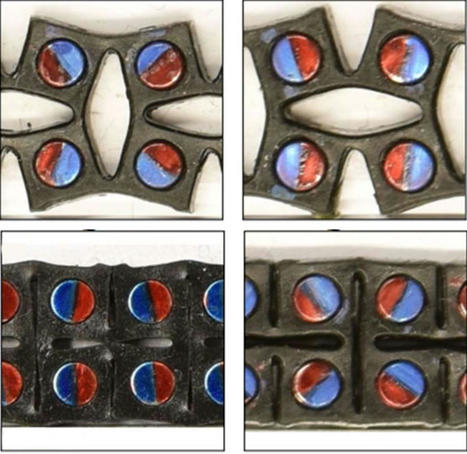
A team of researchers from the University of Massachusetts Amherst recently announced in the Proceedings of the National Academy of Sciences that they had engineered a new rubber-like solid substance that has surprising qualities. It can absorb and release very large quantities of energy. And it is programmable. Taken together, this new material holds great promise for a very wide array of applications, from enabling robots to have more power without using additional energy, to new helmets and protective materials that can dissipate energy much more quickly. "Imagine a rubber band," says Alfred Crosby, professor of polymer science and engineering at UMass Amherst and the paper's senior author. "You pull it back, and when you let it go, it flies across the room. Now imagine a super rubber band. When you stretch it past a certain point, you activate extra energy stored in the material. When you let this rubber band go, it flies for a mile." This hypothetical rubber band is made out of a new metamaterial -- a substance engineered to have a property not found in naturally occurring materials -- that combines an elastic, rubber-like substance with tiny magnets embedded in it. This new "elasto-magnetic" material takes advantage of a physical property known as a phase shift to greatly amplify the amount of energy the material can release or absorb. A phase shift occurs when a material moves from one state to another: think of water turning into steam or liquid concrete hardening into a sidewalk. Whenever a material shifts its phase, energy is either released or absorbed. And phase shifts aren't just limited to changes between liquid, solid and gaseous states -- a shift can occur from one solid phase to another. A phase shift that releases energy can be harnessed as a power source, but getting enough energy has always been the difficult part. "To amplify energy release or absorption, you have to engineer a new structure at the molecular or even atomic level," says Crosby. However, this is challenging to do and even more difficult to do in a predictable way. But by using metamaterials, Crosby says that "we have overcome these challenges, and have not only made new materials, but also developed the design algorithms that allow these materials to be programmed with specific responses, making them predictable." The team has been inspired by some of the lightning-quick responses seen in nature: the snapping-shut of Venus flytraps and trap-jaw ants. "We've taken this to the next level," says Xudong Liang, the paper's lead author, currently a professor at Harbin Institute of Technology, Shenzhen (HITSZ) in China who completed this research while a postdoc at UMass Amherst. "By embedding tiny magnets into the elastic material, we can control the phase transitions of this metamaterial. And because the phase shift is predictable and repeatable, we can engineer the metamaterial to do exactly what we want it to do: either absorbing the energy from a large impact, or releasing great quantities of energy for explosive movement."
|
|
Scooped by
Dr. Stefan Gruenwald
February 4, 2022 2:12 PM
|
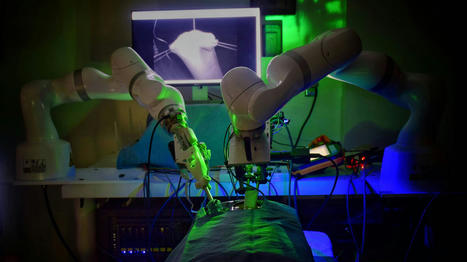
In four experiments on pig tissues, the robot excelled at suturing two ends of intestine—one of the most intricate and delicate tasks in abdominal surgery. A robot has performed laparoscopic surgery on the soft tissue of a pig without the guiding hand of a human -- a significant step in robotics toward fully automated surgery on humans. Designed by a team of Johns Hopkins University researchers, the Smart Tissue Autonomous Robot (STAR) is described today in Science Robotics. "Our findings show that we can automate one of the most intricate and delicate tasks in surgery: the reconnection of two ends of an intestine. The STAR performed the procedure in four animals and it produced significantly better results than humans performing the same procedure," said senior author Axel Krieger, an assistant professor of mechanical engineering at Johns Hopkins' Whiting School of Engineering. The robot excelled at intestinal anastomosis, a procedure that requires a high level of repetitive motion and precision. Connecting two ends of an intestine is arguably the most challenging step in gastrointestinal surgery, requiring a surgeon to suture with high accuracy and consistency. Even the slightest hand tremor or misplaced stitch can result in a leak that could have catastrophic complications for the patient. Working with collaborators at the Children's National Hospital in Washington, D.C. and Jin Kang, a Johns Hopkins professor of electrical and computer engineering, Krieger helped create the robot, a vision-guided system designed specifically to suture soft tissue. Their current iteration advances a 2016 model that repaired a pig's intestines accurately, but required a large incision to access the intestine and more guidance from humans. The team equipped the STAR with new features for enhanced autonomy and improved surgical precision, including specialized suturing tools and state-of-the art imaging systems that provide more accurate visualizations of the surgical field. Soft-tissue surgery is especially hard for robots because of its unpredictability, forcing them to be able to adapt quickly to handle unexpected obstacles, Krieger said. The STAR has a novel control system that can adjust the surgical plan in real time, just as a human surgeon would. "What makes the STAR special is that it is the first robotic system to plan, adapt, and execute a surgical plan in soft tissue with minimal human intervention," Krieger said.
|
|
Scooped by
Dr. Stefan Gruenwald
February 4, 2022 10:48 AM
|
WITHOUT THE OCEAN, climate change on land would be even more catastrophic. The seas have absorbed over 90 percent of the excess heat from greenhouse gas emissions, essentially saving humanity from itself. But it’s taking a toll: The ocean, too, is rapidly warming. And just as we have heat waves on land, parts of the ocean can experience temperature spikes too.
New research exposes just how bad the problem has gotten. Researchers from the Monterey Bay Aquarium began their calculation by analyzing surface temperature data from 1870 to 1919, sampled from across the globe. (Yes, ships have been taking the ocean’s temperature for 150 years.) Once they knew the historical high temperatures for each month in different parts of the ocean, they had a baseline for marine temperature extremes before the escalation of climate change. In the 19th century, only 2 percent of the ocean surface experienced such extremes.
Then they compared this data to readings in the same places taken from 1920 to 2019. Their results show that by the year 2014, half of the ocean surface was logging temperatures once considered extreme—exceeding those historical highs. By 2019, that figure was 57 percent. In 150 years, the occurrence of extreme heat had become the new normal.
These spikes are different from the overall rise in water temperature, which is also caused by global warming. For one thing, a particular region can come back down off of a high when winter arrives. And the location of the spikes can vary over time, meaning some places were affected earlier than others. So while half the ocean surface was logging temperature extremes by 2014, the South Atlantic had actually crossed that threshold back in 1998.
“And that is ludicrous,” says ecologist Kyle Van Houtan, president and CEO of the Loggerhead Marinelife Center, who coauthored today’s paper in the journal PLOS Climate describing the findings. (Van Houtan did the research in his previous role as the chief scientist at the aquarium, with marine biologist Kisei Tanaka, now at the National Oceanic and Atmospheric Administration.) “There's some major changes going on right now in the ocean, and we think that this calculation, this index, of marine heat that we built is helping to describe why,” he continues. “I think extreme marine heat is much more of a problem than we thought it was. It's actually common today, which is scary, because historically it was just extreme—it was rare.”
“The trends they're seeing are consistent with results from a lot of other papers that conclude that marine heat waves are becoming more frequent, they're warmer, and they're lasting longer,” says Bridget Seegers, an oceanographer at NASA, who wasn’t involved in the work. (She was, though, among the researchers who recently reported that 2021 was the sixth hottest year ever recorded.)
|
|
Scooped by
Dr. Stefan Gruenwald
February 3, 2022 3:23 PM
|
Researchers reporting in ACS Nano have developed a prototype “breathalyzer” that can diagnose COVID-19, even in asymptomatic individuals, in less than 5 minutes. According to experts, bringing an end to the pandemic will require rapid screening of people attending large gatherings, such as conferences and weddings. Even those who are asymptomatic can still transmit COVID-19 to others, making it important to identify and isolate them until they are no longer contagious. Now, researchers reporting in ACS Nano have developed a prototype "breathalyzer" that can sensitively and accurately diagnose COVID-19, even in asymptomatic individuals, in less than 5 minutes. Currently, the "gold standard" for COVID-19 testing is a technique called reverse transcription-polymerase chain reaction (RT-PCR), which is slow, requires an uncomfortable nasopharyngeal swab for sample collection and must be performed in a lab. The rapid antigen test is much quicker but has a higher rate of false negatives and positives. Scientists have also developed breathalyzer-type tests for COVID-19, which rely on differences in concentrations of volatile organic compounds exhaled by those infected with the coronavirus, but most require bulky, non-portable instruments for analysis. Xing Yi Ling and colleagues wanted to develop a quick, convenient and accurate breathalyzer test that would be suitable for on-site screening of large numbers of people. The researchers designed a handheld breathalyzer that contains a chip with three surface-enhanced Raman scattering (SERS) sensors attached to silver nanocubes. When a person exhales into the device for 10 seconds, compounds in their breath chemically interact with the sensors. Then, the researchers load the breathalyzer into a portable Raman spectrometer that characterizes the bound compounds based on changes to the molecular vibrations of the SERS sensors. The team found that Raman spectra from COVID-positive and -negative people were different in regions responsive to ketones, alcohols and aldehydes, which they used to develop a statistical model for COVID diagnosis. They tested the breathalyzer on 501 people in hospitals and airports in Singapore, who were shown by RT-PCR to be negative (85.2%), positive and symptomatic (8.6%), or positive and asymptomatic (6.2%) for the coronavirus. The method had a 3.8% false-negative and 0.1% false-positive rate, comparable to RT-PCR tests, but it could be completed on-site in less than 5 minutes. The breathalyzer could someday be a new tool to reduce the silent spread of COVID-19 in communities, the researchers say.
|
|
Scooped by
Dr. Stefan Gruenwald
February 3, 2022 3:20 PM
|
“What we’re doing is preparing an arsenal of shark VNAR therapeutics that could be used down the road for future SARS outbreaks,' says researcher Aaron LeBeau. Small, unique antibody-like proteins known as VNARs -- derived from the immune systems of sharks -- can prevent the virus that causes COVID-19, its variants, and related coronaviruses from infecting human cells, according to a new study published Dec. 16 2021. The new VNARs will not be immediately available as a treatment in people, but they can help prepare for future coronavirus outbreaks. The shark VNARs were able to neutralize WIV1-CoV, a coronavirus that is capable of infecting human cells but currently circulates only in bats, where SARS-CoV-2, the virus that causes COVID-19, likely originated. Developing treatments for such animal-borne viruses ahead of time can prove useful if those viruses make the jump to people. "The big issue is there are a number of coronaviruses that are poised for emergence in humans," says Aaron LeBeau, a University of Wisconsin-Madison professor of pathology who helped lead the study. "What we're doing is preparing an arsenal of shark VNAR therapeutics that could be used down the road for future SARS outbreaks. It's a kind of insurance against the future." LeBeau and his lab in the School of Medicine and Public Health collaborated with researchers at the University of Minnesota and Elasmogen, a biomedical company in Scotland that is developing therapeutic VNARs. The team published its findings in Nature Communications. The anti-SARS-CoV-2 VNARs were isolated from Elasmogen's large synthetic VNAR libraries. One-tenth the size of human antibodies, the shark VNARs can bind to infectious proteins in unique ways that bolster their ability to halt infection. "These small antibody-like proteins can get into nooks and crannies that human antibodies cannot access," says LeBeau. "They can form these very unique geometries. This allows them to recognize structures in proteins that our human antibodies cannot."
|
|
|
Scooped by
Dr. Stefan Gruenwald
February 16, 2022 12:46 PM
|
In a recent cohort study which included 100 patients who recently recovered from COVID-19, using cardiac magnetic resonance imaging revealed cardiac involvement in 78 patients (78%) and ongoing myocardial inflammation in 60 patients (60%), which was independent of preexisting conditions, severity and overall course of the acute illness, and the time from the original diagnosis.
|
|
Scooped by
Dr. Stefan Gruenwald
February 14, 2022 5:43 PM
|
You wake up to a dark, dreary, glum-feeling, Monday-type of morning. For the 547th consecutive day. Just 18 months prior, you were a hard-working farmer gearing up for another bountiful crop season. But then the skies went dark. And they stayed dark -- day after day, month after month -- from early 536 to 537. Across much of eastern Europe and throughout Asia, spring turned into summer and fall gave way to winter without a day of sunshine. Like a blackout curtain over the sun, millions of people across the world's most populated countries squinted through dim conditions, breathing in chokingly thick air and losing nearly every crop they were relying on to harvest. This isn't the plot of a dystopian TV drama or a fantastical "docu-fiction" production. This was a harsh reality for the millions of people who lived through that literally dark time or, as some historians have declared, the very worst year ever to be alive. The darkest year ahead of the darkest decade "For the sun gave forth its light without brightness, like the moon, during this whole year, and it seemed exceedingly like the sun in eclipse, for the beams it shed were not clear nor such as it is accustomed to shed," was the grim account Procopius, a prominent scholar who became the principal Byzantine historian of the 6th century, gave in History of the Wars. "And from the time when this thing happened men were free neither from war nor pestilence nor any other thing leading to death." Some 1,500 years later, Harvard University medieval historian Michael McCormick has reached a similarly grim conclusion about not just 536, but the dreadful decade that followed that terrible year. For people living across Europe in 536, "It was the beginning of one of the worst periods to be alive, if not the worst year," McCormick said. As McCormick told AccuWeather, it was all set off by rapid, drastic climate change. In the spring of 536, a volcanic eruption triggered the Late Antique Little Ice Age (LALIA), he noted. And its ramifications, on top of ensuing eruptions in 540 and 547, were devastating. "Aerosols for the big volcanic eruptions blocked solar radiation, dropping the solar heating of the Earth’s surface," he explained, adding that climate analysis from Cambridge University in the U.K. done on tree rings show the average summer temperature "dropped by between 1.5 degrees and 2.5 degrees Celsius across Eurasia." That's up to 2.7 to 4.5 degrees Fahrenheit cooler due to the heavy smog left behind after the eruption. The skies remained dimmed for up to 18 months, multiple historical witnesses recounted, triggering the dark year of turmoil that earned 536 its dubious distinction. Weather patterns were severely affected by the blocked sunlight, leading to summer snowfall in China and the lowest temperature levels in more than 2,300 years, according to recorded historical accounts and climate reconstruction analysis. In the Middle East, China and Europe, a dense fog was an inescapable daily nightmare while widespread agricultural challenges in Ireland resulted in a "failure of bread from the years 536–539 AD," according to The Gaelic Irish Annals.
|
|
Scooped by
Dr. Stefan Gruenwald
February 11, 2022 2:45 PM
|
A new study has found that carbon emissions are now so high, the last time they hit similar levels was 66 million years ago, when many species of dinosaur were wiped off the face of the planet. And carbon dioxide emissions are still rising, albeit at a slower rate than in recent years. Researchers have been looking at the geological evidence to compare current levels of CO2 with those of the past - they used sediment cores collected from the New Jersey coast to re-evaluate the carbon-13 and oxygen-18 isotope records, which indicate atmospheric carbon concentrations and global temperature respectively. The team, led by Richard Zeebe from the University of Hawaii at Manoa, found that rises in carbon emissions and global warming happened more or less simultaneously during the Palaeocene-Eocene Thermal Maximum (PETM) period around 56 million years ago, as the supercontinent Pangea was breaking apart. That's an important marker, because scientists think the climate changes we're currently experiencing are similar to changes that occurred during the PETM. The fact that carbon emissions and global warming were closely linked suggests a slow and steady increase in CO2 during that time - if a spike in CO2 levels did occur, the overall climate would take longer to catch up, which discounts the possibility of massive amounts of methane gushing from the seafloor as Pangea split up. Zeebe and his colleagues then used their findings to calculate that the annual carbon emissions rate during the PETM was between 0.6 and 1.1 billion tonnes per year. Compare that to the 10 billion tonnes (and rising) that are annually pumped into the atmosphere today, and you can easily see the severity of the problem. As for the event that killed off the dinosaurs, it's hard to say exactly what the levels of CO2 were in the atmosphere at the time (around 10 million years before the PETM), says Zeebe, because geological records get progressively worse as far as older events are concerned. It's possible that the 9.6-km-wide (6-mile-wide) asteroid that slammed into Earth's surface saw similar CO2 emissions to those we're seeing today - but we can't be sure. So in reality, we're actually looking at carbon emission levels that are higher than they've been since the time of the dinosaurs, and possibly even earlier than that. "We conclude that, given currently available records, the present anthropogenic carbon release rate is unprecedented during the past 66 million years," conclude the researchers. "We suggest that such a 'no-analogue' state represents a fundamental challenge in constraining future climate projections. Also, future ecosystem disruptions are likely to exceed the relatively limited extinctions observed at the PETM." It's yet another stark warning of the critical situation we're in as far as climate change and global temperatures are concerned. The team's work has been published in the journal Nature Geoscience.
|
|
Scooped by
Dr. Stefan Gruenwald
February 8, 2022 7:11 PM
|
While controls over the Earth's climate system have undergone rigorous hypothesis-testing since the 1800s, questions over the scientific consensus of the role of human activities in modern climate change continue to arise in public settings. Climate scientists now updated their previous efforts to quantify the scientific consensus on climate change by searching the recent literature for papers skeptical of anthropogenic-caused global warming. From a dataset of 88,125 climate-related papers (!!!) published since 2012, when this question was last addressed comprehensively, they examined a randomized subset of 3,000 such publications. They also used a second sample-weighted approach that was specifically biased with keywords to help identify any skeptical peer-reviewed papers in the whole dataset. They were able to identify just 4 skeptical papers out of the sub-set of 3,000, as evidenced by abstracts that were rated as implicitly or explicitly skeptical of human-caused global warming. They concluded with high statistical confidence that the scientific consensus on human-caused contemporary climate change—expressed as a proportion of the total publications—exceeds 99% in the peer-reviewed scientific literature.
|
|
Scooped by
Dr. Stefan Gruenwald
February 8, 2022 4:54 PM
|
A team mapping radio waves in the Universe has discovered something unusual that releases a giant burst of energy three times an hour, and it’s unlike anything astronomers have seen before. The team who discovered it think it could be a neutron star or a white dwarf—collapsed cores of stars—with an ultra-powerful magnetic field. Spinning around in space, the strange object sends out a beam of radiation that crosses our line of sight, and for a minute in every twenty, is one of the brightest radio sources in the sky. Astrophysicist Dr Natasha Hurley-Walker, from the Curtin University node of the International Centre for Radio Astronomy Research, led the team that made the discovery. "This object was appearing and disappearing over a few hours during our observations," she said. "That was completely unexpected. It was kind of spooky for an astronomer because there's nothing known in the sky that does that. And it's really quite close to us -- about 4000 lightyears away. It's in our galactic backyard." The object in question was discovered by Curtin University Honors student Tyrone O'Doherty using the Murchison Widefield Array (MWA) telescope in outback Western Australia and a new technique he developed. "It's exciting that the source I identified last year has turned out to be such a peculiar object," said Mr O'Doherty, who is now studying for a PhD at Curtin. "The MWA's wide field of view and extreme sensitivity are perfect for surveying the entire sky and detecting the unexpected." Objects that turn on and off in the Universe aren't new to astronomers -- they call them 'transients'. ICRAR-Curtin astrophysicist and co-author Dr Gemma Anderson said that "when studying transients, you're watching the death of a massive star or the activity of the remnants it leaves behind." 'Slow transients' -- like supernovae -- might appear over the course of a few days and disappear after a few months. 'Fast transients' -- like a type of neutron star called a pulsar -- flash on and off within milliseconds or seconds. But Dr Anderson said finding something that turned on for a minute was really weird. She said the mysterious object was incredibly bright and smaller than the Sun, emitting highly-polarised radio waves -- suggesting the object had an extremely strong magnetic field. Dr Hurley-Walker said the observations match a predicted astrophysical object called an 'ultra-long period magnetar'. "It's a type of slowly spinning neutron star that has been predicted to exist theoretically," she said. "But nobody expected to directly detect one like this because we didn't expect them to be so bright.
|
|
Scooped by
Dr. Stefan Gruenwald
February 8, 2022 4:48 PM
|
By 2080, around 70% of the world's oceans could be suffocating from a lack of oxygen as a result of climate change, potentially impacting marine ecosystems worldwide, according to a new study. The new models find mid-ocean depths that support many fisheries worldwide are already losing oxygen at unnatural rates and passed a critical threshold of oxygen loss in 2021. Oceans carry dissolved oxygen as a gas, and just like land animals, aquatic animals need that oxygen to breathe. But as the oceans warm due to climate change, their water can hold less oxygen. Scientists have been tracking the oceans' steady decline in oxygen for years, but the new study provides new, pressing reasons to be concerned sooner rather than later. The new study is the first to use climate models to predict how and when deoxygenation, which is the reduction of dissolved oxygen content in water, will occur throughout the world's oceans outside its natural variability. It finds that significant, potentially irreversible deoxygenation of the ocean's middle depths that support much of the world's fished species began occurring in 2021, likely affecting fisheries worldwide. The new models predict that deoxygenation is expected to begin affecting all zones of the ocean by 2080. The results were published in the AGU journal Geophysical Research Letters, which publishes high-impact, short-format reports with immediate implications spanning all Earth and space sciences. The ocean's middle depths (from about 200 to 1,000 meters deep), called mesopelagic zones, will be the first zones to lose significant amounts of oxygen due to climate change, the new study finds. Globally, the mesopelagic zone is home to many of the world's commercially fished species, making the new finding a potential harbinger of economic hardship, seafood shortages and environmental disruption. Rising temperatures lead to warmer waters that can hold less dissolved oxygen, which creates less circulation between the ocean's layers. The middle layer of the ocean is particularly vulnerable to deoxygenation because it is not enriched with oxygen by the atmosphere and photosynthesis like the top layer, and the most decomposition of algae -- a process that consumes oxygen -- occurs in this layer. "This zone is actually very important to us because a lot of commercial fish live in this zone," says Yuntao Zhou, an oceanographer at Shanghai Jiao Tong University and lead study author. "Deoxygenation affects other marine resources as well, but fisheries [are] maybe most related to our daily life." The new findings are deeply concerning and adds to the urgency to engage meaningfully in mitigating climate change, says Matthew Long, an oceanographer at NCAR who was not involved in the study. "Humanity is currently changing the metabolic state of the largest ecosystem on the planet, with really unknown consequences for marine ecosystems," he said. "That may manifest in significant impacts on the ocean's ability to sustain important fisheries."
|
|
Scooped by
Dr. Stefan Gruenwald
February 4, 2022 2:25 PM
|
A team of researchers including ones from Stanford and Google have created and observed a new phase of matter, popularly known as a time crystal. There is a huge global effort to engineer a computer capable of harnessing the power of quantum physics to carry out computations of unprecedented complexity. While formidable technological obstacles still stand in the way of creating such a quantum computer, today’s early prototypes are still capable of remarkable feats. For example, the creation of a new phase of matter called a “time crystal.” Just as a crystal’s structure repeats in space, a time crystal repeats in time and, importantly, does so infinitely and without any further input of energy – like a clock that runs forever without any batteries. The quest to realize this phase of matter has been a longstanding challenge in theory and experiment – one that has now finally come to fruition. In a recent research, published Nov. 30 in Nature, a team of scientists from Stanford University, Google Quantum AI, the Max Planck Institute for Physics of Complex Systems and Oxford University detail their creation of a time crystal using Google’s Sycamore quantum computing hardware. “The big picture is that we are taking the devices that are meant to be the quantum computers of the future and thinking of them as complex quantum systems in their own right,” said Matteo Ippoliti, a postdoctoral scholar at Stanford and co-lead author of the work. “Instead of computation, we’re putting the computer to work as a new experimental platform to realize and detect new phases of matter.” For the team, the excitement of their achievement lies not only in creating a new phase of matter but in opening up opportunities to explore new regimes in their field of condensed matter physics, which studies the novel phenomena and properties brought about by the collective interactions of many objects in a system. Such interactions can be far richer than the properties of the individual objects. “Time-crystals are a striking example of a new type of non-equilibrium quantum phase of matter,” said Vedika Khemani, assistant professor of physics at Stanford and a senior author of the paper. “While much of our understanding of condensed matter physics is based on equilibrium systems, these new quantum devices are providing us a fascinating window into new non-equilibrium regimes in many-body physics.”
|
|
Scooped by
Dr. Stefan Gruenwald
February 4, 2022 2:20 PM
|
Astronomers have identified two different cases of "mini-Neptune" planets that are losing their puffy atmospheres and likely transforming into super-Earths. Radiation from the planets' stars is stripping away their atmospheres, driving hot gas to escape like steam from a pot of boiling water. "Most astronomers suspected that young, small mini-Neptunes must have evaporating atmospheres," says Michael Zhang, lead author of both studies and a graduate student at Caltech. "But nobody had ever caught one in the process of doing so until now." The findings are published in two separate papers in The Astronomical Journal: one is based on data from W. M. Keck Observatory on Maunakea, Hawai'i and the other paper involves observations from NASA's Hubble Space Telescope. Together, the studies help paint a picture of how exotic worlds like these form and evolve. Mini-Neptunes are a class of exoplanets, which are planets that orbit stars outside our solar system. These worlds, which are smaller, denser versions of the planet Neptune, consist of large rocky cores surrounded by thick blankets of gas. In these new studies, a team of astronomers led by Caltech used Keck Observatory's Near-Infrared Spectrograph (NIRSPEC) to study one of two mini-Neptune planets in the star system called TOI 560, located 103 light-years away; and they used Hubble to look at two mini-Neptunes orbiting HD 63433, located 73 light-years away. Their results show that atmospheric gas is escaping from the innermost mini-Neptune in TOI 560, called TOI 560.01, and from the outermost mini-Neptune in HD 63433, called HD 63433 c. Furthermore, Keck Observatory data surprisingly showed the gas around TOI 560.01 was escaping predominantly toward the star. "This was unexpected, as most models predict that the gas should flow away from the star," says Professor of Planetary Science Heather Knutson, Zhang's advisor and a co-author of the study. "We still have a lot to learn about how these outflows work in practice." Planetary Gap Explained? Since the first exoplanets orbiting Sun-like stars were discovered in the mid-1990s, thousands of others have been found. Many of these orbit close to their stars, and the smaller, rocky ones generally fall into two groups: mini-Neptunes and super-Earths. The super-Earths are as large as 1.6 times the size of Earth (and occasionally as large as 1.75 times the size of Earth), while the mini-Neptunes are between two and four times the size of Earth. Few planets with sizes between these two planet types have been detected. One possible explanation for this gap is that mini-Neptunes are transforming into super-Earths. The mini-Neptunes are theorized to be cocooned by primordial atmospheres made of hydrogen and helium. The hydrogen and helium are left over from the formation of the central star, which is born out of clouds of gas. If a mini-Neptune is small enough and close enough to its star, stellar X-rays and ultraviolet radiation can strip away its primordial atmosphere over a period of hundreds of millions of years, scientists theorize. This would then leave behind a rocky super-Earth with a substantially smaller radius, which could, in theory, still retain a relatively thin atmosphere similar to that surrounding our own planet.
|
|
Scooped by
Dr. Stefan Gruenwald
February 4, 2022 2:15 PM
|
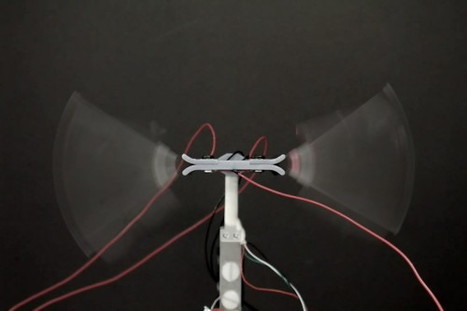
A new drive system for flapping wing autonomous robots has been developed by a University of Bristol team, using a new method of electromechanical zipping that does away with the need for conventional motors and gears. This new advance, published today in the journal Science Robotics, could pave the way for smaller, lighter and more effective micro flying robots for environmental monitoring, search and rescue, and deployment in hazardous environments. Until now, typical micro flying robots have used motors, gears and other complex transmission systems to achieve the up-and-down motion of the wings. This has added complexity, weight and undesired dynamic effects. Taking inspiration from bees and other flying insects, researchers from Bristol's Faculty of Engineering, led by Professor of Robotics Jonathan Rossiter, have successfully demonstrated a direct-drive artificial muscle system, called the Liquid-amplified Zipping Actuator (LAZA), that achieves wing motion using no rotating parts or gears. The LAZA system greatly simplifies the flapping mechanism, enabling future miniaturization of flapping robots down to the size of insects. In the new paper, the team show how a pair of LAZA-powered flapping wings can provide more power compared with insect muscle of the same weight, enough to fly a robot across a room at 18 body lengths per second. They also demonstrated how the LAZA can deliver consistent flapping over more than one million cycles, important for making flapping robots that can undertake long-haul flights. The team expect the LAZA to be adopted as a fundamental building block for a range of autonomous insect-like flying robots. Dr Tim Helps, lead author and developer of the LAZA system said "With the LAZA, we apply electrostatic forces directly on the wing, rather than through a complex, inefficient transmission system. This leads to better performance, simpler design, and will unlock a new class of low-cost, lightweight flapping micro-air vehicles for future applications, like autonomous inspection of off-shore wind turbines."
|
|
Scooped by
Dr. Stefan Gruenwald
February 4, 2022 2:10 PM
|
In the search for Earth-like planets, University of Rochester scientist Miki Nakajima turns to computer simulations of moon formations. Earth's moon is vitally important in making Earth the planet we know today: the moon controls the length of the day and ocean tides, which affect the biological cycles of lifeforms on our planet. The moon also contributes to Earth's climate by stabilizing Earth's spin axis, offering an ideal environment for life to develop and evolve. Because the moon is so important to life on Earth, scientists conjecture that a moon may be a potentially beneficial feature in harboring life on other planets. Most planets have moons, but Earth's moon is distinct in that it is large compared to the size of Earth; the moon's radius is larger than a quarter of Earth's radius, a much larger ratio than most moons to their planets. Miki Nakajima, an assistant professor of earth and environmental sciences at the University of Rochester, finds that distinction significant. And in a new study that she led, published in Nature Communications, she and her colleagues at the Tokyo Institute of Technology and the University of Arizona examine moon formations and conclude that only certain types of planets can form moons that are large in respect to their host planets. "By understanding moon formations, we have a better constraint on what to look for when searching for Earth-like planets," Nakajima says. "We expect that exomoons [moons orbiting planets outside our solar system] should be everywhere, but so far we haven't confirmed any. Our constraints will be helpful for future observations." The origin of Earth's moon Many scientists have historically believed Earth's large moon was generated by a collision between proto-Earth -- Earth at its early stages of development -- and a large, Mars-sized impactor, approximately 4.5 billion years ago. The collision resulted in the formation of a partially vaporized disk around Earth, which eventually formed into the moon. In order to find out whether other planets can form similarly large moons, Nakajima and her colleagues conducted impact simulations on the computer, with a number of hypothetical Earth-like rocky planets and icy planets of varying masses. They hoped to identify whether the simulated impacts would result in partially vaporized disks, like the disk that formed Earth's moon. The researchers found that rocky planets larger than six times the mass of Earth (6M) and icy planets larger than one Earth mass (1M) produce fully -- rather than partially -- vaporized disks, and these fully-vaporized disks are not capable of forming fractionally large moons. "We found that if the planet is too massive, these impacts produce completely vapor disks because impacts between massive planets are generally more energetic than those between small planets," Nakajima says. After an impact that results in a vaporized disk, over time, the disk cools and liquid moonlets -- a moon's building blocks -- emerge. In a fully-vaporized disk, the growing moonlets in the disk experience strong gas drag from vapor, falling onto the planet very quickly. In contrast, if the disk is only partially vaporized, moonlets do not feel such strong gas drag. "As a result, we conclude that a completely vapor disk is not capable of forming fractionally large moons," Nakajima says. "Planetary masses need to be smaller than those thresholds we identified in order to produce such moons."
|
|
Scooped by
Dr. Stefan Gruenwald
February 3, 2022 3:28 PM
|
Scientists in Barcelona have today launched GENIGMA, a videogame that enlists players to solve puzzles while generating real-world scientific data that can detect alterations in genomic sequences and ultimately advance breast cancer research. The game, out today on iOS and Android and available in English, Spanish, Catalan and Italian, is the result of a two-and-a-half-year long citizen science project developed by a team of researchers at the Centre for Genomic Regulation (CRG), the Centro Nacional de Análisis Genómico (CNAG-CRG) and game professionals. The game was created to boost worldwide research efforts that depend on cancer cell lines, a critical resource used by scientists to study cancer and test new drugs to treat the disease. One of the limitations of cancer cell lines are a lack of high-resolution genome reference maps, which are necessary to help researchers interpret their scientific results, for example pinpointing the location of genes of therapeutic interest or potential mutation sites. "Cell lines are responsible for the discovery of vaccines, chemotherapies for cancer or IVF for infertility. This makes them a pillar of modern biology," explains ICREA Research Professor Marc A. Marti-Renom, with dual affiliation at the CRG and CNAG-CRG and whose research underpins GENIGMA. "However, the lack of genome reference maps limits current scientific progress. It's like asking people to navigate modern cities using maps from the past. With the help of other people, we can update these maps, which will allow us to make fast progress in breast cancer research." Professor Marti-Renom's research group has developed methods to create genomic reference maps by visualising the genome in three-dimensional space. However, this requires significant time and resources to train artificial intelligence, as well as vast computational power. The researchers launched GENIGMA because they believe that data generated by players could be a more effective method of updating the reference maps compared to using AI alone. The 'herd intelligence' of players can also provide creative solutions in ways that AI might not be able to. To play GENIGMA, players have to solve a puzzle involving a string of blocks of different colours and shapes. Each string represents a genetic sequence in the cancer cell line, and how players organise the blocks is a potential solution to the location of genes. Players have to reorganise the blocks so that they attain the highest-score possible. The higher the number of players and high scores, the higher likelihood that researchers have found the correct sequence for this particular location in the reference map. "Anyone with a smartphone from anywhere in the world can download GENIGMA for free and make a direct contribution to research, lending their logic and dexterity to the service of science," says Elisabetta Broglio, citizen science facilitator at the CRG. "GENIGMA will analyze the solutions provided by the players as a collective and not as individuals, and will take advantage of creative solutions impossible to find with deterministic algorithms."
|
|
Scooped by
Dr. Stefan Gruenwald
February 3, 2022 3:22 PM
|
Investigators from UCLA Jonsson Comprehensive Cancer Center have identified a germline biomarker signature that successfully predicts which patients will suffer serious side effects that occur in up to 3 in ten patients on anti-PD1/PDL1 therapy, a promising new approach to treating cancer. Checkpoint inhibitors that enhance the immune system against PD-1 and PD-L1 show great promise, having substantially improved the prognosis for patients with several advanced cancers, including melanoma, renal cell carcinoma, non-small cell lung cancer, Hodgkin lymphoma, and head and neck cancer. As promising as they are, these therapies are also associated with a unique set of side effects, called immune-related adverse events (irAEs), believed to be the result of an immune system overstimulated by the therapy. While these side effects are generally treatable, they can in rare cases be very serious, even fatal. In addition, there's currently no way to predict which patients will develop irAEs before starting treatment, requiring clinicians to watch and wait after treatment begins. Notably, the toxicity from checkpoint therapy does not appear to be associated with a patient's cancer or their response to the treatment, supporting the idea that it is a patient-specific reaction. With a growing need to identify which patients are at risk for irAEs, investigators led by Joanne B. Weidhaas, MD, PhD, MSM, of UCLA Jonsson Comprehensive Cancer Center, vice chair Department of Radiation Oncology, and director Division of Molecular and Cellular Oncology at UCLA Health, examined DNA signatures in 99 patients, looking for patterns that would indicate if inherited DNA biomarkers would predict toxicity. In findings published in Journal for Immunotherapy of Cancer, they report that they were able to identify a biomarker panel that predicts toxicity with 80% accuracy. "These findings represent an important step toward personalizing checkpoint therapy, the use of which is growing rapidly," said Dr. Weidhaas. "While we are still at the early stages of understanding the mechanisms by which these germline mutations regulate immunity and the systemic stress response, our repeated findings that these variant panels can predict systemic toxic responses to cancer therapy are potentially paradigm-shifting."
|