Your new post is loading...

|
Scooped by
Dr. Stefan Gruenwald
May 10, 2016 1:14 PM
|
Genes linked to Crohn’s disease, an inflammatory bowel disease, might make people’s immune cells miss out on helpful messages sent by friendly gut bacteria. Good gut bacteria might not help people with Crohn’s disease. Protective microbial messages go unread in mice and in human immune cells with certain defective genes, researchers report online May 5 in Science. The findings are the first to tie together the roles of genes and beneficial microbes in the inflammatory bowel disease, says biologist Brett Finlay of the University of British Columbia in Vancouver, who was not involved in the new work. “This is a major step forward in this area,” he says. Human genes and friendly microbes work together to control inflammation, he says. “And when you muck that up, things can go awry.” In Crohn’s disease, the immune system riles up too easily, trigging chronic inflammation. Scientists don’t know why exactly people’s immune systems go haywire. But researchers have linked the disease to glitches in nearly 200 genes, including ATG16L1 and NOD2, which typically help kill bad bacteria in the gut. Researchers have also reported that people with Crohn’s have a different collection of gut microbes compared with that of healthy people, says study coauthor and Caltech microbiologist Sarkis Mazmanian.But though “there’s a huge body of literature on the genome and on the microbiome,” he says, “no one knew what the interplay was between the two.” So his team explored a potential link using a friendly gut microbe called Bacteroides fragilis. The bacteria send out calming messages that tell the immune system to tone down inflammation. Like letters inside envelopes, these messages travel in protective pouches called outer membrane vesicles, or OMVs. Feeding OMVs to mice typically protects them from developing inflamed colons, or colitis — but not mice lacking the Crohn’s-linked genes ATG16L1 and NOD2. When researchers treated those mice with a colitis-causing chemical, they succumbed to the disease, even after eating OMVs. Mice with defective versions of ATG16L1 and NOD2 “can’t reap the benefits of the beneficial microbiota,” Mazmanian says.Immune cells from human patients with the defective genes didn’t respond to OMVs either. The findings suggest that the genes that kill bad bacteria also work with good bacteria to keep people’s immune systems from going out of control, says gastroenterologist Balfour Sartor of the University of North Carolina School of Medicine in Chapel Hill. The work “opens up a new mechanism for protection,” he says.
|
|
Scooped by
Dr. Stefan Gruenwald
May 9, 2016 6:37 PM
|
The northern white rhinoceros is in far worse straits than most rhinos. There are just three members of the species left, and they can't breed normally -- if nothing happens, extinction is guaranteed. And that's leading researchers to try a dramatic technological solution to keep the northern white rhino around. They're planning to transform both frozen and living rhino cells into stem cells that could grow into eggs and sperm for the in vitro fertilization of a surrogate southern white rhino. This would not only resurrect the species, but create enough diversity that the new population should survive in the wild. Of course, planning a revival and achieving it aren't one and the same. The technique might require growing the cells alongside tissue from other animals, and there's no guarantee that you'd get a healthy rhino on the other end. Also, zoos don't always have the many millions of dollars needed to make this project happen. If everything comes together, though, it could prove that science has what it takes to bring a species back from the brink.
|
|
Scooped by
Dr. Stefan Gruenwald
May 9, 2016 6:05 PM
|
Materials scientists working with cosmetics firms have developed a transparent film that, for the first time, mimics the skin’s youthful elasticity. The silicone-based coating can be smeared onto the face or other areas of the body through two gel applications. Once hardened, it clings closely to the skin for more than 16 hours, says Robert Langer, a bioengineer at the Massachusetts Institute of Technology in Cambridge, who co-led development of the material. The film — which Langer’s team dubs ‘second skin’ — can reduce the appearance of bags under the eyes and wrinkles, and can increase the elastic recoil of skin when it is pinched, he and colleagues report in a paper published in Nature Materials1. It also acts as a barrier that prevents water loss from dry skin, they report, suggesting that besides its cosmetic use, the film might offer an alternative to greasy ointments for people with skin complaints such as eczema, although it hasn't yet been trialled for that idea. A version of the film has been on sale as a daily treatment through dermatologists since 2014, marketed by a firm called Living Proof in Cambridge, Massachusetts, that Langer co-founded — and which film star Jennifer Aniston has invested in. Beauty bloggers writing about the product two years ago said that it was like ‘shapewear for skin’. Langer calls that product a "very early version" of the material described in the research paper, which marks the first time that the film has been detailed in the scientific literature. “Up until now, there has been nothing that could restore the elastic property of skin, and this material does that,” says Barbara Gilchrest, a dermatologist at Harvard Medical School in Boston, Massachusetts, and a co-author of the report. John Rogers, a biomaterials scientist at the University of Illinois at Urbana–Champaign, says that the team’s results are “impressive”. The team screened more than 100 variant polymers to create the elastic yet transparent film. Users first smear on a gel-like polymer that is based on siloxanes (chains of molecules containing silicon and oxygen), and then add another gel that contains a platinum-based catalyst. This cross-links the polymer chains together to toughen up the material — effectively ‘setting’ the film — which is only 40–70 micrometres thin; Langer says it is "essentially invisible".
|
|
Scooped by
Dr. Stefan Gruenwald
May 9, 2016 3:07 PM
|
Bees control their flight using the speed of motion - or optic flow - of the visual world around them, but it is not known how they do this. The only neural circuits so far found in the insect brain can tell the direction of motion, not the speed. This study suggests how motion-direction detecting circuits could be wired together to also detect motion-speed, which is crucial for controlling bees’ flight. “Honeybees are excellent navigators and explorers, using vision extensively in these tasks, despite having a brain of only one million neurons,” said Dr Alex Cope, lead researcher on the paper. “Understanding how bees avoid walls, and what information they can use to navigate, moves us closer to the development of efficient algorithms for navigation and routing - which would greatly enhance the performance of autonomous flying robotics”, he added. Professor James Marshall, lead investigator on the project, added: “This is the reason why bees are confused by windows - since they are transparent they generate hardly any optic flow as bees approach them.” Dr Cope and his fellow researchers on the project; Dr Chelsea Sabo, Dr Eleni Vasilaki, Prof essor Kevin Gurney, and Professor James Marshall, are now using this research to investigate how bees understand which direction they are pointing in and use this knowledge to solve tasks.
|
|
Scooped by
Dr. Stefan Gruenwald
May 9, 2016 2:57 PM
|
NGC 1332, otherwise known as ESO 548-18 and LEDA 12838, is an almost-edge-on elliptical galaxy in the direction of the southern constellation Eridanus. The galaxy is a member of the NGC 1315–1332 group, which is approximately 80 million light-years from Earth. Like other giant elliptical galaxies, NGC 1332 hosts a supermassive black hole at its center. Working with high-resolution data from the Atacama Large Millimeter/submillimeter Array (ALMA) — a powerful array of 66 radio telescopes designed to conduct observations at millimeter and submillimeter wavelengths — in Chile, Dr. Barth and his colleagues from the United States and China were able to determine the speed of a disk of cold molecular gas and dust orbiting the galaxy NGC 1332’s central, supermassive black hole. The ALMA data show that near the disk’s center, the rotation speed of the gas reaches about 1.1 million mph (492 km per second). By mapping the disk’s rotation with the high-resolution data, the team determined that the NGC 1332’s black hole has a mass of 660 million solar masses, with a measurement uncertainty of just 10%. This is among the most precise measurements for the mass of a galaxy’s central black hole. “Measuring the mass of a black hole accurately is very challenging, even with the most powerful telescopes on Earth or in space,” Dr. Barth said. “ALMA has the revolutionary ability to observe disks of cold gas around supermassive black holes at small enough scales that we can clearly distinguish the black hole’s influence on the disk’s rotational speed.”
|
|
Scooped by
Dr. Stefan Gruenwald
May 9, 2016 2:53 PM
|
“Thousands of exoplanets are known to orbit nearby stars. Plans for the next generation of space-based and ground-based telescopes are fueling the anticipation that a precious few habitable planets can be identified in the coming decade,” Prof. Seager and her colleagues explained. “Even more highly anticipated is the chance to find signs of life on these habitable planets by way of biosignature gases.” The team proposes that all stable and potential volatile molecules should be considered as possible biosignature gases. In their paper published online in the journal Astrobiology, Prof. Seager and co-authors laid the groundwork for identifying such gases by conducting a massive search for molecules with six or fewer non-hydrogen atoms. “To maximize our chances of recognizing biosignature gases, we promote the concept that all stable and potentially volatile molecules should initially be considered as viable biosignature gases,” they said. “We present a new approach to the subject of biosignature gases by systematically constructing lists of volatile molecules in different categories.” “An exhaustive list up to six non-H atoms is presented, totaling about 14,000 molecules. About 2,500 of these are CNOPSH (C – carbon, N – nitrogen, O – oxygen, P – phosphorus, S – sulfur, and H – hydrogen) compounds.” The team also describes how this list can help enhance our understanding of the limits of biochemistry on Earth. “This work reminds me of Darwin’s voyage aboard The Beagle, exploring the vast diversity of life by sailing around the world,” said Dr. Nancy Kiang, Senior Editor of the journal Astrobiology and a scientist at NASA’s Goddard Institute for Space Studies.
|
|
Scooped by
Dr. Stefan Gruenwald
May 9, 2016 1:20 PM
|
Jill Watson is a virtual teaching assistant. She was one of nine teaching assistants in an artificial intelligence online course. And none of the students guessed she wasn't a human. College of Computing Professor Ashok Goel teaches Knowledge Based Artificial Intelligence (KBAI) every semester. It's a core requirement of Georgia Tech's online master's of science in computer science program. And every time he offers it, Goel estimates, his 300 or so students post roughly 10,000 messages in the online forums -- far too many inquiries for him and his eight teaching assistants (TA) to handle. That's why Goel added a ninth TA this semester. Her name is Jill Watson, and she's unlike any other TA in the world. In fact, she's not even a "she." Jill is a computer -- a virtual TA -- implemented on IBM's Watson platform. "The world is full of online classes, and they're plagued with low retention rates," Goel said. "One of the main reasons many students drop out is because they don't receive enough teaching support. We created Jill as a way to provide faster answers and feedback." Goel and his team of Georgia Tech graduate students started to build her last year. They contacted Piazza, the course's online discussion forum, to track down all the questions that had ever been asked in KBAI since the class was launched in fall 2014 (about 40,000 postings in all). Then they started to feed Jill the questions and answers. "One of the secrets of online classes is that the number of questions increases if you have more students, but the number of different questions doesn't really go up," Goel said. "Students tend to ask the same questions over and over again." That's an ideal situation for the Watson platform, which specializes in answering questions with distinct, clear solutions. The team wrote code that allows Jill to field routine questions that are asked every semester. For example, students consistently ask where they can find particular assignments and readings. Jill wasn't very good for the first few weeks after she started in January, often giving odd and irrelevant answers. Her responses were posted in a forum that wasn't visible to students. "Initially her answers weren't good enough because she would get stuck on keywords," said Lalith Polepeddi, one of the graduate students who co-developed the virtual TA. "For example, a student asked about organizing a meet-up to go over video lessons with others, and Jill gave an answer referencing a textbook that could supplement the video lessons -- same keywords -- but different context. So we learned from mistakes like this one, and gradually made Jill smarter." After some tinkering by the research team, Jill found her groove and soon was answering questions with 97 percent certainty. When she did, the human TAs would upload her responses to the students. By the end of March, Jill didn't need any assistance: She wrote the class directly if she was 97 percent positive her answer was correct. The students, who were studying artificial intelligence, were unknowingly interacting with it. Goel didn't inform them about Jill's true identity until April 26. The student response was uniformly positive. One admitted her mind was blown. Another asked if Jill could "come out and play." Since then some students have organized a KBAI alumni forum to learn about new developments with Jill after the class ends, and another group of students has launched an open source project to replicate her.
|
|
Scooped by
Dr. Stefan Gruenwald
May 7, 2016 10:43 PM
|
Dark matter has an interesting history. It was first proposed to account for the fact that stars in our galaxy move much faster than they should around the galactic core. Evidence of dark matter has been seen in galactic collisions like the Bullet Cluster, as well as through gravitational lensing by galaxies. On the other hand, we have yet to find any direct detection of dark matter particles. In fact, many of the likely candidates for dark matter have been all but eliminated. Then there is thepuzzling aspect of dwarf galaxies. Although dark matter (specifically cold dark matter) works well on large cosmic scales and within large galaxies such as the Milky Way, it doesn’t seem to match up well with dwarf galaxies for several reasons. One of this is that computer simulations of dark matter predict that spiral galaxies should have many more satellite dwarf galaxies than they actually do. For example, models predict that the Milky Way should have about 500 satellite galaxies, which in reality it has only 11. It should also be the case that these satellite galaxies orbit the main galaxy in random directions, but studies of the Andromeda galaxy finds that satellites are somewhat clustered in a plane. So either something is up with dark matter, or there is an issue with the simulations. Another problem with dwarf galaxies is known as the cuspy halo (or core-cusp) problem. Basically if dark matter is “cold”, it should gravitationally clump toward the center of a mass. This means the distribution of a galaxy’s dark matter halo should have a cusp in the center. We don’t see such dark matter clumping, even in our own galaxy. This is a particular problem in diffuse dwarf galaxies known as low surface brightness galaxies, or LSBs. With spiral galaxies such a the Milky way, you can argue that the central core of regular matter masks the effects of a dark matter cusp. But since LSBs are diffuse, and they still no cusp of dark matter, that argument isn’t very compelling. So what if dark matter is wrong? The main alternative to dark matter are a range of modified gravity models. These propose that on galactic scales gravity differs from the form described by general relativity. The most popular of these modified gravity models is known as modified Newtonian dynamics, or MoND. It turns out that MoND works really well for LSB galaxies. The stellar motion of LSBs matches the predictions of MoND, so you could call it a win for modified gravity. But modified gravity also has several major problems. It doesn’t account for effects such as the Bullet Cluster, it is completely contradicted by the clustering of galaxies on large cosmic scales, and it incorrectly predicts the motions of galaxies within clusters. So where does that leave us? At this point it is generally thought that dark matter not only exists, it accounts for most if not all of the effects we see. We have enough observational evidence to support the existence of dark matter, and effects such as large scale clustering can’t be described by any modified gravity model that also agrees with the experimental limits of special and general relativity. The big question is whether dark matter can account for all the effects such as LSBs, which it hasn’t done so far. Without a direct observation of dark matter, all sorts of variations have been proposed that might solve the LSB problem among others. The alternative is that in addition to dark matter there is some new gravitational effect. Right now most astrophysicists don’t see that as very likely, but if we detect a type of dark matter that can’t account for dwarf galaxies, then it will be clear that modified gravity also plays a role. If that happens, it could revolutionize our understanding of the universe. It would require an extension of Newton and Einstein that are currently the foundation of modern cosmology.
The French satellite, Microscope, was launched successfully on 25 April 2016 with the mission of testing the so-called equivalence principle in Einstein’s general theory of relativity. This describes how people in free fall do not feel their own weight and is what ultimately led Einstein towards his theory of general relativity that states that gravity is not a real force. The equivalence principle is central in Einstein’s general theory of relativity, and without it, the theory faces real problems. Staff at the Institute of space research and technology at the Technical University of Denmark (DTU Space) are happy to see the satellite launch. They developed some of the tools onboard--new cameras to help orient the satellite with unprecedented accuracy, says Professor John Leif Jørgensen, who has been with the project since 2004. "We have delivered two ultra-precise star cameras, which makes it possible to measure the satellite's orientation with an accuracy of 20 thousandths of a second of arc [a measure for calculating angles]--50 times better than any other spacecraft," says Jørgensen. Einstein's general theory of relativity states that gravity is not a force. What we perceive as gravity is actually a curvature of space-time, caused by objects like the Earth. The vast majority of physicists expect that the experiment will confirm that Einstein was right--just like the countless of other experiments in the past 100 years. But if the satellite shows that general relativity is not the whole truth, then the Microscope could lead them towards a new theory of everything--which could be equally exciting.
Via Mariaschnee
|
|
Scooped by
Dr. Stefan Gruenwald
May 7, 2016 12:54 PM
|
Microbes make up the vast majority of species on Earth, but when it comes to identifying them, humans seems clueless. Earth could harbor 1 trillion microbial species, but humans only know about 0.001 percent of them, two biologists from Indiana University suggest in a paper published Monday in Proceedings of the National Academy of Sciences. "We've done a pretty good job of cataloguing macrobes. Maybe every few years you'll hear about a new worm at the bottom of the ocean, but the rate we are exploring new plants and animals is slowing down," Jay Lennon, a microbial biology researcher at Indiana University Bloomington (IU) and co-author of the new study. "But it's only in the last 20 to 30 years that people have figured out how to identify microbes; we are still in an area of discovery. Before this study, it was hard to know where we were. These are the most abundant life on Earth, so from a scientific perspective, we've missed a huge group," he says.
|
|
Scooped by
Dr. Stefan Gruenwald
May 5, 2016 6:19 PM
|
Scientists say they now have a near-perfect picture of the genetic events that cause breast cancer, which they hope will unlock new ways of treating the disease. The study, published in Nature, has been described as a "milestone" moment that could help unlock new ways of treating and preventing the disease. The largest study of its kind unpicked practically all the errors that cause healthy breast tissue to go rogue. Cancer Research UK said the findings were an important stepping-stone to new drugs for treating cancer. To understand the causes of the disease, scientists have to understand what goes wrong in our DNA that makes healthy tissue turn cancerous. The international team looked at all 3 billion letters of people's genetic code - their entire blueprint of life - in 560 breast cancers. They uncovered 93 sets of instructions, or genes, that if mutated, can cause tumours. Some have been discovered before, but scientists expect this to be the definitive list, barring a few rare mutations. Prof Sir Mike Stratton, the director of the Sanger Institute in Cambridge which led the study, said it was a "milestone" in cancer research. "There are about 20,000 genes in the human genome. It turns out, now we have this complete view of breast cancer - there are 93 of those genes that if mutated will convert a normal breast cell into a breast cancer cell. That is an important piece of information," he stated. "We hand that list over to the universities, the pharmaceuticals, the biotech companies to start developing new drugs because those mutated genes and their proteins are targets for new therapeutics. There are now many drugs that have been developed over the last 15 years against such targets which we know work."
|
|
Scooped by
Dr. Stefan Gruenwald
May 5, 2016 6:09 PM
|
Deakin University scientists may have found a way to stop the cancer that has been killing Tasmanian devils for the past 20 years. Dr Beata Ujvari, from Deakin's Centre for Integrative Ecology within the School of Life and Environmental Sciences, investigated differences in molecules found in the devils' immune systems, comparing those that had the cancer, known as the Tasmanian Devil Facial Tumour Disease, and those that didn't. We know from human and animal studies that certain natural antibodies are able to recognise and kill cancerous cells, so we wanted to see whether the presence of these molecules would also determine tumor development in Tasmanian devils," Dr Ujvari said. "We found that devils that have a higher ratio of these natural antibodies were less likely to have cancer. "We can deduce then that devils with higher natural antibody ratio are therefore less susceptible to the contagious cancer." Dr Ujvari said the results could potentially halt the spread of disease that has devastated the Tasmanian devil population since its first sighting in 1996, hopefully enabling new vaccine and treatment options. The research, "Immunoglubolin dynamics and cancer prevalence in Tasmanian devils (Sarcophilus harrisii)" is published in the latest edition of Nature Scientific Reports. "Anti-tumor vaccines that enhance the production of these natural antibodies, or direct treatment of the cancer with natural antibodies, could become a solution to help halt this disease," Dr Ujvari said. "This process known as 'active immunotherapy', is becoming more and more accepted in treating human cancers, and we think it could be the magic bullet in saving the Tasmanian devils from extinction." The facial cancer is spread from devil to devil via biting during social interactions, and has caused massive population declines of Tasmanian devils since its first sighting in 1996, in Tasmania. Dr Ujvari said that because the cancer was transmitted from devil to devil, their immune system should recognise the cells as foreign objects, like a pathogen, and work to eliminate them from the victim's system. "However, this disease's cells are able to avoid recognition by the devils' immune systems and develop into large ulcerating tumors that ultimately kills the animals," she said.
|
|
Scooped by
Dr. Stefan Gruenwald
May 4, 2016 11:04 AM
|
Two black holes, with masses 29 and 35 times the mass of the Sun, merged to form an even bigger black hole. The merger resulted in three entire suns worth of matter converted to pure energy in the form of gravitational waves. The waves travelled a billion light years before a tiny meat-filled species on a pale blue dot in space figured how to see them. Thanks to the smartest one that species had seen in a century, they knew that black holes might merge, and that they would produce these waves if they ever collided. They put so much trust in his proven theory, that they searched for many years to find the waves he predicted. Exactly 100 years after his famous theory was released, their hard work paid off, and they celebrated one of the most significant discoveries in meat-filled history.
|
|
|
Scooped by
Dr. Stefan Gruenwald
May 10, 2016 1:06 PM
|
The humble supermarket carrot owes its deep orange colour to a newly-found gene, according to an analysis of the full carrot genome. Carrots are members of the Apiaceae family of plants, which include celery, parsley, fennel, coriander, dill and parsnip. They are related to crops in the sunflower, artichoke and lettuce — the latter which it split from about 72 million years ago. Historically, carrots had small white roots with a woody interior. They most likely came from areas of Iran and Afghanistan, where they still grow today. Initially they were grown for their aromatic leaves, but over hundreds of years farmers turned a naturally occurring subspecies of the carrot into a larger, less woody root. Domesticated yellow and purple carrots were found in Central Asia around 1,000 years ago, and an orange version emerged in late 16th century Holland, most probably from crossing yellow carrots with purple ones. By using NGS technologies, researchers sequenced the genomes of 35 different carrot specimens and subspecies, both wild and cultivated, in an attempt to understand how carrots evolved into those we find in our fridge. They found a gene responsible for the high concentration of beta-carotene in the orange carrot taproot. They also identified more than 32,000 genes in a typical orange carrot. The genome could help breed carrots that have high levels of beta-carotene and are pest resistant.
|
|
Scooped by
Dr. Stefan Gruenwald
May 9, 2016 6:19 PM
|
Artificial Intelligence is starting to turn invisible from the outside in -- and vice versa. The exact effects and workings of AI technologies are becoming.. In the near future, artificial intelligence will commonly become intangible, indistinguishable and incomprehensible for humans. Firstly, AI doesn’t necessarily need a tangible embodiment. It can manifest itself through different mediators, such as a graphical user interface or a voice interface. Already we trust Spotify recommendations without a glance or talk to Siri and Alexa like they were summoned spirits, intelligences without a tangible form. Secondly, AI becomes invisible by passing the Turing test, or its more relevant variants. An intelligent system that manages to simulate human-level communication, and cognitive as well as emotional abilities, can become indistinguishable from humans and, thus, the “artificiality” of its intelligence becomes imperceptible for us. Thirdly, and most importantly, AI escapes human gaze when the details of its effects and technological dynamics go beyond human perception and understanding. We can be aware of the existence, presence and effects of intelligent systems, but we no longer fully comprehend what these systems do, how they achieve their goals or what are their definite effects. This means that AI technologies will soon go beyond Clarke’s third law, stating that “any sufficiently advanced technology is indistinguishable from magic.” Indeed, we don’t anymore have a chance to figure out the trick — or even realize that any trick occurred in the first place. Following this, we are able to perceive manifestations and presentations of artificial intelligence, but the intelligence itself becomes unknowable to humans through human senses. Currently there are two distinct traits in this development. First, most algorithmic systems, as well as the latest advancements in AI technologies, are black boxes; inaccessible, unfathomable and uncontrollable to most people. Therefore, it’s hard to perceive or assess how intelligent systems shape your life online and offline, from your latest song recommendations to your personalized insurance policy, not to mention the algorithmic stock market trading that shapes the global market economy affecting almost every aspect of modern life. Concretely, when the actions of intelligent systems become more holistically intertwined with personal, social, cultural, political and economical systems, it becomes challenging to distinguish the exact effects or impact of the machine intelligence itself. Second, AI technologies are becoming so complex that they are hard to understand — even for the experts designing and developing them. In his recent book, The Master Algorithm, machine learning expert Pedro Domingos points out that already back in 1950s scientists created an algorithm that could do something that humans couldn’t fully comprehend. This development hasn’t changed its course; rather, to the contrary. With the current pace of AI development, even seasoned experts have a hard time keeping up. Today various machine learning systems can already provide unexpected insights in varying fields, from personalization technologies to particle physics, from cooking recipes and outlandish game moves to crime prevention and bioengineering. Concretely, specialized systems can empower scientific discoveries in biology or help you choose the best route to your next meeting.
|
|
Scooped by
Dr. Stefan Gruenwald
May 9, 2016 5:59 PM
|
Coleoid cephalopods (octopus, squid and cuttlefish) are active, resourceful predators with a rich behavioural repertoire. They have the largest nervous systems among the invertebrates and present other striking morphological innovations including camera-like eyes, prehensile arms, a highly derived early embryogenesis and a remarkably sophisticated adaptive colouration system. To investigate the molecular bases of cephalopod brain and body innovations, a group of scientists now sequenced the genome and multiple transcriptomes of the California two-spot octopus, Octopus bimaculoides. They found no evidence for hypothesized whole-genome duplications in the octopus lineage. The core developmental and neuronal gene repertoire of the octopus is broadly similar to that found across invertebrate bilaterians, except for massive expansions in two gene families previously thought to be uniquely enlarged in vertebrates: the protocadherins, which regulate neuronal development, and the C2H2 superfamily of zinc-finger transcription factors. Extensive messenger RNA editing generates transcript and protein diversity in genes involved in neural excitability, as previously described, as well as in genes participating in a broad range of other cellular functions. The researchers identified hundreds of cephalopod-specific genes, many of which showed elevated expression levels in such specialized structures as the skin, the suckers and the nervous system. They also found evidence for large-scale genomic rearrangements that are closely associated with transposable element expansions. In summary, the present analysis suggests that substantial expansion of a handful of gene families, along with extensive remodelling of genome linkage and repetitive content, played a critical role in the evolution of cephalopod morphological innovations, including their large and complex nervous systems.
|
|
Scooped by
Dr. Stefan Gruenwald
May 9, 2016 3:00 PM
|
In order to fight invading pathogens, the immune system uses “outposts” throughout the body, called lymph nodes. These are small, centimeter-long organs that filter fluids, get rid of waste materials, and trap pathogens, e.g. bacteria or viruses. Lymph nodes are packed with immune cells, and are known to grow in size, or ‘swell’, when they detect invading pathogens. But now, EPFL scientists have unexpectedly discovered that lymph nodes also produce more immune cells when the host is infected with a more complex invader: an intestinal worm. The discovery is published in Cell Reports, and has significant implications for our understanding of how the immune system responds to infections. The discovery was made by the lab of Nicola Harris at EPFL. Her postdoc and first author Lalit Kumar Dubey noticed that the lymph nodes of mice that had been infected with the intestinal worm Heligmosomoides polygyrus bakeri had massively grown in size. This worm is an excellent tool for studying how the worm interacts with its host, and is therefore used as a standard throughout labs working in the field. Lymph nodes have microscopic compartments called “follicles”, where they store a specific type of immune cells, the B-cells. Stored in the follicles, B-cells pump out antibodies into the bloodstream to attack invading pathogens. The researchers found that the mouse lymph nodes were actually producing more follicles, suggesting they were producing more B-cells in response to the worm infection. Of course, this is not a simple event. Like many biological processes, it involves an entire sequence of molecular signals that result in the formation of new cells and tissue. The EPFL scientists were able to reconstruct the molecular sequence, which is fairly complex: when the mouse is infected with the intestinal worm, a “cytokine” molecule is produced. This cytokine then stimulates B-cells in the lymph nodes to produce a molecule called a lymphotoxin. The lymphotoxin then interacts with the cells that form the foundation of the actual lymph node – the so-called “stromal cells”. The stromal cells then produce another cytokine, which stimulates the production of new follicles in the lymph node.
|
|
Scooped by
Dr. Stefan Gruenwald
May 9, 2016 2:55 PM
|
NASA’s MESSENGER mission has unveiled the first global digital elevation model (DEM) of Mercury, revealing in stunning detail the topography across the entire innermost planet and paving the way for scientists to fully characterize Mercury’s geologic history. The global topographic model is among three new products from the Planetary Data System (PDS), a NASA-funded organization that archives and distributes all of NASA’s planetary mission data to the public. With this 15th and last major data release, the MESSENGER mission has shared more than 10 terabytes of Mercury science data, including nearly 300,000 images, millions of spectra, and numerous map products, along with interactive tools that allow the public to explore those data. “The wealth of these data, greatly enhanced by the extension of MESSENGER’s primary one-year mission to more than four years, has already enabled and will continue to enable exciting scientific discoveries about Mercury for decades to come,” said Susan Ensor, a software engineer at The Johns Hopkins University Applied Physics Laboratory (APL), in Laurel, Maryland. For the last nine years, Ensor has managed the MESSENGER Science Operations Center, which oversees the collection of data. The new global model complements an older product released by MESSENGER, the topography map derived from earlier measurements by the Mercury Laser Altimeter (MLA). Because of the spacecraft’s highly eccentric orbit, the MLA was able to make primary measurements only in Mercury’s northern hemisphere and near-equatorial region, leaving the topography of most of the southern hemisphere largely unknown, until now.
|
|
Scooped by
Dr. Stefan Gruenwald
May 9, 2016 1:26 PM
|
Two-quantum oscillations of atoms in a semiconductor crystal are excited by ultrashort terahertz pulses. The terahertz waves radiated from the moving atoms are analyzed by a novel time-resolving method and demonstrate the non-classical character of large-amplitude atomic motions. The classical pendulum of a clock swings forth and back with a well-defined elongation and velocity at any instant in time. During this motion, the total energy is constant and depends on the initial elongation which can be chosen arbitrarily. Oscillators in the quantum world of atoms and molecules behave quite differently: their energy has discrete values corresponding to different quantum states. The location of the atom in a single quantum state of the oscillator is described by a time-independent wavefunction, meaning that there are no oscillations. Oscillations in the quantum world require a superposition of different quantum states, a so-called coherence or wavepacket. The superposition of two quantum states, a one-phonon coherence, results in an atomic motion close to the classical pendulum. Much more interesting are two-phonon coherences, a genuinely non-classical excitation for which the atom is at two different positions simultaneously. Its velocity is nonclassical, meaning that the atom moves at the same time both to the right and to the left as shown in the movie. Such motions exist for very short times only as the well-defined superposition of quantum states decays by so-called decoherence within a few picoseconds (1 picosecond = 10-12 s). Two-phonon coherences are highly relevant in the new research area of quantum phononics where tailored atomic motions such as squeezed and/or entangled phonons are investigated. In a recent issue of Physical Review Letters, researchers from the Max Born Institute in Berlin apply a novel method of two-dimensional terahertz (2D-THz) spectroscopy for generating and analyzing non-classical two-phonon coherences with huge spatial amplitudes. In their experiments, a sequence of three phase-locked THz pulses interacts with a 70-μm thick crystal of the semiconductor InSb and the electric field radiated by the moving atoms serves as a probe for mapping the phonons in real-time. Two-dimensional scans in which the time delay between the three THz pulses is varied, display strong two-phonon signals and reveal their temporal signature [Fig. 1]. A detailed theoretical analysis shows that multiple nonlinear interactions of all three THz pulses with the InSb crystal generate strong two-phonon excitations. This novel experimental scheme allows for the first time to kick off and detect large amplitude two-quantum coherences of lattice vibrations in a crystal. All experimental observations are in excellent agreement with theoretical calculations. This new type of 2D THz spectroscopy paves the way towards generating, analyzing, and manipulating other low-energy excitations in solids such as magnons and transitions between ground and excited states of excitons and impurities with multiple-pulse sequences.
|
|
Scooped by
Dr. Stefan Gruenwald
May 9, 2016 12:27 PM
|
Five hundred years ago, Leonardo da Vinci was pioneering pretty much every field of study going, from poetry to mathematics, engineering, anatomy, science, astronomy, and geology. He wasn’t bad at painting either, apparently. Seemingly inspired by his feverishly creative spirit, scientists have hatched a mad plan to sequence his genome and attempt to piece together his incredible life. The Leonardo Project is bringing together a wealth of scientists, historians, archeologists and art experts from universities around the world. They have recently outlined a few of their plans in a special edition of the Human Evolution journal. The team is going to look for traces of DNA and fingerprints on his books, notepads, paintings, and equipment. They then hope to pair this with information from the hair, bones, fingerprints, and skin cells of his known past and present relatives. As you can imagine, this is no small feat. Much of the work will include tracking the history and final resting place of Leonardo’s family from the 14th century right up to now. Rhonda Roby, a geneticist on the project, spoke to Gizmodo about some of the challenges in finding the physical remnants of Da Vinci, saying: “More and more techniques are being developed to recover DNA from people touching things.” “I also think there’s a possibility of biological material inside paintings,” she added. “The challenge would be actually getting that material out without damaging the artwork.” The legacy of Da VInci’s work in science, engineering, and culture is nothing short of superhuman. But despite this, very little is known about the man himself. One of the things that will be revealed from this genome sequencing is the appearance of the Renaissance polymath. By fitting together bits of the genetic jigsaw, they’ll be able to get a fair idea of his eye color, skin tone, hair color, weight, height, and face shape. They also reckon they’ll be able to get a fair idea of his diet, his health, and his personality. There’re no plans to clone the great polymath just yet, though.
|
|
Scooped by
Dr. Stefan Gruenwald
May 7, 2016 9:43 PM
|
One of the earth's newest islands exploded into view from the bottom of the southwest Pacific Ocean in January 2015, and scientists sailing around the volcano this spring have created a detailed map of its topography.
|
|
Rescooped by
Dr. Stefan Gruenwald
from Papers
May 7, 2016 12:55 PM
|
It's a strong contender for the geekiest video ever made: a close-up of a smartphone with line upon line of numbers and symbols scrolling down the screen. But when visitors stop by Nicola Marzari's office, which overlooks Lake Geneva, he can hardly wait to show it off. “It's from 2010,” he says, “and this is my cellphone calculating the electronic structure of silicon in real time!” Even back then, explains Marzari, a physicist at the Swiss Federal Institute of Technology in Lausanne (EPFL), Switzerland, his now-ancient handset took just 40 seconds to carry out quantum-mechanical calculations that once took many hours on a supercomputer — a feat that not only shows how far such computational methods have come in the past decade or so, but also demonstrates their potential for transforming the way materials science is done in the future. Instead of continuing to develop new materials the old-fashioned way — stumbling across them by luck, then painstakingly measuring their properties in the laboratory — Marzari and like-minded researchers are using computer modelling and machine-learning techniques to generate libraries of candidate materials by the tens of thousands. Even data from failed experiments can provide useful input1. Many of these candidates are completely hypothetical, but engineers are already beginning to shortlist those that are worth synthesizing and testing for specific applications by searching through their predicted properties — for example, how well they will work as a conductor or an insulator, whether they will act as a magnet, and how much heat and pressure they can withstand. The hope is that this approach will provide a huge leap in the speed and efficiency of materials discovery, says Gerbrand Ceder, a materials scientist at the University of California, Berkeley, and a pioneer in this field. “We probably know about 1% of the properties of existing materials,” he says, pointing to the example of lithium iron phosphate: a compound that was first synthesized2 in the 1930s, but was not recognized3 as a promising replacement material for current-generation lithium-ion batteries until 1996. “No one had bothered to measure its voltage before,” says Ceder. At least three major materials databases already exist around the world, each encompassing tens or hundreds of thousands of compounds. Marzari's Lausanne-based Materials Cloud project is scheduled to launch later this year. And the wider community is beginning to take notice. “We are now seeing a real convergence of what experimentalists want and what theorists can deliver,” says Neil Alford, a materials scientist who serves as vice-dean for research at Imperial College London, but who has no affiliation with any of the database projects.
Via Complexity Digest
|
|
Rescooped by
Dr. Stefan Gruenwald
from Gaia Diary
May 6, 2016 12:20 PM
|
Researchers working near the Mariana Trench have captured footage of a jellyfish that boggles the imagination. Researchers working on the NOAA’s ship Okeanos Explorerdispatched their remotely operated vehicle Deep Discoverer to the Enigma Seamount, a ridge located just west of the Mariana Trench. At a depth of 2.3 miles (3.7 km), it managed to capture video of this rather remarkable jellyfish.
Via Mariaschnee
|
|
Scooped by
Dr. Stefan Gruenwald
May 5, 2016 6:10 PM
|
The number of climate refugees could increase dramatically in future. Researchers of the Max Planck Institute for Chemistry and the Cyprus Institute in Nicosia have calculated that the Middle East and North Africa could become so hot that human habitability is compromised. The goal of limiting global warming to less than two degrees Celsius, agreed at the recent UN climate summit in Paris, will not be sufficient to prevent this scenario. The temperature during summer in the already very hot Middle East and North Africa will increase more than two times faster compared to the average global warming. This means that during hot days temperatures south of the Mediterranean will reach around 46 degrees Celsius (approximately 114 degrees Fahrenheit) by mid-century. Such extremely hot days will occur five times more often than was the case at the turn of the millennium. In combination with increasing air pollution by windblown desert dust, the environmental conditions could become intolerable and may force people to migrate.
|
|
Scooped by
Dr. Stefan Gruenwald
May 4, 2016 1:35 PM
|
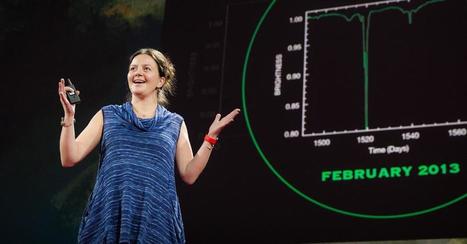
Something massive, with roughly 1,000 times the area of Earth, is blocking the light coming from a distant star known as KIC 8462852, and nobody is quite sure what it is. As astronomer Tabetha Boyajian investigated this perplexing celestial object, a colleague suggested something unusual: Could it be an alien-built megastructure? Such an extraordinary idea would require extraordinary evidence. In this talk, Boyajian gives us a look at how scientists search for and test hypotheses when faced with the unknown.
|