Your new post is loading...
Monstrous moonshine, a quirky pattern of the monster group in theoretical math, has a shadow - umbral moonshine. Mathematicians have now proved this insight, known as the Umbral Moonshine Conjecture, offering a formula with potential applications for everything from number theory to geometry to quantum physics. "We've transformed the statement of the conjecture into something you could test, a finite calculation, and the conjecture proved to be true," says Ken Ono, a mathematician at Emory University. "Umbral moonshine has created a lot of excitement in the world of math and physics." "Sometimes a result is so stunningly beautiful that your mind does get blown a little," says Duncan, who co-wrote the statement for the Umbral Moonshine Conjecture with Miranda Cheng, a mathematician and physicist at the University of Amsterdam, and Jeff Harvey, a physicist at the University of Chicago. "Think of a 24-dimensional doughnut," Duncan says. "And then imagine physical particles zooming through this space, and one particle sometimes hitting another. What happens when they collide depends on a lot of different factors, like the angles at which they meet. There is a particular way of making this 24-dimensional system precise such that the monster is its symmetry. The monster is incredibly symmetric." "The monster group is not just a freak," Ono adds. "It's actually important to many areas of math." It's too immense, however, to use directly as a tool for calculations. That's where representation theory comes in. Shortly after evidence for the monster was discovered, mathematicians John McKay and John Thompson noticed some odd numerical accidents. They found that a series of numbers that can be extracted from a modular function and a series extracted from the monster group seemed to be related. (One example is the strange and simple arithmetic equation 196884 = 196883 + 1.) John Conway and Simon Norton continued to investigate and found that this peculiar pattern was not just a coincidence. "Evidence kept accumulating that there was a special modular function for every element in the monster group," Ono says. "In other words, the main characteristics of the monster group could be read off from modular functions. That opened the door to representation theory to capture and manipulate the monster." The idea that modular functions could tame something as unruly as the monster sounded impossible - like lunacy. It was soon dubbed the Monstrous Moonshine Conjecture. The moonshine reference has the same meaning famously used by Ernest Rutherford, known as the father of nuclear physics. In a 1933 speech, Rutherford said that anyone who considered deriving energy from splitting atoms "was talking moonshine." In 1998, Richard Borcherds won math's highest honor, the Fields Medal, for proving the Monstrous Moonshine Conjecture. His proof turned this representation theory for the monster group into something computable. Fast-forward 16 years. Three Japanese physicists (Eguchi, Ooguri and Tachikawa) were investigating a particular kind of string theory using a particle physics model from the Mathieu Group M24, another important finite simple group. "They conjectured a new way to extract numbers from the Mathieu Group," Duncan says, "and they noticed that the numbers they extracted were similar to those of the monster group, just not as large." Terry Gannon, a mathematical physicist, proved that their observations are true. It was a new, unexpected analogue that hinted at a pattern similar to monstrous moonshine. Duncan started investigating this idea with physicists Cheng and Harvey. "We realized that the Mathieu group pattern was part of a much bigger picture involving mock modular forms and more moonshine," Duncan says. "A beautiful mathematical structure was controlling it." They dubbed this insight the Umbral Moonshine Conjecture. Since they published the final version of the more than 100-page conjecture online last June, it has been downloaded more than 2,500 times.
Via Paulo Gervasio

|
Scooped by
Dr. Stefan Gruenwald
May 12, 2016 6:48 PM
|
Scientists have found the first eukaryotic organism that functions fine without mitochondria, the "powerhouses" that make energy for the cells of yeast, humans and other animals. Mitochondria are the powerhouses inside eukaryotic cells, the type of complicated cell that makes up people, other critters and plants and fungi. All eukaryotic cells contain a nucleus and little organelles — and one of the most famous was the mitochondrion. "They were considered to be absolutely indispensable components of the eukaryotic cell and the hallmark of the eukaryotic cell," says Anna Karnkowska, a researcher in evolutionary biology at the University of British Columbia in Vancouver. Karnkowska and her colleagues describe their new find in a study published online Thursday in the journal Current Biology.i Mitochondria have their own DNA, and scientists believe they were once free-living bacteria that got engulfed by primitive, ancient cells that were evolving to become the complex life forms we know and love today. For decades, researchers have tried to find eukaryotic cells that don't have mitochondria — and for a while they thought they'd found some. One example is Giardia, a human gut parasite that causes diarrhea. It was considered to be a kind of living fossil because it had a nucleus but didn't seem to have acquired mitochondria. But additional studies on Giardia and other microbes showed that actually, the mitochondria were there. "It turned out that all of them actually had some kind of remnant mitochondrion," says Karnkowska, who notes that mitochondria perform key jobs in the cell beyond just generating power. A biggie is assembling iron-sulfur clusters for certain proteins, which is thought to be a mitochondrial function that's really essential. So even if a microbe powers itself in a different way and has a limited form of the organelle that isn't the same as the mitochondria found in people, Karnkowska says, "it's still a mitochondrion and it has some important function for the cell." That kind of vestigial mitochondrion is what she expected to find when she was a researcher at Charles University in Prague and started investigating a particular gut microbe that had been isolated from a researcher's pet chinchilla. After she and her colleagues sequenced the gut microbe's genome, however, they found no trace that it made any mitochondrial proteins at all. "So that's a great surprise for us," she says. "That should theoretically kill the cell — it shouldn't exist." What they learned is that instead of relying on mitochondria to assemble iron-sulfur clusters, these cells use a different kind of machinery. And it looks like they acquired it from bacteria. The researchers say this is the first example of any eukaryote that completely lacks mitochondria.
|
|
Scooped by
Dr. Stefan Gruenwald
May 12, 2016 1:54 PM
|
A University of Washington team of computer scientists and engineers has built what they say is one of the most highly capable five-fingered robot hands in the world. It can perform dexterous manipulation and learn from its own experience without needing humans to direct it. Their work is described in a paper to be presented May 17 at the IEEE International Conference on Robotics and Automation. “Hand manipulation is one of the hardest problems that roboticists have to solve,” said lead author Vikash Kumar, a UW doctoral student in computer science and engineering. “A lot of robots today have pretty capable arms but the hand is as simple as a suction cup or maybe a claw or a gripper.” The UW research team has developed an accurate simulation model that enables a computer to analyze movements in real time. In their latest demonstration, they apply the model to the robot hardware and to real-world tasks like rotating an elongated object.
|
|
Scooped by
Dr. Stefan Gruenwald
May 12, 2016 1:13 PM
|
|
|
Scooped by
Dr. Stefan Gruenwald
May 11, 2016 12:56 PM
|
AeroFarms' headquarters in Newark, New Jersey, is a former steel factory that's been converted into the world's largest vertical farm. Throughout the 6,410m2 of growing space, plant beds are stacked on top of each other in 12 layers between floor and ceiling. LEDs provide lighting and the roots of leafy greens, herbs and salads are kept nourished using an "aeroponic" mist claimed to use 95 per cent less water than outdoor agriculture. "This is game-changing in terms of productivity," explains Marc Oshima, AeroFarms' co-founder. "We can take the same seed that might take 30-35 days to grow outside, and it will have a 12-16 day crop cycle in our system, so we can have 20 crop cycles a year." AeroFarms' agricultural optimisation relies on algorithms that continually monitor nutrients and lighting at different points in the plants' growth cycles. By optimising light wavelengths and the nutrient-filled mist, operators can endow plants with different tastes, textures, colours and yield. "For example, we can make watercress spicier and lettuce sweeter," he says. “Our mission is to build farms in cities all over the world,” Rosenberg recently told The Huffington Post. “We are very much building the infrastructure not to build one, two or three farms but to build 20, 30 or 50 farms.” Indoors farming has long been touted as a way to address two major problems. The first is macro-level and lofty: How will we, the Earth’s 7.4 billion (and counting) humans, go about feeding ourselves in a changing world? The second is more immediate: How do you get fresh, healthy produce to people in urban food deserts, where diet-related conditions like diabetes and obesity run rampant? The answers to those questions could be a gold mine. By 2050, the world’s population is projected to rise to between 9 billion and 10 billion people. Those numbers, coupled with income growth across the world, could result in more than a 70 percent increase in demand for food by that year, according to a report by the World Bank. Making matters worse, the unpredictable and increasingly extreme weather, droughts and flooding that come of climate change are expected to grow more intense in the coming decades, as greenhouse gas emissions continue to warm the planet. The flagship facility, in partnership with RBH, Prudential and Goldman Sachs, will be able to produce 900,000kg of vegetables -- which will be distributed to local buyers -- annually when it reaches full capacity, predicted for midway through 2016.
|
|
Scooped by
Dr. Stefan Gruenwald
May 10, 2016 3:49 PM
|
A team of scientists have discovered a key mechanism that drives a bacteria that kills male insects, a development that could potentially be exploited to control insect pest species in the future. Numerous insects, including beetles, wasps and butterflies, harbor types of bacteria that are transmitted by females and induce the preferential death of males. This sex-specific lethality benefits the bacteria because males are “dead ends,” meaning they don’t transmit the bacteria, and their absence may result in additional resources for their female siblings who can more successfully transmit the bacteria. Although these symbiotic relationships disrupt a range of developmental processes, the underlying cellular mechanisms are largely unknown. A team of scientists, including Omar Akbari, an assistant professor of entomology at the University of California, Riverside, and his colleague Patrick Ferree, an assistant professor of biology at the W.M. Keck Science Department at Claremont McKenna, Pitzer and Scripps Colleges, are beginning to change that. In a paper published online on May 5 2016 in the journal Current Biology, the researchers conducted experiments using fruit flies (Drosophila melanogaster) that strongly suggest that the bacterium (Spiroplasma) initiates male killing by directly targeting the dosage compensation complex of an organism, which equalizes gene expression between the males and females. They found that the dosage compensation complex becomes displaced prior to the killing phase. This effect was accompanied by genome-wide misregulation of gene expression. Further, they artificially induced formation of the dosage compensation complex in infected females, which resulted in the complex being displaced and early death caused by the bacteria. This mirrors the killing effects in males. “Understanding the molecular mechanisms of how this bacterium can bias sex ratios of insects could have downstream implications in other insects and these mechanisms could potentially be exploited to control insect species in the future,” said Akbari, a member of UC Riverside’s Institute for Integrative Genome Biology and the Center for Disease Vector Research.
A team led by researchers from the National University of Singapore has developed a method to enhance the photoluminescence efficiency of tungsten diselenide, a two-dimensional semiconductor, paving the way for the application of such semiconductors in advanced optoelectronic and photonic devices. Tungsten diselenide is a single-molecule-thick semiconductor that is part of an emerging class of materials called transition metal dichalcogenides (TMDCs), which have the ability to convert light to electricity and vice versa, making them strong potential candidates for optoelectronic devices such as thin film solar cells, photodetectors flexible logic circuits and sensors. However, its atomically thin structure reduces its absorption and photoluminescence properties, thereby limiting its practical applications. By incorporating monolayers of tungsten diselenide onto gold substrates with nanosized trenches, the research team, led by Professor Andrew Wee of the Department of Physics at the NUS Faculty of Science, successfully enhanced the nanomaterial's photoluminescence by up to 20,000-fold. This technological breakthrough creates new opportunities of applying tungsten diselenide as a novel semiconductor material for advanced applications. Ms Wang Zhuo, a PhD candidate from the NUS Graduate School for Integrative Sciences and Engineering (NGS) and first author of the paper, explained, "This is the first work to demonstrate the use of gold plasmonic nanostructures to improve the photo-luminescence of tungsten diselenide, and we have managed to achieve an unprecedented enhancement of the light absorption and emission efficiency of this nanomaterial." Elaborating on the significance of the novel method, Prof Wee said, "The key to this work is the design of the gold plasmonic nanoarray templates. In our system, the resonances can be tuned to be matched with the pump laser wavelength by varying the pitch of the structures. This is critical for plasmon coupling with light to achieve optimal field confinement."
Via Mariaschnee
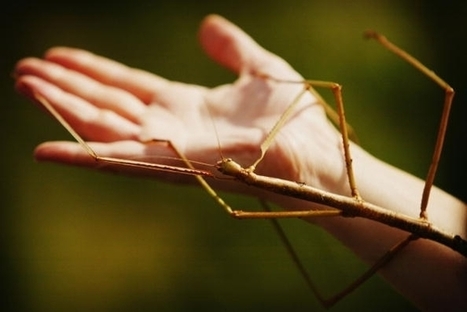
That tree twig may not be as it seems. A stick insect close to two feet long has been discovered in China, as reported by the state media Xinhua agency. Scientists have declared it to be the world's longest insect. Discovery News reported that the Chinese bug measured 1.6 feet (over half a meter) and was discovered in southern China. The record was previously held by a Malaysian stick insect that measured 22.3 inches (56.7 centimeters), discovered in 2008. The bug is now on display in the Natural History Museum in London. Scientist Zhao Li had been looking for the bug for six years after getting a tip from locals about a "huge beast half a meter long, but as thick as a human index finger." In the same report, Zhao told Xinhua that he was collecting insects on a mountain in Guangxi's Liuzhou City in August 2014 when "a dark shadow appeared in the distance," which looked like a branch or twig. "As I went near, I was shocked to find the huge insect's legs were as long as its body," he said. The scientist brought it back to the Insect Museum of West China in Chengdu, where it laid six legs. Zhao said the smallest of the hatchlings was measured at least 26 centimeters, almost twice the size of the insects found at the Natural History Museum.
Via Kathy Bosiak
|
|
Scooped by
Dr. Stefan Gruenwald
May 10, 2016 3:17 PM
|
On June 28, 2009, the world-famous physicist Stephen Hawking threw a party at the University of Cambridge, complete with balloons, hors d'oeuvres and iced champagne. Everyone was invited but no one showed up. Hawking had expected as much, because he only sent out invitations after his party had concluded. It was, he said, "a welcome reception for future time travelers," a tongue-in-cheek experiment to reinforce his 1992 conjecture that travel into the past is effectively impossible. But Hawking may be on the wrong side of history. Recent experiments offer tentative support for time travel's feasibility—at least from a mathematical perspective. The study cuts to the core of our understanding of the universe, and the resolution of the possibility of time travel, far from being a topic worthy only of science fiction, would have profound implications for fundamental physics as well as for practical applications such as quantum cryptography and computing.
The source of time travel speculation lies in the fact that our best physical theories seem to contain no prohibitions on traveling backward through time. The feat should be possible based on Einstein's theory of general relativity, which describes gravity as the warping of spacetime by energy and matter. An extremely powerful gravitational field, such as that produced by a spinning black hole, could in principle profoundly warp the fabric of existence so that spacetime bends back on itself. This would create a "closed timelike curve," or CTC, a loop that could be traversed to travel back in time.
Hawking and many other physicists find CTCs abhorrent, because any macroscopic object traveling through one would inevitably create paradoxes where cause and effect break down. In a model proposed by the theorist David Deutsch in 1991, however, the paradoxes created by CTCs could be avoided at the quantum scale because of the behavior of fundamental particles, which follow only the fuzzy rules of probability rather than strict determinism. "It's intriguing that you've got general relativity predicting these paradoxes, but then you consider them in quantum mechanical terms and the paradoxes go away," says University of Queensland physicist Tim Ralph. "It makes you wonder whether this is important in terms of formulating a theory that unifies general relativity with quantum mechanics." Recently Ralph and his PhD student Martin Ringbauer led a team that experimentally simulated Deutsch's model of CTCs for the very first time, testing and confirming many aspects of the two-decades-old theory. Theirfindings are published in Nature Communications. Much of their simulation revolved around investigating how Deutsch's model deals with the “grandfather paradox,” a hypothetical scenario in which someone uses a CTC to travel back through time to murder her own grandfather, thus preventing her own later birth. Deutsch's quantum solution to the grandfather paradox works something like this: Instead of a human being traversing a CTC to kill her ancestor, imagine that a fundamental particle goes back in time to flip a switch on the particle-generating machine that created it. If the particle flips the switch, the machine emits a particle—the particle—back into the CTC; if the switch isn't flipped, the machine emits nothing. In this scenario there is no a priori deterministic certainty to the particle's emission, only a distribution of probabilities. Deutsch's insight was to postulate self-consistency in the quantum realm, to insist that any particle entering one end of a CTC must emerge at the other end with identical properties. Therefore, a particle emitted by the machine with a probability of one half would enter the CTC and come out the other end to flip the switch with a probability of one half, imbuing itself at birth with a probability of one half of going back to flip the switch. If the particle were a person, she would be born with a one-half probability of killing her grandfather, giving her grandfather a one-half probability of escaping death at her hands—good enough in probabilistic terms to close the causative loop and escape the paradox. Strange though it may be, this solution is in keeping with the known laws of quantum mechanics. In their new simulation Ralph, Ringbauer and their colleagues studied Deutsch's model using interactions between pairs of polarized photons within a quantum system that they argue is mathematically equivalent to a single photon traversing a CTC. "We encode their polarization so that the second one acts as kind of a past incarnation of the first,” Ringbauer says. So instead of sending a person through a time loop, they created a stunt double of the person and ran him through a time-loop simulator to see if the doppelganger emerging from a CTC exactly resembled the original person as he was in that moment in the past. By measuring the polarization states of the second photon after its interaction with the first, across multiple trials the team successfully demonstrated Deutsch's self-consistency in action. "The state we got at our output, the second photon at the simulated exit of the CTC, was the same as that of our input, the first encoded photon at the CTC entrance," Ralph says. "Of course, we're not really sending anything back in time but [the simulation] allows us to study weird evolutions normally not allowed in quantum mechanics."
|
|
Scooped by
Dr. Stefan Gruenwald
May 10, 2016 3:06 PM
|
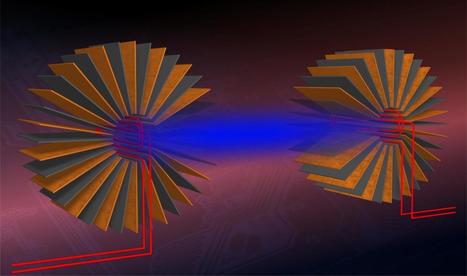
Wireless charging of mobile devices is possibly one of the most desired technological milestones. Some devices can already be charged wirelessly by placing the mobile device on top of a charging base. The next step, charging devices without the need of taking them out of one's pocket, might be just around the corner. A group of researchers from the Department of Physics of Universitat Autònoma de Barcelona has developed a system which can efficiently transfer electrical energy between two separated circuits thanks to the use of metamaterials. This system is still in the experimental stage, but once it has been perfected and can be applied to mobile devices, it will be able to charge them wirelessly and at a longer distance than currently possible. Today's wireless devices make use of induction to charge through a special case adapted to the device and a charging base connected to an electrical socket. When the device is placed on top of the base, this generates a magnetic field which induces an electric current inside the case and, without the need of using any cables, the device is charged. If the device is separated from the base, the energy is not transferred efficiently enough and the battery cannot be charged. The system created by UAB researchers overcomes these limitations. It is made up of metamaterials which combine layers of ferromagnetic materials, such as iron compounds, and conductor materials such as copper. The metamaterials envelop the emitter and receiver and enable transferring energy between the two, at a distance and with unprecedented efficiency. With the use of metamaterial crowns researchers were able in the lab to increase the transmission efficiency 35-fold, "and there is much more room for improvement, since theoretically the efficiency can be increased even more if conditions and the design of the experiment are perfected" explains Àlvar Sánchez, director of the research. "Enveloping the two circuits with metamaterial shells has the same effect as bringing them close together; it's as if the space between them literally disappears", states Jordi Prat, lead author of the paper. Moreover, the materials needed to construct these crowns such as copper and ferrite are easily available. The first experiments conducted with the aim of concentrating static magnetic fields required the use of superconductor metamaterials, unfeasible for everyday uses with mobile devices. "In contrast, low frequency electromagnetic waves – the ones used to transfer energy from one circuit to the other – only need conventional conductors and ferromagnets", Carles Navau explains.
|
|
Scooped by
Dr. Stefan Gruenwald
May 10, 2016 1:40 PM
|
Persons with the serious disorder ALS, can have a genetic mutation that causes the protein SOD1 to aggregate in motor neurons in the brain and spinal cord. Researchers at Umeå University have discovered that, when injected into mice, the SOD1 aggregation spreads rapidly leading to ALS. The discovery has been described in theJournal of Clinical Investigation. ALS, Amyotrophic lateral sclerosis, is a disorder which causes death of motor neurons in the brain and the spinal cord in charge of controlling muscles. This leads to progressive paralysis and death, often due to carbon dioxide narcosis. “The occurrence of SOD1 aggregates in nerve cells in ALS patients has been known for a while,” says Thomas Brännström, professor of Pathology at Umeå University and one of the authors of the article. “But it has long been unclear what role the SOD1 aggregates play in the disease progression in humans carrying hereditary traits for ALS. We have now been able to show that the SOD1 aggregates start a domino effect that rapidly spreads the disease up through the spinal cord of mice. We suspect that this could be the case for humans as well.” Researchers at the Departments of Medical Biosciences and Pharmacology and Clinical Neuroscience at Umeå University have examined whether the accumulation of the SOD1 aggregates inside nerve cells drives the ALS disease or if it is a harmless side-effect. The research team has been able to identify two different kinds of SOD1 aggregates in mice. The results showed that both kinds caused a spread of SOD1 aggregation when a small amount was injected into the spinal cord of mice. The accumulation of aggregates progressed in nerve cells along the entire spinal cord of the mice at the same time as it led to a rapid and eventually mortal outcome of the disease. “The results show that the aggregation of SOD1 plays a critical role in the disease progression – a research hypothesis that ALS researchers in Umeå long has based its work upon,” says Stefan Marklund, professor of Clinical Chemistry. “More research is necessary, but our aim is to develop interventions that prevent or stop the fatal course of the disease in carriers of hereditary traits of ALS.”
|
|
Scooped by
Dr. Stefan Gruenwald
May 10, 2016 1:34 PM
|
To study certain aspects of cells, researchers need the ability to take the innards out, manipulate them, and put them back. Options for this kind of work are limited, but researchers reporting May 10 in Cell Metabolism describe a "nanoblade" that can slice through a cell's membrane to insert mitochondria. The researchers have previously used this technology to transfer other materials between cells and hope to commercialize the nanoblade for wider use in bioengineering. "As a new tool for cell engineering, to truly engineer cells for health purposes and research, I think this is very unique," says Mike Teitell, a pathologist and bioengineer at the University of California, Los Angeles (UCLA). "We haven't run into anything so far, up to a few microns in size, that we can't deliver." Teitell and Pei-Yu "Eric" Chiou, also a bioengineer at UCLA, first conceived the idea of a nanoblade several years ago to transfer a nucleus from one cell to another. However, they soon delved into the intersection of stem cell biology and energy metabolism, where the technology could be used to manipulate a cell's mitochondria. Studying the effects of mutations in the mitochondrial genome, which can cause debilitating or fatal diseases in humans, is tricky for a number of reasons. "There's a bottleneck in the field for modifying a cell's mitochondrial DNA," says Teitell. "So we are working on a two-step process: edit the mitochondrial genome outside of a cell, and then take those manipulated mitochondria and put them back into the cell. We're still working on the first step, but we've solved that second one quite well." The nanoblade apparatus consists of a microscope, laser, and titanium-coated micropipette to act as the "blade," operated using a joystick controller. When a laser pulse strikes the titanium, the metal heats up, vaporizing the surrounding water layers in the culture media and forming a bubble next to a cell. Within a microsecond, the bubble expands, generating a local force that punctures the cell membrane and creates a passageway several microns long that the "cargo"–in this case, mitochondria–can be pushed through. The cell then rapidly repairs the membrane defect. Teitell, Chiou, and their team used the nanoblade to insert tagged mitochondria from human breast cancer cells and embryonic kidney cells into cells without mitochondrial DNA. When they sequenced the nuclear and mitochondrial DNA afterwards, the researchers saw that the mitochondria had been successfully transferred and replicated by 2% of the cells, with a range of functionality. Other methods of mitochondrial transfer are hard to control, and when they have been reported to work, the success rates have been only 0.0001%-0.5% according to the researchers.
|
|
Scooped by
Dr. Stefan Gruenwald
May 10, 2016 1:16 PM
|
Centuries of caravan domestication and travel left some metaphorical tire marks on Arabian camel genes, researchers find. Arabian camels (Camelus dromedarius) have trekked across ancient caravan routes in Asia and Africa for 3,000 years. But it’s unclear how camels’ domestication has affected their genetic blueprints. To find out, Faisal Almathen of King Faisal University in Saudi Arabia and his colleagues combed through the DNA of 1,083 modern camels and ancient remains of wild and domesticated camels found at archaeological sites going back to 5000 B.C. Camels run high on genetic diversity thanks to periodic restocking from now-extinct wild populations in the centuries after their domestication, the team reports May 9 in the Proceedings of the National Academy of Sciences. Travel on human caravan routes also created a steady flow of genes between different domesticated populations, except in a geographically isolated group in East Africa. That diversity may give some camel populations a leg up in adapting to future changes in climate, the authors suggest.
|
|
|
Rescooped by
Dr. Stefan Gruenwald
from SciFrye
May 13, 2016 1:22 AM
|
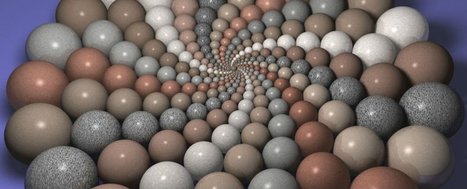
In 3D, a sphere is the set of points that are all the same distance from a common centre – like a tennis ball or an orange. And if you’ve ever seen a pile of tennis balls, you know that there’s always some empty space between the balls. If they’re just poured out of a bag, about 36 percent of the resulting pile will be air.
The number drops to about 26 percent if you arrange the spheres very carefully - called the 26 percent method - but mathematicians have known since the beginning of the 20th century that there’s no way to do better than that.
Mathematicians also play the packing game in higher dimensions, where spheres have the same definition, but the distances gain extra coordinates on top of the familiar three (x, y, and z, for example) that we’re used to. And with more dimensions come more possible arrangements, so finding the arrangements that minimize the empty space has been challenging.
But a mathematician named Maryna Viazovska seems to have finally cracked the case, and for two particularly interesting cases. She started off with an arrangement of eight-dimensional spheres called E8. E8 is a lot like a higher-dimensional version of the 26 percent method, except that in eight dimensions, there’s enough space between the spheres that a new one can fit snugly between them.
And while string theorists don’t use the spheres, they do use the structure of E8 as a key component of the way that the different dimensions of string theory relate to one another. String theory starts out with 26 dimensions, and has to fold them down into the three that we know, and E8 has all of the properties necessary to do that.
Mathematicians and physicists argued that this couldn’t be a coincidence - they figured that the dimensions would act in the most efficient way possible, since any extra space would be harder to explain.
And it looks like they were right. Viazovska was able to show that E8 leaves no extra space anywhere; it’s the most efficient way of stacking eight-dimensional spheres together.
But she didn’t stop there. After she published her paper online at pre-print website arXiv.org, some other mathematicians who wanted solve the problem in 24 dimensions contacted her. "I felt like, 'I am already tired and I deserve some rest,'" Viazovska told Quanta Magazine. "But I tried still to be useful."
This time, the group was tackling an arrangement called the Leech lattice, stumbled upon by John Leech in the 1960s. Leech was trying to figure out ways to correct for errors or noise that would accumulate as signals traveled.
He found a way of arranging the data in 24 dimensions that made it very robust for tasks like transmitting pictures of Jupiter from half a billion miles away – which Voyagers 1 and 2 did a decade later using the Leech lattice.
The Leech lattice arranges information like someone might arrange spheres in those 24 dimensions, and mathematicians had again thought that seemed like the most efficient way to do it. Viazovska and her collaborators again proved the intuition correct, with a paper that came out just a week after the E8 paper did.
The two papers haven’t been peer-reviewed yet, but there seems to be little doubt among mathematicians that they’re right. And while the findings probably won’t change very much about the computing and physics that make these two arrangements special, the methods used by Viazovska and her group could be extended to a lot of future proofs.
Maybe mathematicians will find stacked spheres in your job next.
Via Kim Frye
|
|
Scooped by
Dr. Stefan Gruenwald
May 12, 2016 1:56 PM
|
Two implantable devices developed by American and Chinese researchers are designed to dissolve in the brain over time and may eliminate several current problems with implants. University of Pennsylvania researchers have developed an electrode and an electrode array, both made of layers of silicon and molybdenum that can measure physiological characteristics (like neuron signals) and dissolve at a known rate (determined by the material’s thickness). The team used the device in anesthetized rats to record brain waves (EEGs) and induced epileptic spikes in intact live tissue. In another experiment, they showed the dissolvable electronics could be used in a complex, multiplexed ECoG (intracranial electroencephalography) array over a 30-day period. As the researchers note online in Nature Materials, this new technology offers equal or greater resolution for measuring the brain’s electrical activity, compared to conventional electrodes, while eliminating “the risks, cost, and discomfort associated with surgery to extract current devices used for post-operative monitoring,” according to senior co-author Brian Litt, MD, a professor of Neurology, Neurosurgery, and Bioengineering at the Perelman School of Medicine. Other potential uses of the dissolvable electronics include: - Disorders such as epilepsy, Parkinson’s disease, depression, chronic pain, and conditions of the peripheral nervous system. “These measurements are critically important for mapping and monitoring brain function during and in preparation for neurosurgery, for assisting in device placement, such as for Parkinson’s disease, and for guiding surgical procedures on complex, interconnected nerve structures,” Litt said.
- Post-operative monitoring and recording of physiological characteristic after minimally invasive placement of vascular, cardiac, orthopaedic, neural or other devices. At present, post-operative monitoring is based on clinical examination or interventional radiology, which is invasive, expensive, and impractical for continuous monitoring over days to months.
- Heart and brain surgery for applications such as aneurysm coiling, stent placement, embolization, and endoscopic operations. These new devices could also monitor structures that are exposed during surgery, but are too delicate to disturb later by removing devices.
- More complex devices that also include flow, pressure, and other measurement capabilities.
|
|
Scooped by
Dr. Stefan Gruenwald
May 12, 2016 1:53 PM
|
Here’s an innovative idea: create new proteins by simply “sewing” together pieces of existing proteins. That’s exactly what researchers at the University of North Carolina School of Medicine have done to design new “cellular machines” needed to understand and battle diseases. Published today in the journal Science, the new technique, called SEWING, was inspired by natural evolutionary mechanisms that also recombine portions of the 100,000 different known proteins in the body. Traditionally, researchers have used computational protein design to recreate in the laboratory what already exists in the natural world. But in recent years, their focus has shifted toward inventing novel proteins with new functionality. Those design projects all start with a specific structural “blueprint” in mind, and as a result are limited. Senior study author Brian Kuhlman, PhD, professor of biochemistry and biophysics, and his colleagues believe that by removing the limitations of a pre-determined blueprint and taking cues from evolution, they can more easily create new functional proteins. “We can now begin to think about engineering proteins to do things that nothing else is capable of doing,” he said. “The structure of a protein determines its function, so if we are going to learn how to design new functions, we have to learn how to design new structures. Our study is a critical step in that direction and provides tools for creating proteins that haven’t been seen before in nature.” To mimic the mechanisms of natural protein evolution, they developed a computer design strategy called SEWING (Structure Extension With Native-substructure Graphs): - The researchers digitally chopped up naturally occurring proteins into well-defined pieces.
- They performed a series of computational tests to figure out which pieces would fit well together. In nature, this step would involve looking for stretches of amino acid sequences that are similar between proteins. On the computer, it involved searching for regions of structural similarity to make things fit in the right place.
- They whittled down the list to the top 21 proteins, which they produced in the lab.
- To confirm what they created, they took pictures of these proteins using x-ray crystallography and nuclear magnetic resonance (NMR), and found that the proteins contained all the unique structural varieties they had designed on the computer.
Currently, the researchers are using SEWING to create proteins that can bind to several other proteins at a time. Many of the most important natural proteins are similar multitaskers, including the blood protein hemoglobin, which carries four copies of oxygen from the lungs to the body’s tissues.
|
|
Scooped by
Dr. Stefan Gruenwald
May 11, 2016 12:57 PM
|
Simin Qiu, the creator and designer of this concept designed the faucet such that it passes water via a double turbine .The latter rotates as the water courses through it thus bring about a lattice of elaborate and beautiful jets of water. Less water is used to form this intricate swirls, in fact it reduces the flow of water by 15%.This means that less water is utilized at any point in time, thus saving you water. Three nozzles are available all creating different water swirl patterns. The Design concept award in 2014 was awarded to Qiu for this concept. In order to retain the sleek and elegant design, the operation of this faucet is carried out with a simple touch button at the top.
|
|
Scooped by
Dr. Stefan Gruenwald
May 11, 2016 11:02 AM
|
Human reproduction is about to undergo a radical shift. Embryo selection, in connection with in-vitro fertilization (IVF), will help our species eliminate many genetic diseases, extend healthy lifespans, and enhance people’s overall well-being. Within 20 years, I predict that it will supplant sex as the way large numbers of us conceive of our children. But while the embryo selection revolution will do a lot of good, it will also raise thorny ethical questions about diversity, equality and what it means to be human–questions we are woefully unprepared to address. IVF for humans has been around since 1978, the year Louise Brown, the first so-called “test-tube baby,” was born in the UK. Since then, nearly six million infants around the world have been conceived via IVF, with the procedure growing in popularity each year. Starting in the 1990s, doctors began using preimplantation genetic screening (PGS) to extract cells from early-stage embryos and screen them for simple genetic diseases. Over time, many genetic diseases will come to be seen as preventable parental lifestyle choices rather than bad luck. At present, over a thousand such diseases, including cystic fibrosis, Huntington’s disease, Tay-Sachs, sickle-cell anemia, and Duchenne muscular dystrophy, can be screened during PGS and the list is growing constantly. With this information, parents using IVF and PGS can select embryos not carrying those diseases if they choose to do so. Some jurisdictions, including the US, Mexico, Italy, and Thailand, also allow parents to select the gender of their future children. These are still the early days of PGS. The process of linking single gene mutations to specific diseases has been slow and painstaking, but also relatively straightforward. As increasingly more people have their full genomes sequenced, an essential foundation for the future of personalized medicine, scientists will be able to uncover and screen for genetic and epigenetic patterns underpinning far more genetically complex diseases like epilepsy and type 1 diabetes. As the PGS procedure improves and the number of diseases it prevents increases, I foresee that growing numbers of parents will decide to use assisted reproduction technologies when conceiving children. Over time, many genetic diseases will come to be seen as preventable parental lifestyle choices rather than bad luck. People will be free to opt out of laboratory-managed conception for religious, ideological, or economic reasons—or in fits of passion. But having children through IVF and embryo selection will become the norm for parents of all ages and genetic predispositions. We’ll still have sex for most of the wonderful reasons we do now, just not to have babies. Governments and insurance companies will have strong incentives to cover the expense of IVF and embryo screening. In the few countries like Australia, France, Israel, and Sweden, where assisted reproduction is covered by national health plans, the popular shift toward managed conception will not pose challenging questions of socio-economic equity. In other countries where the cost of IVF and PGS remains high—the procedures currently cost up to $20,000 in the US—the equity challenge will be greater. And in the poorest countries, IVF and PGS may not be available at all. But as IVF and PGS become more widely accepted, the cost will go down and access percentages will go up. In many countries, governments and insurance companies will have strong incentives to cover the expense of IVF and embryo screening. This cost will be far less than that of providing lifetime care for all the children born with preventable genetic diseases in the absence of screening. Another option would be pre-natal screening of embryos during pregnancy, a far more morally fraught process with significantly fewer benefits. Even as the procedures become more prevalent, IVF and PGS will not be without risk. Egg extraction can be extremely painful and sometimes even dangerous for women. Early-stage embryos can be damaged during the biopsy process, and up to a fifth of the embryos may not survive cryogenic freezing prior to implantation. The process can also be expensive, time-consuming, and stressful for parents. And a preliminary study released in the Journal of the American Medical Association (JAMA) earlier this year suggested that children born from IVF may be slightly more likely to carry certain birth defects than their non-IVF peers.
|
|
Scooped by
Dr. Stefan Gruenwald
May 10, 2016 3:45 PM
|
Earlier this week, an expert from the Southern California Earthquake Center spoke at a conference in Long Beach and called the southern San Andreas fault "locked, loaded and ready to go" for a major 'quake. He said that people should be preparing for something around a magnitude 8.0—that's larger than the devastating San Francisco earthquake back in 1906, the LA Times notes, and that one caused about 3,000 deaths from both the shaking and the fires that followed (which LA's former earthquake czar Lucy Jones has said we should be worried about). What would an earthquake that big even look like? How would it move and where could we expect the shaking to be felt? For that, there's a video from the SCEC that shows where the movement would occur and how far away it could be felt in the event of a 'quake that starts near San Luis Obispo and moves south along the fault.
Ancient alga developed large size and complex structure independently of other plants. A mysterious deep-ocean seaweed diverged from the rest of the green-plant family around 540 million years ago, developing a large body with a complex structure independently from all other sea or land plants. All of the seaweed’s close relatives are unicellular plankton. The finding, published today in Scientific Reports1, upends conventional wisdom about the early evolution of the plant kingdom. “People have always assumed that within the green-plant lineage, all the early branches were unicellular,” says Frederik Leliaert, an evolutionary biologist at Ghent University in Belgium. “It is quite surprising that among those, a macroscopic seaweed pops up.” There are only a few described species in this odd order of sea life, known as the Palmophyllales. All live at great depth, usually more than 80 metres below the surface. Five years ago, Leliaert was one of the team that first investigated the order’s genetics. But even though it looked superficially like many green algae, the seaweed turned out to be only very distantly related to any other macroscopic green algae or land plant2. At this point, the scientists could do little more than show that the species was very different.
Via Meristemi
|
|
Scooped by
Dr. Stefan Gruenwald
May 10, 2016 3:18 PM
|
Evidence confirms dramatic climate change effects in the Solomon Islands Sea-level rise, erosion and coastal flooding are some of the greatest challenges facing humanity from climate change. Recently at least five reef islands in the remote Solomon Islands have been lost completely to sea-level rise and coastal erosion, and a further six islands have been severely eroded. These islands lost to the sea range in size from one to five hectares. They supported dense tropical vegetation that was at least 300 years old. Nuatambu Island, home to 25 families, has lost more than half of its habitable area, with 11 houses washed into the sea since 2011. This is the first scientific evidence, published in Environmental Research Letters, that confirms the numerous anecdotal accounts from across the Pacific of the dramatic impacts of climate change on coastlines and people.
|
|
Scooped by
Dr. Stefan Gruenwald
May 10, 2016 3:07 PM
|
Identifying the sites where gamma-retroviruses commonly insert into the genome may help to identify genes associated with specific cancer types, according to a study published April 20, 2016 in the open-access journal PLOS ONE by Kathryn Gilroy at the University of Glasgow, UK, and colleagues. Gamma-retroviruses, such as feline leukaemia virus, tend to cause mutations when they insert into a host’s genome, and have been used as a tool to discover genes associated with cancer. However, this discovery process can be time consuming, requiring the collection of multiple tumors from animals and comparative genomic analyses. The authors of the present study sought to investigate the pattern of gamma-retrovirus insertion using deep sequencing to analyse common insertion sites for feline leukaemia virus in cell culture. The study was also expanded to analyze published genome insertion profiles of other gamma-retroviruses. The authors found that the gamma-retroviruses preferentially inserted into cancer-driving genes, regardless of transcription levels, in a cell type-specific manner. This authors suggest that gamma-retrovirus integration profiling in vitro may be a tool to identify potential therapeutic target genes in different human cancer types.
|
|
Scooped by
Dr. Stefan Gruenwald
May 10, 2016 3:05 PM
|
The human placenta is an organ unlike any other. During the course of nine months it is formed by the embryo, sustains life and then is shed. “What that means,” said Montserrat Anguera, an assistant professor in the University of PennsylvaniaSchool of Veterinary Medicine, “is it has to make very specialized cells, it has to form structures to support itself and the baby, it has to sense cues from the mom and from the environment and it has to do all of these things really, really fast." In a new study, Anguera and colleagues have identified a long non-coding RNA, or lncRNA, that contributes to a crucial function of the placenta: protecting the unborn baby from invading pathogens. The work, published in the journal Molecular and Cellular Biology, is the first to identify a lncRNA in the placenta involved in regulating the immune response. Further study of this and other lncRNAs could shed light on how the placenta protects against pathogens, even at the earliest stage of embryotic development. Long-term, the researchers say, it’s possible that this lncRNA could even present a target for priming the placenta to resist viruses or other infectious agents. Knowledge about lncRNAs is fast-evolving, and it’s an area that Anguera has been part of since her time as a postdoctoral researcher. As their name suggests, lncRNAs are RNA transcripts greater than 200 nucleotides in length that do not code for proteins. Many of them are known to regulate gene expression and to do so in a rapid manner. Other researchers have identified lncRNAs in later-term placentas involved in regulating functions such as growth, but Anguera wanted to look at the earliest stages of placental formation to see how lncRNAs might be influencing development. Using data from an earlier paper by a Chinese group that had sequenced RNA in various stages of early human development, Anguera’s team zeroed on a lncRNA called lncRHOXF1, located on the X chromosome, that was present at high levels in trophectoderm cells, from which the placenta arises, and barely detectable in the cells that give rise to the embryo. Not only was it present in trophectoderm cells, it was one of the most abundant lncRNAs in that cell type.
|
|
Scooped by
Dr. Stefan Gruenwald
May 10, 2016 1:38 PM
|
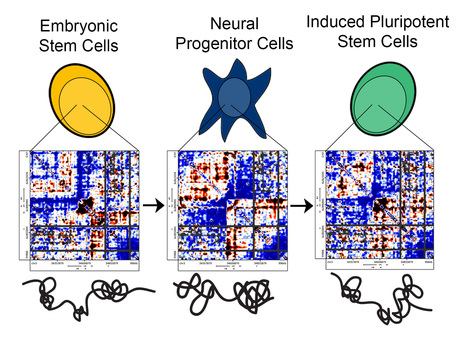
Induced pluripotent stem cells hold promise for regenerative medicine because they can, in theory, turn into any type of tissue and because they are made from a patient’s own adult cells, guaranteeing compatibility. However, the technique that turns adult cells into these iPS cells is not foolproof; after reverting to their pluripotent state, these cells don’t always correctly differentiate back into adult cells. Researchers from the University of Pennsylvania have now discovered one of the reasons why: the reversion process does not always fully capture the way a cell’s genome is folded up inside its nucleus. This folding configuration directly influences gene expression and therefore the functionality of the cell. The new study shows that current techniques might not produce iPS cells that are equivalent to the pluripotent stem cells found in embryos, as some clones retain folding patterns that partially resemble those found in the adult cells from which they are made. Led by Jennifer Phillips-Cremins, assistant professor in the School of Engineering and Applied Science’s Department of Bioengineering, and Jonathan Beagan, a graduate student in her lab, the study, published in the journal Cell Stem Cell, also suggests ways of minimizing these folding errors. Though techniques for reverting adult cells into iPS cells have existed for a decade and avoid the issues surrounding the use of embryonic stem cells that have stymied research into regenerative medicine, clinical investigations of these cells have been cautious and slow. IPS cells can fail to correctly differentiate into the desired tissue. Moreover, there are also concerns that the resulting tissue could have unforeseen genetic abnormalities or could become cancerous. Even outside the clinical applications, many researchers are interested in iPS cells as a way of generating a “disease in a dish.” Rather than taking a tissue sample from a patient with a genetic disorder, which is especially challenging when the affected organ is the brain, researchers could use iPS cells derived from that patient’s skin cells to grow model organs as needed. Observing the development of those tissues could provide clues to the progression of the disease, as well as serve as ideal test-beds for treatments not yet approved for use in humans. In both clinical and research applications, however, the traits that allow for the generation of “high quality” iPS cells capable of correctly differentiating into the desired tissue with no genetic abnormalities is unclear. “We know there is a link between the topology of the genome and gene expression,” Phillips-Cremins said, “so this motivated us to explore how the genetic material is reconfigured in three dimensions inside the nucleus during the reprogramming of mature brain cells to pluripotency. We found evidence for sophisticated configurations that differ in important ways between iPS cells and embryonic stem cells.”
|
|
Scooped by
Dr. Stefan Gruenwald
May 10, 2016 1:29 PM
|
One year ago, Brazil reported the first laboratory-confirmed cases of Zika. The virus had cropped up elsewhere in a few earlier outbreaks, too, but it didn’t seem all that threatening at the time. Zika symptoms were generally pretty mild — or even nonexistent, the Pan American Health Organization and the World Health Organization reported in an epidemiological alert May 7, 2015. The alert made no mention of pregnant women, babies or microcephaly. In fact, it noted: “Complications (neurological, autoimmune) are rare.” What a difference a year makes. Now scientists have convincingly tied Zika infection to birth defects, and suspect it’s behind an uptick in neurological disorders in adults, too. But researchers are still figuring out how the virus acts, and how to stop it. A vaccine is in the works, but could take years. So Zika-fighting tactics have gotten creative. A new billboard in Brazil lures mosquitoes in with spritzes of humanlike scent, and then traps them inside a chamber to die. (It kills hundreds of mosquitoes a day, the billboard’s makers tout, but scientists have yet to weigh in.) Researchers have recently explored other methods to rein in Zika. This and more from recent research: - The best weapon against Zika may be a mosquito-infecting bacteria. Mosquitoes harboringWolbachia pipientis resisted infection from two strains of Zika virus circulating in Brazil, researchers report May 4 in Cell Host & Microbe. And if Wolbachia-carrying mosquitoes do get infected, they’re less likely to transmit the virus. Releasing these mosquitoes in the wild could help halt Zika’s spread.
- An antimalarial drug called chloroquine could also work against Zika. When added to human brain cells and mouse minibrains in the lab, the drug helped prevent Zika infection. It also kept minibrains looking somewhat healthy, researchers report May 2 at bioRxiv.org. Chloroquine is a promising candidate for clinical trials, the authors write, because it’s safe for use in pregnant women.
- Zika kills brain cells by cranking up production of a protein that triggers cellular self-destruction, researchers report May 6 in Cell Stem Cell. Scientists knew that infection with the virus could kill cells, shrinking minibrains grown in the lab, but until now, they didn’t understand how. The protein, an immune molecule called TLR3, could act as a target for therapies.
- A new paper-based Zika test could offer doctors a quick and easy way to detect the virus. The test senses Zika RNA and can differentiate between African and American strains, scientists report May 6 in Cell. Though still in the proof-of-concept stage, the test was able to confirm Zika’s presence in samples from an infected macaque. The news comes on the heels of the FDA’s recent approval of a commercial test for Zika.
|