


Criss-crossing the globe on a quest for unusual DNA, researchers have discovered a rare mutation that promises insights into both epilepsy and autism — and points to a treatment.
Via Integrated DNA Technologies

 Your new post is loading...
 Scoop.it! Criss-crossing the globe on a quest for unusual DNA, researchers have discovered a rare mutation that promises insights into both epilepsy and autism — and points to a treatment. Via Integrated DNA Technologies 
No comment yet.
Sign up to comment
Scoop.it!

From Disney and ETH Zurich, this steam-punkish robot can transition from ground to wall and back again.
VertiGo is a wall-climbing robot that is capable of transitioning from the ground to the wall, created in collaboration between Disney Research Zurich and ETH. The robot has two tiltable propellers that provide thrust onto the wall, and four wheels. One pair of wheels is steerable, and each propeller has two degrees of freedom for adjusting the direction of thrust. By transitioning from the ground to a wall and back again, VertiGo extends the ability of robots to travel through urban and indoor environments. The robot is able to move on a wall quickly and with agility. The use of propellers to provide thrust onto the wall ensures that the robot is able to traverse over indentations such as masonry. The choice of two propellers rather than one enables a floor-to-wall transition – thrust is applied both towards the wall using the rear propeller, and in an upward direction using the front propeller, resulting in a flip onto the wall.
Scoop.it!

Can machines think? That's what renowned mathematician Alan Turing sought to understand back in the 1950s when he created an imitation game to find out if a human interrogator could tell a human from a machine based solely on conversation deprived of physical cues. The Turing test was introduced to determine a machine's ability to show intelligent behavior that is equivalent to or even indistinguishable from that of a human. Turing mainly cared about whether machines could match up to humans' intellectual capacities.
But there is more to being human than intellectual prowess, so researchers from the Center for Complex Systems and Brain Sciences (CCSBS) in the Charles E. Schmidt College of Science at Florida Atlantic University set out to answer the question: "How does it 'feel' to interact behaviorally with a machine?"
They created the equivalent of an "emotional" Turing test, and developed a virtual partner that is able to elicit emotional responses from its human partner while the pair engages in behavioral coordination in real-time.
Results of the study, titled "Enhanced Emotional Responses during Social Coordination with a Virtual Partner," are recently published in the International Journal of Psychophysiology. The researchers designed the virtual partner so that its behavior is governed by mathematical models of human-to-human interactions in a way that enables humans to interact with the mathematical description of their social selves.
"Our study shows that humans exhibited greater emotional arousal when they thought the virtual partner was a human and not a machine, even though in all cases, it was a machine that they were interacting with," said Mengsen Zhang, lead author and a Ph.D. student in FAU's CCSBS. "Maybe we can think of intelligence in terms of coordinated motion within and between brains."
The virtual partner is a key part of a paradigm developed at FAU called the Human Dynamic Clamp -- a state-of-the-art human machine interface technology that allows humans to interact with a computational model that behaves very much like humans themselves. In simple experiments, the model -- on receiving input from human movement -- drives an image of a moving hand which is displayed on a video screen. To complete the reciprocal coupling, the subject sees and coordinates with the moving image as if it were a real person observed through a video circuit. This social "surrogate" can be precisely tuned and controlled -- both by the experimenter and by the input from the human subject.
"The behaviors that gave rise to that distinctive emotional arousal were simple finger movements, not events like facial expressions for example, known to convey emotion," said Emmanuelle Tognoli, Ph.D., co-author and associate research professor in FAU's CCSBS. "So the findings are rather startling at first."
Scoop.it!

The ocean of Jupiter's moon Europa could have the necessary balance of chemical energy for life, even if the moon lacks volcanic hydrothermal activity, finds a new study.
Europa is strongly believed to hide a deep ocean of salty liquid water beneath its icy shell. Whether the Jovian moon has the raw materials and chemical energy in the right proportions to support biology is a topic of intense scientific interest. The answer may hinge on whether Europa has environments where chemicals are matched in the right proportions to power biological processes. Life on Earth exploits such niches.
In the new study published in Geophysical Research Letters, a journal of the American Geophysical Union, scientists at NASA's Jet Propulsion Laboratory (JPL), Pasadena, California, compared Europa's potential for producing hydrogen and oxygen with that of Earth, through processes that do not directly involve volcanism. The balance of these two elements is a key indicator of the energy available for life. The study found that the amounts would be comparable in scale; on both worlds, oxygen production is about 10 times higher than hydrogen production.
The work draws attention to the ways that Europa's rocky interior may be much more complex and possibly Earthlike than people typically think, according to Steve Vance, a planetary scientist at JPL and lead author of the new study. "We're studying an alien ocean using methods developed to understand the movement of energy and nutrients in Earth's own systems. The cycling of oxygen and hydrogen in Europa's ocean will be a major driver for Europa's ocean chemistry and any life there, just it is on Earth."
Ultimately, Vance and colleagues want to also understand the cycling of life's other major elements in the ocean: carbon, nitrogen, phosphorus and sulfur.
As part of their study, the researchers calculated how much hydrogen could potentially be produced in Europa's ocean as seawater reacts with rock in a process called serpentinization. In this process, water percolates into spaces between mineral grains and reacts with the rock to form new minerals, releasing hydrogen in the process. The researchers considered how cracks in Europa's seafloor likely open up over time, as the moon's rocky interior continues to cool following its formation billions of years ago. New cracks expose fresh rock to seawater, where more hydrogen-producing reactions can take place. In Earth's oceanic crust, such fractures are believed to penetrate to a depth of 5 to 6 kilometers (3 to 4 miles). On present-day Europa, the researchers expect water could reach as deep as 25 kilometers (15 miles) into the rocky interior, driving these key chemical reactions throughout a deeper fraction of Europa's seafloor.
The other half of Europa's chemical-energy-for-life equation would be provided by oxidants -- oxygen and other compounds that could react with the hydrogen -- being cycled into the Europan ocean from the icy surface above. Europa is bathed in radiation from Jupiter, which splits apart water ice molecules to create these materials. Scientists have inferred that Europa's surface is being cycled back into its interior, which could carry oxidants into the ocean.
Scoop.it!

A claim by researchers that complex life on Earth may have evolved a billion years earlier than previously thought has immediately divided scientists in the field, with some hailing the evidence as rock-solid and others unconvinced.
Scoop.it!
From
phys

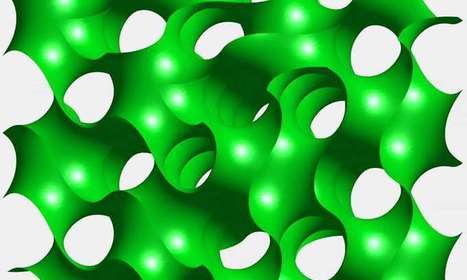
"A team of researchers with Swinburne University of Technology in Australia has found a way to use two-beam super-resolution lithography to create 3D photonic "gyroid" nanostructures—similar to those found in butterfly wings. In their paper published in the journal Science Advances, the team describes their technique and some applications to which it might be applied. Scientists have known for some time that butterfly wings have "gyroid" nanostructures in them (arranged in grid patterns), that serve the butterflies by manipulating light in useful ways. In addition to their photonic properties, the structures, which are made of intertwining curved surfaces, were also found to be very strong for their size, which has caused scientists to see if they might find a way to create them artificially. Up till now, such efforts have left a lot to be desired—most do not have a high enough resolution or are too fragile. In this new effort, the researchers report that rather than rely on traditional methods, such as two-photon polymerization, the team went with optical two-beam super-resolution lithography—they compare it to direct laser writing techniques, noting that it has two major advantages over other techniques used in the past. The first is that it offers much better resolution and the second is that the resulting structure has more mechanical strength." Via Mariaschnee
Scoop.it!

Pieces of DNA that predict lifespan are shorter in birds that are inbred – according to new research from the University of East Anglia (UEA). The findings, published today, mean that inbreeding could be linked to a shorter lifespan.
The team also found effects that spanned generations – with the young of inbred mothers also being negatively affected. The DNA pieces in question, known as telomeres, are found in almost all animals - including humans. They act as protective caps at each end of a chromosome - providing protection from damaging substances.
Lead author of the research Kat Bebbington, a PhD student in UEA’s School of Biological Sciences, said: “Telomeres are a bit like the hard plastic ends of a boot lace. Over time, they get broken down and become shorter because they absorb all the damage experienced during life.
“The rate at which this happens reflects how much stress the body is under – and importantly, how long it can continue to function. In humans, things like smoking, eating foods that are bad for you, and putting your body through extreme physical or mental stress all have a shortening effect on telomeres. In the wild, inbred animals are less able to cope when the environment is bad, and the stress of such situations causes further telomere shortening. "In short - the healthier you are, or have been, the better telomeres you have and the less quickly you age. Inbred animals are more susceptible to disease or poorly developed because they don’t have much variation in the genes they carry, plus whenever life gets difficult, they can’t cope as well outbred animals.”
Previous research from UEA revealed that the length of an animal’s telomeres predicts its biological age and how long it will live. However, this new research is the first to suggest that inbreeding - mating between related individuals - is linked to shorter telomeres in their young.
The research team, led by Prof David S Richardson at UEA, studied a 320-strong population of Seychelles warblers - a small island bird endemic to the Seychelles islands. A total of 1,064 DNA samples were collected from 592 birds over 14 years. The researchers used these samples to analyze telomere length and how this shortens over time. Via Integrated DNA Technologies
Scoop.it!

Biological evolution was preceded by a long phase of chemical evolution during which precursors of biopolymers accumulated. LMU chemists have discovered an efficient mechanism for the prebiotic synthesis of a vital class of such compounds.
How did life originate on Earth and what were its chemical building-blocks? One possible source of answers to these questions can be found in outer space. On the surface of comets planetary scientists have detected simple organic molecules that could also have been available on the young Earth – either because they were present in the material from which our planet was formed or were subsequently delivered by comets or meteorites. LMU chemist Thomas Carell and members of his research group have now shown that, under the conditions that prevailed on the young Earth, these simple molecules could indeed have served as precursors for the synthesis of one class of molecules that is an integral part of all forms of life on Earth. In addition, they have validated a plausible reaction mechanism for the production of these compounds. The new findings appear in the leading journal Science (2016).
Before self-replicating systems could be assembled, prebiotic chemistry must first have given rise to the subunits that form the basis for the complex biopolymers found in all modern organisms – the proteins and the nucleic acids that specify their structures. Unfortunately, little is known about the range of small organic compounds that was present on the young Earth. However, recent discoveries made by the European Space Agency’s Rosetta mission to the comet 67/P/Churyumov-Gerasimenko have given us some new leads. When Rosetta’s lander module Philae first made contact with the comet’s surface, it bounced off, and dust was wafted into its mass spectrometer. The ensuing analysis enabled mission scientists to identify 16 simple organics in the sample. In addition to water and carbon monoxide, the catalog included a number of nitrogen-containing components, such as formamide and hydrogen cyanide.
“We have now looked for ways in which these very simple substances could have given rise to the complex organic building-blocks of life under conditions similar to those that are thought to have existed on the young Earth. In particular, we were interested in the synthesis of key components of RNA,” Carell explains. The origin of RNA is central to an understanding of prebiotic chemistry. This is because RNA is potentially capable of catalyzing its own synthesis and facilitating several other biochemical reactions, and also possesses the capacity to store genetic information. A preliminary analysis of possible synthetic routes led the LMU team to a reaction scheme - the so-called FaPy pathway - that could have enabled purines to form under prebiotic conditions. Two of the five types of nucleotide bases that encode the genetic information stored in RNA and DNA are purines. They also form part of the molecules ATP und GTP, both of which serve as energy sources for biochemical reactions and as molecular switches in the control of protein function.
The FaPy pathway begins with the attachment of formamide to aminopyrimidines, nitrogen-containing rings which can be produced by a series of reactions between hydrogen cyanide molecules (and are themselves closely related to the other three bases found in nucleic acids). This gives rise to formamidopyrimidines, hence the acronym FaPy for the pathway as a whole. A subsequent sequence of reaction steps converts formamidopyridines into the purines adenine and guanine, and several of their biologically important derivatives. “Some 70% of the products of the FaPy pathway are purines, with adenosine – an important subunit of RNA – accounting for about 20%. With the FaPy mechanism, we have thus discovered a synthetic pathway that provides central biochemical components of life in high yield and with high specificity,” Carell explains. “So the FaPy mechanism constitutes an experimentally attested scenario that can explain how the process of chemical evolution could have proceeded during the phase prior to the formation of the first cells.”
Scoop.it!

From
phys
Why doesn't a spider's web sag in the wind or catapult flies back out like a trampoline? The answer, according to new research by an international team of scientists, lies in the physics behind a 'hybrid' material produced by spiders.
Pulling on a sticky thread in a garden spider's orb web and letting it snap back reveals that the thread never sags but always stays taut—even when stretched to many times its original length. This is because any loose thread is immediately spooled inside the tiny droplets of watery glue that coat and surround the core gossamer fibers of the web's capture spiral. This phenomenon is described in the journal PNAS by scientists from the University of Oxford, UK and the Université Pierre et Marie Curie, Paris, France.
The researchers studied the details of this 'liquid wire' technique in spiders' webs and used it to create composite fibers in the laboratory which, just like the spider's capture silk, extend like a solid and compress like a liquid. These novel insights may lead to new bio-inspired technology.
Professor Fritz Vollrath of the Oxford Silk Group in the Department of Zoology at Oxford University said: 'The thousands of tiny droplets of glue that cover the capture spiral of the spider's orb web do much more than make the silk sticky and catch the fly. Surprisingly, each drop packs enough punch in its watery skins to reel in loose bits of thread. And this winching behavior is used to excellent effect to keep the threads tight at all times, as we can all observe and test in the webs in our gardens.'
Scoop.it!

One of the reasons why IoT has gained momentum in the recent past is the rise of cloud services. Though the concept of M2M existed for over a decade, organizations never tapped into the rich insights derived from the datasets generated by sensors and devices. Existing infrastructure was just not ready to deal with the massive scale demanded by the connected devices architecture. That’s where cloud becomes an invaluable resource for enterprises.
With abundant storage and ample computing power, cloud became an affordable extension to the enterprise data center. The adoption of cloud resulted in increased usage of Big Data platforms and analytics. Organizations are channelizing every bit of data generated from a variety of sources and devices to the cloud where it is stored, processed, and analyzed for deriving valuable insights. The combination of cloud and Big Data is the key enabler of Internet of Things. IoT is all set to become the killer use case for distributed computing and analytics.
Cloud service providers such as Amazon, Google, IBM, Microsoft, Salesforce, and Oracle are offering managed IoT platforms that deliver the entire IoT stack as a service. Customers can on-board devices, ingest data, define data processing pipelines that analyze streams in real-time, and derive insights from the sensor data. Cloud-based IoT platforms are examples of verticalized PaaS offerings, which are designed for a specific use case. While cloud is a perfect match for the Internet of Things, not every IoT scenario can take advantage of it. Industrial IoT solutions demand low-latency ingestion and immediate processing of data. Organizations cannot afford the delay caused by the roundtrip between the devices layer and cloud-based IoT platforms. The solution demands instant processing of data streams with quick turnaround. For example, it may be too late before the IoT cloud shuts down an LPG refilling machine after detecting an unusual combination of pressure and temperature thresholds. Instead, the anomaly should be detected locally within milliseconds followed by an immediate action trigged by a rule. The other scenario that demands local processing is healthcare. Given the sensitivity of data, healthcare companies don’t want to stream critical data points generated by life-saving systems. That data needs to be processed locally not only for faster turnaround but also for anonymizing personally identifiable patient data.
The demand for distributing the IoT workloads between the local data center and cloud has resulted in an architectural pattern called Fog computing. Large enterprises dealing with industrial automation will have to deploy infrastructure within the data center that’s specifically designed for IoT. This infrastructure is a cluster of compute, storage, and networking resources delivering sufficient horsepower to deal with the IoT data locally. The cluster that lives on the edge is called the Fog layer. Fog computing mimics cloud capabilities within the edge location, while still taking advantage of the cloud for heavy lifting. Fog computing is to IoT what hybrid cloud is to enterprise IT. Both the architectures deliver best of both worlds.
Cisco is one of the early movers in the Fog computing market. The company is credited with coining the term even before IoT became a buzzword. Cisco positioned Fog as the layer to reduce the latency in hybrid cloud scenarios. With enterprises embracing converged infrastructure in data centers and cloud for distributed computing, Cisco had vested interest in pushing Fog to stay relevant in the data center. Almost after five years of evangelizing Fog computing with little success, Cisco finally found a legitimate use case in the form of IoT.
Scoop.it!

From
phys
In experiments involving a simulation of the human esophagus and stomach, researchers at MIT, the University of Sheffield, and the Tokyo Institute of Technology have demonstrated a tiny origami robot that can unfold itself from a swallowed capsule and, steered by external magnetic fields, crawl across the stomach wall to remove a swallowed button battery or patch a wound.
Scoop.it!

One in five of the world’s plant species is threatened with extinction, according to the first global assessment of flora, putting supplies of food and medicines at risk. But the report also found that 2,000 new species of plant are discovered every year, raising hopes of new sources of food that are resilient to disease and climate change. New finds in 2015 included a giant insect-eating plant first spotted on Facebook and a 100-tonne tree hidden in an African forest.
The State of the World’s Plants report, by experts at the Royal Botanic Gardens Kew, reveals that there are currently 390,000 species of known plants, with more than 30,000 used by people. However, more than 5,000 species have invaded foreign countries and are causing billions of dollars of damage every year.
“Plants are absolutely fundamental to humankind,” said Prof Kathy Willis, director of science at Kew, who led the new report. “Plants provide us with everything - food, fuel, medicines, timber and they are incredibly important for our climate regulation. Without plants we would not be here. We are facing some devastating realities if we do not take stock and re-examine our priorities and efforts.”
The report is the first of what will be an annual benchmark analysis to set out what is known - and not known - about plants and highlight critical issues and how they can be tackled. “I am reasonably optimistic,” said Willis. “Once you know [about a problem], you can do something about it. The biggest problem is not knowing.”
Scoop.it!
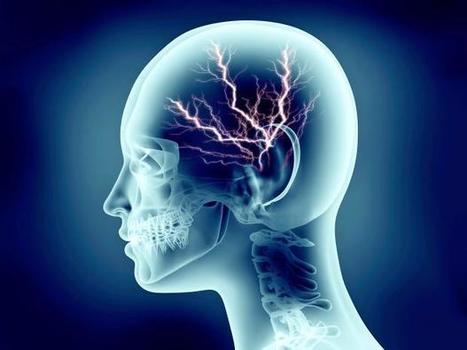
Thousands of genes are involved in intelligence, according to a new study which effectively shatters any hopes of eugenicists that babies can be genetically designed to be clever. In one of the largest studies of the human genome to date, a group of 253 scientists from around the world identified 74 genetic variants that are associated with the number of years spent in formal education.
Humans’ genetic make-up is believed to be responsible for at least 20 per cent of the difference in educational attainment between individuals, with the rest down to social factors and the environment in which they are raised. But the researchers found that the largest effect of any one genetic variant was tiny – just 0.035 per cent. This suggests that there must be at least several thousand of genes that are involved.
An Oxford University geneticist asked to comment on the research said it was a “great relief” because it showed there was little chance that people would be able to genetically modify children to be smart. The researchers, who published a paper in the journal Nature, said that the total effect of the 74 genetic variants on educational attainment was 0.43 per cent.
One of the authors of the paper, Dr Daniel Benjamin, an associate professor at the University of Southern California, said: “The fact that the genetic variant we identify with the largest effect accounts for only 0.035 of one per cent of the variation tells us that there must be at least thousands of genetic variants that influence education but have not yet been detected.” However he said the “most exciting result” of their research was that they could construct an index of genetic variants from across the genome, called a polygenic score, that could predict about six per cent of the variation.
“That’s not large enough to be useful for predicting any particular individual’s educational attainment, but it’s important because it is large enough to be useful in social science studies, which focus on average behavior in the population,” Dr Benjamin said. Via Campaign for Social Science

Campaign for Social Science's curator insight,
May 12, 2016 4:35 AM
News item - Thousands of genes are involved in intelligence, according to a new study which effectively shatters any hopes of eugenicists that babies can be genetically designed to be clever. |
Scoop.it!

Most autonomous vehicle control software is deliberately designed for well-constrained driving that's nice, calm, and under control. Not only is this a little bit boring, it's also potentially less safe: If your car autonomous vehicle has no experience driving aggressively, it won't know how to manage itself if something goes wrong.
At Georgia Tech, researchers are developing control algorithms that allow small-scale autonomous cars to power around dirt tracks at ludicrous speeds. They presented some this week at the 2016 IEEE International Conference on Robotics and Automation in Stockholm, Sweden. Using real-time onboard sensing and processing, the little cars maximize their speed while keeping themselves stable and under control. Mostly.
The electrically powered research platform pictured above, which is a scale model one-fifth the size of a vehicle meant for human occupants, is called AutoRally. It's about a meter long, weighs 21kg, and has a top speed of nearly 100 kilometers per hour. It's based on an R/C truck chassis, with some largely 3D-printed modifications to support a payload that includes a GPS, IMU, wheel encoders, a pair of fast video cameras, and a beefy quad-core i7 computer with a Nvidia GTX 750ti GPU and 32 gigs of RAM. All of this stuff is protected inside of an aluminum enclosure that makes crashing (even crashing badly) not that big of a deal.
The researchers attest that most of the crashes in the video happened due to either software crashes (as opposed to failures of the algorithm itself), or the vehicle having trouble adapting to changes in the track surface. Since that video was made, they've upgraded the software to make it able to handle a more realistically dynamic environment. The result: AutoRally is now able to drive continuously on a track that, because of temperature changes, goes from, say, partially frozen to a huge puddle of mud over the course of a couple of hours.
Scoop.it!
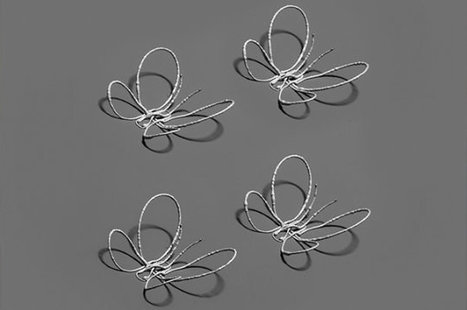
"Flat" and "rigid" are terms typically used to describe electronic devices. But the increasing demand for flexible, wearable electronics, sensors, antennas and biomedical devices has led a team at Harvard's Wyss Institute for Biologically Inspired Engineering and the John A. Paulson School of Engineering and Applied Sciences (SEAS) to innovate an eye-popping new way of printing complex metallic architectures -- as though they are seemingly suspended in midair.
Reported online May 16, 2016 in the Proceedings of the National Academy of Sciences, this laser-assisted direct ink writing method allows microscopic metallic, free-standing 3D structures to be printed in one step without auxiliary support material. The research was led by Wyss Core Faculty member Jennifer Lewis, Sc.D., who is also the Hansjörg Wyss Professor of Biologically Inspired Engineering at SEAS.
"I am truly excited by this latest advance from our lab, which allows one to 3D print and anneal flexible metal electrodes and complex architectures 'on-the-fly,' " said Lewis.
Lewis' team used an ink composed of silver nanoparticles, sending it through a printing nozzle and then annealing it using a precisely programmed laser that applies just the right amount of energy to drive the ink's solidification. The printing nozzle moves along x, y, and z axes and is combined with a rotary print stage to enable freeform curvature. In this way, tiny hemispherical shapes, spiral motifs, even a butterfly made of silver wires less than the width of a hair can be printed in free space within seconds. The printed wires exhibit excellent electrical conductivity, almost matching that of bulk silver.
When compared to conventional 3D printing techniques used to fabricate conductive metallic features, laser-assisted direct ink writing is not only superior in its ability to produce curvilinear, complex wire patterns in one step, but also in the sense that localized laser heating enables electrically conductive silver wires to be printed directly on low-cost plastic substrates. According to the study's first author, Wyss Institute Postdoctoral Fellow Mark Skylar-Scott, Ph.D., the most challenging aspect of honing the technique was optimizing the nozzle-to-laser separation distance.
"If the laser gets too close to the nozzle during printing, heat is conducted upstream which clogs the nozzle with solidified ink," said Skylar-Scott. "To address this, we devised a heat transfer model to account for temperature distribution along a given silver wire pattern, allowing us to modulate the printing speed and distance between the nozzle and laser to elegantly control the laser annealing process 'on the fly.' "
Scoop.it!

Combining superhydrophobic surfaces with Leidenfrost levitation--picture a water droplet hovering over a hot surface rather than making physical contact with it--has been explored extensively for the past decade by researchers hoping to uncover the holy grail of water-repellent surfaces.
In a new twist, a group of South Korean researchers from Seoul National University and Dankook University report an anomalous water droplet-bouncing phenomenon generated by Leidenfrost levitation on nano-textured surfaces in Applied Physics Letters.
"Wettability plays a key role in determining the equilibrium contact angles, contact angle hysteresis, and adhesion between a solid surface and liquid, as well as the retraction process of a liquid droplet impinged on the surface," explained Doo Jin Lee, lead author, and a postdoctoral researcher in the Department of Materials and Engineering at Seoul National University.
Non-wetting surfaces tend to be created by one of two methods. "First, textured surfaces enable non-wettability because a liquid can't penetrate into the micro- or nano-features, thanks to air entrapment between asperities on the textured materials," Lee said.
Or, second, the Leidenfrost effect "can help produce a liquid droplet dancing on a hot surface by floating it on a cushion of its own vapor," he added. "The vapor film between the droplet and heated surface allows the droplet to bounce off the surface--also known as the 'dynamic Leidenfrost phenomenon.'"
Lee and colleagues developed a special "non-wetting, nano-textured surface" so they could delve into the dynamic Leidenfrost effect's impact on the material.
"Our nano-textured surface was verified to be 'non-wetting' via thermodynamic analysis," Lee elaborated. "This analytical approach shows that the water droplet isn't likely to penetrate into the surface's nanoholes, which is advantageous for designing non-wetting, water-repellant systems. And the water droplet bouncing was powered by the synergetic combination of the non-wetting surface--often called a 'Cassie surface'--and the Leidenfrost effect."
Scoop.it!

Artificial intelligence developed by a group of Australian research teams has replicated a complex experiment which won the Nobel Prize for Physics in 2001. The intelligent machine learned how to run a Bose-Einstein condensation – isolating an extremely cold gas inside a beam of laser light – in under an hour, something the team "didn't expect". Results have been published in the Scientific Reports journal. The algorithm has also been uploaded to GitHub for other researchers working on "quantum experiments".
"A simple computer program would have taken longer than the age of the universe to run through all the combinations and work this out," said Paul Wigley, co-lead researcher of the study and professor at the School of Physics and Engineering at the Australian National University.
The gas was cooled to 1 microkelvin before the artificial intelligence was "handed control" of three laser beams in which to trap the gas. It also did things that "surprised" the team.
"It did things a person wouldn't guess – such as changing one laser's power up and down and compensating with another," said Wigley. "It may be able to come up with complicated ways humans haven't thought of to get experiments colder and more precise".
Scoop.it!

Genetically modified crops on the market are not only safe, but appear to be good for people and the environment, experts determined in a report released Tuesday.
But the National Academies of Sciences, Engineering, and Medicine are not just asking people to take their word for it. They're putting the evidence up on a website so skeptics — and they know there are plenty of them — can check for themselves.
"The committee delved into the relevant literature, heard from 80 diverse speakers, and read more than 700 comments from members of the public to broaden its understanding of issues surrounding GE crops," the report reads. Panel members read more than 900 reports.
"It was tiring but worthwhile, because it really brought to our attention a lot of studies we would not have looked at," said Dominique Brossard, chair of the department of Life Sciences Communication at the University of Wisconsin.
"Our process was really, really inclusive and attempted to address as much as possible the concerns that were raised by public comments."
A lot of concern centered on health effects. "The committee received a number of comments from people concerned that GE food consumption may lead to higher incidence of specific health problems including cancer, obesity, gastrointestinal tract illnesses, kidney disease, and such disorders as autism spectrum and allergies," the report reads. "The committee also examined epidemiological data on incidence of cancers and other human-health problems over time and found no substantiated evidence that foods from GE crops were less safe than foods from non-GE crops."
Their conclusions:
Scoop.it!

If the founders of a new face recognition app get their way, anonymity in public could soon be a thing of the past. FindFace, launched two months ago and currently taking Russia by storm, allows users to photograph people in a crowd and work out their identities, with 70% reliability.
It works by comparing photographs to profile pictures on Vkontakte, a social network popular in Russia and the former Soviet Union, with more than 200 million accounts. In future, the designers imagine a world where people walking past you on the street could find your social network profile by sneaking a photograph of you, and shops, advertisers and the police could pick your face out of crowds and track you down via social networks.
In the short time since the launch, Findface has amassed 500,000 users and processed nearly 3m searches, according to its founders, 26-year-old Artem Kukharenko, and 29-year-old Alexander Kabakov.
Kukharenko is a lanky, quietly spoken computer nerd who has come up with the algorithm that makes FindFace such an impressive piece of technology, while Kabakov is the garrulous money and marketing man, who does all of the talking when the pair meet the Guardian.
Unlike other face recognition technology, their algorithm allows quick searches in big data sets. “Three million searches in a database of nearly 1 Billion photographs: that’s hundreds of trillions of comparisons, and all on four normal servers. With this algorithm, you can search through a billion photographs in less than a second from a normal computer,” said Kabakov, during an interview at the company’s modest central Moscow office. The app will give you the most likely match to the face that is uploaded, as well as 10 people it thinks look similar.
Kabakov says the app could revolutionize dating: “If you see someone you like, you can photograph them, find their identity, and then send them a friend request.” The interaction doesn’t always have to involve the rather creepy opening gambit of clandestine street photography, he added: “It also looks for similar people. So you could just upload a photo of a movie star you like, or your ex, and then find 10 girls who look similar to her and send them messages.”
Some have sounded the alarm about the potentially disturbing implications. Already the app has been used by a St Petersburg photographer to snap and identify people on the city’s metro, as well as by online vigilantes to uncover the social media profiles of female porn actors and harass them.
Scoop.it!
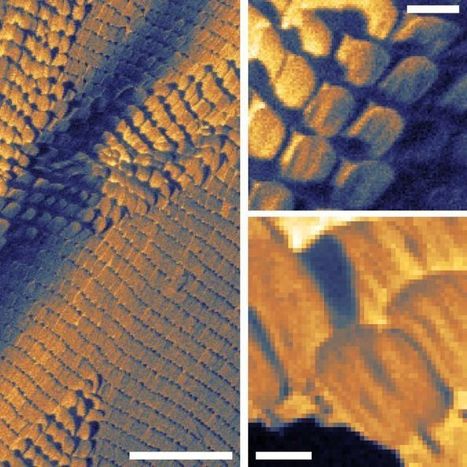
Australian researchers build a world-first prototype of a new microscope that will open scientific doors. Via Mariaschnee
Scoop.it!

From
phys
Earth scientists from Rice University, Yale University and the University of Tokyo are offering a new answer to the long-standing question of how our planet acquired its oxygenated atmosphere.
Based on a new model that draws from research in diverse fields including petrology, geodynamics, volcanology and geochemistry, the team's findings were published online this week in Nature Geoscience. They suggest that the rise of oxygen in Earth's atmosphere was an inevitable consequence of the formation of continents in the presence of life and plate tectonics.
"It's really a very simple idea, but fully understanding it requires a good bit of background about how the Earth works," said study lead author Cin-Ty Lee, professor of Earth science at Rice. "The analogy I most often use is the leaky bathtub. The level of water in a bathtub is controlled by the rate of water flowing in through the faucet and the efficiency by which water leaks out through the drain. Plants and certain types of bacteria produce oxygen as a byproduct of photosynthesis. This oxygen production is balanced by the sink: reaction of oxygen with iron and sulfur in the Earth's crust and by back-reaction with organic carbon. For example, we breathe in oxygen and exhale carbon dioxide, essentially removing oxygen from the atmosphere. In short, the story of oxygen in our atmosphere comes down to understanding the sources and sinks, but the 3-billion-year narrative of how this actually unfolded is more complex."
Lee co-authored the study with Laurence Yeung and Adrian Lenardic, both of Rice, and with Yale's Ryan McKenzie and the University of Tokyo's Yusuke Yokoyama. The authors' explanations are based on a new model that suggests how atmospheric oxygen was added to Earth's atmosphere at two key times: one about 2 billion years ago and another about 600 million years ago.
Today, some 20 percent of Earth's atmosphere is free molecular oxygen, or O2. Free oxygen is not bound to another element, as are the oxygen atoms in other atmospheric gases like carbon dioxide and sulfur dioxide. For much of Earth's 4.5-billion-year history, free oxygen was all but nonexistent in the atmosphere.
Scoop.it!

From
phys
For the first time, scientists at IBM Research have demonstrated reliably storing 3 bits of data per cell using a relatively new memory technology known as phase-change memory (PCM).
The current memory landscape spans from venerable DRAM to hard disk drives to ubiquitous flash. But in the last several years PCM has attracted the industry's attention as a potential universal memory technology based on its combination of read/write speed, endurance, non-volatility and density. For example, PCM doesn't lose data when powered off, unlike DRAM, and the technology can endure at least 10 million write cycles, compared to an average flash USB stick, which tops out at 3,000 write cycles.
This research breakthrough provides fast and easy storage to capture the exponential growth of data from mobile devices and the Internet of Things.
Scoop.it!

There’s a chance to use cutting-edge technology to save native Hawaiian birds from the mosquitoes that are driving them to extinction.
Hawaii’s fourth-largest island, says Paxton, a scientist with the U.S. Geological Survey, is seeing a sudden, rapid decline in native birds. The prime suspect is avian malaria. It’s being spread by mosquitoes and it kills rare birds such as the 'i'iwi, a bright red honeycreeper with a curvy Dr. Seuss beak. Surveys carried out on the island’s rugged, roadless interior are finding fewer birds than ever before. Extinction for some species looks imminent.
So now a group of government officials, conservationists, and scientists in Hawaii are seriously looking at a high-tech solution: genetically modified mosquitoes. They say the modified bugs, whose offspring die quickly, thereby reducing mosquito populations, could be the best chance to save Hawaii’s endangered birds. If these discussions move forward, one idea would be to release millions of genetically modified bugs to drive mosquitoes off of Kauai’s plateau and maybe right out of the entire archipelago.
What’s certain is that genetically modified organisms are political dynamite on Hawaii. Some districts have passed ordinances to ban biotech crops from being planted. No one knows how Hawaiians would react to GM mosquitoes, but lately, mosquito technology has been winning positive attention as a potential high-tech fix for human diseases such as Zika. One company, Oxitec, is testing GM mosquitoes in Brazil and hopes to do so in Florida. Because of a genetic addition to their DNA, those bugs have offspring that die prematurely. Release enough of them and the number of mosquitoes can drop drastically, although they don’t disappear altogether.
While fighting human disease gets the attention and the funding, conservation could end up being just as important a use of advanced biotechnology. At the San Diego Zoo, there are plans to save the northern white rhinoceros by cloning animals from frozen tissues. Scientists have created a genetically modified American chestnut tree resistant to the blight that’s mostly wiped them out.
Scoop.it!

From
phys
The Kepler-223 planetary system has long-term stability because its four planets interact gravitationally to keep the beat of a carefully choreographed dance as they orbit their host star. For example, each time the innermost planet (Kepler-223b) orbits the system's star 3 times, the second-closest planet (Kepler-223c) orbits precisely 4 times, and these two planets return to the same positions relative to each other and their host star. The orbital periods of the four planets of the Kepler-233 system have ratios of exactly 3 to 4, 4 to 6, and 6 to 8. The ratio of these orbits is so precise that they provide a stabilizing influence for the planetary system.
Scoop.it!

Scientists at the Universities of Bristol and Newcastle have uncovered the secret of the 'Mona Lisa of chemical reactions' -- in a bacterium that lives at the bottom of the Pacific Ocean.
The Diels-Alder reaction, discovered by Nobel Prize-wining chemists Otto Diels and Kurt Alder, is one of the most powerful chemical reactions known, and is used extensively by synthetic chemists to produce many important molecules, including antibiotics, anti-cancer drugs and agrochemicals. However, there has been much debate and controversy about whether nature uses the reaction to produce its own useful molecules. If it does, the identity of the biological catalysts (enzymes) responsible for performing this reaction have remained a mystery until now.
Some candidate natural 'Diels-Alderases' have been identified, but these have either been shown not to perform the reaction, or the evidence that they catalyze a Diels-Alder reaction is ambiguous.
Now, researchers at BrisSynBio, a BBSRC/EPSRC Synthetic Biology Research Centre at the University of Bristol and the School of Biology at Newcastle University have conclusively shown that a true 'Diels-Alderase' (Diels-Alder enzyme) exists. They have also established in atomic detail how it catalyses the reaction.
Dr Paul Race, from BrisSynBio, said: "We found the enzyme, called AbyU, in a bacterium calledVerrucosispora maris (V. maris), which lives on the Pacific seabed. V. maris uses the AbyU enzyme to biosynthesise a molecule called abyssomicin C, which has potent antibiotic properties."
To establish the details of how the AbyU enzyme catalyses the Diels-Alder reaction, the team first had to solve the atomic structure of AbyU, and then simulate the enzyme reaction using quantum mechanics methods.
Dr Race said: "Once we had figured out how AbyU was able to make natural antibiotic, we were able to show that it could also perform the Diels-Alder reaction on other molecules that are difficult to transform using synthetic chemistry." Via Mariaschnee

george sperco's curator insight,
February 7, 2023 11:07 AM
https://farmaciadicura.com https://farmaciadicura.com/Prodotto/acquista-metaqualone-in-linea/ https://farmaciadicura.com/Prodotto/acquista-ossicodone-10-mg-sandoz/ https://farmaciadicura.com/Prodotto/acquista-ossicodone-15-mg-sandoz/ https://farmaciadicura.com/Prodotto/acquista-ossicodone-20-mg-sandoz/ https://farmaciadicura.com/Prodotto/acquista-ossicodone-30-mg-sandoz/ https://farmaciadicura.com/Prodotto/acquista-ossicodone-5-mg-sandoz/ https://farmaciadicura.com/Prodotto/acquista-ossicodone-60-mg-sandoz/ https://farmaciadicura.com/Prodotto/acquista-ossicodone-80-mg-sandoz/ https://farmaciadicura.com/Prodotto/acquista-quaalude-online/ https://farmaciadicura.com/Prodotto/acquista-adderall-in-linea-italia/ https://farmaciadicura.com/Prodotto/acquista-ambien-in-linea-italia/ https://farmaciadicura.com/Prodotto/acquista-buprenorfina-in-linea-italia/ https://farmaciadicura.com/Prodotto/acquista-cocaina-boliviana-in-linea/ https://farmaciadicura.com/Prodotto/acquista-cocaina-a-squame-di-pesce/ https://farmaciadicura.com/Prodotto/acquista-desoxyn-in-linea-italia/ https://farmaciadicura.com/Prodotto/acquista-dilaudid-in-linea-italia/ https://farmaciadicura.com/Prodotto/acquistare-eroina-in-linea-italia/ https://farmaciadicura.com/Prodotto/acquista-fentanil-in-linea-italia/ https://farmaciadicura.com/Prodotto/acquista-fentermina-in-linea-italia/ https://farmaciadicura.com/Prodotto/acquista-la-morfina-iniettabile-italia/ https://farmaciadicura.com/Prodotto/acquista-morfina-in-linea-italia/ https://wereldwijdeapotheek.com/ https://wereldwijdeapotheek.com/product/ketamine-poeder-kopen/ https://wereldwijdeapotheek.com/product/koop-4-aco-dmt-online/ https://wereldwijdeapotheek.com/product/koop-adderall-online/ https://wereldwijdeapotheek.com/product/koop-boliviaanse-cocaine-online/ https://wereldwijdeapotheek.com/product/koop-bruine-heroine-online/ https://wereldwijdeapotheek.com/product/koop-codeine-linctus-online/ https://wereldwijdeapotheek.com/product/koop-crack-cocaine-online/ https://wereldwijdeapotheek.com/product/koop-desoxyn-online/ https://wereldwijdeapotheek.com/product/koop-dexedrine-online09/ https://wereldwijdeapotheek.com/product/koop-fentanyl-citrate-online-09/ https://wereldwijdeapotheek.com/product/koop-fentanyl-poeder-online/ https://wereldwijdeapotheek.com/product/koop-fentanyl-pleister-online09/ https://wereldwijdeapotheek.com/product/koop-fishscale-cocaine-online/ https://wereldwijdeapotheek.com/product/koop-flakka-a-pvp-online/ https://wereldwijdeapotheek.com/product/koop-gouden-leraar-paddenstoelen-online1/ https://wereldwijdeapotheek.com/product/koop-heroine-online/ https://wereldwijdeapotheek.com/product/koop-hydromorphone-online/ https://wereldwijdeapotheek.com/product/koop-morfine-online/ https://wereldwijdeapotheek.com/product/koop-natriumcyanide-100-mg-online/ https://wereldwijdeapotheek.com/product/koop-nembutal-pentobarbital-online1g/ https://wereldwijdeapotheek.com/product/koop-oxycodon-hcl-online/ https://wereldwijdeapotheek.com/product/koop-oxycodon-nachts-online/ https://wereldwijdeapotheek.com/product/koop-oxycontin-online/ https://wereldwijdeapotheek.com/product/koop-psilocybe-cubensis-b-online/ https://farmaciadicura.com/Prodotto/acquista-ossicodone-in-linea-italia/ https://farmaciadicura.com/Prodotto/acquista-ossicodone-pillole-in-linea-italia/ https://farmaciadicura.com/Prodotto/acquista-percocet-in-linea-italia/ https://farmaciadicura.com/Prodotto/acquista-ritalin-in-linea-italia/ https://farmaciadicura.com/Prodotto/acquista-stilnox-in-linea-italia/ https://farmaciadicura.com/Prodotto/acquista-strisce-di-suboxone-italia/ https://farmaciadicura.com/Prodotto/acquista-subutex-in-linea-italia/ https://farmaciadicura.com/Prodotto/acquista-vyvanse-in-linea-italia/ https://farmaciadicura.com/Prodotto/acquista-xanax-in-linea-italia/ https://wereldwijdeapotheek.com/product/koop-ritalin-online/ https://wereldwijdeapotheek.com/product/koop-seconal-sodium-online/ https://wereldwijdeapotheek.com/product/koop-stilnox-online/ https://wereldwijdeapotheek.com/product/koop-suboxone-online/ https://wereldwijdeapotheek.com/product/koop-suboxone-strips/ https://wereldwijdeapotheek.com/product/koop-subutex-online/ https://wereldwijdeapotheek.com/product/koop-ultram-online/ https://wereldwijdeapotheek.com/product/koop-vicodin-online/ https://wereldwijdeapotheek.com/product/koop-vyvanse-online/ https://wereldwijdeapotheek.com/product/koop-witte-heroine-online/ https://wereldwijdeapotheek.com/product/koop-xanax-online/ https://wereldwijdeapotheek.com/product/koop-percocet-online1/ https://wereldwijdeapotheek.com/product/koop-phentermine-adipex-online09/ https://healthmartpsychedelics.com/ https://healthmartpsychedelics.com/produit/acheter-acxion-fentermina-30mg/ https://healthmartpsychedelics.com/produit/acheter-adderall-en-ligne/ https://healthmartpsychedelics.com/produit/achetez-ambien-en-ligne/ https://healthmartpsychedelics.com/produit/achetez-des-bandes-de-suboxone/ https://healthmartpsychedelics.com/produit/acheter-buprenorphine-en-ligne/ https://healthmartpsychedelics.com/produit/acheter-contrave-en-ligne/ https://healthmartpsychedelics.com/produit/acheter-desoxyn-en-ligne/ https://healthmartpsychedelics.com/produit/acheter-du-dilaudid-en-ligne/ https://healthmartpsychedelics.com/produit/acheter-duromine-en-ligne/ https://healthmartpsychedelics.com/produit/acheter-de-lephedrine-en-ligne/ https://healthmartpsychedelics.com/produit/acheter-fentanyl-en-ligne/ https://healthmartpsychedelics.com/produit/acheter-de-la-morphine-injectable/ https://healthmartpsychedelics.com/produit/achetez-du-cyanure-de-sodium-en-ligne/ https://healthmartpsychedelics.com/produit/acheter-meratrim-en-ligne/ https://healthmartpsychedelics.com/produit/acheter-morphine-en-ligne/ https://healthmartpsychedelics.com/produit/acheter-de-loxycodone-en-ligne/ https://healthmartpsychedelics.com/produit/acheter-80-mg-doxycodone-en-ligne/ https://healthmartpsychedelics.com/produit/achetez-ozempic-en-ligne/ https://healthmartpsychedelics.com/produit/acheter-du-percocet-en-ligne/ https://healthmartpsychedelics.com/produit/acheter-phentermine-en-ligne/ https://healthmartpsychedelics.com/produit/acheter-qsymia-en-ligne/ https://healthmartpsychedelics.com/produit/acheter-ritaline-en-ligne/ https://healthmartpsychedelics.com/produit/acheter-rybelsus-en-ligne/ https://healthmartpsychedelics.com/produit/acheter-saxenda-en-ligne/ https://healthmartpsychedelics.com/produit/acheter-stilnox-en-ligne/ https://healthmartpsychedelics.com/produit/acheter-subutex-en-ligne/ https://healthmartpsychedelics.com/produit/acheter-trulicity-en-ligne/ https://healthmartpsychedelics.com/produit/acheter-victoza-en-ligne/ https://healthmartpsychedelics.com/produit/acheter-vyvanse-en-ligne/ https://healthmartpsychedelics.com/produit/acheter-wegovy-en-ligne/ https://healthmartpsychedelics.com/produit/acheter-xanax-en-ligne/ https://healthmartpsychedelics.com/produit/acheter-du-xanax-vert-en-ligne/ https://healthmartpsychedelics.com/produit/acheter-xenical-en-ligne/ https://farmaciadesalud.com/tienda/comprar-dexedrina-en-linea/ https://farmaciadesalud.com/tienda/comprar-heroina-blanca-en-linea/ https://farmaciadesalud.com/tienda/comprar-heroina-de-alquitran-negro/ https://farmaciadesalud.com/tienda/comprar-heroina-lobo-artico/ https://farmaciadesalud.com/tienda/comprar-heroina-marron-en-linea/ https://farmaciadesalud.com/tienda/comprar-makatussin-en-linea/ https://farmaciadesalud.com/tienda/comprar-oxicodona-10-mg-sandoz/ https://farmaciadesalud.com/tienda/comprar-oxicodona-15-mg-sandoz/ https://farmaciadesalud.com/tienda/comprar-oxicodona-20-mg-sandoz/ https://farmaciadesalud.com/tienda/comprar-oxicodona-30-mg-sandoz/ https://farmaciadesalud.com/tienda/comprar-oxicodona-5-mg-sandoz/ https://farmaciadesalud.com/tienda/comprar-oxicodona-60-mg-sandoz/ https://farmaciadesalud.com/tienda/comprar-oxicodona-80-mg-sandoz/ https://farmaciadesalud.com/tienda/comprar-pastillas-de-nembutal/ https://farmaciadesalud.com/tienda/compre-polvo-de-nembutal-en-linea/ https://farmaciadesalud.com/tienda/comprar-crack-de-cocaina-en-linea/ https://farmaciadesalud.com/tienda/comprar-desoxyn-en-linea/ https://farmaciadesalud.com/tienda/comprar-dilaudid-en-linea/ https://farmaciadesalud.com/tienda/comprar-efedrina-hcl-en-linea/ https://farmaciadesalud.com/tienda/comprar-fentanilo-en-linea/ https://farmaciadesalud.com/tienda/comprar-fentermina-en-linea/ https://farmaciadesalud.com/tienda/comprar-heroina-en-linea/ https://farmaciadesalud.com/tienda/comprar-morfina-inyectable-en-linea/ https://farmaciadesalud.com/tienda/comprar-morfina-en-linea/ https://farmaciadesalud.com/tienda/comprar-pastillas-de-oxicodona-en-linea/ https://farmaciadesalud.com/tienda/comprar-oxycodone-en-linea/ https://farmaciadesalud.com/tienda/comprar-oxycontin-en-linea/ https://farmaciadesalud.com/tienda/comprar-percocet-en-linea/ https://farmaciadesalud.com/tienda/comprar-ritalin-en-linea/ https://farmaciadesalud.com/tienda/comprar-nembutal-inyectable-en-linea/ https://farmaciadesalud.com/tienda/comprar-stilnox-en-linea/ https://farmaciadesalud.com/tienda/comprar-tiras-de-suboxone-en-linea/ https://farmaciadesalud.com/tienda/comprar-suboxone-en-linea/ https://farmaciadesalud.com/tienda/comprar-subutex-en-linea/ https://farmaciadesalud.com/tienda/comprar-viagra-en-linea/ https://farmaciadesalud.com/tienda/comprar-vyvanse-en-linea/ https://farmaciadesalud.com/tienda/comprar-xanax-en-linea/ https://acquistaossicodoneitalia.com/ https://acquistaossicodoneitalia.com/negozio/acquista-ossicodone-10-mg-sandoz-italia/ https://acquistaossicodoneitalia.com/negozio/acquista-ossicodone-15-mg-sandoz-italia/ https://acquistaossicodoneitalia.com/negozio/acquista-ossicodone-20-mg-sandoz-italia/ https://acquistaossicodoneitalia.com/negozio/acquista-ossicodone-30-mg-sandoz-italia/ https://acquistaossicodoneitalia.com/negozio/acquista-ossicodone-5-mg-sandoz-italia/ https://acquistaossicodoneitalia.com/negozio/acquista-ossicodone-60-mg-sandoz-italia/ https://acquistaossicodoneitalia.com/negozio/acquista-ossicodone-80-mg-sandoz-italia/ https://acquistaossicodoneitalia.com/negozio/acquista-adderall-in-linea-italia/ https://acquistaossicodoneitalia.com/negozio/acquista-ambien-in-linea-italia/ https://acquistaossicodoneitalia.com/negozio/acquista-buprenorfina-in-linea-italia/ https://acquistaossicodoneitalia.com/negozio/acquista-cocaina-boliviana-in-linea/ https://acquistaossicodoneitalia.com/negozio/acquista-cocaina-a-squame-di-pesce/ https://acquistaossicodoneitalia.com/negozio/acquista-cocaina-crack-in-linea/ https://acquistaossicodoneitalia.com/negozio/acquista-desoxyn-in-linea-italia/ https://acquistaossicodoneitalia.com/negozio/acquista-dilaudid-in-linea-italia/ https://acquistaossicodoneitalia.com/negozio/acquistare-eroina-in-linea-italia/ https://acquistaossicodoneitalia.com/negozio/acquista-fentanil-in-linea-italia/ https://acquistaossicodoneitalia.com/negozio/acquista-fentermina-in-linea-italia/ https://acquistaossicodoneitalia.com/negozio/acquista-la-morfina-iniettabile-italia/ https://acquistaossicodoneitalia.com/negozio/acquista-morfina-in-linea-italia/ https://acquistaossicodoneitalia.com/negozio/acquista-ossicodone-in-linea-italia/ https://acquistaossicodoneitalia.com/negozio/acquista-ossicodone-pillole-in-linea-italia/ https://acquistaossicodoneitalia.com/negozio/acquista-oxycontin-in-linea-italia/ https://acquistaossicodoneitalia.com/negozio/acquista-percocet-in-linea-italia/ https://acquistaossicodoneitalia.com/negozio/acquista-ritalin-in-linea-italia/ https://acquistaossicodoneitalia.com/negozio/acquista-stilnox-in-linea-italia/ https://acquistaossicodoneitalia.com/negozio/acquista-strisce-di-suboxone-italia/ https://acquistaossicodoneitalia.com/negozio/acquista-subutex-in-linea-italia/ https://acquistaossicodoneitalia.com/negozio/acquista-viagra-in-linea-italia/ https://acquistaossicodoneitalia.com/negozio/acquista-vyvanse-in-linea-italia/ https://acquistaossicodoneitalia.com/negozio/acquista-xanax-in-linea-italia/ https://acquistaossicodoneitalia.com/negozio/acquista-laudano-droga-online/ https://acquistaossicodoneitalia.com/negozio/acquista-metaqualone-in-linea/ https://acquistaossicodoneitalia.com/negozio/acquista-quaaludes-in-linea/ https://pharmacieanglaise.com/ https://pharmacieanglaise.com/shop/acheter-adderall-en-ligne-canada/ https://pharmacieanglaise.com/shop/achetez-ambien-en-ligne-canada/ https://pharmacieanglaise.com/shop/achetez-des-bandes-de-suboxone-canada/ https://pharmacieanglaise.com/shop/acheter-buprenorphine-en-ligne-canada/ https://pharmacieanglaise.com/shop/acheter-desoxyn-en-ligne-canada/ https://pharmacieanglaise.com/shop/acheter-du-dilaudid-en-ligne-canada/ https://pharmacieanglaise.com/shop/acheter-fentanyl-en-ligne-canada/ https://pharmacieanglaise.com/shop/acheter-de-la-morphine-injectable-canada/ https://pharmacieanglaise.com/shop/achetez-du-cyanure-de-sodium-en-ligne/ https://pharmacieanglaise.com/shop/acheter-morphine-en-ligne-canada/ https://pharmacieanglaise.com/shop/acheter-de-loxycodone-en-ligne-canada/ https://pharmacieanglaise.com/shop/acheter-80-mg-doxycodone-en-ligne-canada/ https://pharmacieanglaise.com/shop/acheter-de-loxycontin-en-ligne-canada/ https://pharmacieanglaise.com/shop/acheter-du-percocet-en-ligne-canada/ https://pharmacieanglaise.com/shop/acheter-phentermine-en-ligne-canada/ https://pharmacieanglaise.com/shop/acheter-ritaline-en-ligne-canada/ https://pharmacieanglaise.com/shop/acheter-stilnox-en-ligne-canada/ https://pharmacieanglaise.com/shop/acheter-subutex-en-ligne-canada/ https://pharmacieanglaise.com/shop/acheter-le-viagra-en-ligne-canada/ https://pharmacieanglaise.com/shop/acheter-vyvanse-en-ligne-canada/ https://pharmacieanglaise.com/shop/acheter-xanax-en-ligne-canada/ https://pharmacieanglaise.com/shop/acheter-du-xanax-vert-en-ligne-canada/
|




