Your new post is loading...

|
Scooped by
Dr. Stefan Gruenwald
June 22, 2016 2:14 PM
|
Ball lightning, a fireball sometimes observed during lightnings, has remained unexplained. Scientists now present a comprehensive theory for the phenomenon: At the tip of a lightning stroke reaching the ground, a relativistic electron bunch can be produced, which in turn excites intense microwave radiation. The latter ionizes the local air and the radiation pressure evacuates the resulting plasma, forming a spherical plasma bubble that stably traps the radiation. This mechanism is verified by particle simulations. The many known properties of ball lightning, such as the occurrence site, relation to the lightning channels, appearance in aircraft, its shape, size, sound, spark, spectrum, motion, as well as the resulting injuries and damages, are also explained. This theory suggests that ball lighting can be created in the laboratory or triggered during thunderstorms. The results should be useful for lightning protection and aviation safety, as well as stimulate research interest in the relativistic regime of microwave physics.
|
|
Scooped by
Dr. Stefan Gruenwald
June 22, 2016 2:07 PM
|
Astronomers using the TRAPPIST telescope at ESO’s La Silla Observatory have discovered three planets orbiting an ultracool dwarf star just 40 light-years from Earth. These worlds have sizes and temperatures similar to those of Venus and Earth and are the best targets found so far for the search for life outside the Solar System. They are the first planets ever discovered around such a tiny and dim star. The new results will be published in the journal Nature on 2 May 2016. A team of astronomers led by Michaël Gillon, of the Institut d’Astrophysique et Géophysique at the University of Liège in Belgium, have used the Belgian TRAPPIST telescope [1] to observe the star 2MASS J23062928-0502285, now also known as TRAPPIST-1. They found that this dim and cool star faded slightly at regular intervals, indicating that several objects were passing between the star and the Earth [2]. Detailed analysis showed that three planets with similar sizes to the Earth were present. TRAPPIST-1 is an ultracool dwarf star — it is much cooler and redder than the Sun and barely larger than Jupiter. Such stars are both very common in the Milky Way and very long-lived, but this is the first time that planets have been found around one of them. Despite being so close to the Earth, this star is too dim and too red to be seen with the naked eye or even visually with a large amateur telescope. It lies in the constellation of Aquarius (The Water Carrier). Emmanuël Jehin, a co-author of the new study, is excited: “This really is a paradigm shift with regards to the planet population and the path towards finding life in the Universe. So far, the existence of such ‘red worlds’ orbiting ultra-cool dwarf stars was purely theoretical, but now we have not just one lonely planet around such a faint red star but a complete system of three planets!” Michaël Gillon, lead author of the paper presenting the discovery, explains the significance of the new findings: "Why are we trying to detect Earth-like planets around the smallest and coolest stars in the solar neighbourhood? The reason is simple: systems around these tiny stars are the only places where we can detect life on an Earth-sized exoplanet with our current technology. So if we want to find life elsewhere in the Universe, this is where we should start to look." Astronomers will search for signs of life by studying the effect that the atmosphere of a transiting planet has on the light reaching Earth. For Earth-sized planets orbiting most stars this tiny effect is swamped by the brilliance of the starlight. Only for the case of faint red ultra-cool dwarf stars — like TRAPPIST-1 — is this effect big enough to be detected. Follow-up observations with larger telescopes, including the HAWK-I instrument on ESO’s 8-metre Very Large Telescope in Chile, have shown that the planets orbiting TRAPPIST-1 have sizes very similar to that of Earth. Two of the planets have orbital periods of about 1.5 days and 2.4 days respectively, and the third planet has a less well determined period in the range 4.5 to 73 days. "With such short orbital periods, the planets are between 20 and 100 times closer to their star than the Earth to the Sun. The structure of this planetary system is much more similar in scale to the system of Jupiter’s moons than to that of the Solar System," explains Michaël Gillon.
|
|
Scooped by
Dr. Stefan Gruenwald
June 20, 2016 5:48 PM
|
Hot fluids of neutrons that flow without friction, superconductors made of protons, and a solid crust built of exotic atoms—features like these make neutron stars some of the strangest objects we’ve found in the cosmos so far. They pack all the mass of a star into a sphere the size of a city, resulting in states of matter we just don’t have on Earth. And yet, despite their extreme weirdness, neutron stars contain a mishmash of vaguely familiar features, as if seen darkly through a funhouse mirror. One of the weirdest is the fact that deep inside a neutron star you can find a whole menu full of nuclear pasta. The pasta is made of protons and neutrons, held together by the extreme pressures. These oddball nuclei arrange themselves into weird configurations that Matt Caplan of Indiana University and his colleagues call “nuclear pasta.”1 The pasta layer lies in the inner crust, a transitional zone between a neutron star’s outer crust and core. In the top of this layer, the nuclei form blobs called “gnocchi.” Deeper down, they join together into cylindrical shapes called “spaghetti.” More pressure, and the spaghetti compresses into “lasagna”: flattish sheets of nuclear matter. Then the pasta transitions into “anti-pasta”: The sheets of lasagna form cylindrical hollows where neutrons begin leaking out, which Caplan calls “anti-spaghetti.” And finally, when the pressure is high enough, those hollows break into small bubbles, the “anti-gnocchi” phase. Weirder still is the resemblance of the nuclear pasta to structures formed by certain biological molecules. These molecules are lipid polymers, which are found in fats. Because they are made of a water-loving and water-repelling layer sandwiched together, their interactions with a watery environment make them self-assemble into the spaghetti- and lasagna-like structures known as endoplasmic reticulum, found in complex (eukaryotic) cells. The similarity is striking, even though the systems couldn’t appear more different in most respects. Nuclear pasta is roughly 100 trillion times denser than the interior of a cell—that’s 1014, or a 1 followed by 14 zeroes. The forces in a neutron star are strong electromagnetism and the nuclear forces; cells are governed by weaker molecular electric forces and the microscopic properties of water. Even the building blocks are different: The raw materials for nuclear pasta are protons and neutrons, while endoplasmic reticulum is made of long chains of molecules strung together. Caplan says, “What’s in common is that they want to minimize surface energy.” Think of a soap bubble or a splash of water aboard the International Space Station: They form roughly spherical shapes. That’s because the surface forces draw the molecules together into spheres, which involve the lowest amount of energy on the surface. The forces that create nuclear pasta and endoplasmic reticulum aren’t as symmetrical, thanks to the competing attractive and repulsive interactions between the lasagna layers and the surrounding material. However, the laws of physics are still at work and want to minimize the energy involved. The result is blobs and folded sheets and cavities in the neutron star crust or the watery interior of a cell. The forces and densities couldn’t be more different, yet the shapes that emerge are amazingly similar. And yes, these are all terms used in papers published by Caplan and his team. One paper even makes reference to “nuclear waffles,” which are like lasagna with holes.2
|
|
Scooped by
Dr. Stefan Gruenwald
June 20, 2016 5:38 PM
|
Cloud or haze layers in the upper atmospheres of extrasolar planets may make them appear bigger than they really are, a study led by Dr. Helmut Lammer from the Austrian Academy of Sciences’ Space Research Institute suggests. Since the first confirmed discovery in 1993, astronomers have found more than 3,000 extrasolar planets. A key goal now is to characterize known planets by mass, size and composition, to better understand the evolution of planetary systems, and the prospects for terrestrial planets that might support life. In 2014 Dr. Lammer and his colleagues used ESA’s CoRoT (Convection, Rotation and planetary Transits) space telescope to study the upper atmosphere of two low-mass exoplanets that are regularly seen to pass in front of their parent star. The two planets, CoRoT-24b and CoRoT-24c, orbit the star in 5 and 12 days, appear to be 3.7 and 4.9 times the diameter of the Earth, and have respective masses of 5.7 and 28 times Earth. CoRoT-24c is similar in mass to Neptune. CoRoT-24b is less than a quarter as massive, but is similar in size, so seems to have a very low density. With such short orbits, both planets are close to and will experience dramatic heating from their star, CoRoT-24. Dr. Lammer’s team modeled this and found that CoRoT-24b would see its atmosphere evaporate within 100 million years, if it really is as big as suggested. But the star is billions of years old, so the planet should have lost its atmosphere long ago. The solution seems to be that CoRoT-24b is only about half as big as thought. Dr. Lammer argues that an extended, very thin, atmosphere, surrounds a relatively compact planet, but has high altitude features that confuse observations. “The radius is based on what we see when the planet makes its transit,” Dr. Lammer said. “This is probably distorted by clouds and haze high in the atmosphere, in a region where atmospheric pressure is otherwise very low.” “This effect needs to be considered by future exoplanet missions, like ESA’s CHEOPS (CHaracterising ExOPlanet Satellite) mission due to launch in December 2017. Results for some worlds found by NASA’s Kepler space telescope may also need to be re-evaluated,” said co-author Dr. Luca Fossati, also from the Space Research Institute.
|
|
Scooped by
Dr. Stefan Gruenwald
June 20, 2016 5:32 PM
|
New device could find use in "boson-sampling" quantum computers. A source of single photons that meets three important criteria for use in quantum-information systems has been unveiled in China by an international team of physicists. Based on a quantum dot, the device is an efficient source of photons that emerge as solo particles that are indistinguishable from each other. The researchers are now trying to use the source to create a quantum computer based on "boson sampling". Devices that emit one – and only one – photon on demand play a central role in light-based quantum-information systems. Each photon must also be emitted in the same quantum state, which makes each photon indistinguishable from all the others. This is important because the quantum state of the photon is used to carry a quantum bit (qubit) of information. Quantum dots are tiny pieces of semiconductor that show great promise as single-photon sources. When a laser pulse is fired at a quantum dot, an electron is excited between two distinct energy levels. The excited state then decays to create a single photon with a very specific energy. However, this process can involve other electron excitations that result in the emission of photons with a wide range of energies – photons that are therefore not indistinguishable. This problem can be solved by exciting the quantum dot with a pulse of light at the same energy as the emitted photon. This is called resonance fluorescence, and has been used to create devices that are very good at producing indistinguishable single photons. However, this process is inefficient, and only produces a photon about 6% of the time. Now, Chaoyang Lu, Jian-Wei Pan and colleagues at the University of Science and Technology of China have joined forces with researchers in Denmark, Germany and the UK to create a resonance-fluorescence-based source that emits a photon 66% of the time when it is prompted by a laser pulse. Of these photons, 99.1% are solo and 98.5% are in indistinguishable quantum states – with both figures of merit being suitable for applications in quantum-information systems. Lu told physicsworld.com that nearly all of the laser pulses that strike the source produce a photon, but about 34% of these photons are unable to escape the device. The device was operated at a laser-pulse frequency of 81 MHz and a pulse power of 24 nW, which is a much lower power requirement than other quantum-dot-based sources. The factor-of-ten improvement in efficiency was achieved by sandwiching a quantum dot in the centre of a "micropillar" created by stacking 40 disc-like layers (see figure). Each layer is a "distributed Bragg reflector", which is a pair of mirrors that together have a thickness of one quarter the wavelength of the emitted photons. The micropillar is about 2.5 μm in diameter and about 10 μm tall, and it allowed the team to harness the "Purcell effect", whereby the rate of fluorescence is increased significantly when the emitter is placed in a resonant cavity.
|
|
Rescooped by
Dr. Stefan Gruenwald
from Daily Magazine
June 18, 2016 12:50 PM
|
NASA findings show that there is a tiny quasi-moon that's been orbiting the Earth for almost a century. One is the loneliest number, especially if you’re a moon circling the Earth (Earth is rather far away, after all). But just as you are about to lose hope and accept your solitary fate, NASA announces there could be a second moon come to keep you company. Sure, it is smaller than you and goes around the Earth amazingly irregularly, but still, two is always better than one. It turns out that the second “moon,” asteroid 2016 HO3, is currently locked into “a little dance” with Earth, and it has been dancing for a century. The rock’s orbit is highly elliptical, causing it to go a wee bit off tangent—between 38 and 100 times the distance of our planet’s primary moon—and bob up and down across Earth’s orbital plane. HO3 is tilted by about 8° and it circles the Sun for 365.93 days, which is slightly longer than Earth’s 365.24 day-long year.
Via THE OFFICIAL ANDREASCY
|
|
Rescooped by
Dr. Stefan Gruenwald
from Daily Magazine
June 18, 2016 12:46 PM
|
A microchip containing 1,000 independent programmable processors has been designed by a team at the University of California, Davis, Department of Electrical and Computer Engineering. The energy-efficient "KiloCore" chip has a maximum computation rate of 1.78 trillion instructions per second and contains 621 million transistors. The KiloCore was presented at the 2016 Symposium on VLSI Technology and Circuits in Honolulu on June 16. "To the best of our knowledge, it is the world's first 1,000-processor chip and it is the highest clock-rate processor ever designed in a university," said Bevan Baas, professor of electrical and computer engineering, who led the team that designed the chip architecture. While other multiple-processor chips have been created, none exceed about 300 processors,according to an analysis by Baas' team. Most were created for research purposes and few are sold commercially. The KiloCore chip was fabricated by IBM using their 32 nm CMOS technology. Each processor core can run its own small program independently of the others, which is a fundamentally more flexible approach than so-called Single-Instruction-Multiple-Data approaches utilized by processors such as GPUs; the idea is to break an application up into many small pieces, each of which can run in parallel on different processors, enabling high throughput with lower energy use, Baas said. Because each processor is independently clocked, it can shut itself down to further save energy when not needed, said graduate student Brent Bohnenstiehl, who developed the principal architecture. Cores operate at an average maximum clock frequency of 1.78 GHz, and they transfer data directly to each other rather than using a pooled memory area that can become a bottleneck for data. The chip is the most energy-efficient "many-core" processor ever reported, Baas said. For example, the 1,000 processors can execute 115 billion instructions per second while dissipating only 0.7 Watts, low enough to be powered by a single AA battery. The KiloCore chip executes instructions more than 100 times more efficiently than a modern laptop processor. Applications already developed for the chip include wireless coding/decoding, video processing, encryption, and others involving large amounts of parallel data such as scientific data applications and datacenter record processing. The team has completed a compiler and automatic program mapping tools for use in programming the chip.
Via THE OFFICIAL ANDREASCY
|
|
Scooped by
Dr. Stefan Gruenwald
June 17, 2016 8:55 PM
|
Surprising effect occurs when light is confined to fewer than three dimensions Photons can have half-integer values of angular momentum when they are confined to fewer than three dimensions. That is the conclusion of physicists in Ireland, who have revived an experiment first done in the 1830s to show that photons are not limited to having just integer values of angular momentum. The discovery could have applications in quantum computing and could also boost the capacity of optical-fibre data transmission. The angular momentum of light comes in two varieties: spin and orbital. Spin is associated with optical polarization, which is the orientation of light's electric-field oscillations. Orbital angular momentum rotates a light beam's wavefront around its propagation axis, giving it a corkscrew shape. Individually, the two types of angular momentum come in multiples of the reduced Planck's constant, ħ. For spin, those multiples are either +1 or –1, while the orbital variety can take any integer value. To date, physicists have assumed that a photon's total angular momentum is simply the sum of these two parts and that it therefore comes in integer multiples of ħ. But in the latest research, Paul Eastham of Trinity College Dublin and colleagues have shown that the total angular momentum can in fact take on half-integer values. Inspiration for the work, says Eastham, came from celebrations of the 200th anniversary of the birth of Irish mathematician William Hamiltonin 2005. Hamilton and physicist Humphrey Lloyd showed, in the 1830s, that a beam of light passing through a "biaxial" crystal takes on the shape of a hollow cylinder. The void at its centre is now known to be caused by the light acquiring orbital angular momentum. The bicentennial prompted renewed interest in this effect among physicists in Ireland, says Eastham, who joined Trinity College in 2009 and then started to think about exactly how such beams behave quantum-mechanically.
|
|
Scooped by
Dr. Stefan Gruenwald
June 17, 2016 5:51 PM
|
A team of researchers from Google, the University of the Basque Country, the University of California and IKERBASQUE, Basque Foundation for Science has devised a means for combining the two leading ideas for creating a quantum computer in one machine, offering a possible means for learning more about how to create a true quantum computer sometime in the future. They have published the details in the journal Nature. Computer scientists would really like to figure out how to build a true quantum computer—doing so would allow for solving problems that are simply unsolvable on conventional machines. But, unfortunately, the idea behind such a computer is still mostly theoretical. To move some of the ideas from theory to reality, the researchers with this new effort have built an actual machine that is based on two of the strongest approaches to building a quantum computer. The first approach is based on the gate model, where qubits are linked together to form primitive circuits that together form quantum logic gates. In such an arrangement, each logic gate is capable of performing one specific type of operation. Thus, to make use of such a computer, each of the logic gates must be programmed ahead of time to carry out certain tasks. With the second approach the qubits do not interact, instead they are kept at a ground state where they are then caused to evolve into a system capable of solving a particular problem. The result is known as an adiabatic machine—some have actually been built because they are more versatile than the gate model computers. Unfortunately, they are also not expected to be able to ever fully make use of the full power of quantum computing. In this new effort, the researchers have attempted to gain the positive attributes of both approaches by creating a machine where they started with a standard quantum computer and then used it to simulate an adiabatic machine. It uses 9 qubits and has over 1,000 logic gates and allows for communication between qubits to be turned on and off at will. The end result, the team reports, is one that unlike an adiabatic machine, is able to tackle traditionally difficult computing problems. They expect it to be useful as a research tool, helping lead the way to the development of a truly quantum computer.
|
|
Scooped by
Dr. Stefan Gruenwald
June 17, 2016 5:49 PM
|
A new maker of self-driving vehicles burst onto the scene Thursday in partnership with IBM's supercomputer platform Watson, and it's ready to roll right now. The vehicle—a 3D-printed minibus called "Olli" capable of carrying 12 people—was unveiled by Arizona-based startup Local Motors outside the US capital city Washington. Olli was designed as an on-demand transportation solution that passengers can summon with a mobile app, like Uber rides. And it can be "printed" to specification in "micro factories" in a matter of hours. Olli will be demonstrated in National Harbor, Maryland, over the next few months with additional trials expected in Las Vegas and Miami. Local Motors is also in talks to test the vehicles in dozens of cities around the world including Berlin, Copenhagen and Canberra. Even though Google and several automakers see several years of testing before deploying autonomous cars, Local Motors co-founder and chief executive John Rogers said this vehicle is ready to go into service as soon as regulations allow it. "The technology has been ready—fielding it is what has been hard," he said in an interview with AFP. By "fielding," Rogers said Local Motors can design and make the vehicles to specification and offer a service to local governments or other buyers. "Local Motors is about selling (the vehicles) into the markets that are ready now," he said. Rogers said the company has an advantage over other systems because it is building the vehicles from the ground up, and producing most components with 3D printers. "We hope to be able to print this vehicle in about 10 hours and assemble it in another hour," he said. He envisions hundreds of "micro-factories" producing the vehicles around the world. The privately held company with about 45 investors can easily revamp its design based on what a customer wants, and lacks the large infrastructure costs of traditional automakers, according to Rogers.
|
|
Scooped by
Dr. Stefan Gruenwald
June 17, 2016 2:40 PM
|
Bacteriophages are viruses that infect bacteria. Using state-of-the-art tools, EPFL scientists have described a million-atom "tail" that bacteriophages use to breach bacterial surfaces. The breakthrough has major implications. To infect bacteria, most bacteriophages employ a 'tail' that stabs and pierces the bacterium's membrane to allow the virus's genetic material to pass through. The most sophisticated tails consist of a contractile sheath surrounding a tube akin to a stretched coil spring at the nanoscale. When the virus attaches to the bacterial surface, the sheath contracts and drives the tube through it. All this is controlled by a million-atom baseplate structure at the end of the tail. EPFL scientists have now shown, in atomic detail, how the baseplate coordinates the virus's attachment to a bacterium with the contraction of the tail's sheath. The breakthrough has made the cover of Nature, and has important implications for science and medicine. Phages are widely distributed on the planet. They accompany bacteria everywhere - in the soil, water, hot springs, algal bloom, animal intestines etc - and have a dramatic impact on the diversity of bacterial populations, including for example, the microbiome of the human gut. Phages are also indispensible tools in genetics and molecular biology, and are even being developed as an alternative to antibiotics. However, the mechanisms by which these viruses attach to their host cells and deliver their genetic material remain poorly understood. The laboratory of Petr Leiman at EPFL has now created a detailed, atom-level model of the transformation of a phage's baseplate, an important structure that controls the phage's ability to find its target bacterium and attach to it, contract its tail, and inject its DNA. The entire baseplate-tail-tube complex consists of one million atoms, making up 145 chains of 15 different proteins, most of which had to be modeled from scratch. To do this, Leiman's lab used the state-of-the-art equipment of the Center for Cellular Imaging and NanoAnalytics (C-CINA) at the University of Basel and the computing resources of EPFL's High Performance Computing department. The scientists were also able to identify a minimal set of molecular components in the baseplate that work together like miniature gears to control the activity of the virus's tail. These components, and the underlying functional mechanism, are the same across many viruses and even bacteria that use similar tail-like structures to inject toxins into neighboring cells. "These findings are important for our understanding of how these contractile tail-like systems work," says Leiman. "But they also set a benchmark for the complexity of biological systems that can be described at the atomic level." The human body contains almost as many bacteria as human cells (30-40 trillion), and the human gut microbiota will likely represent an important target for personalized medicine in the future. "It is clear that we need to understand the detailed mechanisms by which these bacteria interact with each other and how phages are involved in these interactions."
|
|
Scooped by
Dr. Stefan Gruenwald
June 17, 2016 10:57 AM
|
The protective sheath surrounding the brain’s blood supply—known as the blood-brain barrier—is a safeguard against nasty germs and toxins. But it also prevents existing drugs that could potentially be used to treat brain cancer or Alzheimer’s disease from reaching the brain. That’s why scientists want to unchain the gates of this barrier. Now a new study shows it’s been done in cancer patients. Alexandre Carpentier, a neurosurgeon at the Pitié-Salpêtrière Hospital in Paris, used ultrasound to open the blood-brain barrier in patients with recurrent glioblastoma—the most common and deadly tumor originating in the adult brain—allowing for delivery of chemotherapy that would otherwise reach the tumor in miniscule amounts. The preliminary results of the early phase clinical trial were reported Wednesday in Science Translational Medicine. The procedure works by first injecting microbubbles into the bloodstream, and then using a device implanted near patients’ tumors to send ultrasonic soundwaves into the brain, exciting the bubbles. The physical pressure of the bubbles pushing on the cells temporarily opens the blood brain barrier, letting an injected drug cross into the brain. “People for years have been trying to open the blood-brain barrier,” said Neal Kassell, founder of the Focused Ultrasound Foundation. The device, called SonoCloud, was implanted and used on 15 patients during monthly chemotherapy administration with no ill effects after six months. Although this is the first published study using ultrasound to open the blood-brain barrier in humans, it is not the first study to hit the news. In November, a team at the Sunnybrook Health Sciences Centre in Toronto announced the start of a clinical trial to open the blood-brain barrier using ultrasound in a single brain cancer patient. Carpentier’s trial, on the other hand, began in July 2014, and Kassell said the French study “is the first time they’ve shown the safety of repetitively opening the blood-brain barrier in humans.” Both clinical trials are ongoing. The Sunnybrook trial used a focused ultrasound device, which is good for pinpointing localized cancers. In contrast, SonoCloud emits ultrasound more diffusely, which is useful for glioblastomas that blend into surrounding brain tissue. “It seems a little more aggressive to implant something,” Carpentier said, but the wider-ranging ultrasound opens a larger swath of the blood-brain barrier. This enables chemotherapy drugs to reach cancer cells around the periphery of the main tumor, hopefully reducing the chance that the cancer will grow back.
|
|
Scooped by
Dr. Stefan Gruenwald
June 16, 2016 7:10 PM
|
A new multi-step brain imaging method called ClearMap creates a snapshot of neuronal activity across the entire brain of an adult mouse1.
The tool, described 25 May in Cell, could help researchers understand how symphonies of neurons firing during social interactions differ between mouse models of autism and typical mice.
Scientists have used various methods, such as functional magnetic resonance imaging, to record synchronized activity in brain regions. But these techniques cannot identify which patterns of activity correspond with particular behaviors.
In the new method, a specialized microscope shines light on various depths of the mouse brain to produce a three-dimensional (3D) rendering of active neurons. New software then superimposes this image onto a publicly available atlas of brain structures. Scientists can analyze this combination to pinpoint the brain regions that fire in synchrony and match that activity to what the animal was doing just before they examined its brain.
|
|
|
Scooped by
Dr. Stefan Gruenwald
June 22, 2016 2:08 PM
|
Researchers from Aalto University have created unique surfaces that cause oil to transport itself to specified locations, directions which have been pre-selected. The oleophobic surfaces created by researchers are microtextures with radial arrays of undercut stripes. When oil drops find their way onto these surfaces, drops are forces to move away from the place they have landed to a direction set by asymmetric geometrical patterning of the surface. These surfaces open up completely new avenues that do not require power in order to transport liquid as well as oil contamination self-removal applications in analytical and fluidic devices. Postdoctoral Researcher Ville Jokinen says the team has developed surfaces that hold the ability to move liquid oil droplets by surface tension forces. Droplets from anywhere inside the pattern will find their way to the center of the pattern. Xuelin Tian, another postdoctoral researcher involved in the team says that although surface engineering facilitates effective liquid manipulation and allows water droplets to transport on their own with the help of synthetic surfaces, self-transportation of oil droplets posed the team with a major challenge due to their low surface tension.
|
|
Scooped by
Dr. Stefan Gruenwald
June 20, 2016 6:02 PM
|
We may soon look up and see a satellite brighter than the space station and even Venus gliding across the night sky if a Russian crowdfunding effort succeeds. An enthusiastic team of students from Moscow University of Mechanical Engineering are using Boomstarter, the Russian equivalent of Kickstarter, to raise the money needed to build and launch a pyramid-shaped satellite made of highly reflective material they’re calling Mayak, Russian for “Beacon”. To date they’ve collected more than $23,000 or 1.7 million rubles. Judging from the video, the team has built the canister that would hold the satellite (folded up inside) and performed a high-altitude test using a balloon. If funding is secured, Beacon is scheduled to launch on a Soyuz-2 rocket from the Baikonur Cosmodrome in the second quarter of this year. Once in orbit, Beacon will inflate into a pyramid with a surface area of 172 square feet (16 square meters). Made of reflective metallized film 20 times thinner than a human hair, the satellite is expected to become the brightest man-made object in orbit ever. That title is currently held by the International Space Station which can shine as brightly as magnitude -3 or about three times fainter than Venus. The brightest satellites, the Iridiums, can flare to magnitude -8 (as bright as the crescent moon) but only for a few seconds before fading back to invisibility. They form a “constellation” of some 66 satellites that provide data and voice communications. A concurrently-developed mobile app would allow users to know when Beacon would pass over a particular location. The students hope to achieve more than just track a bright, moving light across the sky. According to their website, the goal of the project is the “popularization of astronautics and space research in Russia, as well as improving the attractiveness of science and technology education among young people.” They want to show that almost anyone can build and send a spacecraft into orbit, not just corporations and governments.
|
|
Scooped by
Dr. Stefan Gruenwald
June 20, 2016 5:45 PM
|
This new window to the cosmos will be used for centuries and this is just the beginning of a new era of scientific discovery. At the LIGO facility in Livingston, Louisiana, a distortion was detected at 7:38 PM Pacific time on the night of December 25th and then detected by the twin facility in Hanford, Washington just 1.1 milliseconds later. The information gathered from the telltale waves lead scientists to believe that they were produced in the final moments of the violent merger of two black holes that danced around each other’s orbit almost 27 times before finally colliding. The doomed black holes are thought to be 14 and 8 times the mass of our Sun and when the dust settled from the collision, a single, gargantuan black hole remained measuring about 21 times the mass of the Sun. “This is a very important discovery,” said University of Illinois astrophysicist Stuart Shapiro. “It cements the reality of the first detection and makes credible the belief that detections of this sort will be common and that we have truly opened up a new window to the Universe.” When it comes to observing the known universe, humanity’s first window was optical astronomy and today it’s newest, gravitational wave astronomy, will widen that window and allow humanity to explore the origins of the cosmos. “When Galileo first trained his optic telescope on the heavens and opened up modern optical astronomy, that was the first of the electromagnetic windows out of the universe: light. We use the phrase ‘window’ to mean certain technologies we use to look for radiation with a certain wavelength region,” explained Theoretical Astrophysicist Kip Thorne to the Observer. “In the 1940’s, radio astronomy was born—looking with radio waves instead of light. In the 1960’s, X-ray astronomy was born. In the 1970’s, gamma-ray astronomy was born. Infrared astronomy was also born in the 1960’s. Soon we had all these different windows that all looked with electromagnetic waves but with different wavelengths. The universe looks very different through a radio telescope and an x-ray telescope than it does with light. The same thing is happening with gravitational wave astronomy.” Dr. Kip Thorne believes this new window to the cosmos will be used for centuries just as optical astronomy has and that this is just the beginning of a new era of scientific discovery. “We’ll have four different gravitational wave windows open within the next 20 years and each of them will see something different. We’ll be probing the birth of the universe with this, the so-called ‘inflationary era’ of the universe,” explained Thorne. “We’ll be probing the birth of the fundamental forces and how they came into being. We’ll watch them be born in the earliest moments of the universe using gravitational waves. We will watch black holes collide which we are now doing—but huge black holes collide. We’ll watch stars be torn apart by black holes.”
|
|
Scooped by
Dr. Stefan Gruenwald
June 20, 2016 5:35 PM
|
Harvard scientists have created a system a system that uses solar energy plus hydrogen-eating bacteria to produce liquid fuels with 10 percent efficiency, compared to the 1 percent seen in the fastest-growing plants. The system, co-created by Daniel Nocera, the Patterson Rockwood Professor of Energy at Harvard University, and Pamela Silver, the Elliott T. and Onie H. Adams Professor of Biochemistry and Systems Biology at Harvard Medical School, uses solar energy to split water molecules into hydrogen and oxygen molecules. A paper on the research was published June 3, 2016 in Science. “This is a true artificial photosynthesis system,” Nocera said. “Before, people were using artificial photosynthesis for water-splitting, but this is a true A-to-Z system, and we’ve gone well over the efficiency of photosynthesis in nature.” “The beauty of biology is it’s the world’s greatest chemist: Biology can do chemistry we can’t do easily,” said Silver, who is also a founding core member of the Wyss Institute at Harvard University. “In principle, we have a platform that can make any downstream carbon-based molecule. So this has the potential to be incredibly versatile.” Dubbed “bionic leaf 2.0,” the new system builds on previous work by Nocera, Silver and others, which faced a number of challenges. Mainly, the catalyst they used to produce hydrogen (a nickel-molybdenum-zinc alloy) also createdreactive oxygen species — molecules that attacked and destroyed the bacteria’s DNA. To avoid that problem, researchers were forced to run the system at abnormally high voltages, resulting in reduced efficiency.
|
|
Scooped by
Dr. Stefan Gruenwald
June 19, 2016 11:56 AM
|
This isn’t something oil markets are planning for, and it’s easy to see why. Plug-in cars make up just one-tenth of 1 percent of the global car market today. They’re a rarity on the streets of most countries and still cost significantly more than similar gasoline burners. OPEC maintains that electric vehicles (EVs) will make up just 1 percent of cars in 2040. Last year ConocoPhillips Chief Executive Officer Ryan Lance told me EVs won’t have a material impact for another 50 years—probably not in his lifetime.
But here’s what we know: In the next few years, Tesla, Chevy, and Nissan plan to start selling long-range electric cars in the $30,000 range. Other carmakers and tech companies are investing billions on dozens of new models. By 2020, some of these will cost less and perform better than their gasoline counterparts. The aim would be to match the success of Tesla’s Model S, which now outsells its competitors in the large luxury class in the U.S. The question then is how much oil demand will these cars displace? And when will the reduced demand be enough to tip the scales and cause the next oil crisis?
|
|
Rescooped by
Dr. Stefan Gruenwald
from Daily Magazine
June 18, 2016 12:47 PM
|
Positive results from the first clinical trial on a wearable artificial kidney may soon replace dialysis.For anyone suffering from kidney disease, their only course of treatment is hemodialysis—a costly, time consuming, and cumbersome method that requires a patient being hooked up to a machine. Through the years, researchers have sought to find a wearable and portable alternative that could allow for more mobility and more sessions, but minus the hassle. Now, the results of an FDA-approved human trial of a wearable artificial kidney have just been published. The device is essentially a miniature version of the traditional, stationary hemodialysis machine, and it could one day change current methods of dialysis.
Via THE OFFICIAL ANDREASCY
Zee.Aero, which is headquartered next door to the Googleplex in Silicon Valley, is a secretive, six-year-old aviation company reportedly working on an electric airplane that can take off and land vertically. Company representatives had previously told the press that Zee.Aero is not affiliated with Google. But Bloomberg reported last week that Google CEO and co-founder Larry Page is actually the owner of Zee.Aero. As part of the secrecy protocol, according to the report, employees were supposed to refer to Page as "GUS," which stands for the "Guy Upstairs." Page initially used the second floor of the Zee.Aero building as an office and playground. Zee.Aero's first aircraft is a strange creature. It has wings at the very back of the fuselage that curve way down at the edges, as well as two rear propellers that provide forward thrust. Two additional wings grace the very front of the plane. Here's the strange part: Between the front and back and on either side of the fuselage are four small propellers on each side. Combined with the two at the back, the Zee.Aero plane has 10 propellers. These propellers aren't powered from a central engine. Each propeller has its own independent electric motor and controller system. Page reportedly wants the Zee.Aero's plane to be "downmarket" -- an affordable aircraft for ordinary people. Astonishingly, everything we know about Zee.Aero suggests that it's making all the right decisions. The design is brilliant. A consumer airplane for the masses absolutely requires electric power, and for two reasons. The first is safety: If one or two of the propellers fails, for whatever reason, the rest can safely continue to operate. The second reason is that if consumer airplanes are to be flying around in large quantities near or over residential areas, they have to be relatively quiet. Zee.Aero has a handful of patents for the innovative multiple propeller system, battery technology and for the airplane itself.One patent says that in "an alternative embodiment, aircraft 100 is an unmanned vehicle that is capable of flight without a pilot or passengers" and that "embodiments without passengers have additional control systems that provide directional control inputs in place of a pilot, either through a ground link or through a predetermined flight path trajectory. Zee.Aero's prototypes are already flying at a nearby airport. Yes, they're flying, but they're not flying cars. Zee.Aero is working on an airplane, and not even a roadable one. Page has also invested in another Silicon Valley-based aviation startup called Kitty Hawk, which is reportedly working on an enormous quadcopter drone that's capable of carrying passengers, according to Bloomberg. The company's board president is former Google researcher Sebastian Thrun, who spearheaded Google's self-driving car initiative.
Via Alain Coetmeur
|
|
Scooped by
Dr. Stefan Gruenwald
June 17, 2016 8:54 PM
|
"Gyroid" photonic crystal could have a number of technological applications. Using optical two-beam lithography with improved resolution and enhanced mechanical strength, we demonstrate the replication of gyroid photonic nanostructures found in the butterfly Callophrys rubi. These artificial structures are shown to have size, controllability, and uniformity that are superior to those of their biological counterparts. In particular, the elastic Young’s modulus of fabricated nanowires is enhanced by up to 20%. As such, the circular dichroism enabled by the gyroid nanostructures can operate in the near-ultraviolet wavelength region, shorter than that supported by the natural butterfly wings of C. rubi. This fabrication technique provides a unique tool for extracting three-dimensional photonic designs from nature and will aid the investigation of biomimetic nanostructures.
|
|
Scooped by
Dr. Stefan Gruenwald
June 17, 2016 5:50 PM
|
A team of researchers with members from institutions in Germany and Switzerland has shown that band structure engineering is possible when designing organic semiconductors. In their paper published in the journal Science, the team describes a technique that involves long-range Coulomb interactions that are loosely bound by van der Walls forces. Nobuo Ueno with Chiba University, in Japan offers a deeper look at the work done by the team in a Perspective commentary in the same journal issue. As Ueno notes, one of the most basic principles underlying semiconductor devices is the band gap—which is a measure of the energy needed to excite a material enough to make it conduct electricity. Much work has been done over the years to control the band gap in inorganic (non-carbon based) materials such as gallium, arsenide and of course silicon, by creating different alloys and putting them together in different ways to allow for tuning—success in this area meant that many different types of semiconductor based devices could be created. In recent years researchers have looked more and more at applying similar techniques to organic semiconductors, which as their name implies are semiconductors made from materials that are carbon based. Holding up such work has been an inability to find a way around the strong localization of the electronic states in them. In this new effort, the researchers report that they have developed a means at long last for engineering organic semiconductors. The new approach involved taking note of the influence of Coulomb interactions (interactions that occur between electrically charged particles) which up to now, the team points out, have been mostly ignored by other researchers attempting to control band gaps in organic semiconductors. They found that the ionization energies of crystalline organic semiconductors could be tuned continuously over a large number of options by mixing them with their halogenated derivatives. In addition they showed that the photovoltaic gap and open-circuit voltage of organic solar cells could be tuned on a continuous basis by mixing the ratio of the donors.
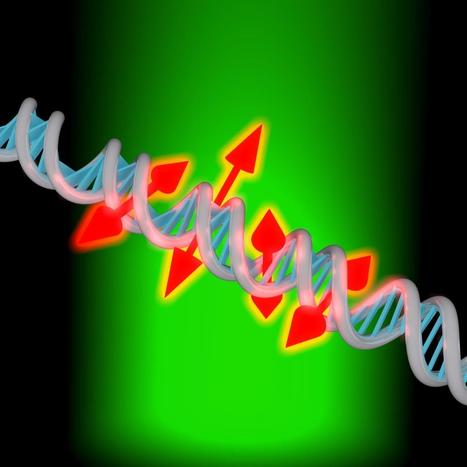
Researchers have developed a new enhanced DNA imaging technique that can probe the structure of individual DNA strands at the nanoscale. Since DNA is at the root of many disease processes, the technique could help scientists gain important insights into what goes wrong when DNA becomes damaged or when other cellular processes affect gene expression. The new imaging method builds on a technique called single-molecule microscopy by adding information about the orientation and movement of fluorescent dyes attached to the DNA strand. W. E. Moerner, Stanford University, USA, is the founder of single-molecule spectroscopy, a breakthrough method from 1989 that allowed scientists to visualize single molecules with optical microscopy for the first time. Of the 2014 Nobel Laureates for optical microscopy beyond the diffraction limit (Moerner, Hell & Betzig), Moerner and Betzig used single molecules to image a dense array of molecules at different times. In The Optical Society's journal for high impact research, Optica, the research team led by Moerner describes their new technique and demonstrates it by obtaining super-resolution images and orientation measurements for thousands of single fluorescent dye molecules attached to DNA strands. "You can think of these new measurements as providing little double-headed arrows that show the orientation of the molecules attached along the DNA strand," said Moerner. "This orientation information reports on the local structure of the DNA bases because they constrain the molecule. If we didn't have this orientation information the image would just be a spot." A strand of DNA is a very long, but narrow string, just a few nanometers across. Single-molecule microscopy, together with fluorescent dyes that attach to DNA, can be used to better visualize this tiny string. Until now, it was difficult to understand how those dyes were oriented and impossible to know if the fluorescent dye was attached to the DNA in a rigid or somewhat loose way. Adam S. Backer, first author of the paper, developed a fairly simple way to obtain orientation and rotational dynamics from thousands of single molecules in parallel. "Our new imaging technique examines how each individual dye molecule labeling the DNA is aligned relative to the much larger structure of DNA," said Backer. "We are also measuring how wobbly each of these molecules is, which can tell us whether this molecule is stuck in one particular alignment or whether it flops around over the course of our measurement sequence."
Via Mariaschnee
|
|
Scooped by
Dr. Stefan Gruenwald
June 17, 2016 1:42 PM
|
Thalidomide was marketed as a sedative in West Germany and some other countries under the brand name “Contergan”. 55 years ago, in 1961, it hit the headlines after having caused horrific deformations in unborn children. Between 5,000 and 10,000 children were affected worldwide. Up to now, the reasons for these disastrous birth defects have remained unclear. Researchers at the Technical University of Munich have at last identified the molecular mechanism of thalidomide. To this day, more than 2,000 victims across the world still live with the consequences of this tragedy. Soon after the discovery of these devastating side effects, the drug was withdrawn from the market. More recently, however, thalidomide is experiencing a kind of renaissance, as it was coincidentally discovered to inhibit the growth of certain tumors. That is why these latest findings are highly relevant to current cancer therapies, as related substances are essential components of modern cancer treatment regimens. Two follow-up substances, lenalidomide and pomalidomide, have been approved for cancer treatment. Both thalidomide-derivatives are successfully used to treat certain bone-marrow cancers such as multiple myeloma. While showing stronger anti-tumor potential, they have fewer side effects than thalidomide. Despite this, they still pose a risk of causing severe birth defects and must not be taken during pregnancy. Thalidomide, lenalidomide and pomalidomide are also known as immunomodulatory drugs (IMiDs). The name is derived from their ability to modify the body’s immune response. Cereblon, a cellular protein, plays an important role in the function of IMiDs. Cereblon (CRBN), a substrate receptor of the CRL4 ubiquitin ligase complex, is the primary target by which IMiDs mediate anticancer and teratogenic effects. Researchers now identified a ubiquitin-independent physiological chaperone-like function of CRBN that promotes maturation of the basigin (BSG; also known as CD147) and solute carrier family 16 member 1 (SLC16A1; also known as MCT1) proteins. This process allows for the formation and activation of the CD147–MCT1 transmembrane complex, which promotes various biological functions, including angiogenesis, proliferation, invasion and lactate export. The researchers found that IMiDs outcompete CRBN for binding to CD147 and MCT1, leading to destabilization of the CD147–MCT1 complex. Accordingly, IMiD-sensitive MM cells lose CD147 and MCT1 expression after being exposed to IMiDs, whereas IMiD-resistant cells retain their expression. Furthermore, del(5q) MDS cells have elevated CD147 expression, which is attenuated after IMiD treatment. Finally, the scientists were able to show that BSG (CD147) knockdown phenocopies the teratogenic effects of thalidomide exposure in zebrafish. These findings provide a common mechanistic framework to explain both the teratogenic and pleiotropic antitumor effects of IMiDs.
|
|
Scooped by
Dr. Stefan Gruenwald
June 16, 2016 7:18 PM
|
One of the oldest known galaxies in the universe is now home to the oldest oxygen yet spotted, a new study suggests. That massive group of stars, dubbed SXDF-NB1006-2, lies about 13.1 billion light-years from Earth and was the oldest known galaxy when it was discovered in 2012 (a record that has been toppled several times since). When first observed, astronomers also discerned that the galaxy had a halo of ionized hydrogen (purple in the artist’s sketch above), a sign that radiation streaming from the galaxy’s stars was energetic enough to strip electrons from atoms in that region of space. Now, new observations of a particular wavelength of infrared light from that galaxy betrays the presence of oxygen atoms that have two electrons missing (in the smaller region depicted in green), researchers report online today in Science. Because all elements in the universe heavier than hydrogen, helium, and lithium have been forged by nuclear fusion in the cores of stars and then scattered into space by supernova explosions, the find indicates that the galaxy, at the age we’re now observing it, was old enough for at least one generation of stars to have formed, lived, and died. The lack of infrared glow from the galaxy across a broad range of wavelengths, however, suggests that there’s very little dust there to absorb and then re-radiate the stars’ radiation, the team notes. There are likely many other galaxies of the same age sporting haloes of oxygen, the team notes, and detecting and then analyzing them will help shed light on how stars and galaxies formed and evolved in the early universe.
|