Your new post is loading...

|
Scooped by
Dr. Stefan Gruenwald
June 23, 2016 11:24 AM
|
Last year, biophysicist Moh El-Naggar and his graduate student Yamini Jangir plunged beneath South Dakota’s Black Hills into an old gold mine that is now more famous as a home to a dark matter detector. Unlike most scientists who make pilgrimages to the Black Hills these days, El-Naggar and Jangir weren’t there to hunt for subatomic particles. They came in search of life.
In the darkness found a mile underground, the pair traversed the mine’s network of passages in search of a rusty metal pipe. They siphoned some of the pipe’s ancient water, directed it into a vessel, and inserted a variety of electrodes. They hoped the current would lure their prey, a little-studied microbe that can live off pure electricity. The electricity-eating microbes that the researchers were hunting for belong to a larger class of organisms that scientists are only beginning to understand. They inhabit largely uncharted worlds: the bubbling cauldrons of deep sea vents; mineral-rich veins deep beneath the planet’s surface; ocean sediments just a few inches below the deep seafloor. The microbes represent a segment of life that has been largely ignored, in part because their strange habitats make them incredibly difficult to grow in the lab. Yet early surveys suggest a potential microbial bounty. A recent sampling of microbes collected from the seafloor near Catalina Island, off the coast of Southern California, uncovered a surprising variety of microbes that consume or shed electrons by eating or breathing minerals or metals. El-Naggar’s team is still analyzing their gold mine data, but he says that their initial results echo the Catalina findings. Thus far, whenever scientists search for these electron eaters in the right locations — places that have lots of minerals but not a lot of oxygen — they find them. As the tally of electron eaters grows, scientists are beginning to figure out just how they work. How does a microbe consume electrons out of a piece of metal, or deposit them back into the environment when it is finished with them? A study published last year revealed the way that one of these microbes catches and consumes its electrical prey. And not-yet-published work suggests that some metal eaters transport electrons directly across their membranes — a feat once thought impossible. Though eating electricity seems bizarre, the flow of current is central to life. All organisms require a source of electrons to make and store energy. They must also be able to shed electrons once their job is done. In describing this bare-bones view of life, Nobel Prize-winning physiologist Albert Szent-Györgyi once said, “Life is nothing but an electron looking for a place to rest.” The microbes’ apparent ability to ingest electrons — known as direct electron transfer — is particularly intriguing because it seems to defy the basic rules of biophysics. The fatty membranes that enclose cells act as an insulator, creating an electrically neutral zone once thought impossible for an electron to cross. “No one wanted to believe that a bacterium would take an electron from inside of the cell and move it to the outside,” said Kenneth Nealson, a geobiologist at the University of Southern California, in a lecture to the Society for Applied Microbiology in London last year. In the 1980s, Nealson and others discovered a surprising group of bacteria that can expel electrons directly onto solid minerals. It took until 2006 to discover the molecular mechanism behind this feat: A trio of specialized proteins sits in the cell membrane, forming a conductive bridge that transfers electrons to the outside of cell.
|
|
Scooped by
Dr. Stefan Gruenwald
June 23, 2016 11:19 AM
|
Ord and his colleagues at UNSW colleague Georgina Cooke analyzed the evolutionary relationships between fish species with out-of-water adaptations, and also looked at the ecological and evolutionary conditions that might inspire fish to move from water to land. The researchers identified 33 fish families with at least one species that showcases amphibious tendencies. They published their findings in the journal Evolution. "These forays onto land have occurred in fish that live in different climates, eat different diets and live in range of aquatic environments, from freshwater rivers to the ocean," atted Ord. "While many species only spend a short time out of water, others, like mudskippers and some eels can last for hours or days." The new study also documents a unique group of intertidal fish called blennies, which includes several species that hop around on land full-time as adults, staying within the vicinity of crashing waves and hiding in the crevices of wet rocks at low tide. "In this one family of fish alone, an amphibious lifestyle appears to have evolved repeatedly, between three and seven times," added Ord.
|
|
Scooped by
Dr. Stefan Gruenwald
June 23, 2016 11:10 AM
|
MicroRNA (miRNA) are cellular fragments of RNA that in some organisms prevent the production of certain proteins. They have been found to be expressed in tissues of some non-mammals and in some embryos prior to pre-implantation. Little is known about their function in mammals, however, though prior research had found them to exist in oocytes (ovarian cells that lead to the development of an ovum) and early embryos. Prior efforts to deep sequence them in mammals has proved to be extremely challenging due to the numbers of them that must be processed, thus scientists still do not know what role they may play in embryo development, if any. In this new effort, the researchers report that they have found a way to tweak the cDNA library construction method for small RNAs resulting in a need for only 10 nanograms of RNA for doing a deep sequence, and because of that, were able to profile samples of both mouse oocytes and early embryos. To tweak the construction method, the researchers optimized the 5' and 3' adaptor ligation and PCR amplification steps, which allowed for drastically reducing the amount of RNA needed. To test their ideas they performed the tweaking on 293 human embryonic kidney cells. Once they had the technique developed, they switched to testing mice oocytes and early embryos to learn more about the role of miRNA in mammal embryo development. They report that they were able to trace the processes surrounding miRNA as it moved from fertilization to early embryonic development—which was the first time that had ever been done. Furthermore, they found that the role miRNA played was suppressed as initial cell division was occurring—though it was not clear why that occurred—but later it was reactivated, perhaps as part of the process of regulating zygotic genetic growth factors.
|
|
Scooped by
Dr. Stefan Gruenwald
June 23, 2016 11:05 AM
|
Earth's magnetosphere, the region of space dominated by Earth's magnetic field, protects our planet from the harsh battering of the solar wind. Announced recently in Nature Physics, a new discovery led by researchers at the University of Alberta shows for the first time how the puzzling third Van Allen radiation belt is created by a "space tsunami." Intense so-called ultra-low frequency (ULF) plasma waves, which are excited on the scale of the whole magnetosphere, transport the outer part of the belt radiation harmlessly into interplanetary space and create the previously unexplained feature of the third belt. "Remarkably, we observed huge plasma waves," says Ian Mann, physics professor at the University of Alberta, lead author on the study and former Canada Research Chair in Space Physics. "Rather like a space tsunami, they slosh the radiation belts around and very rapidly wash away the outer part of the belt, explaining the structure of the enigmatic third radiation belt." The research also points to the importance of these waves for reducing the space radiation threat to satellites during other space storms as well. "Space radiation poses a threat to the operation of the satellite infrastructure upon which our twenty-first century technological society relies," adds Mann. "Understanding how such radiation is energized and lost is one of the biggest challenges for space research." For the last 50 years, and since the accidental discovery of the Van Allen belts at the beginning of the space age, forecasting this space radiation has become essential to the operation of satellites and human exploration in space. The Van Allen belts, named after their discoverer, are regions within the magnetosphere where high-energy protons and electrons are trapped by Earth's magnetic field. Known since 1958, these regions were historically classified into two inner and outer belts. However, in 2013, NASA's Van Allen Probes reported an unexplained third Van Allen belt that had not previously been observed. This third Van Allen belt lasted only a few weeks before it vanished, and its cause remained inexplicable. Mann is co-investigator on the NASA Van Allen Probes mission. One of his team's main objectives is to model the process by which plasma waves in the magnetosphere control the dynamics of the intense relativistic particles in the Van Allen belts—with one of the goals of the Van Allen Probes mission being to develop sufficient understanding to reach the point of predictability. The appearance of the third Van Allen belt, one of the first major discoveries of the Van Allen Probes era, had continued to puzzle scientists with ever increasingly complex explanation models being developed. However, the explanation announced today shows that once the effects of these huge ULF waves are included, everything falls into place.
|
|
Scooped by
Dr. Stefan Gruenwald
June 22, 2016 5:29 PM
|
3-D printing has become a powerful tool for engineers and designers, allowing them to do "rapid prototyping" by creating a physical copy of a proposed design. But what if you decide to make changes? You may have to go back, change the design and print the whole thing again, perhaps more than once. So Cornell researchers have come up with an interactive prototyping system that prints what you are designing as you design it; the designer can pause anywhere in the process to test, measure and, if necessary, make changes that will be added to the physical model still in the printer. "We are going from human-computer interaction to human-machine interaction," said graduate student Huaishu Peng, who described the On-the-Fly-Print system in a paper presented at the 2016 ACM Conference for Human Computer Interaction. Co-authors are François Guimbretière, associate professor of information science; Steve Marschner, professor of computer science; and doctoral student Rundong Wu. Their system uses an improved version of an innovative "WirePrint" printer developed in a collaboration between Guimbretière's lab and the Hasso Platner Institute in Potsdam, Germany. In conventional 3-D printing, a nozzle scans across a stage depositing drops of plastic, rising slightly after each pass to build an object in a series of layers. With the WirePrint technique the nozzle extrudes a rope of quick-hardening plastic to create a wire frame that represents the surface of the solid object described in a computer-aided design (CAD) file. WirePrint aimed to speed prototyping by creating a model of the shape of an object instead of printing the entire solid. The On-the-Fly-Print system builds on that idea by allowing the designer to make refinements while printing is in progress.
|
|
Scooped by
Dr. Stefan Gruenwald
June 22, 2016 11:25 PM
|
Scientists can now detect magnetic behavior at the atomic level with a new electron microscopy technique developed by a team from the Department of Energy's Oak Ridge National Laboratory and Uppsala University, Sweden. The researchers took a counterintuitive approach by taking advantage of optical distortions that they typically try to eliminate. "It's a new approach to measure magnetism at the atomic scale," ORNL's Juan Carlos Idrobo said. "We will be able to study materials in a new way. Hard drives, for instance, are made by magnetic domains, and those magnetic domains are about 10 nanometers apart." One nanometer is a billionth of a meter, and the researchers plan to refine their technique to collect magnetic signals from individual atoms that are ten times smaller than a nanometer. "If we can understand the interaction of those domains with atomic resolution, perhaps in the future we will able to decrease the size of magnetic hard drives," Idrobo said. "We won't know without looking at it." Researchers have traditionally used scanning transmission electron microscopes to determine where atoms are located within materials. This new technique allows scientists to collect more information about how the atoms behave. "Magnetism has its origins at the atomic scale, but the techniques that we use to measure it usually have spatial resolutions that are way larger than one atom," Idrobo said. "With an electron microscope, you can make the electron probe as small as possible and if you know how to control the probe, you can pick up a magnetic signature." The ORNL-Uppsala team developed the technique by rethinking a cornerstone of electron microscopy known as aberration correction. Researchers have spent decades working to eliminate different kinds of aberrations, which are distortions that arise in the electron-optical lens and blur the resulting images.
|
|
Scooped by
Dr. Stefan Gruenwald
June 22, 2016 5:35 PM
|
Ralph Merkle, Robert Freitas and others have a theoretical design for a molecular mechanical computer that would be 100 billion times more energy efficient than the most energy efficient conventional green supercomputer. Removing the need for gears, clutches, switches, springs makes the design easier to build.
Existing designs for mechanical computing can be vastly improved upon in terms of the number of parts required to implement a complete computational system. Only two types of parts are required: Links, and rotary joints. Links are simply stiff, beam-like structures. Rotary joints are joints that allow rotational movement in a single plane.
Simple logic and conditional routing can be accomplished using only links and rotary joints, which are solidly connected at all times. No gears, clutches, switches, springs, or any other mechanisms are required. An actual system does not require linear slides.
|
|
Scooped by
Dr. Stefan Gruenwald
June 22, 2016 2:37 PM
|
Astronomers have discovered a vast cloud of high-energy particles called a wind nebula around a rare ultra-magnetic neutron star, or magnetar, for the first time. The find offers a unique window into the properties, environment and outburst history of magnetars, which are the strongest magnets in the universe. A neutron star is the crushed core of a massive star that ran out of fuel, collapsed under its own weight, and exploded as a supernova. Each one compresses the equivalent mass of half a million Earths into a ball just 12 miles (20 kilometers) across, or about the length of New York’s Manhattan Island. Neutron stars are most commonly found as pulsars, which produce radio, visible light, X-rays and gamma rays at various locations in their surrounding magnetic fields. When a pulsar spins these regions in our direction, astronomers detect pulses of emission, hence the name. Typical pulsar magnetic fields can be 100 billion to 10 trillion times stronger than Earth’s. Magnetar fields reach strengths a thousand times stronger still, and scientists don’t know the details of how they are created. Of about 2,600 neutron stars known, to date only 29 are classified as magnetars. The newly found nebula surrounds a magnetar known as Swift J1834.9-0846—J1834.9 for short—which was discovered by NASA’s Swift satellite on Aug. 7, 2011, during a brief X-ray outburst. Astronomers suspect the object is associated with the W41 supernova remnant, located about 13,000 light-years away in the constellation Scutum toward the central part of our galaxy.
|
|
Rescooped by
Dr. Stefan Gruenwald
from Daily Magazine
June 22, 2016 5:14 PM
|
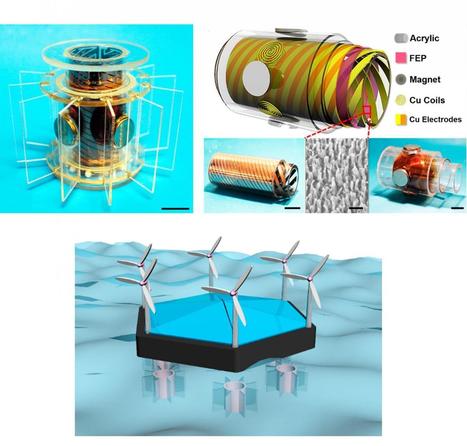
Energy from the ocean, or "blue energy," is arguably the most underexploited power source, according to researchers in a new study. The main problem is that ocean waves are irregular and pass by at low frequencies, whereas most energy harvesters operate best with waves that have regular amplitudes and high frequencies. Unfortunately, the calming lull of slow, unpredictable waves beating against the shore that we tend to find so peaceful is not ideal for energy harvesting. In a new study published in ACS Nano, a team of researchers led by Zhong Lin Wang at the Georgia Institute of Technology has developed a device that can harvest ocean waves in a very broad frequency range that encompasses almost all of the ocean wave energy spectrum, including the hard-to-reach low frequencies that are inaccessible to most harvesters. The new device is a hybrid system that consists of two generators. An electromagnetic generator (EMG), which has traditionally been the main approach for harvesting ocean energy, is well-suited for harvesting waves at high frequencies and fast rotation speeds. A triboelectric nanogenerator (TENG), which has only recently been investigated for ocean energy applications, works better in the low-frequency range and at slower rotation speeds. "The TENG has the unique advantage of high output voltage, and its output power is linearly scaled with frequency, making it ideal for harvesting low-frequency energy," Wang told Phys.org. "On the other hand, the EMG's output power is proportional to the square of the frequency, so the EMG is ideally suited for harvesting high-frequency energy. At low frequency, (< 5 Hz), the effective output of the TENG is much higher than that of the EMG." When combined, the two types of generators operate in a broad frequency range and in two modes (fluctuation and rotation), allowing the hybrid device to collect a variety of types of ocean energies, including wave, current, and tidal. Each type of energy causes a different motion that requires a flexible harvesting capability. The researchers demonstrated the device by using it to light up LEDs that form the words "BLUE ENERGY." The EMG is connected to the word "BLUE" and the TENG is connected to the word "ENERGY" so that the power output of each generator can be viewed individually.
Via THE OFFICIAL ANDREASCY
|
|
Scooped by
Dr. Stefan Gruenwald
June 22, 2016 2:45 PM
|
If DNA archives become a plausible method of data storage, it will be thanks to rapid advances in genetic technologies. The sequencing machines that “read out” DNA code have already become exponentially faster and cheaper; the National Institutes of Health shows costs for sequencing a 3-billion-letter genome plummeting from US $100 million in 2001 to a mere $1,000 today. However, DNA synthesis technologies required to “write” the code are much newer and less mature. Synthetic-biology companies like San Francisco’s Twist Biosciencehave begun manufacturing DNA to customers’ specifications only in the last few years, primarily serving biotechnology companies that are tweaking the genomes of microbes to trick them into making some desirable product. Manufacturing DNA for data storage could be a profitable new market, says Twist CEO Emily Leproust. Twist sent a representative to the April meeting, and the company is also working with Microsoft on a separate experiment in DNA storage, in which it synthesized 10 million strands of DNA to encode Microsoft’s test file. Leproust says Microsoft and the other tech companies are currently trying to determine “what kind of R&D has to be done to make a viable commercial product.” To make a product that’s competitive with magnetic tape for long-term storage, Leproust estimates that the cost of DNA synthesis must fall to 1/10,000 of today’s price. “That is hard,” she says mildly. But, she adds, her industry can take inspiration from semiconductor manufacturing, where costs have dropped far more dramatically. And just last month, an influential group of geneticists proposed an international effort to reduce the cost of DNA synthesis, suggesting that $100 million could launch the project nicely.
|
|
Scooped by
Dr. Stefan Gruenwald
June 22, 2016 2:36 PM
|
They say it’s almost two billion (with a B) years old, yet it resembles modern counterparts. The Gunflint Chert in Canada has long been a hot spot for microbe hunters. J. William Schopf identified microbial fossils in these rocks years ago. Only recently, however, have scientists been able to probe the structure of molecules within the fossils. Not all of the living material has been permineralized (that is, replaced by minerals such as silicates). Unbelievably, there are still traces of the original organic molecules present, as reported in Nature Communications by Alleon et al. “Molecular preservation of 1.88 Ga Gunflint organic microfossils as a function of temperature and mineralogy.” The significant degradation that fossilized biomolecules may experience during burial makes it challenging to assess the biogenicity of organic microstructures in ancient rocks. Here we investigate the molecular signatures of 1.88 Ga Gunflint organic microfossils as a function of their diagenetic history. Synchrotron-based XANES data collected in situ on individual microfossils, at the submicrometre scale, are compared with data collected on modern microorganisms. Despite diagenetic temperatures of ~150–170 °C deduced from Raman data, the molecular signatures of some Gunflint organic microfossils have been exceptionally well preserved. Remarkably, amide groups derived from protein compounds can still be detected. The scientists collected samples from about 7 locations. Using models of metamorphic temperatures during diagenesis (rock formation), they show that slightly higher temperatures in some regions erased the signature of protein compounds. Yet as they say, “remarkably” some protein compounds survived temperatures up to 338° F. They repeatedly say that the spectra show exceptional preservation when compared to modern microbes: Taking advantage of the unique capabilities of STXM-based XANESspectroscopy at the carbon and nitrogen K edges to perform in situ experiments at the submicrometre scale, the present study shows that, in addition to the fine-scale morphologies, the molecular biosignatures of some Gunflint organic microfossils have been exceptionally preserved. In fact, despite the 1.88-Gyr-long geological history that they experienced, Kakabeka Falls and Schreiber Beach organic microfossils exhibit C– and N-XANES spectra sharing strong similarities to those of modern cyanobacteria and modern micro-algae. Despite a higher content of aromatic compounds compared to modern microorganisms, these microfossils exhibit a quite high content of oxygen-based functional groups (carbonyl, phenolic, carboxylic and hydroxyl groups). In addition, these microfossils still contain amide functional groups(absorption feature at 288.2 eV), which were likely to be involved in the proteinaceous compounds synthetized by the once living organisms.
|
|
Scooped by
Dr. Stefan Gruenwald
June 22, 2016 2:21 PM
|
Since major gun law reforms were introduced in Australia, mass shootings have not only stopped, but there has also been an accelerating reduction in rates of firearm-related homicide and suicides, a landmark study has found. It has been two decades since rapid-fire long guns were banned in Australia, including those already in private ownership, and 19 years since the mandatory buyback of prohibited firearms by government at market price was introduced. A handgun buyback program was later introduced, in 2003. Researchers from the University of Sydney and Macquarie University analysed data on intentional suicide and homicide deaths caused by firearms from the National Injury Surveillance Unit, and intentional firearm death rates from the Australian Bureau of Statistics. For the period after the 1996 reforms, rates of total homicides and suicides from all causes were also examined to consider whether people may have substituted guns for alternative means. From 1979 to 1996, the average annual rate of total non-firearm suicide and homicide deaths was rising at 2.1% per year. Since then, the average annual rate of total non-firearm suicide and homicide deaths has been declining by 1.4%, with the researchers concluding there was no evidence of murderers moving to other methods, and that the same was true for suicide. The average decline in total firearm deaths accelerated significantly, from a 3% decline annually before the reforms to a 5% decline afterwards, the study found. In the 18 years to 1996, Australia experienced 13 fatal mass shootings in which 104 victims were killed and at least another 52 were wounded. There have been no fatal mass shootings since that time, with the study defining a mass shooting as having at least five victims. The findings were published in the Journal of the American Medical Association on Thursday, days after the US Senate rejected a string of Republican and Democrat measures to restrict guns. The reforms were proposed in response to the deadliest mass shooting in US history, at an LGBTI nightclub in Orlando. The 1996 reforms introduced in Australia came just months after a mass shooting known as the Port Arthur massacre, when Martin Bryant used two semi-automatic rifles to kill 35 people and wound 23 others in Port Arthur, Tasmania. The reforms had the support of all major political parties.
|
|
Scooped by
Dr. Stefan Gruenwald
June 22, 2016 2:16 PM
|
It is fairly well understood by now that releasing carbon dioxide and other greenhouse gases into the atmosphere imposes an economic cost, in the form of climate change impacts. In most cases, however, those responsible for carbon emissions are not required to pay that cost. Instead, it's borne mainly by the world's poor and low-lying countries, and of course by future generations, as many of the worst impacts of climate change will emerge years after the emissions that drive them. People sometimes refer to the unpaid cost of carbon pollution as a subsidy, or an "implicit subsidy," to polluting businesses. The IMF recently issued a report saying that total worldwide subsidies to energy, mainly fossil fuel energy, amounted to $5.2 trillion a year. The reason that number is so high is that the IMF includes implicit subsidies — the social costs imposed by businesses (including climate damages) that they don't have to pay for. Vox's Brad Plumer raised some questions about whether that's a misleading use of the term "subsidy." Whatever you call it, though, it makes for an unsustainable situation, literally. It can't go on. As climate change gets worse and the chance to avoid harsh impacts dwindles, governments are getting serious about putting some sort of price on carbon emissions, whether explicit (a tax) or implicit (regulations). Soon, a quarter of the world's carbon emissions will be priced in some way. Businesses that now emit carbon pollution for free (or cheap) will soon see their costs rise. In other words, carbon pollution is a business risk. It's a bubble that's going to pop, probably soon. The Carbon Tracker Initiative has popularized a term for this looming liability: "unburnable carbon." There's been a lot of work recently trying to quantify carbon risk. A recent contribution to that conversation was released by Chris Hope and colleagues at the University of Cambridge Judge Business School: "Quantifying the implicit climate subsidy received by leading fossil fuel companies." It attempts to put a number on the carbon risk facing the world's top 20 fossil fuel companies, the ones most directly vulnerable to a price on carbon. The results suggest that those companies are in a perilous situation. Hope took a fairly simple approach: He multiplied the carbon emissions embedded in the companies' products by the "social cost of carbon," i.e., the net economic, health, and environmental cost of a ton of carbon dioxide. He ran the calculation for data from 2008 to 2012 and took the results as a rough proxy for the level of carbon risk facing each company. (See the technical addendum below for more details on this calculation.) The results are pretty startling. To wit: "For all companies and all years, the economic cost to society of their CO2 emissions was greater than their after‐tax profit, with the single exception of Exxon Mobil in 2008" (my emphasis). In other words, if these fossil fuel companies had to pay the full cost of the carbon emissions produced by their products, none of them would be profitable. It's even worse for pure coal companies, for which "the economic cost to society exceeds total revenue in all years, with this cost varying between nearly $2 and nearly $9 per $1 of revenue." Total revenue, Hope and colleagues note, represents "employment, taxes, supply purchases, and indirect employment" — everything that coal companies contribute to the economy. It turns out the costs they impose through carbon emissions are larger than all those contributions combined. (For oil and gas companies, carbon costs generally range from 10 to 50 percent of total revenue.)
|
|
|
Scooped by
Dr. Stefan Gruenwald
June 23, 2016 11:21 AM
|
At first, the researchers assumed that genes would shut down shortly after death, like the parts of a car that has run out of gas. What they found instead was that hundreds of genes ramped up. Although most of these genes upped their activity in the first 24 hours after the animals expired and then tapered off, in the fish some genes remained active 4 days after death. Many of these postmortem genes are beneficial in emergencies; they perform tasks such as spurring inflammation, firing up the immune system, and counteracting stress. Other genes were more surprising. “What’s jaw-dropping is that developmental genes are turned on after death,” Noble says. These genes normally help sculpt the embryo, but they aren’t needed after birth. One possible explanation for their postmortem reawakening, the researchers say, is that cellular conditions in newly dead corpses resemble those in embryos. The team also found that several genes that promote cancer became more active. That result could explain why people who receive transplants from the recently deceased have a higher risk of cancer, Noble says. He and his colleagues posted their results on the preprint server bioRxiv last week, and Noble says their paper is undergoing peer review at a journal. “This is a rare study,” says molecular pharmacologist Ashim Malhotra of Pacific University, Hillsboro, in Oregon, who wasn’t connected to the research. “It is important to understand what happens to organs after a person dies, especially if we are going to transplant them.” The team’s approach for measuring gene activity could be “used as a diagnostic tool for predicting the quality of a transplant.” In an accompanying paper on bioRxiv, Noble and two colleagues demonstrated another possible use for gene activity measurements, showing that they can provide accurate estimates of the time of death. Those results impress forensic scientist David Carter of Chaminade University of Honolulu. Although making a time of death estimate is crucial for many criminal investigations, “we are not very good at it,” he says. Such estimates often rely on evidence that isn’t directly connected to the body, such as the last calls or texts on the victim’s cellphone. Noble and his colleagues, Carter says, have “established a technique that has a great deal of potential to help death investigation.” A mouse or zebrafish doesn’t benefit, no matter which genes turn on after its death. The patterns of gene activity that the researchers observed may represent what happens when the complex network of interacting genes that normally keeps an organism functioning unwinds. Some genes may turn on, for example, because other genes that normally help kept them silent have shut off. By following these changes, researchers might be able to learn more about how these networks evolved, Noble says. “The headline of this study is that we can probably get a lot of information about life by studying death.”
|
|
Scooped by
Dr. Stefan Gruenwald
June 23, 2016 11:16 AM
|
Chew on this: rice farming is a far older practice than we knew. In fact, the oldest evidence of domesticated rice has just been found in China, and it's about 9,000 years old. The discovery, made by a team of archaeologists that includes University of Toronto Mississauga professor Gary Crawford, sheds new light on the origins of rice domestication and on the history of human agricultural practices. Today, rice is one of most important grains in the world's economy, yet at one time, it was a wild plant...how did people bring rice into their world? This gives us another clue about how humans became farmers," says Crawford, an anthropological archaeologist who studies the relationships between people and plants in prehistory. Working with three researchers from the Provincial Institute of Cultural Relics and Archaeology in Zhejiang Province, China, Crawford found the ancient domesticated rice fragments in a probable ditch in the lower Yangtze valley. They observed that about 30 per cent of the rice plant material - primarily bases, husks and leaf epidermis - were not wild, but showed signs of being purposely cultivated to produce rice plants that were durable and suitable for human consumption. Crawford says this finding indicates that the domestication of rice has been going on for much longer than originally thought. The rice plant remains also had characteristics of japonica rice, the short grain rice used in sushi that today is cultivated in Japan and Korea. Crawford says this finding clarifies the lineage of this specific rice crop, and confirms for the first time that it grew in this region of China. Crawford and his colleagues spent about three years exploring the five-hectare archaeological dig site, called Huxi, which is situated in a flat basin about 100 meters above sea level. Their investigations were supported by other U of T Mississauga participants - anthropology professor David Smith and graduate students Danial Kwan and Nattha Cheunwattana. They worked primarily in early spring, fall and winter in order to avoid the late-spring wet season and excruciatingly hot summer months. Digging 1.5 meters below the ground, the team also unearthed artifacts such as sophisticated pottery and stone tools, as well as animal bones, charcoal and other plant seeds.
|
|
Scooped by
Dr. Stefan Gruenwald
June 23, 2016 11:09 AM
|
An international team of astronomers has reported the discovery of a new giant extrasolar planet orbiting a subgiant star so closely that it should be destroyed due to tidal interactions. However, against all odds, the planet exists. The planet, designated K2-39b, was first spotted by NASA's prolonged Kepler mission, known as K2. To confirm the planetary status of K2-39b, the team of researchers, led by Vincent Van Eylen of the Aarhus University in Denmark, has employed the High Accuracy Radial velocity Planet Searcher (HARPS) spectrograph on the ESO 3.6m telescope in La Silla, Chile, the Nordic Optical Telescope in La Palma, Canary Islands, as well as the Magellan II telescope at the Las Campanas Observatory in Chile. The ground-based follow-up measurements were crucial to confirm that the newly found object was, indeed, a genuine exoplanet. The scientists conducted the so-called radial velocity measurements to measure the movement of the star caused by the planet. They clearly confirmed that the planet was indeed real, and also allowed the team to determine its mass. According to the study, K2-39b is 50 times more massive than our planet and has a radius of about eight Earth radii. However, what is most intriguing about the new findings is that the planet is orbiting its evolved subgiant host star every 4.6 days, and so closely that it should be tidally destroyed. "K2-39b is a bit of a 'special beast,' because such short-period planets orbiting large, evolved stars, are quite rare. (…) This planet is special mostly because of the star it orbits: Its host star is an evolved star, a subgiant several times larger than the sun. Around such stars, very few short-period planets were known, and there is speculation this may be because they cannot survive so close to such large stars. However, the fact that we have now found this planet, very close to a subgiant star, proves that at least some planets can survive there," Van Eylen explained. Currently, there are two main theories attempting to explain the lack of close-in planets orbiting evolved subgiant stars. One of the hypotheses is that planets might be tidally destroyed as the star evolves and grows larger. The other scenario suggests that this is due to the systematically higher masses of the observed evolved stars compared to the observed main-sequence stars. In the study, the scientists also attempt to estimate how long K2-39b can survive orbiting its sub-giant parent star. Taking into account the stellar mass of K2-39 and assuming that the planet remains in its current orbit, they suggest that the alien world will end its life probably in about 150 million years' time. Furthermore, the team notes that it seems there may be a second planet in the system, at a much larger distance from the star. However, according to Van Eylen, the current data set has not been able to constrain this potential second planet. Further measurements may be able to do just that.
|
|
Scooped by
Dr. Stefan Gruenwald
June 23, 2016 11:02 AM
|
Hyperloop One demonstrated its rapidly developing technology earlier this year in the Nevada desert. There, electromagnets propelled a sled at 115 mph (185 km/h) along a special test track. The ultimate goal of the Hyperloop system is the create a tube in which a vacuum in front of a passenger or cargo capsule removes air friction and allows mass ground travel at unprecedented speeds. The company is currently working to bring about a magnetic drive that could get a capsule up to 700 mph (1,126 km/h), for example. According to a press release about today's announcement, Hyperloop One now has feasibility studies being conducted in the Netherlands, Switzerland, Dubai, Los Angeles, the UK, Finland, and Sweden.
|
|
Scooped by
Dr. Stefan Gruenwald
June 22, 2016 11:27 PM
|
Researchers have fabricated a silicon optical antenna that is somewhat like an extremely small, special kind of prism. This is because when a red light shines on the optical antenna, the light turns right, but when the light is another color such as orange, it turns left. This unusual property, which is called "bidirectional color scattering," enables the optical antenna to function effectively as a passive wavelength router for visible light. The device could have applications for innovative light sensors, light-matter manipulation, and optical communication. The new optical antenna was developed by a team of researchers, Jiaqi Li et al., at imec (Interuniversity MicroElectronics Center) and the University of Leuven (KU Leuven), both in Leuven, Belgium. Their work is published in a recent issue of Nano Letters. Although optical antennas are a relatively new area of research, they are simply the optical version of the radio and microwave antennas that most people are familiar with, which are commonly used for receiving and transmitting signals in radios, cell phones, and Wi-Fi. In general, an antenna's size corresponds to the wavelengths that it was designed for. Since radio and microwave waves are on the scale of millimeters to kilometers, these antennas can be quite large. Since the wavelength of visible light is on the scale of a few hundred nanometers, tuning in to these signals requires nanosized antennas, which are much more difficult to fabricate. Over the past few years, the imec and KU Leuven team has been exploring the possibilities of directional light manipulation at these length scales using an antenna consisting of just a single element. In 2013, using gold nanoantennas, they were able to demonstrate the world's smallest unidirectional optical antenna, in the shape of the letter V. These metallic antennas support so-called "plasmonic modes," which are fundamentally different form the optical modes supported by a dielectric antenna. Now, by switching to a dielectric V-shaped antenna made from silicon, the researchers could achieve bidirectional scattering, in contrast to unidirectional scattering in the case of using gold. In bidirectional scattering, the scattering direction depends on the wavelength of the incoming (incident) light. The shift in direction is gradual. For example, as the wavelength decreases from 755 nm to 660 nm, the scattering direction gradually changes from the leftward to the rightward direction. The specific wavelengths can be tuned by engineering slight adjustments to the size and shape of the antenna.
|
|
Rescooped by
Dr. Stefan Gruenwald
from Daily Magazine
June 22, 2016 5:36 PM
|
A Chinese supercomputer has topped a list of the world's fastest computers again this year, and for the first time the winning system uses Chinese-designed processors instead of U.S. technology. The announcement Monday is a new milestone for Chinese supercomputer development and a further erosion of past U.S. dominance of the field. Last year's Chinese winner in the TOP500 ranking maintained by researchers in the United States and Germany slipped to No. 2, followed by a computer at the U.S. government's Oak Ridge National Laboratory in Tennessee. Also this year, China displaced the United States for the first time as the country with the most supercomputers in the top 500. China had 167 systems and the United States had 165. Japan was a distant No. 3 with 29 systems. Supercomputers are one of a series of technologies targeted by China's ruling Communist Party for development and have received heavy financial support. Such systems are used for weather forecasting, designing nuclear weapons, analyzing oilfields and other specialized purposes. "Considering that just 10 years ago, China claimed a mere 28 systems on the list, with none ranked in the top 30, the nation has come further and faster than any other country in the history of supercomputing," the TOP500 organizers said in a statement. This year's champion is the Sunway TaihuLight at the National Supercomputing Center in Wuxi, west of Shanghai, according to TOP500. It was developed by China's National Research Center of Parallel Computer Engineering & Technology using entirely Chinese-designed processors. The TaihuLight is capable of 93 petaflops, or quadrillion calculations per second, according to TOP500. It is intended for use in engineering and research including climate, weather, life sciences, advanced manufacturing and data analytics. Its top speed is about five times that of Oak Ridge's Titan, which uses Cray, NVIDIA and Opteron technology. Other countries with computers in the Top 10 were Japan, Switzerland, Germany and Saudi Arabia.
Via THE OFFICIAL ANDREASCY
|
|
Scooped by
Dr. Stefan Gruenwald
June 22, 2016 5:31 PM
|
A piece of paper is one of the most common, versatile daily items. Children use it to draw their favorite animals and practice writing the A-B-Cs, and adults print reports or scribble a hasty grocery list. Now, connecting real-world items such as a paper airplane or a classroom survey form to the larger Internet of Things environment is possible using off-the-shelf technology and a pen, sticker or stencil pattern. Researchers from the University of Washington, Disney Research and Carnegie Mellon University have created ways to give a piece of paper sensing capabilities that allows it to respond to gesture commands and connect to the digital world. The method relies on small radio frequency (RFID) tags that are stuck on, printed or drawn onto the paper to create interactive, lightweight interfaces that can do anything from controlling music using a paper baton, to live polling in a classroom. "Paper is our inspiration for this technology," said lead author Hanchuan Li, a UW doctoral student in computer science and engineering. "A piece of paper is still by far one of the most ubiquitous mediums. If RFID tags can make interfaces as simple, flexible and cheap as paper, it makes good sense to deploy those tags anywhere." The researchers presented their work May 12, 2016 at the Association for Computing Machinery's CHI 2016 conference in San Jose, California.
|
|
Scooped by
Dr. Stefan Gruenwald
June 22, 2016 5:27 PM
|
Genetically engineered immune cells are saving the lives of cancer patients. That may be just the start. Cellectis began developing the treatment in 2011 after doctors in New York and Philadelphia reported that they’d found a way to gain control over T cells, the so-called killer cells of the immune system. They had shown that they could take T cells from a person’s bloodstream and, using a virus, add new DNA instructions to aim them at the type of blood cell that goes awry in leukemia. The technique has now been tested in more than 300 patients, with spectacular results, often resulting in complete remission. A dozen drug firms and biotechnology companies are now working to bring such a treatment to market. The search to expand immune therapy now involves not only the world’s largest drug companies but also tech firms. Sharp says that last year Google held two summits at MIT of top immune oncologists and bioengineers to determine what parts of the problem could be “Googlified.” Attendees say the search giant paid special attention to new research techniques that fingerprint cells from a tumor biopsy in rapid-fire fashion. These methods might generate big data about what immune system cells are actually doing inside a tumor, and new clues about how to influence them. So far, Google’s life science unit, named Verily, hasn’t revealed its plans in cancer immunotherapy. But in New York’s Union Square, I met Jeffrey Hammerbacher, a former Facebook employee who now runs a lab that is part of Mount Sinai, the hospital and medical school. With 12 programmers in a light-soaked loft—the nearest thing to blood and guts is a photo of an exhausted surgeon on the wall—he’s also spending time on T cells. He’s developing software to interpret the DNA sequence in a patient’s cancer and predict from it how to goose the response of killer T cells. A clinical trial by Mount Sinai should start this year. The patients receive a dose of abnormal protein fragments that Hammerbacher’s software predicts will train T cells to attack the cancer. “What was fun was that what we submitted to the [U.S. Food and Drug Administration] was not a molecule but an algorithm,” he says. “It might be one of the first times the output of a program is the therapy.” In January, Juno Therapeutics (see “Biotech’s Coming Cancer Cure”) paid $125 million to acquire AbVitro, a Boston-area company that specializes in sequencing the DNA inside single T cells. Now Juno is trying to locate T cells that are active inside cancers and study their receptors. Juno’s chief scientist, Hyam Levitsky, says an experiment that used to take seven months now takes seven days. And data is piling up: an average experiment generates 100 gigabytes of information. “A lot of what is happening is technology-driven,” he says. “The questions have been there for a while, but there was no way to get at the answers. Now we’re visualizing them with new technology in ways we never could before.” In March Pfizer appointed John Lin to head its San Francisco biotech unit, which develops cancer drugs and recently started making engineered T cells. He says the company had been negotiating with Cellectis well before the news of Layla’s treatment and that no one there was even aware the girl had been treated before it hit the news. “The publicity was a big surprise,” he says. Lin says years of scientific work have finally resulted in a level of mastery that makes therapeutic products seem practical. He thinks the treatments will go beyond leukemia, and beyond cancer. “We think that this fundamental principle, engineering human cells, could have broad implications,” he says, “and the immune system will be the most convenient vehicle for it, because they can move and migrate and play such important roles.” Researchers are already working on autoimmune disorders, like diabetes, multiple sclerosis, and lupus. Infectious disease is also in the sights of T-cell engineers. Edward Berger, a virologist at the National Institutes of Health who helped discover how HIV enters human cells, thinks it may be possible to permanently keep the virus in check, a so-called “functional cure.” In February, he says, he will start giving monkeys T cells genetically programmed to find and destroy any cell in which the simian version of HIV is replicating.
|
|
Scooped by
Dr. Stefan Gruenwald
June 22, 2016 2:49 PM
|
Using genome sequencing, researchers from the University of British Columbia, along with colleagues at the Imperial College in London, now have the ability to determine when a tuberculosis (TB) outbreak is over. The research is the first of its kind to demonstrate that genomic analysis can be used to determine when a TB outbreak has ended—valuable knowledge which can assist public health investigators understand an outbreak’s dynamics and guide a real-time public health response. Genomic analysis involves reading the complete genetic instructions of the pathogens causing a disease, and using that data to infer who might have infected whom. By looking for mutations that are shared between the pathogens taken from different people, researchers can see whose pathogens are most closely related to each other, suggesting potential transmission. “Declaring the end of a TB outbreak is a difficult thing to do,” said senior author Jennifer Gardy, assistant professor in UBC’s school of population and public health and a senior scientist at the British Columbia Centre for Disease Control. “Because the bacterium that causes TB can lie dormant in someone’s lung for months or even years before it causes disease, we had no way of knowing whether a TB case we have just diagnosed was a recent infection – suggesting the outbreak is still going on – or whether the person was infected years ago.” Using mathematical and statistical techniques, the researchers evaluated a TB outbreak that began in May 2008 and were able to determine when each outbreak case was infected. This provided public health officials with a way to determine when disease transmission had stopped and the outbreak had ended. They were able to declare the outbreak over in January 2015, after the data indicated no disease transmission had occurred since mid-2012. “By using a series of techniques from the world of mathematics and statistics, we can come up with an estimated time at which each infection occurred,” explained Gardy. “This information is incredibly useful to the public health officials managing an outbreak. Responding to an outbreak requires a lot of effort and resources, and we need to know when we can step down our response.” “Genomics has been used to monitor infectious disease outbreaks before, but this is the first time it’s ever been possible to declare a complicated outbreak of TB over,” said Gardy. “It really opens up new doors in the world of TB control.”
|
|
Scooped by
Dr. Stefan Gruenwald
June 22, 2016 2:42 PM
|
A preprogrammed FPGA can take motion planning from frustrating to instantaneous. If you’ve ever seen a live robot manipulation demo, you’ve almost certainly noticed that the robot probably spends a lot of time looking like it’s not doing anything. It’s tempting to say that the robot is “thinking” when this happens, and that might even be mostly correct: odds are that you’re watching some poor motion-planning algorithm try and figure out how to get the robot’s arm and gripper to do what it’s supposed to do without running into anything. This motion planning process is both one of the most important skills a robot can have (since it’s necessary for robots to “do stuff”), and also one of the most time and processor intensive. At the RSS 2016 conference this week, researchers from the Duke Roboticsgroup at Duke University in Durham, N.C., are presenting a paper about “Robot Motion Planning on a Chip,” in which they describe how they can speed up motion planning by three orders of magnitude while using 20 times less power. How? Rather than using general purpose CPUs and GPUs, they instead developed a custom processor that can run collision checking across an entire 3D grid all at once.
|
|
Scooped by
Dr. Stefan Gruenwald
June 22, 2016 2:23 PM
|
Temperatures around the world are rising faster than scientists can develop varieties that can cope with a warmer world, according to a new study. Crops yields around the world could fall within a decade unless action is taken to speed up the introduction of new varieties. A study says temperatures are rising faster than the development of crop varieties that can cope with a warmer world. In Africa, researchers found that it can take 10-30 years before farmers can grow a new breed of maize. By the time these new crops are planted, they face a warmer environment than they were developed in. The scientists behind the study, published in the journal Nature Climate Change, looked closely at the impact of temperature rises on crop duration - that's the length of time between planting and harvesting. They found that in a warmer world durations will be shorter meaning these varieties will have less time to accumulate biomass and yields could be affected. In their paper, the researchers write that crop duration will become significantly shorter as early as 2018 in some regions but by 2031, the majority of maize-growing areas of Africa will be affected. "The actual changes in yield may be different but this effect is there, the impact of this change in duration will occur unless breeding changes," said lead author Prof Andy Challinor from the University of Leeds. "The durations will be shorter than what they were bred for - by the time they are in the field they are, in terms of temperature, out of date." New varieties of maize need between 10-30 years of development before they are ready to be grown by farmers. The scientists say the lag is down to a combination of factors including the limited number of crops you can grow in a season, the need for government approved testing and there are also a number of problems of access to markets that can increase the time it takes before the farmers have the new seeds to plant. Increasing the speed of development is important but according to Prof Challinor, so is making smarter assumptions about future conditions.
|
|
Scooped by
Dr. Stefan Gruenwald
June 22, 2016 2:19 PM
|
In all the talk of “disruption” and “hacking cancer,” you’d be forgiven for not taking internet billionaire Sean Parker seriously in the life sciences world. But he just got federal backing to run the world’s first-ever CRISPR/Cas9 trial, which could alter the way many diseases, especially cancer, are treated. You’d be hard-pressed to find another first-in-human trial gain so much attention because, yes, despite all the column inches it’s generated, CRISPR has not yet entered the clinic. But its preclinical activity has caused much hype given its gene-editing capabilities, with its core tech centering on a simple method for reengineering DNA--which may well have profound consequences in treating a number of diseases. Recently, a National Institutes of Health (NIH) panel ruled unanimously (but with one abstention) to let the first trial for a CRISPR candidate run. This is just the first step, however, as the FDA as well as the medical centers where it’ll be run will still need to clear the study before it can actually start recruiting and testing patients. So who’s the first pioneer? CRISPR Therapeutics, Caribou Biosciences, Editas ($EDIT), or maybe Intellia ($NTLA)? Surely Novartis ($NVS) must be involved? Nope, it’s Sean Parker, founder of Napster and the first president of Facebook, who, not short of a few bucks (net worth estimated at $2.4 billion), has stolen a march on the CRISPR pioneers. (Editas was in fact down 7% at the end of play yesterday after the news, with Intellia down 4.5%.) The trial, should it gain the regulatory nod, will be run by a group of University of Pennsylvania researchers and funded by the Parker Institute. The study would also be conducted at MD Anderson Cancer Center in Texas and the University of California, San Francisco. Penn will be its spiritual home, however, as Penn’s Dr. Carl June is one of the major innovators in T cell biology. Speaking at the Forbes Philanthropy Summit earlier this month, June said the idea is to make T cells, a type of white blood cell, “better than nature made them.” The cells will be edited to lack several genes, including one that allows them to respond to a protein called PD-1, which acts as an off switch that some cancers hijack to evade the immune system. PD-1 was the last next big thing in cancer, with Merck ($MRK) gaining the first approval for its PD-1 drug Keytruda in 2014, although the market leader, despite being approved second, is Bristol-Myers Squibb’s ($BMY) Opdivo. Roche ($RHHBY) also joined the party earlier this year with its PD-L1 drug Tecentriq.
|