Your new post is loading...

|
Scooped by
Dr. Stefan Gruenwald
September 6, 2016 12:22 PM
|
Scientists at The University of Texas at Austin have demonstrated a method for making three-dimensional images of structures in biological material under natural conditions at a much higher resolution than other existing methods. The method may help shed light on how cells communicate with one another and provide important insights for engineers working to develop artificial organs such as skin or heart tissue. The research is described today in the journal Nature Communications. The scientists, led by physicist Ernst-Ludwig Florin, used their method, called thermal noise imaging, to capture nanometer-scale images of networks of collagen fibrils, which form part of the connective tissue found in the skin of animals. A nanometer is a billionth of a meter or about one-hundred-thousandth of the width of a human hair. Examining collagen fibrils at this scale allowed the scientists to measure for the first time key properties that affect skin's elasticity, something that could lead to improved designs for artificial skin or tissues.
|
|
Scooped by
Dr. Stefan Gruenwald
September 6, 2016 12:11 PM
|
Optoelectronic devices that combine electronics and photonics are incorporating two-dimensional (2D) materials for a range of applications. At the same time, cooperative phenomena – in which a system's individual components appear to act as a single entity rather than independently – have yet to be widely investigated, an important example being ferroelectricity (spontaneous electric polarization that can be reversed by an electric field) in the 2D limit. Recently, however, scientists at Nanyang Technological University, Singapore have demonstrated room-temperature out-of-plane ferroelectricity (that is, orthogonal to the 2D material) in 2D CuInP2S6 (copper indium thiophosphate) with a ~320 K transition temperature, as well as switchable polarization in 4 nm CuInP2S6 flakes. The researchers state that their findings create the possibility of sensors, actuators, non-volatile memory devices, various van der Waals heterostructures (devices made from layers of dissimilar 2D crystals in which forces are based on molecular attraction or repulsion rather than covalent or ionic bonds), and other novel applications based on 2D ferroelectricity.
|
|
Scooped by
Dr. Stefan Gruenwald
September 1, 2016 2:42 PM
|
Annular eclipses occur when the Moon is too distant to cover the Sun as seen from the Earth. TheMoon reaches apogee, or its most distant point from the Earth on September 6th, just five days after New and the September 1st eclipse. How common (or rare) are solar eclipses, annular or total? It’s worth noting that as the 2017 total solar eclipse crossing the contiguous United States approaches, creationist websites are again promoting the idea that the supposed ‘perfection’ of solar eclipses is evidence for intelligent design. If solar eclipses are an example of a higher plan to the cosmos, they’re not a very good one… in fact, in our current epoch, partial eclipses, to include annulars, are much more prevalent. If, for example, the Moon’s orbit was aligned with the ecliptic, we’d see two eclipses – one lunar and and one solar – every month, a much rarer circumstance… a creator could have really used that to really get our attention. And Earth isn’t alone in hosting total solar eclipses: in our own solar system, you can make a brief visit to Jupiter’s large moons and also witness total solar eclipse perfection.
|
|
Scooped by
Dr. Stefan Gruenwald
September 1, 2016 2:33 PM
|
When chemistry graduate student Demetrius A. Vazquez-Molina took COF-5, a nano sponge-like, non-flammable manmade material and pressed it into pellets the size of a pinkie nail, he noticed something odd when he looked at its X-ray diffraction pattern. The material's internal crystal structure arranged in a strange pattern. He took the lab results to his chemistry professor Fernando Uribe-Romo, who suggested he turn the pellets on their side and run the X-ray analysis again. The result: The crystal structures within the material fell into precise patterns that allow for lithium ions to flow easily - like in a liquid. The findings, published in the Journal of the American Chemical Society earlier this summer, are significant because a liquid is necessary for some electronics and other energy uses. But using current liquid materials sometimes is problematic. For example, take lithium-ion batteries. They are among the best batteries on the market, charging everything from phones to hover boards. But they tend to be big and bulky because a liquid must be used within the battery to transfer lithium ions from one side of the battery to the other. This process stores and disperses energy. That reaction creates heat, which has resulted in cell phones exploding, hover boards bursting into flames, and even the grounding of some airplanes a few years ago that relied on lithium batteries for some of its functions.
New research by scientists at The University of Akron (UA) shows that a nanometer-thin layer of water between two charged surfaces exhibits ice-like tendencies that allow it to withstand pressures of hundreds of atmospheres. The discovery could lead to better ways to minimize friction in a variety of settings.
Why water between two surfaces does not always simply squeeze out when placed under severe pressure had never been fully understood. The UA researchers discovered that naturally-occurring charges between two surfaces under intense pressure traps the water, and gives it ice-like qualities. It is this ice-like layer of water—occurring at room temperature—that then lessens the friction between the two surfaces. "For the first time we have a basic understanding of what happens to water under these conditions and why it keeps two surfaces apart," says Professor Ali Dhinojwala. "We had suspected something was happening at the molecular level, and now we have proof." "This discovery could lead to improved designs where low friction surfaces are critically important, such as in biomedical knee implants," says UA graduate student Nishad Dhopatkar. Graduate student Adrian Defante, who was also part of the research team, says "the newfound properties of water might contribute to the development of more effective antimicrobial coatings, as a thin layer of water could prevent bacterial adhesion." Dhinojwala adds that the research conversely offers insight into how water might be kept away from two surfaces, which could lead to better adhesives in watery environments. The study by Dhinojwala and his team can be found in the current issue of Science Advances.
Via Mariaschnee
When a star explodes, it’s a catastrophic event on a cosmic scale. The amount of energy released is beyond the grasp of our puny human minds; in a few seconds it blasts out as much energy as the Sun will over its entire lifetime. Needless to say, you don’t want to be anywhere near a supernova. So what would it be like to be near three of them? If there are any aliens perusing the skies in the nearby galaxy M33, they got their chance. Astronomers have found the expanding debris from not one, but three previously unknown supernovae. Better yet: The spherical shells of gas hurled outward by these explosions are concentric, centered on the same point in space, which means all three stars were very close to each other when they let go. This weird triple supernova was found using a technique that specifically looks for rapidly moving gas. It involves a special kind of spectrograph that breaks the incoming light for the sky into very narrow slices of color. The resulting spectrum can reveal a lot of information about an object, including its composition, speed through space, and more. In this case the spectrograph can create a spectrum for every point in the sky in the telescope’s field of view. For a supernova remnant (the expanding gas from the explosion), some of that gas will be moving toward us (the gas on the near side of the explosion) and some away from us (on the other side of the explosion). The gas heading toward us will have its spectrum shifted toward shorter wavelengths (called blue shift), while the gas moving away will be shifted toward longer ones (red shift).
Via Mariaschnee
|
|
Scooped by
Dr. Stefan Gruenwald
September 1, 2016 2:08 PM
|
It’s hard to believe that carbon has any more surprises up its sleeve. And yet today, Mingjie Liu and pals at Rice University in Houston calculate the properties of another form of carbon that is stronger, stiffer and more exotic than anything chemists have seen before. The new material is called carbyne. It is a chain of carbon atoms that are linked either by alternate triple and single bonds or by consecutive double bonds. Carbyne is something of a mystery. Astronomers believe they have detected its signature in interstellar space but chemists have been bickering for decades over whether they had ever created this stuff on Earth. A couple of years ago, however, they synthesized carbyne chains up to 44 atoms long in solution. The thinking until now has been that carbyne must be extremely unstable. In fact some chemists have calculates that two strands of carbyne coming into contact would react explosively. Nevertheless, nanotechnologists have been fascinated with potential of this material because it ought to be both strong and stiff and therefore useful. But exactly how strong and how stiff, no one has been quite sure. This is where Liu and co step in. These guys have calculated from first principles the bulk properties of carbyne and the results make for interesting reading. For starters, they say that carbyne is about twice as stiff as the stiffest known materials today. Carbon nanotubes and grapheme, for example, have a stiffness of 4.5 x 10^8 N.m/kg but carbyne tops them with a stiffness of around 10^9 N.m/kg. Just as impressive is the new material’s strength. Liu and co calculate that it takes around 10 nanoNewtons to break a single strand of carbyne. “This force translates into a specific strength of 6.0–7.5×10^7 N∙m/kg, again significantly outperforming every known material including graphene (4.7–5.5×10^7 N∙m/ kg), carbon nanotubes (4.3–5.0×10^7 N∙m/ kg), and diamond (2.5–6.5×10”7 N∙m/kg4),” they say. Carbyne has other interesting properties too. Its flexibility is somewhere between that of a typical polymer and double-stranded DNA. And when twisted, it can either rotate freely or become torsionally stiff depending on the chemical group attached to its end. Perhaps most interesting is the Rice team’s calculation of carbyne’s stability. They agree that two chains in contact can react but there is an activation barrier that prevents this happening readily. “This barrier suggests the viability of carbyne in condensed phase at room temperature on the order of days,” they conclude.
|
|
Rescooped by
Dr. Stefan Gruenwald
from DNA and RNA research
September 1, 2016 1:59 PM
|
Although ribosomes are ubiquitous and essential for life, recent data indicate that monogenic causes of ribosomal dysfunction can confer a remarkable degree of specificity in terms of human disease phenotype. Box C/D small nucleolar RNAs (snoRNAs) are evolutionarily conserved non-protein-coding RNAs involved in ribosome biogenesis. Now scientists show that biallelic mutations in the gene SNORD118, encoding the box C/D snoRNA U8, cause the cerebral microangiopathy leukoencephalopathy with calcifications and cysts (LCC), presenting at any age from early childhood to late adulthood. These mutations affect U8 expression, processing and protein binding and thus implicate U8 as essential in cerebral vascular homeostasis.
Via Integrated DNA Technologies
Researchers at Penn State and the Molecular Foundry at Lawrence Berkeley National Laboratory are pushing the limits of electron microscopy into the tens of picometer scale, a fraction of the size of a hydrogen atom. The ability to see at this subatomic level is crucial for designing new materials with unprecedented properties, such as materials that transition from metals to semiconductors or that exhibit superconductivity. The researchers' work describing the first atomic scale evidence for strain-induced ferroelectricity in a layered oxide appears online today, (Aug. 31), inNature Communications. "This paper is important because it highlights our ability to design new classes of materials that can be tuned, one atomic layer at a time, to get interesting new properties such as high-frequency tunable dielectrics, which are of interest to the semiconductor industry," said first author Greg Stone, a former Penn State post-doctoral scholar now at the U.S. Army Research, Development, and Engineering Center. Designing new materials with potentially useful properties requires the close collaboration of theory, synthesis and characterization - the first to build the mathematical models needed, the second to create the material in the lab, and the third to visualize and measure the material's properties and provide feedback to tweak theories and improve synthesis. This study builds on previous theoretical work by coauthors Turan Birol and Craig Fennie of Cornell University and experimental work by coauthors Venkatraman Gopalan of Penn State and Darrell Schlom, formerly at Penn State and now at Cornell, and their students. Gopalan and Nasim Alem, professors of materials science and engineering at Penn State, led the current study. "The material we are looking at is a form of strontium titanate called a layered oxide," said Gopalan. "This study brings together electron microscopy and density functional theory on a 5 to 10 picometer length scale to show why these materials are such good tunable dielectrics. The key is phase competition, and for the first time, we show that many polar phases with similar energies compete in this material on the atomic scale, just as theory predicted, which gives it large tunability under a voltage." Complex oxides are materials that form by combining negatively charged oxygen and two other positively charged ions. In this instance, the team examined strontium titanate with a structure called Ruddlesden-Popper (RP), after the two scientists who discovered it. The structure looks like a brick and mortar wall, with the bricks made of the strontium titanate and the thin mortar between the bricks made up of strontium oxide. When the bricks are layered in this fashion, new properties emerge that would not appear in a single brick. "In the case of RP-strontium titanate, the emergent property is ferroelectricity, which means it has a built-in electrical polarization within its structure," said Gopalan. "But it could be magnetism or metal-insulator transitions or superconductivity, depending on the atoms involved and the layering order of the materials."
Via Mariaschnee
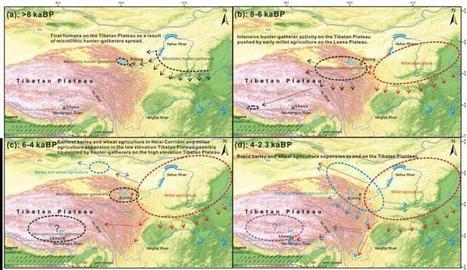
The Tibetan Plateau, as the Earth's third pole, has long been of interest to many, especially in relation to its human history. Over the last few decades our understanding of the history of human occupation of the Tibetan Plateau has significantly improved as a result of progress made in archaeological, genetic and earth science studies. However, arguments still remain as a result of the major discrepancies which exist between the findings of studies based on different materials and using different approaches. A recent study did a comprehensive review of previous studies of the human history of the Tibetan Plateau and the nature of human adaptation to the high elevation environment. The present study is published in the latest issue of Science China: Earth Sciences, and is entitled "History and possible mechanisms of prehistoric human migration to the Tibetan Plateau". The research is led by Lanzhou University, the Gansu Provincial Institute of Cultural Relics and Archaeological Research, the Qinghai Provincial Institute of Cultural Relics and Archaeological Research and the Tibetan Cultural Relic Conservation Institute. Prehistoric human history on the Tibetan Plateau is a hotly debated topic. Recent studies have not only yielded a large amount of archaeological material and genetic information about the Tibetan people, but they have also proposed divergent hypotheses. A comprehensive analysis of this diverse material, and of the resulting conclusions, is urgently required. By reviewing all of the previous prehistoric archaeological work on the Tibetan Plateau, and reanalyzing the available data, this study reconstructs the history of human migration to the Tibetan Plateau and discusses the possible mechanisms involved. Humans first arrived in the relatively low elevation Northeastern Tibetan Plateau from the adjacent Western Loess Plateau via the He-Huang Valley, and then moved further south to the central plateau. This process consisted of four stages. (i) During the climatic amelioration of the Last Deglacial period (15-11.6 ka BP), Upper Paleolithic hunter-gatherers with a well-developed microlithic technology first spread into the Northeastern Tibetan Plateau. (ii) In the early-mid Holocene (11.6-6 ka BP), Epipaleolithic microlithic hunter-gatherers were widely distributed on the northeastern plateau and spread southwards to the interior plateau, possibly with millet agriculture developed in the neighboring low elevation regions. (iii) In the mid-late Holocene (6-4 ka BP), Neolithic millet farmers spread into low elevation river valleys in the northeastern and southeastern plateau areas. (iv) In the late Holocene (4-2.3 ka BP), Bronze Age barley and wheat farmers further settled on the high elevation regions of the Tibetan Plateau, especially after 3.6 ka BP. However, all the reported Paleolithic sites earlier than the LGM on the Tibetan Plateau need further examination.
Via Mariaschnee
|
|
Scooped by
Dr. Stefan Gruenwald
September 1, 2016 12:42 PM
|
An ultrafast "electron camera" at the Department of Energy's SLAC National Accelerator Laboratory has made the first direct snapshots of atomic nuclei in molecules that are vibrating within millionths of a billionth of a second after being hit by a laser pulse. The method, called ultrafast electron diffraction (UED), could help scientists better understand the role of nuclear motions in light-driven processes that naturally occur on extremely fast timescales. Researchers used the UED instrument's electron beam to look at iodine molecules at different points in time after the laser pulse. By stitching the images together, they obtained a "molecular movie" that shows the molecule vibrating and the bond between the two iodine nuclei stretching almost 50 percent - from 0.27 to 0.39 millionths of a millimeter - before returning to its initial state. One vibrational cycle took about 400 femtoseconds; one femtosecond, or millionth of a billionth of a second, is the time it takes light to travel a small fraction of the width of a human hair. "We've pushed the speed limit of the technique so that we can now see nuclear motions in gases in real time," said co-principal investigator Xijie Wang, SLAC's lead scientist for UED. "This breakthrough creates new opportunities for precise studies of dynamic processes in biology, chemistry and materials science." The UED method has been under development by a number of groups throughout the world since the 1980s. However, the quality of electron beams has only recently become good enough to enable femtosecond studies. SLAC's instrument benefits from a high-energy, ultrabright electron source originally developed for the lab's femtosecond X-ray laser, the Linac Coherent Light Source (LCLS), a DOE Office of Science User Facility.
|
|
Scooped by
Dr. Stefan Gruenwald
September 1, 2016 12:34 PM
|
Our brains have a detailed picture of our hands and fingers, and that persists even decades after an amputation, Oxford University researchers have found. The finding could have implications for the control of next generation prosthetics. Team leader, Dr. Tamar Makin said: 'It has been thought that the hand 'picture' in the brain, located in the primary somatosensory cortex, could only be maintained by regular sensory input from the hand. In fact, textbooks teach that the 'picture' will be 'overwritten' if its primary input stops. If that was the case, people who have undergone hand amputation would show extremely low or no activity related to its original focus in that brain area- in our case, the hand. However, we also know that people experience phantom sensations from amputated body parts, to the extent that someone asked to move a finger can 'feel' that movement. 'We wanted to look at the information underlying brain activity in phantom movements, to see how it varied from the brain activity of people moving actual hands and fingers.' The team, from Oxford's Hand and Brain Lab, used an ultra-high power (7 Tesla) MRI scanner to look at brain activity in two people who had lost their left hand through amputation 25 and 31 years ago but who still experienced vivid phantom sensations, and eleven people who retained both hands and were right handed. Each person was asked to move individual fingers on their left hand. Study leader, Ms. Sanne Kikkert said: 'We found that while there was less brain activity related to the left hand in the amputees, the specific patterns making up the composition of the hand picture still matched well to the two-handed people in the control group.'
|
|
Scooped by
Dr. Stefan Gruenwald
September 1, 2016 12:31 PM
|
The traces of microbes date back 3.7 billion years, much further than the former record-holder. Scientists have just unearthed what they claim to be the oldest fossils ever found on our planet. They're so ancient they predate the next oldest finds by roughly a quarter-billion years. These newly uncovered fossils are 3.7-billion-year -old traces of ancient microbes, and were found under recently melted perennial snow in southwest Greenland. The fossils were discovered by a team of geologists and paleontologists led by Allen Nutman at the University of Wollongong in Australia. Nutman and his colleagues outlined their fossil discoveries today in the journal Nature. Nutman's fossils are a breathtaking find for reasons beyond their unparalled age. "If these are really the figurative tombstones of our earliest ancestors, the implications are staggering," writes Abigail Allwood, an earth scientist at NASA's Jet Propulsion Laboratory, in an essay accompanying the science paper. That's because the fossils are tentative proof that life formed very quickly after a violent and chaotic era in our planet's history—a period of intense asteroid shelling called the Late Heavy Bombardment that ended 3.8 billion years ago. "If life could find a foothold here, and leave such an imprint that vestiges exist even though only a minuscule sliver of [rock] is all that remains from that time, then life is not a fussy, reluctant and unlikely thing," Allwood writes. "Give life half an opportunity and it'll run with it."
|
|
|
Scooped by
Dr. Stefan Gruenwald
September 6, 2016 12:14 PM
|
A team of researchers with the National University of Singapore has found a way to get around what they describe as 'Rayleigh's curse'—a phenomenon that happens when two light sources appear to coalesce as they grow closer together, limiting the ability to measure the distance between them. In their paper published in the journal Physical Review Letters, the team describes how they applied a quantum mechanics technique to solve the problem. For many years, scientists working in a variety of fields studying the stars through a telescope or objects through a microscope have been limited by the same problem—diffraction interfering with light sources that are very close together—the wave-like nature of light causes spreading, which in turn can cause an overlap of photons striking a surface meant to be used to measure the difference between two sources. Back in the late 1800's, John William Strutt, Lord Rayleigh, laid down the criterion to describe such limitations and it now bears his name. In this new effort, the researchers report on a new technique they have developed that gets around this problem, allowing for measuring the distance between light sources regardless of how far apart they are. To address the diffraction problem, the researchers applied quantum metrology and quantum optics techniques, using a hybrid of quantum mechanics and a type of statistical theory—it involves working out which measurements are likely to give the most information when measuring sources of light—even when they violate the Rayleigh criterion. The result is an estimation, but one that is believed to be extremely accurate. In so doing, they have shown that 'Rayleigh's curse' is not an actual limit, but one that can be overcome. The work by the team follows an earlier effort using another technique and is different from other techniques that also overcome the Rayleigh limit that other teams have been reporting. The researchers report that their technique is practical—devices using it will allow scientists to measure the distance between very close stars or very tiny objects that until now have not been discernable. One such area of research, they note, is fluorescence microscopy, which they believe should be a particularly good starting point.
|
|
Scooped by
Dr. Stefan Gruenwald
September 1, 2016 3:05 PM
|
Physicists at the U.S. Department of Energy’s Princeton Plasma Physics Laboratory (PPPL)* are building a “star in a jar” — a miniature version of the how our Sun creates energy through fusion. It could provide humankind with near limitless energy, ending dependence on fossil fuels for generating electricity — without contributing greenhouse gases that warm the Earth, and with no long-term radioactive waste. But that requires a “jar” that can contain superhot plasma — and is low-cost enough to be built around the world. A model for such a “jar,” or fusion device, already exists in experimental form: the tokamak, or fusion reactor. Invented in the 1950s by Soviet physicists, it’s a device that uses a powerful magnetic field to confine plasma (superhot charged gas) in the shape of a torus. There are many experimental tokamaks currently in operation, but they all face physics challenges, the PPPL physicists explain. “For example, they must control the turbulence that arises when superhot plasma particles are subjected to powerful electromagnetic fields. They must also carefully control how the plasma particles interact with the surrounding walls to avoid possible disruptions that can halt fusion reactions if the plasma becomes too dense or impure.” So researchers at PPPL and in and Culham, England are looking at ways of solving these challenges for the next generation of fusion devices, based on compact spherical tokamaks. They suggest that these could provide the design for possible next steps in fusion energy: a Fusion Nuclear Science Facility (FNSF) that would develop reactor components and also produce electricity as a pilot plant for a commercial fusion power station. The detailed proposal for such a “jar” is described in a paper published in August 2016 in the journal Nuclear Fusion. “We are opening up new options for future plants,” said lead author Jonathan Menard, program director for the recently completed National Spherical Torus Experiment-Upgrade (NSTX-U) at PPPL. The $94-million upgrade of the NSTX, financed by the U.S. Department of Energy’s Office of Science, began operating last year. Spherical tokamaks are compact devices shaped like cored apples, compared with the bulkier doughnut-like shape of conventional tokamaks. The increased power of the upgraded PPPL machine and the soon-to-be completed MAST Upgrade device “will push the physics frontier, expand our knowledge of high temperature plasmas, and, if successful, lay the scientific foundation for fusion development paths based on more compact designs,” said PPPL Director Stewart Prager.
|
|
Scooped by
Dr. Stefan Gruenwald
September 1, 2016 2:36 PM
|
Our galaxy is home to a bewildering variety of Jupiter-like worlds: hot ones, cold ones, giant versions of our own giant, pint-sized pretenders only half as big around. Astronomers say that in our galaxy alone, a billion or more such Jupiter-like worlds could be orbiting stars other than our sun. And we can use them to gain a better understanding of our solar system and our galactic environment, including the prospects for finding life. It turns out the inverse is also true -- we can turn our instruments and probes to our own backyard, and view Jupiter as if it were an exoplanet to learn more about those far-off worlds. The best-ever chance to do this is now, with Juno, a NASA probe the size of a basketball court, which arrived at Jupiter in July to begin a series of long, looping orbits around our solar system's largest planet. Juno is expected to capture the most detailed images of the gas giant ever seen. And with a suite of science instruments, Juno will plumb the secrets beneath Jupiter's roiling atmosphere. It will be a very long time, if ever, before scientists who study exoplanets -- planets orbiting other stars -- get the chance to watch an interstellar probe coast into orbit around an exo-Jupiter, dozens or hundreds of light-years away. But if they ever do, it's a safe bet the scene will summon echoes of Juno. "The only way we're going to ever be able to understand what we see in those extrasolar planets is by actually understanding our system, our Jupiter itself," said David Ciardi, an astronomer with NASA's Exoplanet Science Institute (NExSci) at Caltech.
|
|
Scooped by
Dr. Stefan Gruenwald
September 1, 2016 2:25 PM
|
A star system 94 light-years away known as HD 164595 is a possible candidate for intelligent life, based on an announcement by an international team of researchers. However, the unusual signal registered by the Ratan-600 radio telescope at the Zelenchukskaya observatory in the North Caucasus Republic of Karachay-Cherkessia is found to be a terrestrial disturbance. Director of the Institute of Applied Astronomy at the Russian Academy of Sciences Alexander Ipatov told TASS: "We, indeed, discovered the unusual signal. However, an additional check showed that it was emanating from a Soviet military satellite, which had not been entered into any of the catalogs of celestial bodies." As renowned US amateur astronomer Paul Gilster reported on the website Centairu Dreams, the Zelenchukskaya observatory’s telescope possibly registered a signal from an extraterrestrial civilization sent from the stellar system HD164595 in the constellation Hercules. The signal was reportedly received at a wavelength of 2.7 cm. As Gilster claimed, the signal could evidence the existence of an extraterrestrial civilization as it was 8-10 times brighter than a typical pulsar or the Moon. Russia’s Ratan-600 is the world’s largest radio telescope with its ring diameter of 600 meters. One of the telescope’s basic missions is to study the Sun but a lot of scientific program are simultaneously carried out with its help. The program, under which the unusual signal was detected, is being implemented by the special astrophysical observatory jointly with Moscow State University.
|
|
Scooped by
Dr. Stefan Gruenwald
September 1, 2016 2:16 PM
|
Protein-shelled structures called gas vesicles, illustrated here, can be engineered with Lego-like proteins to improve ultrasound methods. The next step in ultrasound imaging will let doctors view specific cells and molecules deeper in the body, such as those associated with tumors or bacteria in our gut. A new study from Caltech outlines how protein engineering techniques might help achieve this milestone. The researchers engineered protein-shelled nanostructures called gas vesicles (which reflect sound waves) to exhibit new properties useful for ultrasound technologies. In the future, these gas vesicles could be administered to a patient to visualize tissues of interest. The modified gas vesicles were shown to give off more distinct signals (making them easier to image), target specific cell types, and help create color ultrasound images. “It’s somewhat like engineering with molecular Legos,” says assistant professor of chemical engineering and Heritage Principal Investigator Mikhail Shapiro, who is the senior author of a new paper about the research published in this month’s issue of the journal ACS Nano and featured on the journal’s cover. “We can swap different protein ‘pieces’ on the surface of gas vesicles to alter their targeting properties and to visualize multiple molecules in different colors.”
|
|
Scooped by
Dr. Stefan Gruenwald
September 1, 2016 2:12 PM
|
The AI program reliably interprets mammograms and translates patient data into diagnostic information 30 times faster than a human doctor, with 99 per cent accuracy. It was developed by researchers at Houston Methodist Research Institute in Texas. “This software intelligently reviews millions of records in a short amount of time, enabling us to determine breast cancer risk more efficiently using a patient's mammogram,” said Stephen T Wong, chair of the Department of Systems Medicine and Bioengineering at the institute. “This has the potential to decrease unnecessary biopsies," he added. The team used the AI software to evaluate mammograms and pathology reports of 500 breast cancer patients. The software scanned patient charts, collected diagnostic features and correlated mammogram findings with breast cancer subtype. Clinicians used results, such the expression of tumor proteins, to accurately predict each patient's probability of breast cancer diagnosis. In the US, 12.1 million mammograms are performed annually, but half yield false results, according to the American Cancer Society, resulting in one in two healthy women being told they have cancer. Patients who are told they are at particular risk of breast cancer are often recommended for biopsies – a necessary but invasive procedure that removes tissue or fluid from a suspicious area so cells can be analyzed. However, 20 per cent are performed unnecessarily. The researchers hope their software will help physicians better choose which patients need the procedure and decrease unnecessary breast biopsies. Manual review of 50 charts took two clinicians 50 to 70 hours, whereas the AI software reviewed 500 charts in a few hours, saving the human doctors 500 hours of their time.
Romania's Movile Cave has been cut off from the outside for millions of years. Its air is thick with harmful gases, yet it is home to an array of strange animals. Microbial mats discovered in a ground-water ecosystem in southern Romania contain chemoautotrophic bacteria that fix inorganic carbon, using hydrogen sulfide as an energy source. Analysis of stable carbon and nitrogen isotopes showed that this chemoautotrophic production is the food base for 48 species of cave-adapted terrestrial and aquatic invertebrates, 33 of whichonly live in this ecosystem. This is the only cave ecosystem known to be supported by in situ autotrophic production, and it contains the only terrestrial community known to be chemoautotrophically based. There are no flies in the cave, but spiders still weave webs.
Via Kathy Bosiak
|
|
Scooped by
Dr. Stefan Gruenwald
September 1, 2016 1:56 PM
|
The analysis of cell-free DNA (cfDNA) in plasma represents a rapidly advancing field in medicine. cfDNA consists predominantly of nucleosome-protected DNA shed into the bloodstream by cells undergoing apoptosis. A group of researchers now performed whole-genome sequencing of plasma DNA and identified two discrete regions at transcription start sites (TSSs) where nucleosome occupancy results in different read depth coverage patterns for expressed and silent genes. By employing machine learning for gene classification, they found that the plasma DNA read depth patterns from healthy donors reflected the expression signature of hematopoietic cells. In patients with cancer having metastatic disease, they were able to classify expressed cancer driver genes in regions with somatic copy number gains with high accuracy. They also determined the expressed isoform of genes with several TSSs, as confirmed by RNA-seq analysis of the matching primary tumor. These type of analyses provide functional information about cells releasing their DNA into the circulation.
|
|
Rescooped by
Dr. Stefan Gruenwald
from DNA and RNA research
September 1, 2016 1:50 PM
|
UNC School of Medicine researchers discovered that the major developmental function of heterochromatin – a form of tight DNA packaging found in chromosomes – may be to suppress activity of virus-like DNA elements known as transposons or “jumping genes,” which can otherwise copy and paste themselves throughout the genome, potentially destroying important genes, and causing cancers and other diseases. The discovery, published online in Genes & Development, clarifies the role of this basic feature of cell biology and adds to the scientific understanding of the different steps in heterochromatin formation. Disruption of these steps is associated with numerous diseases, including many cancers. Dissecting the mechanisms that cells use to build heterochromatin will help scientists therapeutically target the affected steps in these diseases, such as how disease-causing transposons can become active in cells. “The repression of transposon mobilization is necessary to maintain genome stability, and we now think this repression may be the major developmental function of heterochromatin, rather than a role in controlling gene expression and cell proliferation,” said Robert Duronio, PhD, professor of biology and genetics and senior author of the study. “This finding was very much unexpected.”
Via Integrated DNA Technologies
|
|
Scooped by
Dr. Stefan Gruenwald
September 1, 2016 12:49 PM
|
There are more different kinds of trees in the Amazon rainforest than anywhere else on earth, but the exact number has long been a mystery. In 2013, scientists estimated that the number of species was around 16,000—no one had ever counted them all up, though. In a new paper in Scientific Reports, the same scientists delved into museum collections from around the world to confirm just how many tree species have been recorded in the Amazon so far—and how many have yet to be discovered. Nigel Pitman, The Field Museum's Mellon Senior Conservation Ecologist, explains, "Hans ter Steege at the Naturalis Biodiversity Center led an international team of botanists who tallied up the number of species in more than half a million museum specimens collected in the Amazon between 1707 and 2015, and we came away with a list of 11,676 Amazonian tree species. We interpret this to mean that our 2013 estimate of 16,000 species is good, and that about 4,000 of the rarest Amazonian trees remain to be discovered and described." "Since 1900, between fifty and two hundred new trees have been discovered in the Amazon every year," adds Pitman. "Our analysis suggests that we won't be done discovering new tree species there for three more centuries." The study relied upon the digitization of museum collections data—photographs and digital records of the specimens housed in museum collections that are shared worldwide through aggregator sites like IDigBio. "We couldn't have written this paper without digitization efforts," says Pitman. "All of the information we needed was in the same place, so we didn't have to go through every individual museum in the world. We were able to use data not just from The Field Museum, but from museum collections everywhere."
|
|
Scooped by
Dr. Stefan Gruenwald
September 1, 2016 12:40 PM
|
In response to the current global health emergency posed by the Zika virus outbreak and its link to microcephaly and other neurological conditions, a team of researchers performed a drug repurposing screen of ~6,000 compounds that included approved drugs, clinical trial drug candidates and pharmacologically active compounds. Surprisingly, they identified compounds that either inhibit ZIKA virus infection or suppress infection-induced caspase-3 activity in different neural cells. A pan-caspase inhibitor, emricasan, inhibited ZIKA virus-induced increases in caspase-3 activity and protected human cortical neural progenitors in both monolayer and three-dimensional organoid cultures. Ten structurally unrelated inhibitors of cyclin-dependent kinases inhibited ZIKA virus replication. Niclosamide, a category B anthelmintic drug approved by the US Food and Drug Administration, also inhibited ZIKA virus replication. Finally, combination treatments using one compound from each category (neuroprotective and antiviral) further increased protection of human neural progenitors and astrocytes from ZIKA virus-induced cell death. Our results demonstrate the efficacy of this screening strategy and identify lead compounds for anti-ZIKA virus drug development. Niclosamide is an FDA-approved drug (trade name Niclocide) that has been used in humans to treat worm infections for nearly 50 years, and it is well tolerated54, 55. It is known to inhibit several viruses in culture systems, including the Japanese encephalitis flavivirus56, 57, 58. Its broad antiviral activity has been attributed to its ability to neutralize endolysosomal pH and interfere with pH-dependent membrane fusion57, which is an essential step in the common virus entry pathway.
|
|
Scooped by
Dr. Stefan Gruenwald
September 1, 2016 12:33 PM
|
Researchers at the University and University Hospital of Basel succeed in imaging microscopically small structures of the human brain in three dimensions and automatically detecting the number of Purkinje cells in this tissue. They report these results in the journal Scientific Reports. The human being consists of thousand times more cells than the Milky Way has stars. Therefore, it is a remarkable challenge to three-dimensionally visualize even a part of the human brain on the cellular level. By the application of a novel X-ray imaging technique and the development of a specific mathematical filter, Dr. Simone Hieber and Prof. Bert Müller of the Department of Biomedical Engineering at the University of Basel succeeded in visualizing such structures and automatically identifying certain neuronal cells in the cerebellum, namely the Purkinje cells.
|